
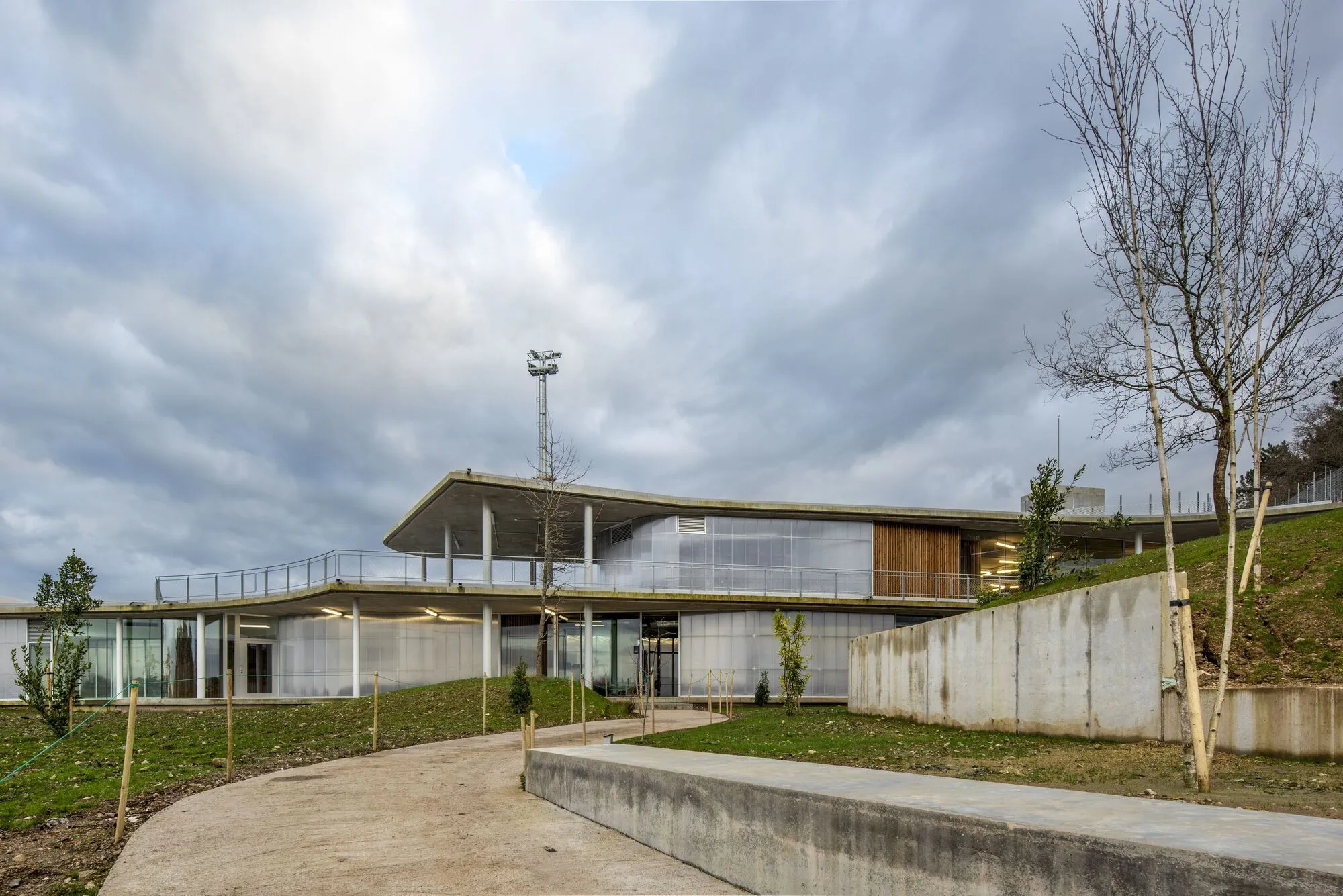
Afouteza Sports Fields by Irisarri + Piñera – A Sustainable Sports Architecture in Galicia
Afouteza Sports Fields by Irisarri + Piñera blends sports, sustainability, and landscape, creating flexible, adaptive architecture rooted in Galicia’s rural identity.


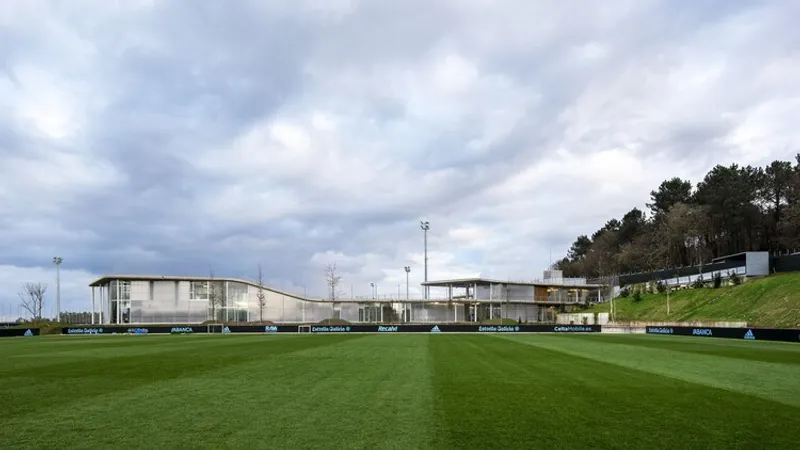
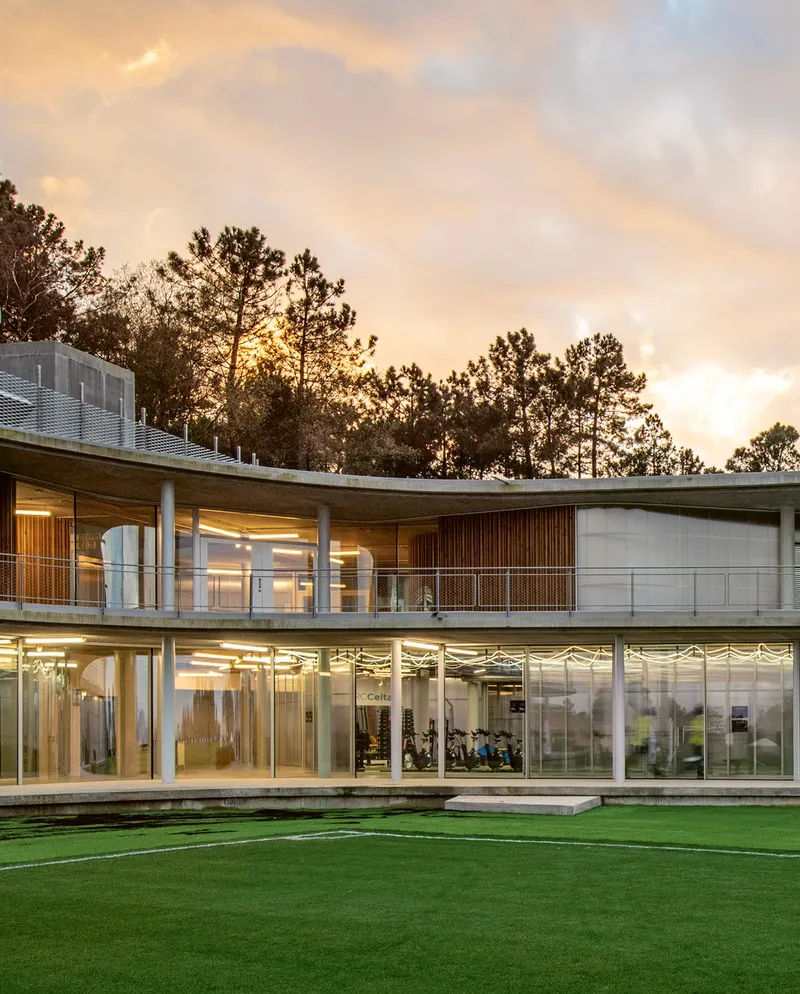
Afouteza Sports Fields, designed by Irisarri + Piñera Arquitectos, is a visionary sports complex in Galicia, Spain, completed in 2021. Covering an area of 3,650 m², the project redefines the relationship between sports, architecture, and the rural environment by blending modern facilities with traditional strategies of landscape adaptation.
Photographed by Héctor Santos-Diez, the project was part of a larger contest held in 2018 to design the future sports city of Celta, a project that envisioned more than just training grounds—it aimed to integrate sports facilities with the essence of an urban community, including public, commercial, and residential elements.
Blending Urbanity and Rural Landscape
The Afouteza Sports Fields embrace the concept of reconnecting society with nature. Built on rural land in Galicia, the project symbolizes how modern architecture can create a balance between man, environment, and sports facilities. Instead of imposing rigid structures, the architects proposed an open system of flexible design, capable of evolving and adapting to diverse future programs.
The architecture reflects Galicia’s dispersed rural fabric, where settlements are traditionally stitched together with minimal infrastructure and adapted to microclimates. This sensitivity to place creates an environment where architecture respects topography, seasons, and landscape rhythms.
Design Concept – Flexibility and Adaptation
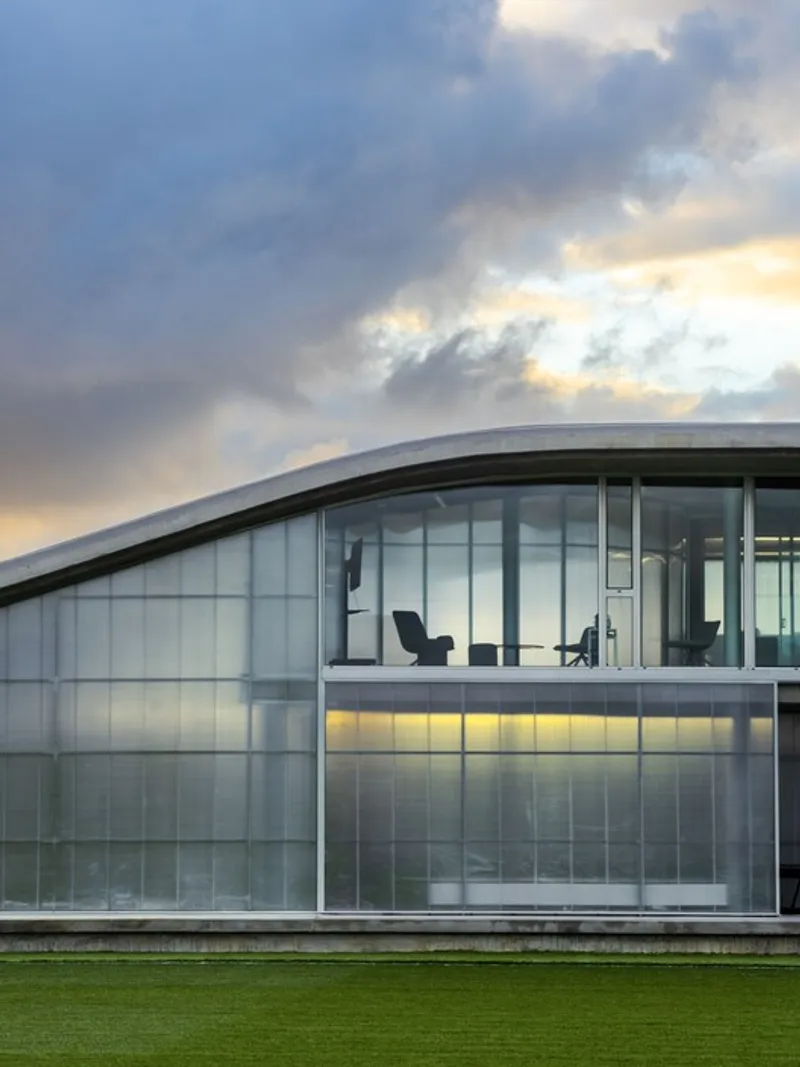
The design approach focuses on flexibility in architecture, often described as the “myth of flexibility.” The sports fields are not a closed, rigid system but an adaptive architectural model. Much like traditional rural dwellings, the facility is composed of several interconnected pieces, forming a conglomerate of semi-climatized and intermediate spaces.
The first phase of the project focused on providing essential facilities for the first team, while ensuring that the design remains coherent, complete, and adaptable at every stage—whether large or small in scale.
Spatial Organization and Atmospheres
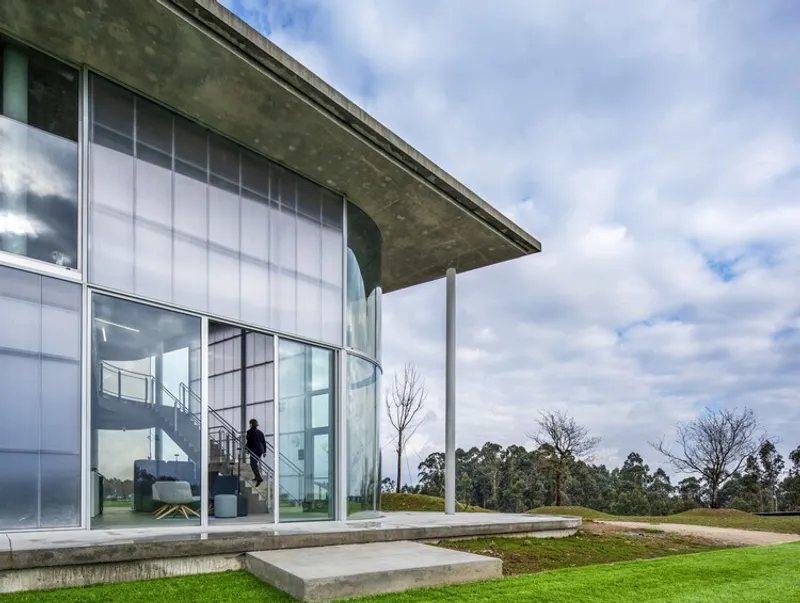
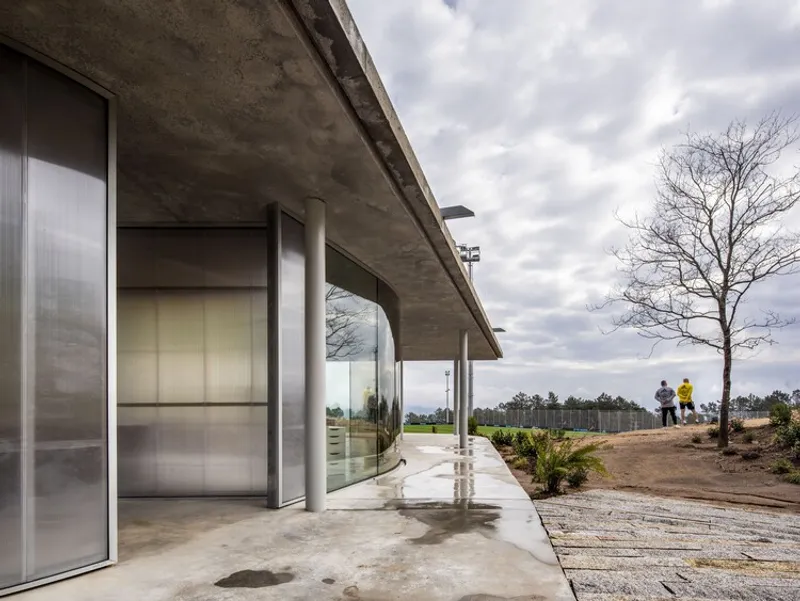
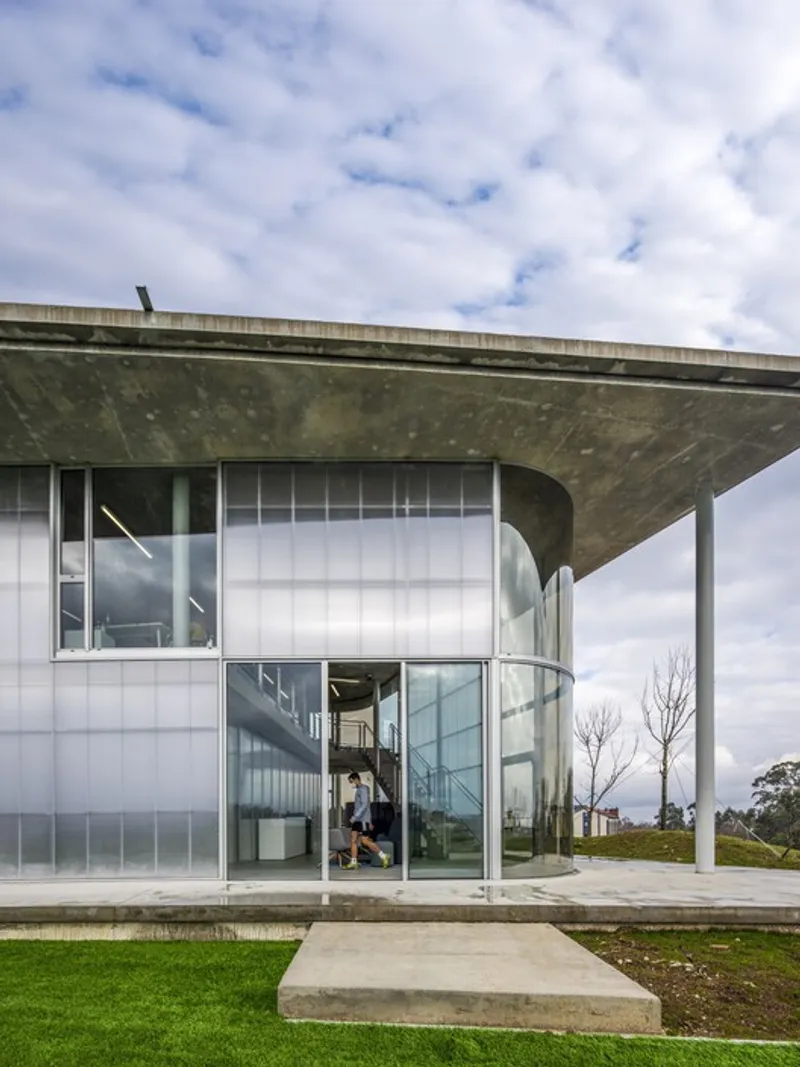
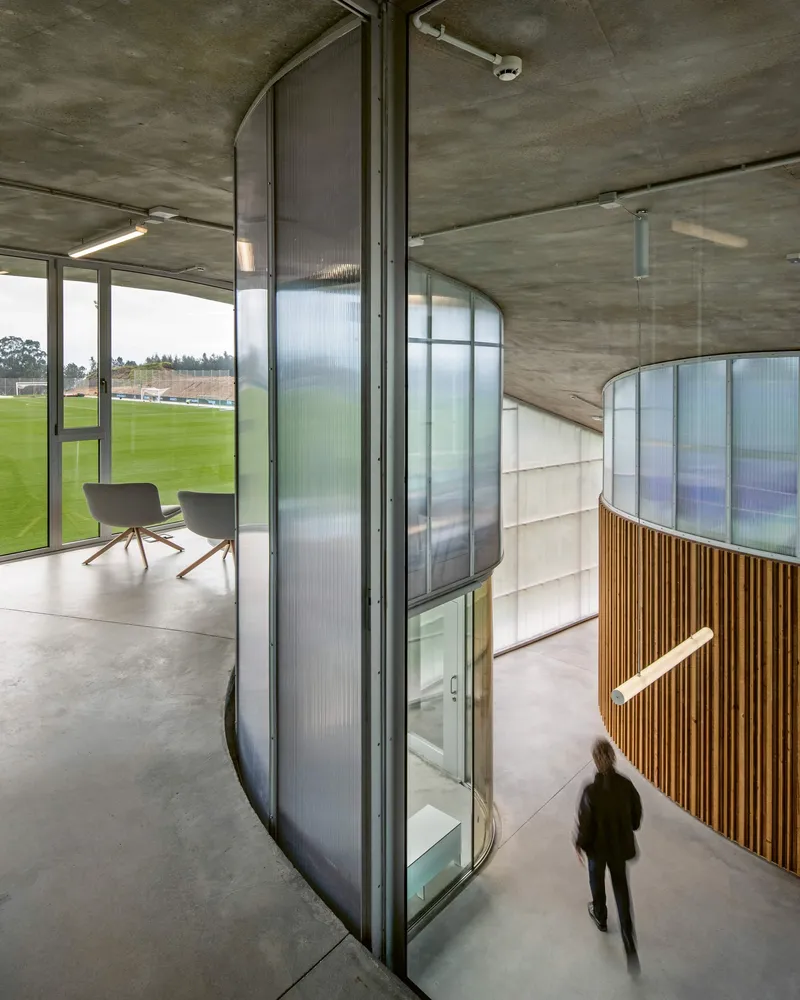
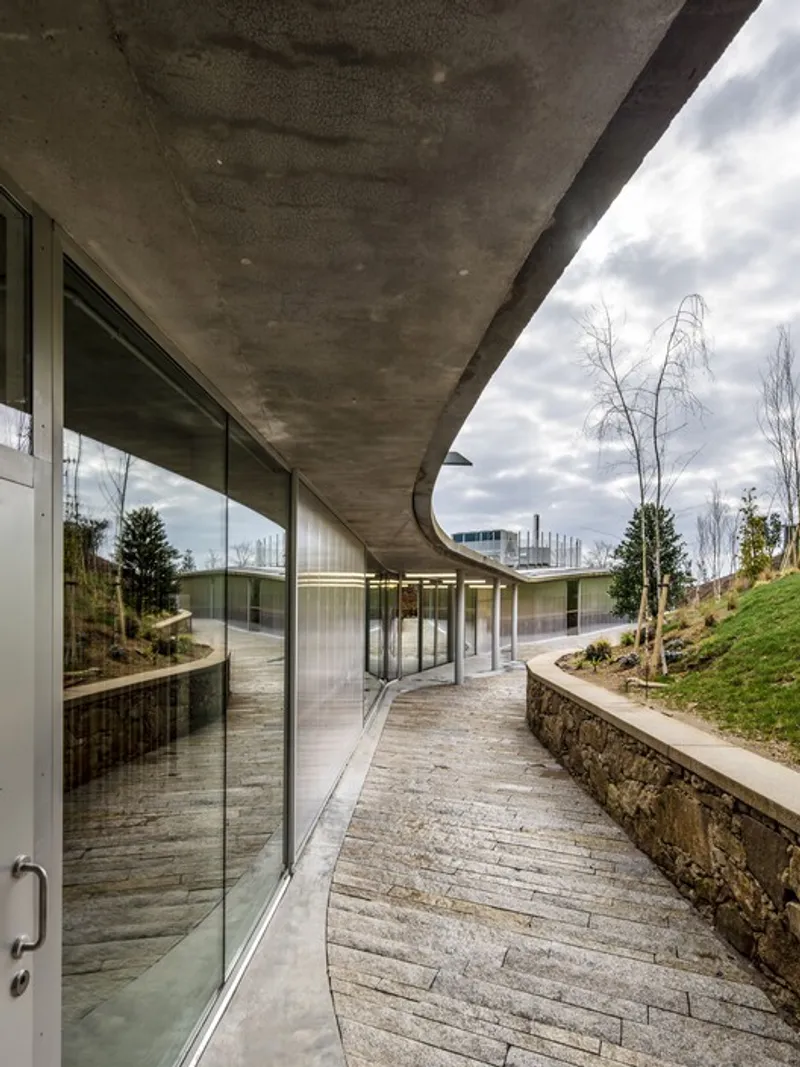
The Afouteza Sports Fields are designed as a team of architectural pieces that come together to create diverse environments for athletes and visitors. The architects introduced three distinct atmospheres, each defined by materiality and environmental response:
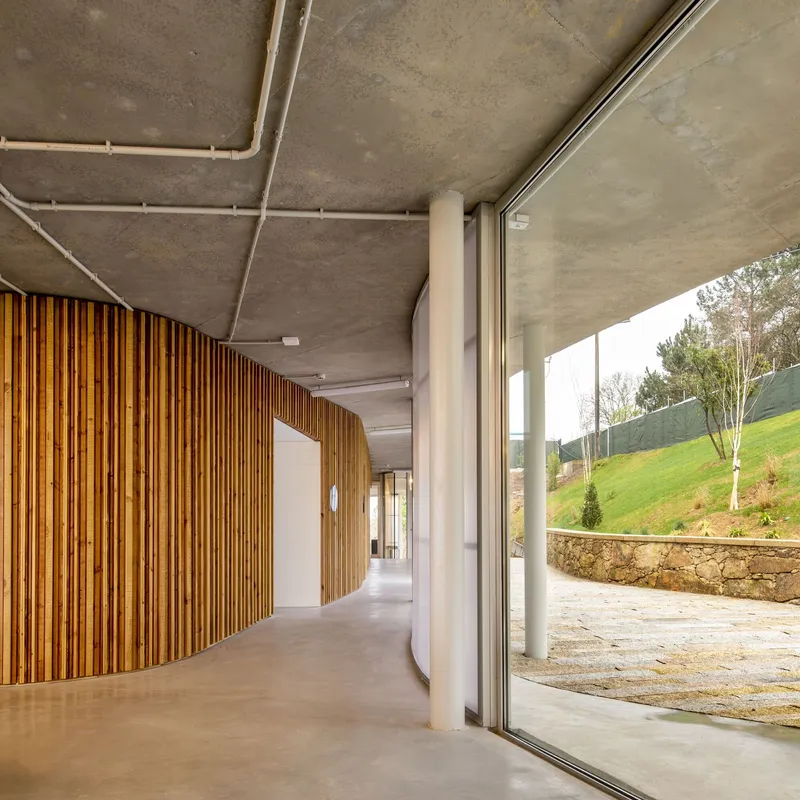
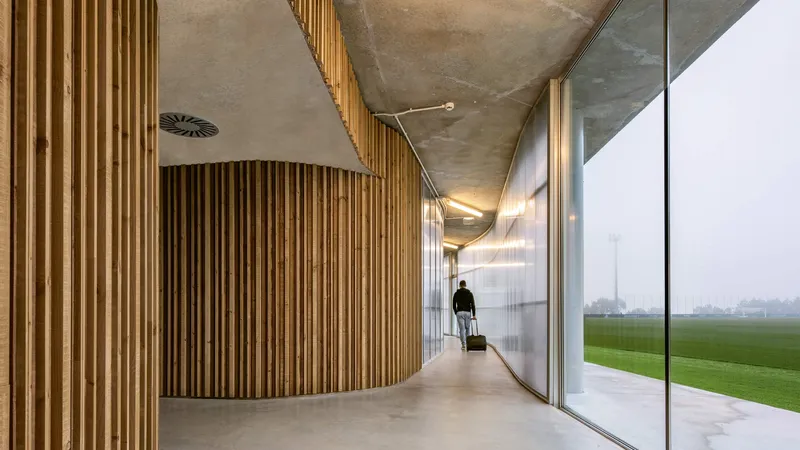
- Wooden Enclosures – Introverted spaces for indoor activities, providing warmth and privacy.
- Translucent Bubble Volumes – Semi-transparent structures that blur the boundary between indoor and outdoor, allowing natural light and creating fluid spatial experiences.
- Semi-Climatized Air Zones – Open, breathable spaces that immerse occupants in the landscape and seasonal rhythms of Galicia.
These layers of space foster interaction with the natural environment, offering athletes both protection and openness.
Materials and Sustainability
The project uses wood, concrete, and translucent materials to respond to site conditions and sustainability goals. The semi-climatized spaces reduce dependency on mechanical systems, while the design leverages natural ventilation, daylight, and seasonal adaptation.
The architecture mirrors Galicia’s terraced landscapes, with structures that feel integrated into the land rather than imposed upon it. This strategy not only grounds the project in its rural context but also provides social and environmental sustainability by supporting community life and reducing energy demands.
The Afouteza Sports Fields by Irisarri + Piñera represent more than a training ground—they embody a visionary model of sports architecture that reconnects urban society with rural landscapes. Through flexibility, sustainable design, and sensitivity to place, the project creates a balance between athletic performance, community, and environment.
In an era where sports facilities often lean toward monumental, closed systems, Afouteza offers a refreshing alternative: an open, adaptive, and sustainable design deeply rooted in Galicia’s cultural and natural identity.
All the photographs are works of




Popular Articles
Popular articles from the community


Riyadh For All: Intergenerational Urban Design for Active Aging in Rabat
Riyadh For All reimagines urban design in Rabat with intergenerational co-living, adaptive courtyards, and Moroccan cultural exchange today.

Co-life: Sustainable Architecture for Age-Friendly Community Living
Co-life reimagines sustainable architecture for seniors through courtyards, rammed earth, shared gardens, and spaces designed for belonging.

Conexión: Biophilic Design Reimagines High-Rise Living in Hong Kong
Conexión reimagines high-rise living in Hong Kong through biophilic design, green facades, shared spaces, daylight, water and nature within.

The Ocean Hive: Sustainable Architecture for a Self-Sufficient Civilization at Sea
The Ocean Hive imagines sustainable architecture at sea, where modular habitats, algae, wave power and ocean waste sustain a growing colony.


Similar Reads
You might also enjoy these articles


Hodi-Mandai Geram
Project Function: Preservation and revitalization of the Intangible heritage and socio-spatial identity of the Hodi by Housing, Cultural Memory Center, Sacred Grove, landscape, local tourism economy


Olio Towers: A Mid-Rise for Performers That Fuses Housing, Rehearsal, and Stage
Located blocks from Houston's Theater District, this modular tower stacks living units around a central performance atrium.

Oasis: Modular Green Housing Carved into Dhaka's Urban Fabric
A shortlisted Plugin Housing entry reclaims unauthorized settlements in Dhaka with stepped concrete volumes, green roofs, and ventilation-driven design.

Black Hole: A Floating Megastructure for the Post-Physical Era
Emiliano Mazzarotto envisions a spherical, self-scaling arena where e-sports, digital hotels, and holographic stadiums replace traditional public space.


Explore Sports Architecture Competitions
Discover active competitions in this discipline



Challenge to design a barrier free sports center


Challenge to design an outdoor ice-rink and park


Challenge to reimagine the Iron Throne


Photograph architecture without architects
Comments (0)
Please login or sign up to add comments
No comments yet. Be the first to comment!