
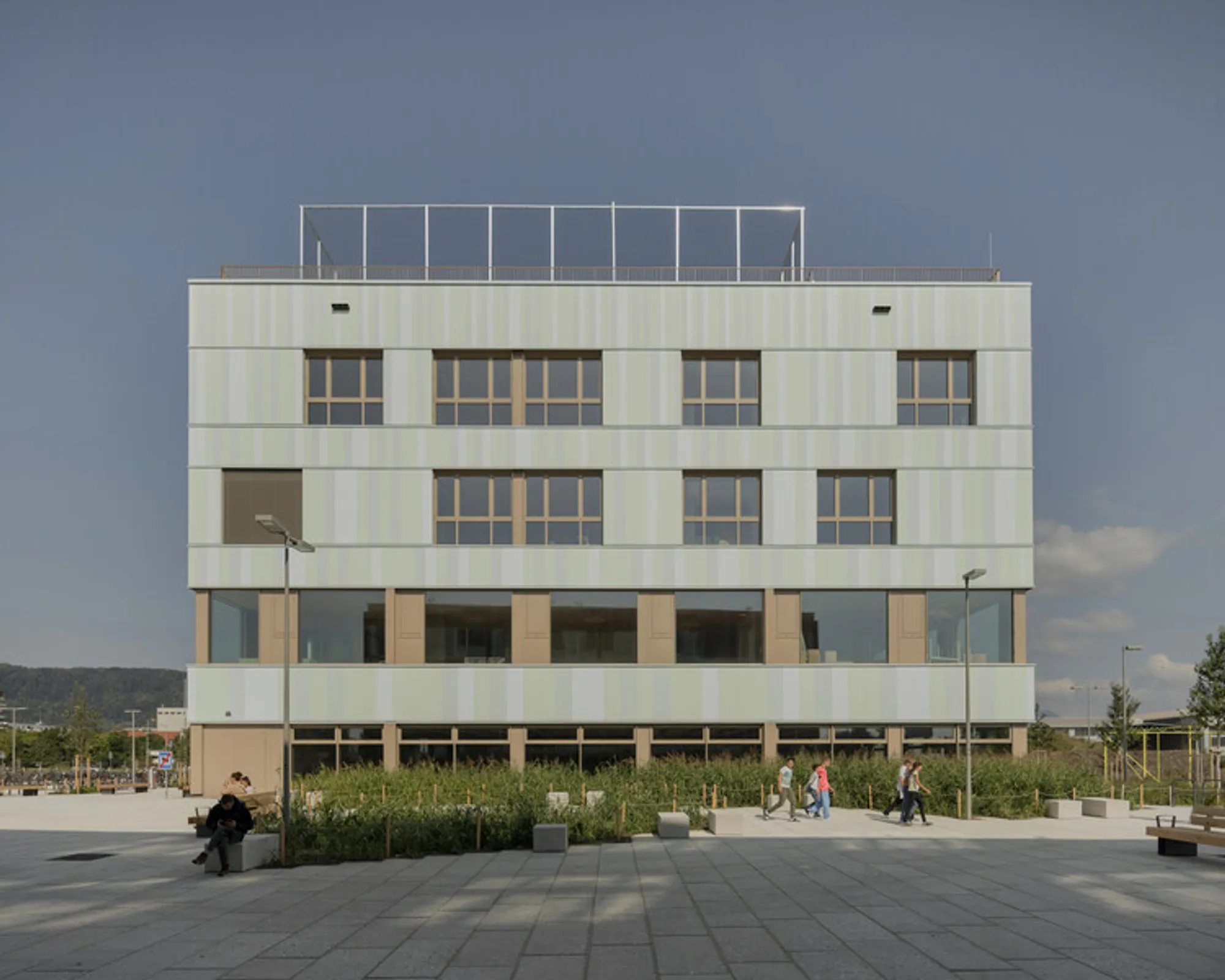
AHS Reininghaus Secondary School By j-c-k
AHS Reininghaus Secondary School in Graz is a contemporary, sustainable learning campus integrating green terraces, flexible spaces, and community-focused educational architecture.


Designed by Janser Castorina Katzenberger (j-c-k), the AHS Reininghaus Secondary School is a forward-thinking educational campus developed for the emerging Reininghaus district in Graz, Austria. Conceived to accommodate approximately 1,000 students, the project combines progressive pedagogy, urban integration, and landscape-driven architecture to create a vibrant learning environment for the next generation.
Urban Context and Architectural Form
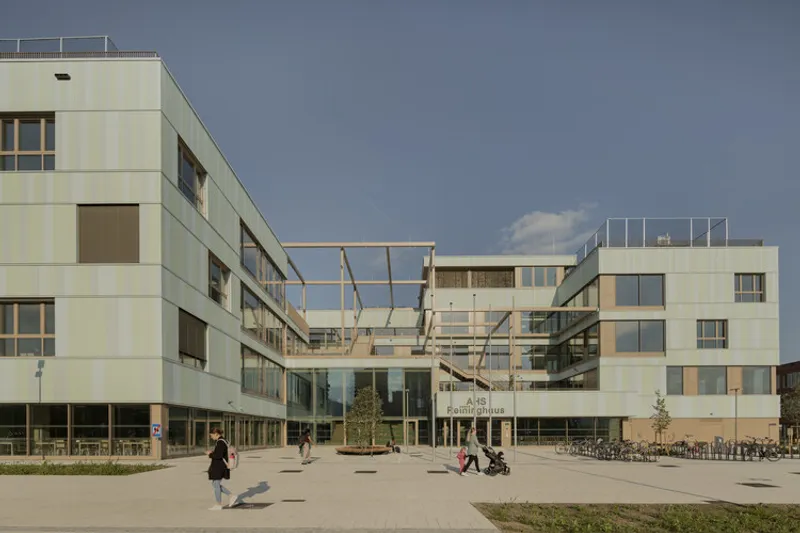
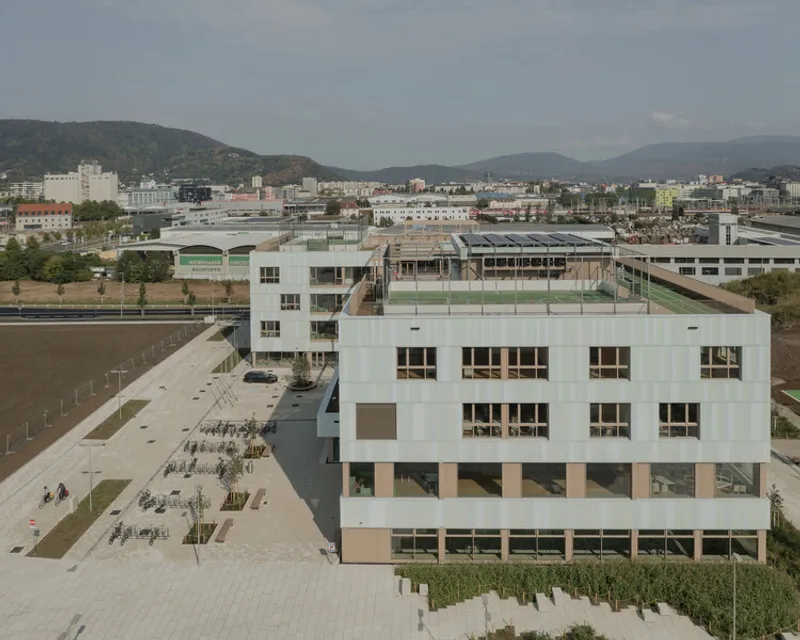
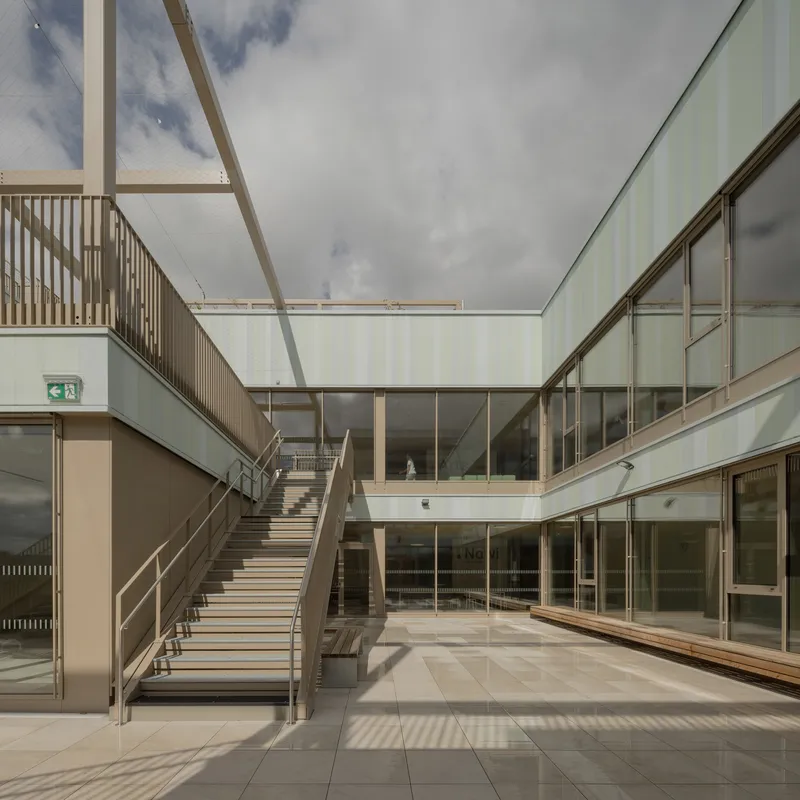
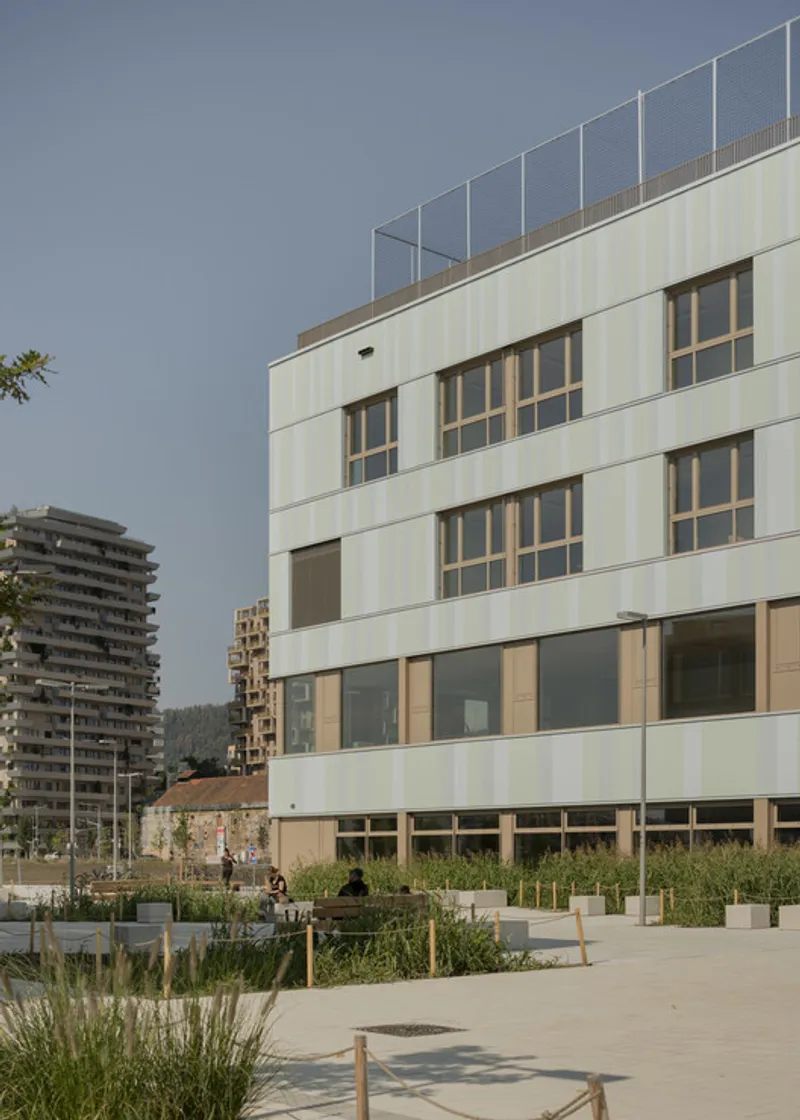
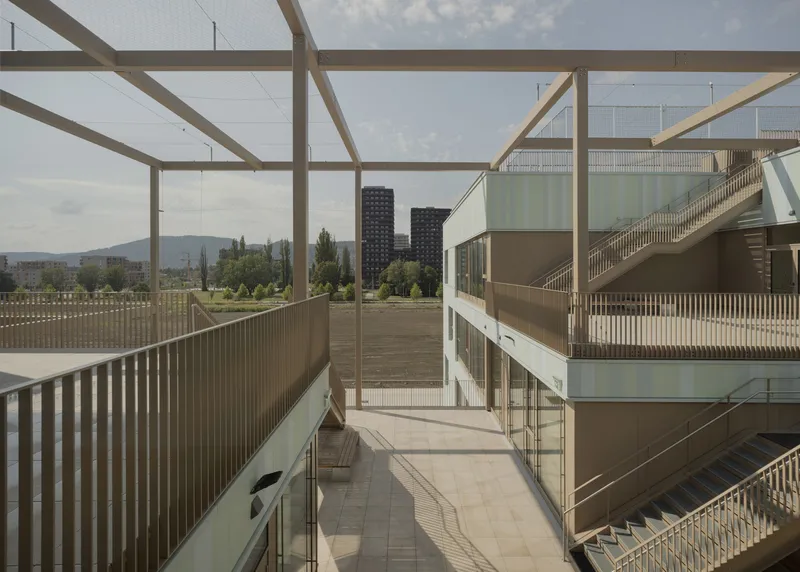
The four-storey school building is arranged in a distinctive L-shaped volume, extending along Am Steinfeld and Margarethe-Schütte-Lihotzky-Straße. This configuration defines the northeastern edge of Quartier 12 while simultaneously acting as a noise-protecting urban barrier. The compact mass is strategically fragmented toward the southwest through a sequence of stepped terraces, softening the building’s scale and allowing light, greenery, and outdoor learning spaces to penetrate deep into the structure.
Schoolyard as Social and Spatial Core
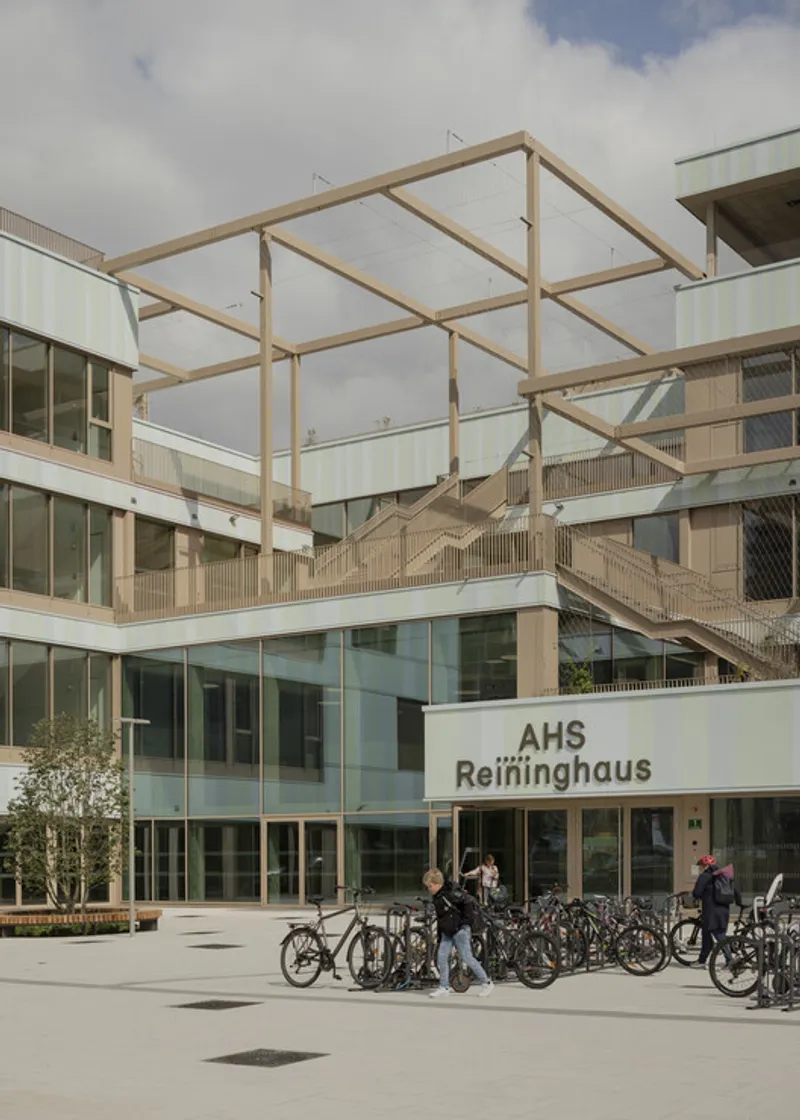
At the heart of the project lies a green schoolyard, positioned at the front of the building and fully enclosed by its wings. Designed as a sheltered, semi-public space, the courtyard functions as a social hub for students while also connecting to the neighboring elementary school, enabling shared public use and interaction across educational levels.
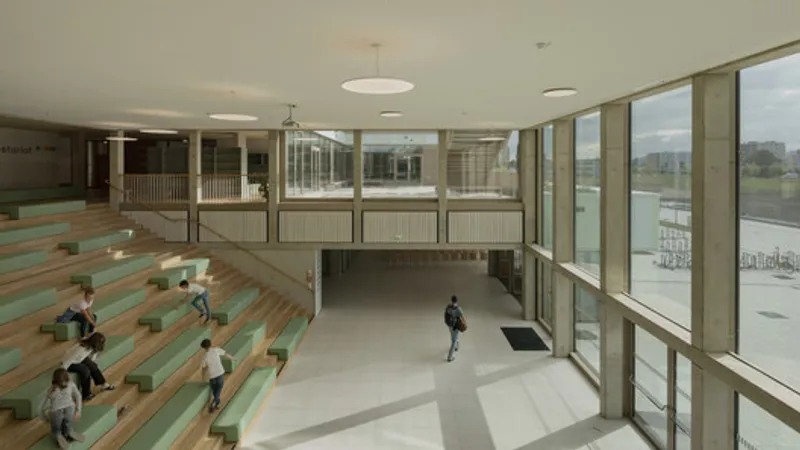
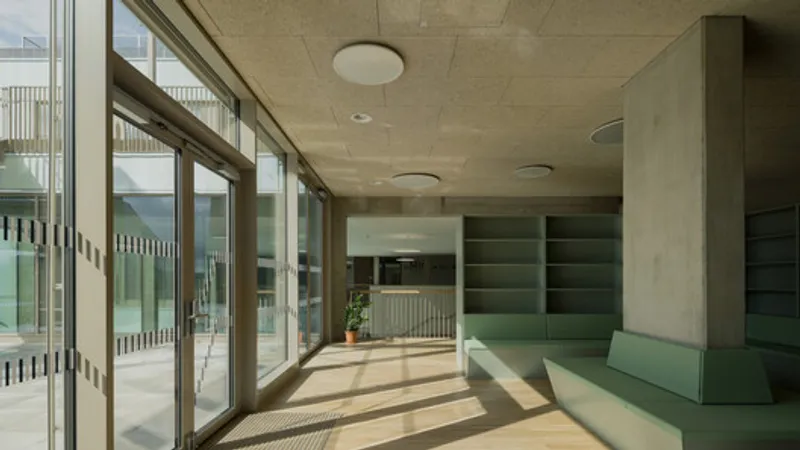
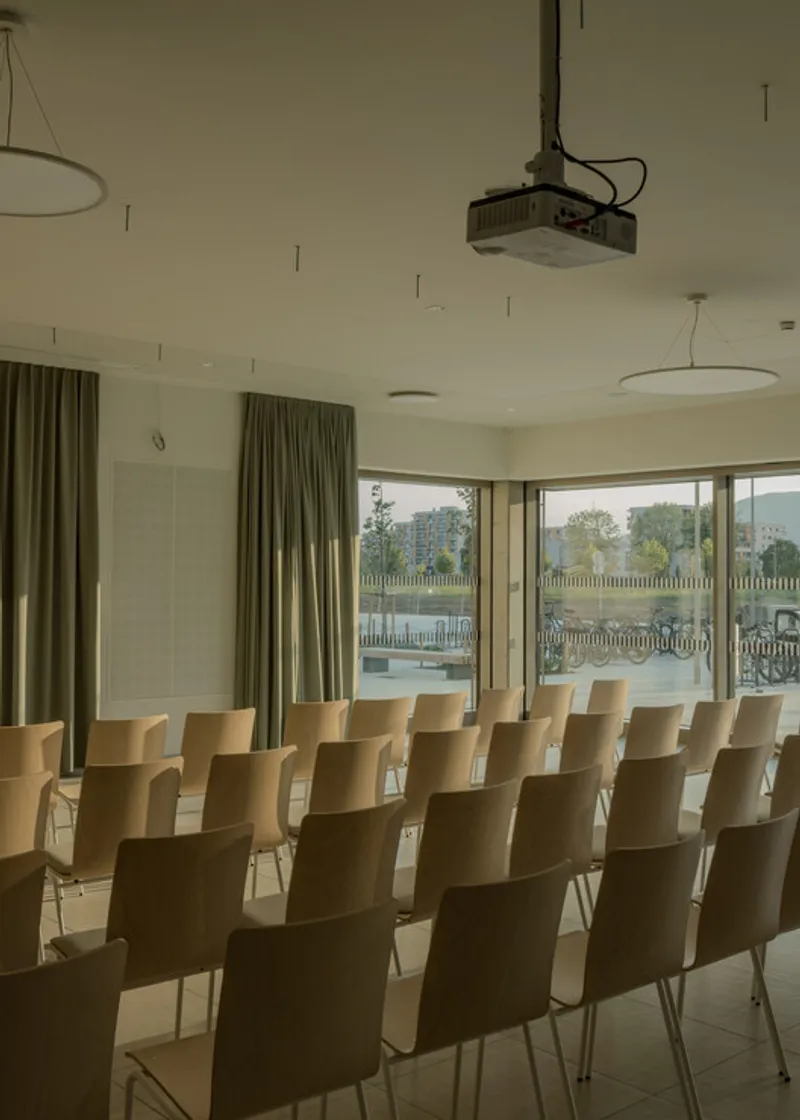
Surrounding this courtyard are transparent multifunctional spaces, including the assembly hall, dining hall, and multipurpose hall. These areas open visually and physically toward the schoolyard, reinforcing community engagement. A generous two-storey entrance hall is animated by a broad staircase that doubles as a grandstand, offering views across the courtyard and providing flexible seating for everyday school activities, exhibitions, and large events.
The Ribbon and the Core: A Pedagogical Framework
The architectural concept is driven by the interplay of two spatial layers:
- The Ribbon: A compact, outward-oriented band containing classrooms, ensuring efficient circulation and clear orientation.
- The Core: A central, light-filled learning landscape designed to inspire creativity and collaboration.
Within the core, a fluid network of learning islands, multipurpose corridors, and terrace gardens creates a dynamic and adaptable educational environment. Constant visual connections to greenery and outdoor spaces enhance orientation, well-being, and spatial identity throughout the building.
Learning Clusters and Departments
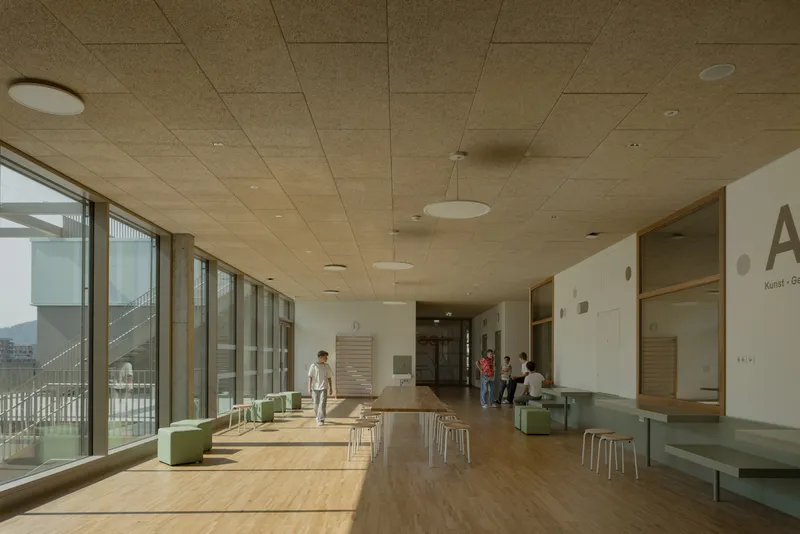
The school is organized into clusters and pedagogical departments, reflecting contemporary educational models. Each cluster consists of four classrooms paired with an open, flexible learning zone. Located at the ends of the upper floors, clusters and home bases offer students a sense of belonging, safety, and retreat.
Between these zones lie the departments, where learning islands directly connect to planted terraces. These sub-centers are equipped with large communal tables, encouraging collaboration, informal learning, and social interaction beyond traditional classroom boundaries.
Accessibility and Circulation
A clear and barrier-free access system ensures efficient movement throughout the building. Two main vertical cores connect all learning areas without crossing other functional zones, while a central staircase provides direct access to the administration offices.
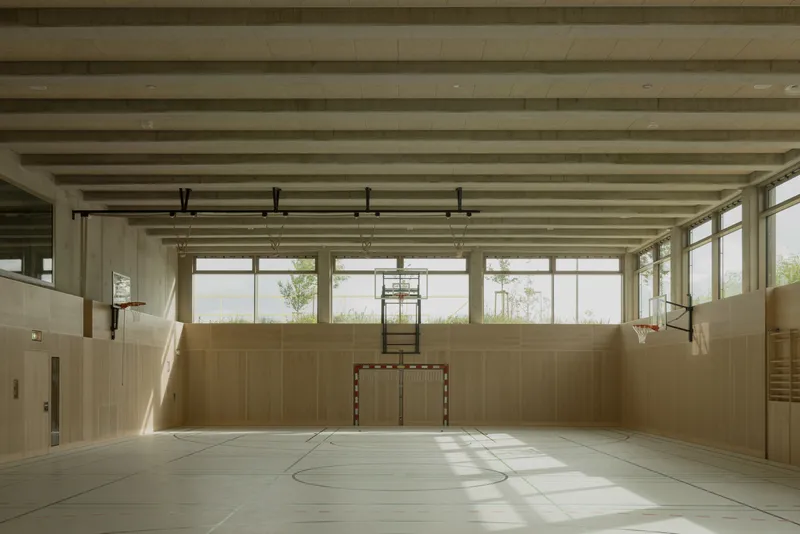
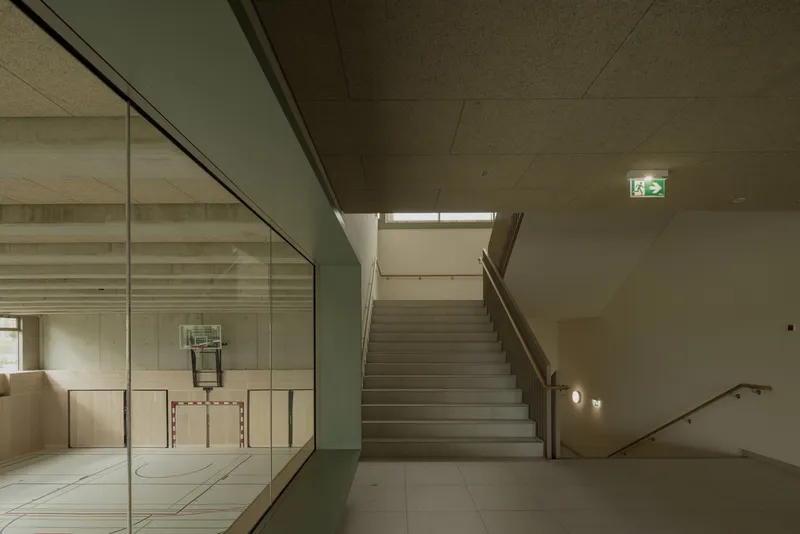
In the basement, three gymnasiums are visually connected to the auditorium through expansive interior glazing, enhancing spatial transparency. A secondary entrance allows independent public access to the sports facilities and the adjacent communal sports field.
Landscape, Sustainability, and Outdoor Learning
Landscape design plays a central role in the project’s identity. The schoolyard features a loose grove of trees with shaded seating areas, while the terraced gardens are planted with climbing vegetation that acts as natural sun protection and helps mitigate overheating. Seasonal changes—blossoms, fragrances, and autumn colors—bring continuous variation to the learning environment.
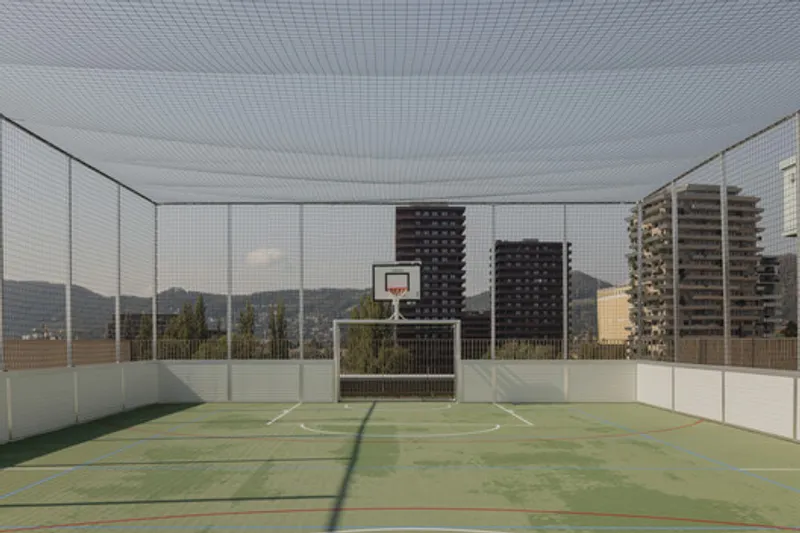
An external staircase links the terraces and roofscape, which includes sports courts, a running track, and a bouldering wall. These elevated outdoor areas function as recreational zones as well as open-air classrooms, expanding learning beyond enclosed interiors.
Facade and Interior Identity
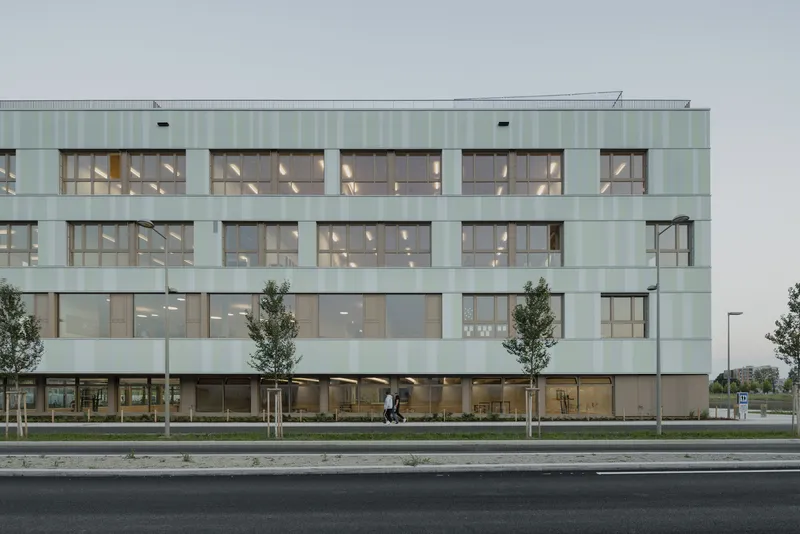
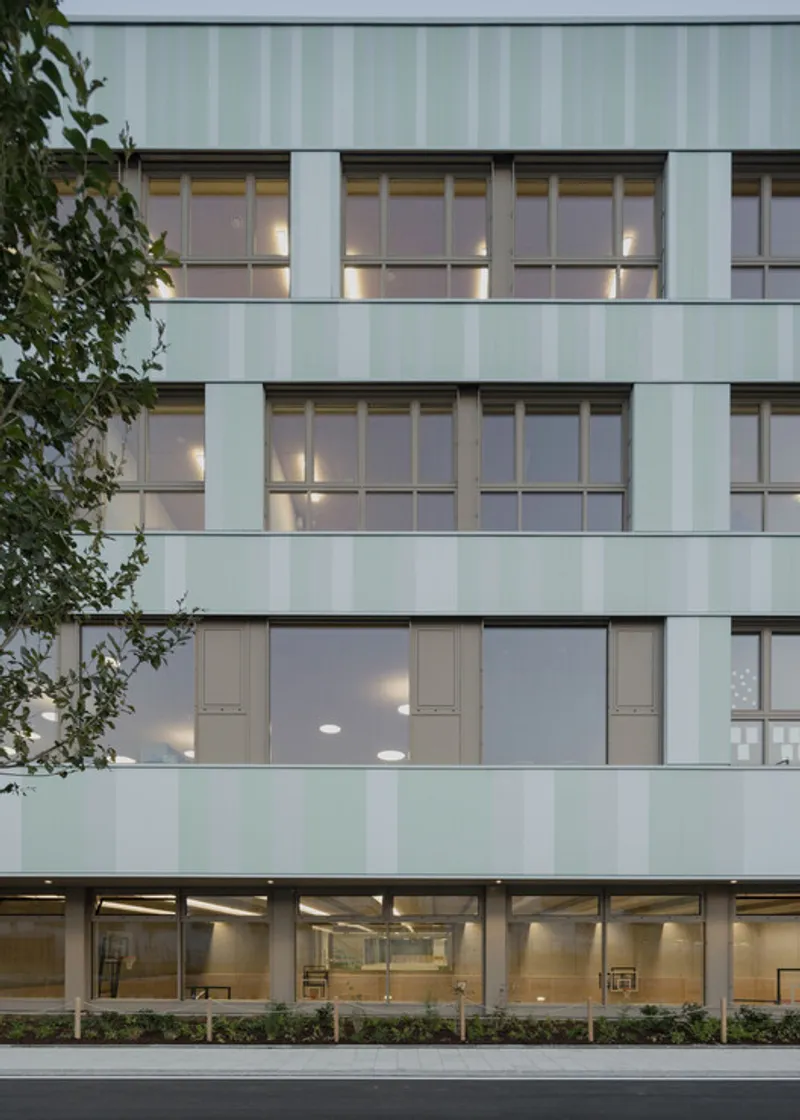
The façade extends the concept of greening vertically, giving the school a welcoming and human-scaled presence within a developing urban context. Subtle color gradations visually reduce the building’s height and contribute to its friendly character.
Inside, wooden surfaces, warm materials, and coordinated colors create a pleasant and inspiring atmosphere. Murals and a graphic guidance system reinforce orientation and identity, aligning architecture with the school’s educational mission: “AHS Reininghaus – Fostering a new generation of creative thinkers.”
AHS Reininghaus Secondary School stands as a model for contemporary educational architecture—one that integrates urban design, landscape, sustainability, and innovative pedagogy. Through flexible spaces, strong community focus, and a deep connection to nature, the project redefines how schools can support learning, creativity, and social interaction in the 21st century.
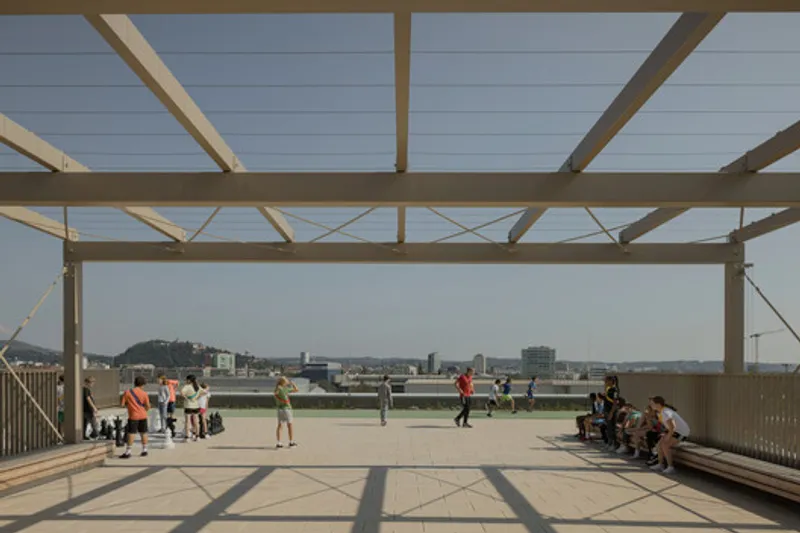
All the photographs are works of Federico Cairoli




Popular Articles
Popular articles from the community


Co-life: Sustainable Architecture for Age-Friendly Community Living
Co-life reimagines sustainable architecture for seniors through courtyards, rammed earth, shared gardens, and spaces designed for belonging.

Hill & Cross Opera: Sculptural Opera House Architecture Shaped by Tallinn’s Landscape and Identity
Hill & Cross Opera reimagines opera house architecture in Tallinn through its sculptural hill, civic plaza, glass wave and a luminous cross.
EW PARK: Sustainable Architecture Reimagines the Future of Urban Parking
EW PARK reimagines city parking as a modular wooden tower combining automation, solar energy, electric mobility, and adaptable urban design.
AL-JANNAH: Sustainable Architecture and Permaculture for Afghan Widows
AL-JANNAH uses sustainable architecture and permaculture to create resilient oasis of housing, learning, work and renewal for Afghan widows.


Similar Reads
You might also enjoy these articles


Hodi-Mandai Geram
Project Function: Preservation and revitalization of the Intangible heritage and socio-spatial identity of the Hodi by Housing, Cultural Memory Center, Sacred Grove, landscape, local tourism economy


Olio Towers: A Mid-Rise for Performers That Fuses Housing, Rehearsal, and Stage
Located blocks from Houston's Theater District, this modular tower stacks living units around a central performance atrium.

Oasis: Modular Green Housing Carved into Dhaka's Urban Fabric
A shortlisted Plugin Housing entry reclaims unauthorized settlements in Dhaka with stepped concrete volumes, green roofs, and ventilation-driven design.

Black Hole: A Floating Megastructure for the Post-Physical Era
Emiliano Mazzarotto envisions a spherical, self-scaling arena where e-sports, digital hotels, and holographic stadiums replace traditional public space.

Explore Educational Building Competitions
Discover active competitions in this discipline



Challenge to design public laboratory


Challenge to reimagine the Iron Throne


Photograph architecture without architects


Illustrate the lost glory of Angkor Wat - Render Challenge
Comments (0)
Please login or sign up to add comments
No comments yet. Be the first to comment!