
Akamori Restaurant by TOUCH Architect – A Minimalist Japanese Yakiniku Experience in Bangkok
Akamori Restaurant in Bangkok features minimalist Japanese yakiniku design, dark concrete, bold red accents, central courtyard, private rooms, and serene urban dining.


Embracing Calm Amidst Urban Chaos
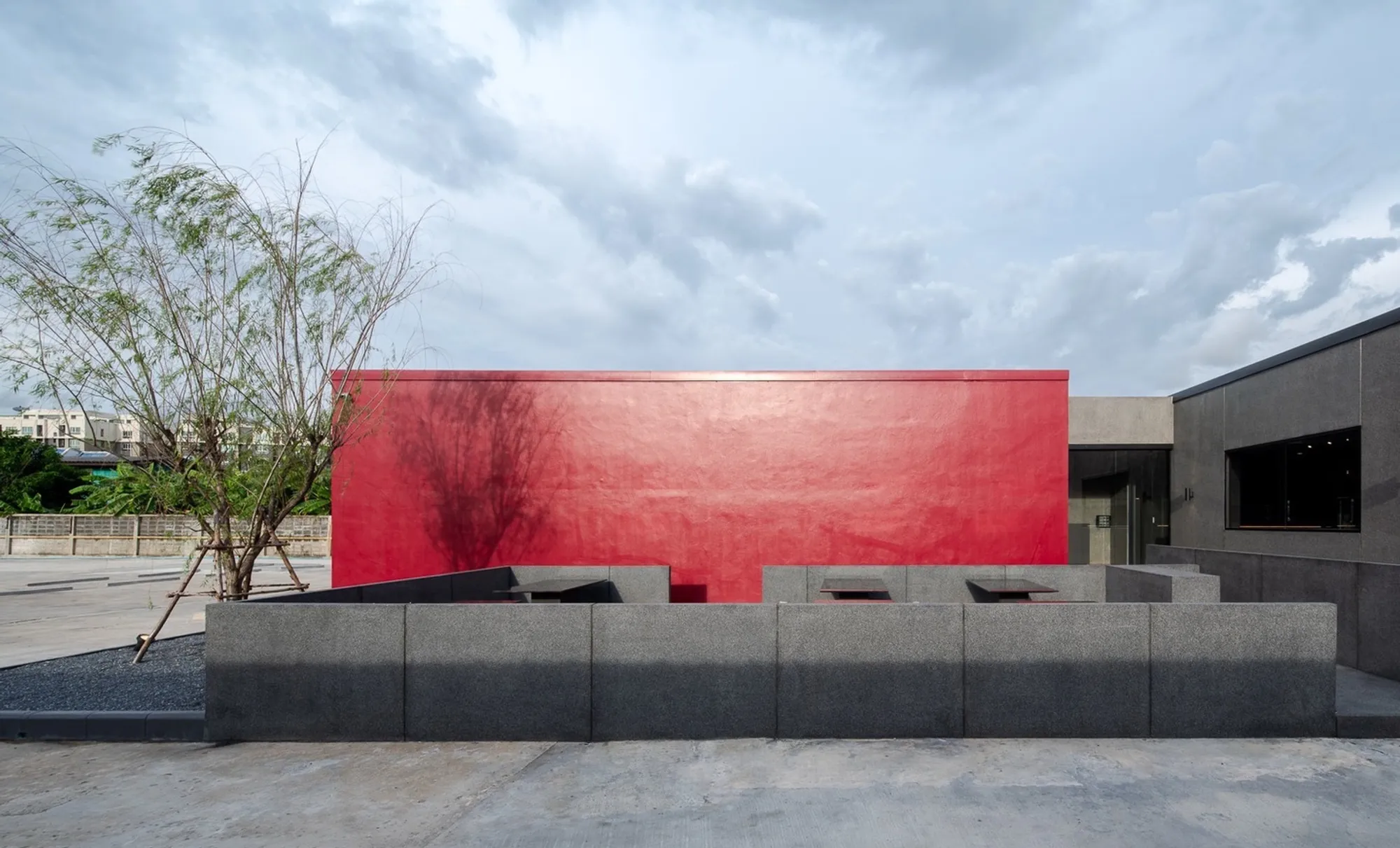
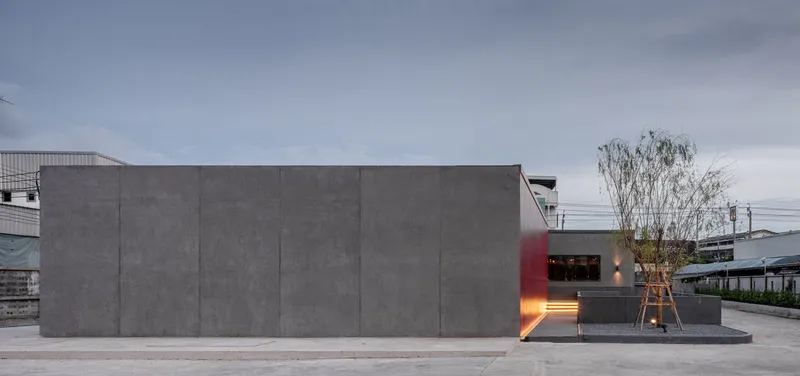
Nestled in a visually cluttered urban environment, Akamori Restaurant by TOUCH Architect transforms the bustling city context into a serene and focused dining experience. The design presents a calm, inward-looking architectural form, shielding guests from the surrounding visual noise. A minimalist, dark grey box clad in textured exposed aggregate concrete ensures the restaurant maintains a quiet presence while drawing attention to its interior ambiance.
A Bold Gesture: The Signature Red Plane
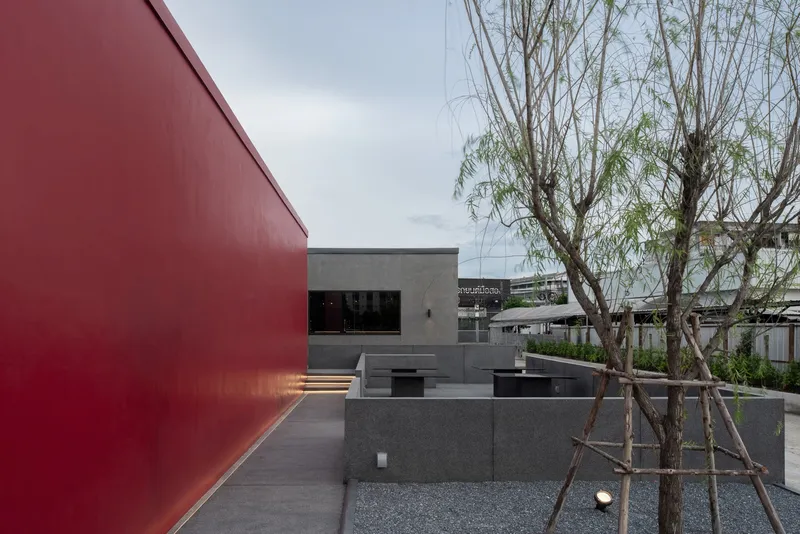
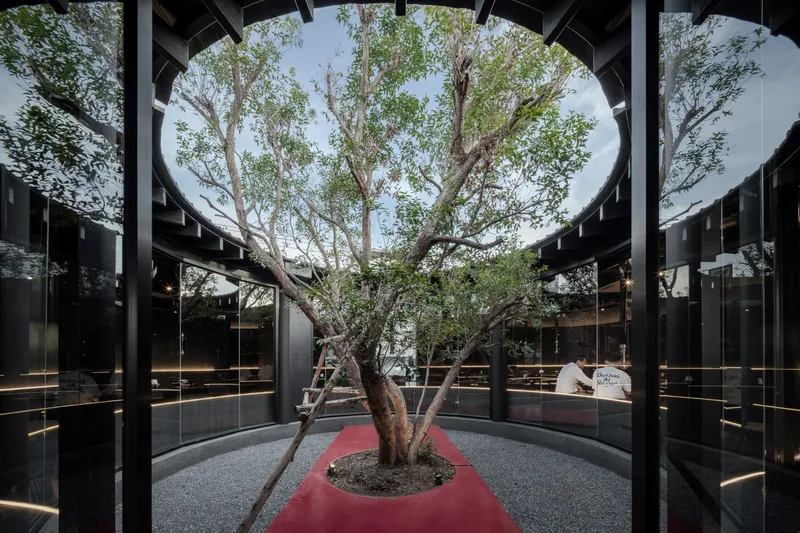
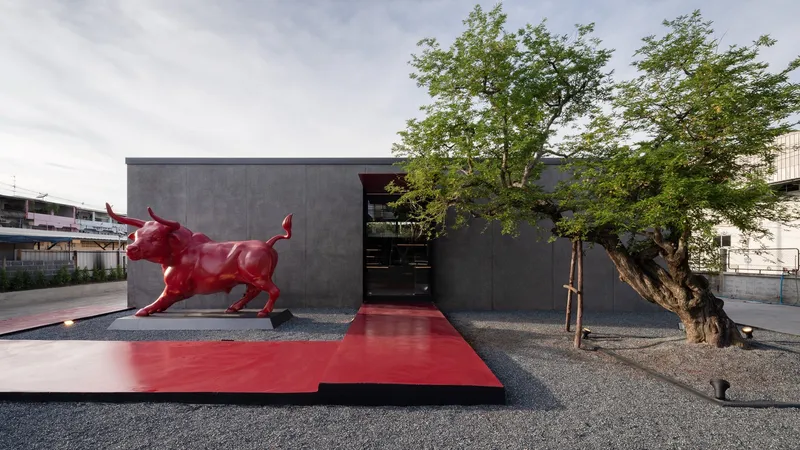
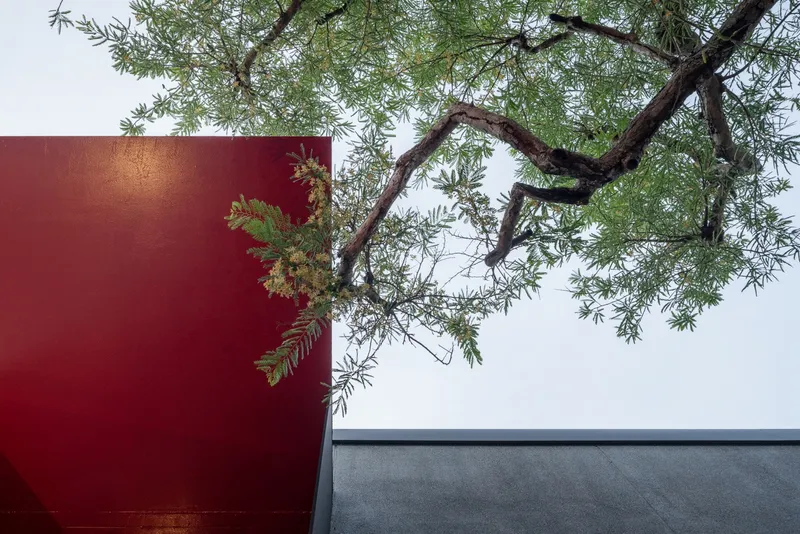
The architectural narrative is defined by a vivid red plane slicing through the building’s facade, guiding visitors from the entrance toward the central courtyard. This dynamic feature is rich in symbolism: it evokes the red sun of the Japanese flag and metaphorically references a skewer piercing a grill, reinforcing Akamori’s identity as a Japanese yakiniku restaurant. Beyond symbolism, the bold red hue also stimulates appetite, creating an inviting and warm visual anchor against the muted exterior.
Spatial Organization: Courtyards, Dining, and Privacy
The restaurant is divided into two main volumes:
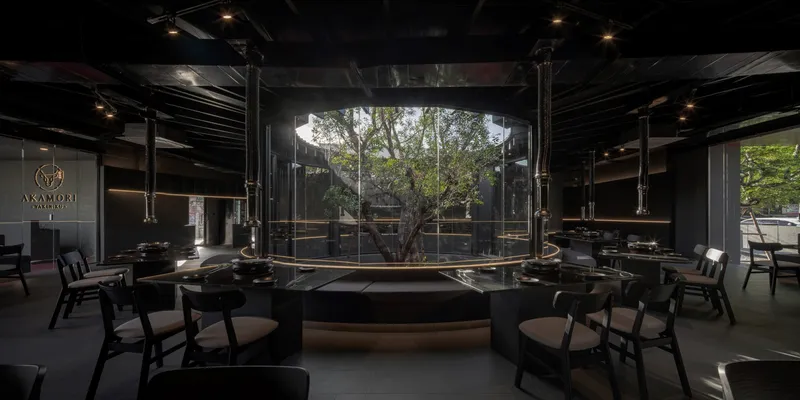
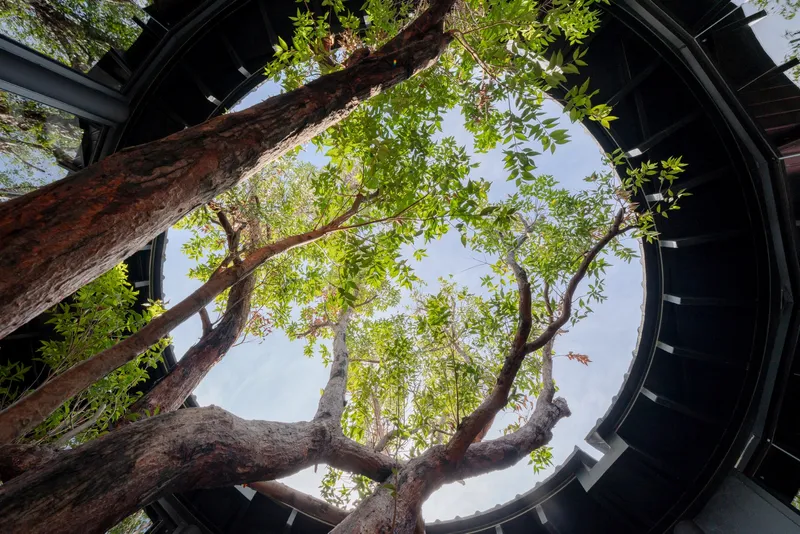
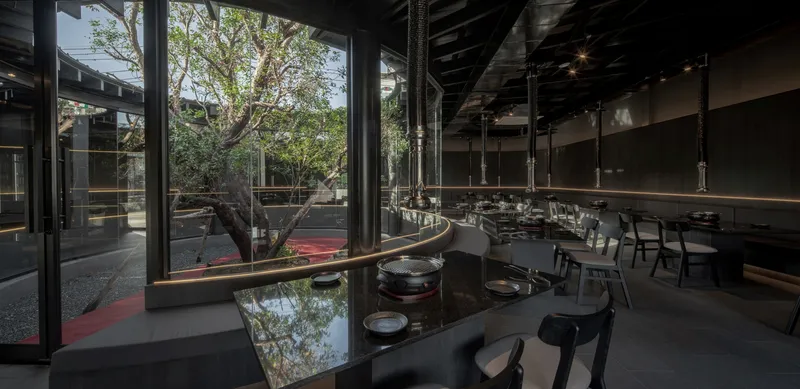
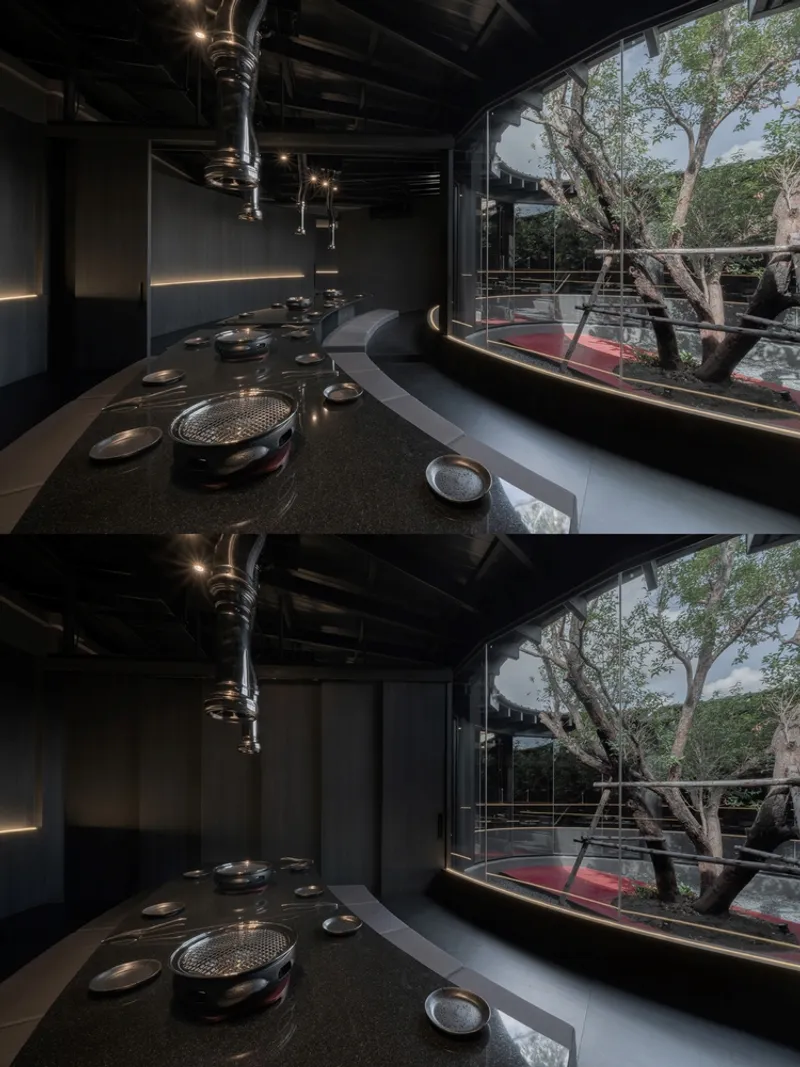
- Main Dining Building: Wraps around a circular courtyard centered on a mature tree, visible from every table. Two elevated private rooms feature traditional Japanese sliding partitions, allowing flexible configurations for intimate dining experiences.
- Service Building: Located at the rear, this volume discreetly houses the kitchen and utility functions, connected via a transitional lobby space that also serves as the main entrance.
A narrow, softly lit gravel corridor curves alongside the dining area, creating a spatial journey from dark, enclosed interiors to light, open spaces. Outdoor seating, positioned beside a large red wall panel, strategically redirects views and provides a sense of intimacy.
Materiality and Sensory Experience
Material selection is central to Akamori’s design philosophy. Dark grey sand-wash concrete adds textural richness while enhancing shadow play and durability. A bright red bull sculpture and a lush green tree at the entrance create visual contrast, reinforcing the restaurant’s brand identity and making a bold statement in the urban context.
Emotional Resonance Through Minimalism
Akamori exemplifies quiet intensity, achieved through geometric clarity, material restraint, and symbolic gestures. The minimalist design transforms a simple box into a spatial expression of flavor, focus, and fire, creating a dining environment that is both emotionally engaging and functionally precise. Every element, from courtyard orientation to red accents, contributes to a holistic Japanese-inspired dining experience.
All Photographs are works of Metipat Prommomate




Popular Articles
Popular articles from the community


The Musturak Paradise: Senior Living Architecture for a Connected Future in Temara, Morocco
The Musturak Paradise reimagines senior living architecture in Temara via private homes, social spaces, culture, community, and shared care.

Riyadh For All: Intergenerational Urban Design for Active Aging in Rabat
Riyadh For All reimagines urban design in Rabat with intergenerational co-living, adaptive courtyards, and Moroccan cultural exchange today.

Conexión: Biophilic Design Reimagines High-Rise Living in Hong Kong
Conexión reimagines high-rise living in Hong Kong through biophilic design, green facades, shared spaces, daylight, water and nature within.

Hill & Cross Opera: Sculptural Opera House Architecture Shaped by Tallinn’s Landscape and Identity
Hill & Cross Opera reimagines opera house architecture in Tallinn through its sculptural hill, civic plaza, glass wave and a luminous cross.


Similar Reads
You might also enjoy these articles


Hodi-Mandai Geram
Project Function: Preservation and revitalization of the Intangible heritage and socio-spatial identity of the Hodi by Housing, Cultural Memory Center, Sacred Grove, landscape, local tourism economy


Olio Towers: A Mid-Rise for Performers That Fuses Housing, Rehearsal, and Stage
Located blocks from Houston's Theater District, this modular tower stacks living units around a central performance atrium.

Oasis: Modular Green Housing Carved into Dhaka's Urban Fabric
A shortlisted Plugin Housing entry reclaims unauthorized settlements in Dhaka with stepped concrete volumes, green roofs, and ventilation-driven design.

Black Hole: A Floating Megastructure for the Post-Physical Era
Emiliano Mazzarotto envisions a spherical, self-scaling arena where e-sports, digital hotels, and holographic stadiums replace traditional public space.


Explore Hospitality Building Competitions
Discover active competitions in this discipline



Challenge to reimagine the Iron Throne


Photograph architecture without architects


Illustrate the lost glory of Angkor Wat - Render Challenge


Design challenge to reuse E-waste
Comments (0)
Please login or sign up to add comments
No comments yet. Be the first to comment!