

Alagado House by Michel Macedo Arquitetos: A Modern Sanctuary Along the Iguaçu River
Alagado House by Michel Macedo Arquitetos blends modular design, natural light, and passive strategies along Brazil’s Iguaçu River floodplain.


A Dialogue Between Architecture and Landscape
Nestled within the lush floodplains of the Salto Caxias hydroelectric reservoir, Alagado House by Michel Macedo Arquitetos is a striking example of how contemporary architecture can harmonize with its natural surroundings. Located in Nova Prata do Iguaçu, this 314-square-meter residence carefully addresses the evolving landscape shaped by hydroelectric development along the Iguaçu River.
As hydroelectric plants transformed the river’s ecosystem over time, large expanses of land were submerged, leading to the rise of tourism centered on leisure and environmental contemplation. Responding thoughtfully to this context, the design of Alagado House positions itself as a positive intervention — a peaceful retreat that both respects and enhances the newly created landscape.
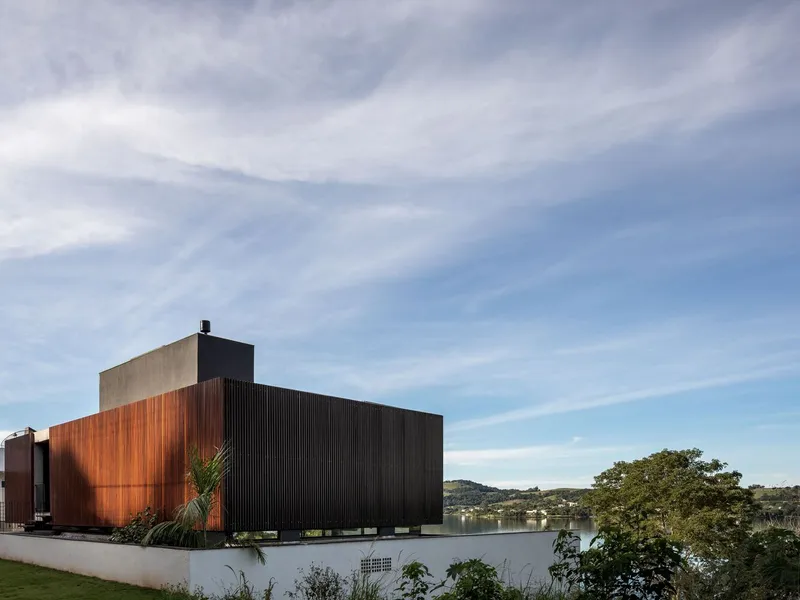
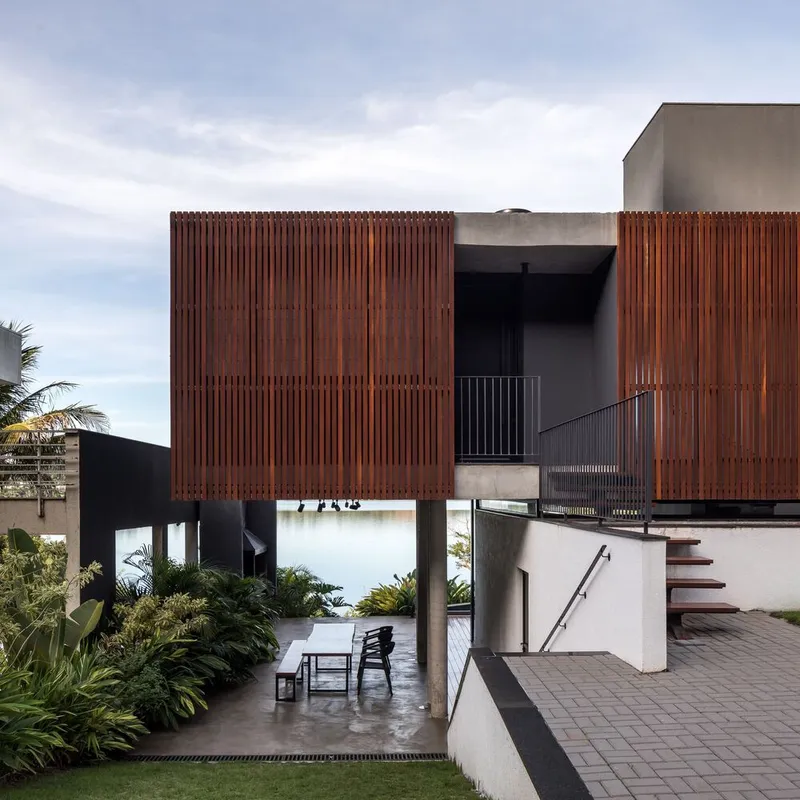
Site Strategy: Embracing Topography and Water
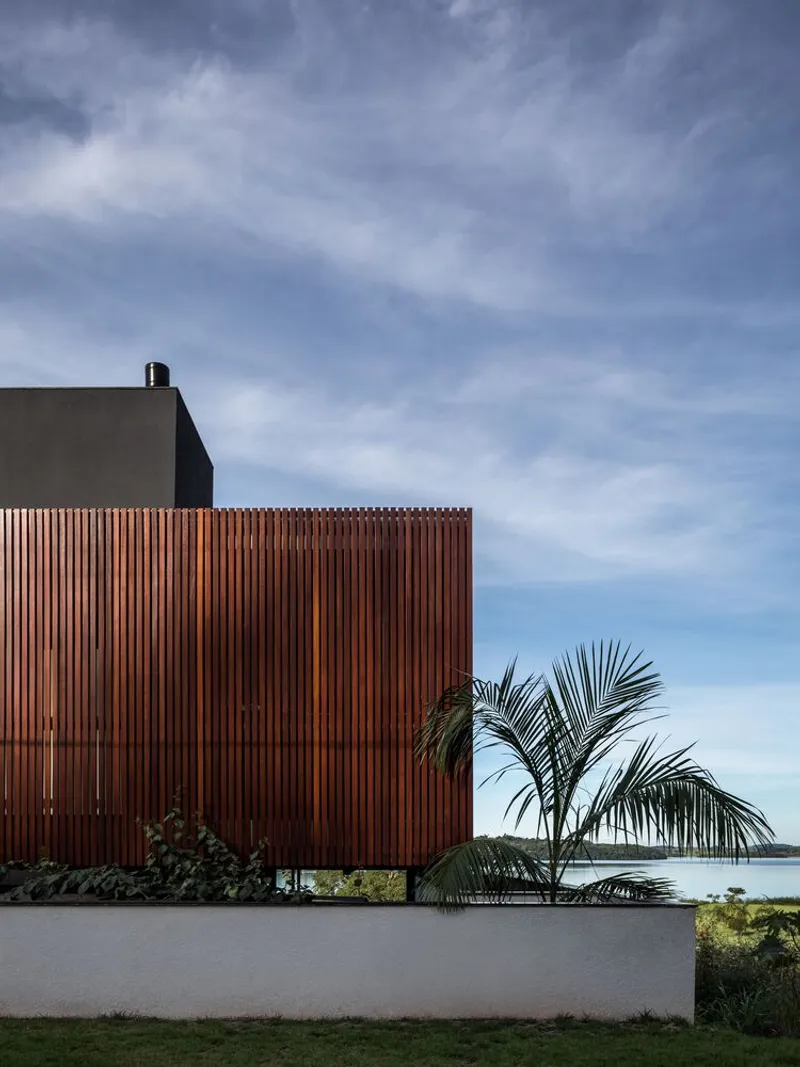
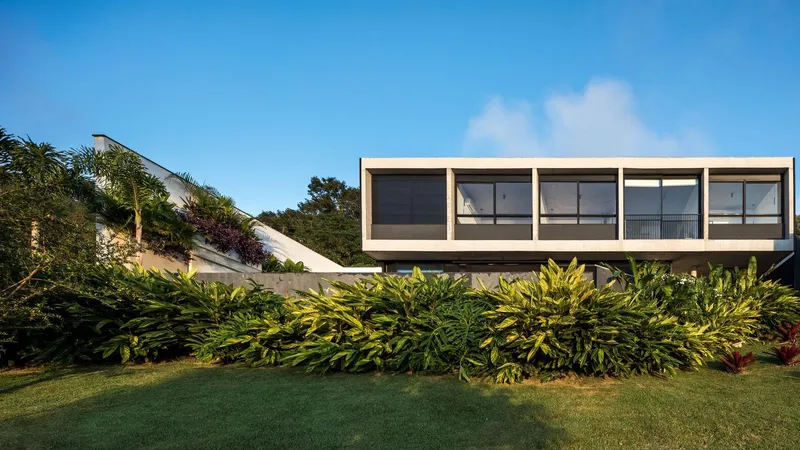
Respecting the mandatory setback from the riverbanks, Alagado House occupies the highest section of its plot. The site’s natural slope is cleverly negotiated through a two-half-level layout:
- The lower half-level embeds a portion of the living area into the terrain, creating a sheltered, protected atmosphere.
- Above, the intimate zones — including bedrooms — are elevated, appearing to float above the landscape, separated from the ground by a subtle visual gap.
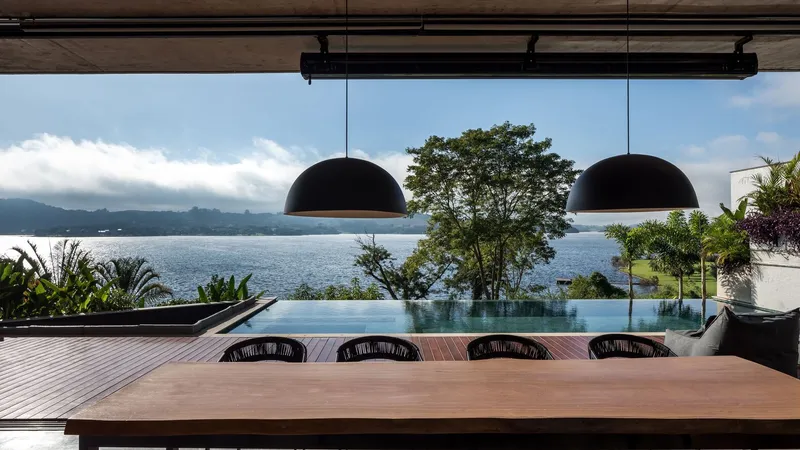
This thoughtful split not only preserves the natural gradient but also frames ever-changing vistas of the river, strengthening the home's connection to water and the surrounding Atlantic Forest.
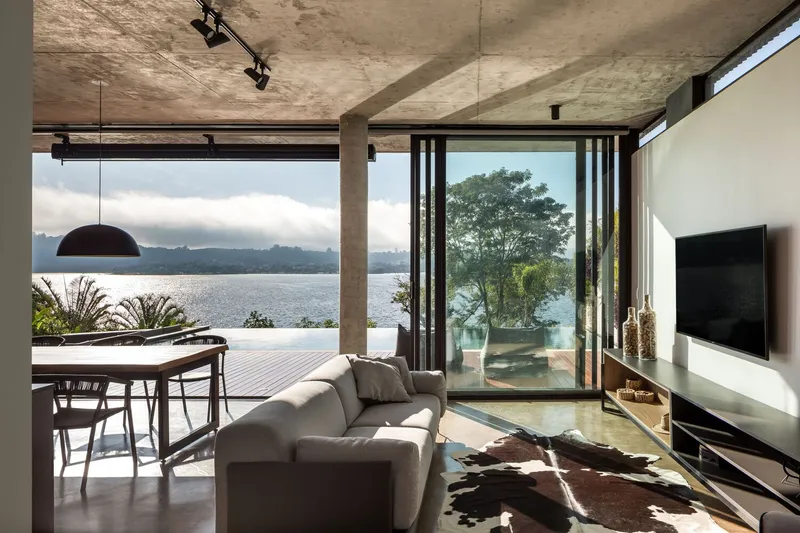
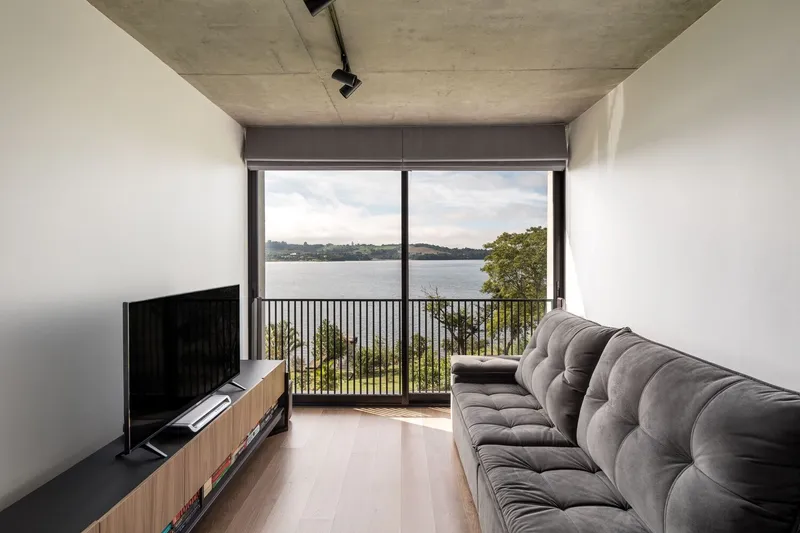
Fluid Access and Spatial Experience
Access to Alagado House offers two distinct experiences:
- A gentle side ramp flows beneath a bold cantilevered volume, linking the street level seamlessly to the riverfront.
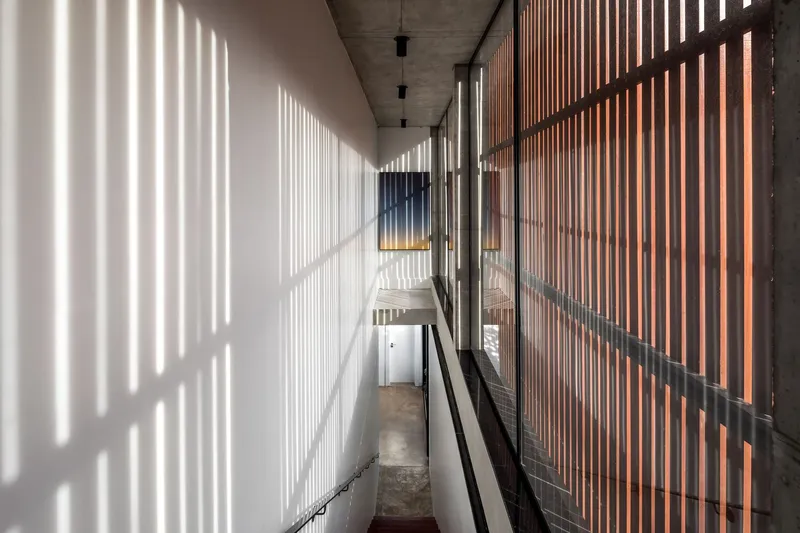
- Alternatively, a staircase invites a more formal, intimate entrance typical of traditional homes.
This dual-access system dissolves rigid thresholds, creating a fluid, immersive relationship between architecture and nature.

Modular Precision and Spatial Rhythm
The structural organization of the house is guided by a modular system, allowing a rational and rhythmic arrangement of spaces. Bedrooms line up precisely side-by-side, emphasizing modularity and repetition. This approach optimizes construction methods, favoring industrialized elements and prefabricated components for efficiency and sustainability.
By embracing modular architecture, Michel Macedo Arquitetos delivers a design that is both elegant and environmentally mindful, offering a blueprint for future sustainable housing in similar contexts.

Light, Air, and Environmental Sensibility
Large glazed openings dominate the design, ensuring that natural light floods every room. These openings can be:
- Left completely transparent to embrace the outdoors,
- Shielded with wooden brise-soleils to filter sunlight, or
- Fully closed with external shutters for protection and privacy.
Cross-ventilation is actively promoted through a combination of an internal garden and aligned openings, supporting passive cooling strategies. Such environmental consciousness reinforces the house’s sustainability credentials, providing thermal comfort while minimizing mechanical energy consumption.
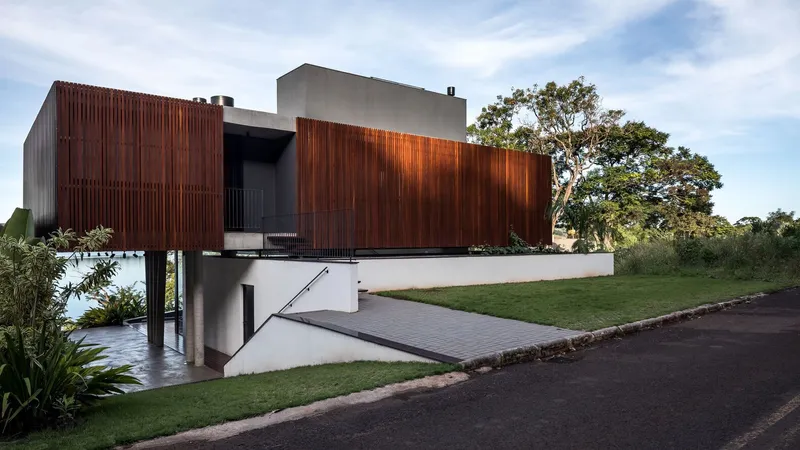

All Photographs are works of Eduardo Macarios


Popular Articles
Popular articles from the community

Tsunami Convergenics: Turning Catastrophic Ocean Forces into Underwater Housing Infrastructure
A speculative underwater settlement off the coast of Onagawa, Japan, treats tsunamis and typhoons as energy sources rather than threats.
Opera on the Sea: Driftwood Logic Shapes a Timber Opera House on Estonia's Coast
Trevor Orgill's opera house translates the entangled drift of floating timber into a civic building where wood, water, and music converge.
Temporary Home for Dogs: A Reversed Zoo Rethinks Animal Shelter Architecture
In Bucharest, a sinuous corridor and freed landscape flip the logic of containment, designing a shelter that works to make itself unnecessary.
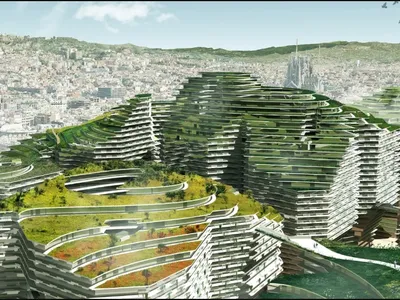
Manzana Morphosis: Stretching Barcelona's Grid into a Living Landscape for 2050
A radical reworking of the Eixample manzana turns density into a tool for generous public space, vertical ecology, and environmental performance.

Similar Reads
You might also enjoy these articles

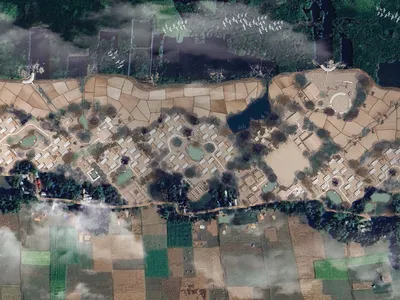
Hodi-Mandai Geram
Project Function: Preservation and revitalization of the Intangible heritage and socio-spatial identity of the Hodi by Housing, Cultural Memory Center, Sacred Grove, landscape, local tourism economy

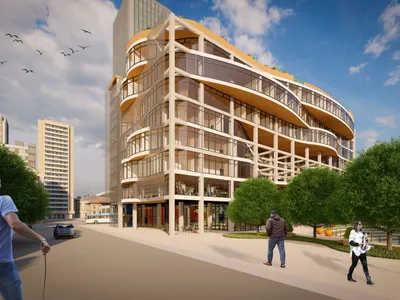
Olio Towers: A Mid-Rise for Performers That Fuses Housing, Rehearsal, and Stage
Located blocks from Houston's Theater District, this modular tower stacks living units around a central performance atrium.

Oasis: Modular Green Housing Carved into Dhaka's Urban Fabric
A shortlisted Plugin Housing entry reclaims unauthorized settlements in Dhaka with stepped concrete volumes, green roofs, and ventilation-driven design.

Black Hole: A Floating Megastructure for the Post-Physical Era
Emiliano Mazzarotto envisions a spherical, self-scaling arena where e-sports, digital hotels, and holographic stadiums replace traditional public space.

Explore Architecture Competitions
Discover active competitions in this discipline

Challenge to reimagine the Iron Throne

Photograph architecture without architects

Illustrate the lost glory of Angkor Wat - Render Challenge

Design challenge to reuse E-waste
Comments (0)
Please login or sign up to add comments
No comments yet. Be the first to comment!