
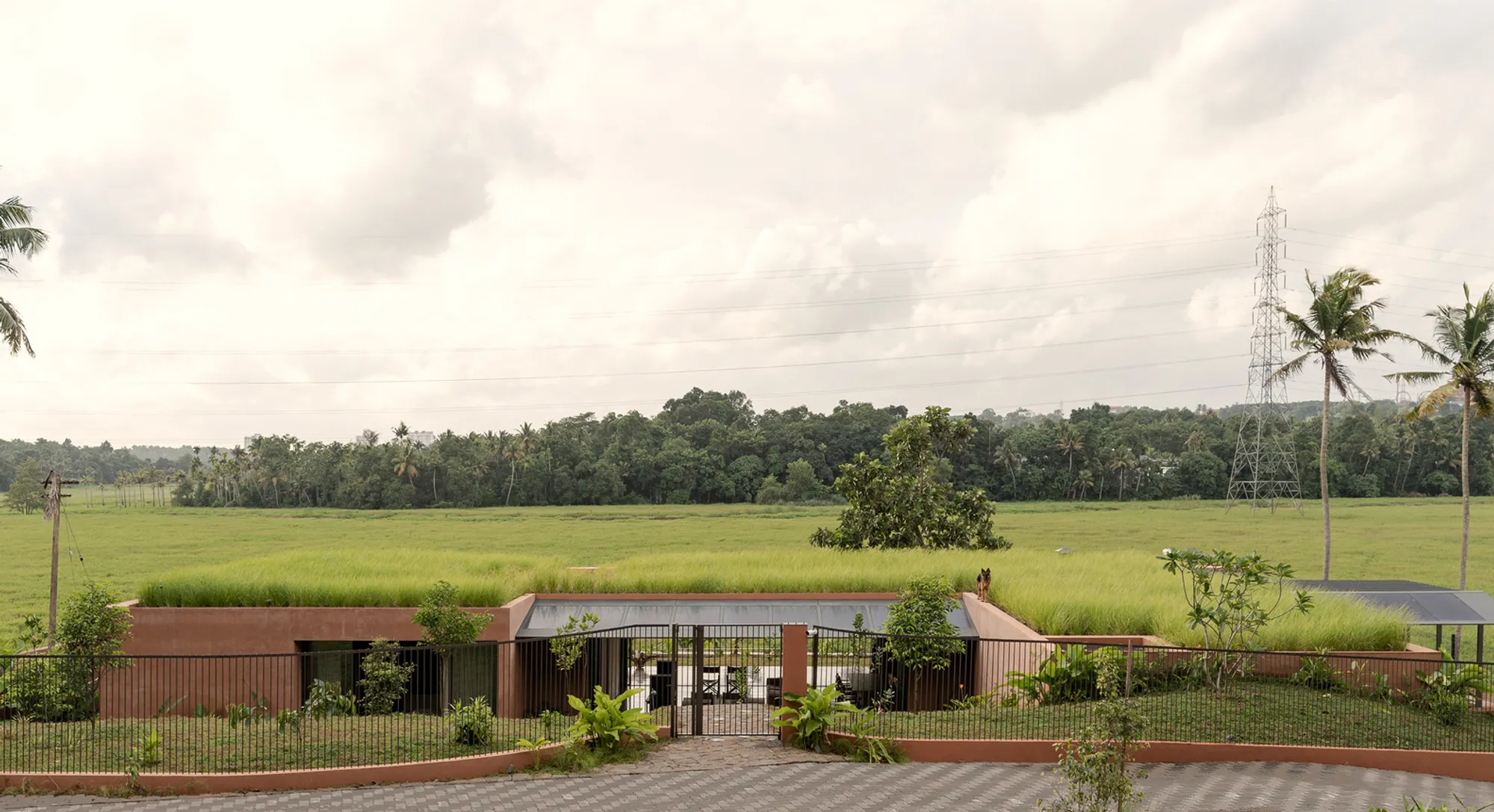
Alarine Earth Home by Zarine Jamshedji Architects: A Sustainable Earth-Integrated Residence in Kochi
Alarine Earth Home is a sustainable, earth-integrated residence in Kochi blending modern innovation with natural materials and permaculture principles.


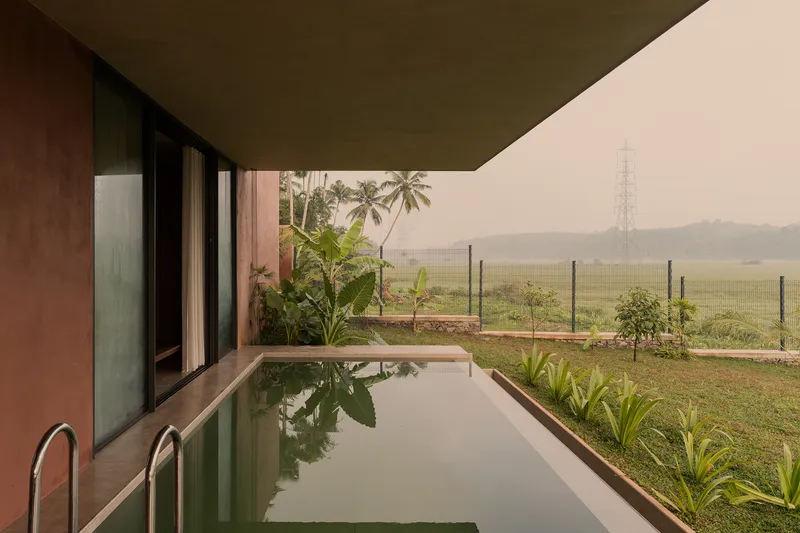
Alarine Earth Home is a visionary residential project designed by Zarine Jamshedji Architects, seamlessly merging architecture with the natural landscape of Kochi, India. The residence is a profound expression of sustainable living, born from the collaborative vision of architect Zarine Jamshedji and construction expert Cornelis Alan Beuke. Rooted in eco-conscious principles, the home is designed to blend effortlessly with its rural setting, embracing the surrounding paddy fields and incorporating green architecture, earth materials, and permaculture principles throughout.
A Home That Grows From the Land
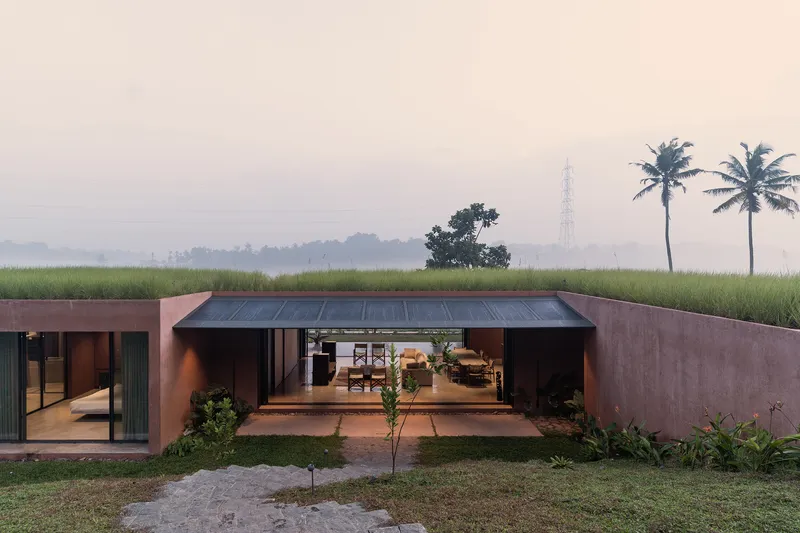
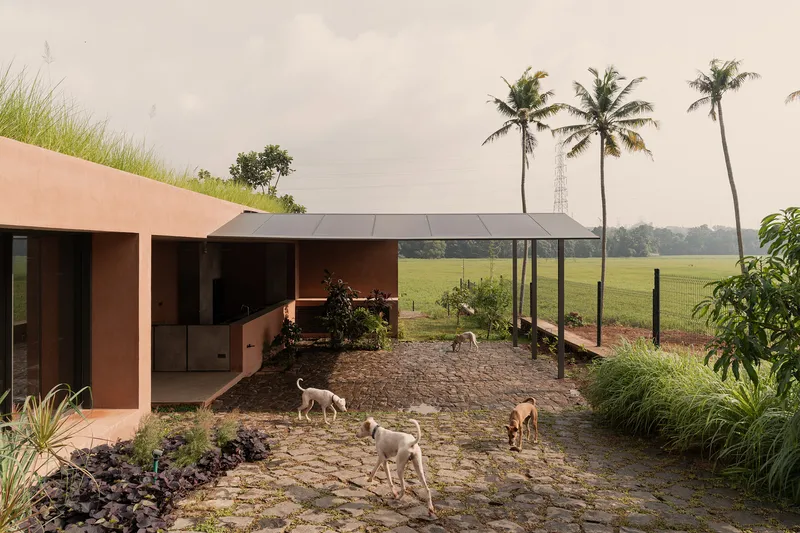
The design of Alarine Earth Home was inspired by the architects’ desire for a lifestyle rooted in simplicity, sustainability, and connection with nature. The couple sought out a site that resonated with their vision—a place where the architecture would not intrude, but rather disappear into the landscape. The result is a residence that forgoes traditional boundaries and embraces context-sensitive architecture.
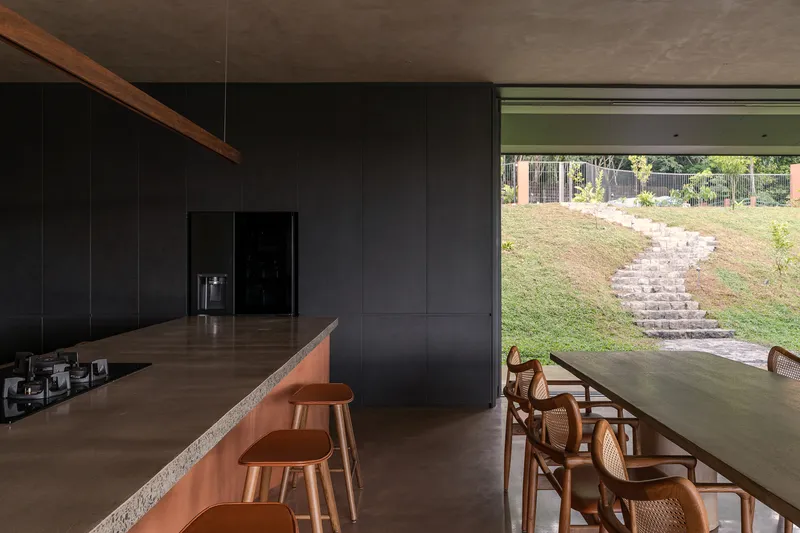
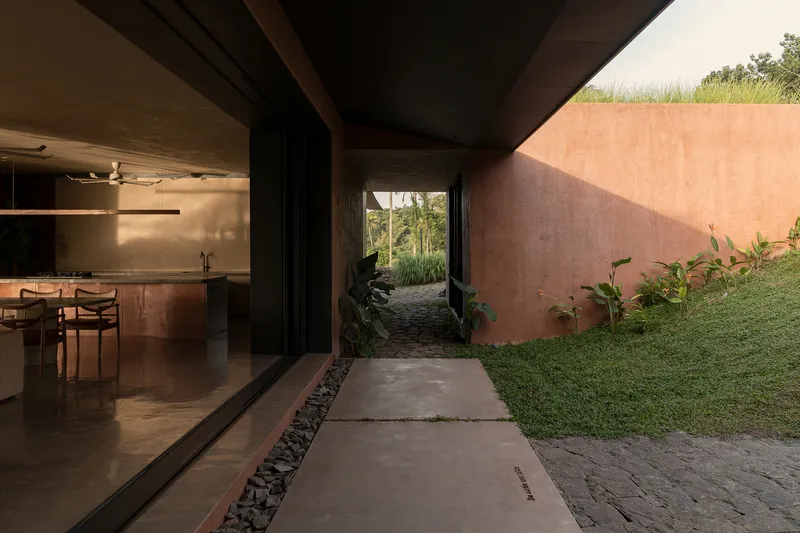
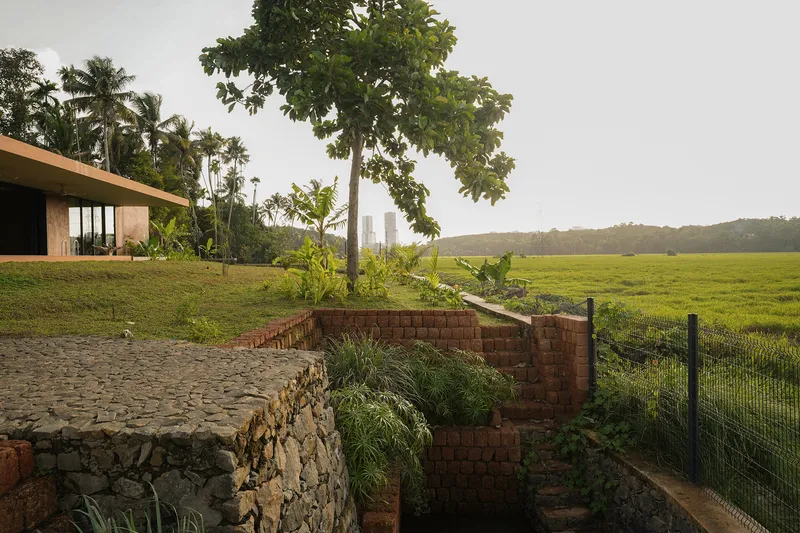
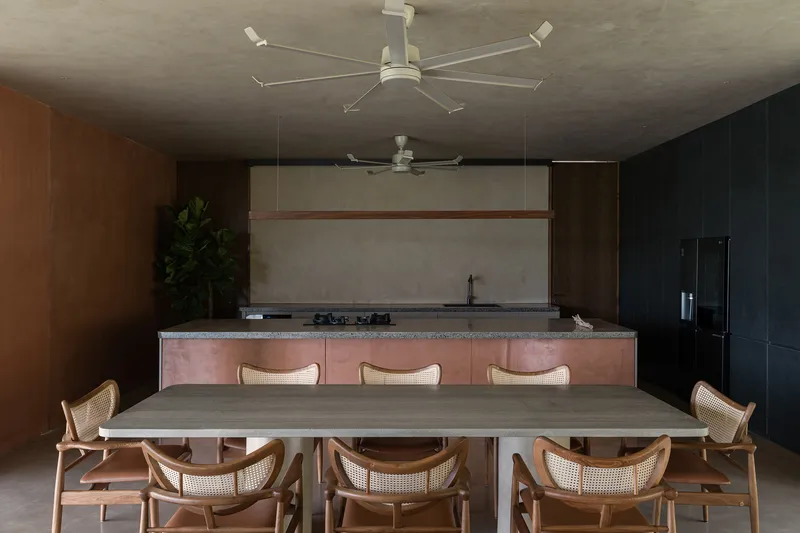
Without a defined main entrance, the home invites visitors beneath a canopy of solar panels into an open-plan communal living space. This central area—comprising living, dining, and kitchen zones—flows effortlessly into a column-free sit-out that opens directly to the landscape, creating an uninterrupted connection to the paddy fields beyond.
Innovative and Sustainable Construction
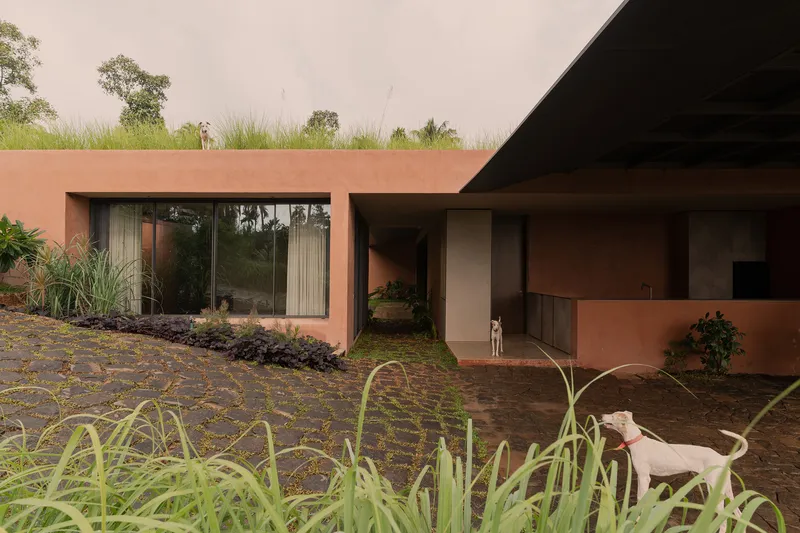
At the core of the project is a commitment to both technological innovation and earth-friendly materials. The structure employs the Schnell 3D Panel construction system, chosen for its combination of structural strength, thermal insulation, and construction speed. The entire build, including interiors and landscape, was completed in just six months—a testament to efficient planning and collaborative execution.
Low-Tech Meets High-Tech
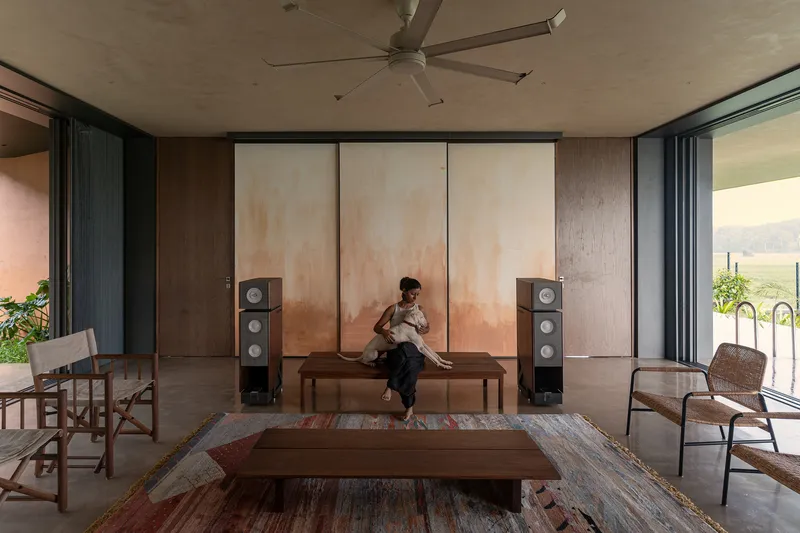
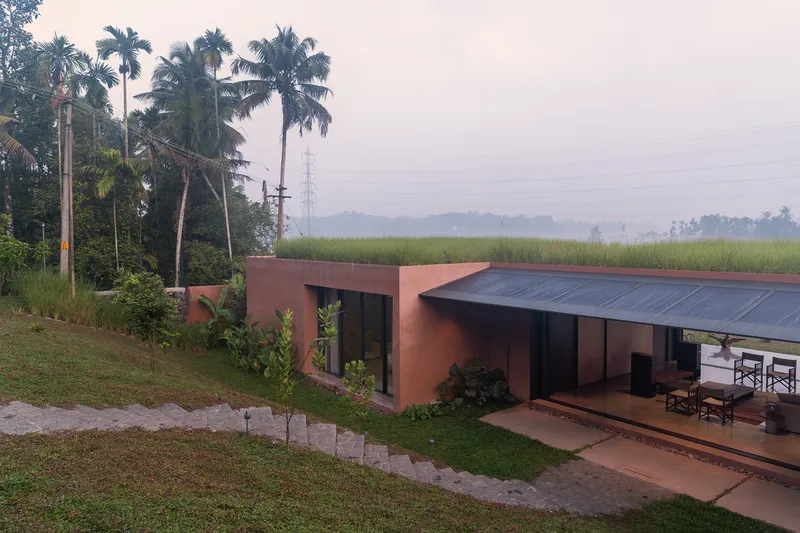
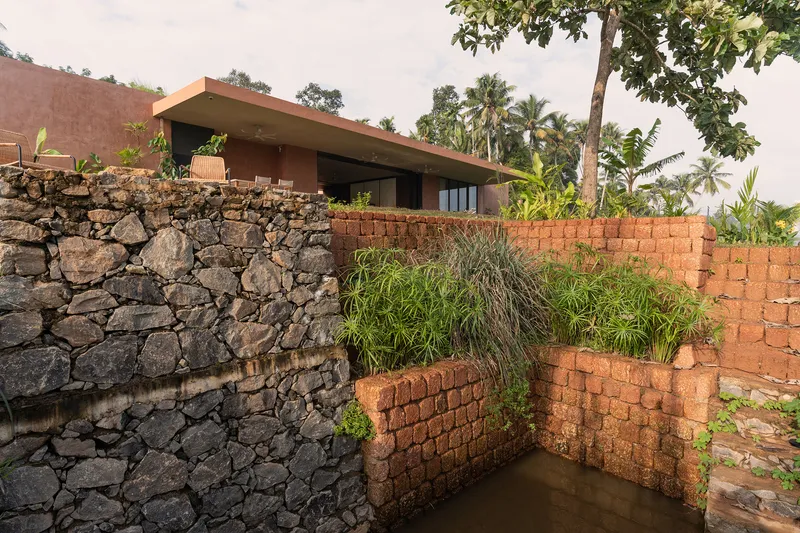
In a compelling juxtaposition, low-tech materials like recycled laterite paste from local cutting workshops were used for wall finishes. This earth-based render complements the high-performance Schnell panels, fusing modern construction techniques with traditional material reuse.
Even the furniture and lighting were crafted from leftover Schnell panels, emphasizing resourceful design. A tree root salvaged on-site was repurposed as an interior feature, while an old pumping shed's foundation became an outdoor seating area. The adaptive reuse of these elements highlights the project’s deeply sustainable ethos.
Ecological Systems and Permaculture Principles
The home’s ecological footprint is minimized through rainwater harvesting, bio-septic treatment, and landscape irrigation systems that recycle greywater. An old trench was transformed into a pond that supports both biodiversity and water management for adjacent fields.
The green roof, planted with Vetiver grass (Khus), serves both functional and aesthetic purposes—blending visually into the surrounding paddy landscape while offering thermal insulation and erosion control. The site’s natural vegetation was preserved and enhanced, including the revival of a dying teak tree, reinforcing the home’s holistic relationship with its environment.
A Design Philosophy Rooted in Responsibility
Architect Zarine Jamshedji reflects on the importance of context in design:
“Architecture can be both sensitive and considerate. We must keep seeking newer, more effective sustainable solutions. A good designer can create timeless beauty without being limited to a single style.”
This philosophy is evident in every aspect of the Alarine Earth Home—from its material choices and construction techniques to the sustainable landscaping and community-conscious design. It is not just a home, but a model for how modern residential architecture can respectfully coexist with nature while elevating everyday living.
All Photographs are works of Syam Sreesylam




Popular Articles
Popular articles from the community


The Ocean Hive: Sustainable Architecture for a Self-Sufficient Civilization at Sea
The Ocean Hive imagines sustainable architecture at sea, where modular habitats, algae, wave power and ocean waste sustain a growing colony.

Riyadh For All: Intergenerational Urban Design for Active Aging in Rabat
Riyadh For All reimagines urban design in Rabat with intergenerational co-living, adaptive courtyards, and Moroccan cultural exchange today.

Co-life: Sustainable Architecture for Age-Friendly Community Living
Co-life reimagines sustainable architecture for seniors through courtyards, rammed earth, shared gardens, and spaces designed for belonging.

Conexión: Biophilic Design Reimagines High-Rise Living in Hong Kong
Conexión reimagines high-rise living in Hong Kong through biophilic design, green facades, shared spaces, daylight, water and nature within.


Similar Reads
You might also enjoy these articles


Hodi-Mandai Geram
Project Function: Preservation and revitalization of the Intangible heritage and socio-spatial identity of the Hodi by Housing, Cultural Memory Center, Sacred Grove, landscape, local tourism economy


Olio Towers: A Mid-Rise for Performers That Fuses Housing, Rehearsal, and Stage
Located blocks from Houston's Theater District, this modular tower stacks living units around a central performance atrium.

Oasis: Modular Green Housing Carved into Dhaka's Urban Fabric
A shortlisted Plugin Housing entry reclaims unauthorized settlements in Dhaka with stepped concrete volumes, green roofs, and ventilation-driven design.

Black Hole: A Floating Megastructure for the Post-Physical Era
Emiliano Mazzarotto envisions a spherical, self-scaling arena where e-sports, digital hotels, and holographic stadiums replace traditional public space.
Explore Architecture Competitions
Discover active competitions in this discipline



Challenge to reimagine the Iron Throne


Photograph architecture without architects


Illustrate the lost glory of Angkor Wat - Render Challenge


Design challenge to reuse E-waste
Comments (0)
Please login or sign up to add comments
No comments yet. Be the first to comment!