
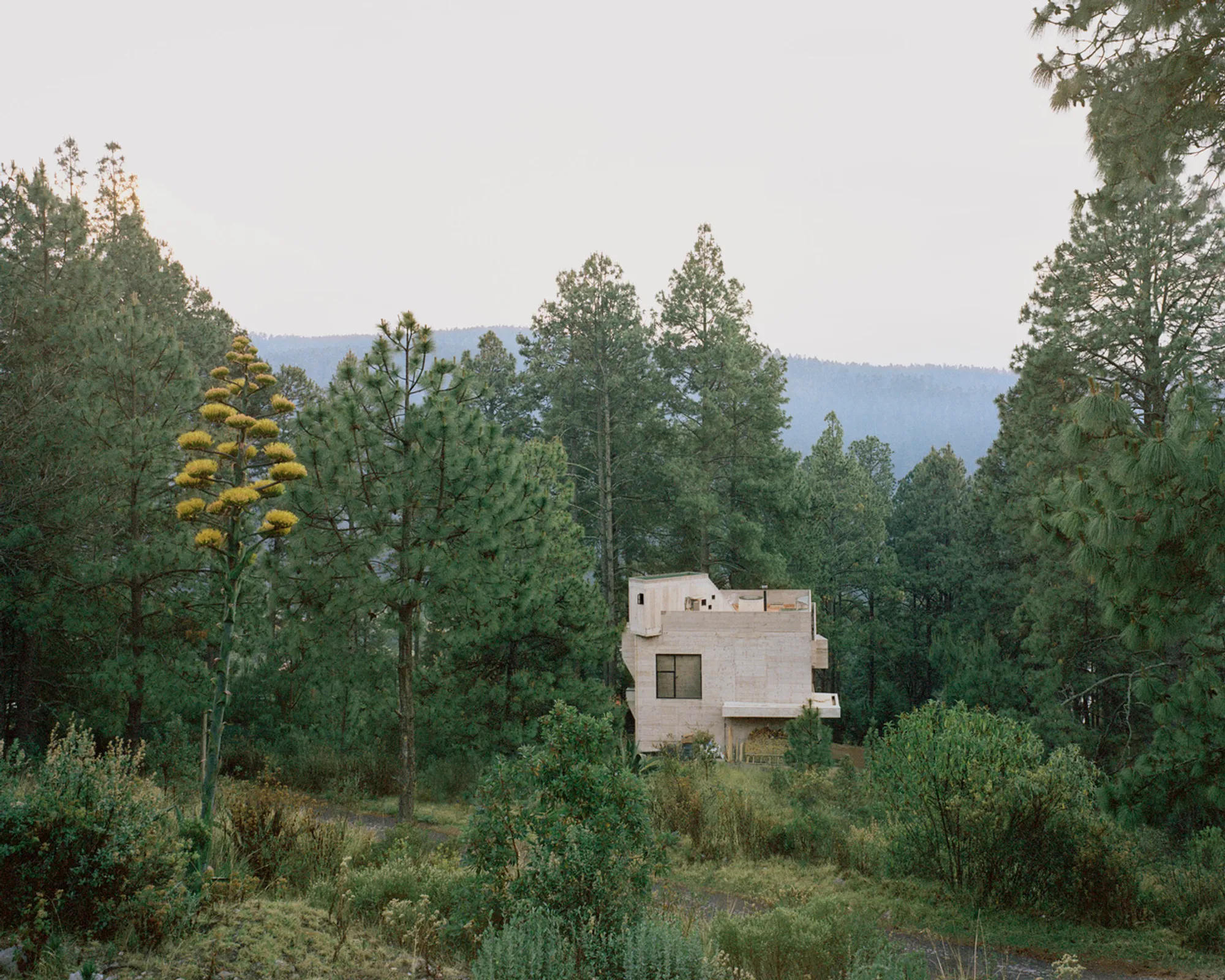
Alférez House by Ludwig Godefroy Architecture – A Forest Cabin Meets Concrete Brutalism
Alférez House by Ludwig Godefroy Architecture is a concrete forest cabin blending security, vertical design, and natural light in a compact footprint.


Concept and Inspiration
Alférez House emerges from the romantic notion of a forest cabin, combined with the protective qualities of a fortress. Nestled within the dense forest of Cañada De Alferes, the house embodies a dialogue between shelter and security. The design concept transforms the dwelling into an object seemingly deposited among the trees, creating an intimate and secluded retreat.
The project is guided by three fundamental principles: security, compactness, and verticality, ensuring a harmonious interaction between architecture and nature.
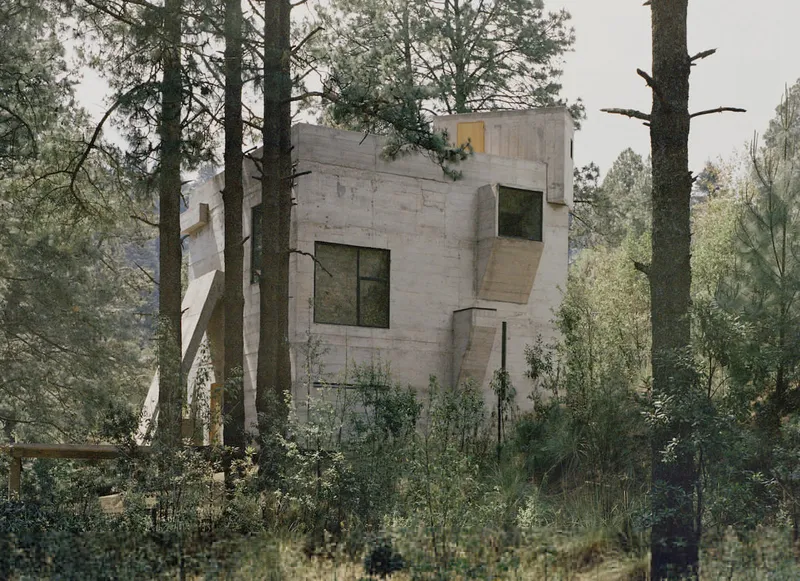
Security and Brutalism: Concrete as Protection
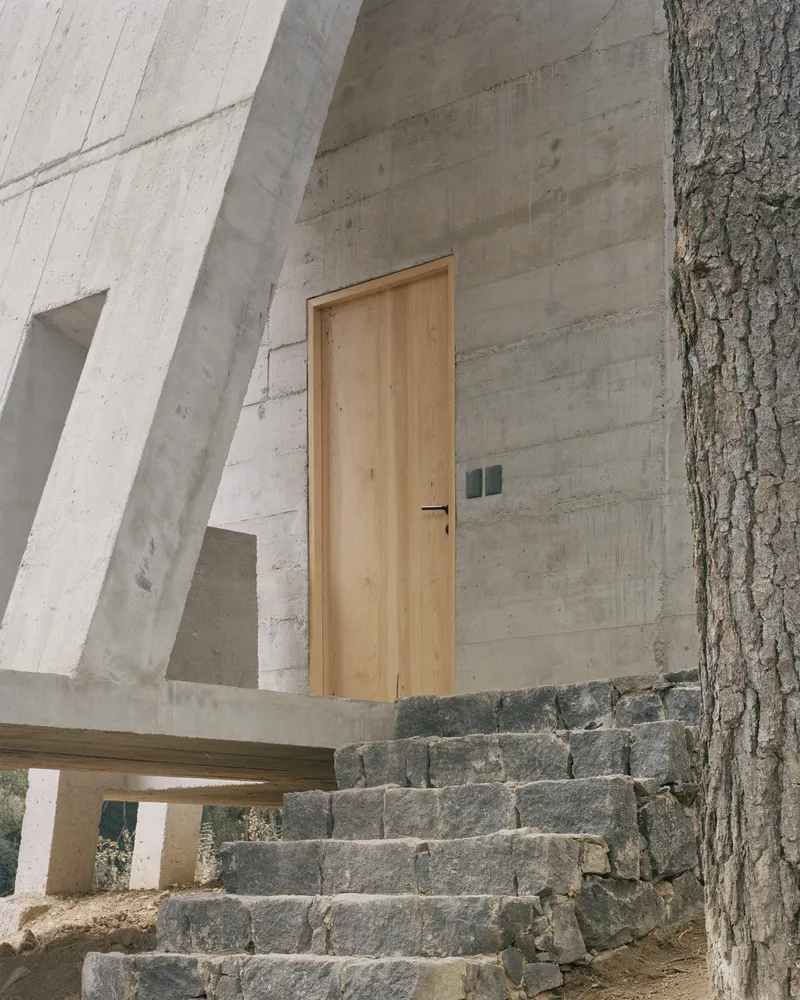
The first principle emphasizes safety and protection. The first floor is crafted in robust concrete, forming a defensive layer that safeguards its inhabitants. Windows are deliberately positioned out of reach, reinforcing security while maintaining a visual connection to the surrounding forest.
This duality creates a unique architectural language: the romantic charm of a cabin is intertwined with the strength of a concrete fortress, evoking brutalist sensibilities in its material expression.
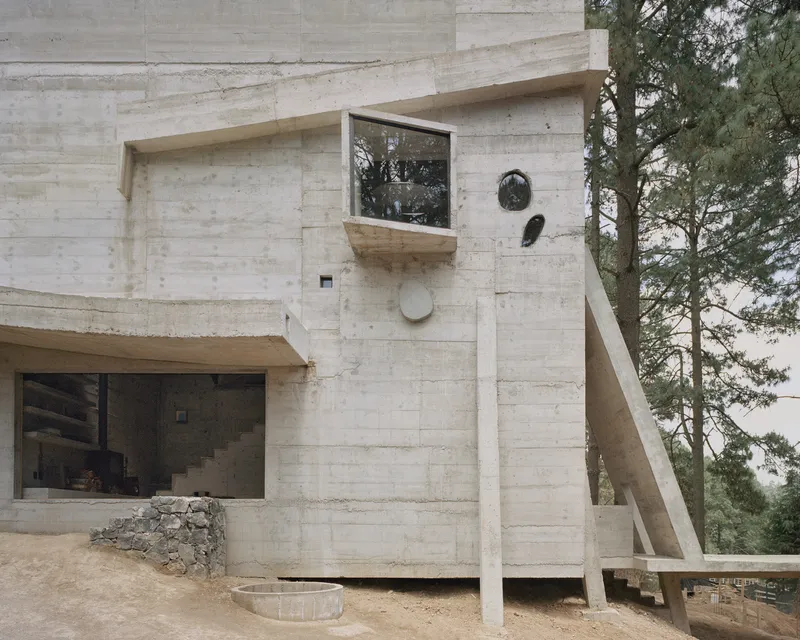
Compact Footprint: Building on a Sloped Terrain
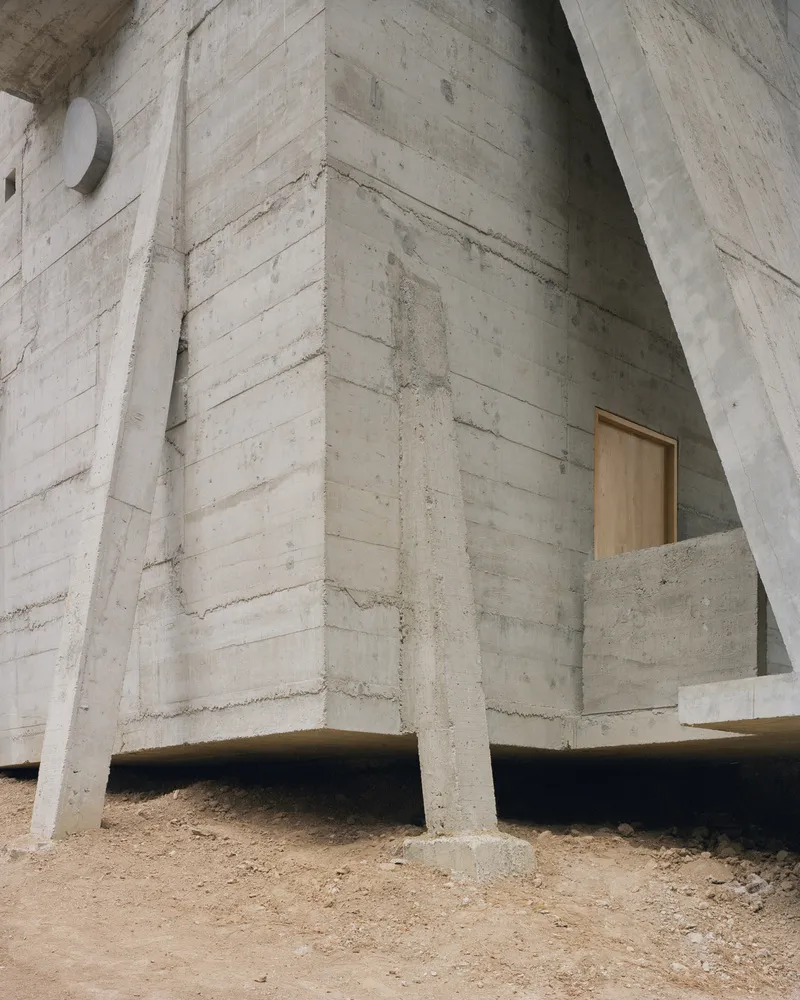
Alférez House is designed to minimize its footprint, responding to the steep, challenging terrain. The house is semi-buried on the northeast corner while cantilevering over the southwest slope, creating a sensation of floating among the pine trees.
The structure achieves a balance between lightness and solidity, with the suspended cabin-like section contrasted against the weighty concrete base. This approach reduces the need for complex foundations while integrating the house seamlessly into the natural topography.
Vertical Growth: Seeking Light Among the Trees
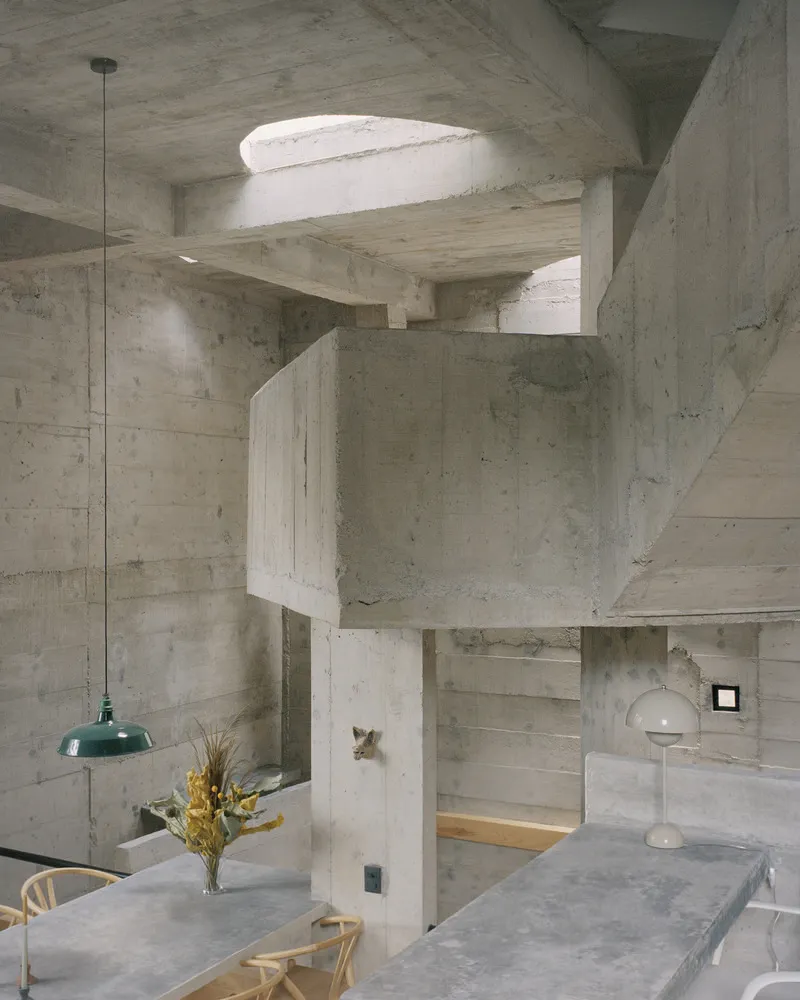
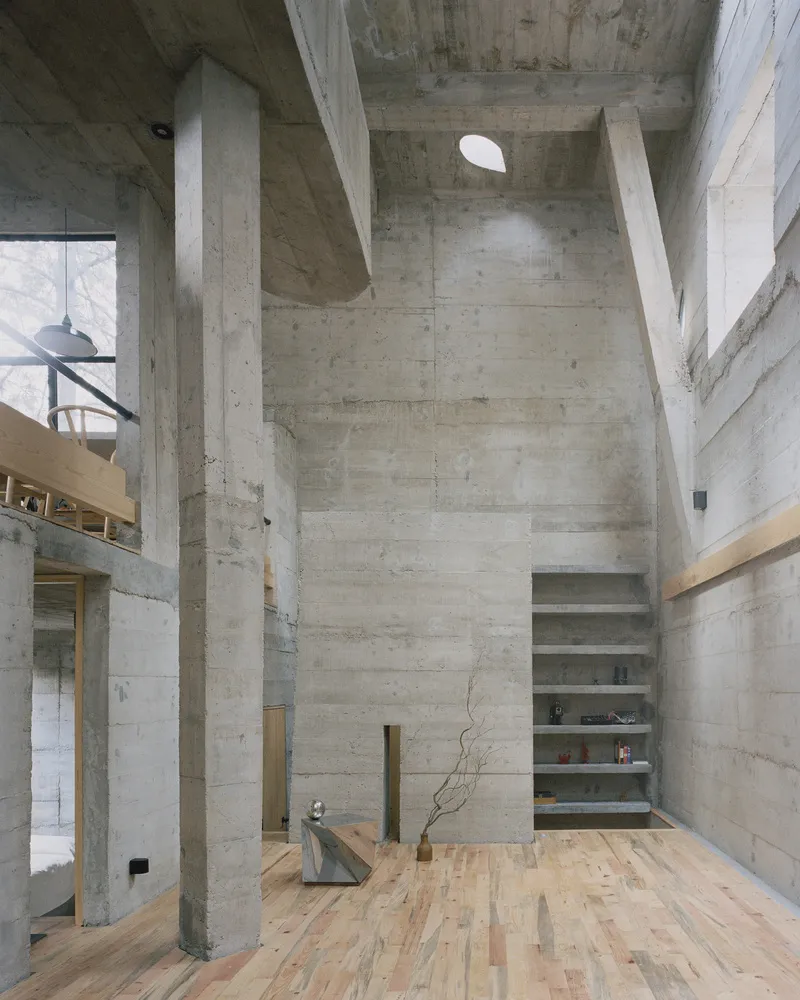
The third guiding principle is verticality. With a compact 9.5 × 9.5-meter footprint, the house grows upward, reaching for sunlight and establishing a dialogue with the towering pines. The design features semi-levels surrounding a double-height central space, enhanced by high windows and strategically placed skylights.
This vertical strategy ensures natural light permeates every interior, compensating for the reduced window openings on the secure ground floor. The result is a home that is both private and luminous, offering panoramic views of the surrounding forest canopy.
Interior Design and Spatial Experience
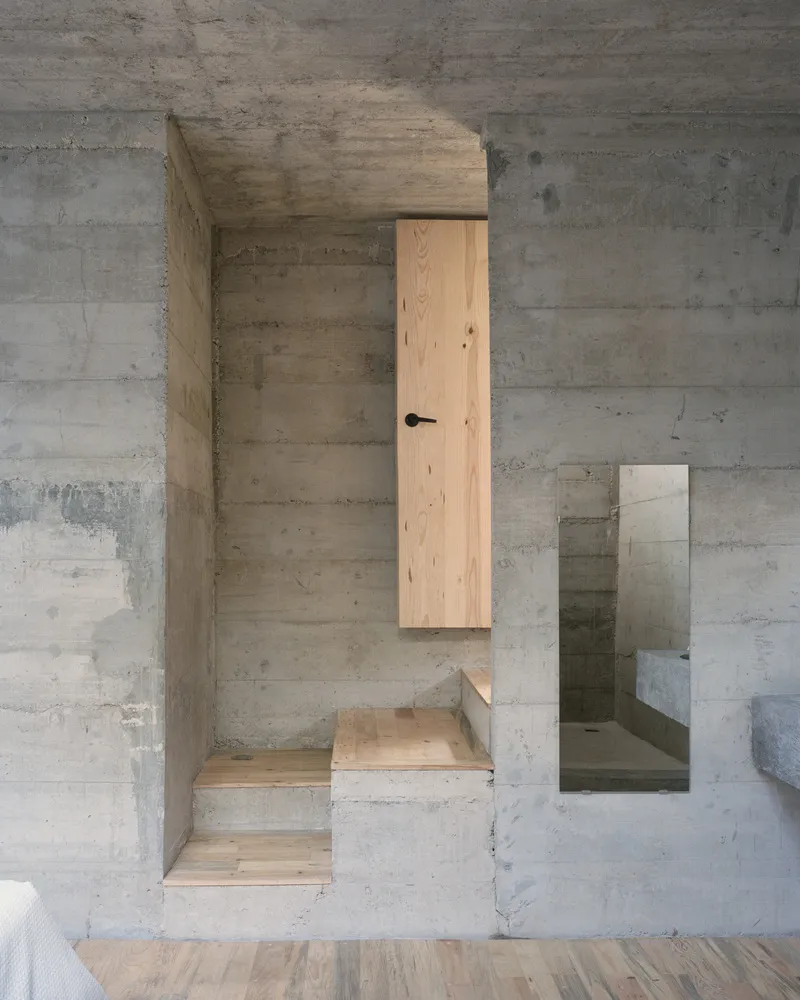
Inside, exposed beams, high ceilings, and open volumes evoke the feeling of a contemporary forest cabin. The semi-level arrangement allows for dynamic spatial flow, while the central double-height space acts as a light well, illuminating every corner. The house emphasizes connection with nature, privacy, and architectural minimalism, balancing concrete solidity with the warmth of wood and natural textures.
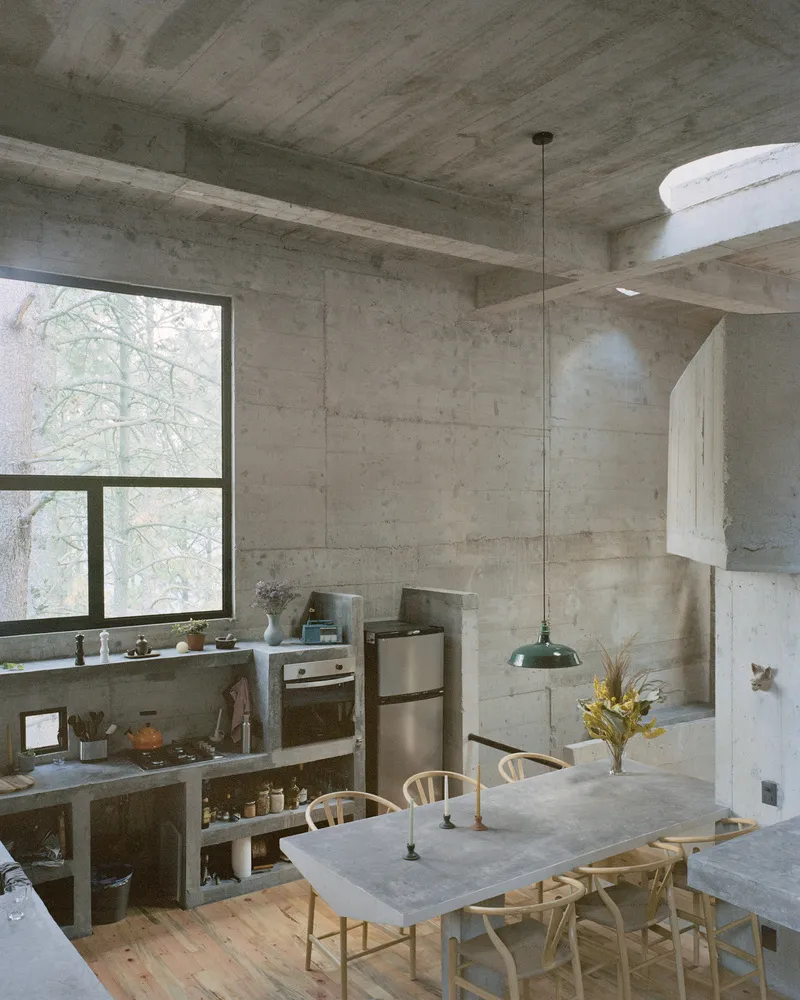
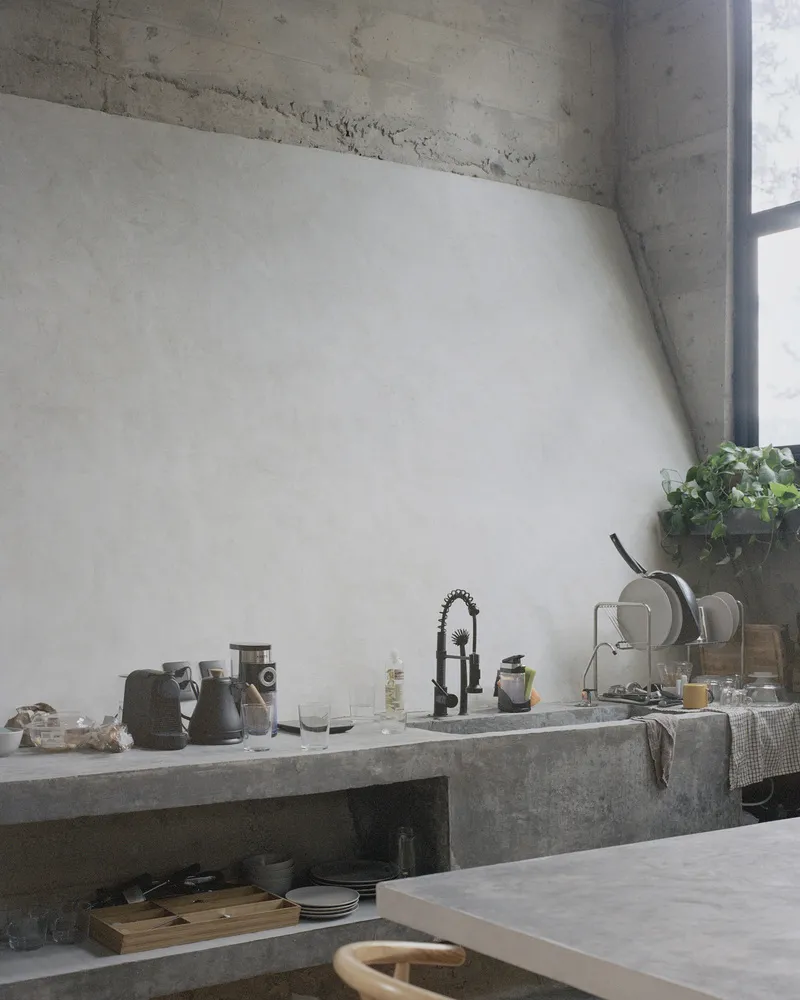
All Photographs are works of Rory Gardiner




Popular Articles
Popular articles from the community


Play: Fragments of Their World
Familiar architecture becomes modular playground design, creating safe spaces where displaced children can learn, connect, imagine and play.

The Ocean Hive: Sustainable Architecture for a Self-Sufficient Civilization at Sea
The Ocean Hive imagines sustainable architecture at sea, where modular habitats, algae, wave power and ocean waste sustain a growing colony.

Co-life: Sustainable Architecture for Age-Friendly Community Living
Co-life reimagines sustainable architecture for seniors through courtyards, rammed earth, shared gardens, and spaces designed for belonging.

Co-Life: Senior Housing Design That Reconnects Older Adults With the City
Co-Life reimagines senior housing design through healing gardens, shared streets, workshops, and a sustainable community across generations.

Similar Reads
You might also enjoy these articles


Hodi-Mandai Geram
Project Function: Preservation and revitalization of the Intangible heritage and socio-spatial identity of the Hodi by Housing, Cultural Memory Center, Sacred Grove, landscape, local tourism economy


Olio Towers: A Mid-Rise for Performers That Fuses Housing, Rehearsal, and Stage
Located blocks from Houston's Theater District, this modular tower stacks living units around a central performance atrium.

Oasis: Modular Green Housing Carved into Dhaka's Urban Fabric
A shortlisted Plugin Housing entry reclaims unauthorized settlements in Dhaka with stepped concrete volumes, green roofs, and ventilation-driven design.

Black Hole: A Floating Megastructure for the Post-Physical Era
Emiliano Mazzarotto envisions a spherical, self-scaling arena where e-sports, digital hotels, and holographic stadiums replace traditional public space.


Explore Architecture Competitions
Discover active competitions in this discipline



Challenge to reimagine the Iron Throne


Photograph architecture without architects


Illustrate the lost glory of Angkor Wat - Render Challenge


Design challenge to reuse E-waste
Comments (0)
Please login or sign up to add comments
No comments yet. Be the first to comment!