

amass Threads a Yunnan Restaurant Through the Bones of a Chengdu Commercial Complex
Spring Patio pairs raw concrete and copper cladding with pink globe lights inside a repurposed Temple Lane building in Chengdu, China.


There is a particular kind of restaurant design that treats an existing building like a blank canvas, scrubbing it clean before overlaying a new identity. Spring Patio, completed in 2024 by Chengdu-based studio amass, does the opposite. Situated inside the renovated Temple Lane commercial complex in Chengdu, this 410 m² Yunnan restaurant and bar was designed to let the host structure remain visible, treating exposed concrete beams, raw columns, and brick infill not as problems to be concealed but as collaborators in the atmosphere.
What makes the project genuinely interesting is its layering strategy. Rather than imposing a single material story, amass introduces a controlled set of new elements: copper-toned panels, green-painted steel, translucent glass partitions, and pink globe pendant lights. Each insertion reads as lightweight and temporary against the heavy permanence of the concrete frame. The result is a space that feels simultaneously unfinished and highly considered, a tension that suits the social looseness of a restaurant far more than a polished fit-out ever could.
A Facade That Reads Like a Section
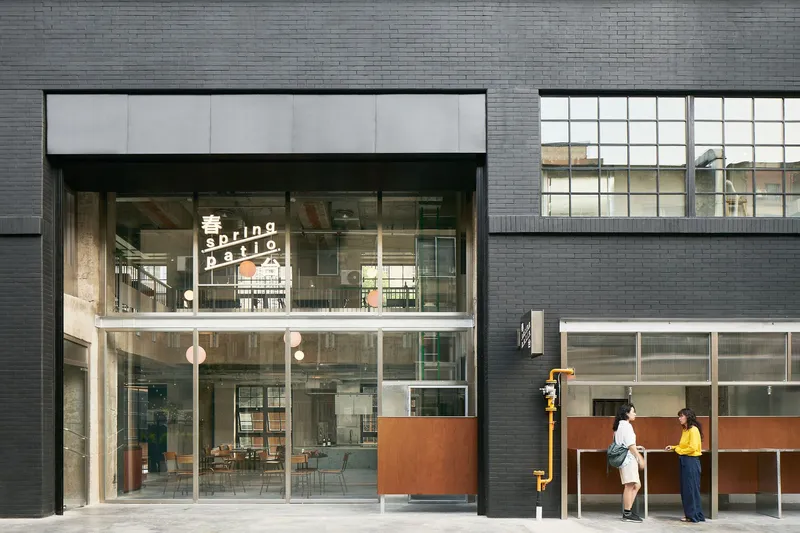
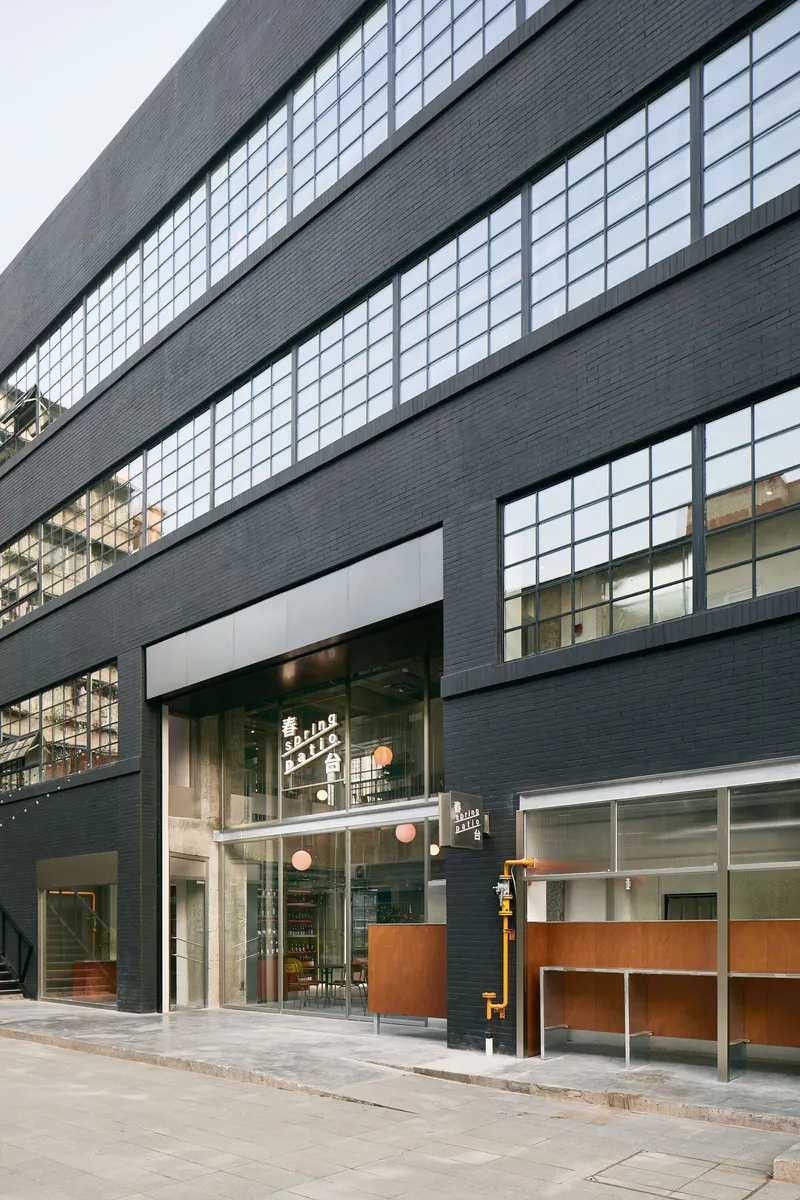
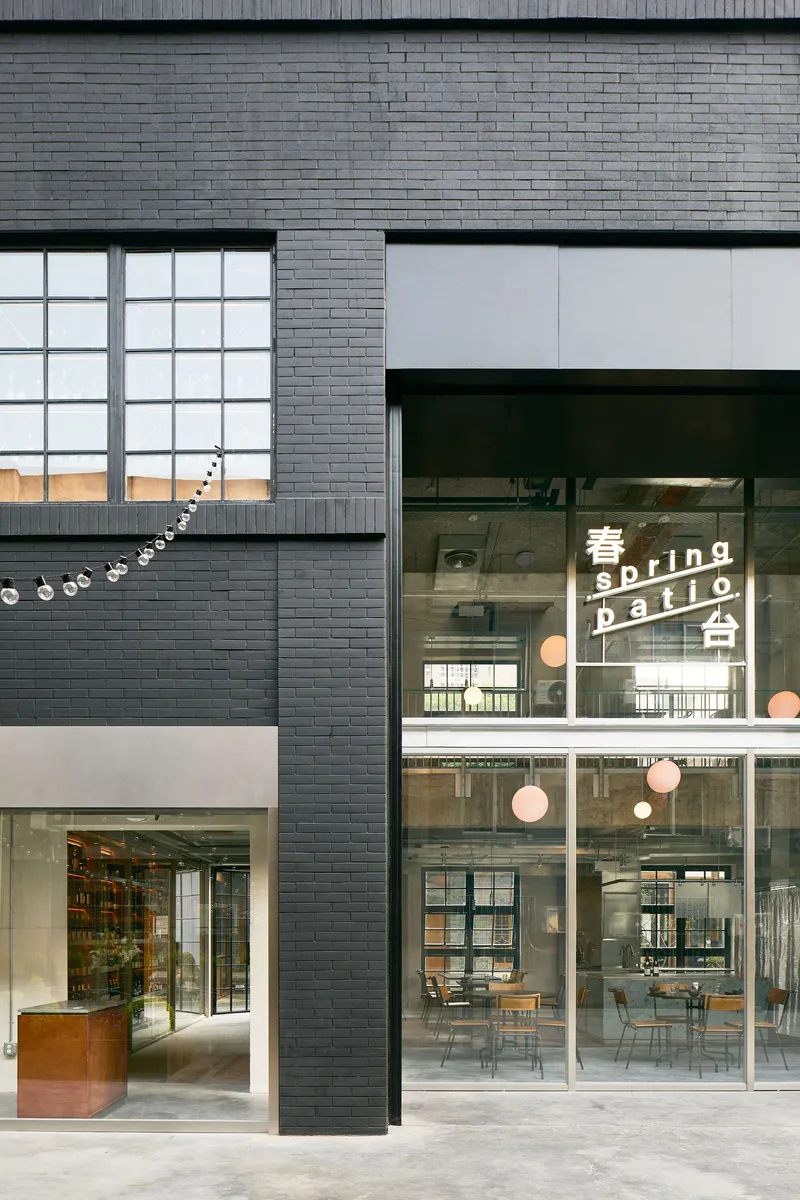
The street presence of Spring Patio is layered and legible. Dark brick cladding wraps the exterior in horizontal bands, punctuated by gridded glass block ribbon windows and a double-height glazed cafe entrance. From the sidewalk, the facade reads almost like a section drawing: you can see the structural bays, the mezzanine levels, and the rhythm of the interior partitions through the glass. At dusk, the string lights and warm glow from the copper-clad reception desk pull the eye in, but during the day, the massing feels quieter, almost civic.
The angled metal awning and glass block windows at the upper level give the building an industrial character that resists the polished retail language typical of Chengdu's commercial developments. It is a deliberate choice, rooting the restaurant's identity in its structural honesty before you step through the door.
Entrance and the Glass Block Threshold
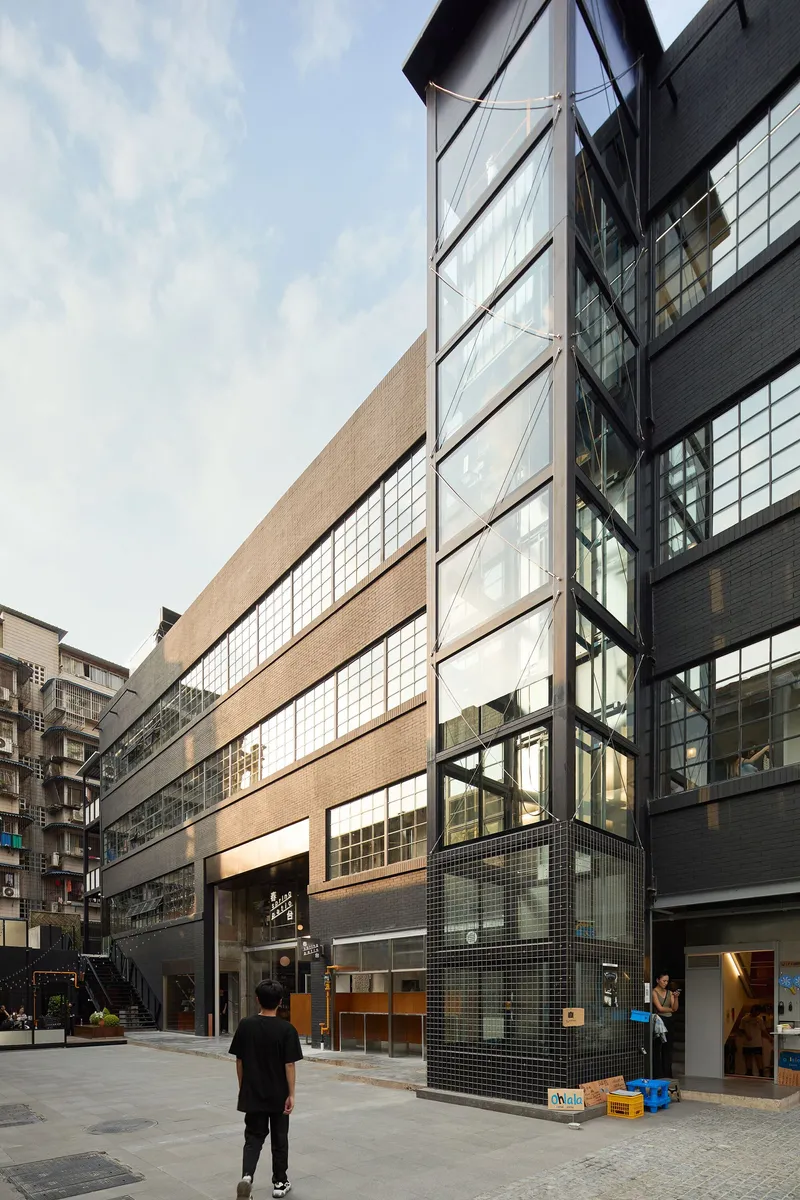
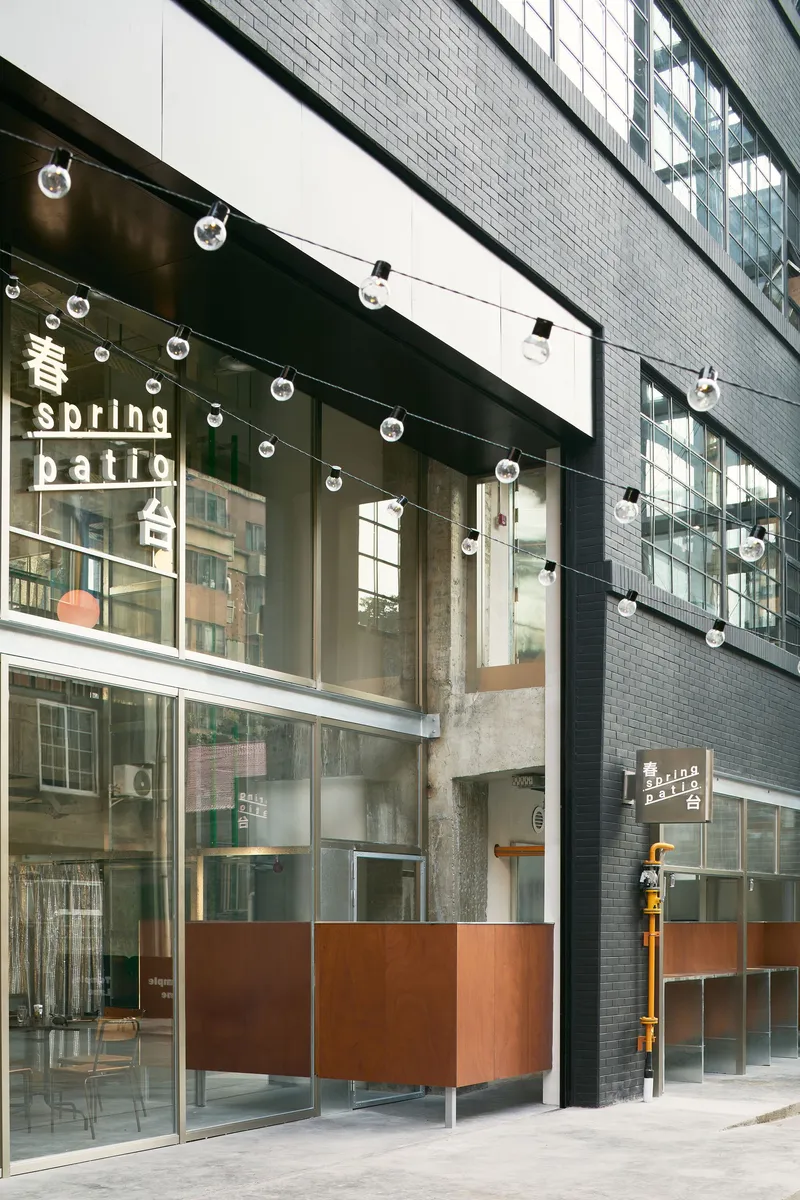
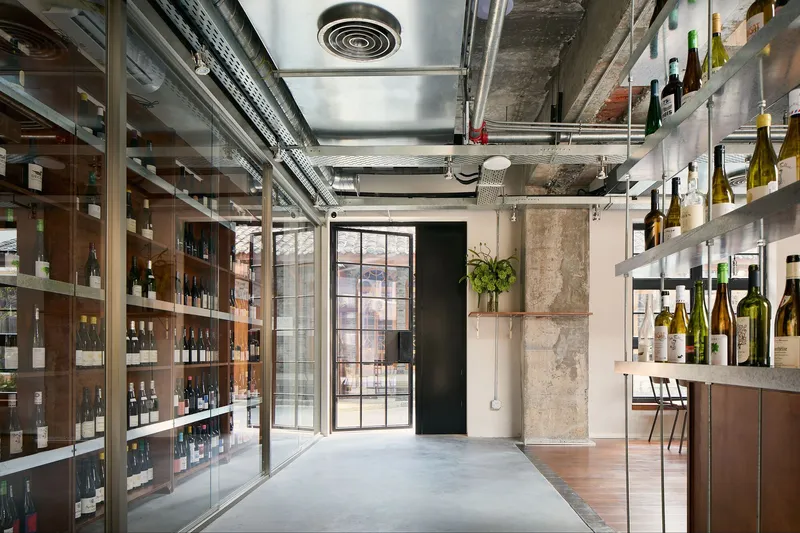
Moving from street to interior, amass orchestrates a careful transition. The dark awning compresses the threshold, while the globe string lights and the warm copper of the reception desk signal hospitality without over-performing. The entry corridor itself, lined with glass-fronted wine shelving and gridded steel-framed doors, operates as a decompression chamber between the noise of the street and the dining room beyond.
The glass block ribbon window on the upper facade deserves attention on its own terms. It diffuses light into the mezzanine level without creating direct views, keeping the upper floor feeling sheltered while still connected to the rhythm of the street. It is a simple move, but it earns its place.
Copper and Concrete: Material Dialogue in the Dining Room
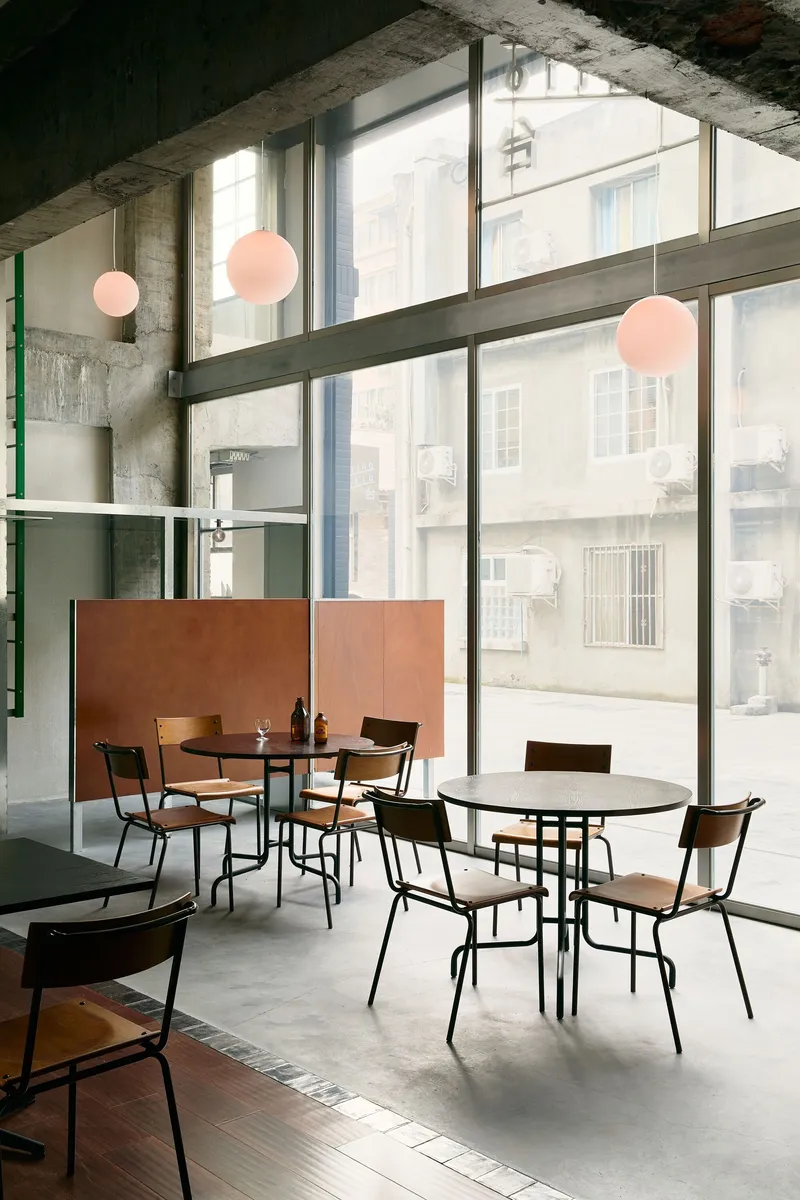
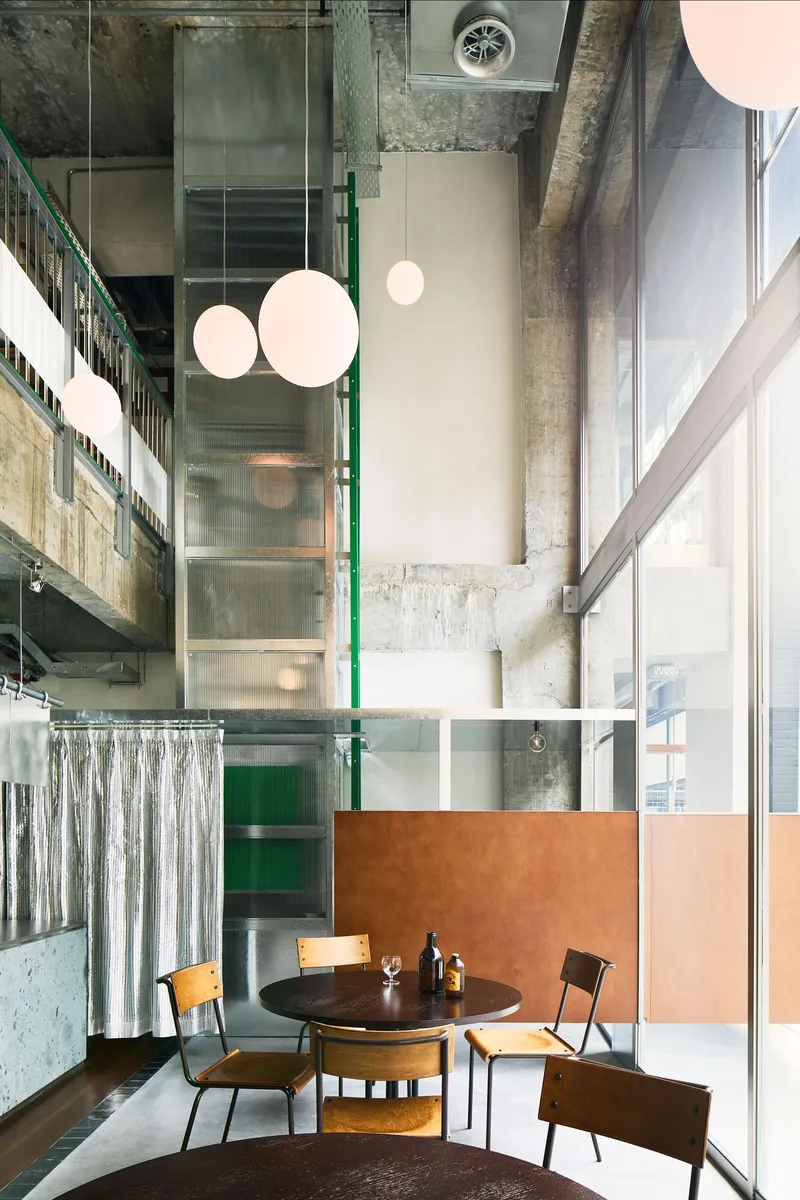
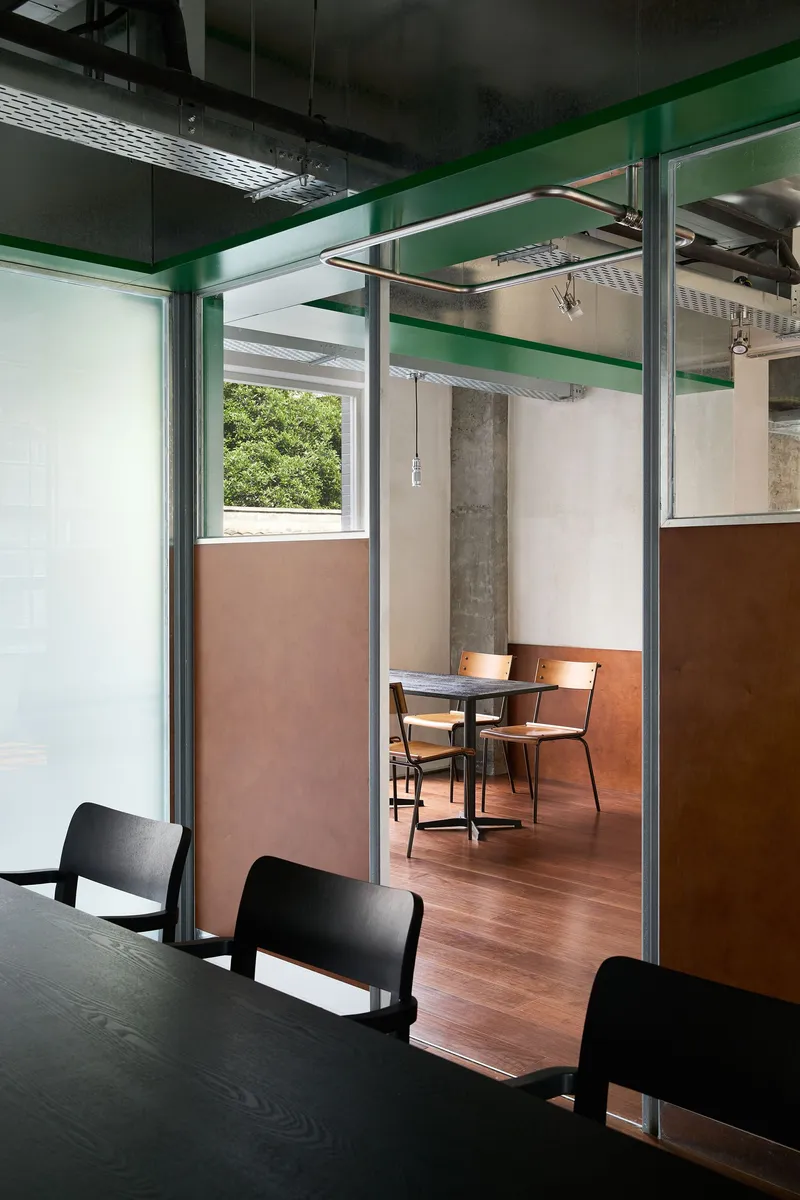
The primary dining space is defined by its material contrasts. The exposed concrete ceiling, with its visible formwork grain and ventilation ducts, sets a tough, industrial baseline. Against this, the copper-toned partition panels create warmth and intimacy at the human scale. These panels serve as seating dividers, separating tables without enclosing them, a move that keeps the volume feeling generous while giving each group of diners a sense of territory.
The pink globe pendant lights are the most overt decorative gesture in the project, and they work because everything around them is restrained. Suspended at varying heights from the concrete beams, they create a secondary ceiling of soft light that floats below the raw infrastructure. It is a classic technique, and amass deploys it with enough discipline that it avoids becoming a gimmick.
The Bar as Spatial Anchor
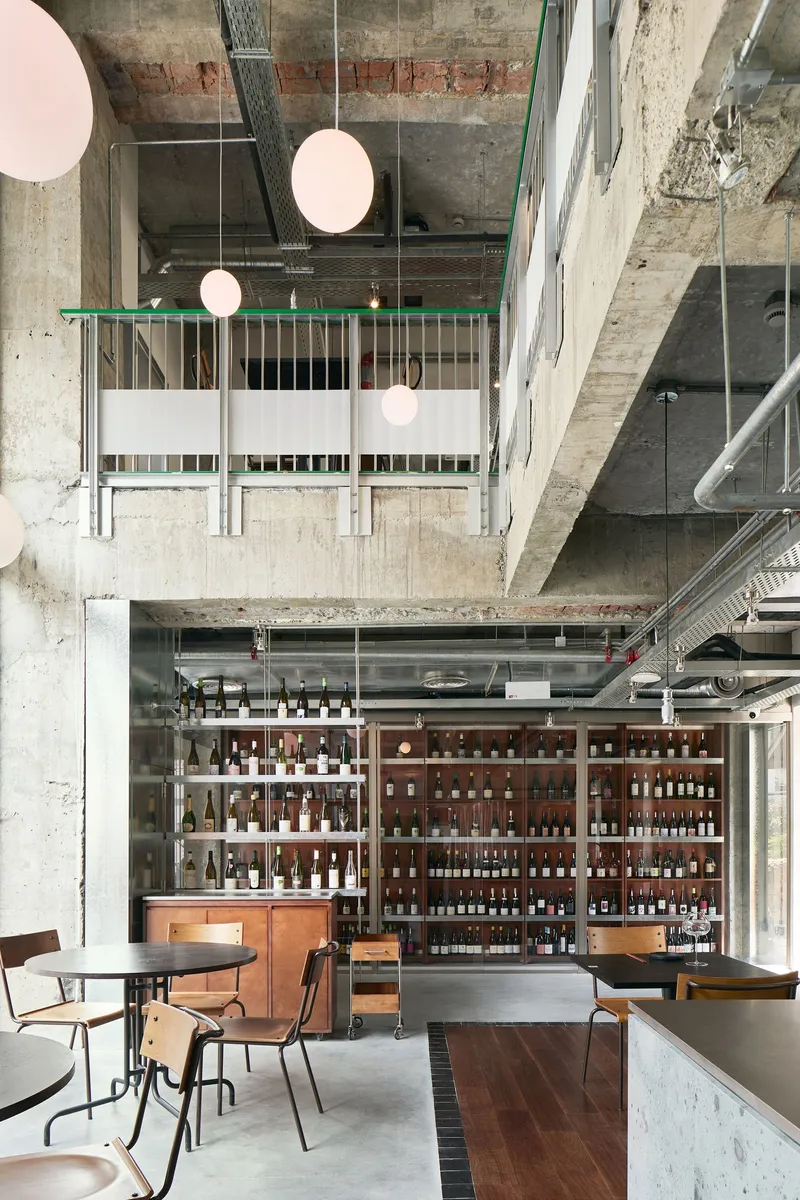
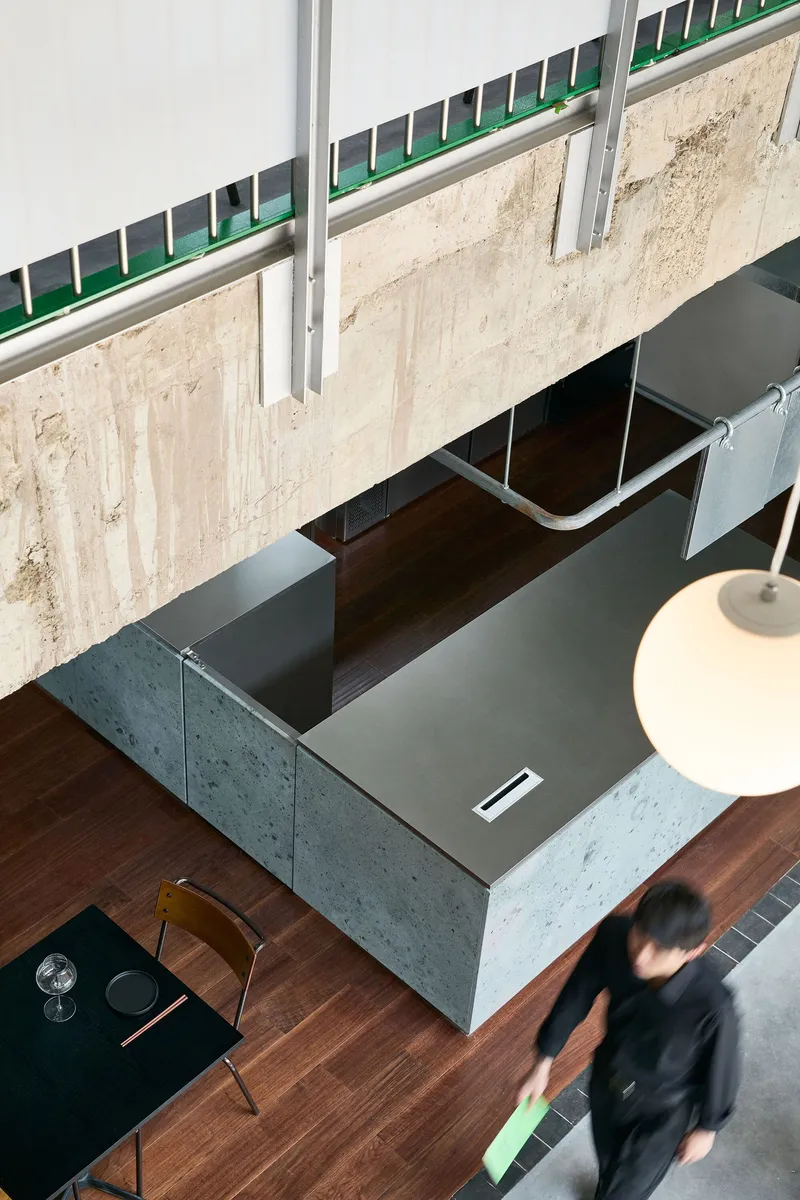
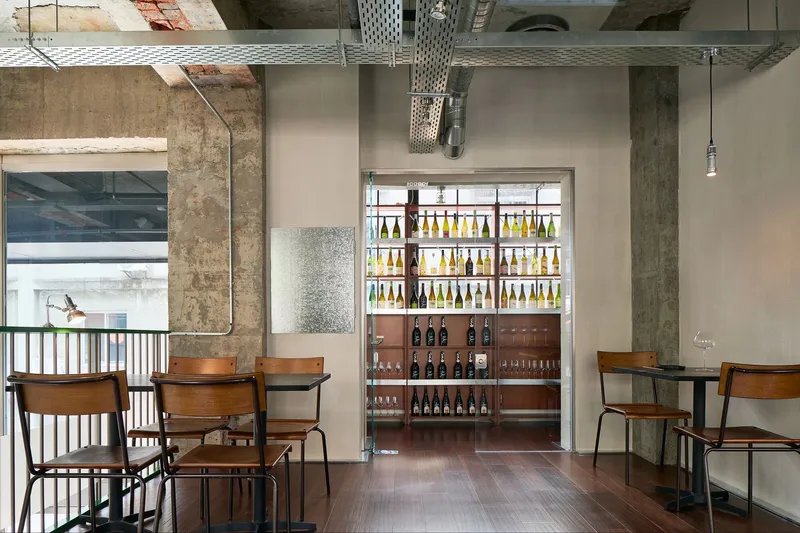
The bar counter occupies a central position, visible through translucent glass partitions and framed by exposed concrete columns. Its concrete body with walnut trim bridges the material palette of the old building and the new insertions. The backlit bottle display shelving behind the bar becomes an almost theatrical backdrop, viewed through layers of structure and perforated metal ductwork. This depth of field, seeing through multiple planes simultaneously, is one of the project's strongest spatial qualities.
The overhead view of the reception counter reveals the care taken with detail: the walnut trim is precise against the rough concrete, and the proportions of the counter invite casual leaning as much as formal ordering. It is a piece of furniture that also functions as architecture.
Green Steel, Translucent Glass, and Borrowed Views
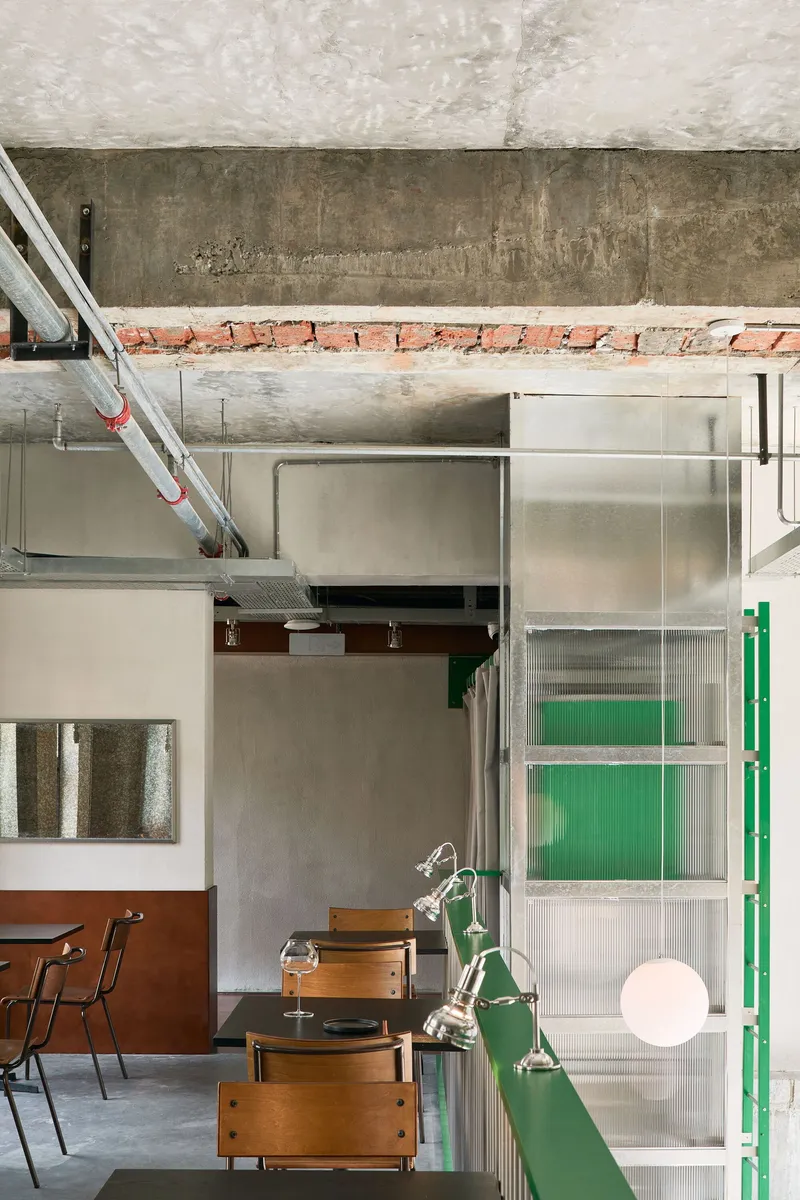
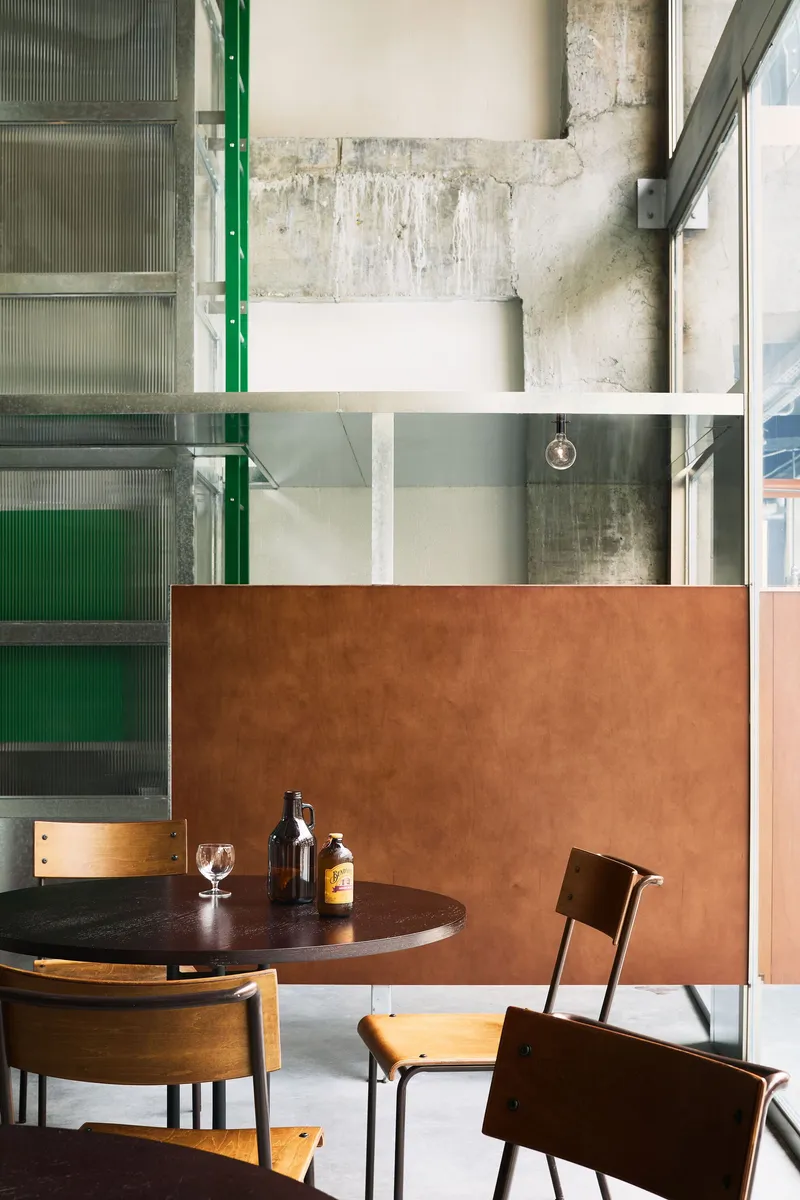
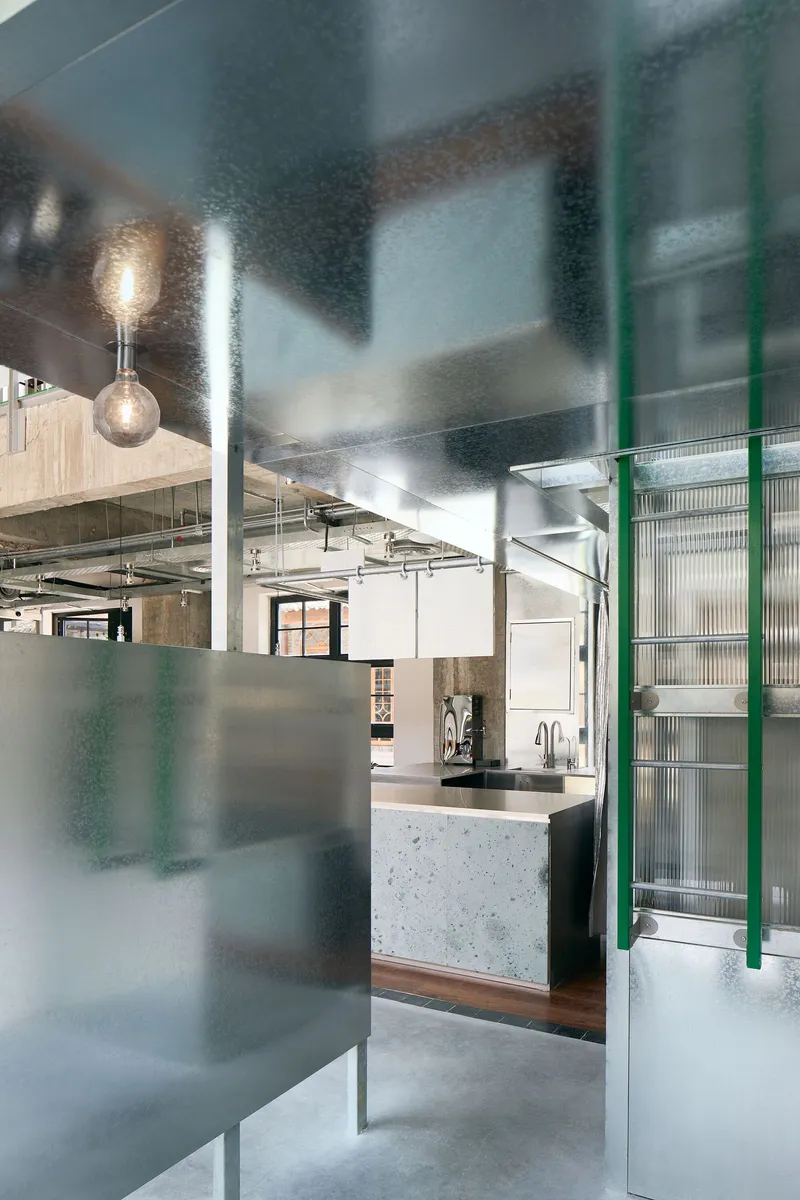
The translucent glass partitions framed in green-painted steel are perhaps the most characterful detail in the project. They divide spaces without severing them, allowing blurred silhouettes and diffused light to pass between zones. Where a green steel frame meets a concrete beam or an exposed brick soffit, the junction is left honest: new and old do not pretend to be the same age. The green itself, a muted industrial tone rather than a decorative colour, reinforces the sense that these partitions are infrastructure, not decoration.
amass uses these panels to create borrowed views throughout the restaurant, so that seated diners catch abstracted glimpses of the bar, the courtyard, or other tables. The effect is cinematic: the space unfolds in layers rather than revealing itself all at once.
Raw Ceilings and the Honesty of Services
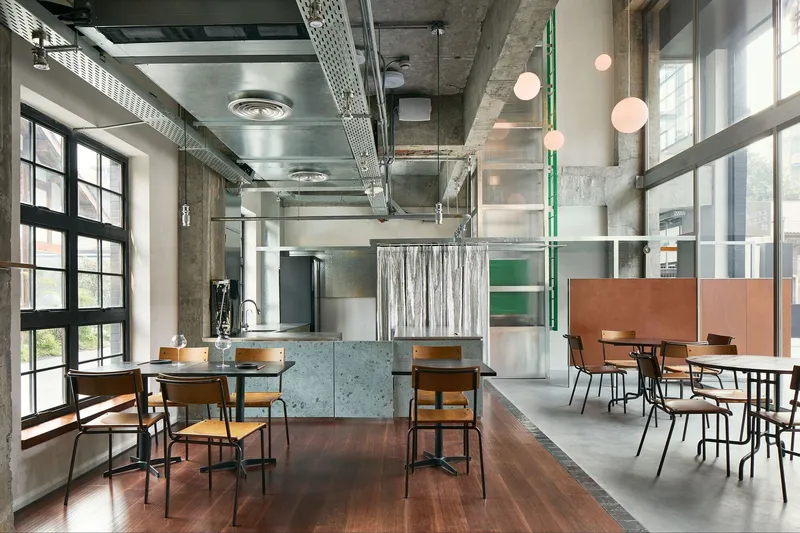
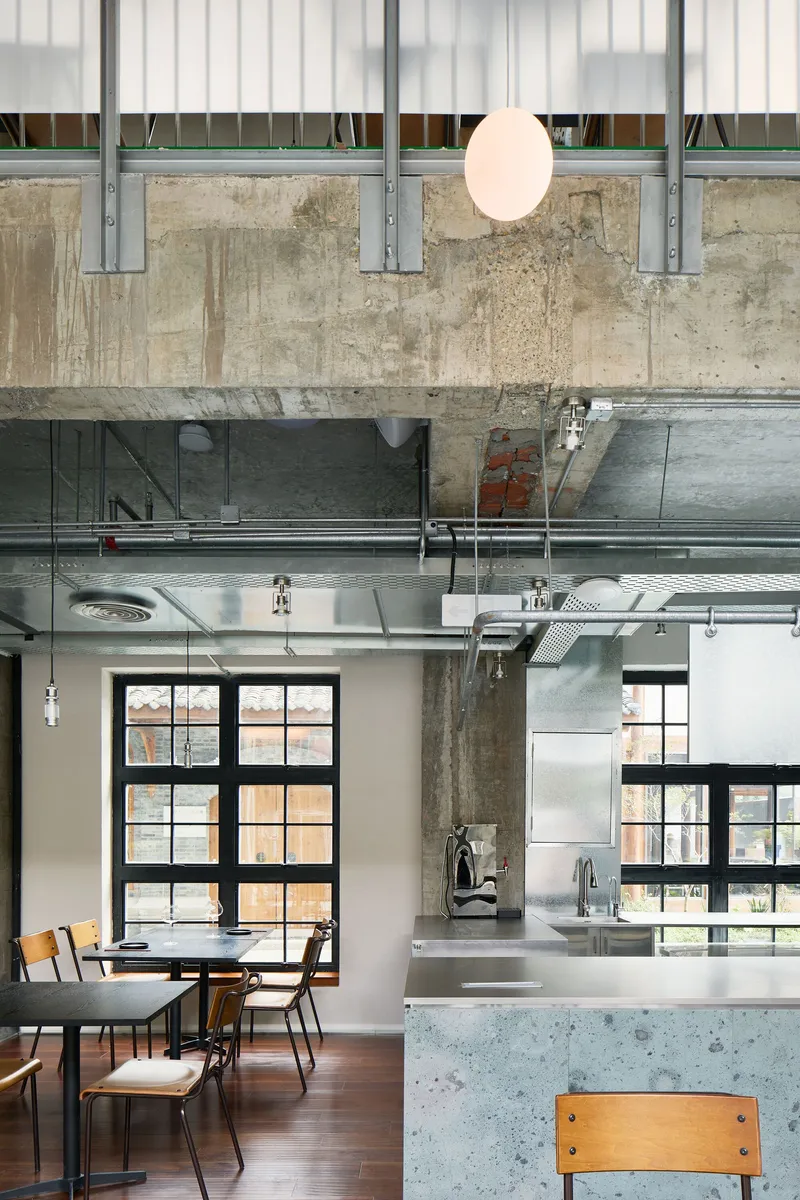
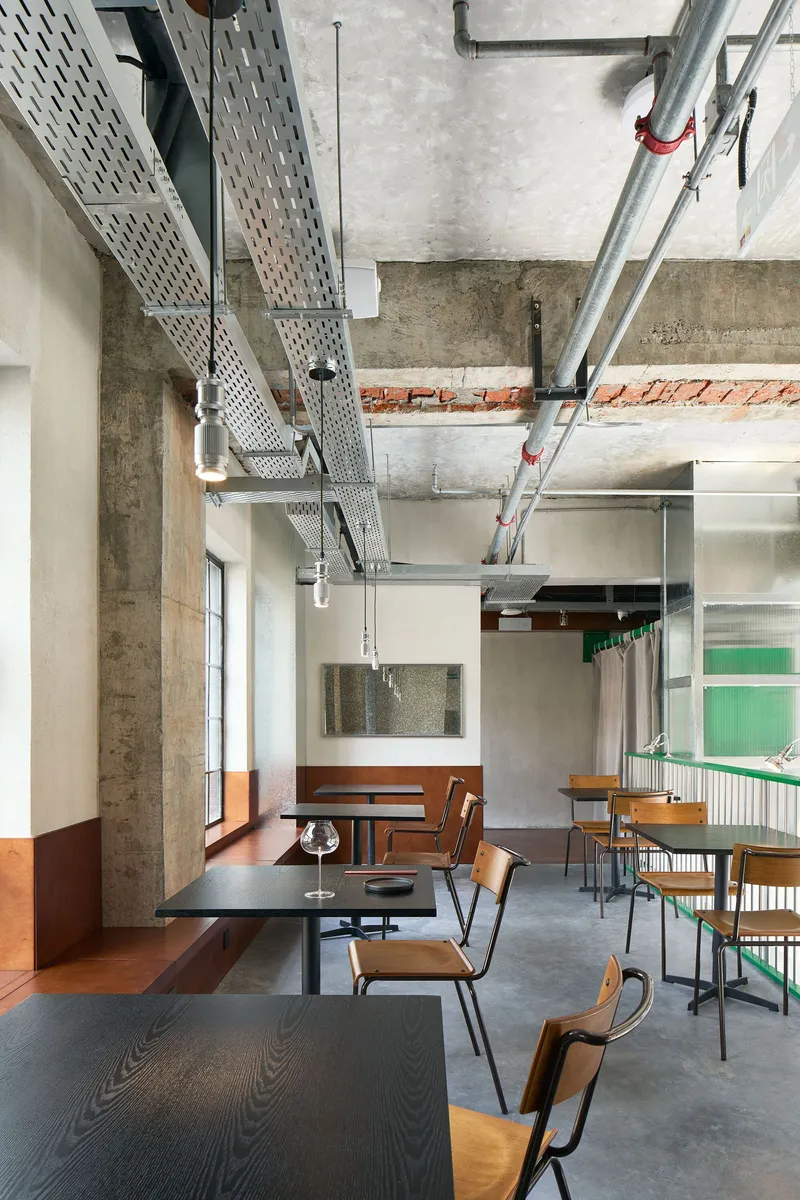
Leaving the ceiling exposed is a common move in hospitality interiors, but Spring Patio does it with more conviction than most. The mesh cable trays, perforated metal ducts, and ventilation runs are not hidden or painted to blend in. They are simply there, organized but unapologetic. The concrete beams provide a structural rhythm overhead that the pendant lights then counterpoint. In the double-height zones, this layering of infrastructure becomes a genuine spatial experience rather than a stylistic choice.
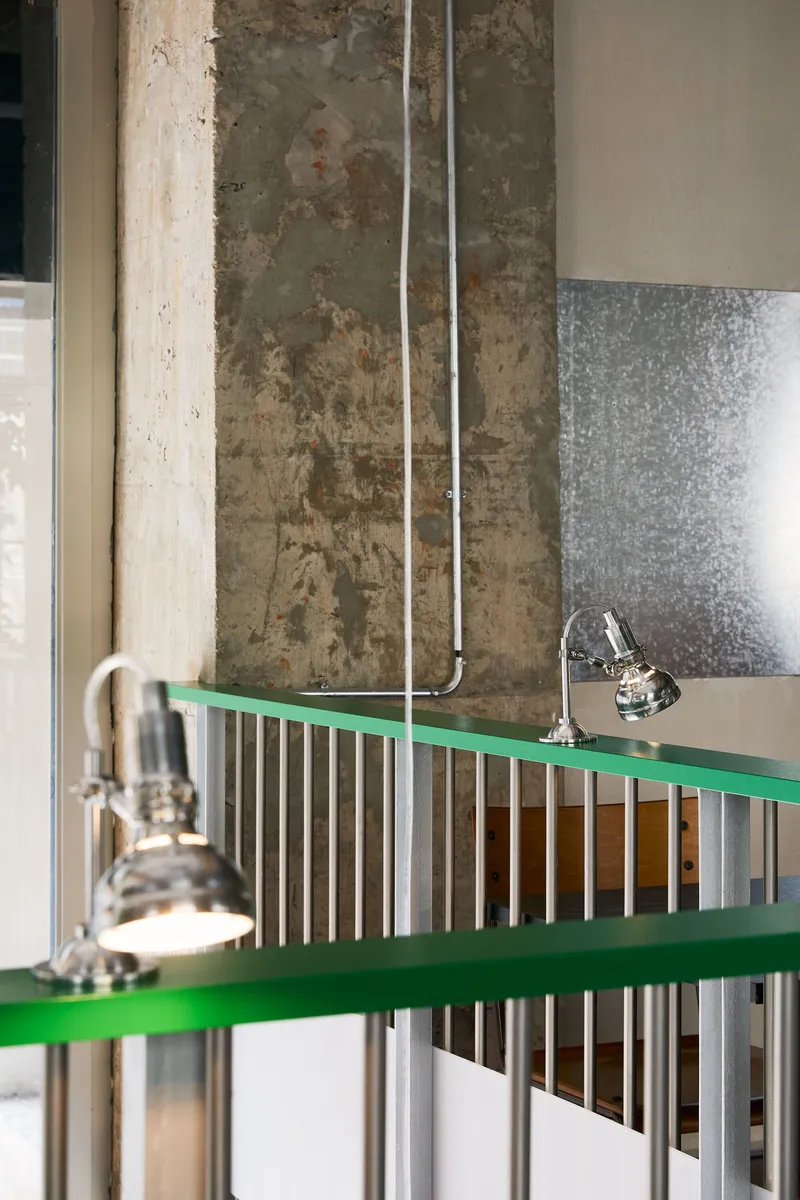
The close-up of the green metal railing with vertical corrugated infill against a weathered concrete column captures the project's attitude in miniature: new metal, old concrete, no filler.
Secondary Spaces and Material Details
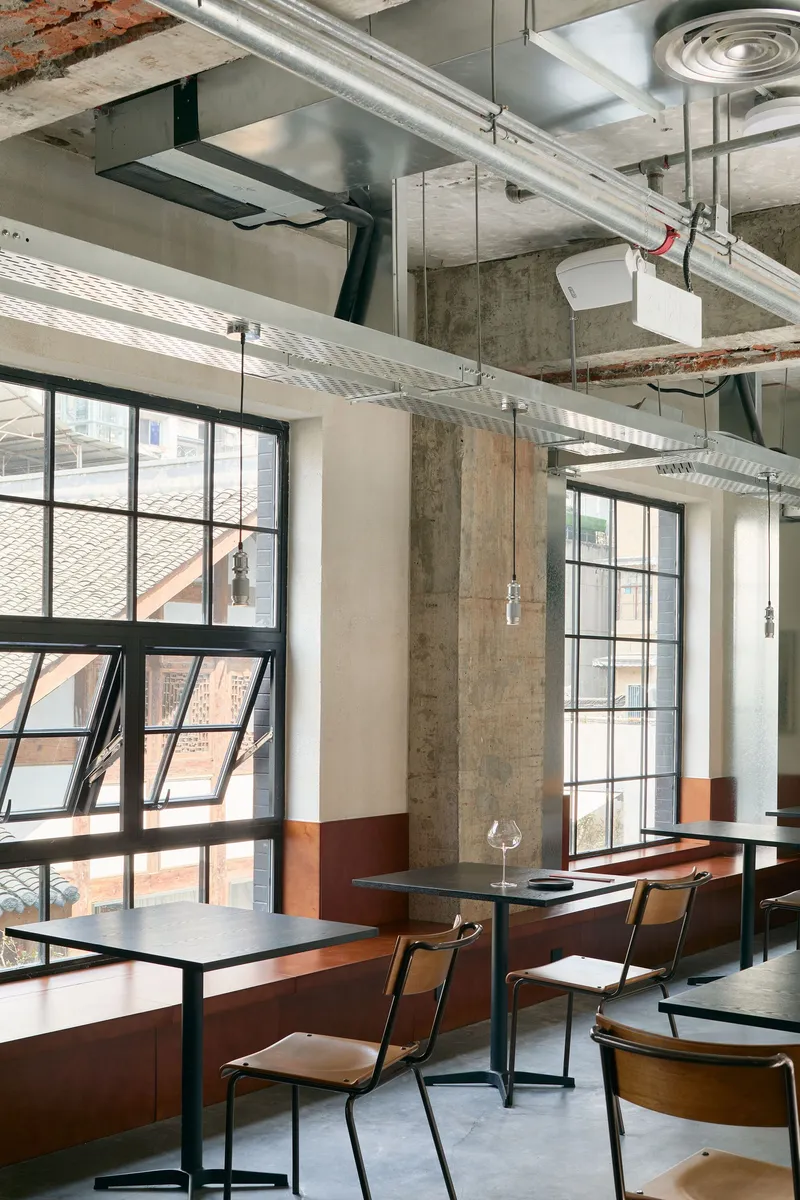
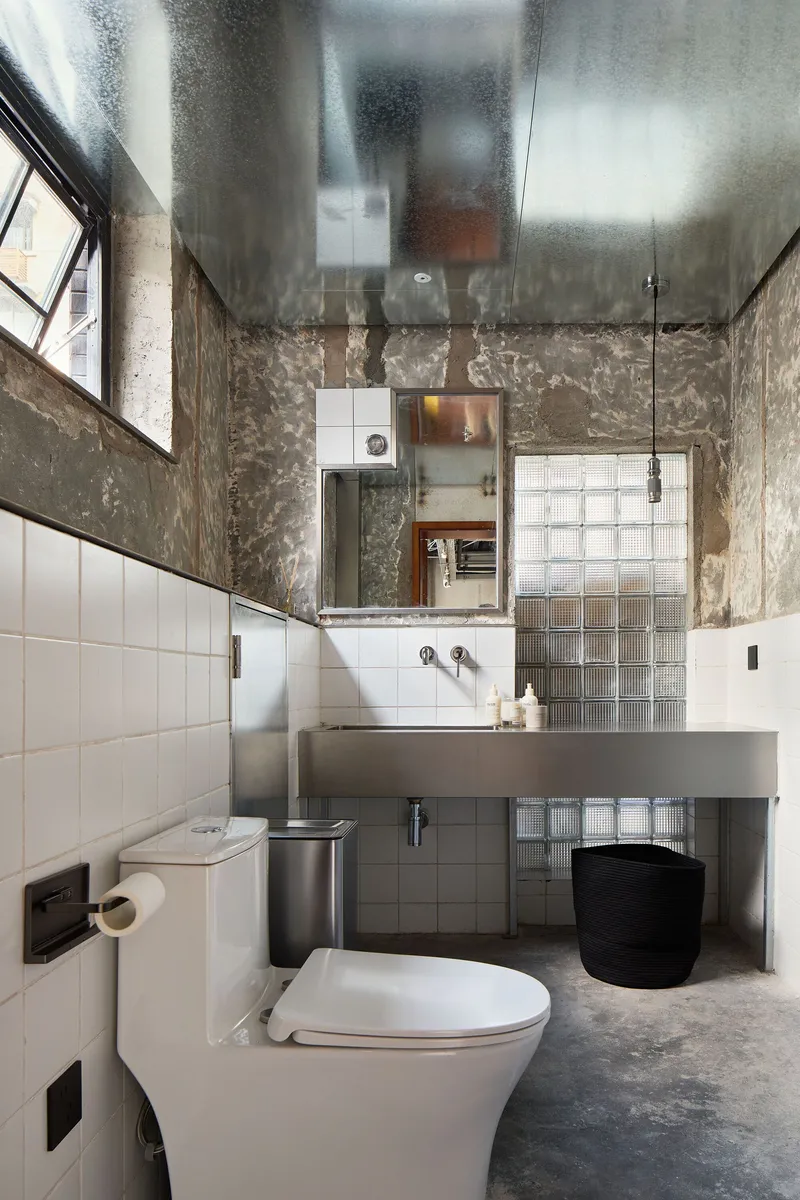
The secondary dining areas and ancillary rooms demonstrate that amass maintained consistency across the entire floor plate. Terracotta tile wainscoting lines the lower walls of some dining zones, introducing a warmer, earthier texture that complements the copper panels while referencing the Yunnan culinary identity. The compact bathroom, with its reflective metal ceiling and white tile wainscoting under textured concrete walls, is one of the project's quieter surprises: a tiny room with real material ambition.
Even the mezzanine-level co-working and meeting spaces, visible in the layered interior views, maintain the same material logic of exposed concrete, green steel, and timber flooring. The translucent glass doors in the meeting rooms carry the same visual language down to the scale of a handle pull.
Plans and Drawings
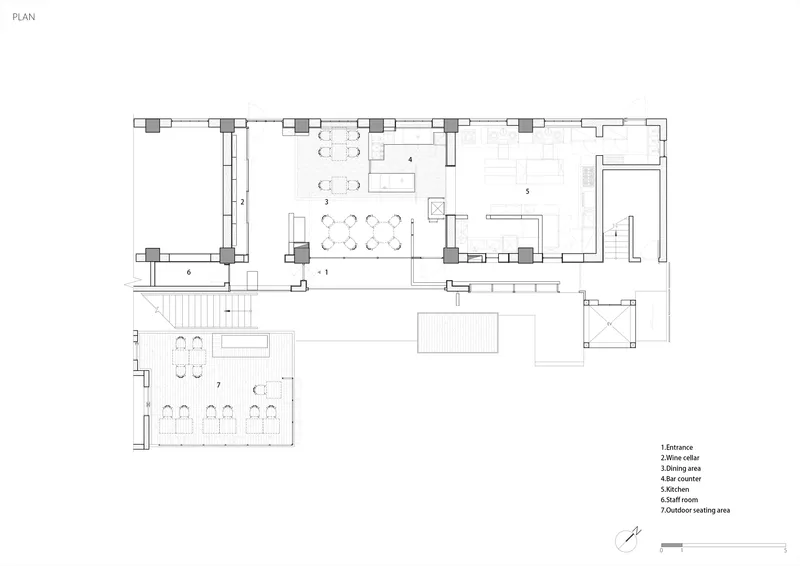
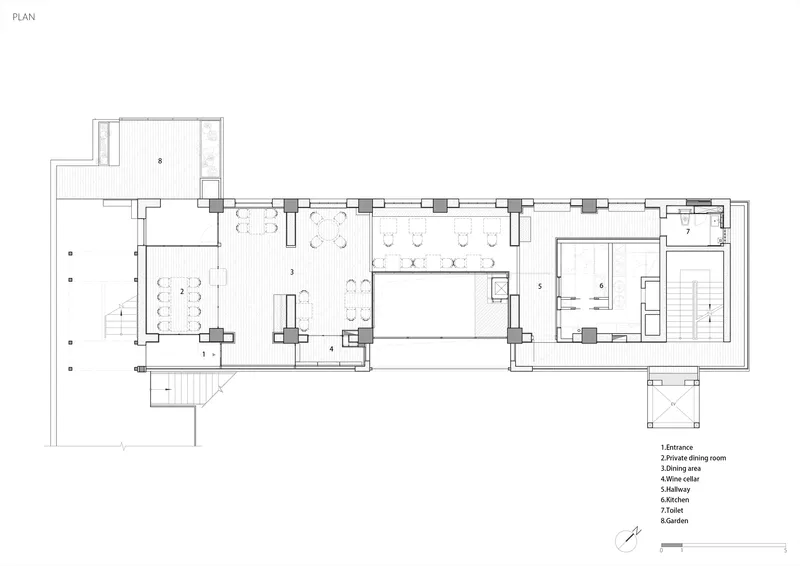
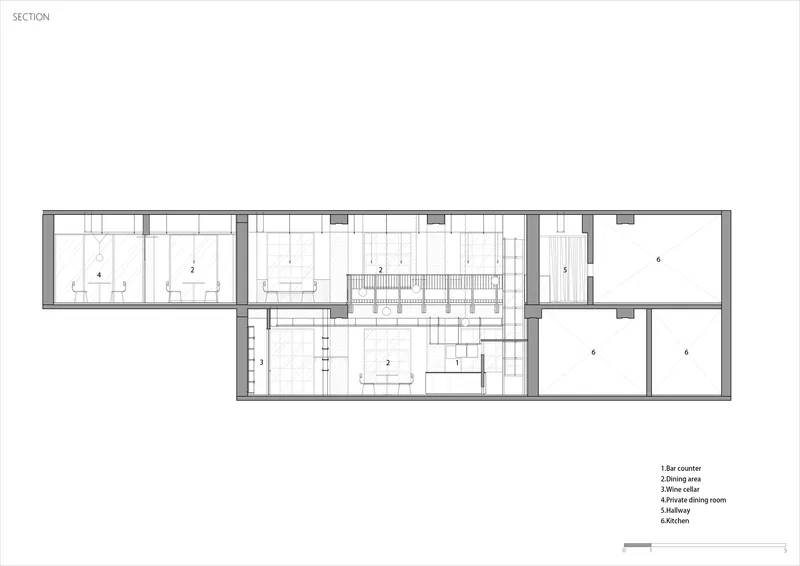
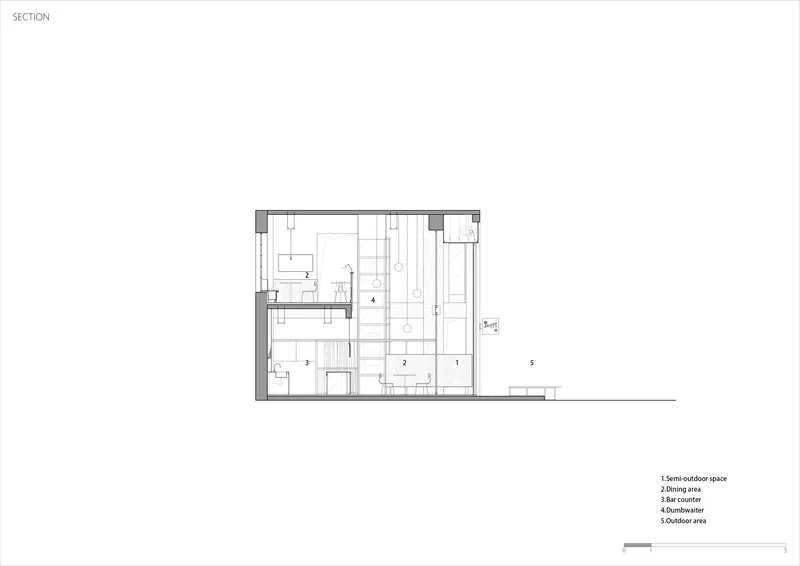
The floor plans reveal an L-shaped layout that separates the public dining and bar zones from the kitchen and service areas. The linear arrangement of the upper level, with its sequence of entrance, dining, kitchen, and private rooms, shows how amass carved distinct spatial identities from a single structural bay. The sections are particularly revealing: the central staircase connecting the two levels creates a vertical moment of openness that the plans alone do not fully communicate, and the relationship between the bar counter, the dining area, and the outdoor courtyard becomes clear only in cut.
What the drawings confirm is that the spatial richness of the project is not accidental. The double-height voids, the layered partitions, and the staggered mezzanine levels are all precisely positioned to maximize borrowed views and spatial overlap. The architecture does real work here; the atmosphere is not just a matter of surface finishes.
Why This Project Matters
Spring Patio is a strong example of what happens when a studio treats adaptive reuse as a design strategy rather than a constraint. By preserving the existing concrete frame and layering new elements beneath it, amass created a spatial experience that no ground-up construction could replicate. The material palette of copper, green steel, translucent glass, and raw concrete is specific enough to feel intentional but restrained enough to let the food, the people, and the existing structure share the stage.
For the broader conversation about restaurant design in rapidly transforming Chinese cities, the project offers a useful counterpoint to the tendency toward total spectacle. Spring Patio is atmospheric without being theatrical. It is warm without being nostalgic. And it treats the bones of an ordinary commercial building as something worth keeping, which, in a city that builds as fast as Chengdu, is a statement in itself.
Spring Patio, designed by amass. Located in Chengdu, China. 410 m². Completed in 2024. Photography by Xinxin Guo.
About the Studio
Share Your Own Work on uni.xyz
If projects like this are the kind of work you want to make, uni.xyz is a place to publish your own, find collaborators, and enter design competitions.


Popular Articles
Popular articles from the community


Cloaked Colonization: A Mobile Underwater Habitat That Moves Like a Fish
Micah Abaya's shortlisted EHC Pacific entry reimagines ocean settlement as a dispersed network of self-sustaining architectural organisms.

Singing Woman: An Opera House That Performs Before the Curtain Rises
Ovidiu Cristian Pavel's conceptual opera house translates Estonia's choral identity into a sculpted waterfront landmark facing the Baltic Sea.

The Amber Palace Opera: A Geological Fiction Surfaces on Tallinn's Baltic Waterfront
Pierre Brillard reimagines a Baltic legend as a public landscape, opera house, and waterfront promenade rooted in Tallinn's coastal identity.

Manzana Morphosis: Stretching Barcelona's Grid into a Living Landscape for 2050
A radical reworking of the Eixample manzana turns density into a tool for generous public space, vertical ecology, and environmental performance.

Similar Reads
You might also enjoy these articles

Pixel Gardens: One Repeated Module Stacked Into a Terraced Social Housing Tower for Famagusta
Salem Bader's shortlisted housing tower builds a vertical neighbourhood from one repeated module, offsetting units to carve terraces, light and air.

Bao Huynh Watercolor Atelier: A Serene Art Retreat in Hội An
Bao Huynh Watercolor Atelier in Hội An blends multifunctional art spaces, sustainable design, local materials, and family-friendly living in a serene environment.

Atelier Macri Concept Store Interior Design by CASE-REAL
Atelier Macri store features a "ko" counter, walnut wood details, cork displays, blending retail, gallery, and seamless customer experiences.

Manuel Vargas Izquierdo Stadium and High-Performance Sports Center: Architectural Excellence in Jalpa de Méndez
The Manuel Vargas Izquierdo Stadium blends sustainable design, inclusive sports facilities, and cultural-inspired architecture, revitalizing Jalpa de Méndez’s public spaces.

Explore Ai Generated Competitions
Discover active competitions in this discipline

Challenge to design luxury tourism on rails

VR headsets Storefront design competition

Designing a staircase for a client
Comments (0)
Please login or sign up to add comments
No comments yet. Be the first to comment!