

AmI-MODULE POCKET HOME - JOURNAL
a new way of living

The CONCEPT of the AmI-MODULE offers affordable living space in high-density urban areas by combining smart furniture, micro-living principles and biophilic design. The project consists of 12 modular units that can be relocated to a new location without disassembling them. Each housing unit is designed for one or two persons and provides space for living, working, sleeping, cooking, sanitary and many more activities in very little space. Besides the wish to live small, the increasing rate of urbanization leads to an increased demand for affordable living space, especially in big cities where prices keep increasing. The distinguishing feature of the concept is the interior which consists of several smart furniture elements that are controlled by an Ambient intelligence (AmI). This allows the system to react to the user in real-time, for instance lowering the ceiling-mounted storage boxes or moving the smart wall to switch from a living area to a workspace. The AmI learns, gets to know the user and individualises the experience. This enables multiple functions to happen in the same space over time, which leads to a fully operable home for two on just 30 square meters. It is not only a machine to increase efficiency. Natural materials like wood and fabric, fractal patterns and plants convey a certain sense of "being at home".
The LOCATION of the site is 271, Bowery - New York, a place with very high demand and major affordability issues. Density and a naturally grown city structure lead to unusually oriented, leftover plots, which are often very difficult locations for planners. Modular capsules in combination with an external steel structure are a good method to make the different parts easy to reassemble and reuse. The spirit of the area is incorporated by the capsules industrial style on the outside and the open interior layout on the inside.
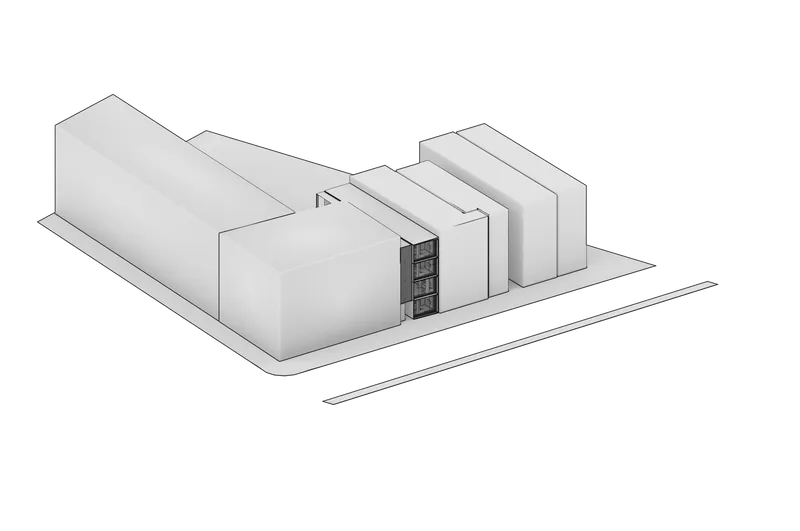
The USER GROUP could be young people with a neo-nomadic lifestyle who do not mind being at different locations of a city. Each capsule is designed to house one or two people on 30m2. Even though the location of the capsules might change, the user can move with it or to another location where AmI-MODULEs are located. Since the AI will be learning over time, user profiles can move with the user and enable a fast lifestyle at the puls of the worlds most exciting cities.
The DESIGN of each AmI-MODULE is a modular box, that can be transported on a truck in one piece. Metal surfaces on the outside give the modules and the supporting structure an industrial look that fits into New York streets perfectly. While the outside is as simple as possible, the inside features a modern, open living space with unmatched functionality. The ORGANIZATION OF ELEMENTS is a reaction to the tiny plot and the height restriction of 12 meters. Moving the capsules to one side of the gap allows them to have the entrance and windows in 3 directions. This allows air and light to get into each AmI-MODULE. Their adaptive interiors are as diverse and different as the people who live in them. The concept of mass -customization is applied to allow the user to apply a personal touch and individual smart elements. The light-transmissive structure outside allows spaces for urban gardening and to meet with friends.
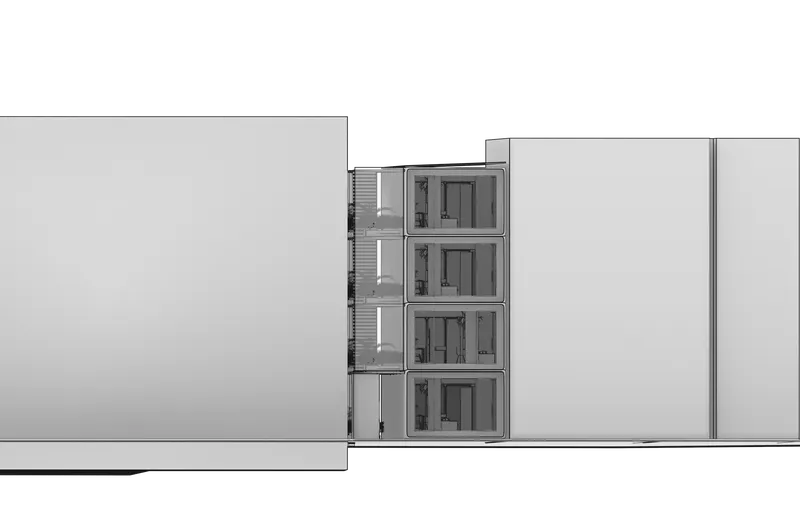
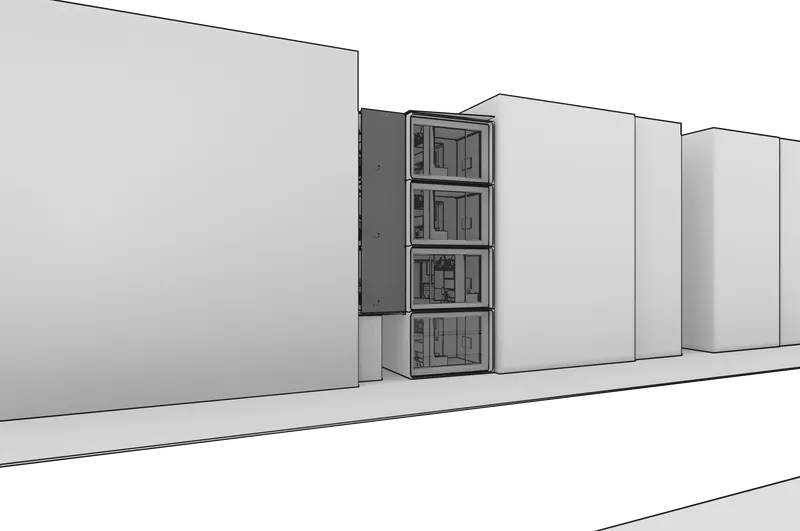
The concept especially incorporates the concept of TIME which is manifested in its ADAPTABILITY AND REORGANISATION of elements on the inside and outside. First of all the capsules can be relocated to another empty plot at any time. Not a lot of disassembling is necessary for this action. The concept is scalable and there might be identical capsules all over the world, allowing people to stay in different places. Since the AmI in the capsule gets to know its user, their profiles are stored and can be accessed at any place. This gives an immediate sense of home because light, colour and interaction are according to the users' needs wherever they are. On a smaller scale, the place allows a maximum of flexibility and changes multiple times over a day. The person might get up, the bed would automatically disappear, the kitchen would open automatically and make coffee. The whole kitchen back wall is a video device, so the user can cook with their friends wherever they are. On the freed up space, they could do a workout out or practise yoga and take a shower afterwards. The cupboards automatically lower down if the user needs something. If the user wants to start working, the smart wall slides on top of the sofa, which frees up space for 2 extendable tables which create a fully functional home office. After work, the tables are folded up and the smart wall can slide to the other side of the room freeing up space for the living room. The sofa hooks in at the back of the smart wall to move to the middle of the room.
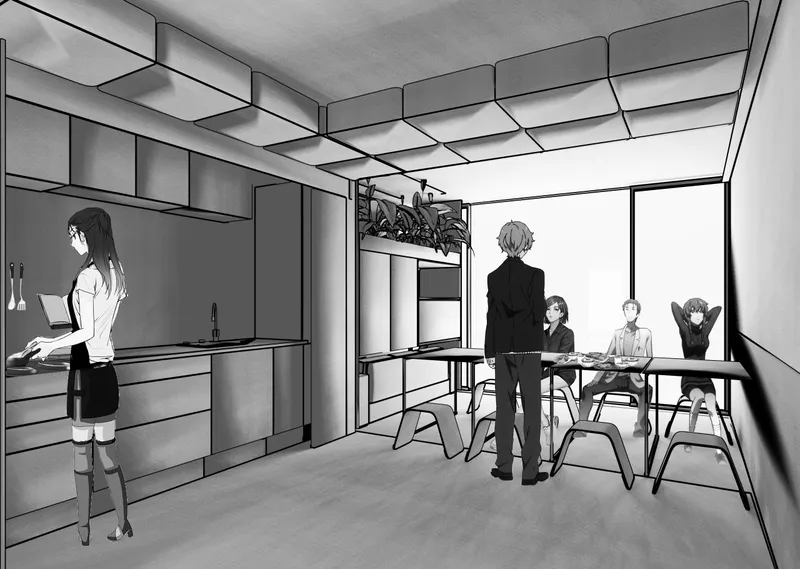
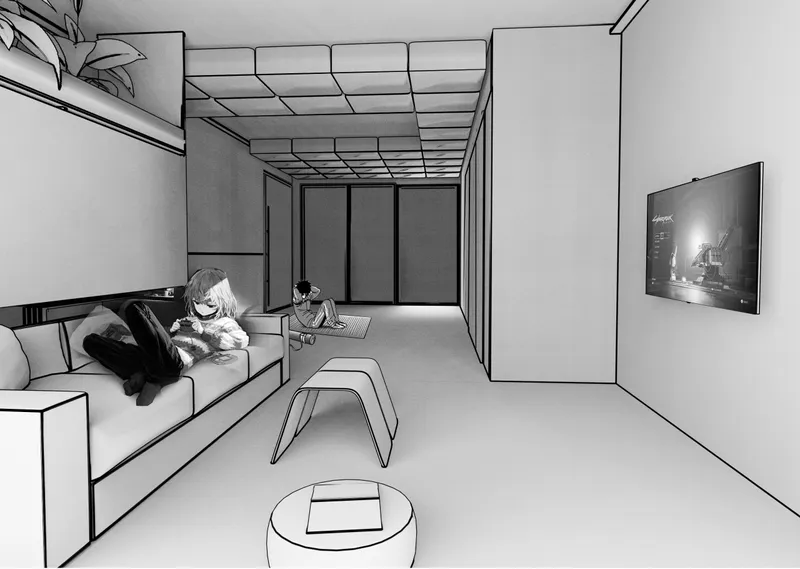
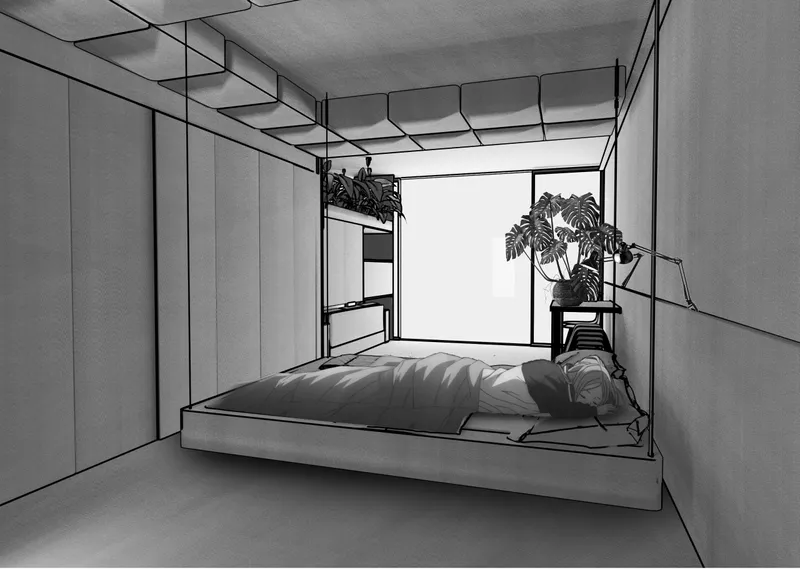
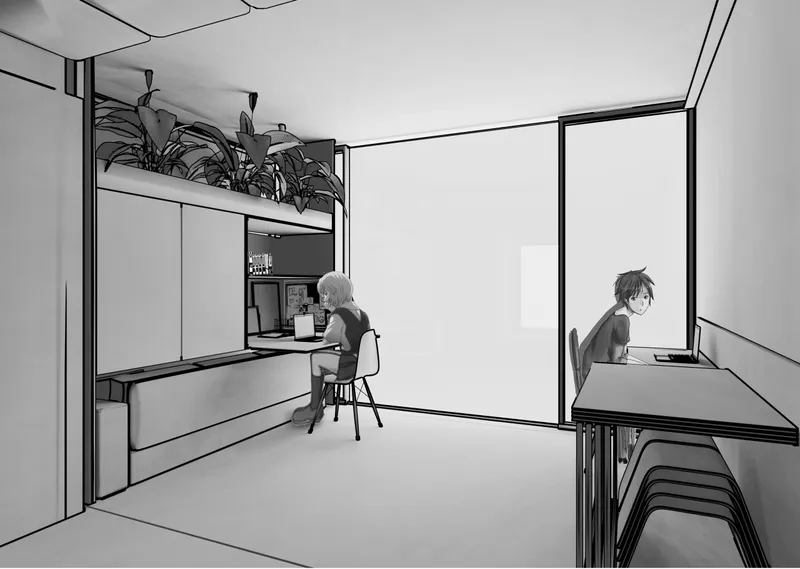
MATERIALS AND ECOLOGY are important parts of the concept. The outside of the capsules is a wood stud construction with metal cladding which allows to completely disassemble them if necessary. Natural materials like wood also make the interior design more welcoming and healthy. Fractal patterns and terrazzo surfaces try to make the room look bigger than it is. Plants are implemented because they play an important role in the inhabitants' well-being.
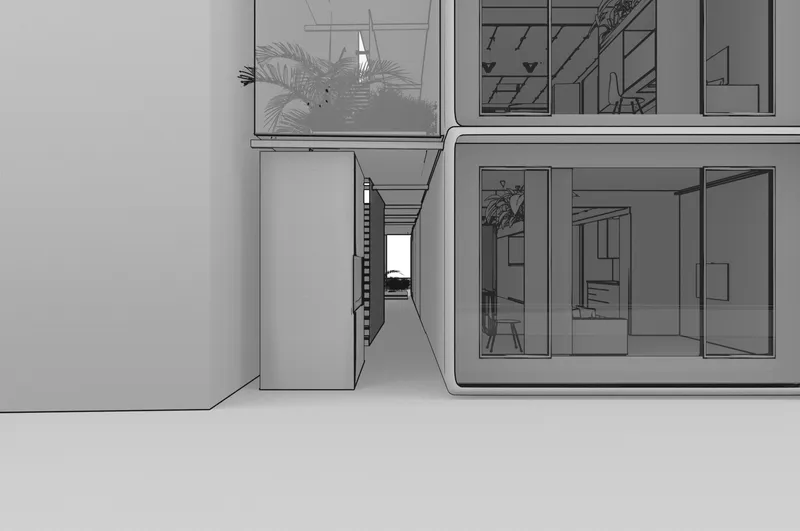
The DESIGN PROCESS started with sketches and was quickly moved into CAD to test the arrangement of the capsules. Since all the capsules should be 30m2 and considering the height restriction the distribution on one side of the gap with the maximum length made the most sense. The interior design with all the movable elements and research into technology made up the longest part of the design process.


Popular Articles
Popular articles from the community


Singing Woman: An Opera House That Performs Before the Curtain Rises
Ovidiu Cristian Pavel's conceptual opera house translates Estonia's choral identity into a sculpted waterfront landmark facing the Baltic Sea.


ETEH Reworks the Shared Spaces of São Domingos School in Brazil Around Timber, Color and Hanging Plants
At São Domingos School in Brazil, 436 m² of hall, refectory and library are recast with timber joinery, a yellow and blue code and trailing greenery.

Cube Design Draws an Ecological Corridor Between Two Shenzhen Hills with the Nankai Building
Beside Shenzhen's container docks, the Nankai Building pairs stacked balconies with a climbing green screen to connect two hillsides across its height.

LT2A and OPEN Architectes Thread a Brick and Glass High School Through a Wooded Belgian Campus
In Braine-l'Alleud, a 3,000 m² wing for Collège Cardinal Mercier pairs pale brick with a glazed colonnade, deferring to a small chapel and a dense wood.

Similar Reads
You might also enjoy these articles

The Rhythm of Seasons
A Farmers' Market Connecting Nature and the City

More Than a Building-Designing a Living System
More Than a Building-Designing a Living System
Base Beyond
DESERT COMPOUND ARID: TOURISM OF ABSENCE AND ABUNDANCE

Explore Spatial & Interior Design Competitions
Discover active competitions in this discipline


Challenge to design luxury tourism on rails

VR headsets Storefront design competition

Designing a staircase for a client
Comments (0)
Please login or sign up to add comments
No comments yet. Be the first to comment!