

An Educational Urban Farm on a Parisian Rooftop: Learning, Cultivation, and Climate Intelligence by rerum architectes
A rooftop educational farm in Paris combining greenhouse, learning spaces, and urban agriculture to teach sustainability through architecture and cultivation.


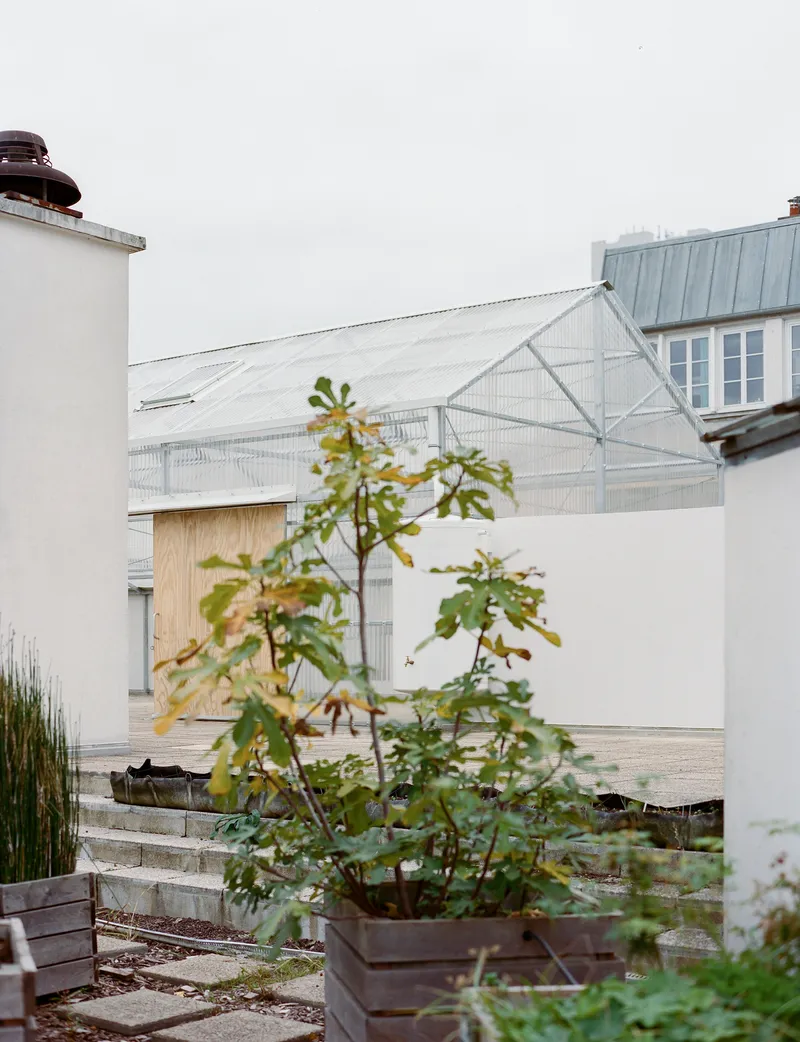
An Educational Farm on the Roof is a pedagogical and productive architectural project by rerum architectes, transforming the rooftop of Collège Flora Tristan in Paris into a living laboratory for urban agriculture. Combining a greenhouse, an educational pavilion, and open cultivation areas, the project supports the work of Veni Verdi—an association dedicated to teaching students how to grow fruits, vegetables, and flowers within the school curriculum.
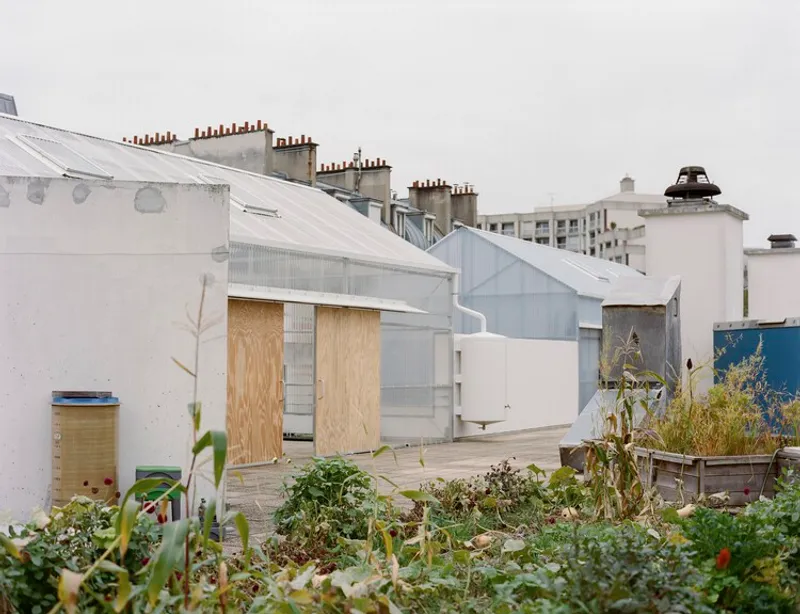
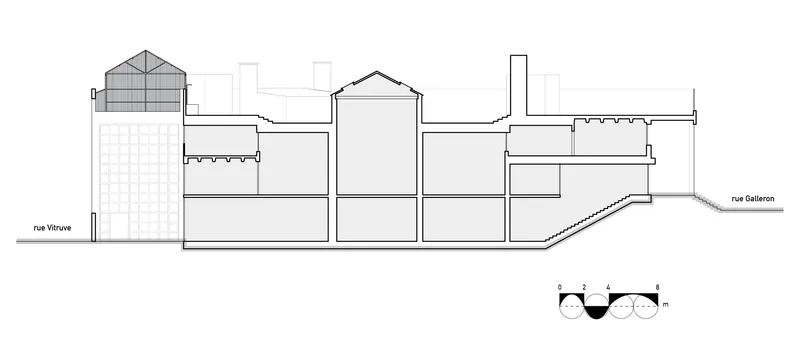
Originally conceived as a playground, the rooftop already possessed spatial and structural qualities suitable for productive reuse. Through a participatory budget supported by the City of Paris, the project reimagines this underutilized surface as an agricultural and educational landscape, developed through a frugal approach that carefully balances environmental responsibility, financial constraints, and long-term usability.
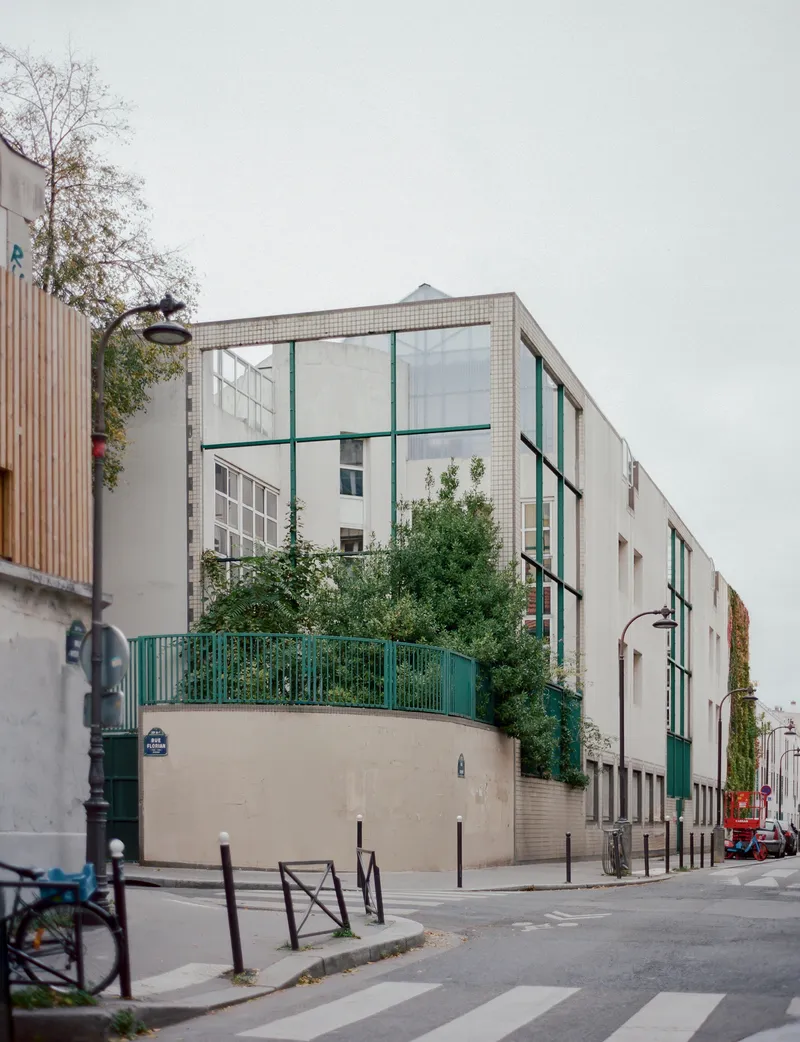
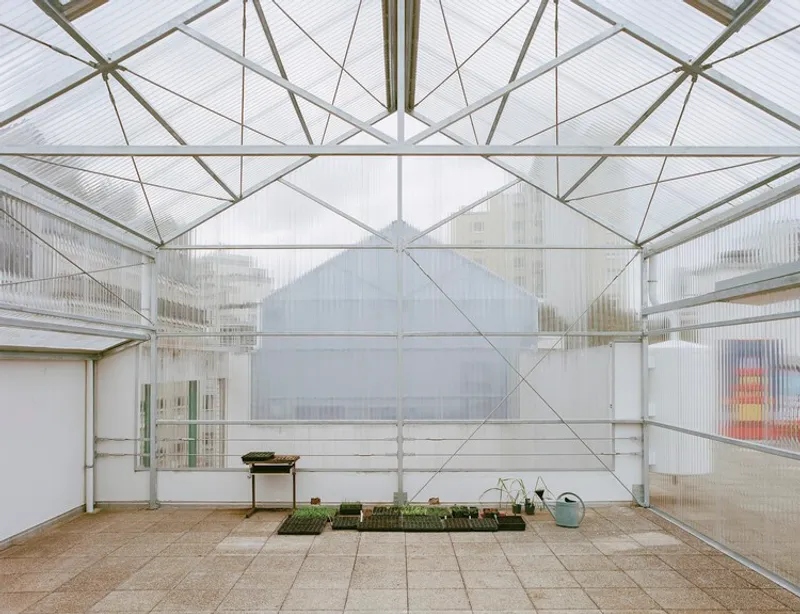
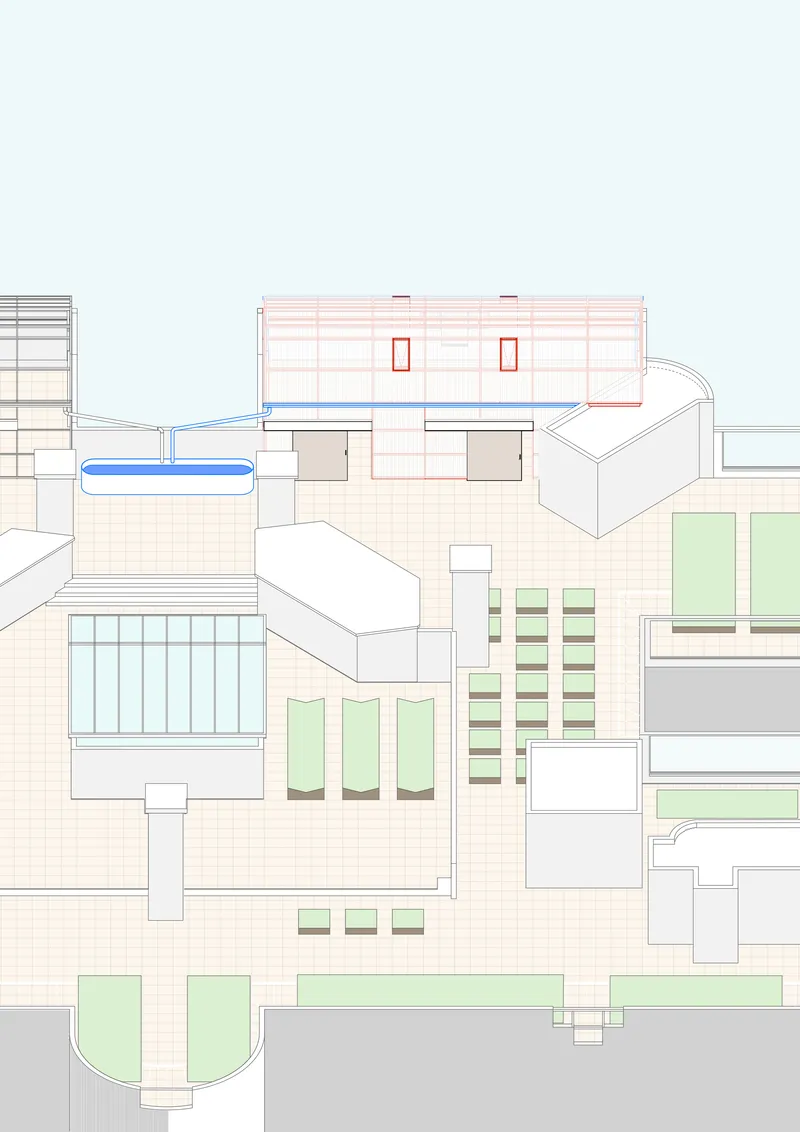
The design introduces two compact yet complementary enclosed volumes: a greenhouse dedicated to crop production and an educational pavilion subdivided into three distinct learning spaces. These built elements are embedded within a broader system of raised planting beds and open soil cultivation areas, forming a comprehensive environment where theory and practice intersect. Together, architecture and agriculture become inseparable tools for learning.
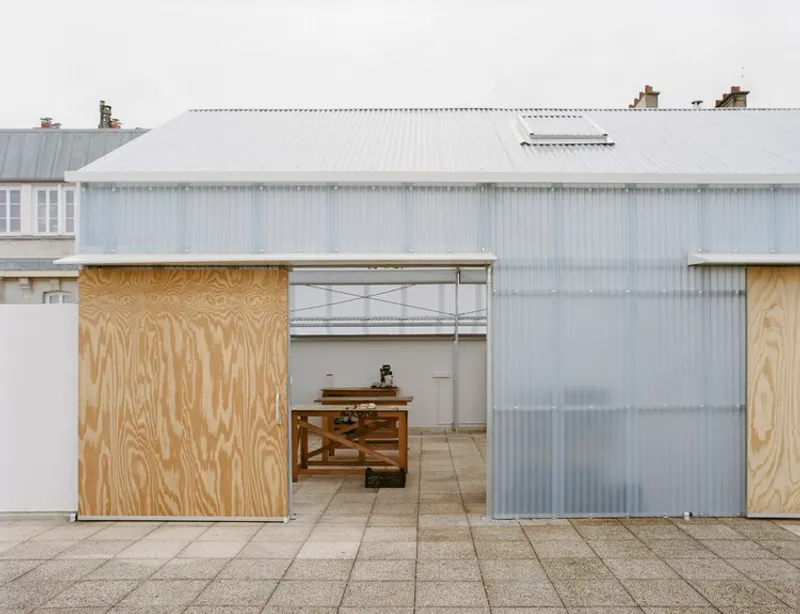
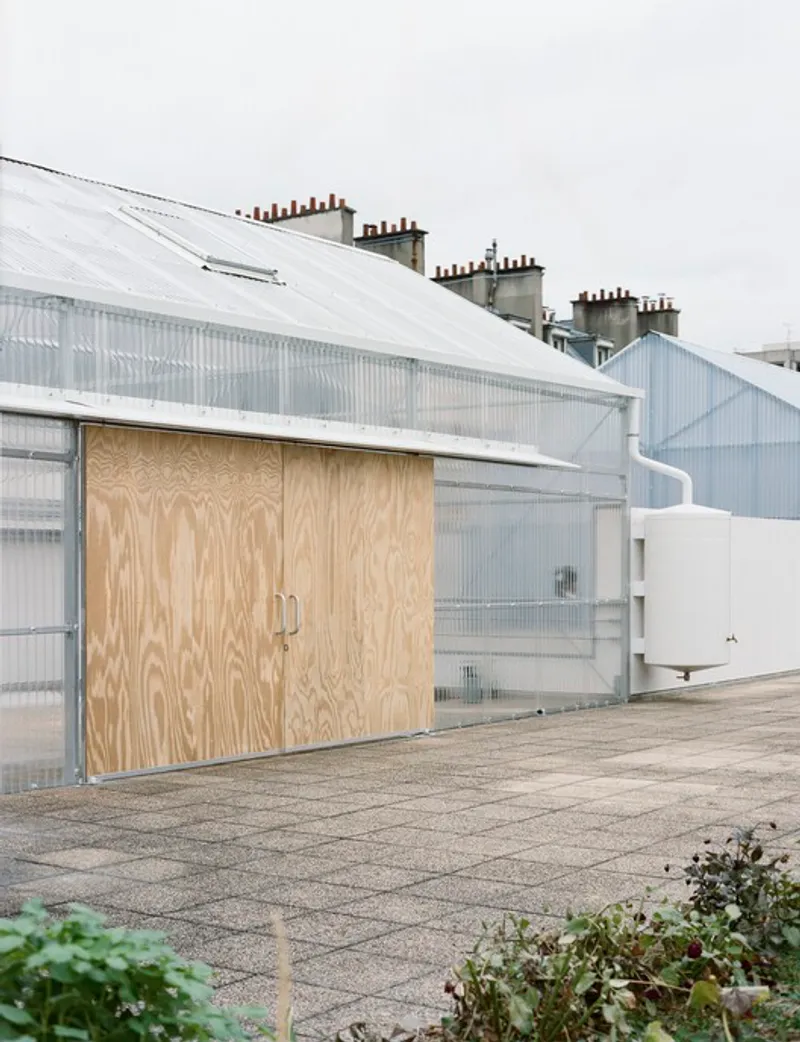
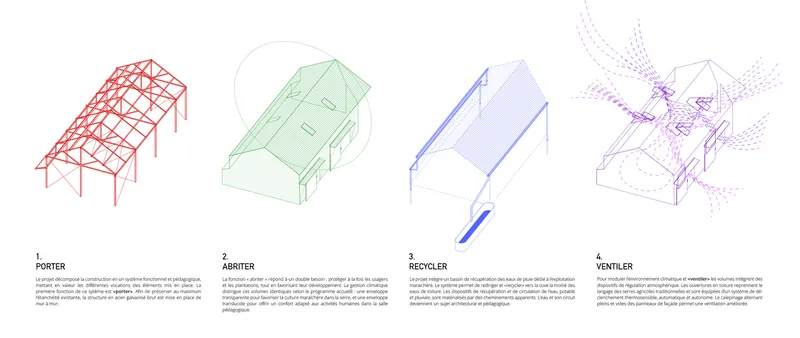
The project is structured around four core principles—support, shelter, recycle, and ventilate—which guide both the architectural logic and the educational narrative.
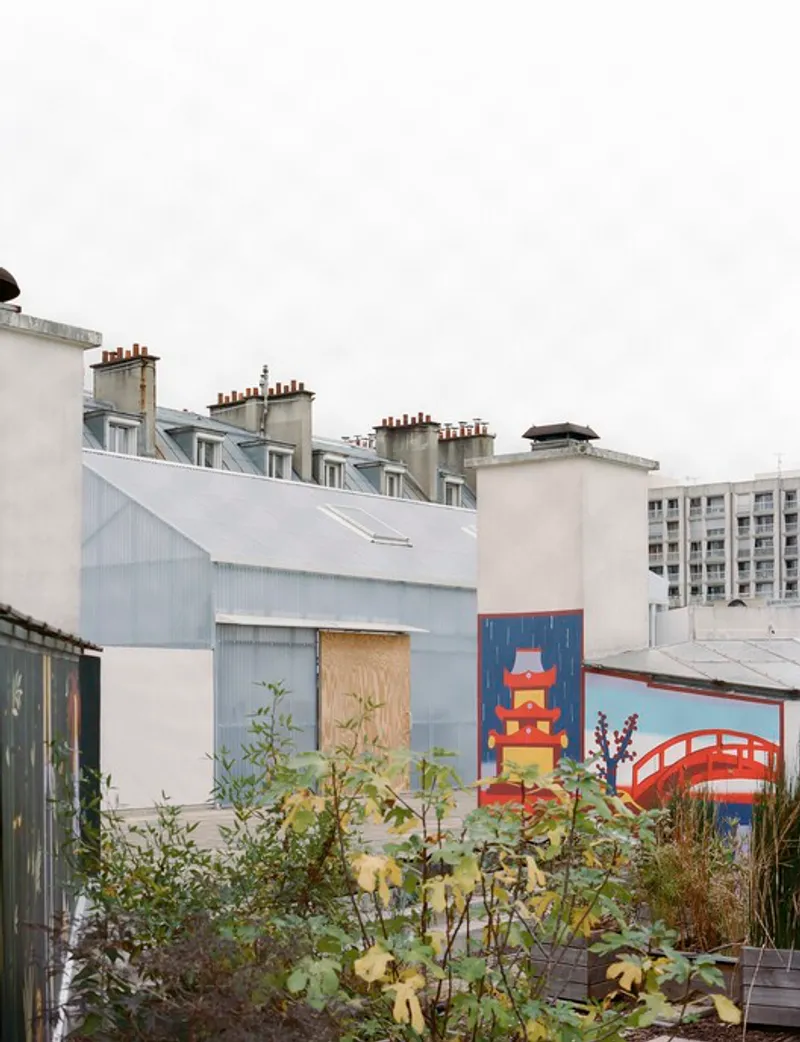
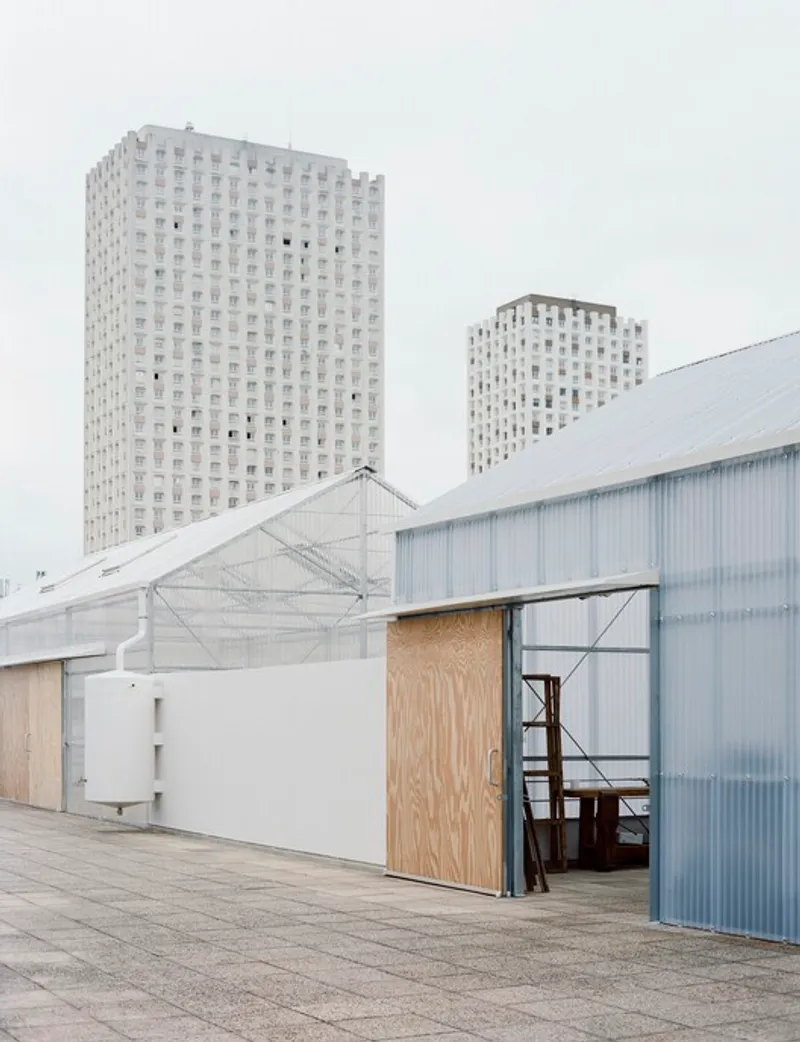
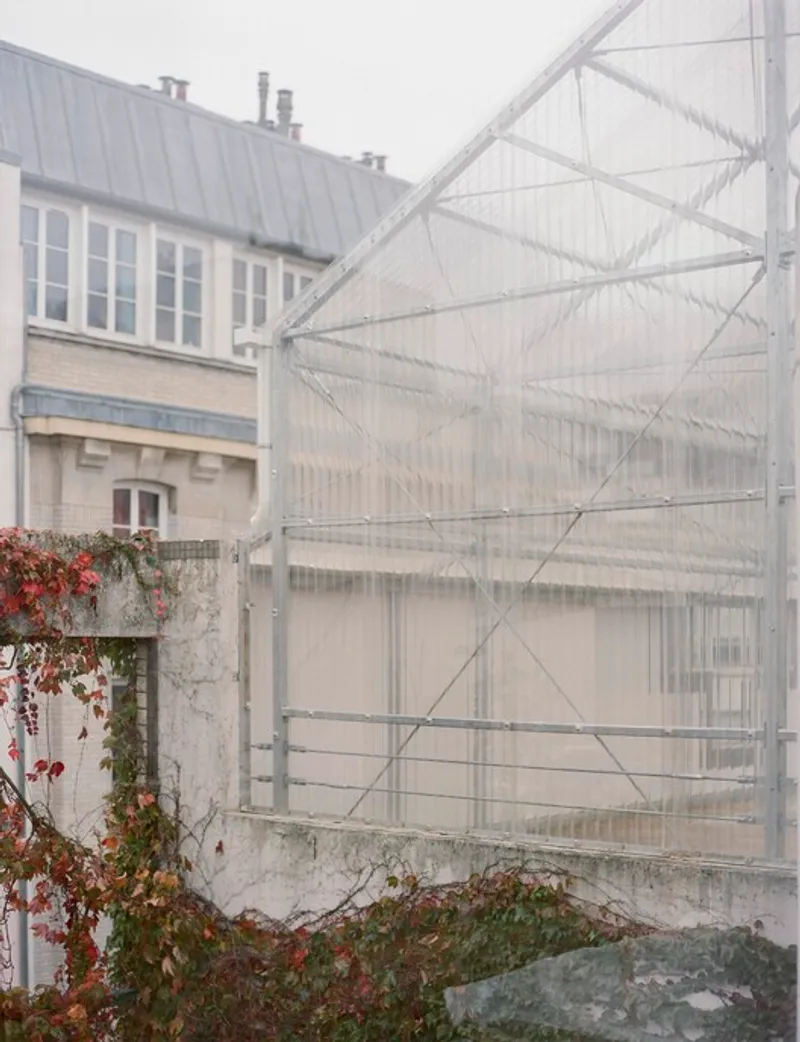
Support defines the structural strategy. To preserve the existing roof waterproofing, the new galvanized steel structure spans from wall to wall, minimizing penetrations while clearly expressing the role of each element. This legible construction system allows students to understand how architecture can respond intelligently to existing constraints.
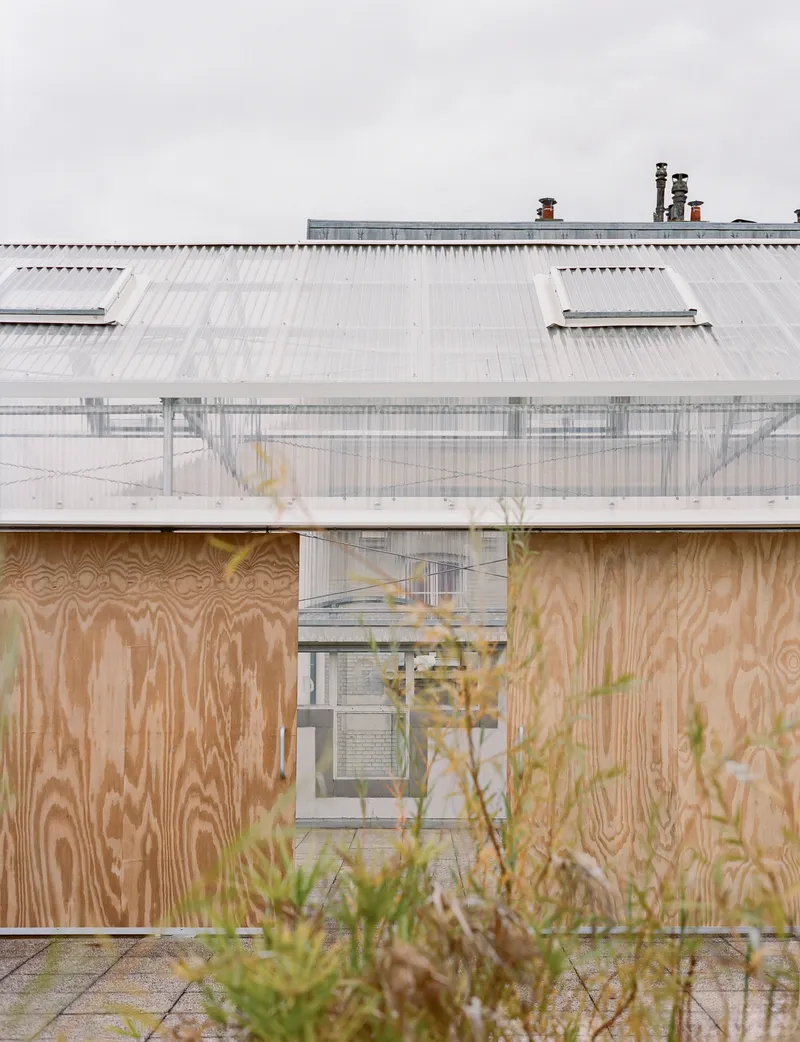
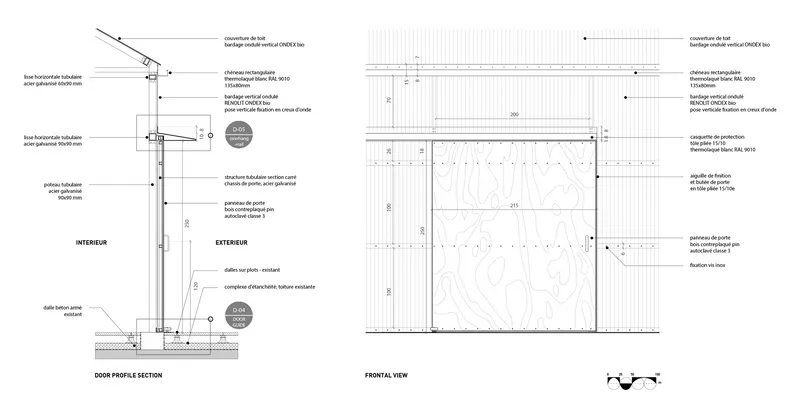
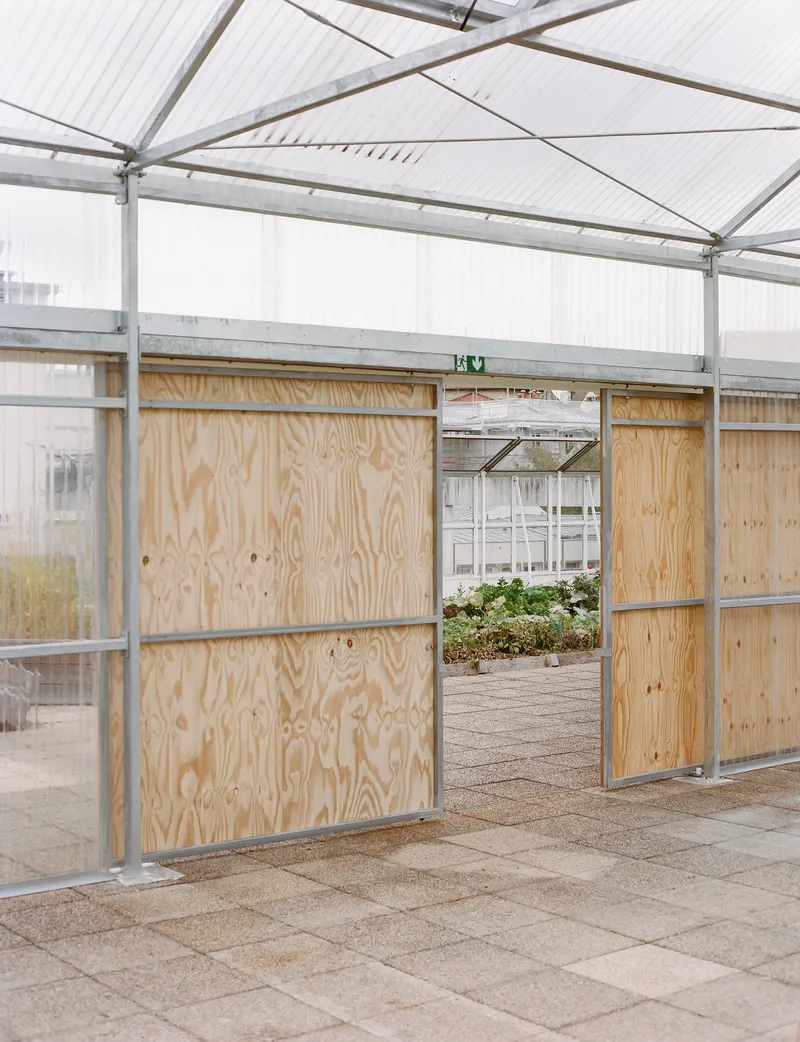
Shelter addresses the distinct climatic needs of people and plants. While both volumes share a similar structural framework, their envelopes differ according to function. The greenhouse is wrapped in transparent polycarbonate to maximize solar gain and promote plant growth, while the educational pavilion uses translucent panels to provide soft daylight and thermal comfort for occupants. Polycarbonate was selected for its durability, UV control, and widespread use in agricultural contexts, reinforcing the project’s didactic character.
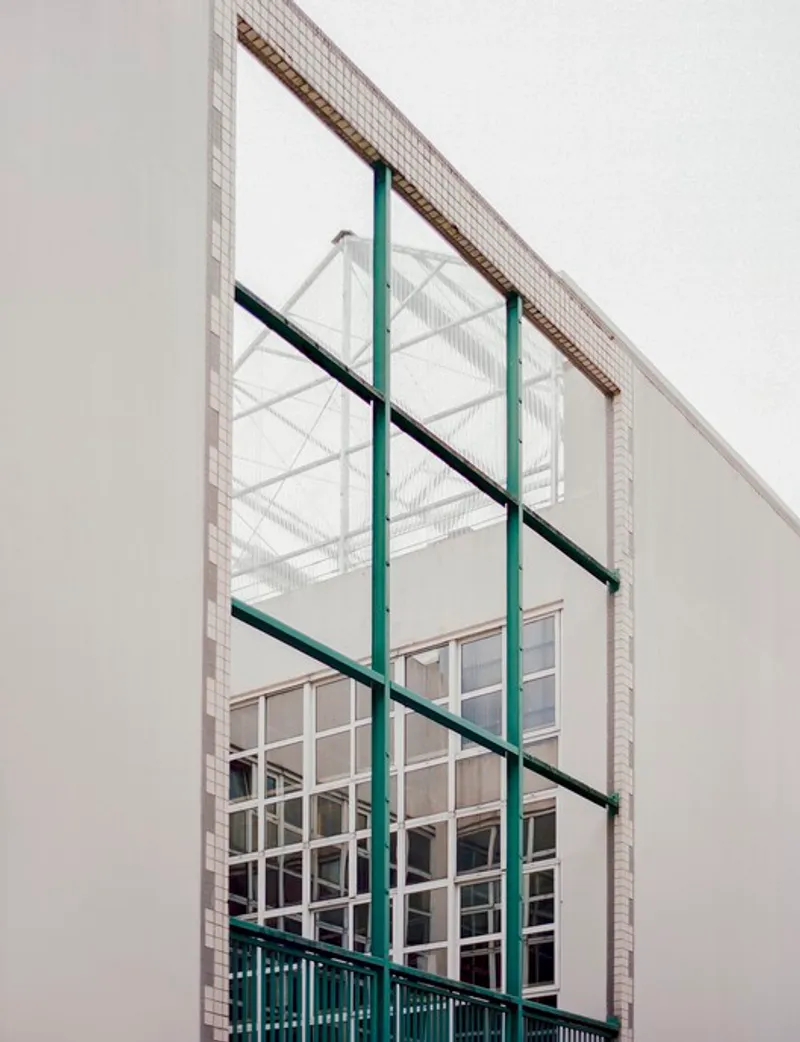
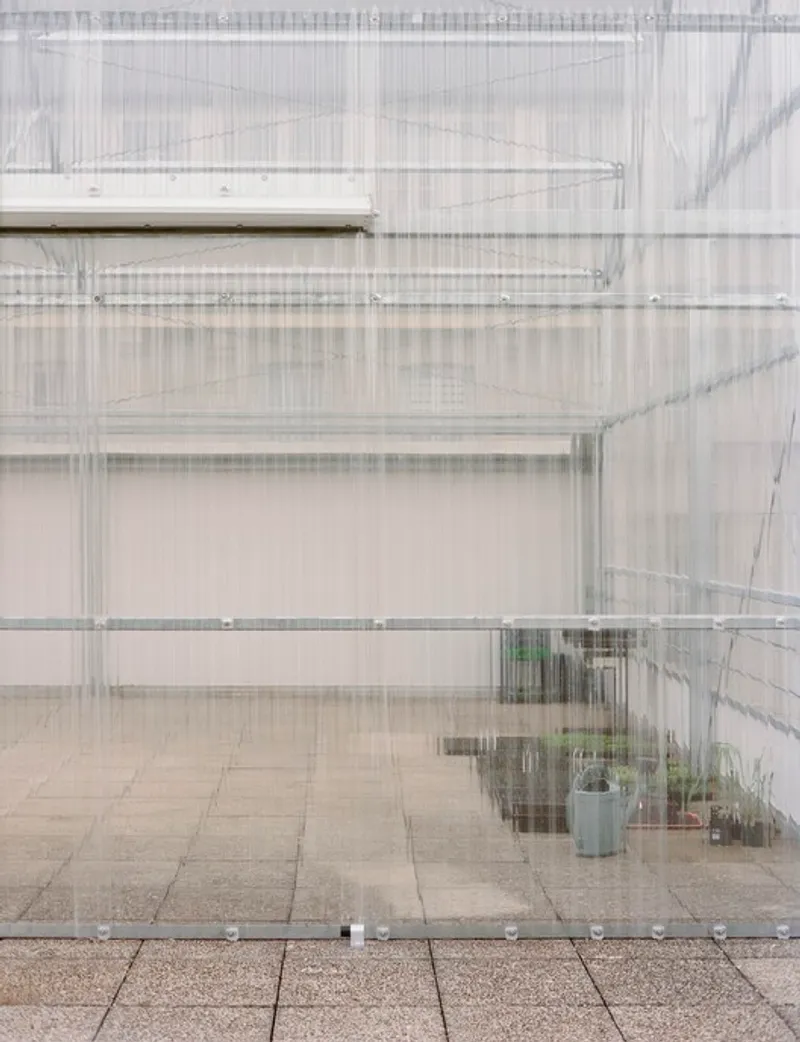
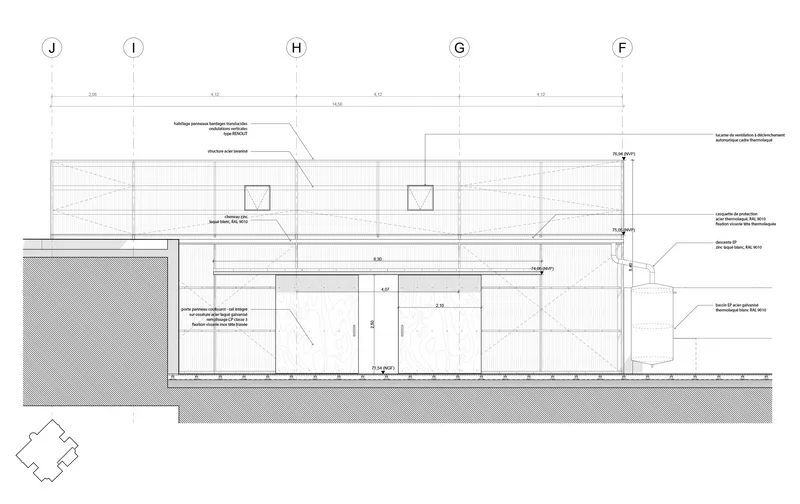
Recycle transforms water management into both a functional system and a teaching device. Nearly half of the rooftop’s rainwater runoff is collected and stored in a dedicated basin, then reused for irrigation. The visible routing of potable and non-potable water makes the entire water cycle understandable, turning infrastructure into an educational tool that reveals processes often hidden in conventional buildings.
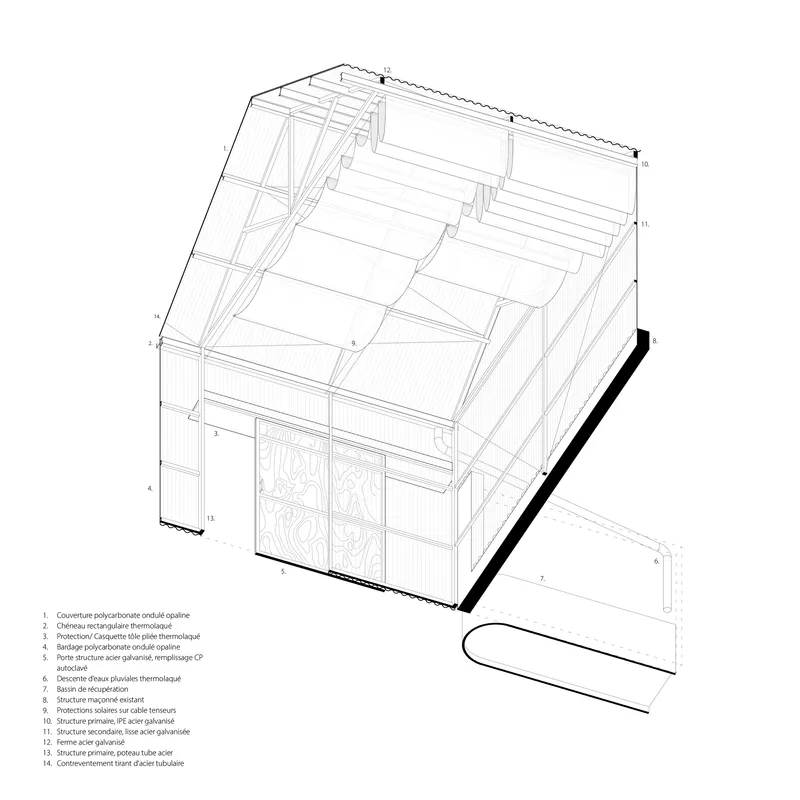
Ventilate ensures adaptable and comfortable atmospheric conditions. Roof openings reinterpret the language of traditional greenhouses and are equipped with thermosensitive systems that automatically regulate airflow. On the façades, alternating solid and perforated polycarbonate panels enhance natural ventilation, supporting crop health while improving comfort in learning spaces.
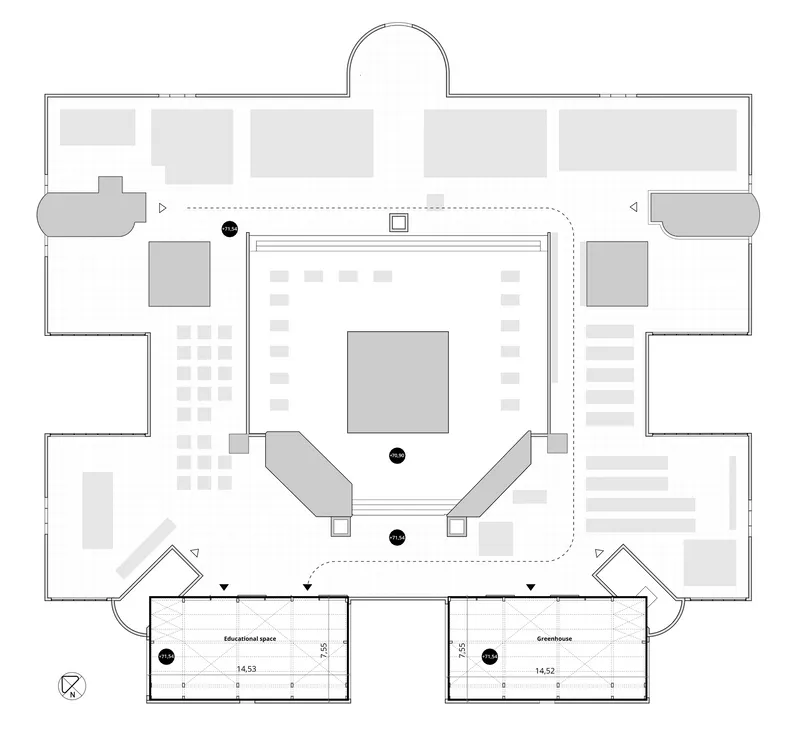
By organizing the project around these four principles, the rooftop farm becomes an immersive environment where architecture actively supports ecological awareness and experiential education. An Educational Farm on the Roof demonstrates how school infrastructure can be reimagined as a productive landscape—one that integrates agriculture, climate intelligence, and pedagogy into the everyday life of students.
All the Photographs are works of Mary Gaudin


Popular Articles
Popular articles from the community

Manzana Morphosis: Stretching Barcelona's Grid into a Living Landscape for 2050
A radical reworking of the Eixample manzana turns density into a tool for generous public space, vertical ecology, and environmental performance.

The Amber Palace Opera: A Geological Fiction Surfaces on Tallinn's Baltic Waterfront
Pierre Brillard reimagines a Baltic legend as a public landscape, opera house, and waterfront promenade rooted in Tallinn's coastal identity.

Tsunami Convergenics: Turning Catastrophic Ocean Forces into Underwater Housing Infrastructure
A speculative underwater settlement off the coast of Onagawa, Japan, treats tsunamis and typhoons as energy sources rather than threats.
Temporary Home for Dogs: A Reversed Zoo Rethinks Animal Shelter Architecture
In Bucharest, a sinuous corridor and freed landscape flip the logic of containment, designing a shelter that works to make itself unnecessary.

Similar Reads
You might also enjoy these articles


Hodi-Mandai Geram
Project Function: Preservation and revitalization of the Intangible heritage and socio-spatial identity of the Hodi by Housing, Cultural Memory Center, Sacred Grove, landscape, local tourism economy


Olio Towers: A Mid-Rise for Performers That Fuses Housing, Rehearsal, and Stage
Located blocks from Houston's Theater District, this modular tower stacks living units around a central performance atrium.

Oasis: Modular Green Housing Carved into Dhaka's Urban Fabric
A shortlisted Plugin Housing entry reclaims unauthorized settlements in Dhaka with stepped concrete volumes, green roofs, and ventilation-driven design.

Black Hole: A Floating Megastructure for the Post-Physical Era
Emiliano Mazzarotto envisions a spherical, self-scaling arena where e-sports, digital hotels, and holographic stadiums replace traditional public space.

Explore Urban Farm Competitions
Discover active competitions in this discipline

Challenge to design public laboratory

Challenge to reimagine the Iron Throne

Photograph architecture without architects

Illustrate the lost glory of Angkor Wat - Render Challenge
Comments (0)
Please login or sign up to add comments
No comments yet. Be the first to comment!