

Ananda House by PPAA – A Contemporary Retreat Blending Architecture, Nature, and Tranquility in Valle de Bravo
A serene Valle de Bravo retreat blending wood, concrete, and nature, with a central terrace uniting flexible indoor-outdoor living spaces beautifully.


Ananda House, designed by PPAA (Pérez Palacios Arquitectos Asociados), is a 606 m² contemporary vacation residence located in the lush, forested landscape of Valle de Bravo, Mexico. Completed in 2023, the home reimagines the relationship between architecture and nature by dissolving the boundaries between indoor and outdoor spaces. Every design decision—materials, layout, circulation, and views—supports a lifestyle centered on serenity, connection, and fluidity.
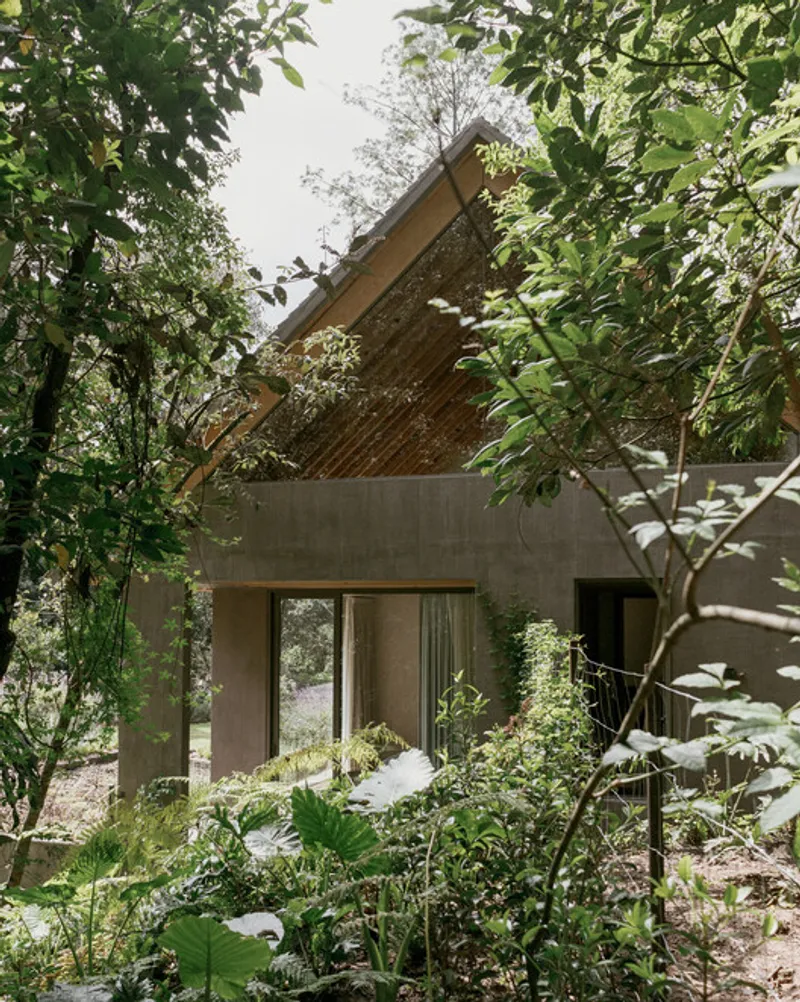
A Vacation Home Designed Around a Central Terrace
At the heart of Ananda House lies a spacious open terrace, which functions as the core architectural element. More than a transitional space, the terrace acts as an axis that divides and simultaneously connects all areas of the home. It is designed for flexible use—intimate and quiet when desired, or completely open and communal when extended into the surrounding landscape.
This blurring of public and private space creates a dynamic environment that adapts to the family’s needs. The terrace becomes a breathing space, allowing nature to flow inward while framing peaceful views of the wooded site.
Two Interconnected Volumes With Fluid Boundaries
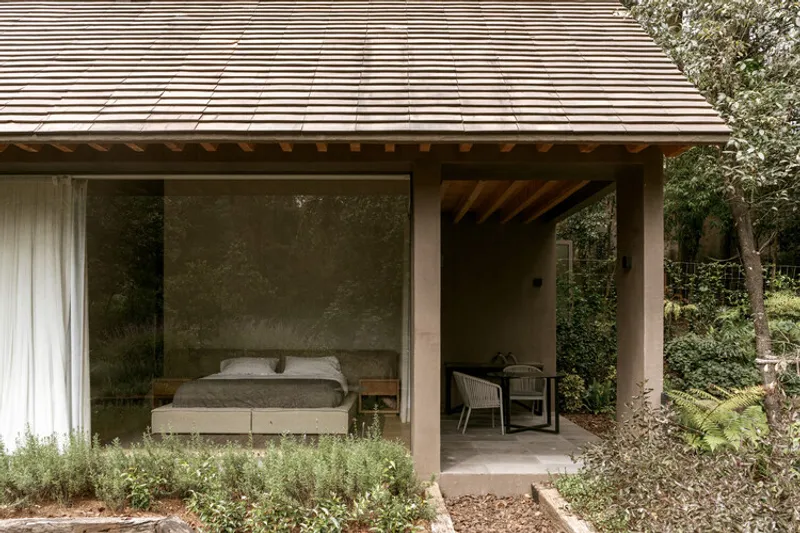
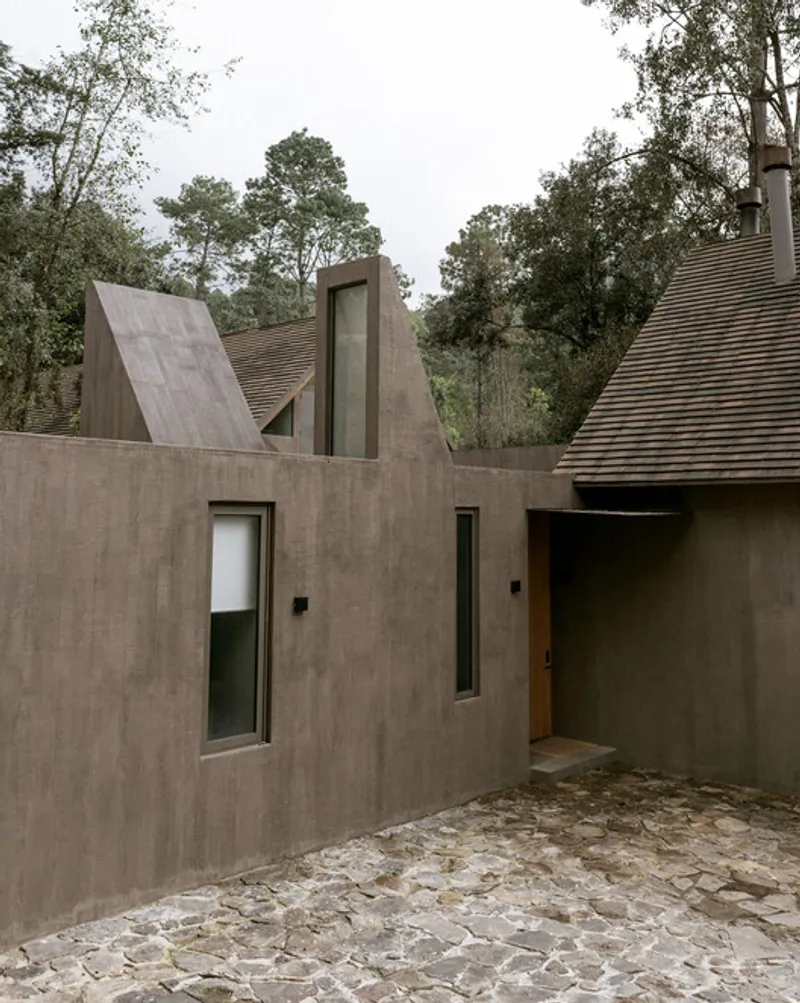
Ananda House is organized into two volumes linked by the central terrace, exploring duality and spatial flexibility. The design encourages continuous interaction between interior rooms and outdoor areas. Each volume opens seamlessly toward the exterior, orchestrating moments of connection with the forest, sunlight, and changing atmosphere.
The result is a home that evolves throughout the day—quiet, contemplative mornings and open, lively evenings—while maintaining harmony with its natural environment.
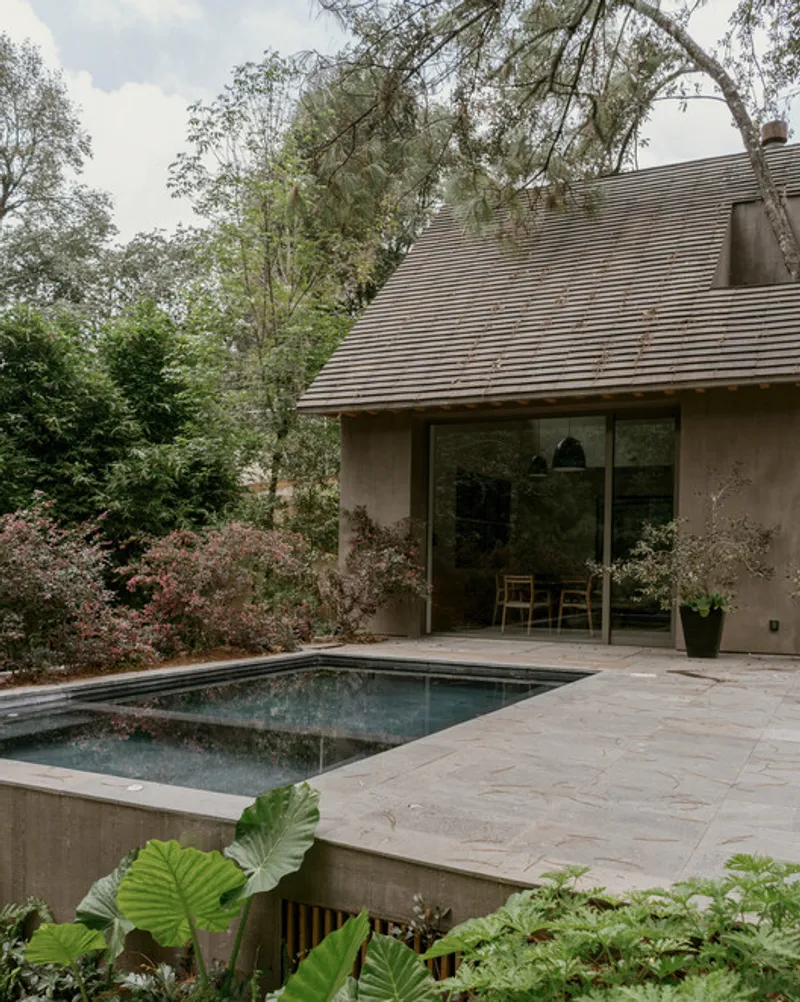
Gabled Roofs and Thoughtful Integration With Nature
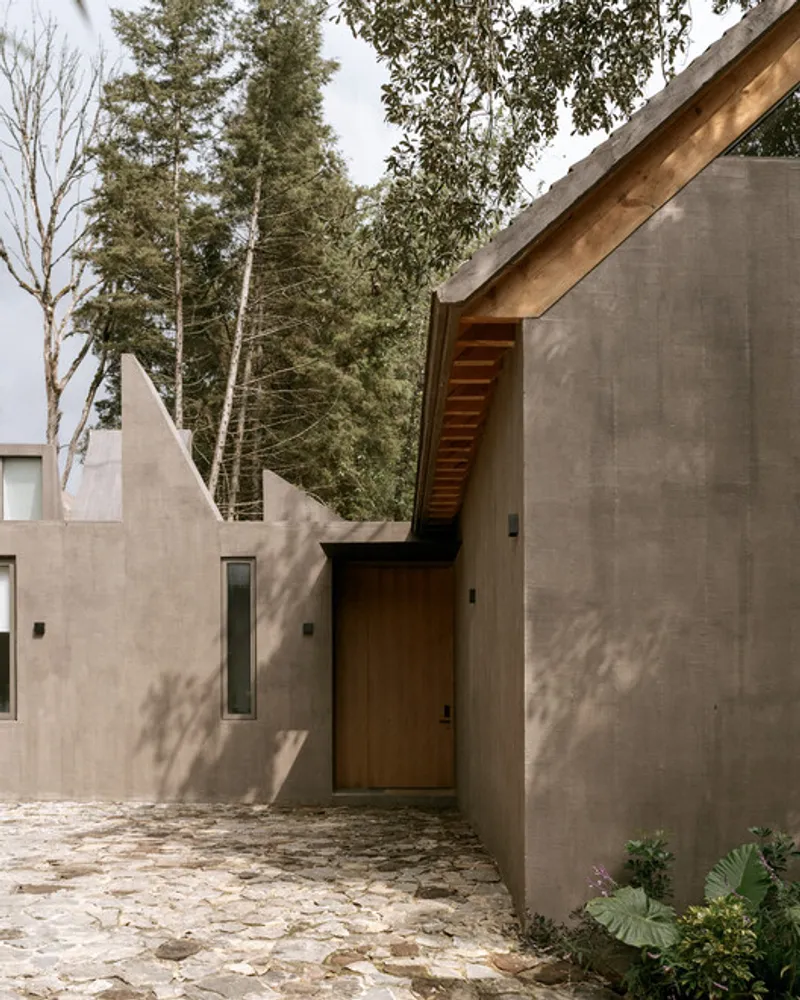
The home’s distinctive gabled roofs are more than an aesthetic gesture—they respond to the region’s climate, helping to regulate temperatures and shed rainfall efficiently. These pitched forms also echo the traditional silhouette of countryside homes, grounding Ananda House within its cultural and geographic context.
One of the most poetic features is the preservation and integration of an existing tree, which becomes an anchor point in the architecture. The home curves, frames, and opens around the tree, establishing a direct dialogue with nature and honoring the land it belongs to.
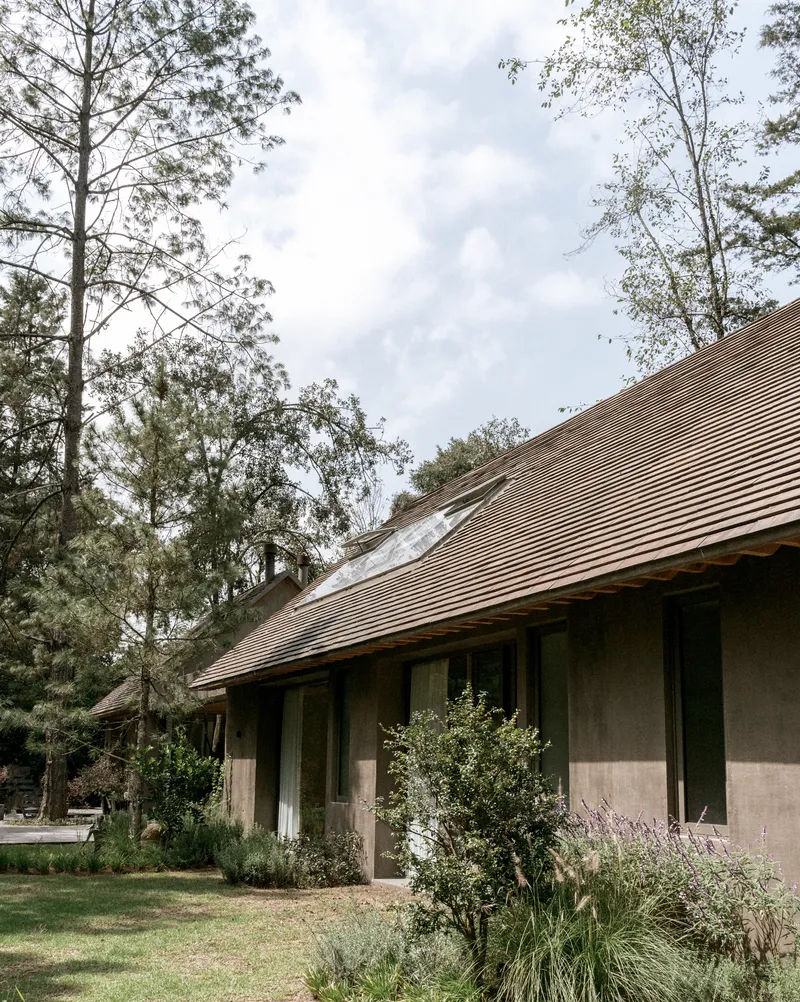
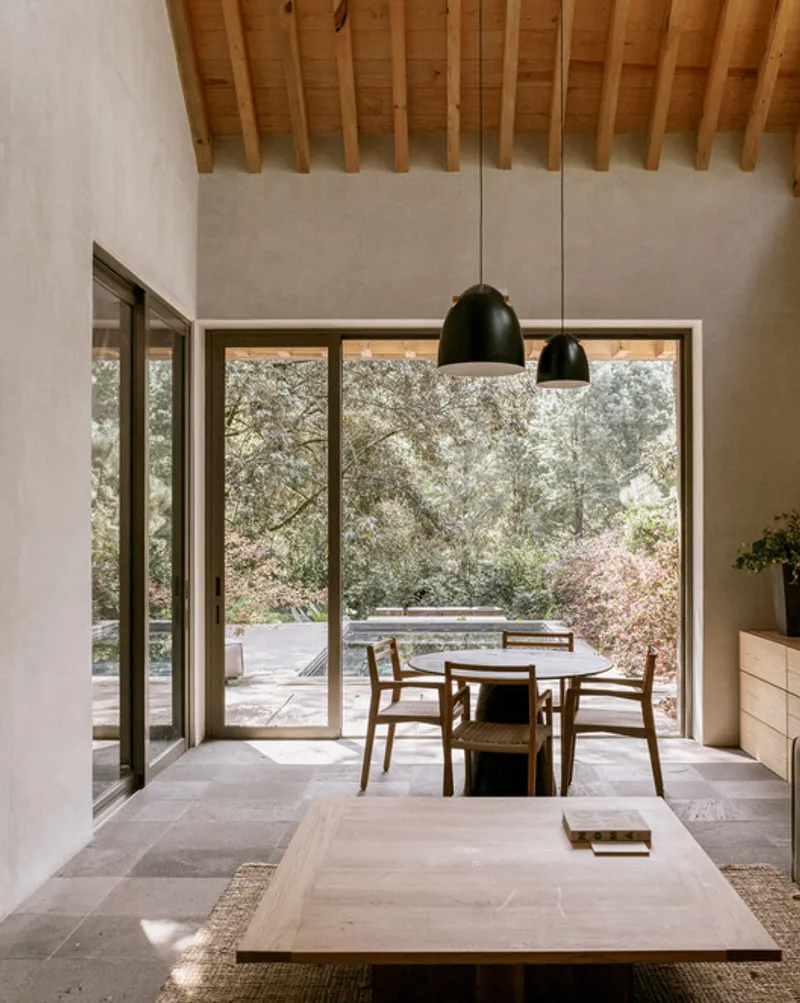
Light-Filled Interiors Framed by Generous Windows
Large floor-to-ceiling windows feature throughout the home, bathing the interiors in natural light and offering uninterrupted views of the garden and forest. These glazed surfaces introduce a constant sense of openness, allowing residents to experience the changing seasons and shifting daylight from every room.
Warm wooden elements, exposed concrete, and earthy textures create interiors that feel grounded yet elevated—a calm and welcoming environment for a family retreat.
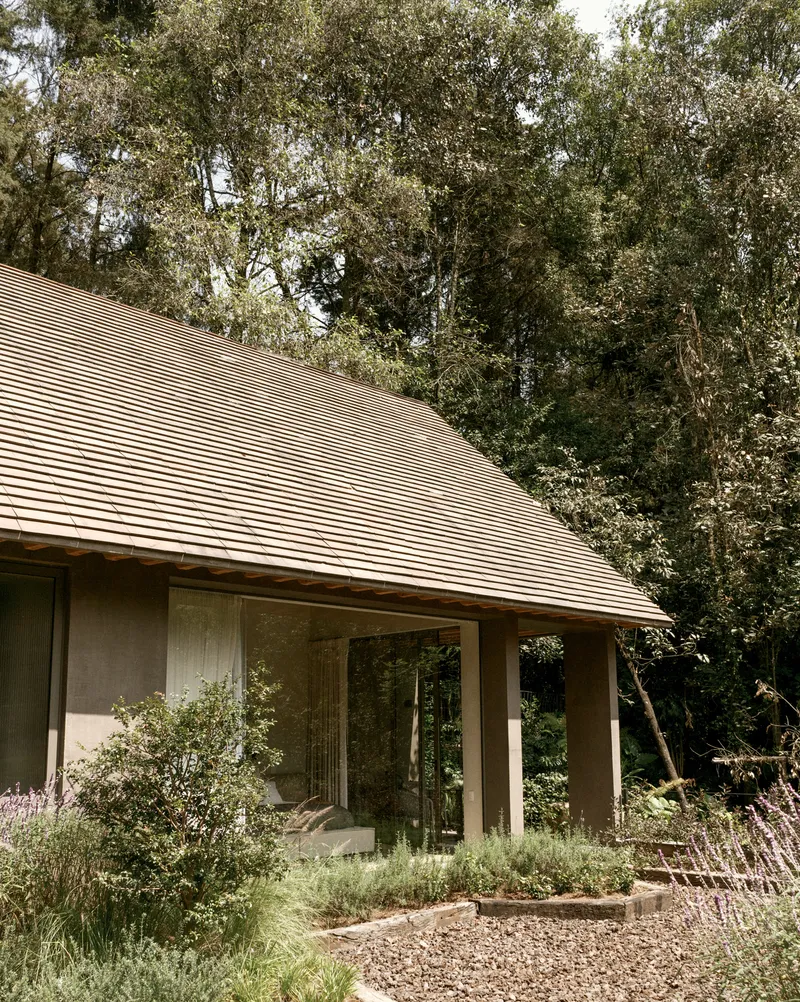
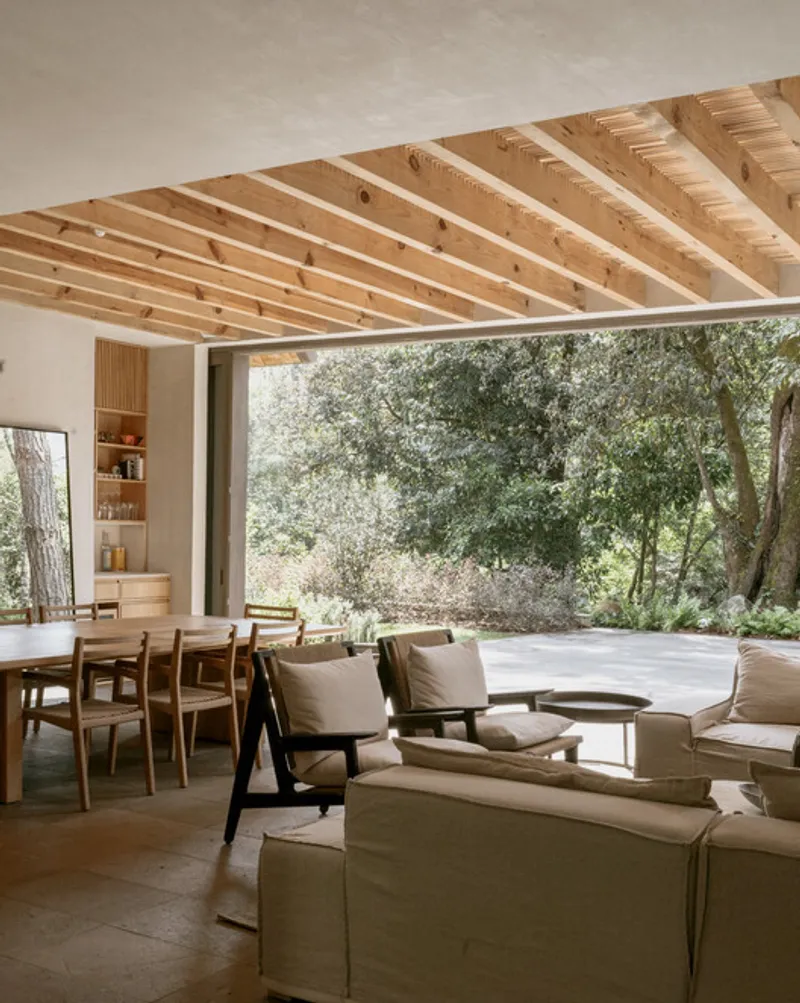
Evolving Architecture That Redefines Public and Private Space
At its core, Ananda House is about fluidity. It is a home that evolves with time, mood, and season. Public and private zones overlap, shift, and open, depending on how the family inhabits the space. The terrace—an intersection of architecture and landscape—acts as the symbolic and functional heart of the project.
PPAA’s design challenges traditional boundaries, offering a new way of living where nature, architecture, and daily life merge effortlessly.
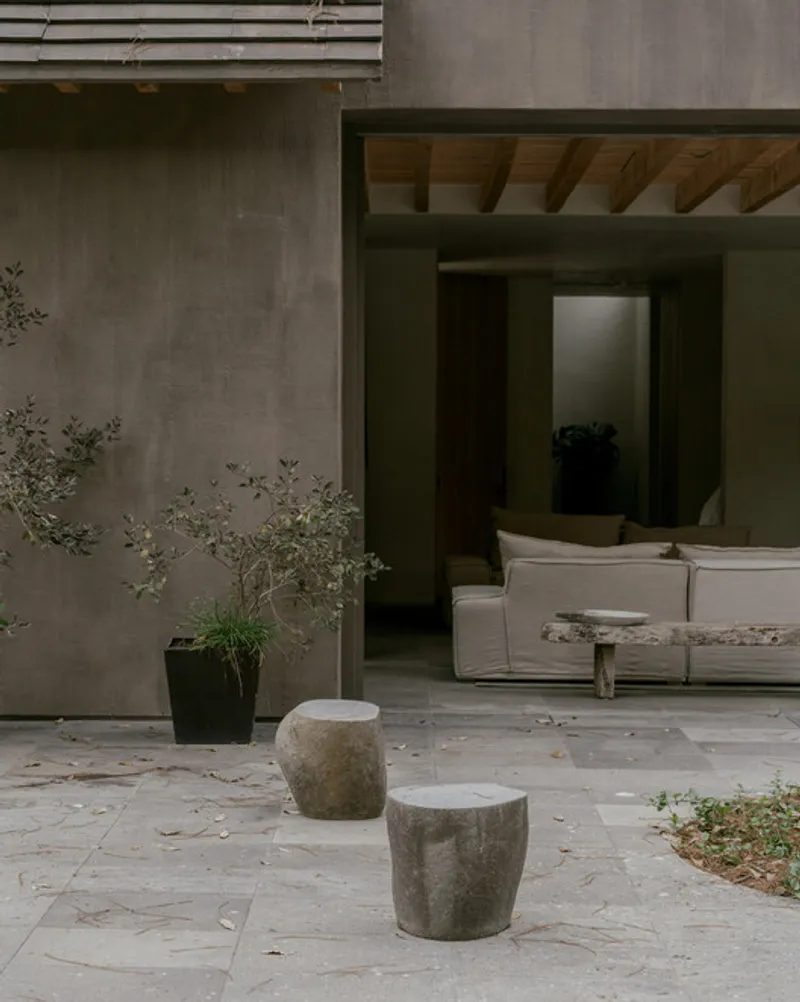

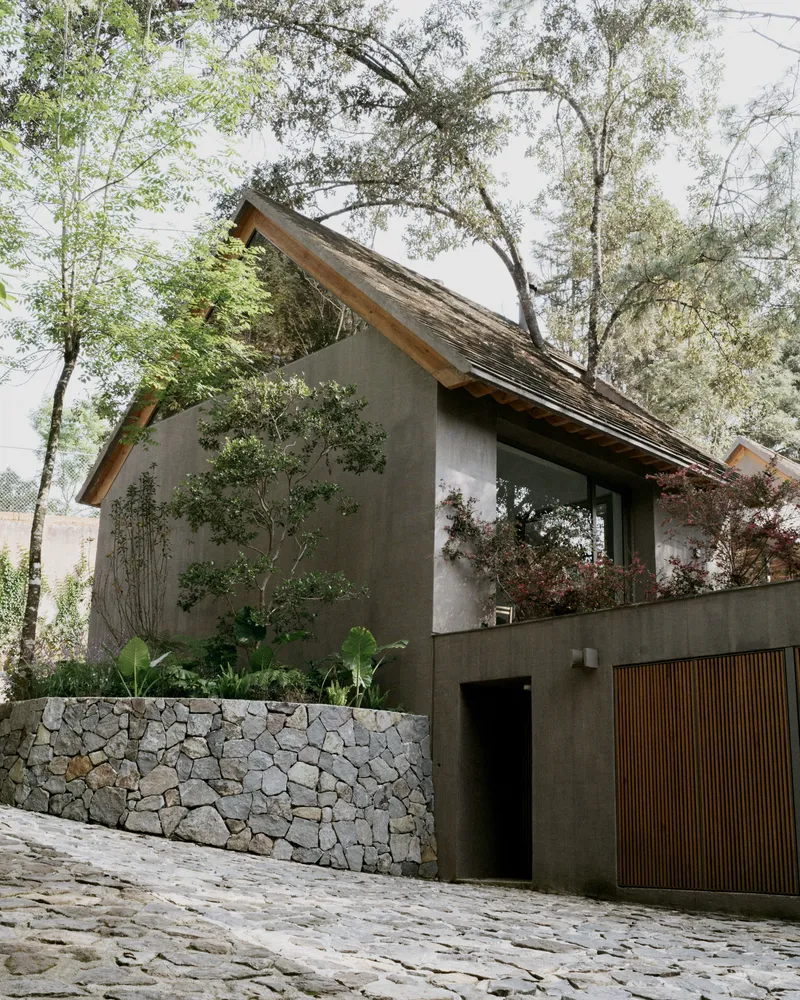
All the photographs are works of


Popular Articles
Popular articles from the community


Juan García Correa, John González and Claudia Rueda Sink a Circular Amphitheater into a Manizales Engineering Building
On the La Nubia campus in Manizales, Colombia, the S1 Building folds labs and offices into a hillside of ramped lawns that double as a campus route.

Cube Design Draws an Ecological Corridor Between Two Shenzhen Hills with the Nankai Building
Beside Shenzhen's container docks, the Nankai Building pairs stacked balconies with a climbing green screen to connect two hillsides across its height.

GROUP A Strips a 1969 Rotterdam Harbor Headquarters to Its Frame and Wraps It in Timber Louvers
In Rotterdam's M4H harbor district, Ferro Offices reuses a 1969 frame, adds one timber storey and reaches BREEAM-NL Outstanding.

Architekt Andreas Gruber Scatters 23 Dark Timber Chalets Across a South Tyrolean Forest Edge
In Molini di Tures, Amonti Chalets breaks a resort into a hamlet of gabled timber houses, with parking, storage and services pushed into the slope.

Similar Reads
You might also enjoy these articles


Hodi-Mandai Geram
Project Function: Preservation and revitalization of the Intangible heritage and socio-spatial identity of the Hodi by Housing, Cultural Memory Center, Sacred Grove, landscape, local tourism economy


Olio Towers: A Mid-Rise for Performers That Fuses Housing, Rehearsal, and Stage
Located blocks from Houston's Theater District, this modular tower stacks living units around a central performance atrium.

Oasis: Modular Green Housing Carved into Dhaka's Urban Fabric
A shortlisted Plugin Housing entry reclaims unauthorized settlements in Dhaka with stepped concrete volumes, green roofs, and ventilation-driven design.

Black Hole: A Floating Megastructure for the Post-Physical Era
Emiliano Mazzarotto envisions a spherical, self-scaling arena where e-sports, digital hotels, and holographic stadiums replace traditional public space.

Explore Architecture Competitions
Discover active competitions in this discipline

Challenge to reimagine the Iron Throne

Photograph architecture without architects

Illustrate the lost glory of Angkor Wat - Render Challenge

Design challenge to reuse E-waste
Comments (0)
Please login or sign up to add comments
No comments yet. Be the first to comment!