
SCCS Arquitectos Threads Hotel Apartments Through a Terraced Hillside in the Azores
In Angra do Heroísmo's UNESCO-listed core, maroon steel and curved glass grow from centuries-old stone walls and cobblestone streets.


Angra do Heroísmo, on the island of Terceira, is one of the oldest continuously settled towns in the Azores and a UNESCO World Heritage Site since 1983. Working inside that designation means every intervention is a negotiation between preservation mandates and the realities of contemporary hospitality. SCCS Arquitectos took on that negotiation directly with Angra + Hotel Apartments, a project that converts existing stone buildings into short-stay residential units while adding new volumes that step down the town's characteristic hillside.
What makes the project worth examining is the frankness of its additions. Rather than hiding new construction behind pastiche facades, the architects introduced concrete block volumes, maroon-painted steel frames, and curved glazed walls that sit in clear dialogue with white stucco, basalt masonry, and iron balconies. The result reads as a single compound, not a museum piece with an embarrassed annex. It is rehabilitation that owns its moment in time.
Street Presence and the White Facade
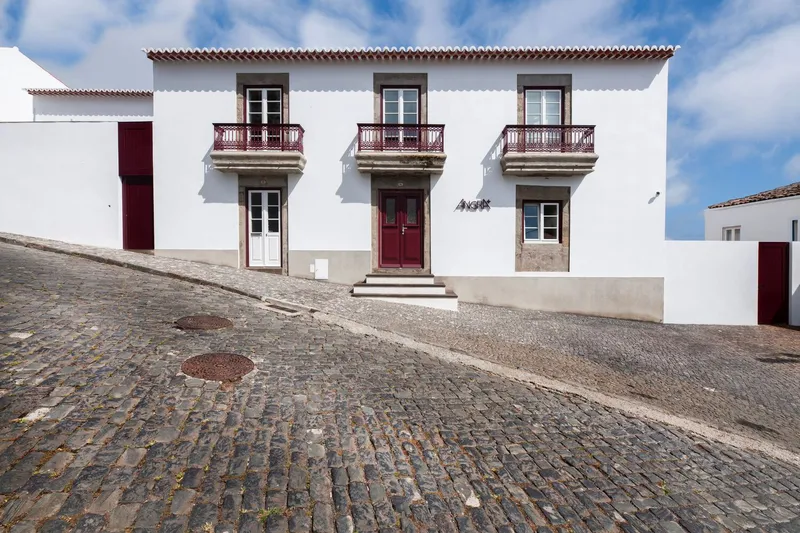
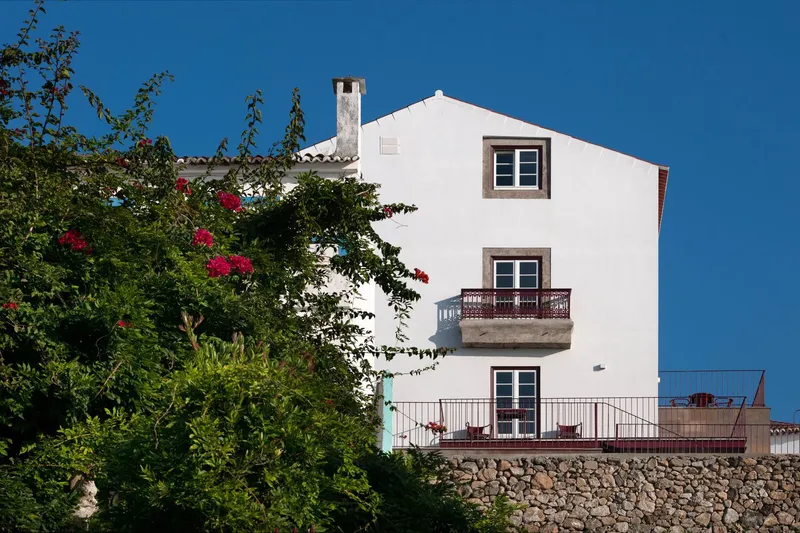
From the cobblestone street, the project reads as a traditional Azorean house: white rendered walls, regularly spaced windows, iron balconies, and maroon-painted doors. Bougainvillea climbs a stone retaining wall below. The discipline here is restraint. SCCS Arquitectos cleaned and repaired rather than redesigned, keeping the public face of the building legible within a streetscape that has looked roughly this way for centuries.
The maroon color that appears on the street-side doors becomes a leitmotif throughout the project, reappearing on steel frames, railings, and rooftop structures. It links old joinery to new metalwork, giving the compound a chromatic coherence that reads as intentional rather than coincidental.
New Volumes on the Hillside
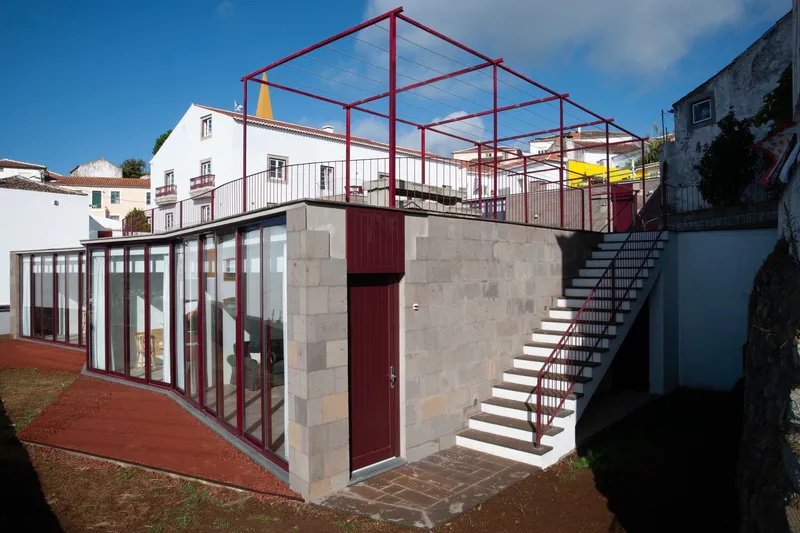
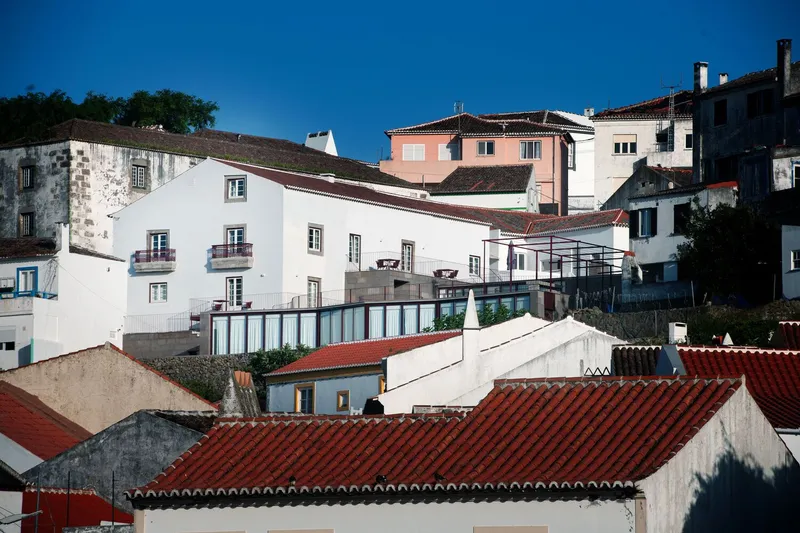
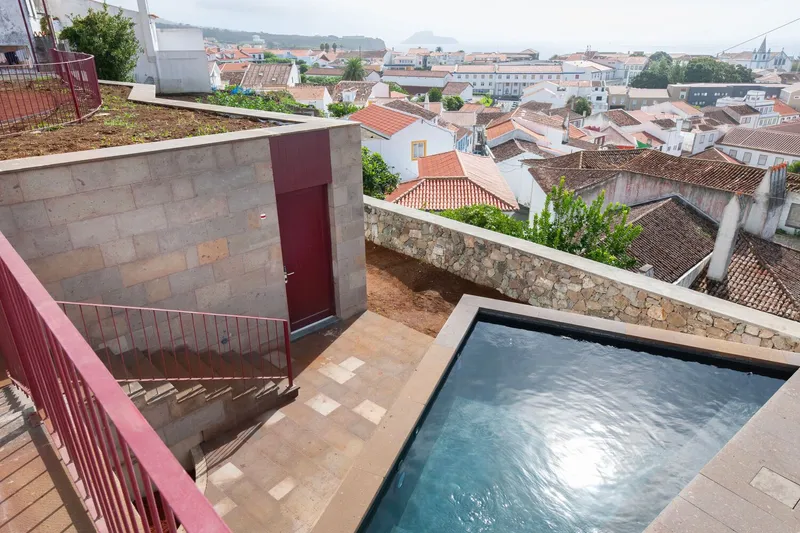
Step behind the heritage facade and the project reveals its contemporary ambition. A concrete block volume with generous glazed walls rises above the terraced rooftops, crowned by a maroon steel rooftop structure that reads almost like scaffolding frozen in place. Seen from the hillside, the glazed addition sits among terracotta roofs without trying to mimic them. It is honest about its material identity: steel, glass, concrete.
The rooftop terrace caps the composition with a rectangular pool cantilevered over the descending terrain. The view from here takes in the harbor, the town's layered roofscape, and the volcanic landscape beyond. It is the kind of payoff that justifies the vertical climb through the building's section.
The Courtyard as a Hinge
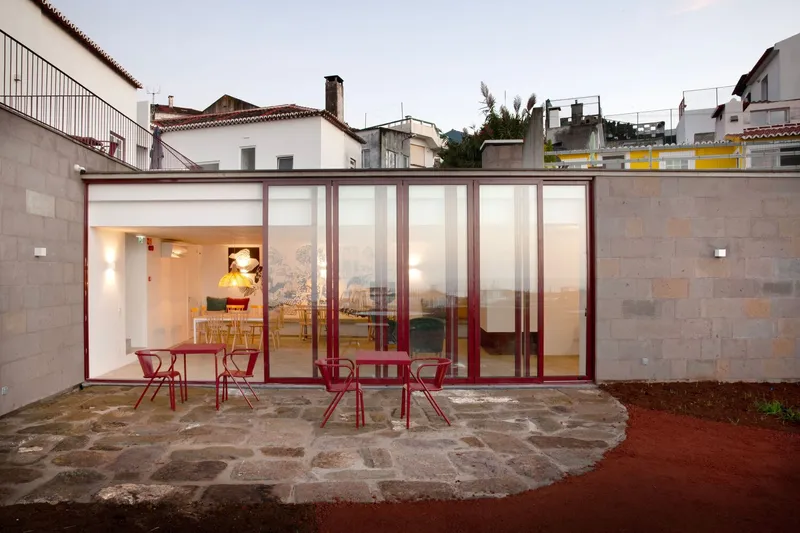
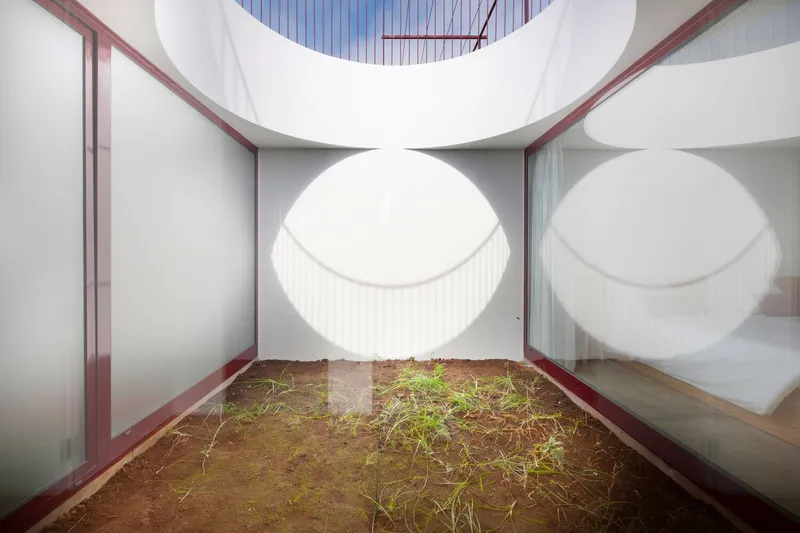
Two courtyards organize the plan and the experience. At ground level, a glass pavilion framed in maroon steel opens onto a cobblestone patio, its transparency making the boundary between inside and outside almost irrelevant at dusk. Deeper in the plan, an interior courtyard receives light through a circular skylight, with white reflecting panels amplifying daylight into the surrounding rooms.
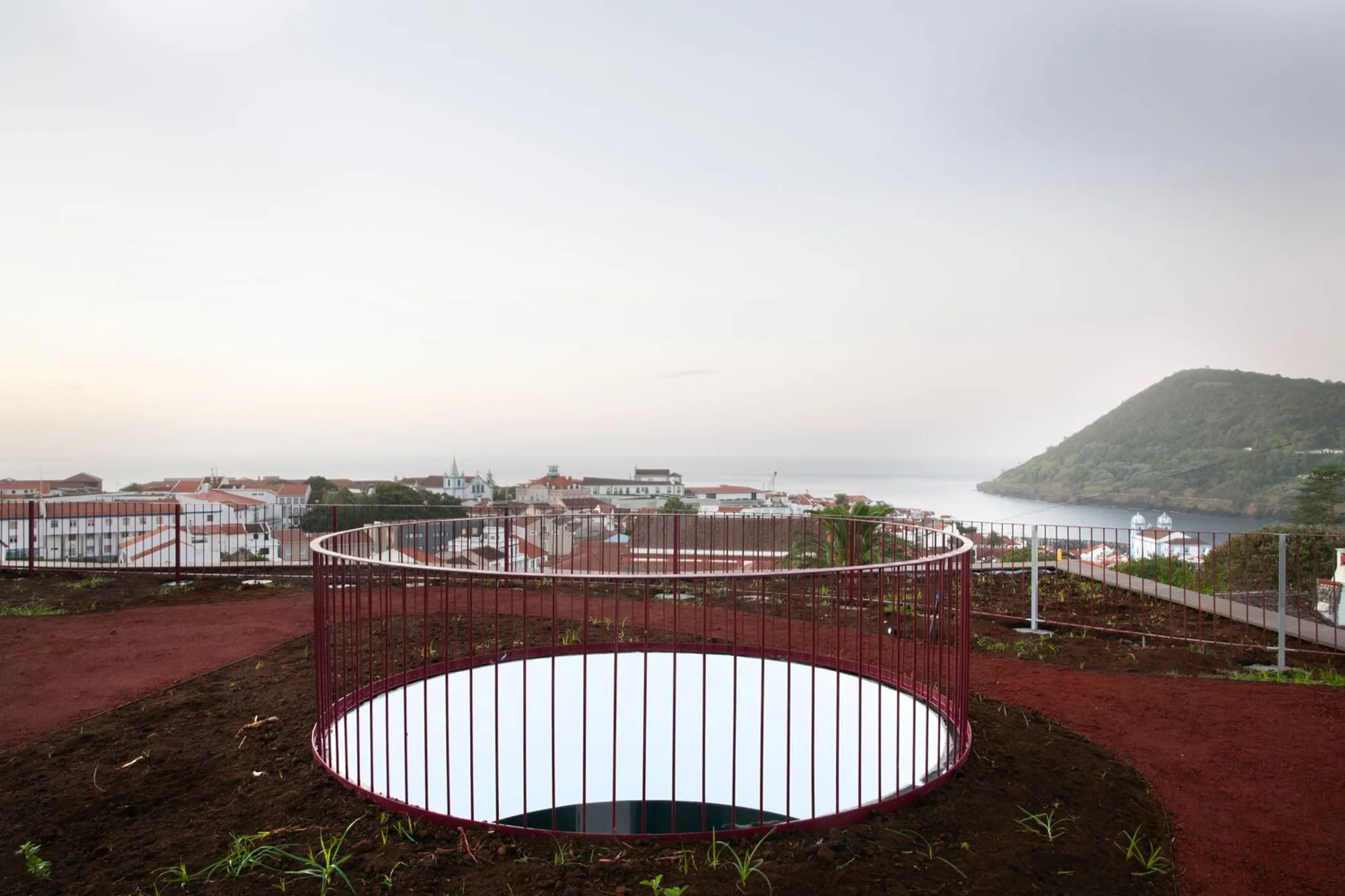
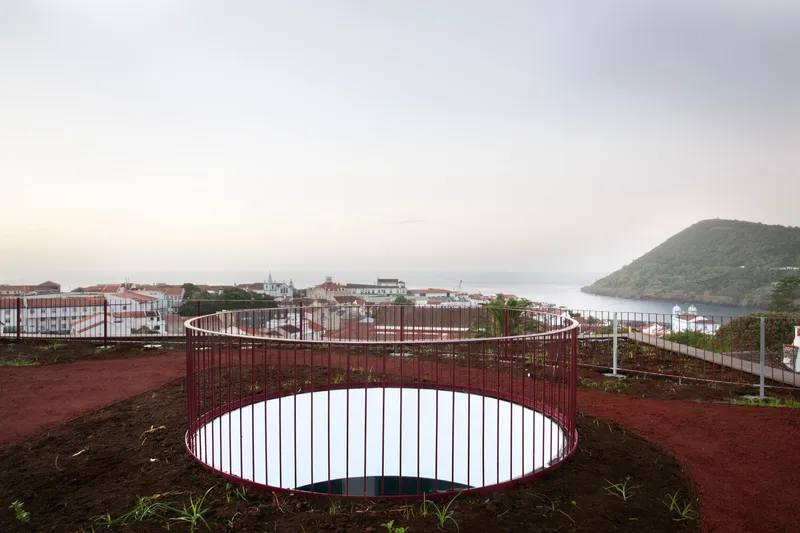
The circular motif recurs at the upper terrace level, where a red steel railing traces a planted courtyard that looks out over the harbor. The geometry is deliberate: the circle pulls your eye inward to the planting and then outward to the panorama. It functions simultaneously as a light well, a garden, and a belvedere, which is a lot of work for a single architectural gesture.
Rooftop Terrace and Curved Glass
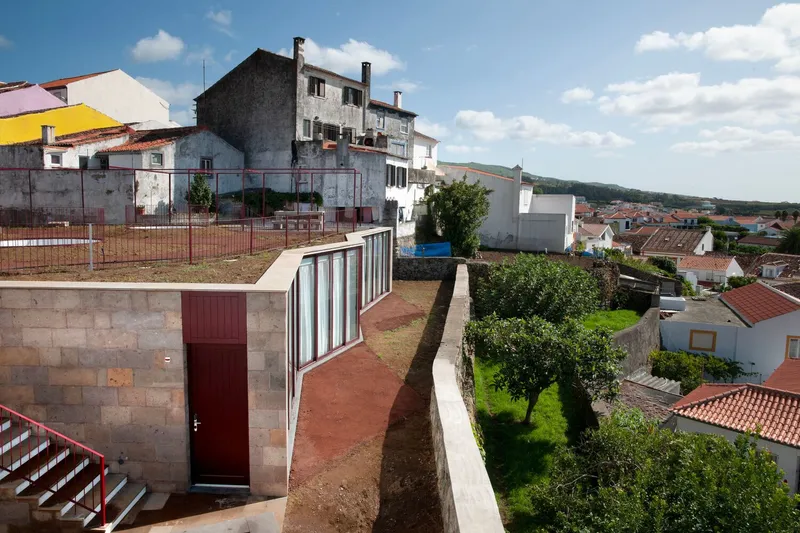
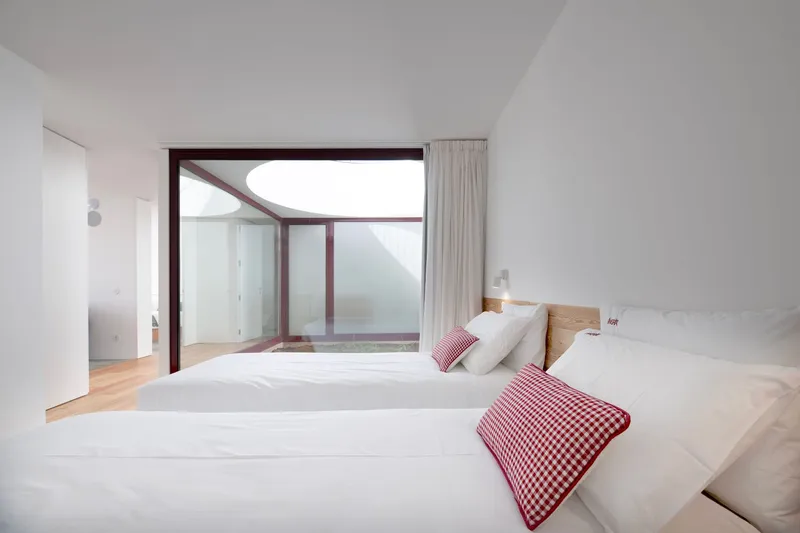
The curved glazed walls that appear on the rooftop terrace and in the bedrooms are the project's most distinctive formal move. They soften what could be a rigid steel-and-concrete addition, and they frame views in a cinematic way, panning across the landscape rather than framing a single static picture. From the bedroom, a red-framed curved window opens directly onto the planted terrace courtyard, collapsing the distance between private sleeping space and shared outdoor life.
The maroon door on the terrace level, set against the curve of glass, condenses the project's material argument into a single frame: heritage color palette, contemporary construction technique, landscape as backdrop.
Interior Life: Stone, Wood, and White
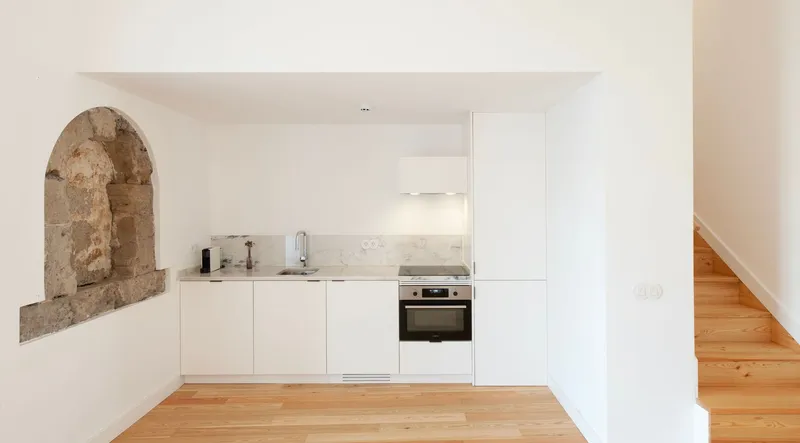
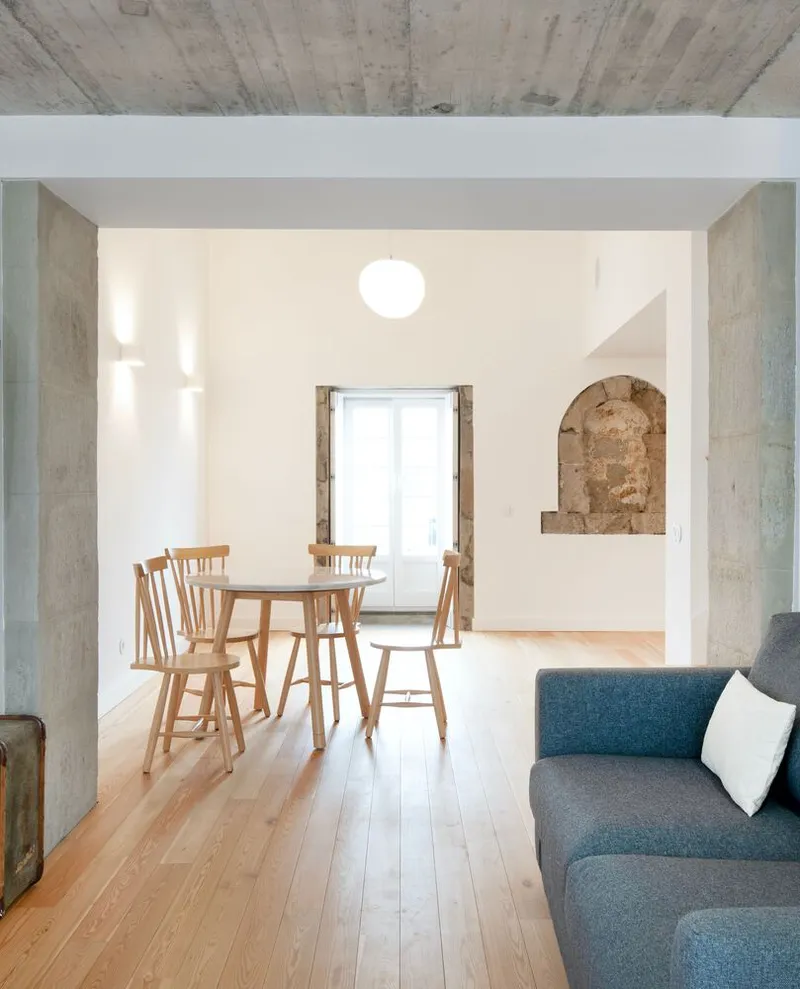
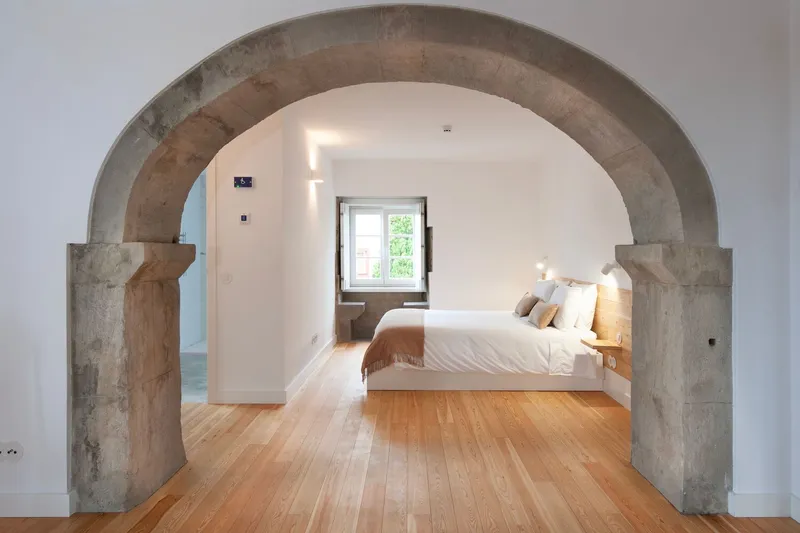
Inside the apartments, the palette is deliberately restrained. Light wood flooring runs through every unit, providing warmth against white plastered walls and ceilings. The preserved stone arches do the heavy lifting in terms of character. In the kitchen, an exposed stone arch becomes a niche; in the bedrooms, arched doorways frame the view through successive rooms, creating a depth of field that makes modest floor areas feel generous.
Concrete columns appear in the open living spaces, marking the structural transition from old masonry to new frame. They are left exposed, not clad or painted, which reads as an honest acknowledgment of where the original building ends and the addition begins.
Kitchen and Dining Details
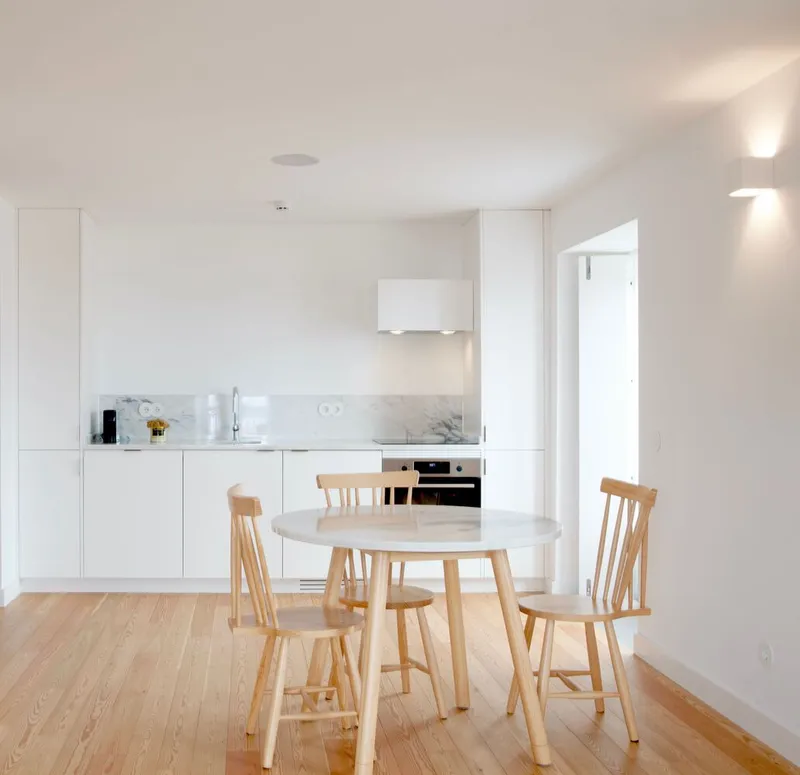
The kitchens share a language of white cabinetry, marble backsplashes, and light wood dining furniture. They are compact and functional, designed for short-stay guests rather than serious home cooks, but the material quality lifts them above the typical hotel-apartment fit-out. The marble, in particular, connects to the Azorean tradition of stone craftsmanship without being literal about it.
Plans and Drawings
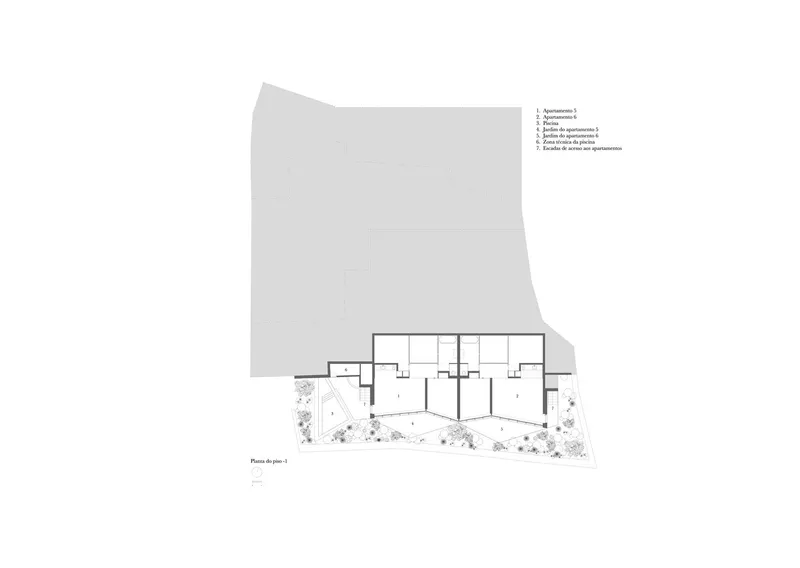
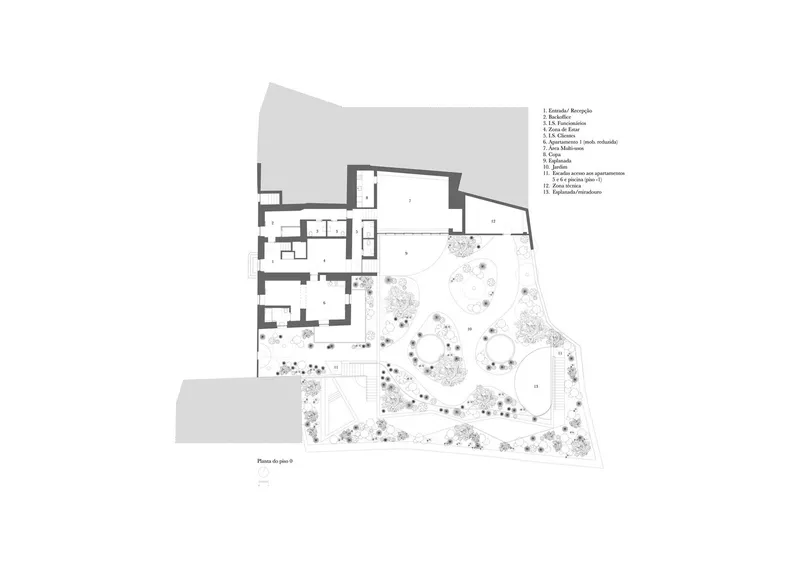
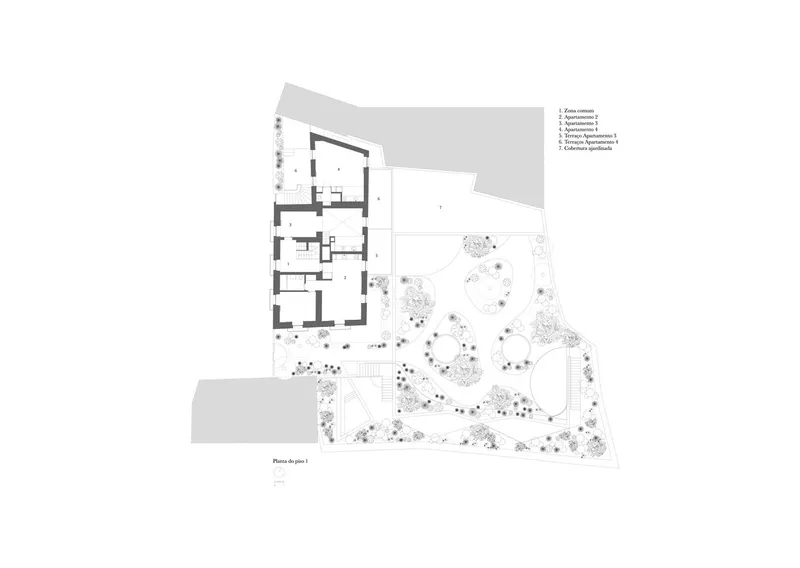
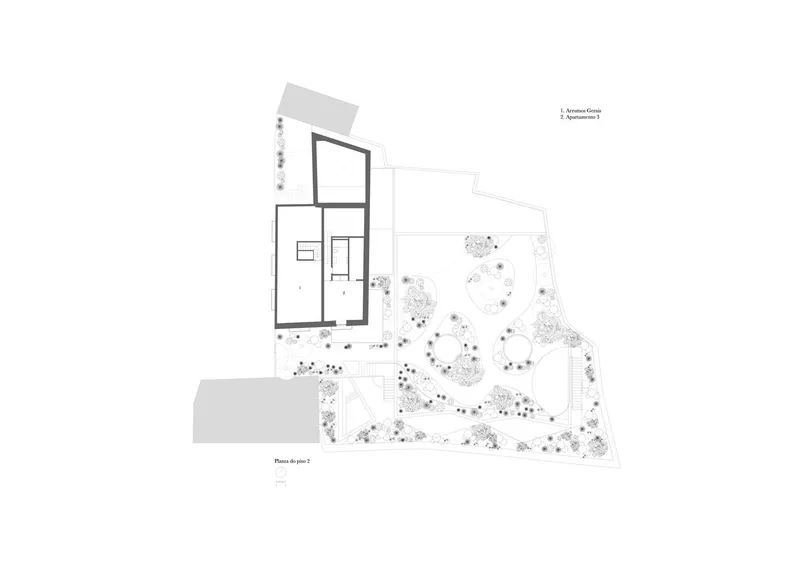
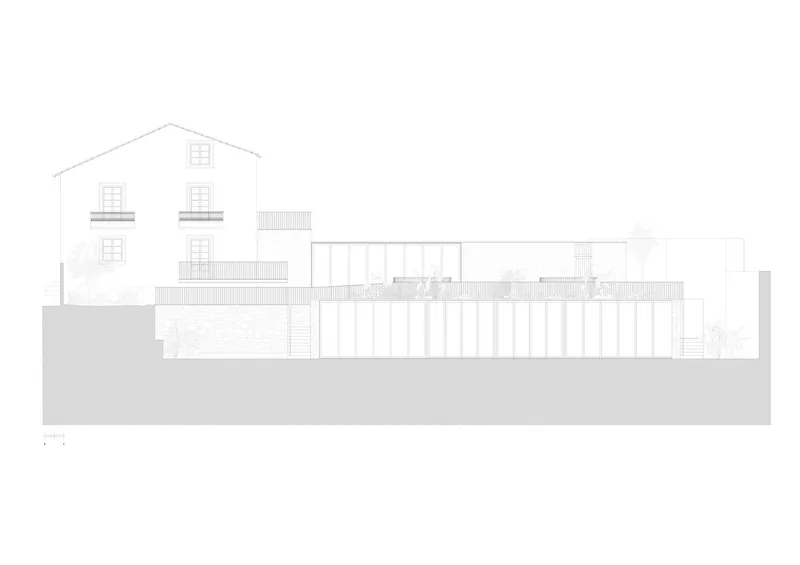
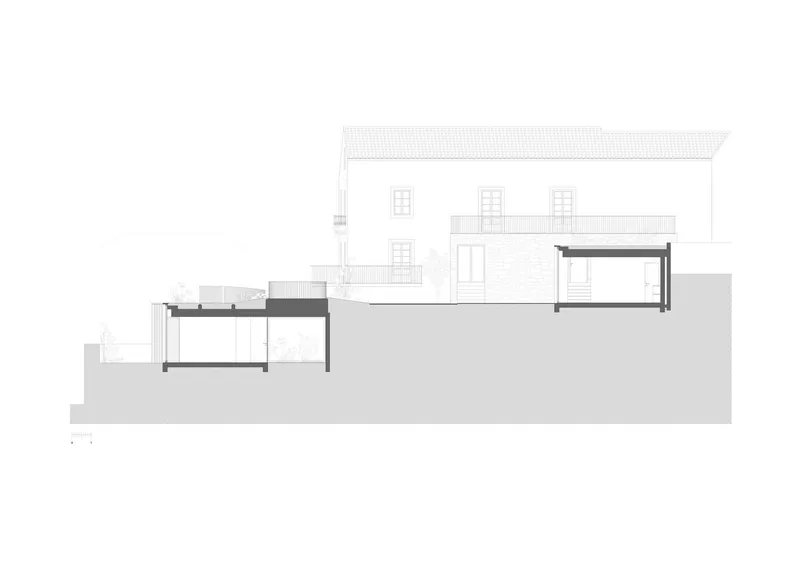
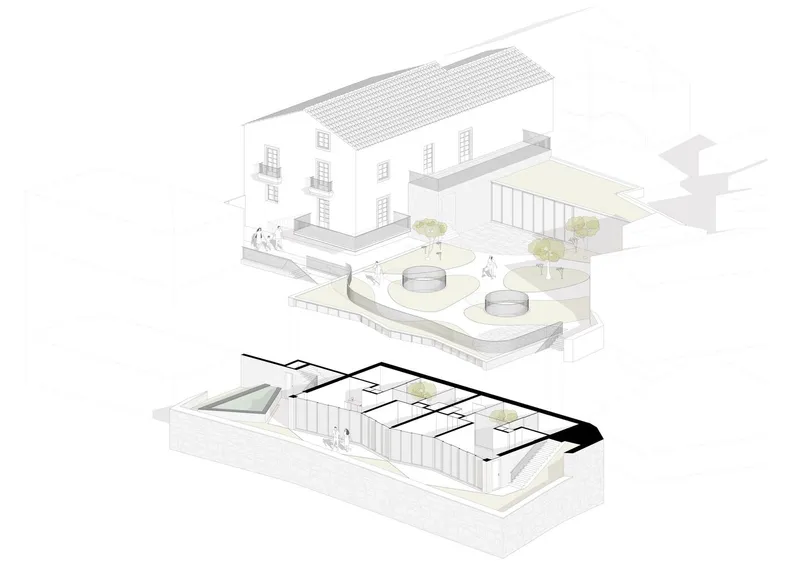
The floor plans reveal how SCCS Arquitectos carved multiple residential units out of what reads on the street as a single house. Landscaped gardens with circular pathways occupy the spaces between buildings, threading planting through the section from ground level to rooftop. The section drawing is the most telling: interior levels step down the hillside, following the natural topography, with covered terraces at each tier. The elevation confirms that the horizontal extension hugs the slope rather than fighting it.
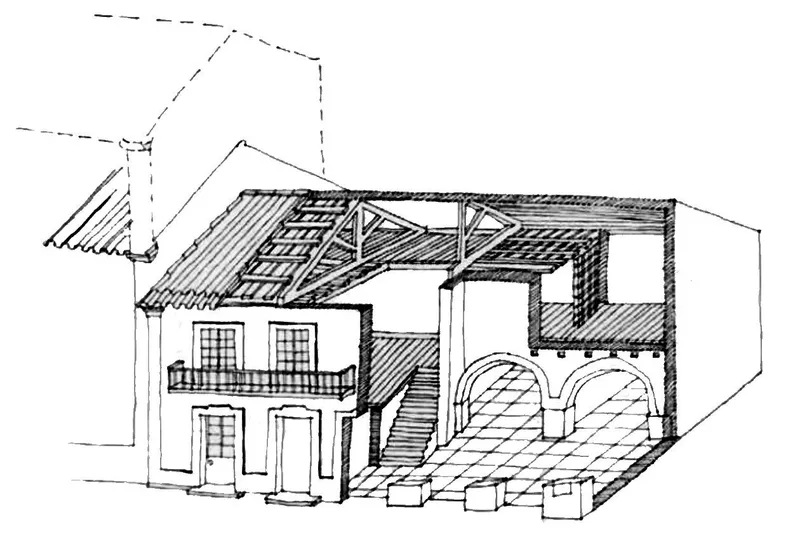
The exploded axonometric separates roof, terrace, and floor plates to show planted trees occupying the courtyard voids between structural levels. The cutaway sketch goes further, exposing timber roof structure above and arched underground spaces below, evidence that the historic masonry does not stop at ground level. The building has archaeological depth, and the architects have incorporated that depth into the section rather than burying it under new construction.
Why This Project Matters
Heritage rehabilitation in UNESCO-listed towns often produces one of two outcomes: timid restoration that freezes a building in amber, or aggressive insertion that treats the old fabric as a stage set. Angra + Hotel Apartments avoids both traps. By using a bold material palette (maroon steel, curved glass, raw concrete) within a careful reading of the site's topography and chromatic traditions, SCCS Arquitectos demonstrate that respect for history and confidence in contemporary design are not mutually exclusive.
The project also offers a pragmatic model for adaptive reuse in small island towns where tourism is an economic lifeline but overdevelopment is a genuine threat. Rather than demolishing and rebuilding, the architects worked with the existing stone structure, adding volume only where the hillside section allowed it. The result is a hospitality program that fits within the urban grain of Angra do Heroísmo without distorting it, and a set of spaces that feel specific to their place rather than imported from a design catalog.
Angra + Hotel Apartments by SCCS Arquitectos, Angra do Heroísmo, Azores, Portugal. Photography by Jorge Figanier Castro.
About the Studio
Share Your Own Work on uni.xyz
If projects like this are the kind of work you want to make, uni.xyz is a place to publish your own, find collaborators, and enter design competitions.




Popular Articles
Popular articles from the community

AL-JANNAH: Sustainable Architecture and Permaculture for Afghan Widows
AL-JANNAH uses sustainable architecture and permaculture to create resilient oasis of housing, learning, work and renewal for Afghan widows.

Riyadh For All: Intergenerational Urban Design for Active Aging in Rabat
Riyadh For All reimagines urban design in Rabat with intergenerational co-living, adaptive courtyards, and Moroccan cultural exchange today.

Hill & Cross Opera: Sculptural Opera House Architecture Shaped by Tallinn’s Landscape and Identity
Hill & Cross Opera reimagines opera house architecture in Tallinn through its sculptural hill, civic plaza, glass wave and a luminous cross.

The Earth Pod: 3D Printed Homes for Resilient Refugee Communities
The Earth Pod reimagines refugee housing through 3D printed homes made from clay, combining resilience, self-sufficiency, and rapid shelter.

Similar Reads
You might also enjoy these articles


Hodi-Mandai Geram
Project Function: Preservation and revitalization of the Intangible heritage and socio-spatial identity of the Hodi by Housing, Cultural Memory Center, Sacred Grove, landscape, local tourism economy


Olio Towers: A Mid-Rise for Performers That Fuses Housing, Rehearsal, and Stage
Located blocks from Houston's Theater District, this modular tower stacks living units around a central performance atrium.

Oasis: Modular Green Housing Carved into Dhaka's Urban Fabric
A shortlisted Plugin Housing entry reclaims unauthorized settlements in Dhaka with stepped concrete volumes, green roofs, and ventilation-driven design.

Black Hole: A Floating Megastructure for the Post-Physical Era
Emiliano Mazzarotto envisions a spherical, self-scaling arena where e-sports, digital hotels, and holographic stadiums replace traditional public space.


Explore Architecture Competitions
Discover active competitions in this discipline



Challenge to reimagine the Iron Throne


Photograph architecture without architects


Illustrate the lost glory of Angkor Wat - Render Challenge


Design challenge to reuse E-waste
Comments (0)
Please login or sign up to add comments
No comments yet. Be the first to comment!