

Ängsdals School By STADSTUDIO AB
A contemporary Swedish school forming a protective shell around learning, blending concrete, timber, daylight, and landscape into a calm educational environment.


A Contemporary Learning Environment Shaped by Landscape, Light, and Structure
Located in Väster, Sweden, near the dramatic threshold of the Öresund Bridge, Ängsdals School by STADSTUDIO AB stands as a contemporary landmark and one of the first educational buildings encountered when entering Sweden from Denmark. Designed to accommodate 350 students within a complex and infrastructure-heavy site, the project responds to its challenging surroundings: highways, railways, and noise: through a carefully articulated architectural strategy that prioritizes learning, protection, and spatial clarity.
Architecture as a Protective Shell
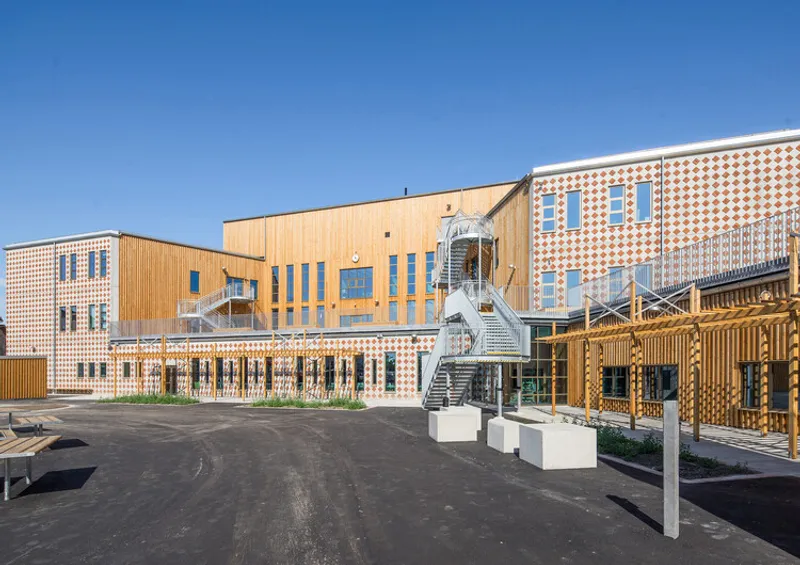
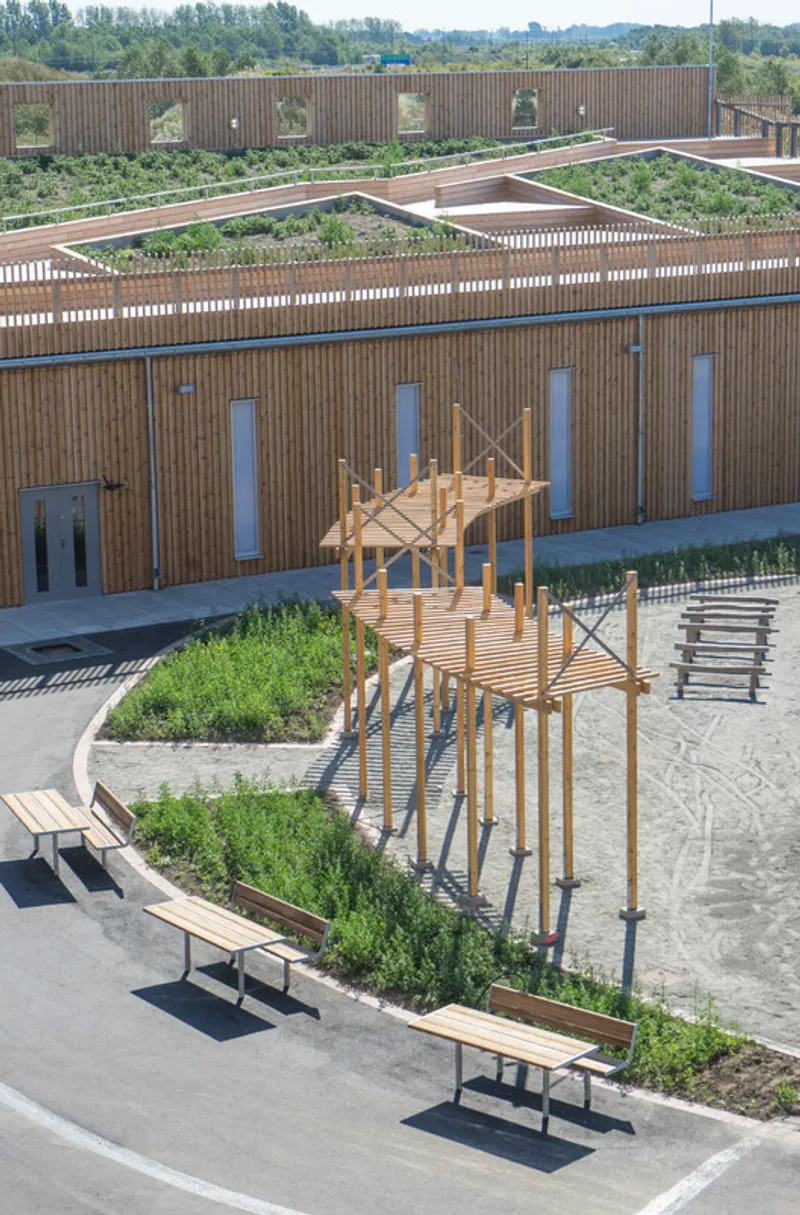
The school’s geometry is conceived as a protective shell, wrapping itself around a central schoolyard to shield students from traffic noise while creating a calm and focused internal environment. The building’s massing is composed of interlocking volumes that respond dynamically to both the urban context and the inner courtyard, balancing openness with enclosure.
This shell-like configuration allows classrooms to line the outer perimeter, while the heart of the building is reserved for shared and social spaces: encouraging interaction, visibility, and a sense of community.
A Central Core for Learning and Interaction
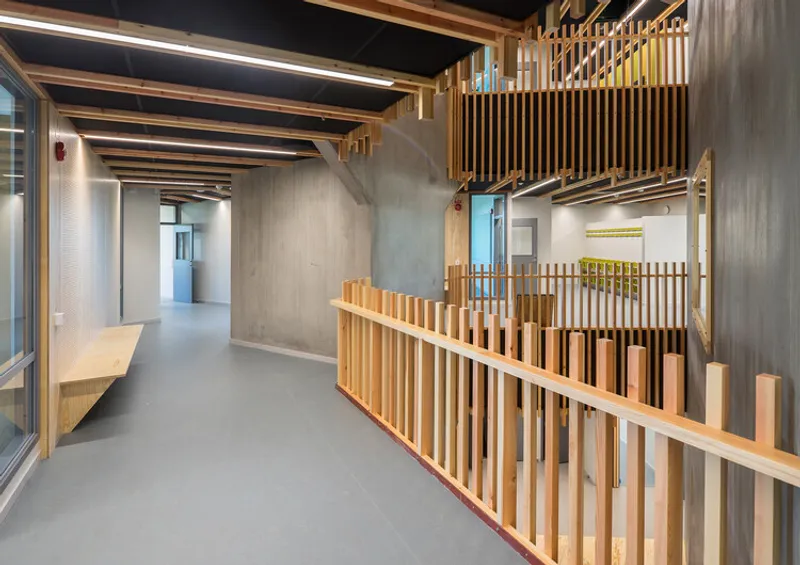
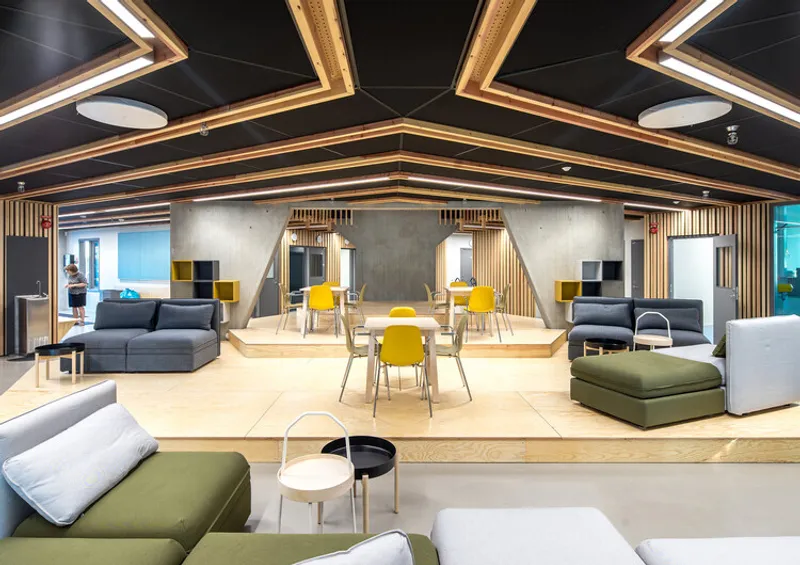
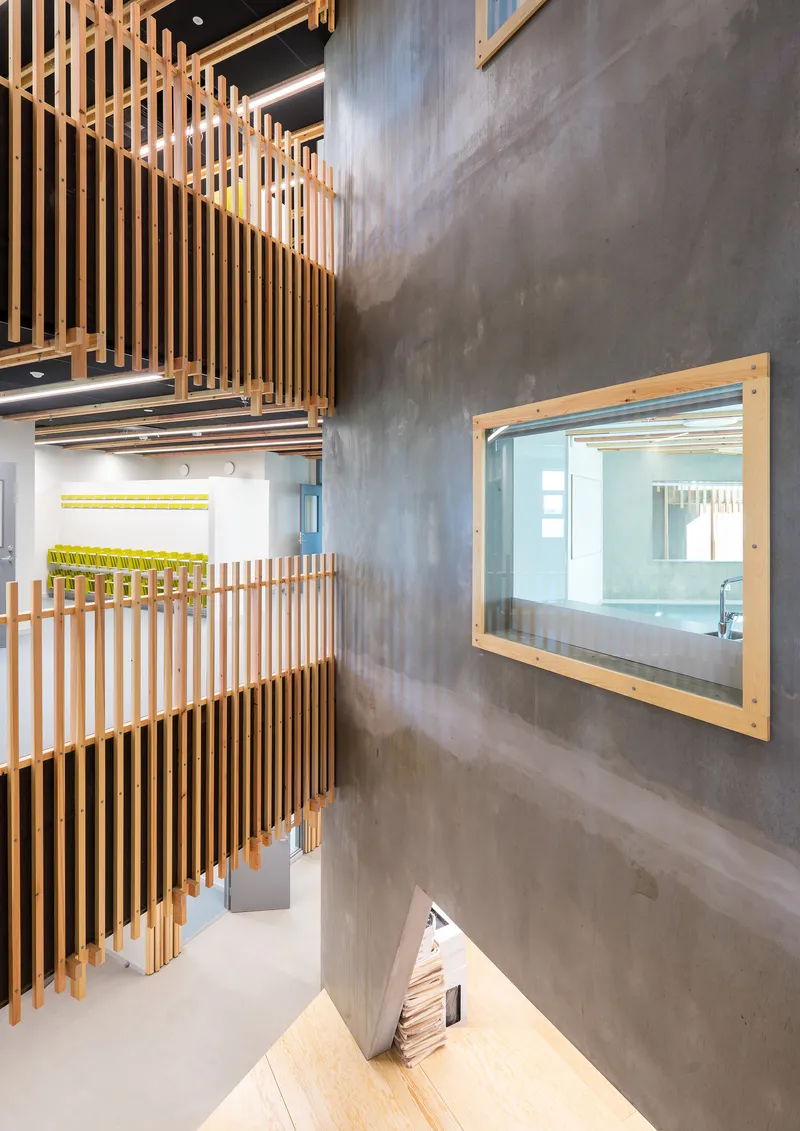
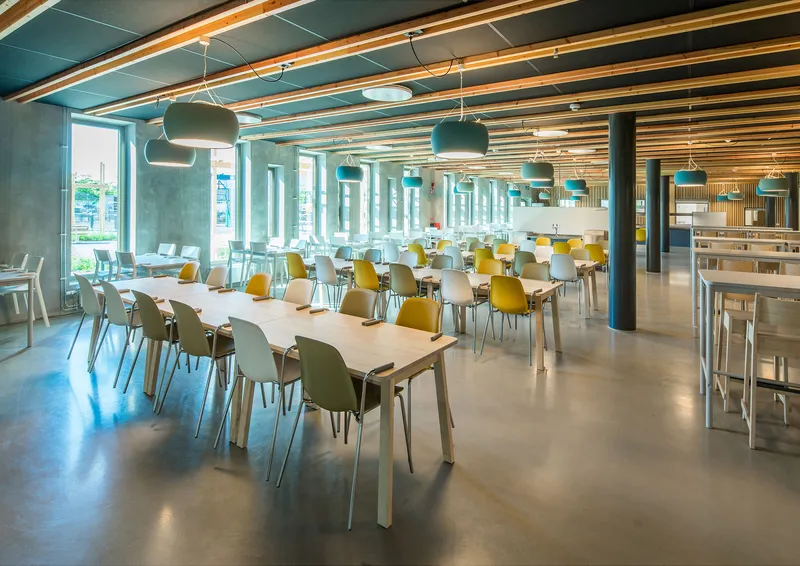
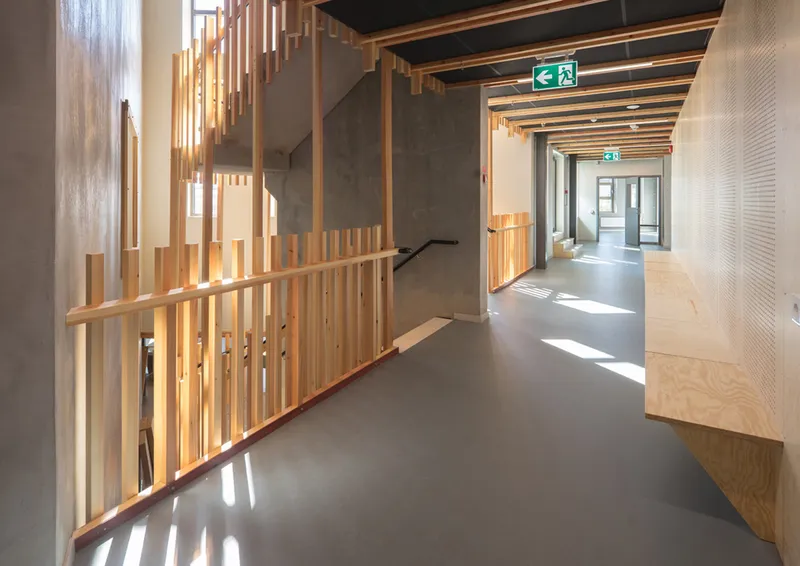
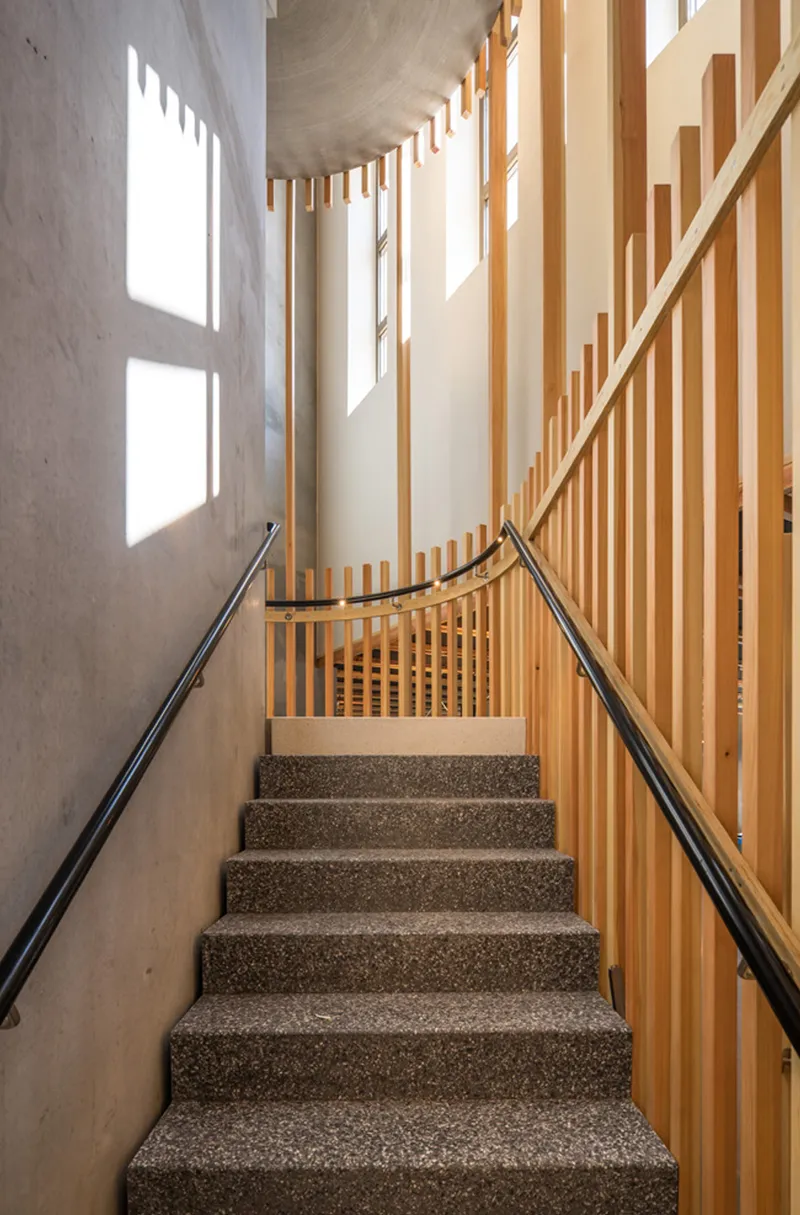
At the core of Ängsdals School lies a vertical communal space that replaces traditional corridors with open meeting areas and visual connections between floors. This spatial strategy reduces circulation space while enhancing orientation and social exchange. The core houses key creative functions such as the art classroom, media library, and shared learning zones, while opening directly onto the dining hall at ground level.
By increasing sightlines and minimizing enclosed hallways, the design fosters transparency, safety, and a more engaging educational experience.
Material Hierarchy and Sensory Balance
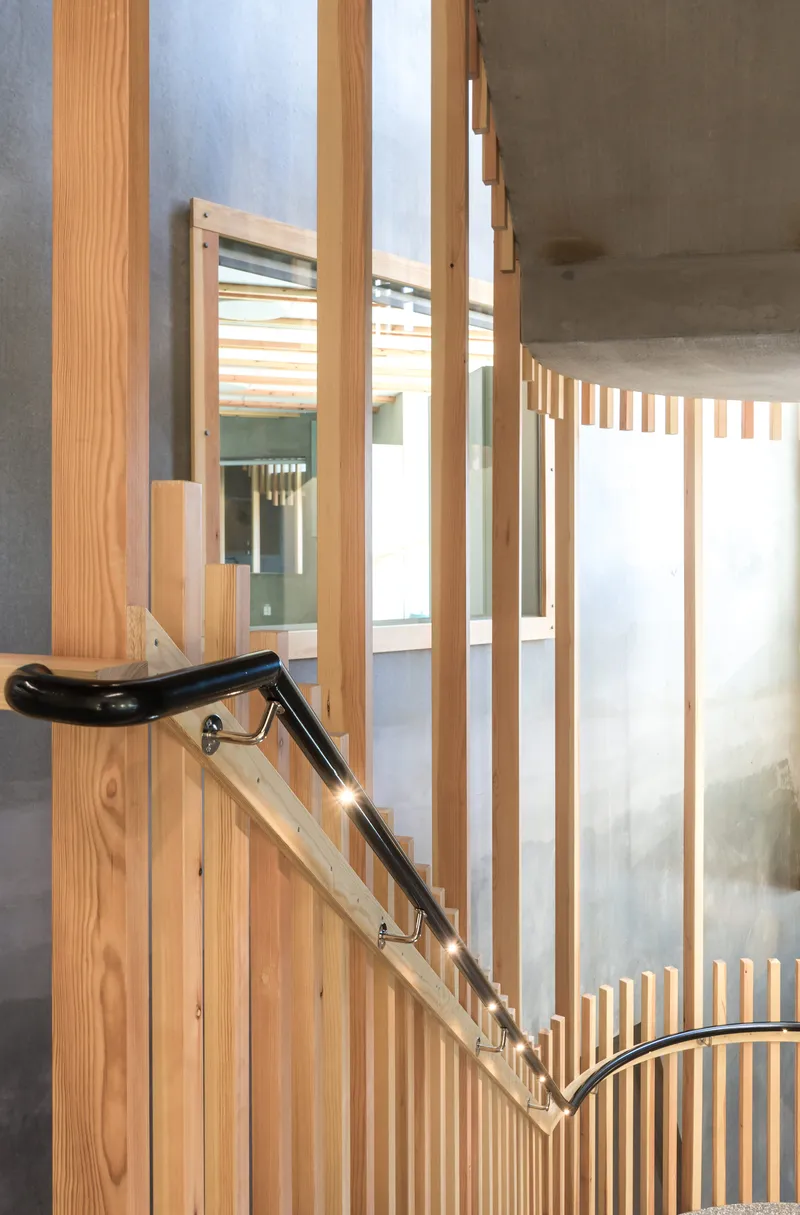
Material choices reinforce the hierarchy of spaces. Exposed concrete columns, beams, and slabs clearly express the building’s structural logic, especially around the central core. In contrast, surfaces frequently touched by students: handrails, seating, wall panels: are finished in warm, refined timber, offering tactile comfort and acoustic softness.
This interplay between raw and warm materials creates a balanced atmosphere: robust and honest in construction, yet intimate and inviting in daily use.
Learning Landscapes Inside and Out
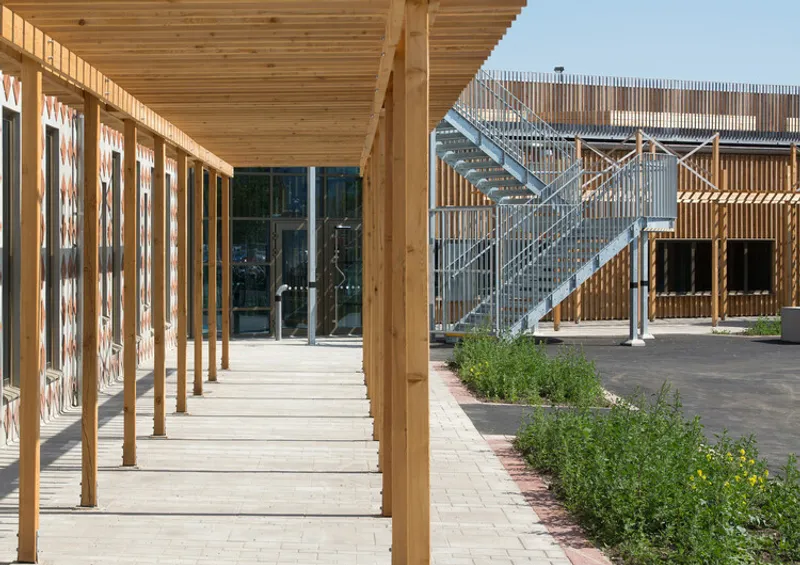
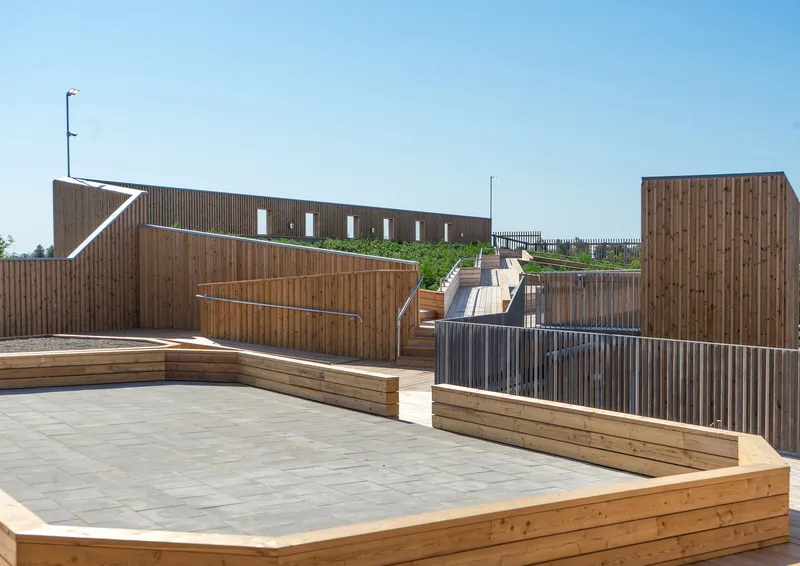
The schoolyard is conceived as a layered landscape, extending from ground level up to roof terraces. Outdoor spaces are seamlessly integrated with indoor learning environments, encouraging movement, exploration, and play. Multiple circulation paths promote varied movement patterns and reinforce a strong sense of cohesion throughout the school.
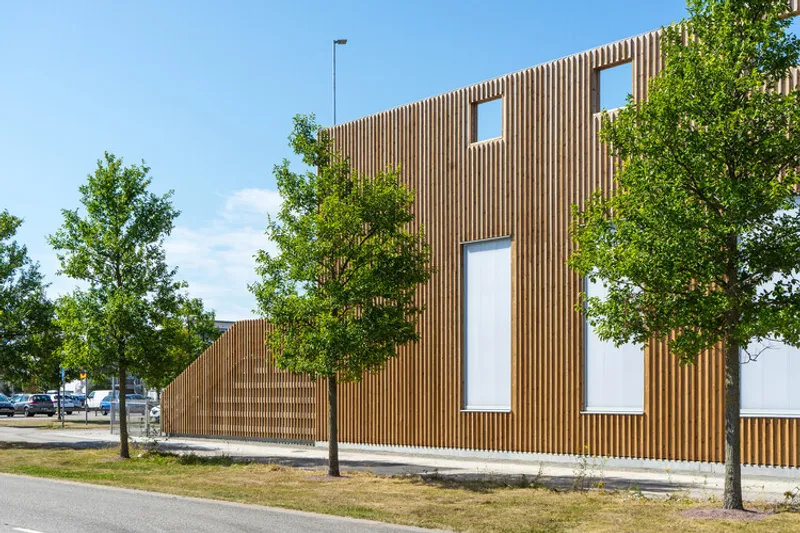
An adjoining gymnasium anchors the eastern edge of the site. Its inclined roof terrace not only mitigates traffic noise but also improves visibility and accessibility, further strengthening the relationship between indoor and outdoor spaces.
Durable Facades with Subtle Expression
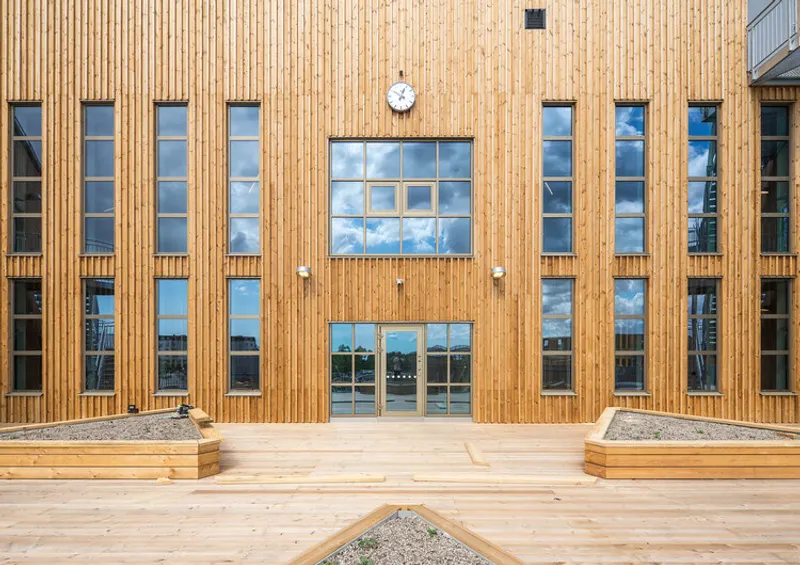
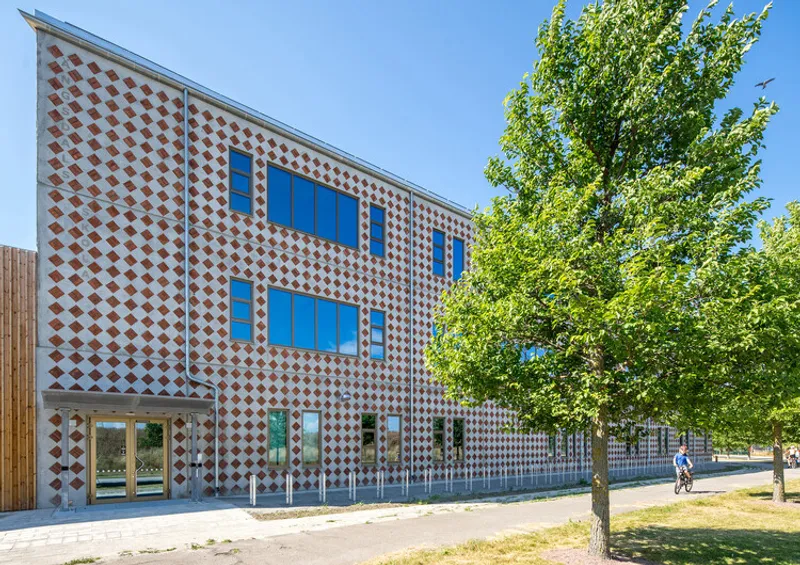
The exterior material palette is deliberately restrained and highly durable. The outer facade features concrete cast with integrated bricks, creating a soft, textile-like texture that responds to the infrastructural surroundings. Toward the courtyard, ribbed wooden cladding introduces warmth, shadow, and human scale, softening the building’s appearance and enhancing the student experience.
A School Designed for Learning and Longevity
Ängsdals School exemplifies how thoughtful architectural design can transform a complex site into a cohesive, nurturing learning environment. Through spatial clarity, material honesty, and landscape integration, the project demonstrates a progressive approach to contemporary school architecture: one that places students, community, and long-term durability at its core.
All the photographs are works of Carl Tengström and Olof Nilsson


Popular Articles
Popular articles from the community


U.GA Architects Wraps an Oval Rooftop Pool in Curved Board-Formed Concrete on Busan's Jeollidan-gil
In Busan's Jeonpo-dong, a 454 m² mixed-use block stacks a neighborhood facility, guest rooms and an oval rooftop pool inside spiraling concrete walls.

LT2A and OPEN Architectes Thread a Brick and Glass High School Through a Wooded Belgian Campus
In Braine-l'Alleud, a 3,000 m² wing for Collège Cardinal Mercier pairs pale brick with a glazed colonnade, deferring to a small chapel and a dense wood.

longwave studio Reorganizes a 112 m² Tainan Apartment Around the Daily Routines of a Family and Two Cats
In Tainan, Taiwan, birch plywood, rust-red furniture and a freestanding plaster wall link arrival, storage, work and family life in one apartment.

Jaramillo Van Sluys Arquitectura and Urbanismo Turn a Demolished Registry Lot in Quito into an Orchard Plaza
In Quito's Centro Histórico, a 2,800 m² plaza exposes the San Agustín convent wall and redraws its lost Augustinian orchard in volcanic stone.

Similar Reads
You might also enjoy these articles


Hodi-Mandai Geram
Project Function: Preservation and revitalization of the Intangible heritage and socio-spatial identity of the Hodi by Housing, Cultural Memory Center, Sacred Grove, landscape, local tourism economy


Olio Towers: A Mid-Rise for Performers That Fuses Housing, Rehearsal, and Stage
Located blocks from Houston's Theater District, this modular tower stacks living units around a central performance atrium.

Oasis: Modular Green Housing Carved into Dhaka's Urban Fabric
A shortlisted Plugin Housing entry reclaims unauthorized settlements in Dhaka with stepped concrete volumes, green roofs, and ventilation-driven design.

Black Hole: A Floating Megastructure for the Post-Physical Era
Emiliano Mazzarotto envisions a spherical, self-scaling arena where e-sports, digital hotels, and holographic stadiums replace traditional public space.

Explore Educational Building Competitions
Discover active competitions in this discipline

Challenge to design public laboratory

Challenge to reimagine the Iron Throne

Photograph architecture without architects

Illustrate the lost glory of Angkor Wat - Render Challenge
Comments (0)
Please login or sign up to add comments
No comments yet. Be the first to comment!