

Antonio House by Simón Albina and Tomás Rossini: Modern Residential Architecture in City Bell, Argentina
Antonio House by Simón Albina and Tomás Rossini features elevated concrete, exposed brick, wood interiors, west gallery, and seamless indoor-outdoor modern design.


Located in the serene neighborhood of City Bell, Argentina, the Antonio House designed by architects Simón Albina and Tomás Rossini is a contemporary residential project that harmoniously blends modern design with the natural landscape. Completed in 2023 and spanning 1938 ft², this home is a study in spatial efficiency, materiality, and environmental responsiveness, capturing both privacy and openness in its unique design.
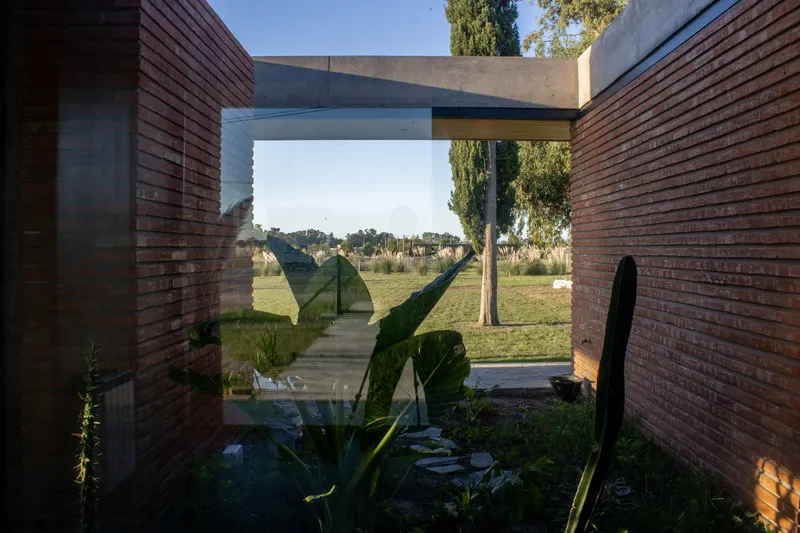
Site and Context
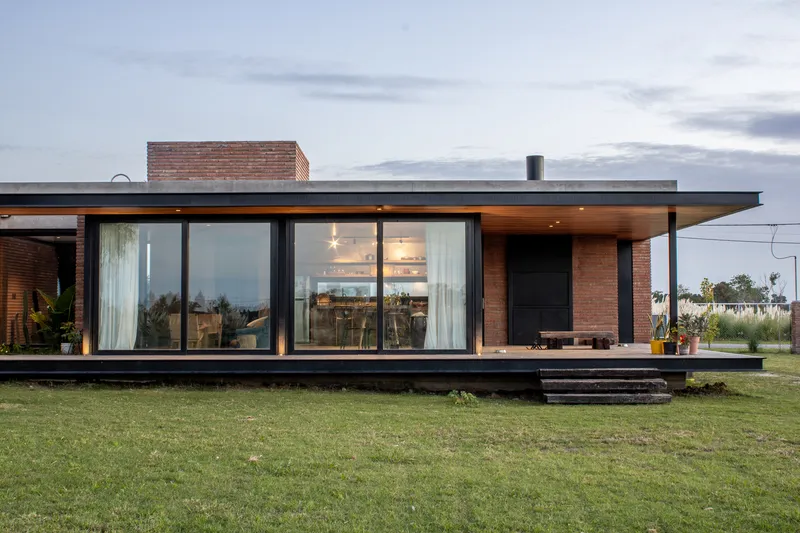
Perched twelve meters from the municipal boundary, the house occupies a generous plot characterized by a steep slope on one side. This natural topography inspired a design that elevates the building on concrete beams, allowing unobstructed views of the surrounding park while minimizing its footprint on the terrain. This elevated structure not only enhances the visual connection with the landscape but also introduces a dynamic interplay of light and shadow across the facade.
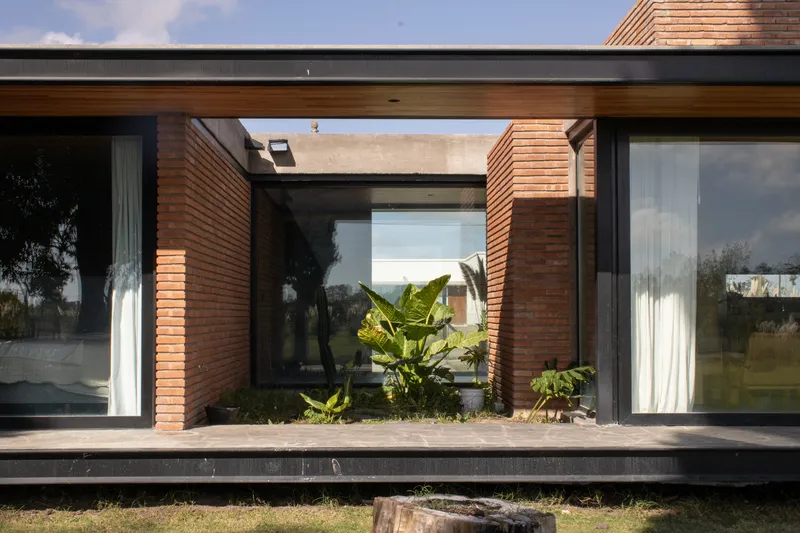
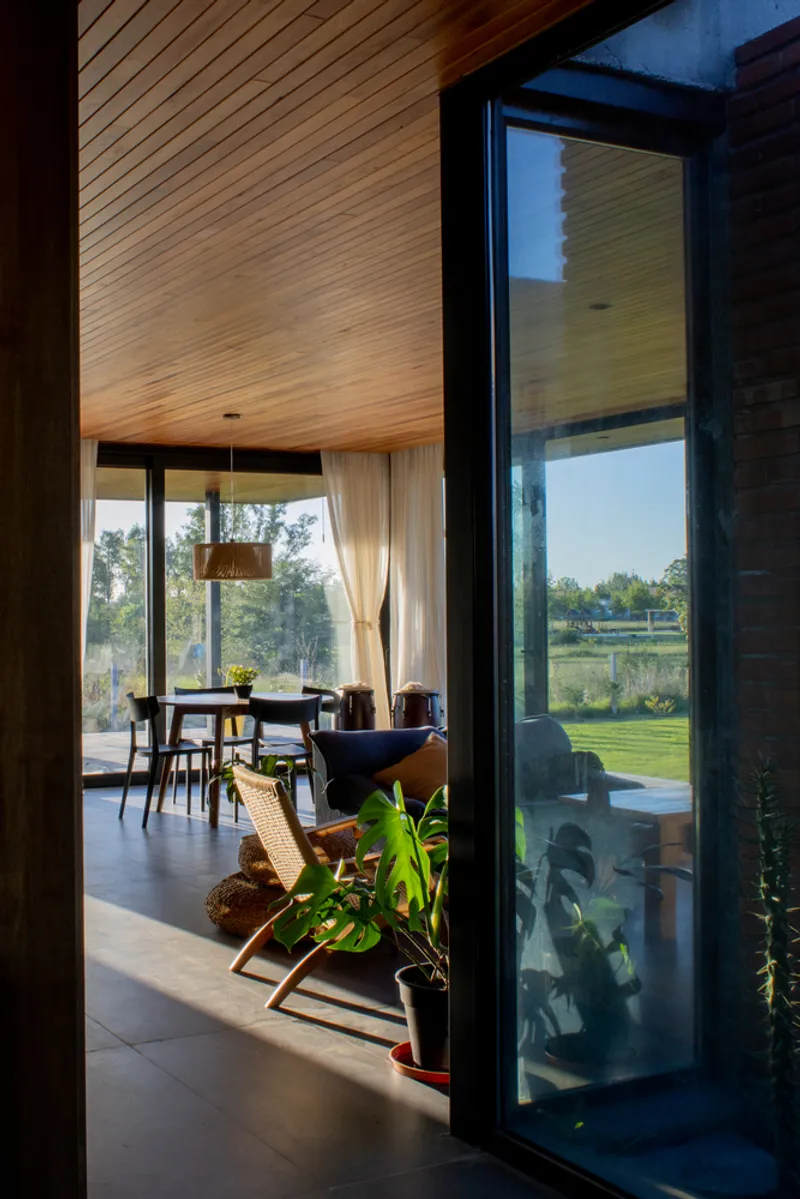
Architectural Organization
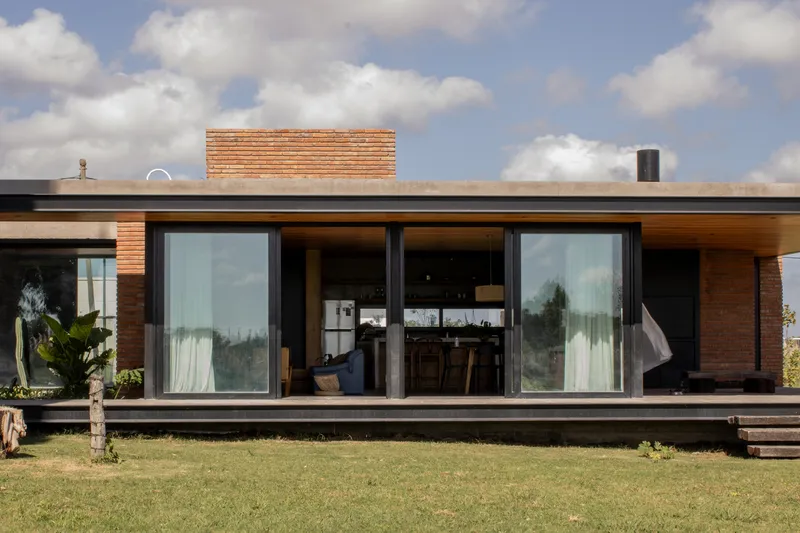
The internal layout emphasizes a clear separation between public and private zones, articulated around a central patio. The patio functions as a spatial anchor, connecting the home’s communal areas with private bedrooms while maintaining fluid circulation. At the front, an exposed brick volume anchors the south side of the land and houses the service areas, creating a visually grounded element that contrasts with the lighter, elevated portions of the home.
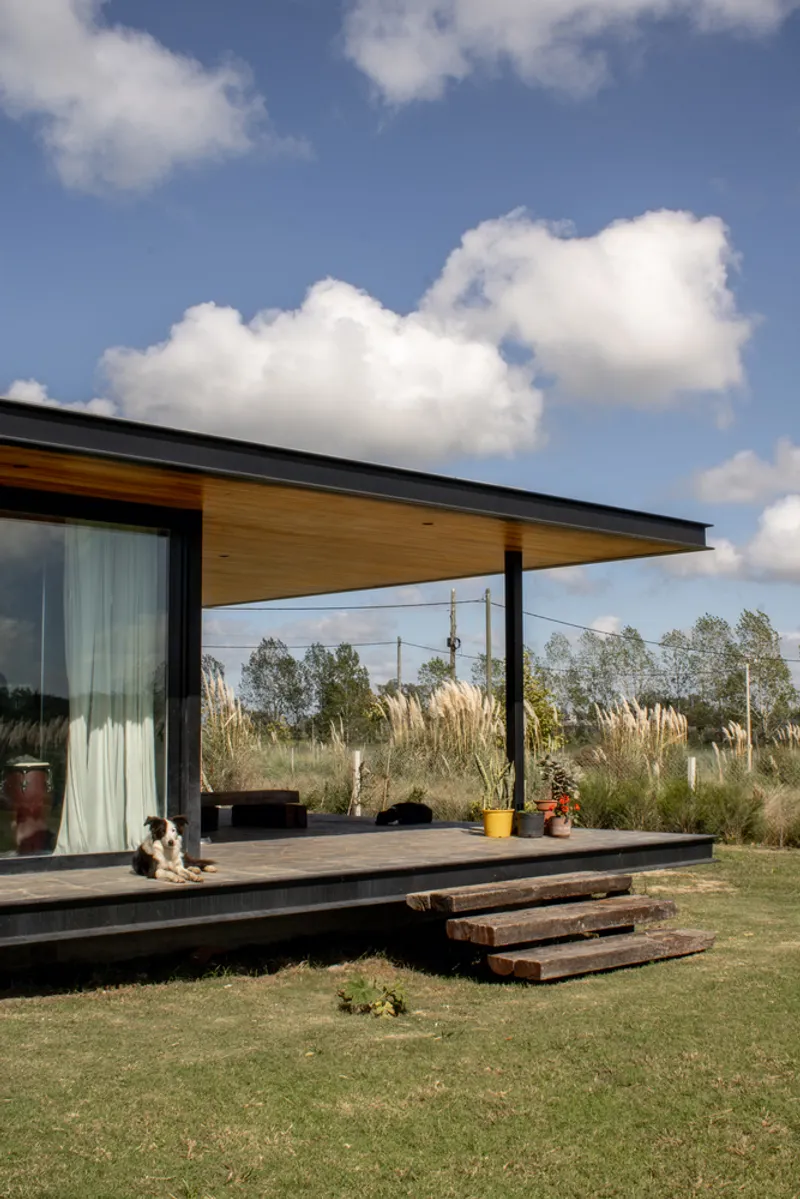
The living and dining areas, along with the main bedroom, are strategically oriented toward the quiet side of the property. This orientation maximizes natural light, ensures privacy, and frames expansive views of the open landscape. The public spaces extend seamlessly into a west-facing gallery, which introduces flexibility for indoor-outdoor living while providing solar shading and controlling sunlight penetration.
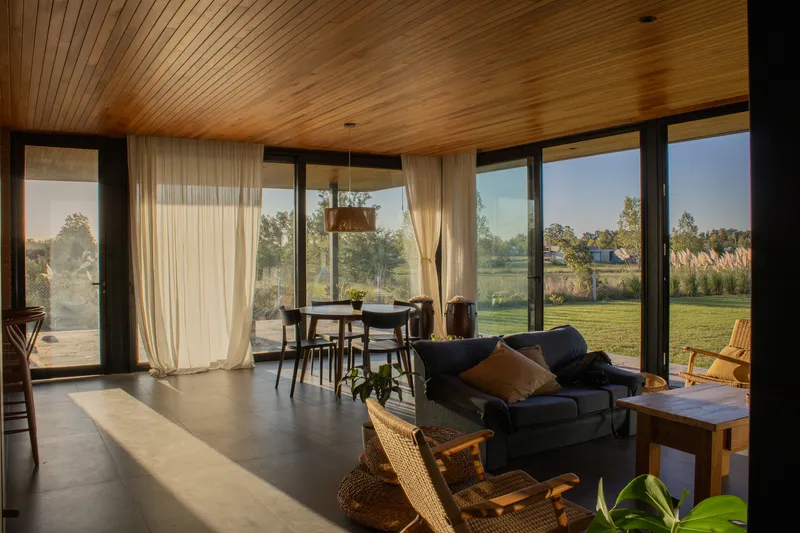
Materiality and Design Elements
Antonio House is composed of three primary materials that define its aesthetic and functional identity:
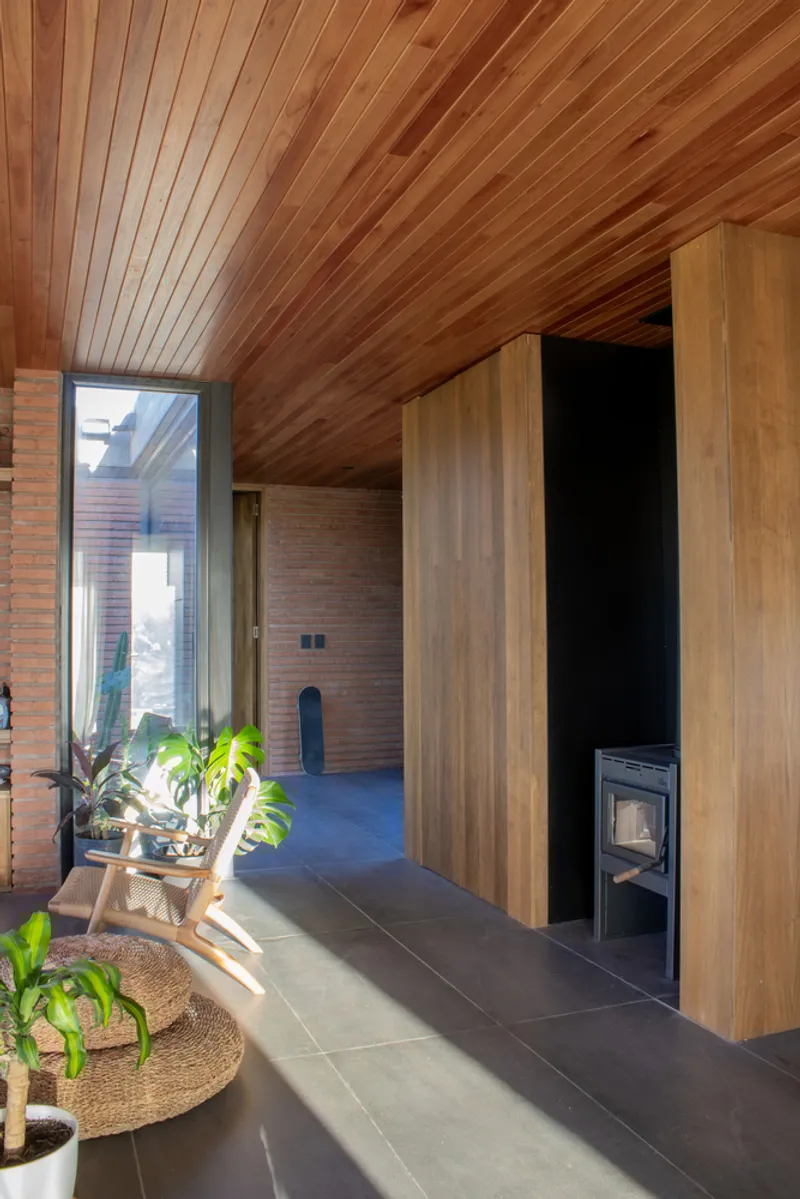
- Exposed brick – forming a vertical envelope that articulates the house’s structural and visual presence.
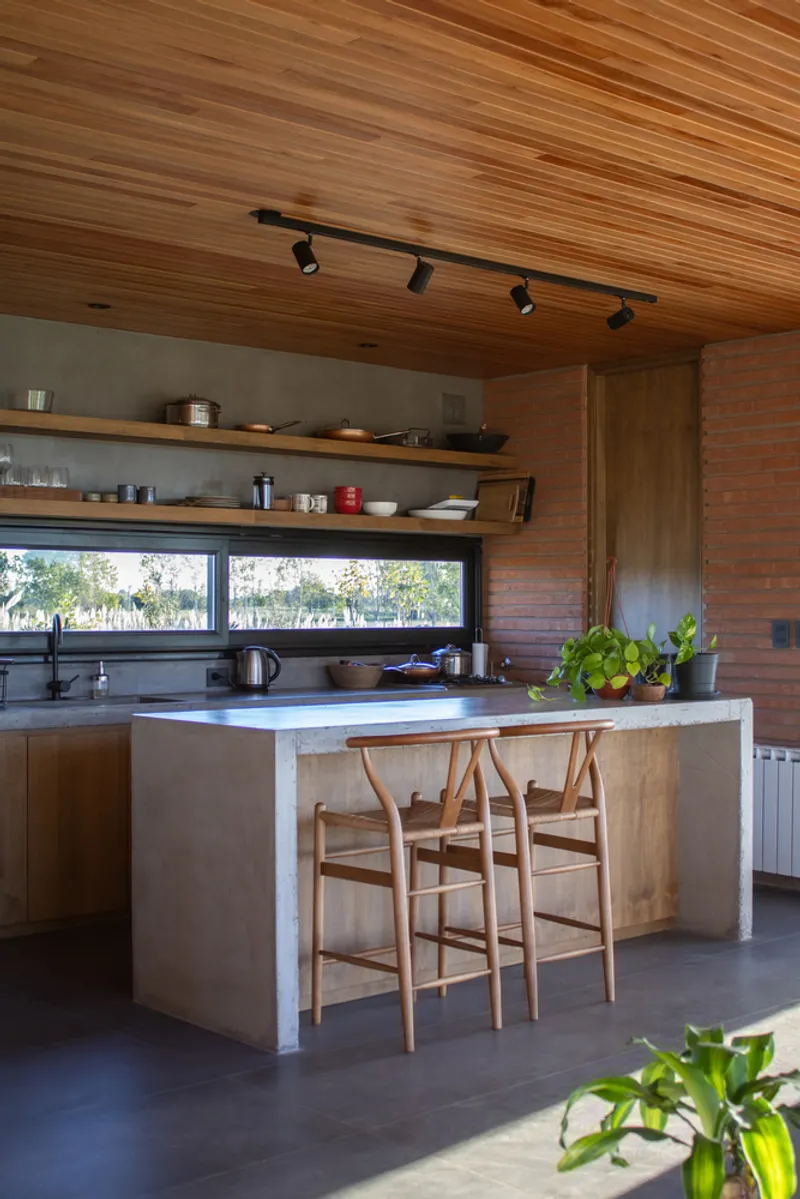
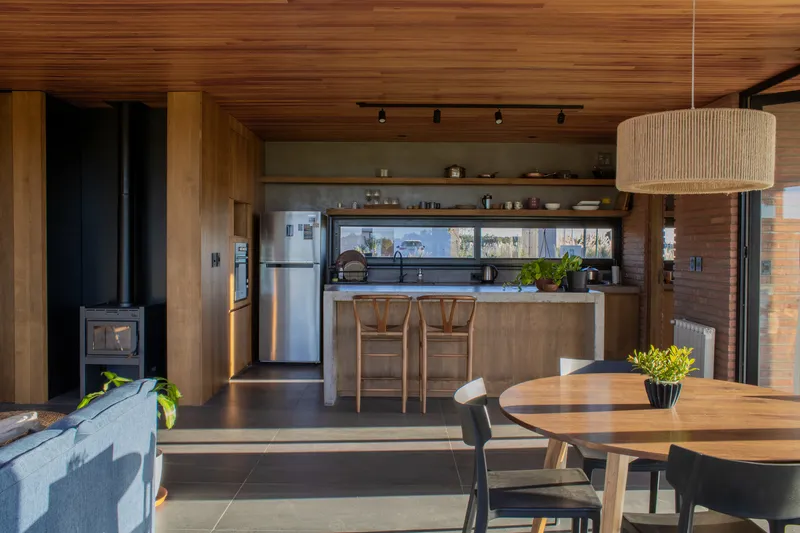
- Wood – used in furniture, ceilings, and interior detailing, bringing warmth and tactile contrast.
- Folded sheet metal – finishing the perimeter of floors and ceilings, adding a contemporary, industrial edge.
In addition, an independent sheet metal volume located within the property serves as a multifunctional storage area and alternative meeting space, enhancing the home’s versatility and spatial narrative.
Interior Experience
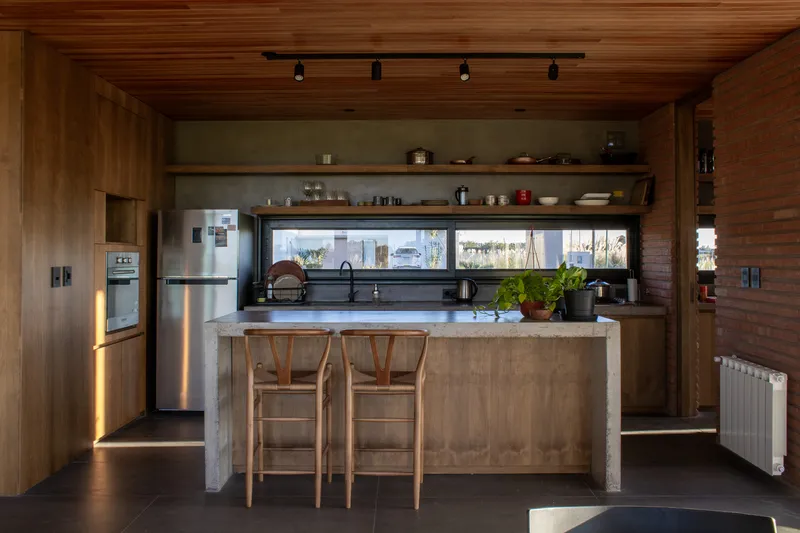
The interiors of Antonio House are designed to prioritize comfort, privacy, and visual connection to nature. The dining room and kitchen feature wood finishes and open layouts that encourage social interaction while maintaining a cohesive connection with the exterior spaces. Bedrooms incorporate large windows, inviting natural light while framing serene landscape views, creating a calming retreat within the home.
Sustainable and Functional Features
- Elevated concrete structure: reduces environmental impact on the sloped terrain.
- West-facing gallery: optimizes solar control and outdoor usability.
- Material integration: wood, brick, and metal combine for durability, aesthetics, and low maintenance.
By carefully considering orientation, materiality, and spatial organization, Simón Albina and Tomás Rossini have created a residence that balances modern architectural expression with a sensitive response to its natural surroundings.
All photographs are works of
Simón Albina


Popular Articles
Popular articles from the community


Temporary Home for Dogs: A Reversed Zoo Rethinks Animal Shelter Architecture
In Bucharest, a sinuous corridor and freed landscape flip the logic of containment, designing a shelter that works to make itself unnecessary.

The Amber Palace Opera: A Geological Fiction Surfaces on Tallinn's Baltic Waterfront
Pierre Brillard reimagines a Baltic legend as a public landscape, opera house, and waterfront promenade rooted in Tallinn's coastal identity.

Singing Woman: An Opera House That Performs Before the Curtain Rises
Ovidiu Cristian Pavel's conceptual opera house translates Estonia's choral identity into a sculpted waterfront landmark facing the Baltic Sea.

Opera by the Sea Estonia: Three Shells Dissolving Architecture into Tallinn's Coastline
A winning opera house proposal replaces monumental form with interconnected shells that blur the boundary between building, park and Baltic Sea.

Similar Reads
You might also enjoy these articles

FAMM Arquitectura Organizes Ten Villas Around Courtyards and Jungle in Nosara, Costa Rica
El Molino pairs two elongated volumes with deep overhangs and timber louvers to build a compact coastal community five minutes from the beach.
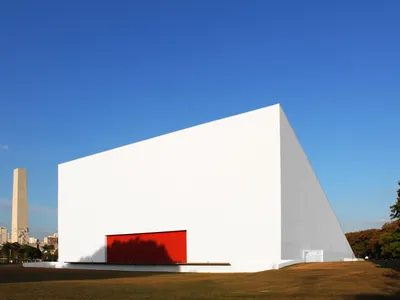
Oscar Niemeyer's Ibirapuera Park Pavilions Define São Paulo's Cultural Identity in Concrete and Curve
A constellation of modernist volumes set within São Paulo's most important urban park, conceived for the city's 400th anniversary in 1954.
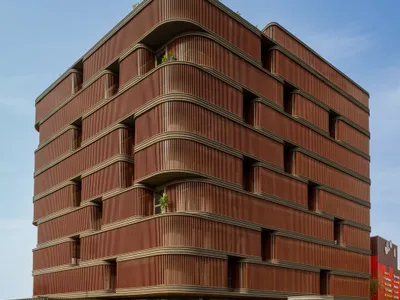
Sanjay Puri Architects Wraps a Jaipur Office Tower in Capsule-Shaped Green Buffers
A nine-level climate-responsive workplace near Jaipur Airport uses stacked planter terraces and aluminium screens to fight 40°C heat.
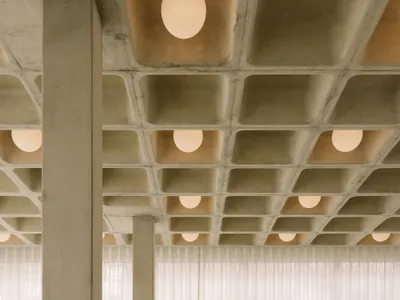
RHO Converts a Berlin Spree-Side Industrial Courtyard into Enkime's 1,000 m² Agency Headquarters
A social media agency's new home in Charlottenburg trades glossy branding for concrete waffle ceilings, glazed tile, and sheer curtains.

Explore Latin American Houses Competitions
Discover active competitions in this discipline

Challenge to reimagine the Iron Throne

Photograph architecture without architects

Illustrate the lost glory of Angkor Wat - Render Challenge

Design challenge to reuse E-waste
Comments (0)
Please login or sign up to add comments
No comments yet. Be the first to comment!