
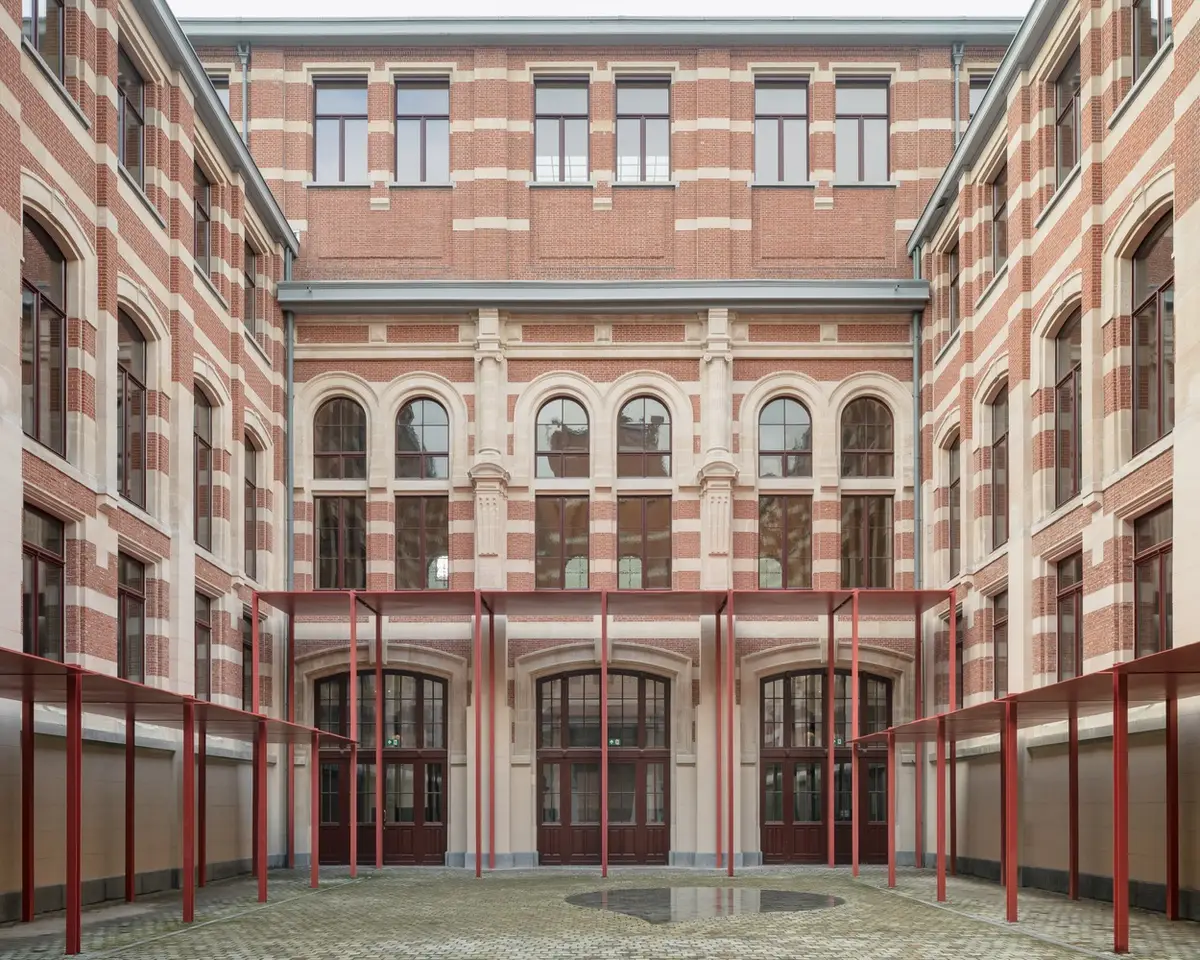
Antwerp Historic Courthouse by HUB – A Harmonious Revival of Justice, Heritage, and Sustainability
Restored 19th-century Antwerp Courthouse blends heritage architecture with modern sustainability, enhancing civic identity and justice through adaptive reuse.


Introduction: Reviving a Civic Landmark
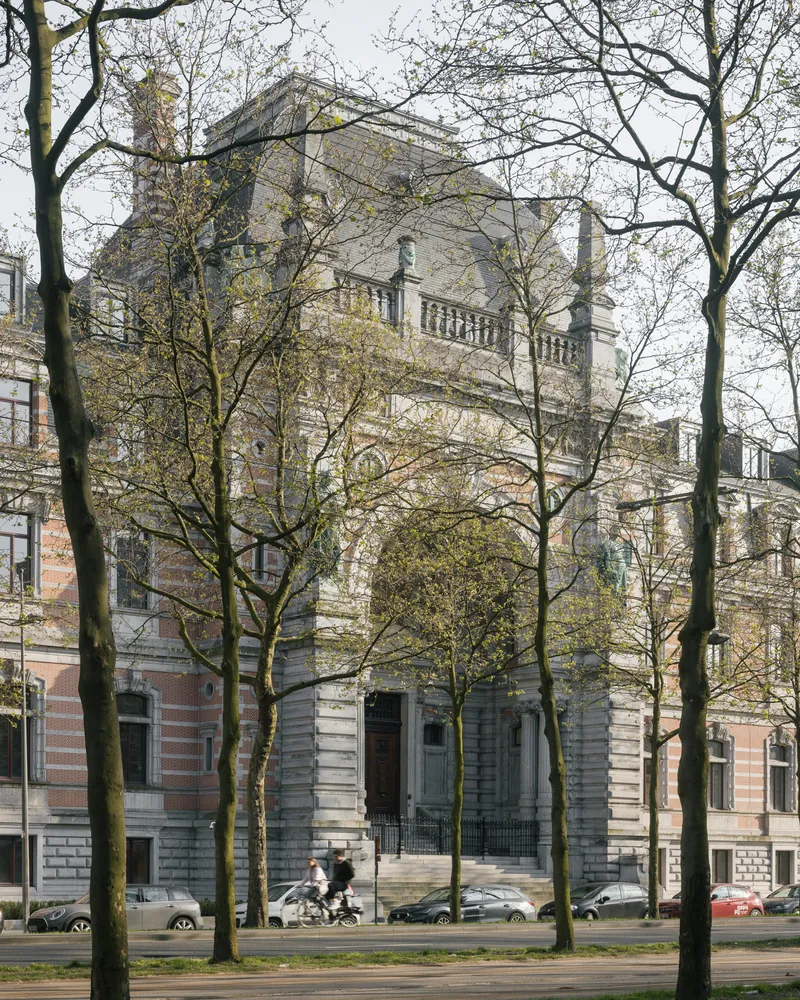
The Antwerp Historic Courthouse, one of Belgium’s most iconic civic structures, has undergone a landmark transformation under the direction of HUB Architects. Originally designed by architect Lode Baeckelmans in 1867, the courthouse had lost much of its architectural clarity and functionality due to decades of unsympathetic alterations. HUB’s meticulous renovation not only restores the building's historical grandeur but also adapts it to meet the demands of 21st-century judiciary infrastructure—bridging heritage preservation with contemporary performance standards.
Unraveling the Past: A Heritage-First Approach
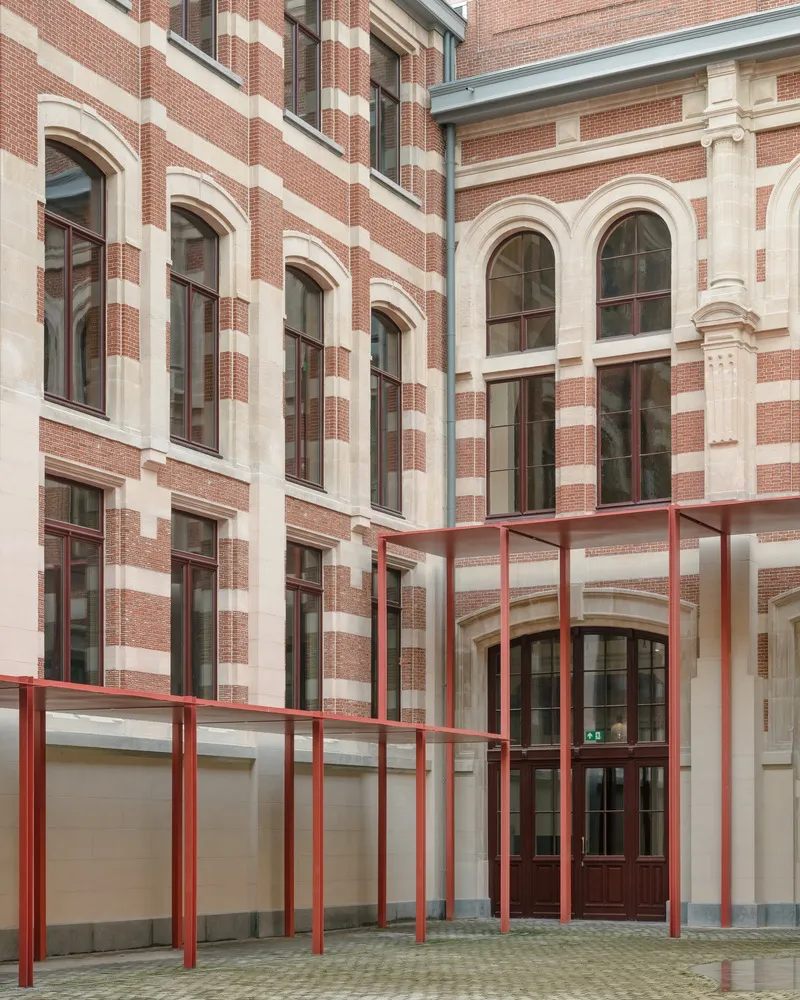
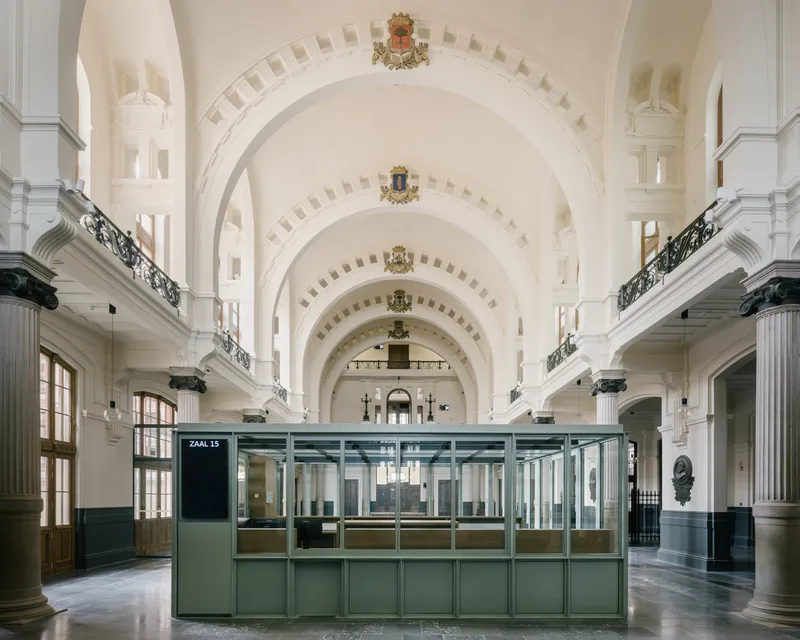
At the heart of this project is a profound respect for the original 19th-century architectural vision. Baeckelmans' neoclassical plan—centered around two majestic courtyards and the symbolic Salle des Pas Perdus—was disrupted during construction due to his untimely death and further compromised by numerous 20th-century interventions. HUB’s first objective was to “unravel” these layers of insensitive modifications, enabling the spatial order, light flow, and monumental character of the original design to emerge once again.
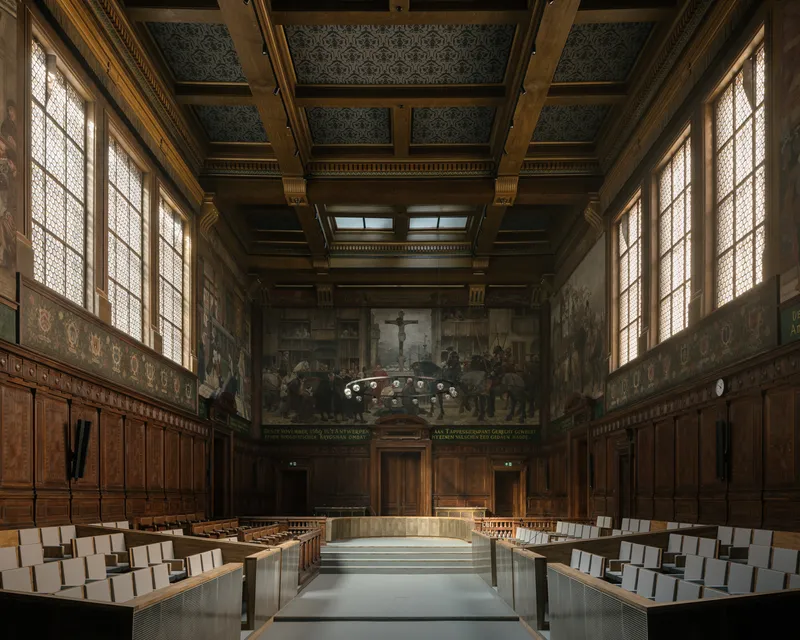
Restoration Meets Innovation: A 21st-Century Courthouse
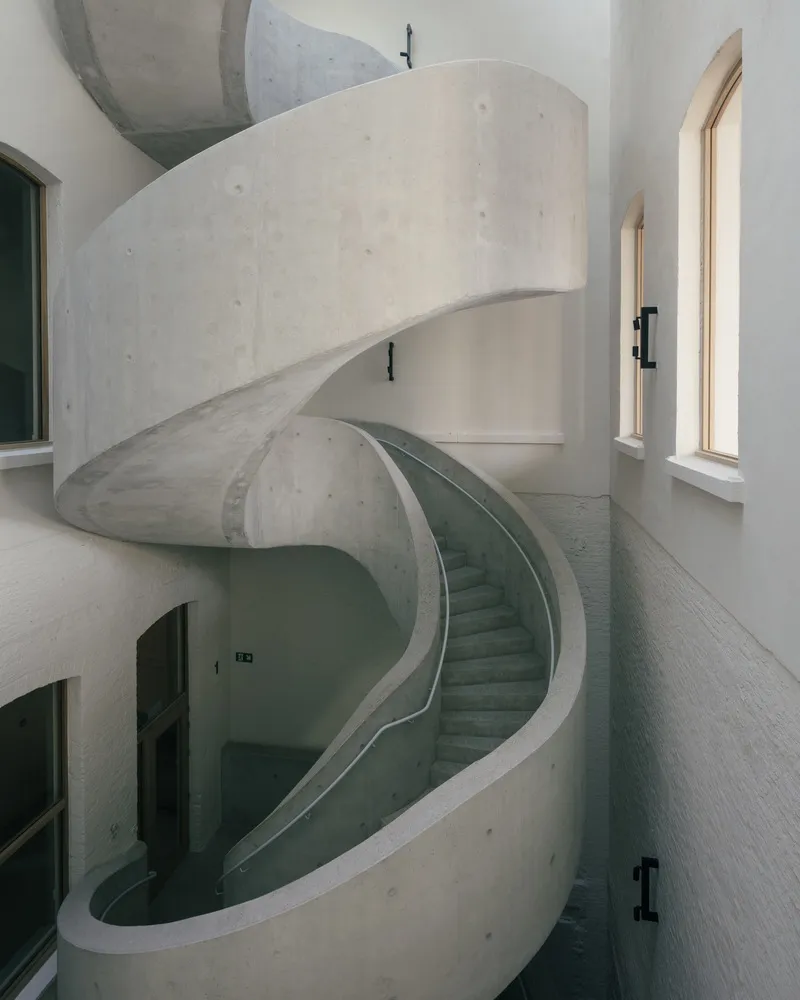
The design strategy balances historical fidelity with modern innovation. While key historical elements were restored with precision, new insertions were carefully integrated to enhance function without diluting authenticity. Highlights of the intervention include:

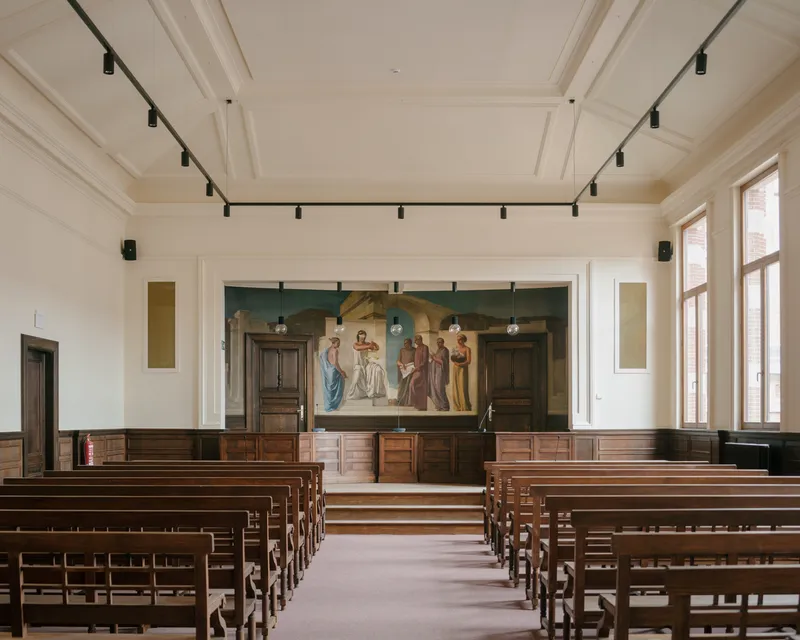
- New courtrooms to accommodate modern legal proceedings
- Reconstructed and extended staircases for vertical connectivity
- Modern HVAC and electrical systems carefully embedded
- Activation of the historic attic as usable space
- Sensitive updates to circulation and security systems
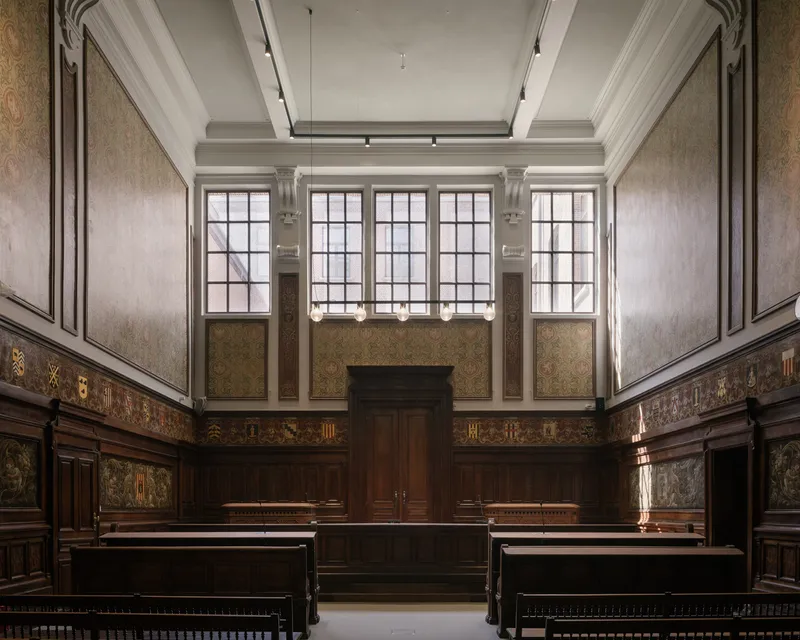
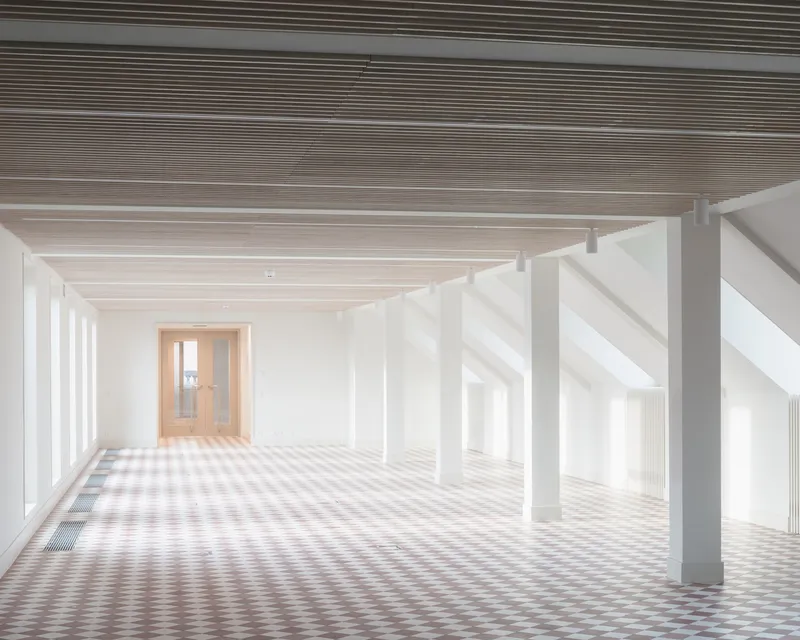
Every intervention aligns with sustainability goals, reinforcing the project’s long-term ecological and functional resilience.
Sustainability and Adaptive Reuse
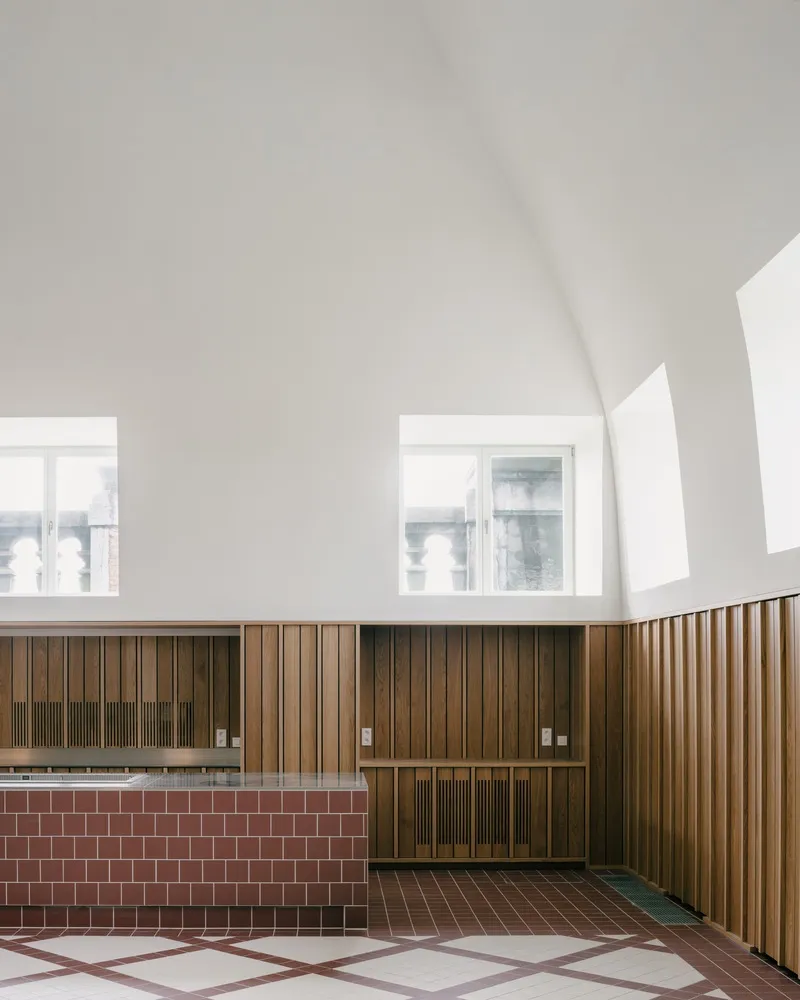
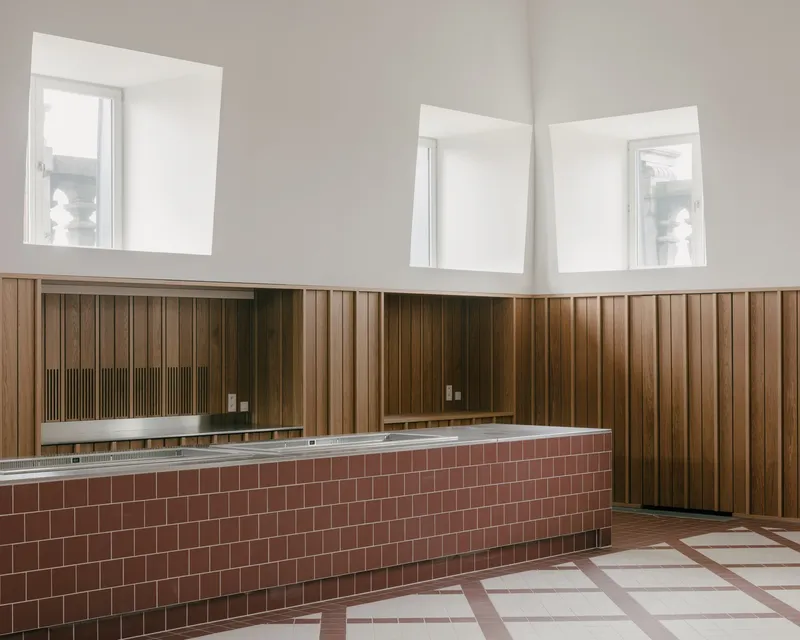
The courthouse’s transformation sets a benchmark in sustainable heritage restoration. Retaining the existing structural and material fabric, HUB prioritized reuse, thermal upgrades, and energy efficiency. New systems were introduced with minimal visual disruption, ensuring the building is future-ready while remaining anchored in its historical identity. The result is an adaptive reuse project that positions the courthouse as a model of environmental responsibility in the realm of civic architecture.
Celebrating Civic Architecture and Urban Identity
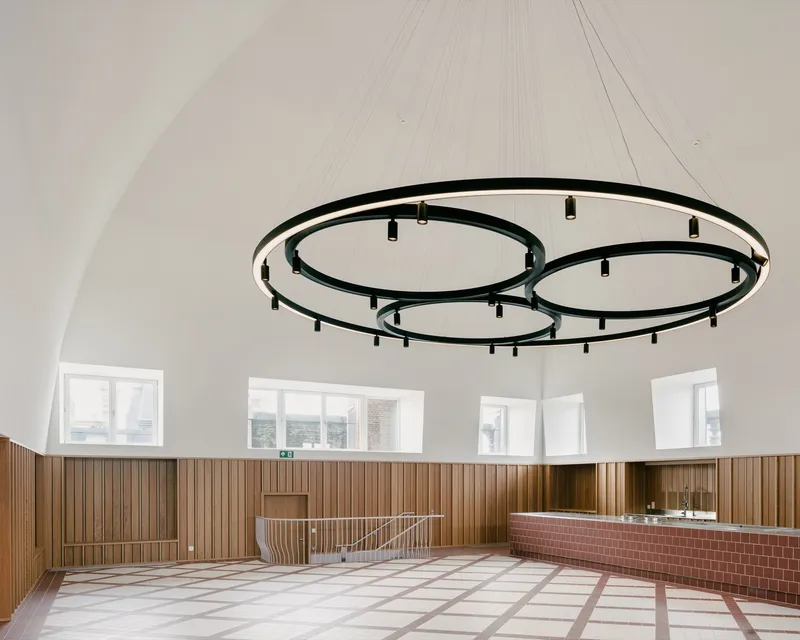
More than a building, the Antwerp Courthouse is a symbol of public life, democracy, and justice. Its restoration reinforces its role as a central urban landmark—architecturally, socially, and institutionally. The revived Salle des Pas Perdus now functions not only as a circulation hub but also as a ceremonial and symbolic space, enhancing the civic identity of Antwerp. The intervention transforms the courthouse into a beacon of equity, transparency, and sustainability.
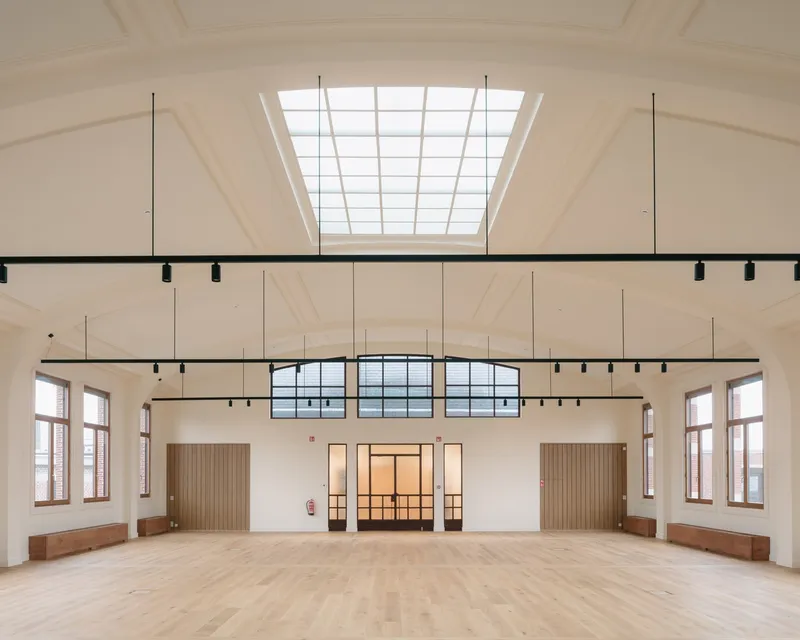
Honoring the Past, Empowering the Future
Through the expertise of HUB, the Antwerp Historic Courthouse reclaims its architectural integrity and civic dignity. The project exemplifies the power of architecture to respect history, meet contemporary needs, and envision a sustainable future. It is a testament to how sensitive design can preserve the cultural memory of a place while enhancing its relevance for generations to come.
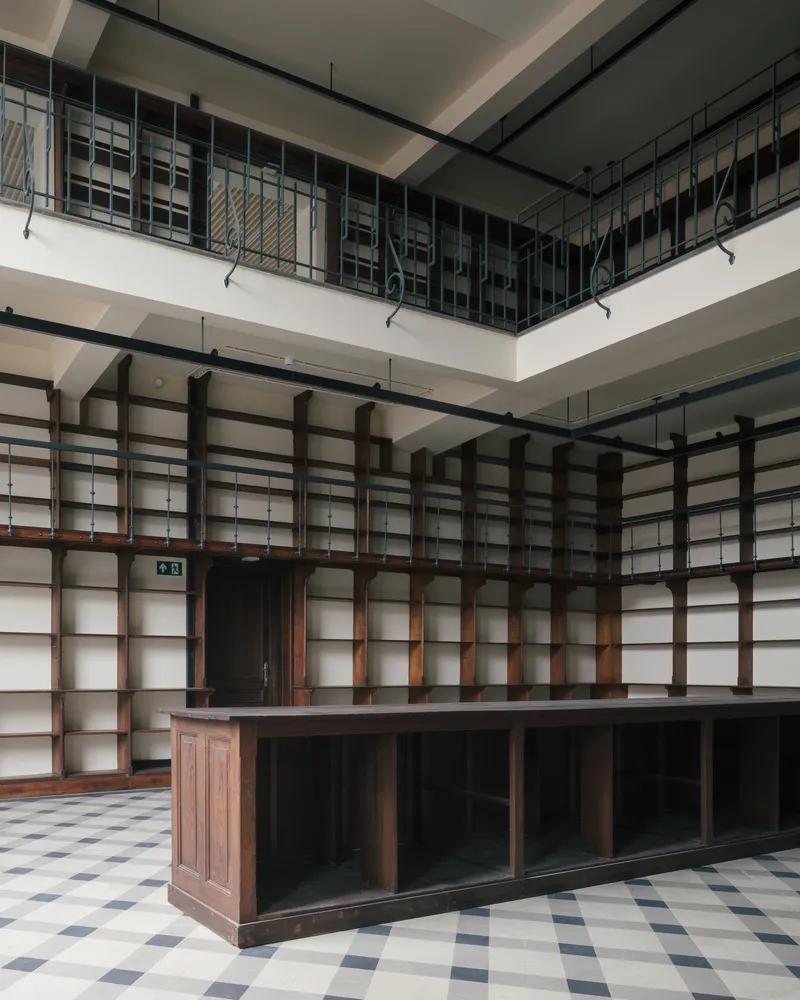
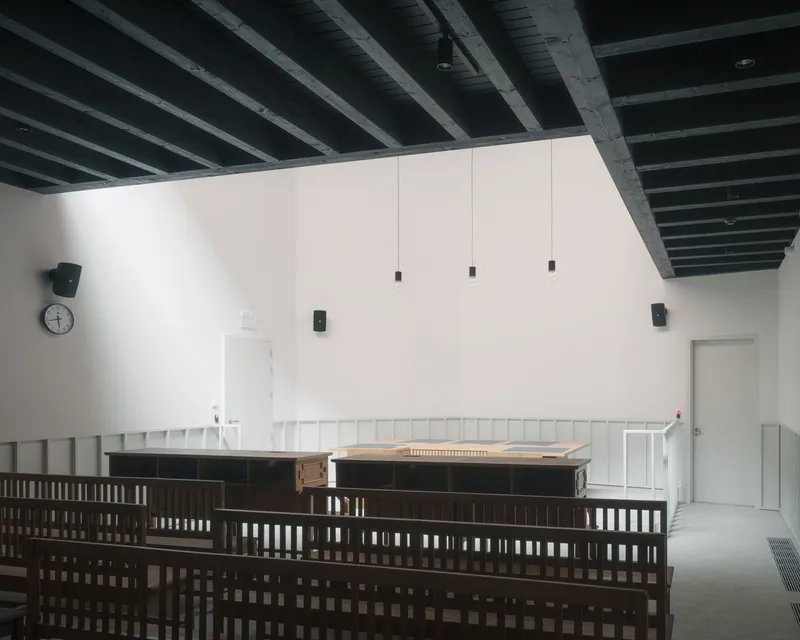
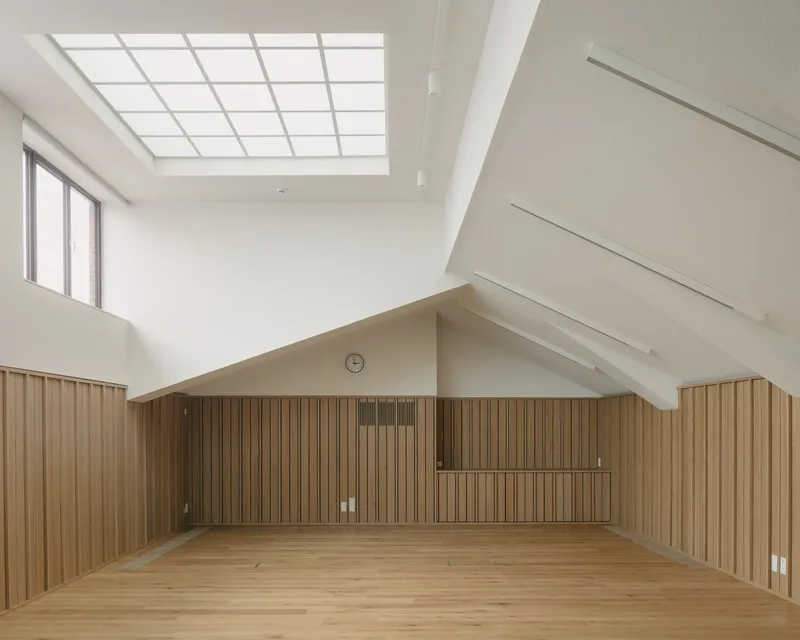
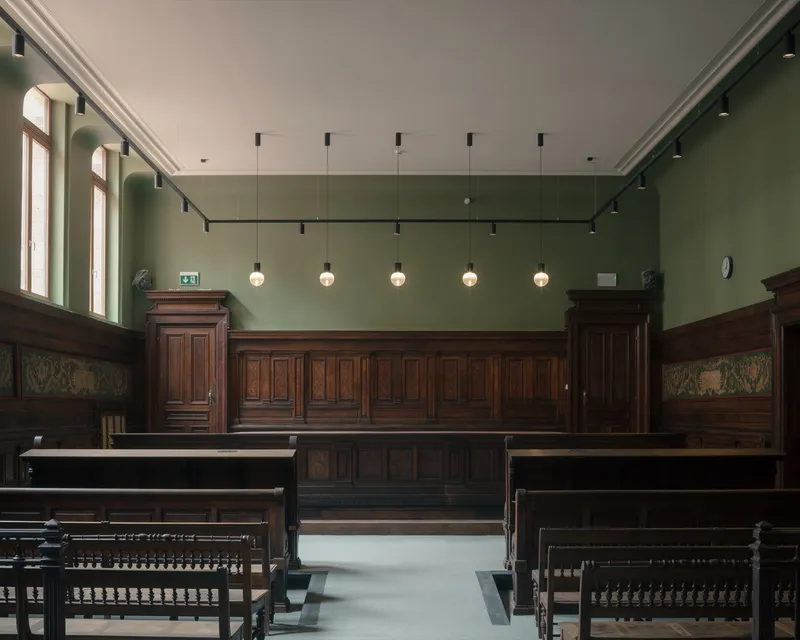
All the photographs are works of Stijn Bollaert


Popular Articles
Popular articles from the community


Jaramillo Van Sluys Arquitectura and Urbanismo Turn a Demolished Registry Lot in Quito into an Orchard Plaza
In Quito's Centro Histórico, a 2,800 m² plaza exposes the San Agustín convent wall and redraws its lost Augustinian orchard in volcanic stone.

LT2A and OPEN Architectes Thread a Brick and Glass High School Through a Wooded Belgian Campus
In Braine-l'Alleud, a 3,000 m² wing for Collège Cardinal Mercier pairs pale brick with a glazed colonnade, deferring to a small chapel and a dense wood.

longwave studio Reorganizes a 112 m² Tainan Apartment Around the Daily Routines of a Family and Two Cats
In Tainan, Taiwan, birch plywood, rust-red furniture and a freestanding plaster wall link arrival, storage, work and family life in one apartment.

U.GA Architects Wraps an Oval Rooftop Pool in Curved Board-Formed Concrete on Busan's Jeollidan-gil
In Busan's Jeonpo-dong, a 454 m² mixed-use block stacks a neighborhood facility, guest rooms and an oval rooftop pool inside spiraling concrete walls.

Similar Reads
You might also enjoy these articles


Hodi-Mandai Geram
Project Function: Preservation and revitalization of the Intangible heritage and socio-spatial identity of the Hodi by Housing, Cultural Memory Center, Sacred Grove, landscape, local tourism economy


Olio Towers: A Mid-Rise for Performers That Fuses Housing, Rehearsal, and Stage
Located blocks from Houston's Theater District, this modular tower stacks living units around a central performance atrium.

Oasis: Modular Green Housing Carved into Dhaka's Urban Fabric
A shortlisted Plugin Housing entry reclaims unauthorized settlements in Dhaka with stepped concrete volumes, green roofs, and ventilation-driven design.

Black Hole: A Floating Megastructure for the Post-Physical Era
Emiliano Mazzarotto envisions a spherical, self-scaling arena where e-sports, digital hotels, and holographic stadiums replace traditional public space.

Explore Courthouse Competitions
Discover active competitions in this discipline

Challenge to reimagine the Iron Throne

Photograph architecture without architects

Illustrate the lost glory of Angkor Wat - Render Challenge

Design challenge to reuse E-waste
Comments (0)
Please login or sign up to add comments
No comments yet. Be the first to comment!