
Apocalypse Bio-Jellyfish: Climate Resilient Architecture for a Future Water World
Bio-Jellyfish imagines climate resilient architecture as floating survival units, merging biomimicry, food, energy, and future hope at sea!!

Apocalypse Bio-Jellyfish by Xiong Yaru is an imaginative proposal for climate resilient architecture in a post-apocalyptic future where the earth has become a “water ball.” Developed as an Editor’s Choice entry of Architecture of the Apocalypse 2020, the project responds to a speculative scenario in which global warming, melting glaciers, and long-term geological changes submerge the last pieces of land beneath the sea.
Instead of treating the apocalypse only as destruction, the project uses it as a design condition. It asks how architecture can help humans live, move, grow food, generate energy, access oxygen, withstand storms, and form communities when conventional land-based settlements no longer exist. The answer is a floating survival habitat inspired by the form, structure, and behavior of jellyfish.
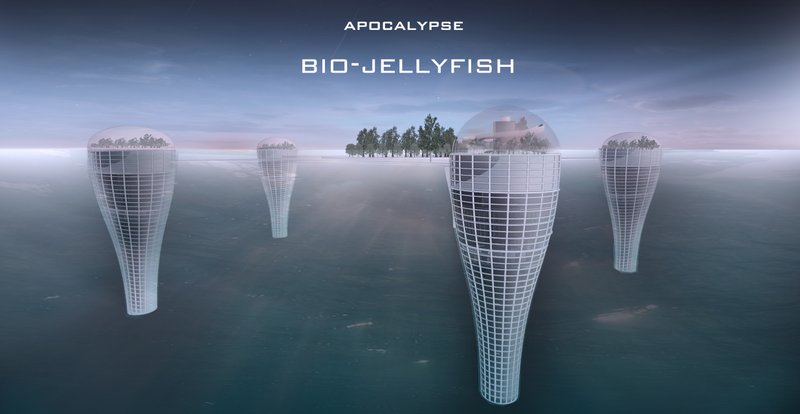
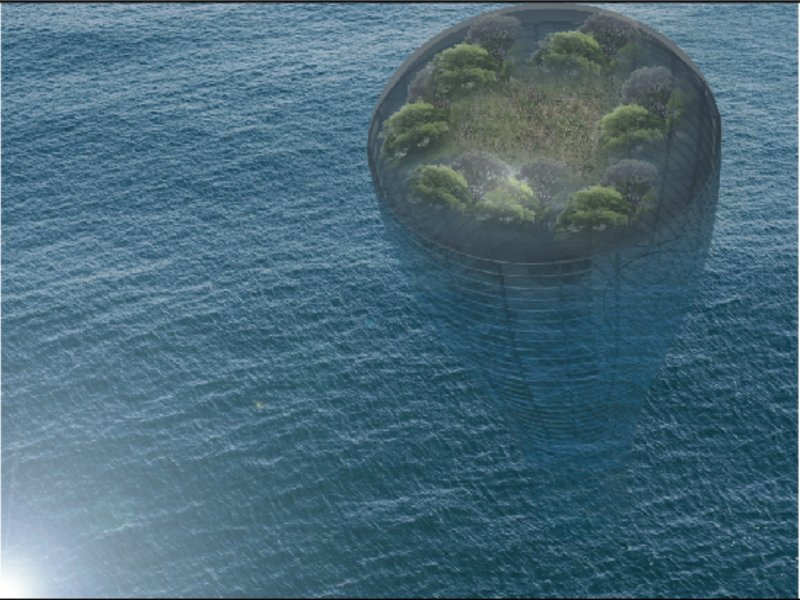
The proposal imagines a series of independent yet interconnected marine survival units. Each unit floats on the water surface, can move when threatened, and can eventually sink or anchor into deeper waters to avoid storms. Its circular plan, vertical organization, membrane-like skin, and central core create a self-sufficient living environment that combines residential space, agriculture, energy systems, research areas, storage, and communal decks.
A Post-Apocalyptic Water World
The project begins with a dramatic environmental premise. In this future, the earth’s land and sea distribution has been transformed by internal geological dynamics and climate change. As global temperatures rise, polar glaciers melt, sea levels increase sharply, and the remaining land is gradually swallowed by water. The planet becomes a continuous oceanic surface, leaving humanity with no stable ground for settlement.
This setting is not just a visual backdrop. It becomes the architectural problem. The design must answer questions of survival in a world without land:
How will people find food?How will they obtain oxygen?How will they survive at sea?How will they gather and use energy?How will they avoid storms?How will they stabilize their habitat on water?How will they prevent leakage?How will they create light, community, and spiritual continuity?
Apocalypse Bio-Jellyfish approaches these questions through climate resilient architecture, using a speculative but systematic design strategy. The project does not propose a single refuge building. It proposes a floating ecological unit that can adapt, move, expand, connect, and form new communities across a flooded planet.
Biomimicry as a Survival Strategy
The central inspiration behind the project is the jellyfish. Jellyfish are soft-bodied marine creatures that move with water, survive in unstable oceanic environments, and possess umbrella-like forms, tentacles, and internal systems suited to aquatic life. Xiong Yaru translates these biological features into architectural components.
The bio-jellyfish habitat uses a rounded upper membrane, a tapering submerged body, and flexible anchoring elements that resemble tentacles. The outer form is not only symbolic. It reflects a larger attempt to create architecture that can behave like an organism in water.
The jellyfish metaphor appears across multiple systems:
The umbrella body becomes a protective shell.The tentacles become anchoring and stabilizing elements.The internal digestive logic becomes a model for resource flow.The membrane becomes a light-absorbing and energy-storing surface.The floating body becomes a mobile survival unit.
This makes the project an example of biomimetic architecture, but with a strong climate adaptation purpose. The architecture is not simply shaped like a jellyfish. It studies the jellyfish as a model for living with uncertainty, motion, pressure, and water.
Floating Habitat as Climate Resilient Architecture
The survival unit is designed to float for long periods on the sea surface. When necessary, it can move to avoid extreme conditions or sink toward the seabed to escape storms. This mobility gives the habitat a crucial advantage over static architecture. In a world where climate conditions are unpredictable, movement becomes a survival mechanism.
From a long-term perspective, the project imagines the unit as a flexible and adaptable living system. It can respond to storms, resource scarcity, changing water conditions, and the need to communicate with other units. Instead of resisting nature through rigid permanence, the proposal accepts instability and designs around it.
This is where the project’s relevance to climate resilient architecture becomes especially clear. Resilience here is not expressed through heavy walls or defensive infrastructure. It is expressed through adaptability, redundancy, modularity, and ecological intelligence.
The survival unit can operate independently, but it can also join with other units. Every six units form a community, and multiple communities can connect to create a larger floating settlement. In this vision, the world becomes an oceanic network of human survival pods, each one contributing to a larger society.
Spatial Organization and Daily Life
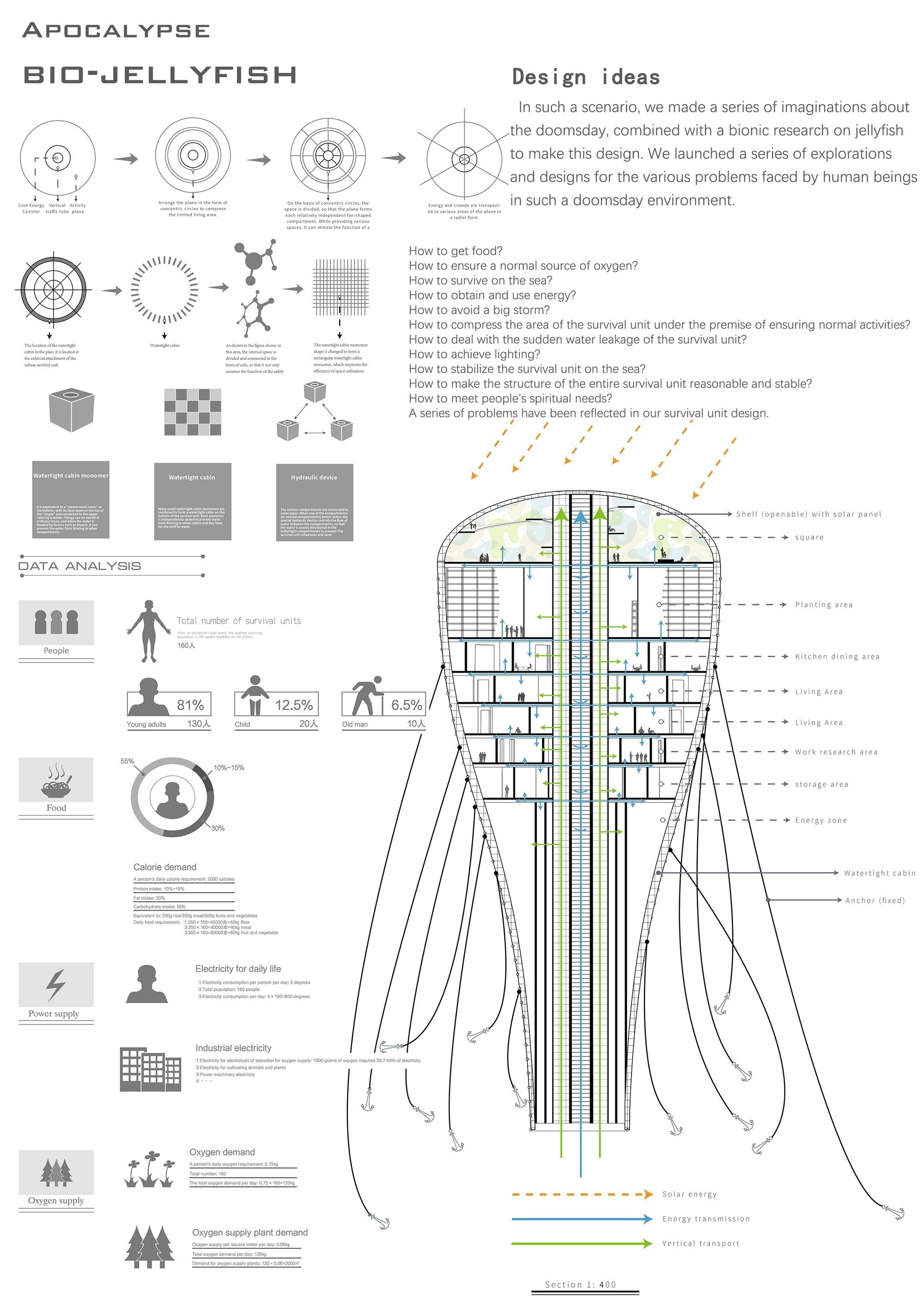
The project uses a central core tube as the main vertical circulation and communication spine. Around this core, the functions are arranged in concentric layers. This circular planning strategy allows the habitat to compress its footprint while maintaining multiple zones for living, farming, work, research, storage, and energy production.
The unit is organized from top to bottom through a layered sequence:
Movable deck with open top shellPlanting areaKitchen and dining areaTwo-story residential areaWork and scientific research areaStorage areaEnergy zone
The plan reflects the logic of a compact vertical city. Instead of spreading outward like a conventional settlement, the unit stacks and rings its functions around a central axis. The circular geometry creates efficient circulation and allows different areas to remain relatively independent while still being connected.
The project also considers day-to-day human needs. Food production, water treatment, light, energy, storage, and communication are all treated as architectural functions. The habitat is not a symbolic shelter. It is imagined as a complete living mechanism.
Food Production and Plant Selection
One of the most important survival questions in the project is food. Since the earth is covered by water, agriculture must be internalized within the habitat. The design includes dedicated planting zones and selects crops based on nutrition, storage, and suitability for the doomsday scenario.
The project identifies four key food sources:
SeaweedSoybeansChinese cabbageSweet potato
Seaweed is selected because it is located in the ocean, grows well in marine environments, absorbs carbon dioxide, and can release oxygen. It also contributes to balancing oxygen supply inside the building when integrated into the ecological system.
Soybeans are selected for their high protein content and nutritional value. They are also easy to store, making them valuable for long-term survival.
Chinese cabbage is selected as a nutritious vegetable rich in vitamins and protein. It is easy to plant and store, which makes it suitable for a closed or semi-closed habitat.
Sweet potato is selected as a high-starch food crop rich in nutrients, including starch, sugars, protein, vitamins, cellulose, and amino acids. It is presented as a strong survival crop because it is relatively easy to grow and store.
This agricultural strategy gives the habitat a food system that is compact, diverse, and practical. It also reinforces the idea that climate resilient architecture must integrate food production into the built environment rather than treating it as a separate external supply chain.
Energy, Water, and Environmental Systems
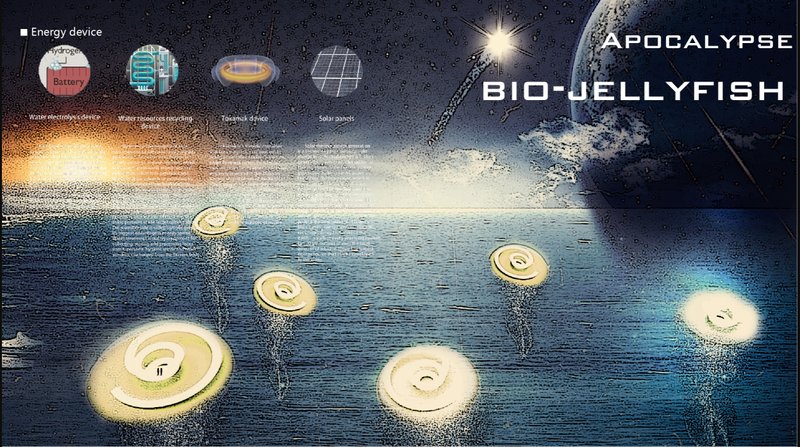
The project proposes several energy and resource systems to support survival at sea. These include solar panels, water electrolysis, water resource recycling, a Tokamak device, and freshwater treatment systems.
The solar panel system is integrated into the membrane and surface structure of the bio-jellyfish. The outer shell absorbs and stores sunlight during the day, then releases energy in the form of light at night. This creates both illumination and energy support for human activity.
The project also includes water treatment devices placed toward the lower part of the unit. Since the habitat exists in a marine environment, seawater purification becomes essential. The design proposes collecting deeper seawater, which is considered cleaner than surface water, and filtering it through a purification system.
Energy and water systems are not hidden technical additions. They are embedded into the architectural section, skin, and spatial logic. The unit becomes a machine for living, but also a biological metaphor. It consumes, filters, stores, circulates, and protects.
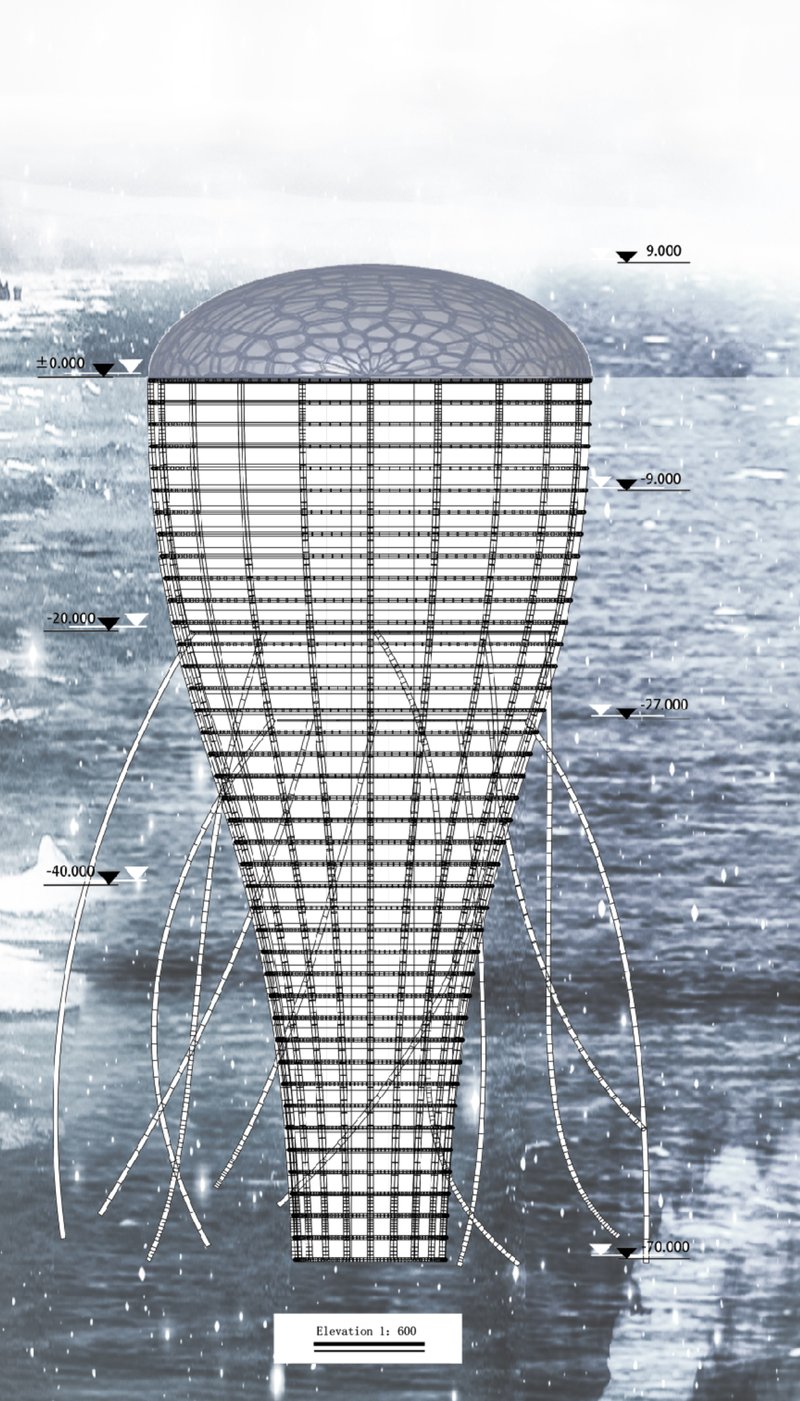
Structure, Skin, and Stability
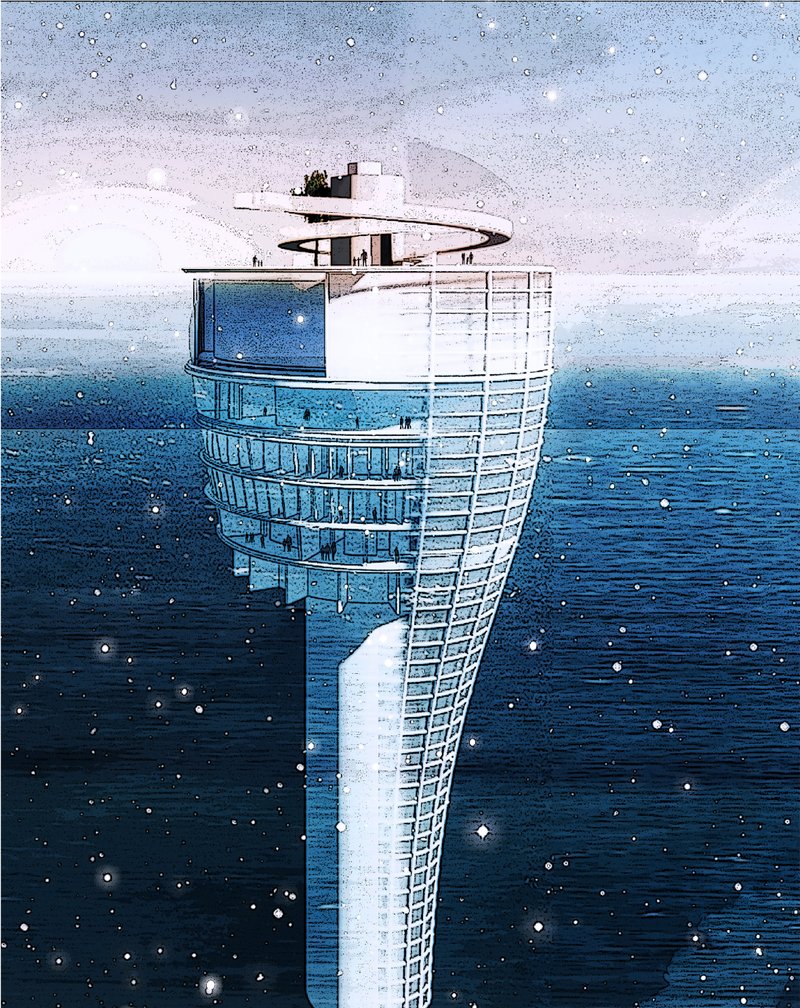
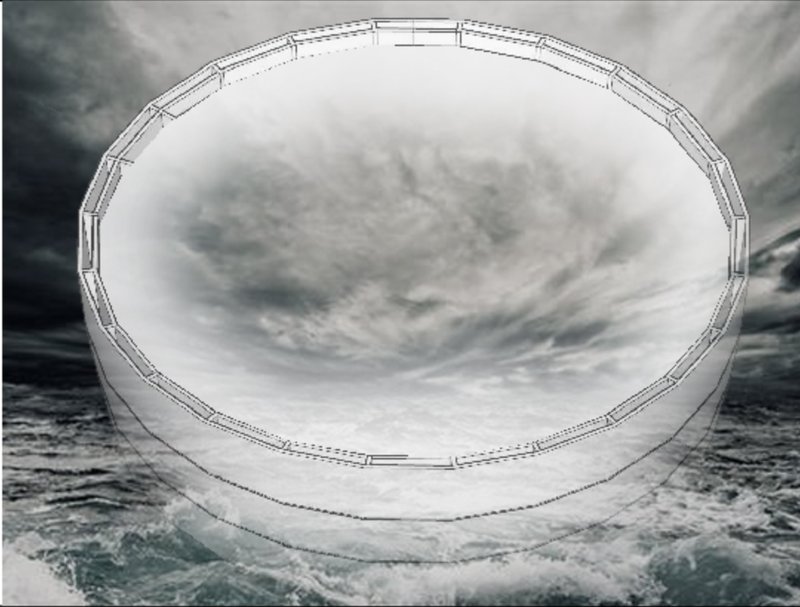
The project’s structural design is based on a combination of an internal frame, external membrane, and anchoring system. The underwater structure is shown as a tapered frame that stabilizes the floating body. The outer membrane is presented as a double-shell system, similar to a watertight cabin.
This double-shell strategy is important because water leakage is one of the major threats in a marine habitat. By mimicking a watertight cabin, the survival unit can create an emergency treatment strategy when water enters the outer shell. The layered membrane also strengthens the overall structure and supports energy absorption.
The anchor analysis shows flexible tentacle-like elements extending into the water. These elements help stabilize the unit and allow it to respond to tides, currents, and storm conditions. The anchoring system is conceptually tied to the jellyfish anatomy, but it also performs an architectural role.
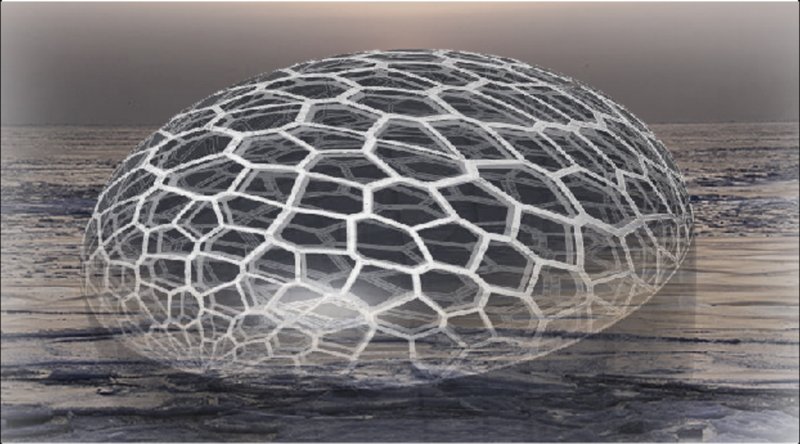
The unit’s outer membrane is described as having cell-like structures. These cells act as the membrane skeleton, supporting the floating shell and strengthening the upper dome. Visually, this creates a translucent, organic surface that bridges technological infrastructure and biological inspiration.
Community Formation and Expansion
Apocalypse Bio-Jellyfish is not designed as a single isolated object. Its long-term vision is collective. Each unit functions independently, but multiple units can gather to form communities. The project proposes that every six survival units create one community. As the number of units increases, they can interact, coordinate, and support each other.
This gives the project a social dimension. Survival is not only about shelter, food, or energy. It is also about communication, cooperation, and the reconstruction of human society in a changed world.
The floating units become seeds of a new oceanic civilization. They are not cities in the traditional sense, but they carry the essential functions of urban life: housing, production, research, energy, food, movement, and collective identity.
The project’s final message is hopeful. In a world of disaster, the bio-jellyfish units are imagined as beautiful and hopeful, like stars reflected in the sea. This poetic image gives the project emotional weight. It suggests that even in an apocalyptic condition, architecture can carry memory, dignity, and future possibility.
Juror Comments and Critical Reflection
Juror Pieter Mathews noted that the scheme is dependent on a vertical movement system and suggested that similar sites could be considered. This comment points to one of the project’s most important technical challenges: the success of the habitat depends heavily on how people, energy, resources, and services move vertically through the central core.
Mathews also commented that a better visual explanation could have been given to illustrate the anchoring of the scheme. This is a valuable critique because the anchor system is central to the project’s survival logic. Since the unit floats, sinks, stabilizes, and responds to sea conditions, its anchoring strategy needs to be clearly communicated through diagrams, sections, and operational sequences.
The juror also observed that the concept is rather literal but has potential to be refined. This critique recognizes both the strength and limitation of the project. The jellyfish metaphor is direct and visually clear, but further refinement could transform it from a literal biological analogy into a more technically resolved architectural system.
These comments help position Apocalypse Bio-Jellyfish as a strong conceptual project with clear speculative ambition. Its greatest value lies in its imaginative synthesis of climate adaptation, biomimicry, survival infrastructure, and floating community design. With further development, the project could benefit from more precise explanations of movement, anchoring, structural behavior, and long-term operation.
Why the Project Matters
Apocalypse Bio-Jellyfish matters because it expands the role of architecture beyond buildings on land. It asks what architecture becomes when the ground disappears. It imagines survival not as retreat, but as adaptation.
The project also shows how climate resilient architecture can be speculative, poetic, and technical at the same time. It combines environmental anxiety with design imagination. It transforms the jellyfish into a model for post-land habitation and proposes a future where human life continues through floating, mobile, self-sufficient units.
In a time when climate change, sea level rise, and ecological instability are shaping architectural discourse, projects like Apocalypse Bio-Jellyfish are important because they stretch the boundaries of design thinking. They do not offer immediate construction solutions, but they create conceptual frameworks for adaptation, resilience, and survival.
Apocalypse Bio-Jellyfish by Xiong Yaru is a powerful speculative proposal for climate resilient architecture in a flooded post-apocalyptic world. As an Editor’s Choice entry of Architecture of the Apocalypse 2020, the project transforms the jellyfish into a living model for architecture that floats, adapts, stores energy, produces food, treats water, and forms communities.
Its circular plans, vertical core, membrane structure, underwater frame, agricultural zones, energy systems, and community logic create a compelling vision of life after land. While the project could be refined through clearer anchoring diagrams and a more developed vertical movement strategy, its conceptual strength lies in its ability to imagine survival as both technical and poetic.
In the end, Apocalypse Bio-Jellyfish is not only a design for disaster. It is a design for continuity. It imagines architecture as a floating star in the sea, carrying human life, resilience, and hope into an uncertain future.




Popular Articles
Popular articles from the community

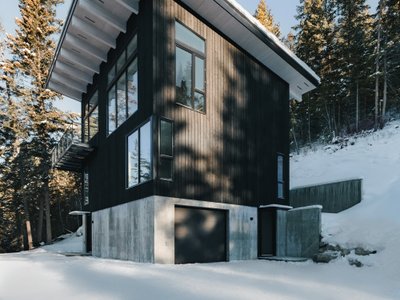
Twobytwo Architecture Studio Towers a Blackened Ski Cabin Above the Trees in Golden, BC
A compact three-storey lookout in the Kootenay mountains trades square footage for 14-foot ceilings and Columbia River Valley views.
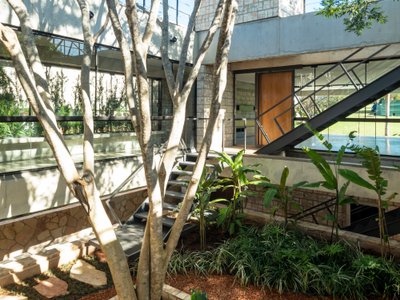
OMCM arquitectos Builds a Summer House in Paraguay from Quarry Waste Blocks and Three Sacred Trees
In the young hillside neighborhood of Altos, a 696-square-meter concrete volume hovers on six pillars around three preserved native Yvyraju trees.
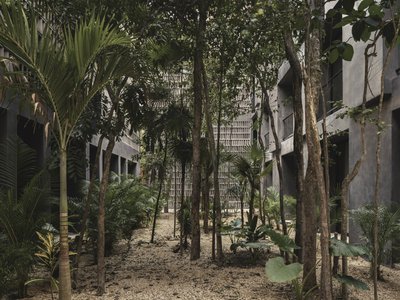
Three Studios Build 200 Affordable Units for Tulum's Displaced Hospitality Workers
Casa Selva embeds dark concrete housing blocks into Yucatán rainforest, offering dignified shelter to those priced out by the tourism they serve.
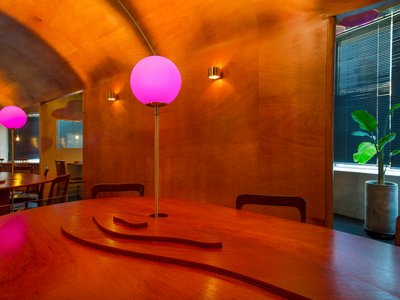
Indiesalon Carves a Plywood Cave into a Seoul Bistro's Second Floor
Munhwa Bistro's second Seongsu branch wraps diners in a laminated timber vault laced with colored light and mirror illusions.


Similar Reads
You might also enjoy these articles


Urban Forest: A Vertical Ecosystem for 5,000 Workers in Singapore's Changi Business Park
Radially stacked pods and layered green decks turn a 7-acre plot into 47 acres of ecological workspace projected for 2040.
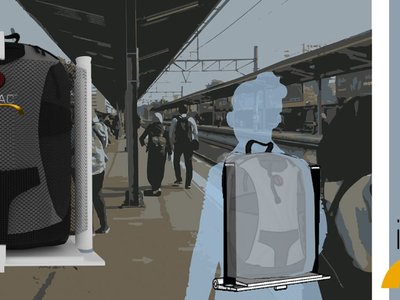
interACT: A Wearable Transit Object That Turns Commuting Into Social Infrastructure
A backpack-mounted foldable device transforms walking, waiting, and riding into moments of shared comfort across Jakarta's transit network.

Lean On Barrier System: Where Traffic Safety Meets Chai Culture in Ahmedabad
A modular steel barrier doubles as informal seating and lean-on furniture at one of Ahmedabad's busiest intersections, keeping vendors in place.

The Black Bagh: A Living Monument Built from Water, Light, and Memory
On the banks of the Yamuna, two designers replace the myth of a marble mausoleum with a regenerative landscape of reflection and ritual.

Explore Conceptual Architecture Competitions
Discover active competitions in this discipline




The International Standard for Design Portfolios


The Global Benchmark for Architecture Dissertation Awards


The Global Benchmark for Graduation Excellence


Challenge to reimagine the Iron Throne
Comments (0)
Please login or sign up to add comments
No comments yet. Be the first to comment!