

Araksa Tea House: Sustainable Architecture by Simple Architecture in Mae Taeng, Thailand
Araksa Tea House in Thailand blends sustainable adobe architecture, local timber, and organic tea culture, creating eco-friendly hospitality amidst lush gardens.


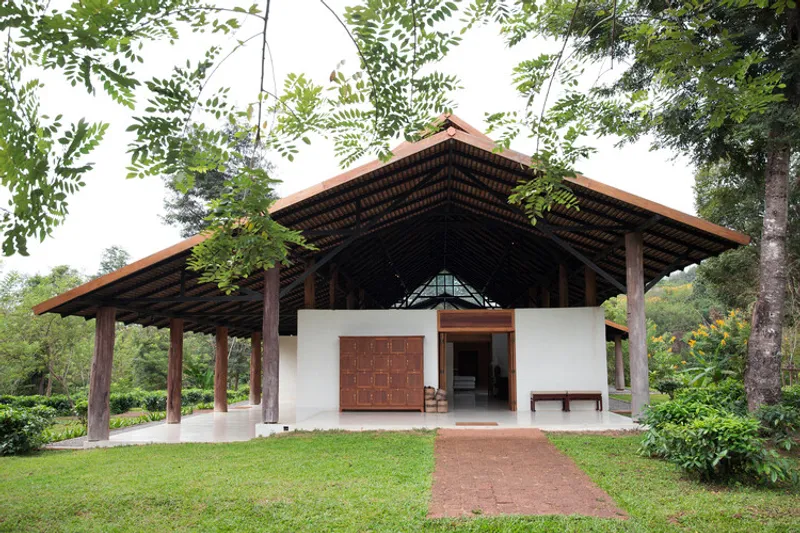
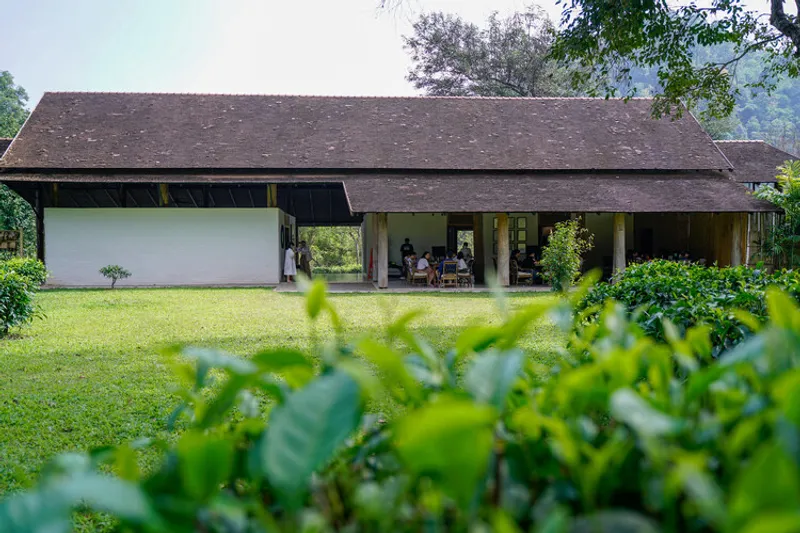
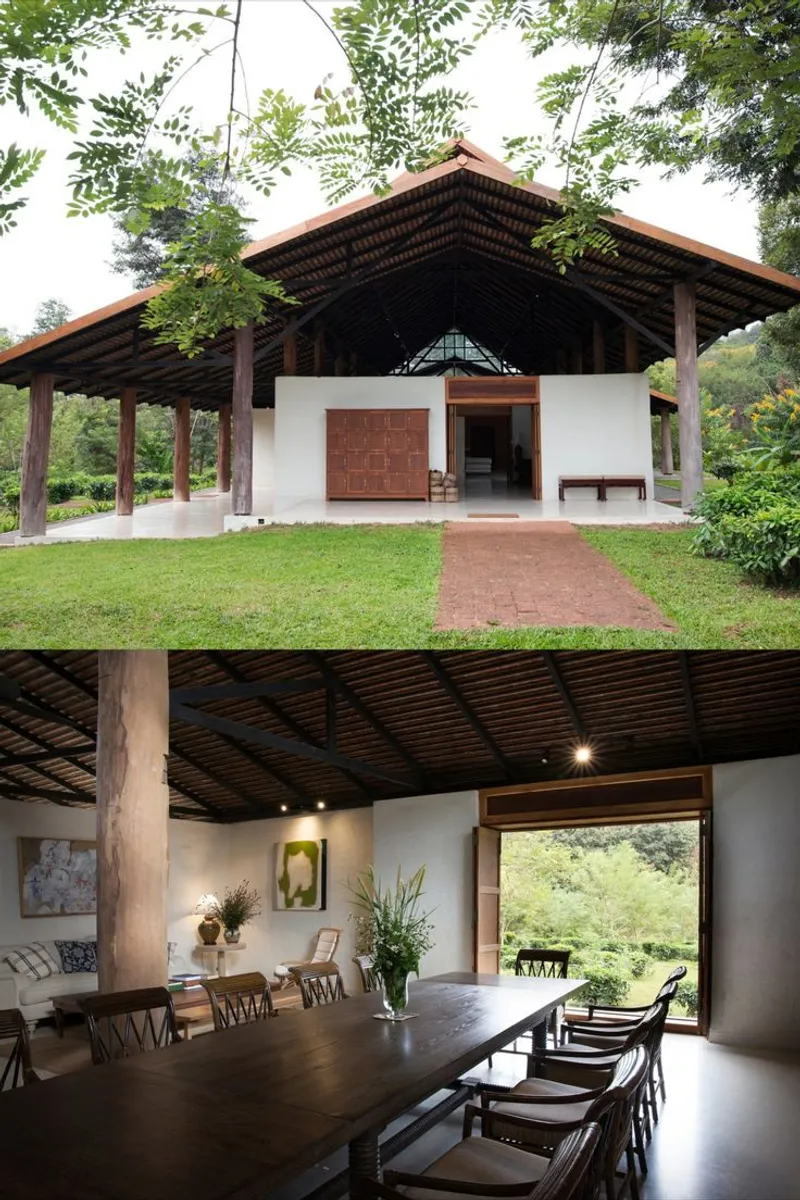
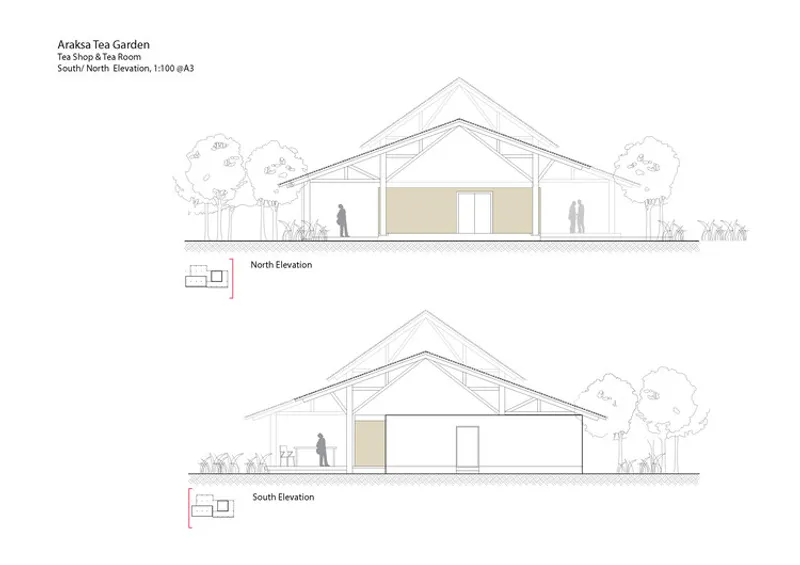
Araksa Tea House, designed by Simple Architecture, is a striking example of sustainable hospitality design in the heart of Mae Taeng, Thailand. Completed in 2019, the 448 m² tea house sits within the historic Araksa Tea Garden, one of Thailand’s oldest tea plantations. Surrounded by lush forests and organic tea fields, the tea house blends seamlessly into its natural surroundings while embracing eco-conscious building techniques and locally sourced materials.
A Tea House Rooted in Nature and Tradition
The Araksa Tea Garden is a boutique organic tea plantation located at the foothills of Mae Taeng’s fertile forests. Undisturbed for more than 15 years, the plantation has thrived without the use of pesticides or chemical fertilizers. With new ownership, the vision was to create a tea house that respected this natural heritage while providing visitors with a serene space to enjoy the tea culture of Thailand.
The design goal was simple yet ambitious: to craft a tea house architecture that harmonizes with the surrounding tea fields, uses sustainable building materials, and minimizes environmental impact.
Locally Sourced, Sustainable Materials
The construction of Araksa Tea House focused on ecological responsibility, social engagement, and climate responsiveness. Two primary materials were chosen: adobe bricks and locally salvaged timber.
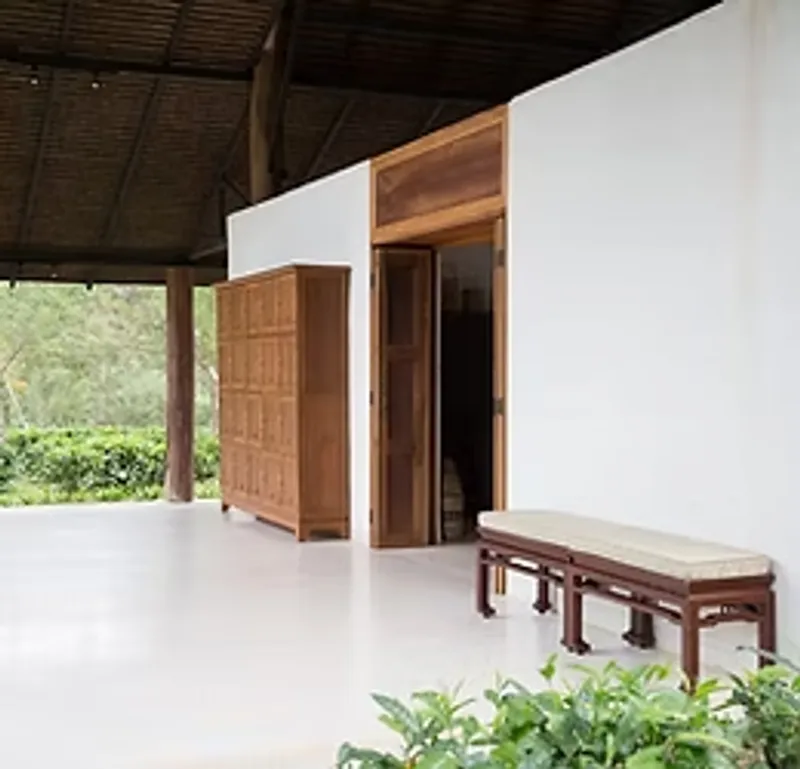
- Adobe Bricks: Soil with sufficient clay content was sourced directly on-site. Combined with rice husk, over 18,000 adobe bricks were hand-produced and carefully cured under a protective roof during the rainy season.
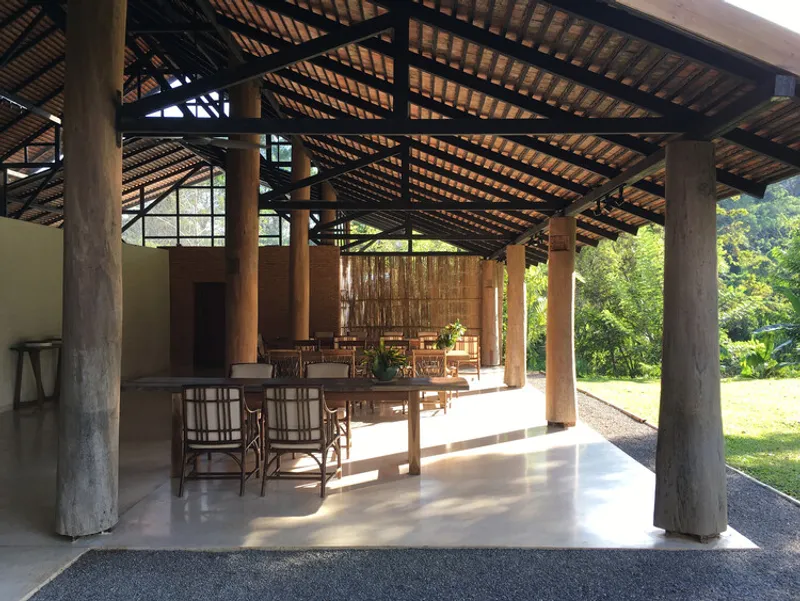
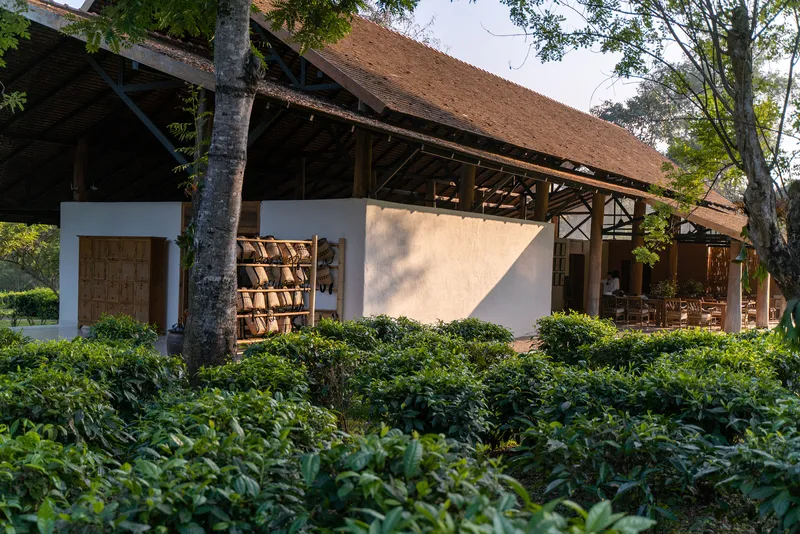
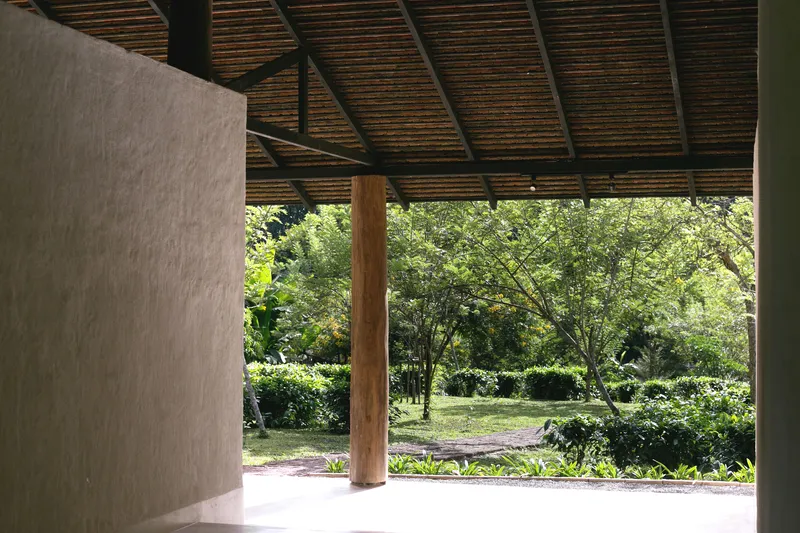
- Local Timber: Tree trunks already found on-site were repurposed as structural supports, ensuring that no trees were cut specifically for construction.
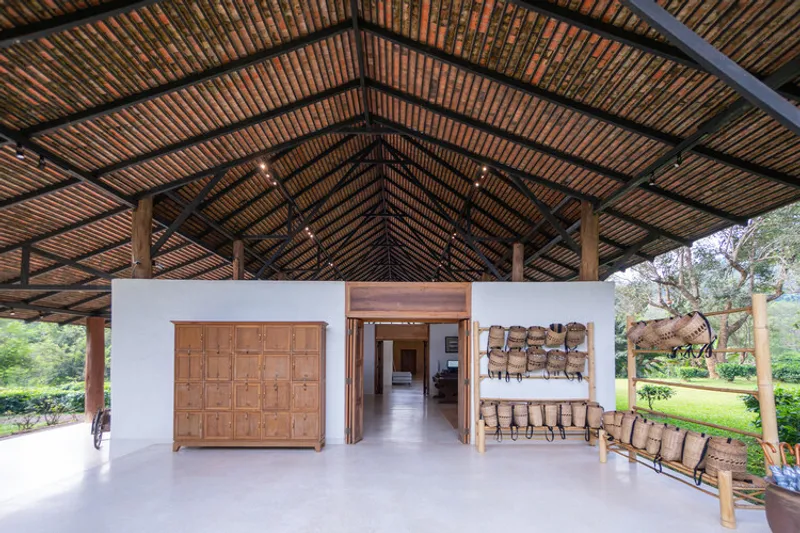
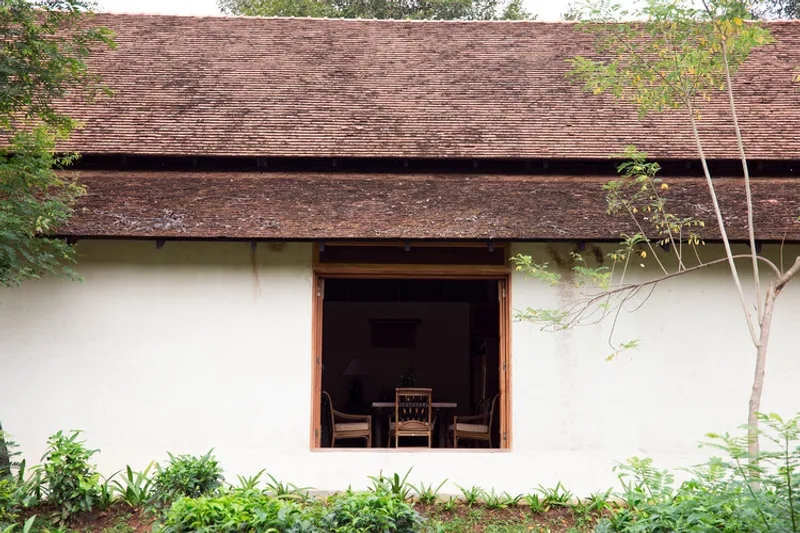
- Roof Tiles: Approximately 150,000 hand-pressed clay roof tiles were sourced from a local tile-making factory. Their delicate nature required careful installation with precise roof inclination to prevent water damage.
These material choices not only reduced CO2 emissions but also supported local industries and minimized transportation costs.
Design and Spatial Experience
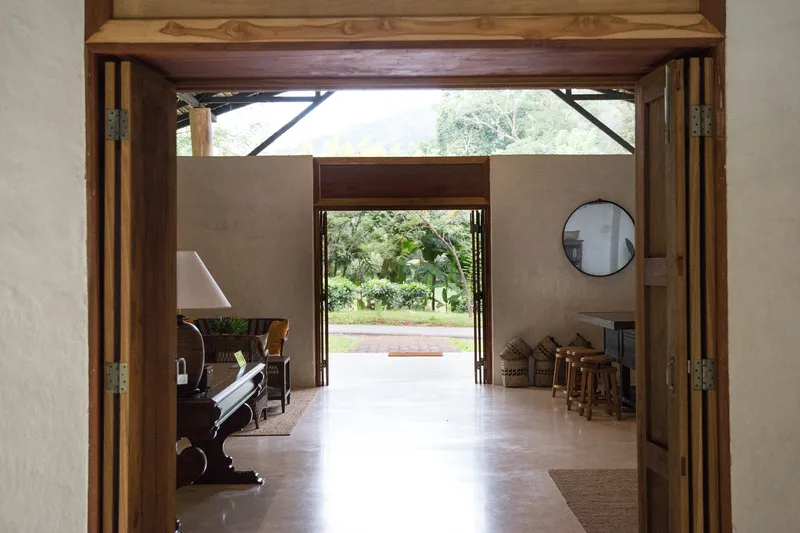
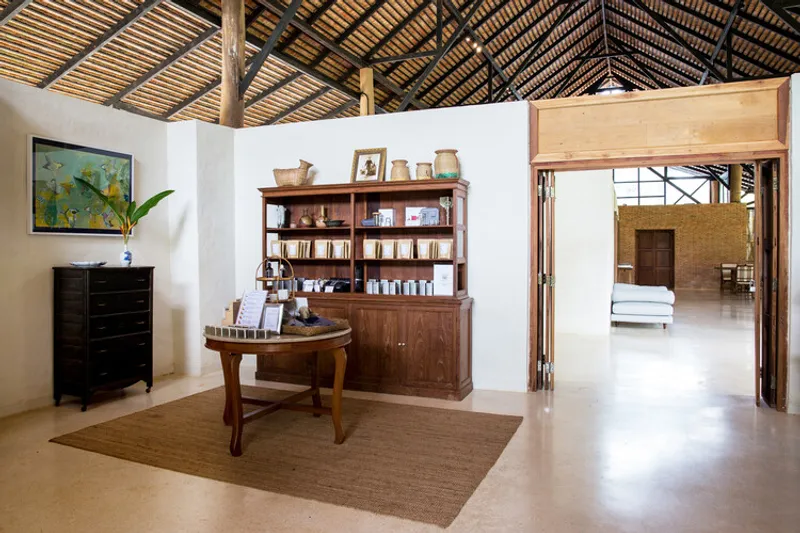
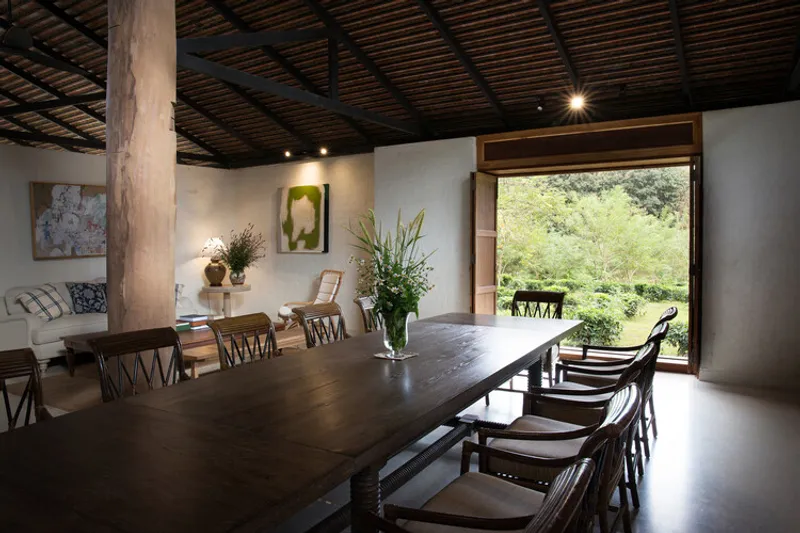
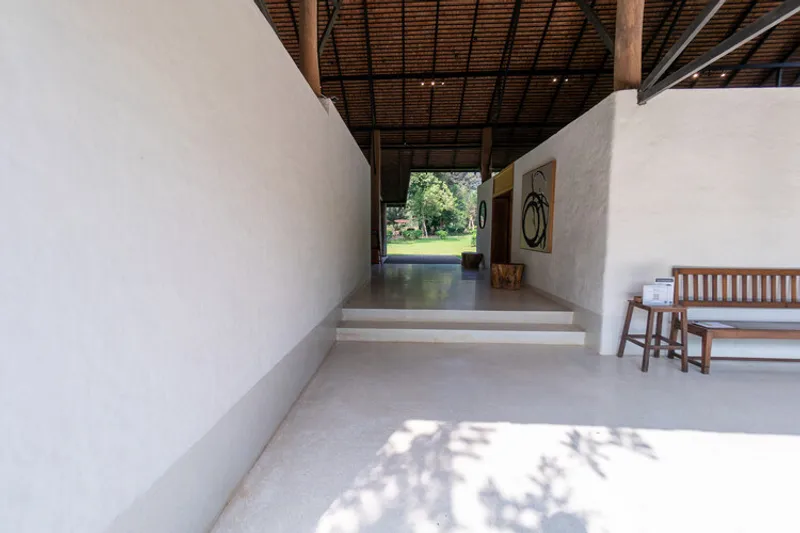
The design emphasizes natural ventilation, light, and zoning. The thick adobe walls regulate heat while the open arrangement of walls allows for cross-ventilation and abundant daylight, reducing the need for artificial cooling or lighting.
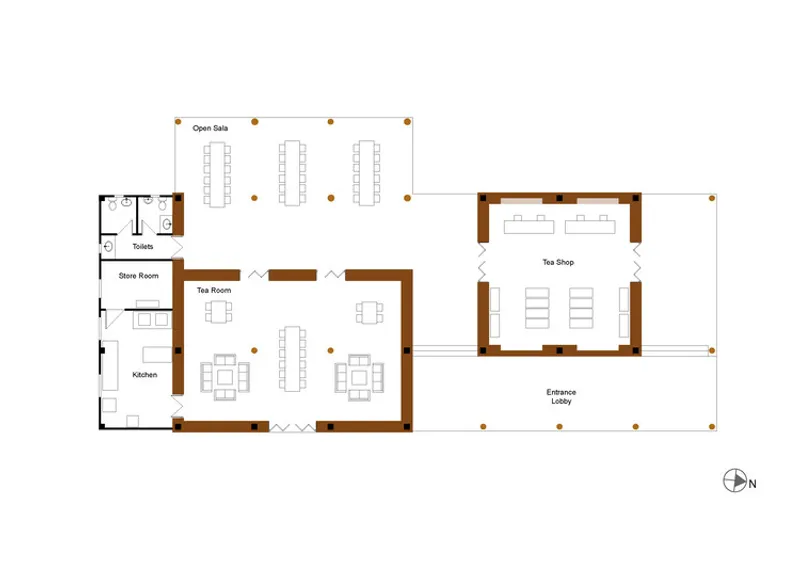
Inside, the spaces are divided into zones for tea tasting, social gatherings, and quiet reflection. The use of adobe and lime plaster walls creates a warm, tactile interior, while exposed timber beams celebrate traditional craftsmanship.
Community and Cultural Impact
Beyond architecture, the project prioritized local engagement. Skilled and unskilled workers from the surrounding community were employed, fostering a cultural exchange of building techniques and knowledge. This approach not only created jobs but also built stronger community ties and transferred sustainable construction skills.
Environmental Responsibility
From material selection to construction techniques, Araksa Tea House demonstrates how eco-friendly architecture can exist in harmony with its environment. The natural properties of adobe provide excellent thermal mass, keeping interiors cool without the need for air conditioning. The building’s placement within the tea garden enhances airflow and shading, further reducing energy demand.
The minimal use of concrete—limited to the foundations for structural stability—ensured durability while respecting the environment.
A Model for Sustainable Hospitality Architecture
The Araksa Tea House is more than just a place for tea—it is a living model of sustainable architecture in Thailand. It shows how traditional building methods, local resources, and community involvement can be integrated into contemporary hospitality spaces. Visitors not only experience the beauty of the tea garden but also witness the philosophy of building with nature, not against it.
All the photographs are works of Araksa Tea Garden


Popular Articles
Popular articles from the community


Architekt Andreas Gruber Scatters 23 Dark Timber Chalets Across a South Tyrolean Forest Edge
In Molini di Tures, Amonti Chalets breaks a resort into a hamlet of gabled timber houses, with parking, storage and services pushed into the slope.

David Ortega Stacks a Two-Story Mexico City Penthouse Around a Steel Stair and a Pergola-Shaded Roof Terrace
In Colonia Roma, a 300 m² penthouse uses oak joinery, a planted steel stair and a slatted roof pergola to make a new-build apartment feel like a house.

U.GA Architects Wraps an Oval Rooftop Pool in Curved Board-Formed Concrete on Busan's Jeollidan-gil
In Busan's Jeonpo-dong, a 454 m² mixed-use block stacks a neighborhood facility, guest rooms and an oval rooftop pool inside spiraling concrete walls.

LT2A and OPEN Architectes Thread a Brick and Glass High School Through a Wooded Belgian Campus
In Braine-l'Alleud, a 3,000 m² wing for Collège Cardinal Mercier pairs pale brick with a glazed colonnade, deferring to a small chapel and a dense wood.

Similar Reads
You might also enjoy these articles


Hodi-Mandai Geram
Project Function: Preservation and revitalization of the Intangible heritage and socio-spatial identity of the Hodi by Housing, Cultural Memory Center, Sacred Grove, landscape, local tourism economy


Olio Towers: A Mid-Rise for Performers That Fuses Housing, Rehearsal, and Stage
Located blocks from Houston's Theater District, this modular tower stacks living units around a central performance atrium.

Oasis: Modular Green Housing Carved into Dhaka's Urban Fabric
A shortlisted Plugin Housing entry reclaims unauthorized settlements in Dhaka with stepped concrete volumes, green roofs, and ventilation-driven design.

Black Hole: A Floating Megastructure for the Post-Physical Era
Emiliano Mazzarotto envisions a spherical, self-scaling arena where e-sports, digital hotels, and holographic stadiums replace traditional public space.

Explore Hospitality Building Competitions
Discover active competitions in this discipline

Challenge to reimagine the Iron Throne

Photograph architecture without architects

Illustrate the lost glory of Angkor Wat - Render Challenge

Design challenge to reuse E-waste
Comments (0)
Please login or sign up to add comments
No comments yet. Be the first to comment!