

ARAN Residential Building by Pargar Architecture and Design Studio: Harmonizing Landscape, Light, and Living in Tehran
ARAN Residential Building blends rotated geometry, natural materials, and daylight-rich interiors to redefine luxury living in Tehran’s green hillside.


Nestled in the scenic hillsides of Zaferanieh, north Tehran, the ARAN Residential Building by Pargar Architecture and Design Studio redefines high-end urban living through an innovative interplay of natural orientation, refined materiality, and carefully curated amenities. Completed in 2021, the project reflects the studio’s commitment to human-centric design while addressing the spatial and environmental potentials of its unique context.
Spanning a total area of 14,044 square meters across 16 floors on a 1,960 sqm plot, the ARAN building offers a distinctive residential experience that integrates panoramic mountain views, southeastern solar exposure, and rich spatial amenities within a unified architectural language.
Site Context and Planning: Responding to Topography and Sunlight
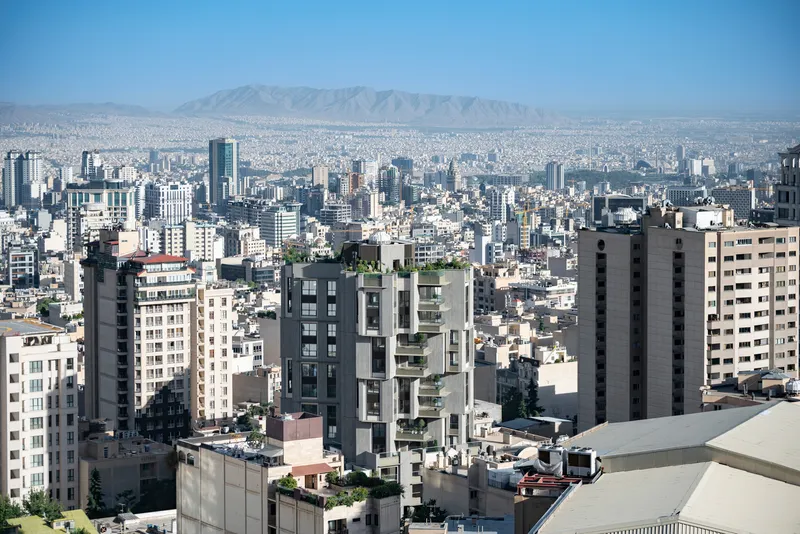
The building is located in Zaferanieh, a prestigious and green district in northern Tehran, known for its proximity to the Alborz mountains. Unlike typical land plots in the city that are oriented along cardinal axes, the ARAN site tilts towards the southeast—presenting a unique solar and visual challenge for the design team.
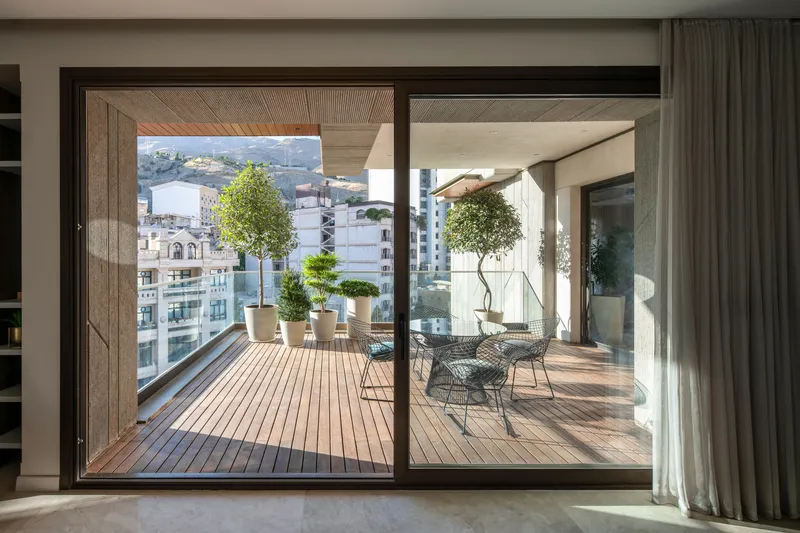
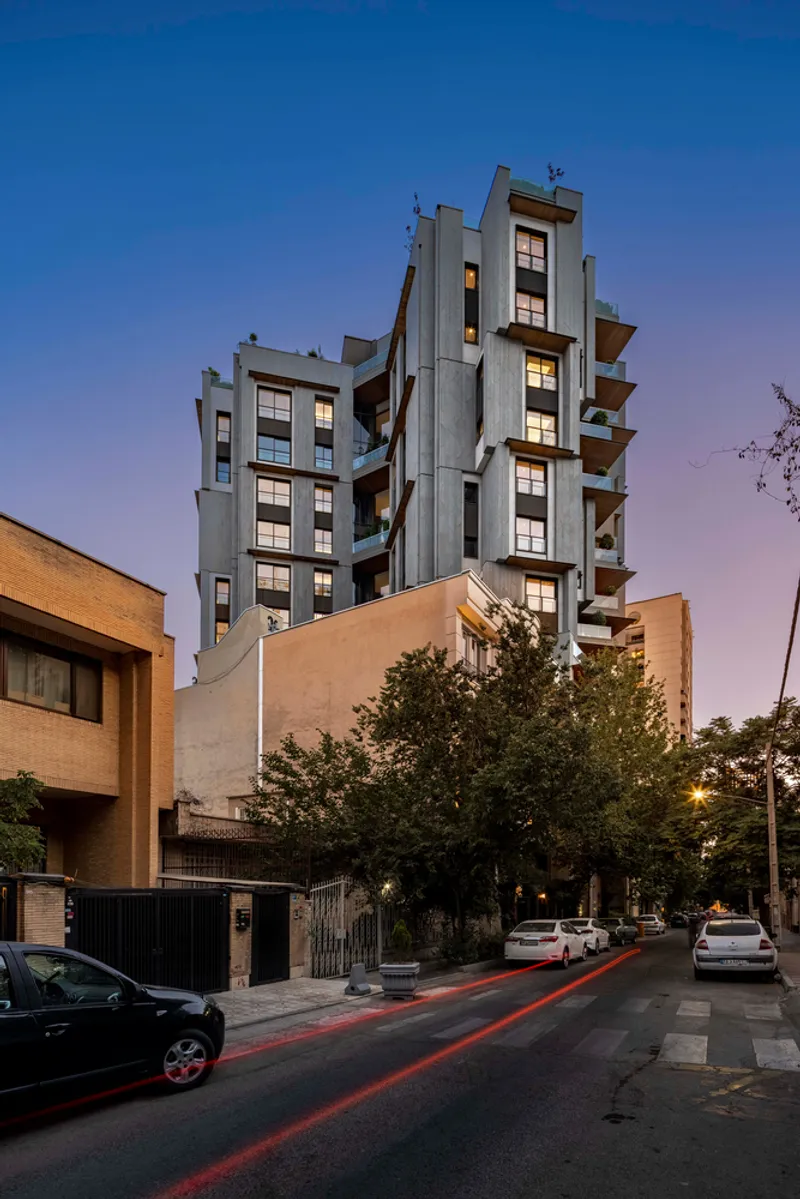
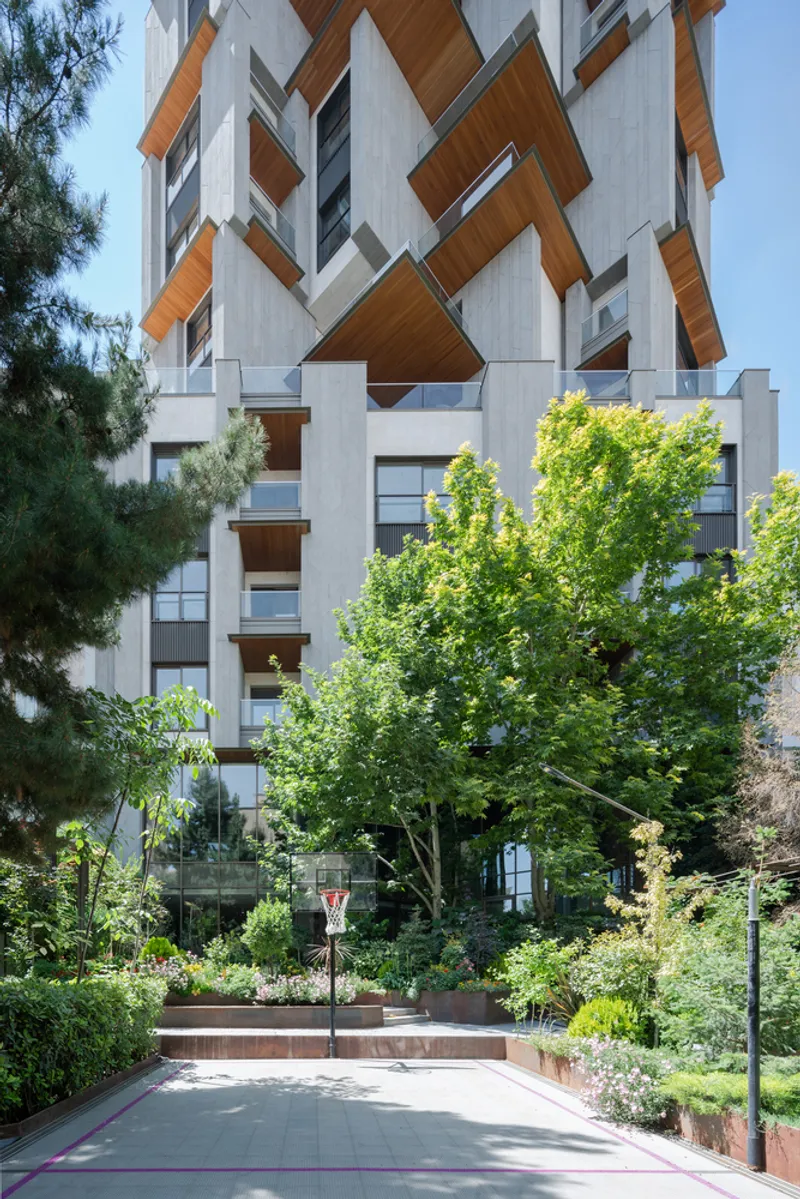
Initial studies revealed the impracticality of arranging two symmetrical east-west units per floor due to limited daylight and compromised layouts. To resolve this, the architects adopted a bold yet effective solution: rotating the residential units 45 degrees to align with optimal sun paths and surrounding views. This shift allowed for better natural lighting, especially for the northern unit, while framing views of the nearby landscape and cityscape.
Residential Configuration and Program Distribution
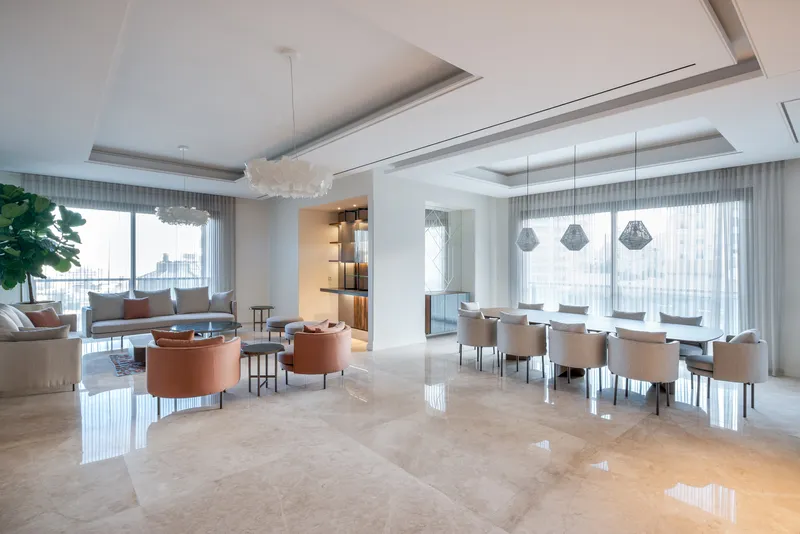
The ARAN building consists of 11 residential floors, structured to accommodate a mix of spacious units:
- 8 floors with two units of 370 sqm each
- 3 floors with four units of 200 sqm each
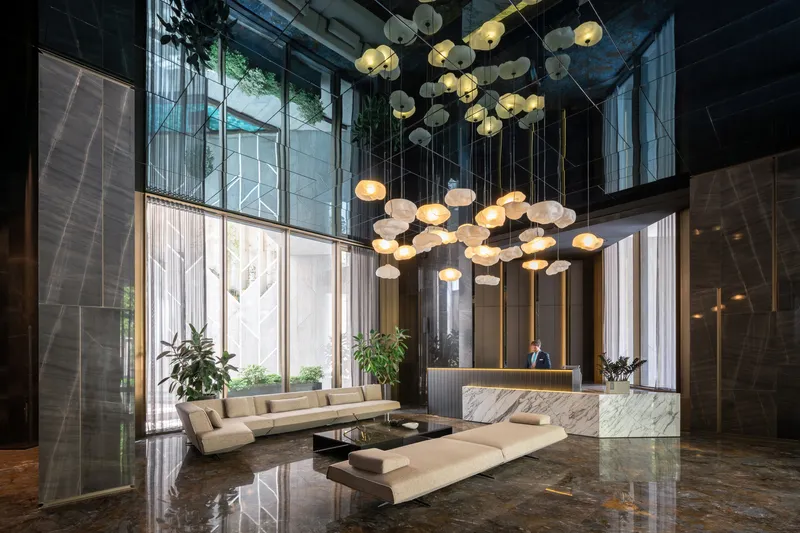
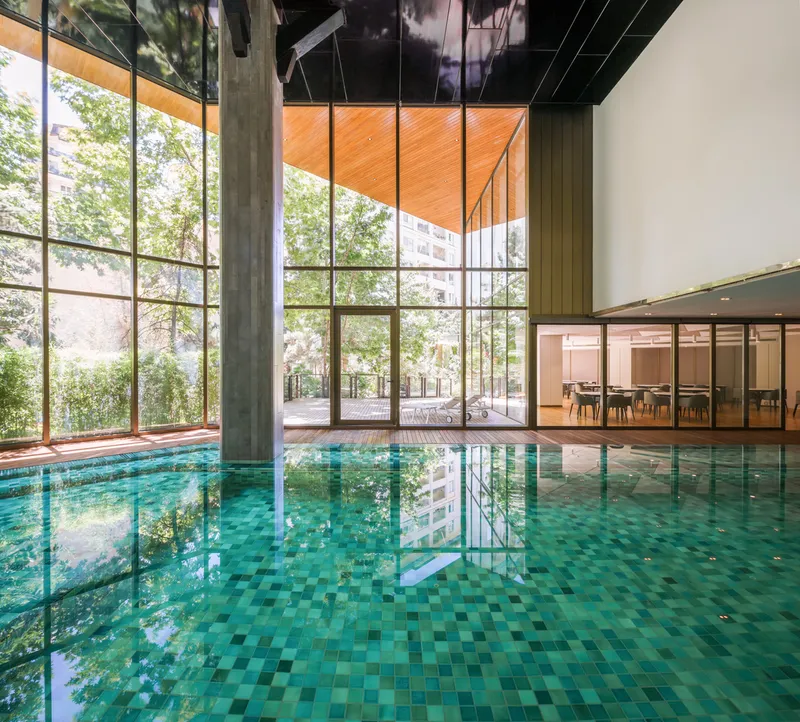
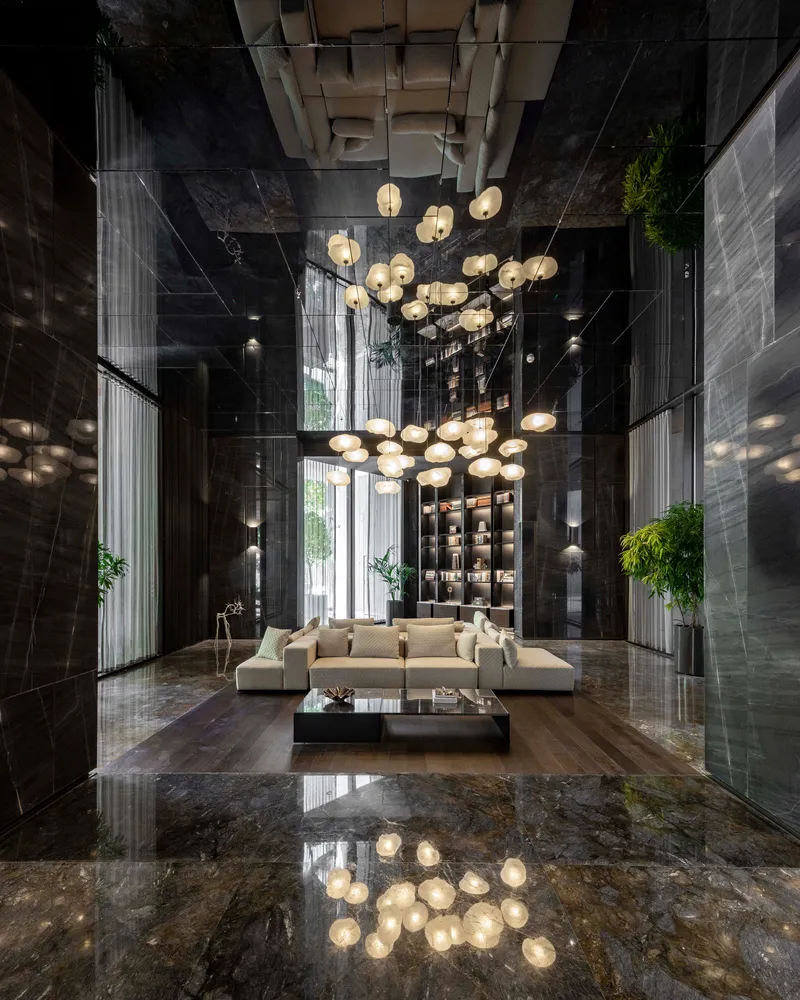
The ground floor serves as a dynamic communal hub, including a lobby, library, game room, gym, family cinema, and management office. Subterranean levels extend the building’s program with a swimming pool, spa, conference center, and mechanical facilities on Level -1. Below this, three basement levels (-2 to -4) house parking and storage rooms for residents.
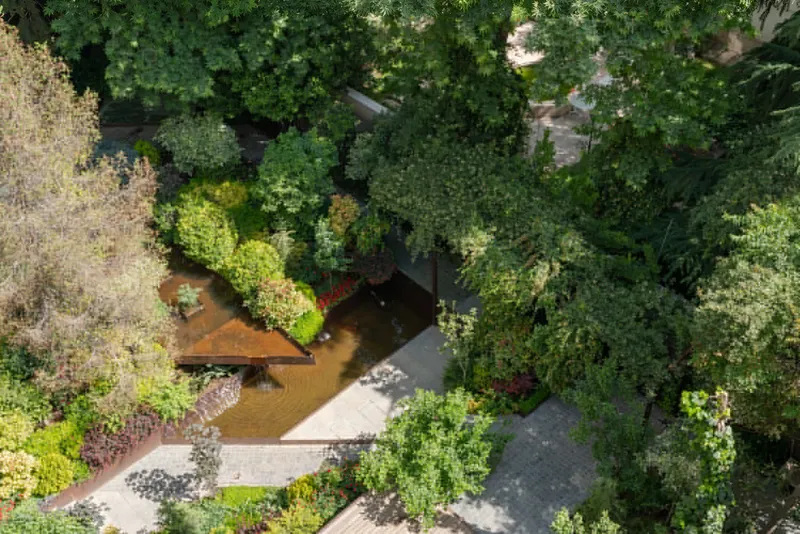
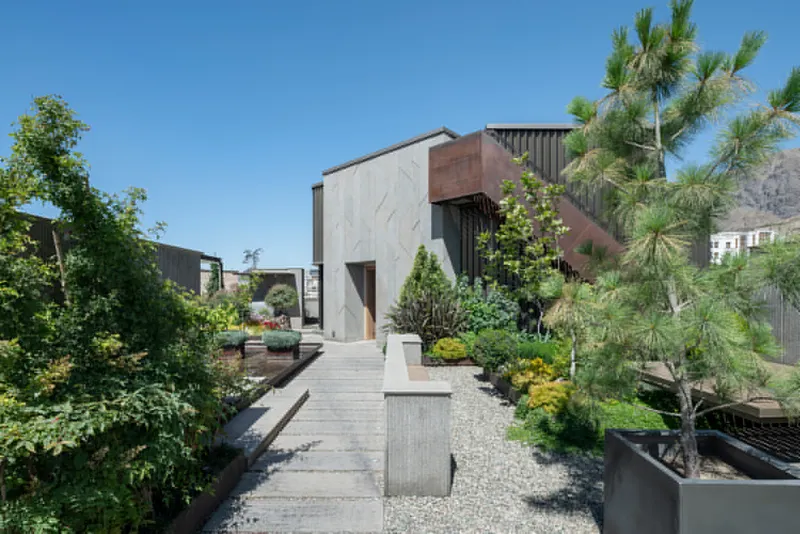
Two rooftop gardens crown the building—each with its own visual and functional identity—offering residents landscaped spaces for rest, recreation, and community interaction.
Design Concept: Merging Architecture with Nature
Pargar Architecture’s primary design intention was to synthesize architecture with the surrounding natural environment, responding to both land orientation and human perception. The result is a residential complex that feels rooted in its landscape while offering luxury and privacy.
The ground floor lobby is flanked by two internal courtyards on the east and west sides—subtly extending the interior into green outdoor spaces. The swimming pool and adjacent conference room are designed with glass partitions overlooking a sloped terrain that admits daylight deep into the structure, enhancing transparency and functional overlap.
This careful negotiation between built and natural environments enriches the living experience, transforming conventional residential amenities into spatial narratives of light, openness, and flow.
Architectural Language and Materiality
The ARAN Residential Building is visually unified through a distinctive material palette and formal geometry inspired by the 45-degree axis of rotation. This angular logic is repeated throughout the project, including in:
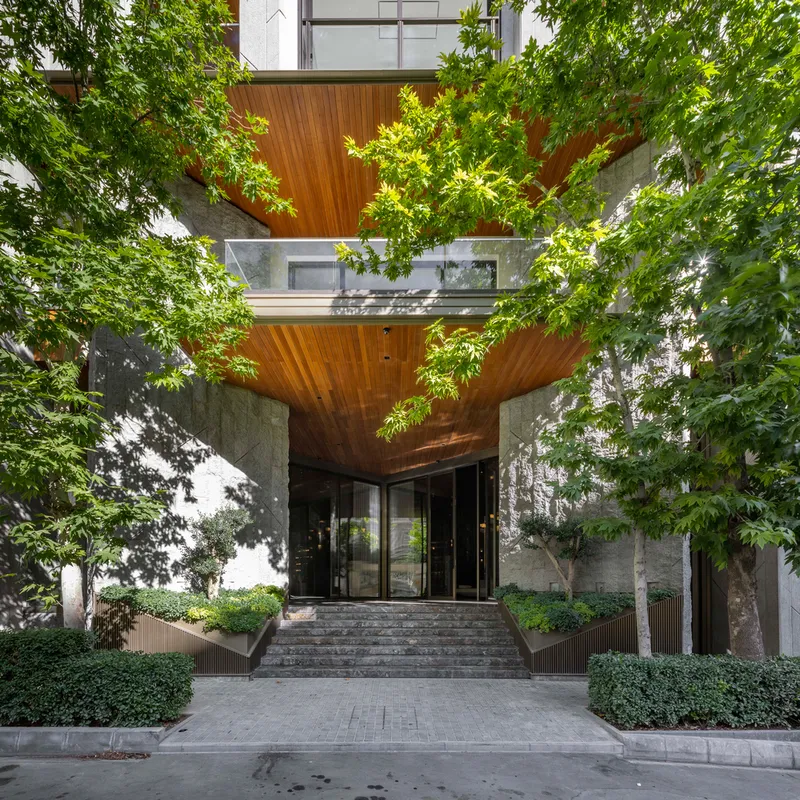
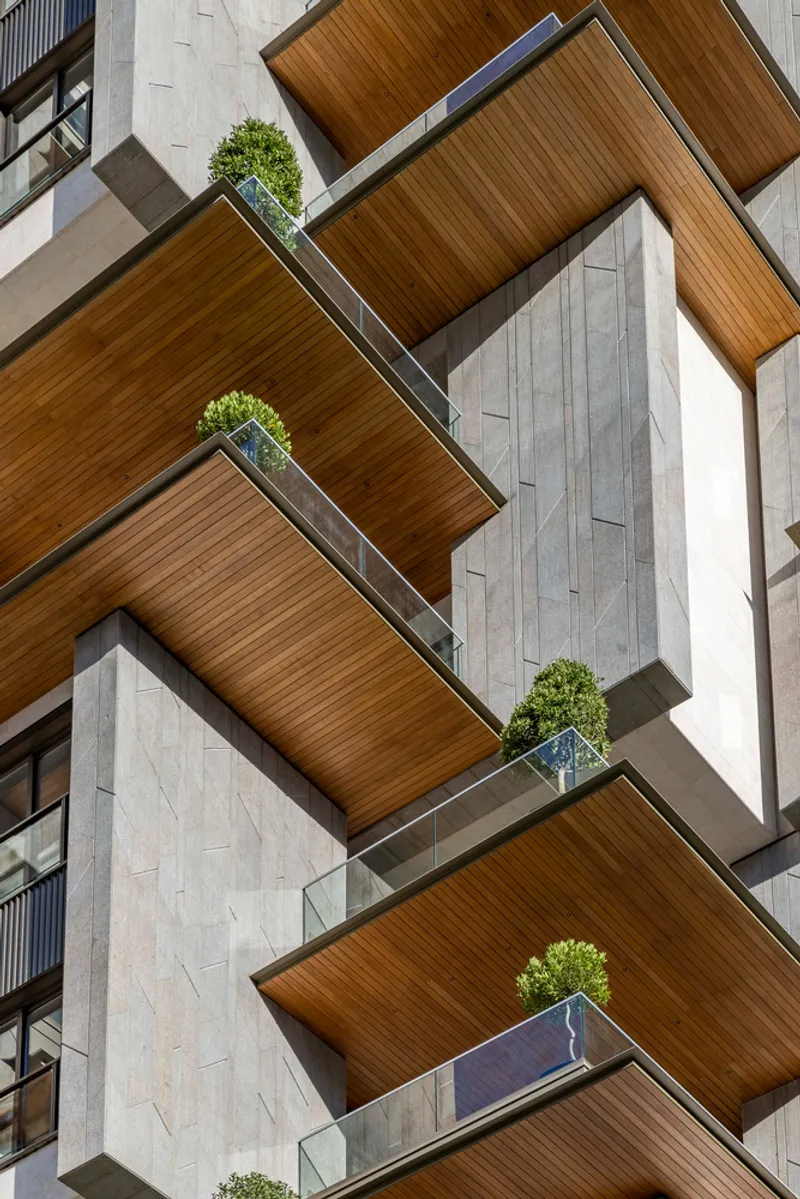
- Stone cladding patterns on the façade
- Interior wall paneling
- Apartment entry doors
The building’s exterior features a composition of natural stone, wood, and aluminum, providing both thermal performance and textural contrast. These materials echo the surrounding landscape while reinforcing the project’s contemporary identity.
The first three floors, which align with the street skyline, were kept orthogonal to maintain urban coherence, further enhancing the contrast with the rotated upper levels.
Integrated Identity and Architectural Unity
The defining rotation strategy became the signature identity of the ARAN building. Not only did it resolve environmental concerns, but it also offered a conceptual and formal framework that guided every design decision—from structural orientation to façade detailing.



Popular Articles
Popular articles from the community


The Ocean Hive: Sustainable Architecture for a Self-Sufficient Civilization at Sea
The Ocean Hive imagines sustainable architecture at sea, where modular habitats, algae, wave power and ocean waste sustain a growing colony.

Co-life: Sustainable Architecture for Age-Friendly Community Living
Co-life reimagines sustainable architecture for seniors through courtyards, rammed earth, shared gardens, and spaces designed for belonging.

The Earth Pod: 3D Printed Homes for Resilient Refugee Communities
The Earth Pod reimagines refugee housing through 3D printed homes made from clay, combining resilience, self-sufficiency, and rapid shelter.
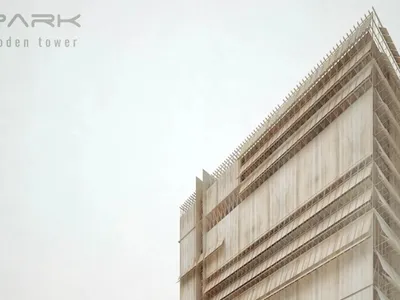
EW PARK: Sustainable Architecture Reimagines the Future of Urban Parking
EW PARK reimagines city parking as a modular wooden tower combining automation, solar energy, electric mobility, and adaptable urban design.

Similar Reads
You might also enjoy these articles


Hodi-Mandai Geram
Project Function: Preservation and revitalization of the Intangible heritage and socio-spatial identity of the Hodi by Housing, Cultural Memory Center, Sacred Grove, landscape, local tourism economy


Olio Towers: A Mid-Rise for Performers That Fuses Housing, Rehearsal, and Stage
Located blocks from Houston's Theater District, this modular tower stacks living units around a central performance atrium.

Oasis: Modular Green Housing Carved into Dhaka's Urban Fabric
A shortlisted Plugin Housing entry reclaims unauthorized settlements in Dhaka with stepped concrete volumes, green roofs, and ventilation-driven design.

Black Hole: A Floating Megastructure for the Post-Physical Era
Emiliano Mazzarotto envisions a spherical, self-scaling arena where e-sports, digital hotels, and holographic stadiums replace traditional public space.

Explore Residential Building Competitions
Discover active competitions in this discipline


Challenge to design mud housing for contemporary communities


Challenge to reimagine the Iron Throne


Photograph architecture without architects


Illustrate the lost glory of Angkor Wat - Render Challenge
Comments (0)
Please login or sign up to add comments
No comments yet. Be the first to comment!