
ARC Z and Practice on Earth Carve a Tavern and Teahouse into a Huizhou Hillside Village
At just 85 square meters, two interlocking pavilions in Mazha Town reimagine the rural Chinese teahouse as a civic anchor.


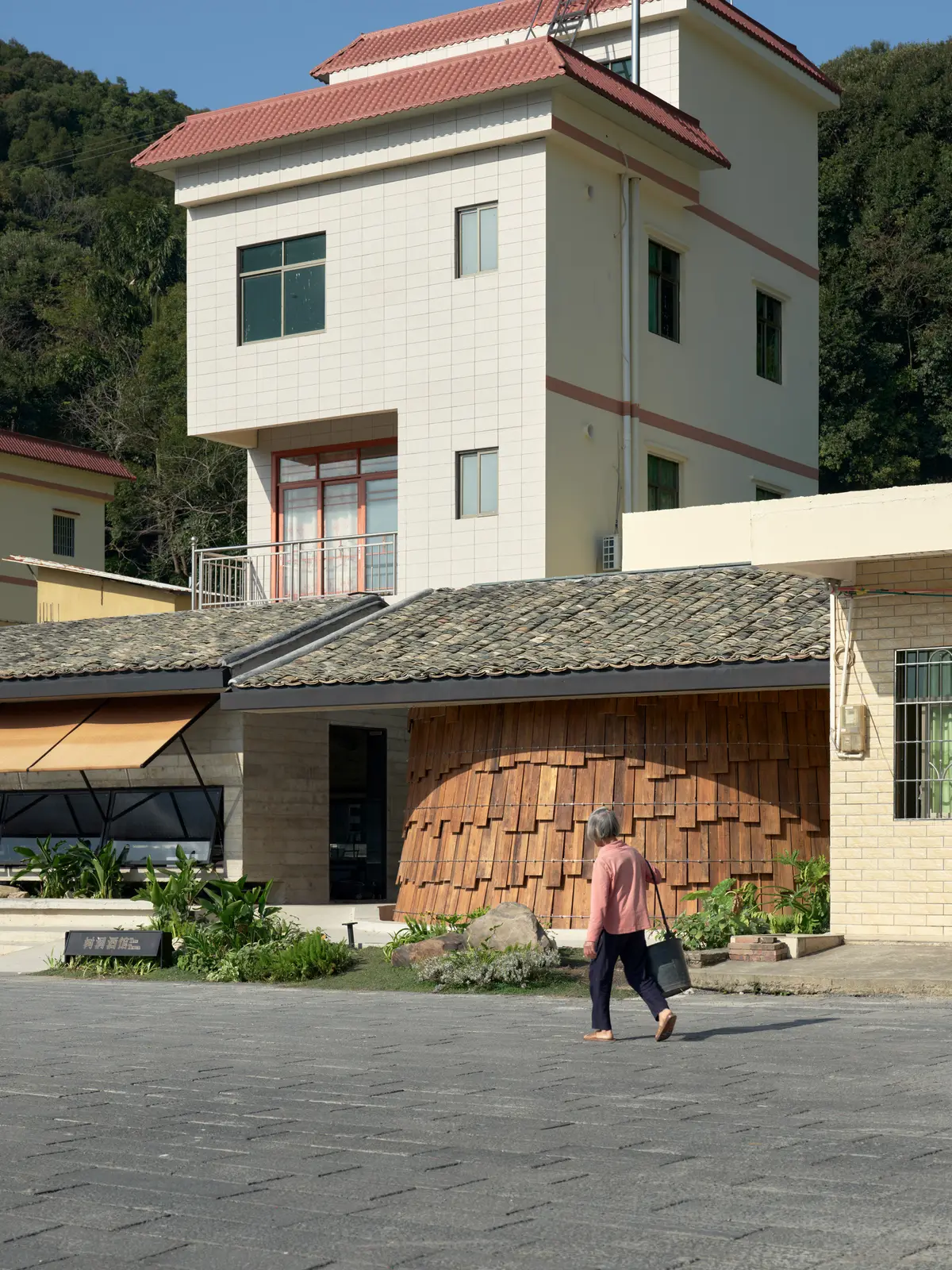
Rural revitalization projects in China often oscillate between two poles: nostalgic pastiche that freezes a village in amber, or alien insertions that treat the countryside as a blank canvas for formal experiments. The Tree Tavern and Cave Teahouse, a collaboration between ARC Z Architects and Practice on Earth, manages to avoid both. Set within the Ancient Banyan Literary area of Mazha Town in Longmen County, Huizhou, the project threads a pair of compact pavilions into the existing grain of a hillside village, using board-formed concrete, timber shingles, and ceramic tile roofs that feel neither imitative nor contrived.
What makes this 85-square-meter project genuinely compelling is how much it achieves with how little. The program is modest: a coffee shop and teahouse commissioned by the Mazha Town Government. But the spatial ambition is not. Rather than building a single box, the architects split the program into two interlocking volumes connected by planted courtyards and covered walkways, creating a sequence of outdoor rooms, thresholds, and framed views that multiplies the perceived scale of the intervention several times over. The result is less a building and more a tiny precinct, a social infrastructure for gathering that plugs directly into the village's public life.
Roofscape as Village Grammar
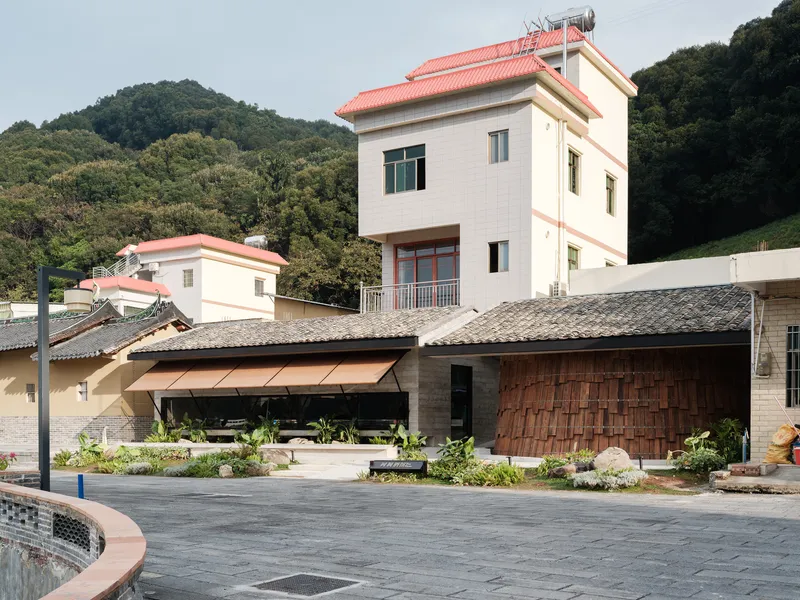
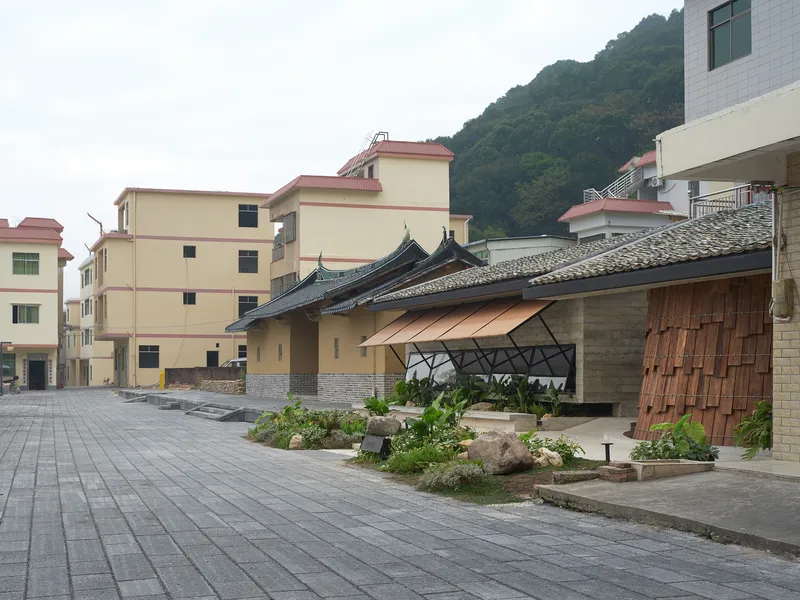
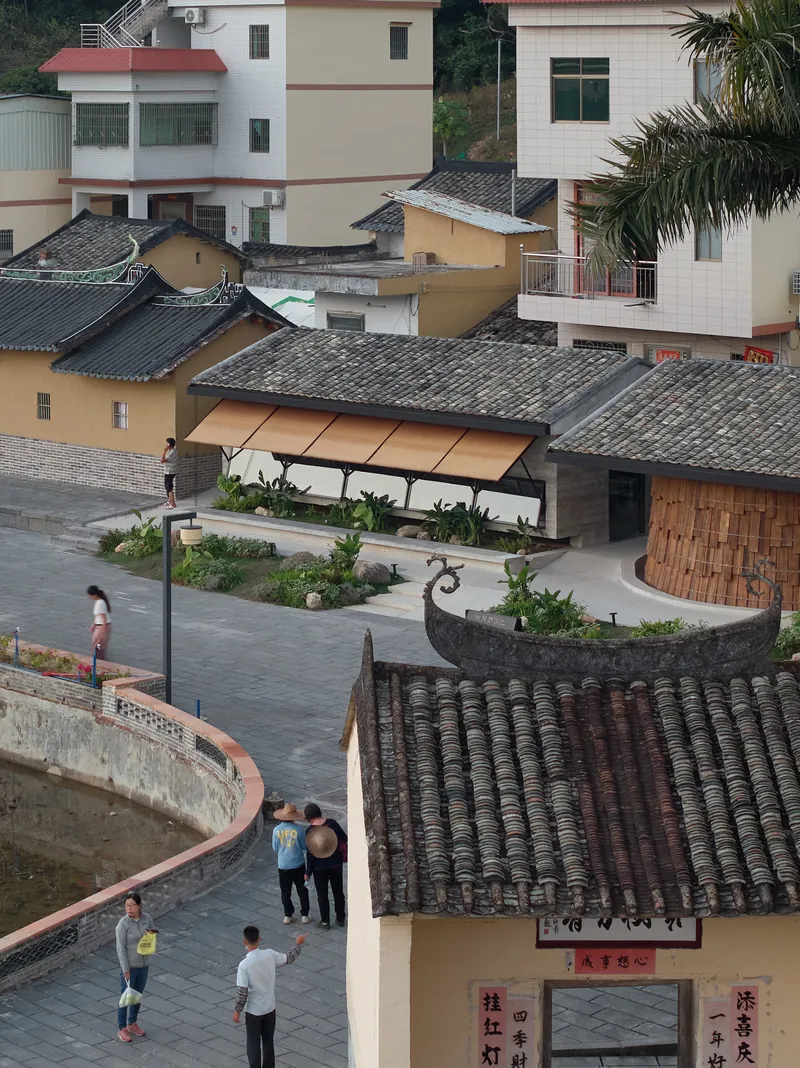
Seen from above or across the adjacent pond, the project's most telling move is its roof. The architects deploy traditional ceramic tiles and timber shingles in curving, low-slung profiles that echo the pitch and materiality of surrounding village houses without copying their geometry. The gabled forms are subtly warped: walls curve where you expect them to be straight, and the roofline dips to meet planted beds that blur the boundary between building and landscape. It reads as a natural extension of the hillside cluster rather than an imposition on it.
The curved planted courtyard beds, visible in the elevated views, act as a second layer of mediation. They soften the hard edges of the paved plaza and introduce a domestic scale that makes the project approachable. Visitors are drawn not to a front door but into a courtyard system, a spatial strategy that owes as much to traditional Lingnan residential planning as it does to any contemporary landscape urbanism.
Concrete and Timber in Dialogue
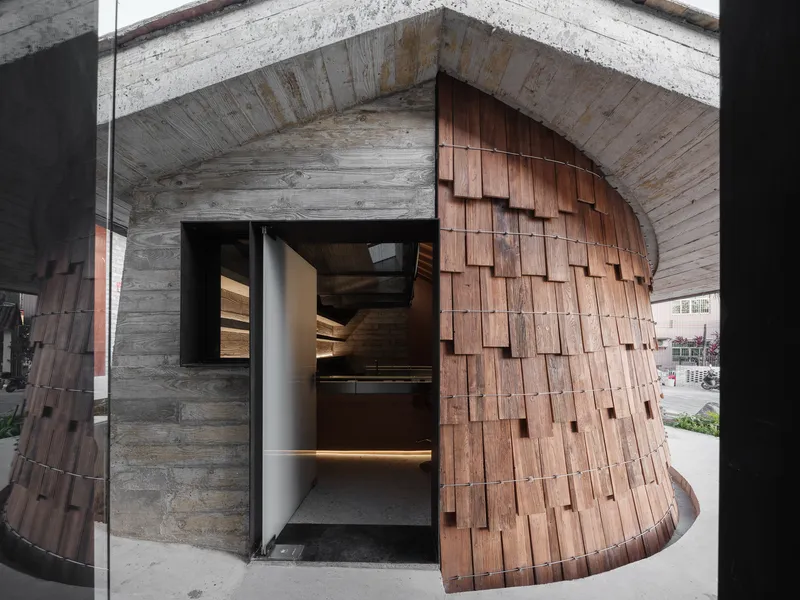
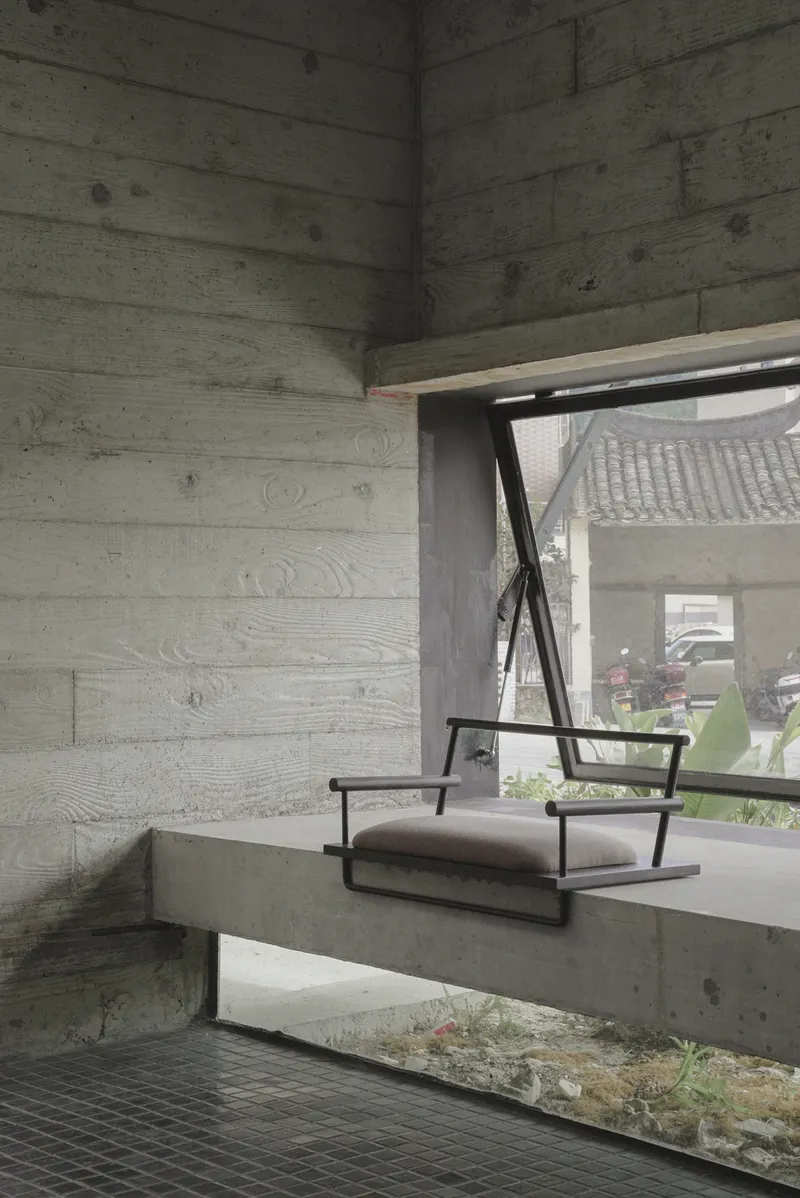
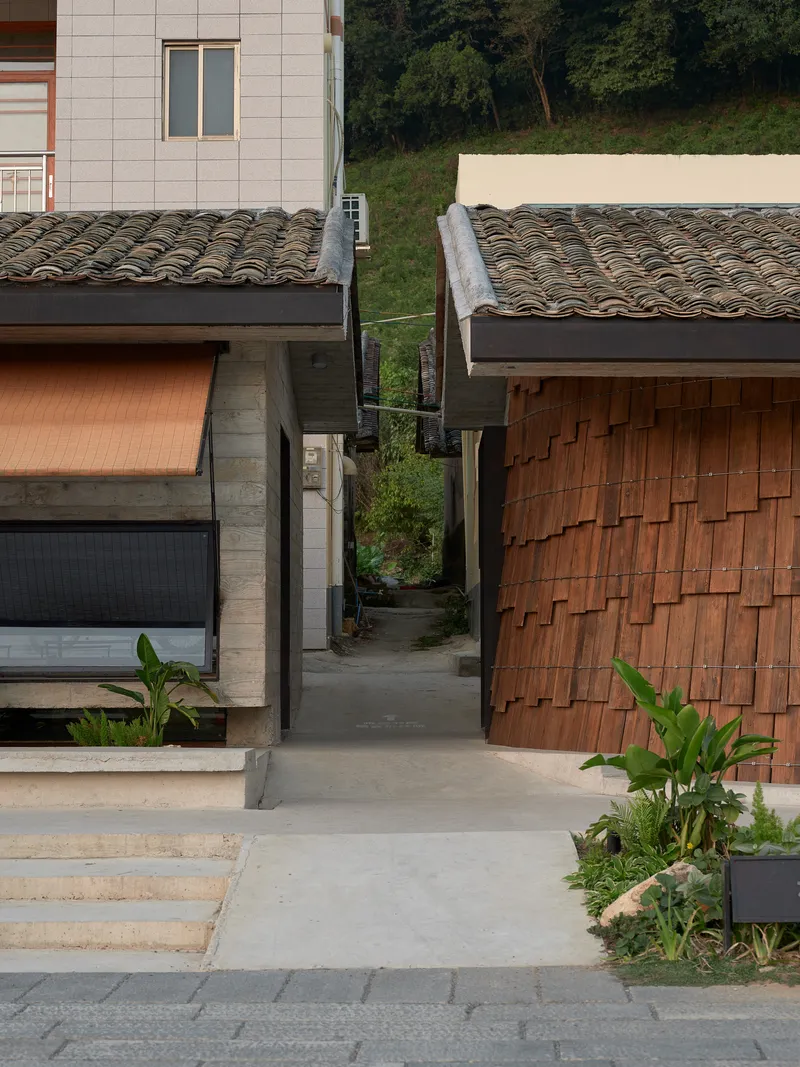
The material palette is deliberately restrained: board-formed concrete, timber structure, and timber shingles. What elevates these choices beyond standard rural-project minimalism is how they are composed against each other. The concrete is rough and earthbound, its board marks legible up close, while the timber ceiling planes above feel warm and precise. The contrast gives each interior a cave-like solidity at the base and a lightness overhead, a duality hinted at in the project's own name: tree above, cave below.
Between the two volumes, a concrete pathway lined by tiled roofs channels movement toward the green hillside beyond. These interstitial spaces are as carefully designed as the interiors, turning what could be leftover circulation into some of the project's most atmospheric moments. Angled windows cut into concrete walls frame planted courtyards with a precision that suggests each view was composed individually.
The Interior as Gathering Hall
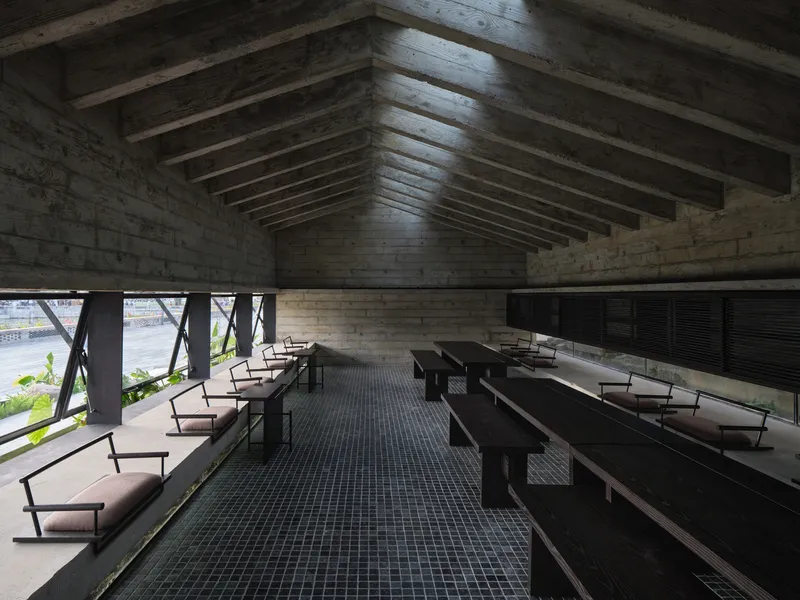
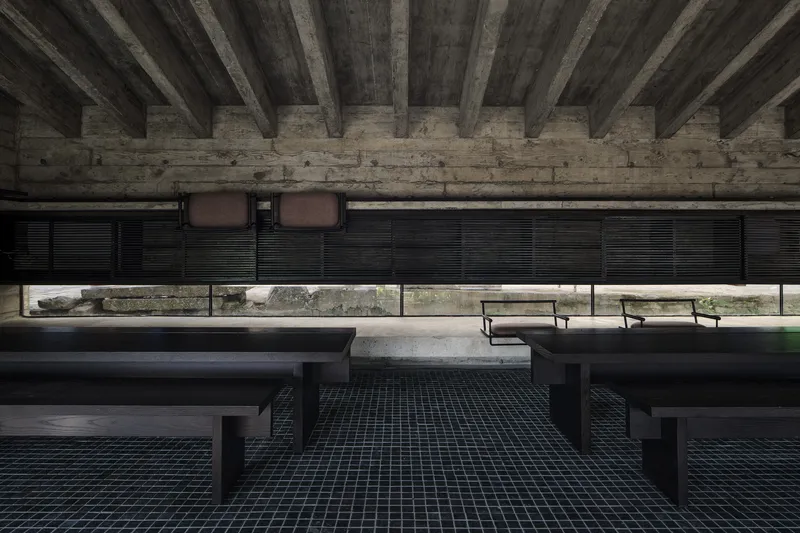
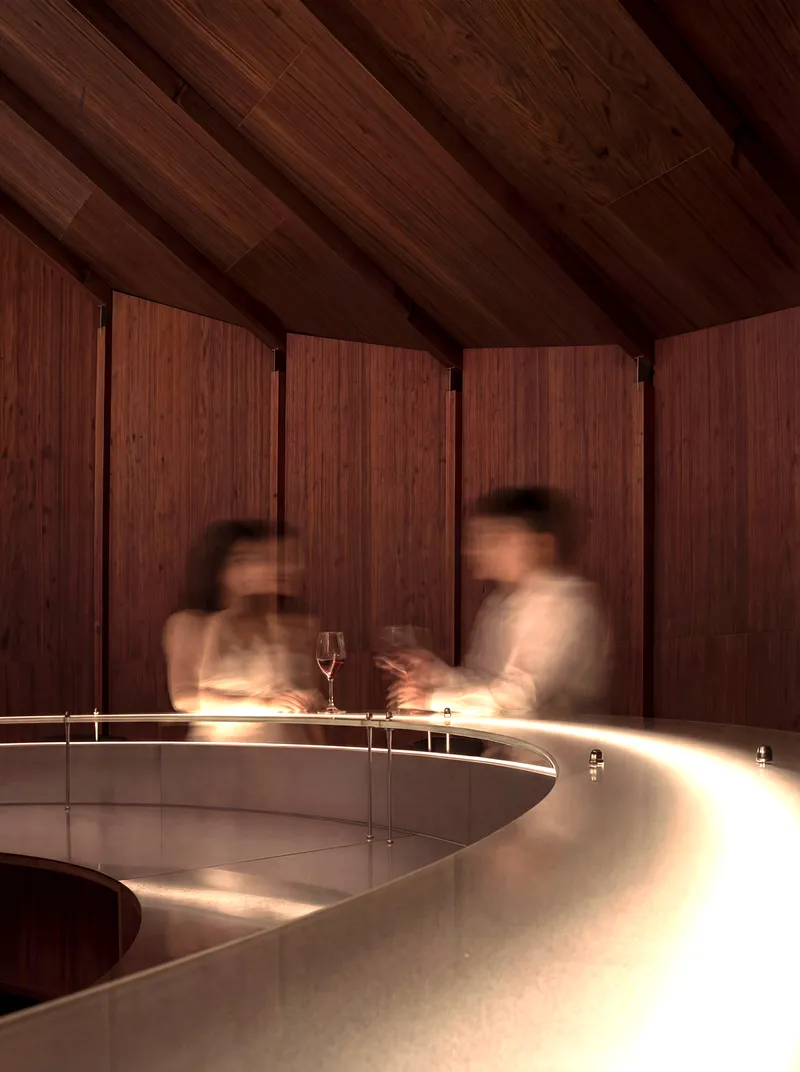
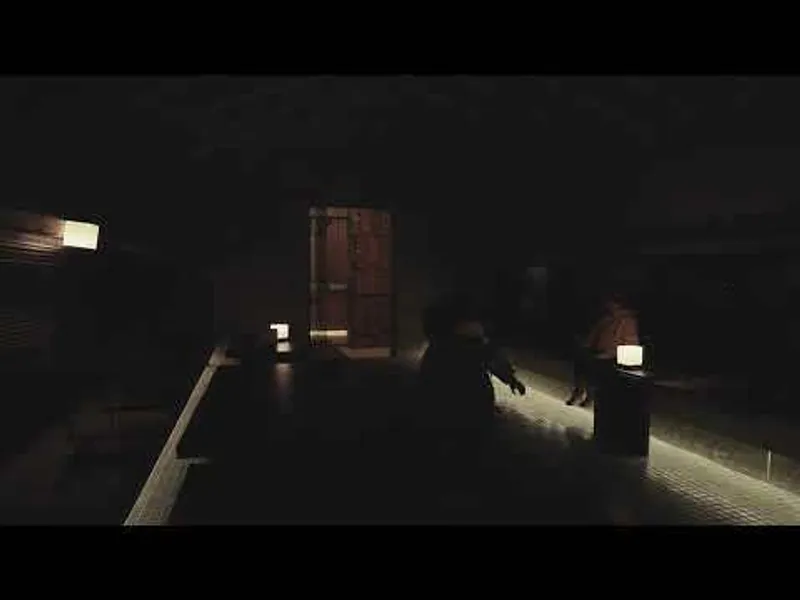
Inside, the main hall reads less like a coffee shop and more like a village commons. Exposed timber ceiling beams run in parallel lines, establishing a rhythmic order against which the rougher concrete walls register as almost geological. Black steel benches line the perimeter beneath horizontal window shutters, their minimal detailing allowing the architecture itself to do the work of creating atmosphere. There is no retail signage, no barista theater. The architecture is the brand.
A curved counter with integrated lighting occupies one zone, its gentle arc mirroring the exterior wall curves. Figures blur past in motion, suggesting the kind of casual, unhurried use pattern the design intends. This is not a grab-and-go counter; it is a place to linger, to watch the courtyard through slatted openings, to let the village's rhythm set the tempo of your afternoon.
A Circular Skylight and the Unexpected Bath
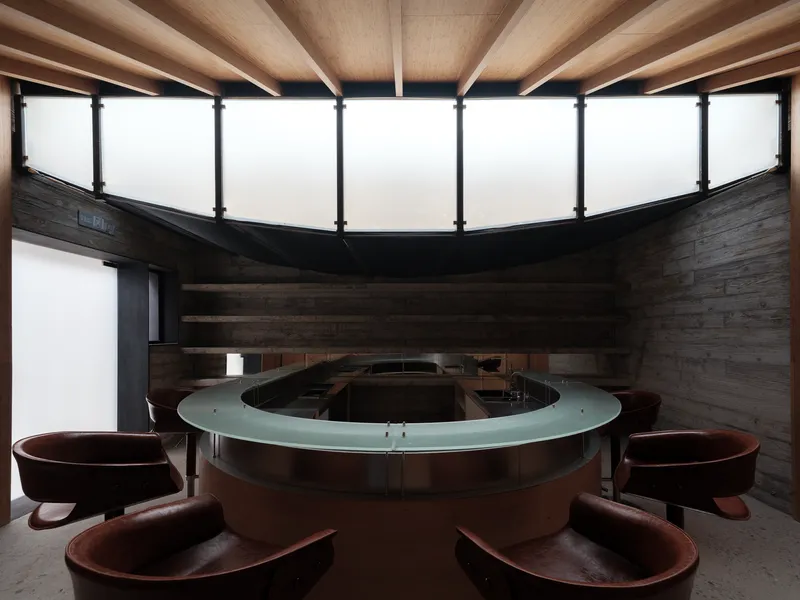
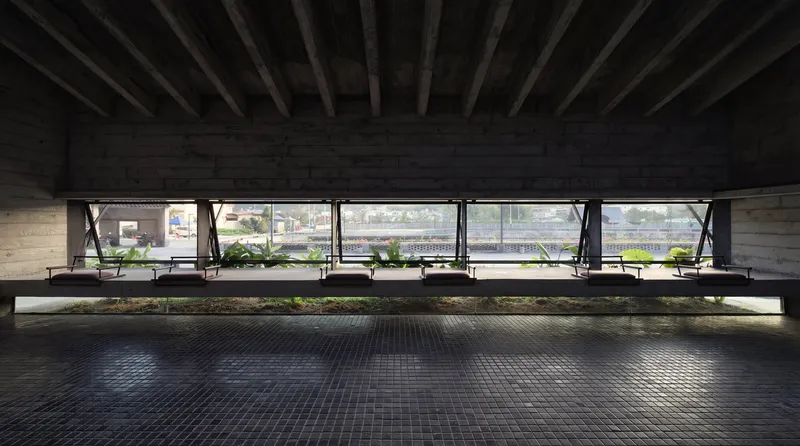
The most surprising space in the project is a circular clerestory opening above what appears to be a communal bathing basin surrounded by timber tubs. In a coffee shop. The inclusion of a water element this intimate and ritualistic signals the architects' ambition to create something more than a commercial program. It references the longstanding Chinese tradition of the bathhouse as a site of social exchange, collapsing the distinction between commerce and communal care into a single room.
Elsewhere, a covered plaza with exposed timber beams and a continuous horizontal window band provides a shaded threshold between the village street and the building's interior. Planted beds running along the glazing soften the transition, making it possible to occupy this in-between zone comfortably during Huizhou's subtropical summers.
The Arched Screen and Village Edge
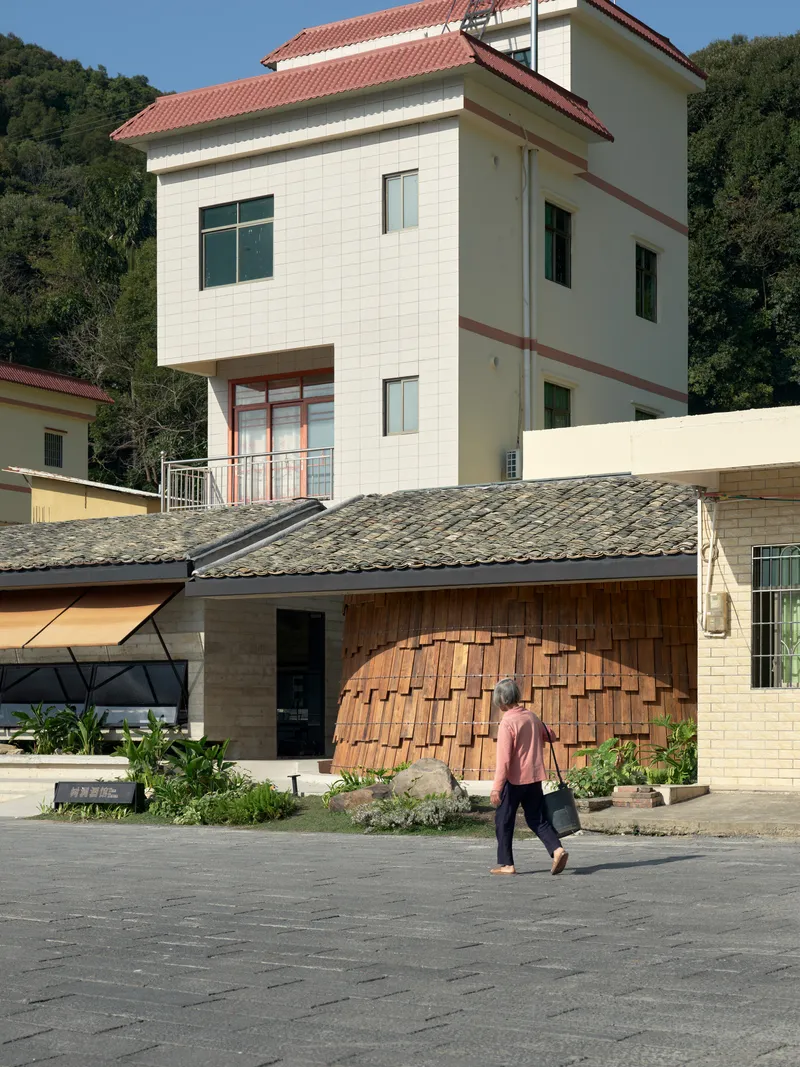
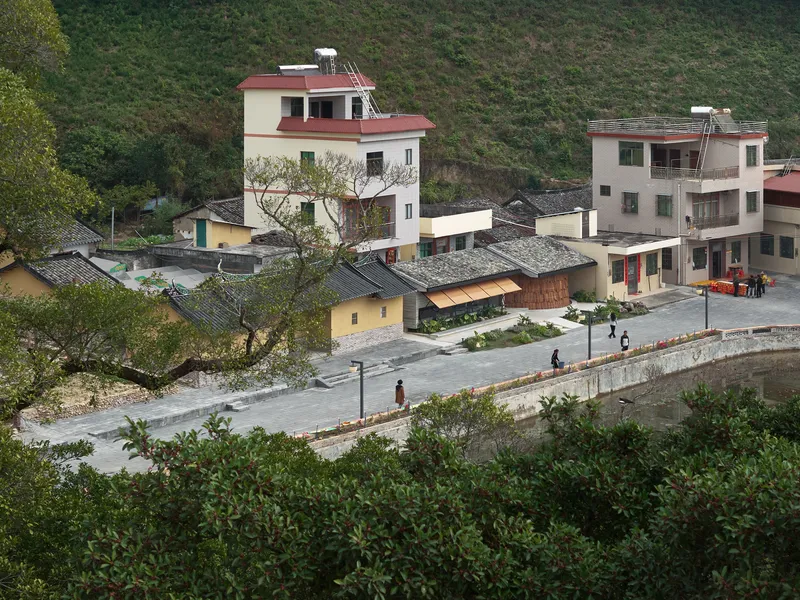
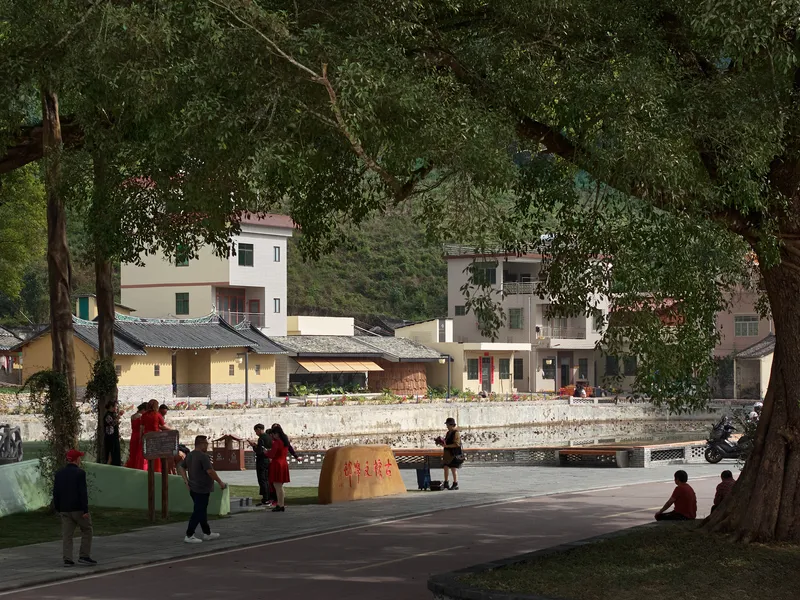
An arched timber screen facade defines the project's most public face, turning toward the paved courtyard where villagers and visitors circulate. The screen is permeable rather than protective, filtering light and air while establishing a clear threshold between the plaza and the interior. A lone figure crossing the courtyard in front of it gives a sense of scale: the arch is generous without being monumental, tall enough to create presence but low enough to feel welcoming.
Looking at the wider context, the village cluster with its traditional tile roofs cascading down the hillside toward a curving waterfront wall, the project sits quietly at an edge condition. It does not try to be the center of the village. Instead, it occupies a seam between the residential fabric and the public waterfront, acting as a hinge that connects daily village life to the new literary tourism economy being cultivated in Mazha Town.
Custom Furniture and Exhibition
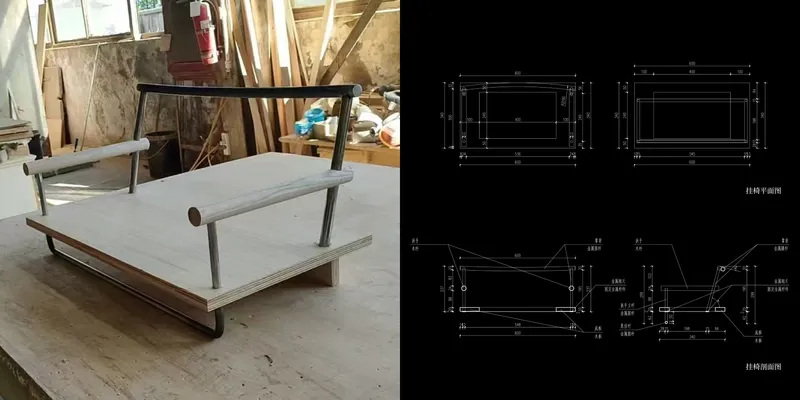
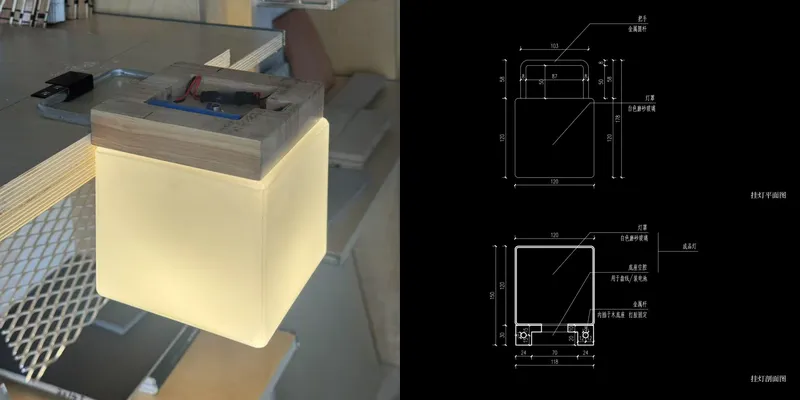
The attention to detail extends to custom furniture designed by Cloe Yun Wang, including a low daybed prototype with curved metal legs that shares the project's vocabulary of soft arcs and grounded horizontality. These pieces were developed alongside the architecture and presented in an exhibition context, spotlit against dark gallery walls as objects in their own right. It is a level of integration that most rural projects at this scale simply cannot afford or do not attempt.
An illuminated model displayed alongside section and elevation drawings reveals the project's formal logic at a glance: two compact volumes, differentiated by roof type, connected by landscape. The model's translucent shell makes the interior spatial relationships legible in a way that photographs alone cannot.
Plans and Drawings
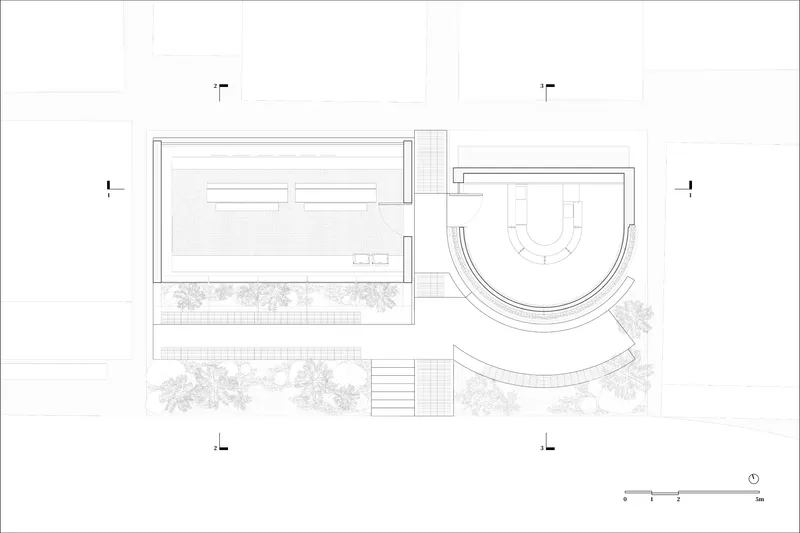
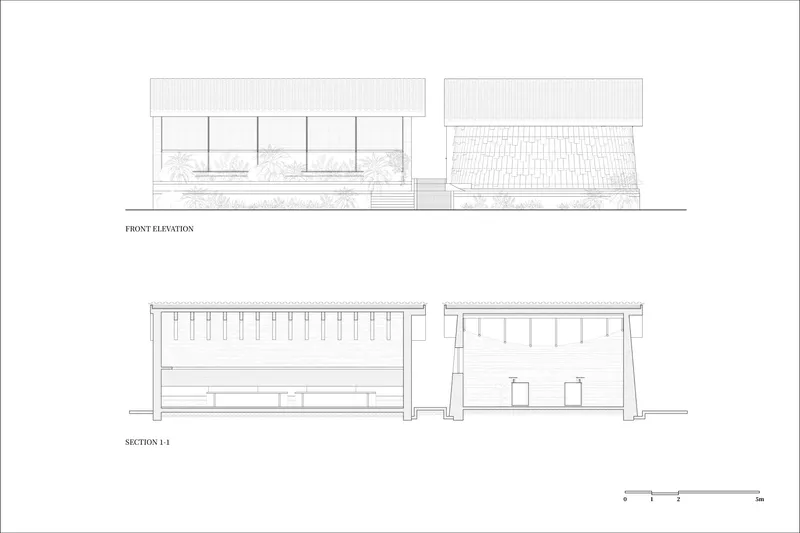
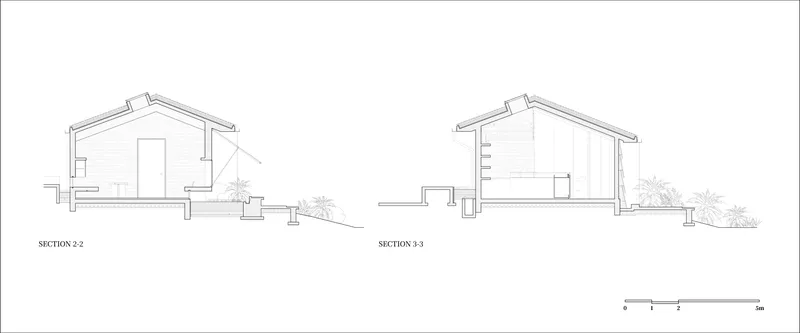
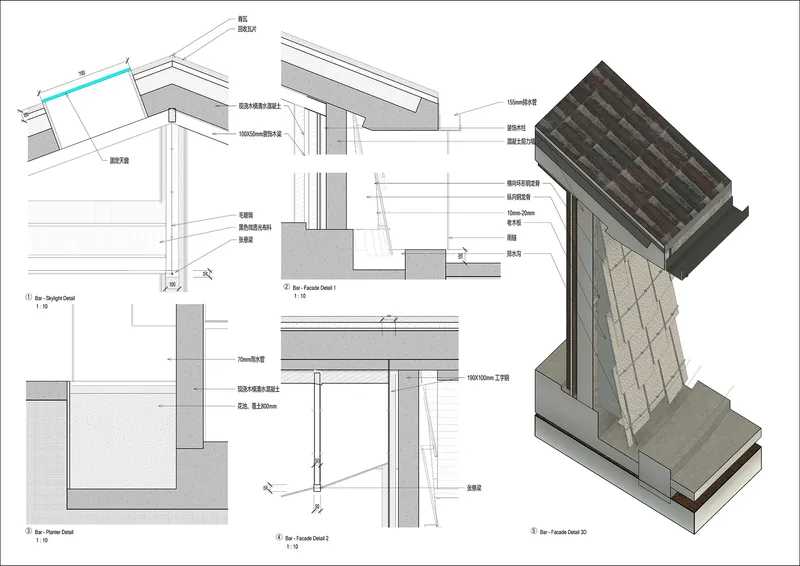
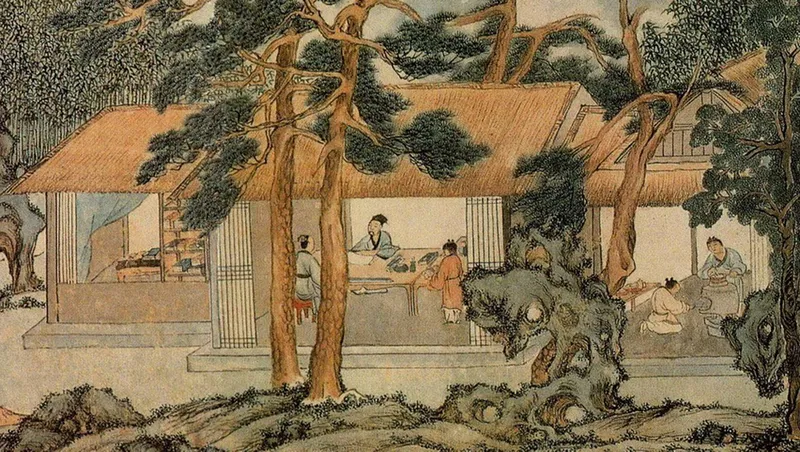
The plan drawing confirms what the photographs suggest: two volumes, one rectangular and one curved, are linked by planted courtyards and a stepped entry sequence that negotiates the site's slope. Sections and elevations show paired gabled structures at different levels, their rooflines calibrated to the hillside gradient. Construction details reveal the roof assembly, facade panel system, and skylight, alongside an axonometric that makes the three-dimensional relationships legible. A historical illustration of pavilions under gnarled pines offers an explicit reference point, grounding the project's formal language in a lineage of Chinese garden architecture.
Why This Project Matters
China's rural revitalization boom has produced hundreds of small cultural and commercial projects in villages across the country, many of them photogenic but spatially thin. The Tree Tavern and Cave Teahouse distinguishes itself through its commitment to spatial complexity at a miniature scale. At 85 square meters, it packs the experiential richness of a much larger project into a footprint that respects the village's existing dimensions. The courtyard system, the material contrasts, and the unexpected programmatic inclusions all suggest architects who understand that rural architecture is not a simplified version of urban practice but a discipline with its own specific demands.
ARC Z Architects and Practice on Earth have produced something here that resists easy categorization. It is a coffee shop that functions as a village commons. It is a contemporary intervention that feels like it has always been part of the hillside. It is tiny and yet spatially generous. These contradictions are not accidents; they are the project's animating force. In a landscape crowded with well-intentioned but ultimately decorative rural projects, this one earns its complexity.
Tree Tavern & Cave Teahouse by ARC Z Architects and Practice on Earth. Mazha Town, Longmen County, Huizhou, China. 85 m². Completed 2025. Photography by Qingyan Zhu, Runzi Zhu, and Ziyan Zhang.
About the Studio
Share Your Own Work on uni.xyz
If projects like this are the kind of work you want to make, uni.xyz is a place to publish your own, find collaborators, and enter design competitions.


Popular Articles
Popular articles from the community


Manzana Morphosis: Stretching Barcelona's Grid into a Living Landscape for 2050
A radical reworking of the Eixample manzana turns density into a tool for generous public space, vertical ecology, and environmental performance.

Temporary Home for Dogs: A Reversed Zoo Rethinks Animal Shelter Architecture
In Bucharest, a sinuous corridor and freed landscape flip the logic of containment, designing a shelter that works to make itself unnecessary.

Opera on the Sea: Driftwood Logic Shapes a Timber Opera House on Estonia's Coast
Trevor Orgill's opera house translates the entangled drift of floating timber into a civic building where wood, water, and music converge.

Singing Woman: An Opera House That Performs Before the Curtain Rises
Ovidiu Cristian Pavel's conceptual opera house translates Estonia's choral identity into a sculpted waterfront landmark facing the Baltic Sea.

Similar Reads
You might also enjoy these articles

Pixel Gardens: One Repeated Module Stacked Into a Terraced Social Housing Tower for Famagusta
Salem Bader's shortlisted housing tower builds a vertical neighbourhood from one repeated module, offsetting units to carve terraces, light and air.

Bao Huynh Watercolor Atelier: A Serene Art Retreat in Hội An
Bao Huynh Watercolor Atelier in Hội An blends multifunctional art spaces, sustainable design, local materials, and family-friendly living in a serene environment.

Atelier Macri Concept Store Interior Design by CASE-REAL
Atelier Macri store features a "ko" counter, walnut wood details, cork displays, blending retail, gallery, and seamless customer experiences.

Manuel Vargas Izquierdo Stadium and High-Performance Sports Center: Architectural Excellence in Jalpa de Méndez
The Manuel Vargas Izquierdo Stadium blends sustainable design, inclusive sports facilities, and cultural-inspired architecture, revitalizing Jalpa de Méndez’s public spaces.

Explore Tree House Competitions
Discover active competitions in this discipline

Challenge to design a portable theatre

Challenge to design a portable music platform

Challenge to design an open learning module for the elderly
Comments (0)
Please login or sign up to add comments
No comments yet. Be the first to comment!