

Archipelago Pavilion – Author Houses in the Forest by Alarcia Ferrer Arquitectos
A triangular pavilion in Argentina’s forest with sliding walls, burnt wood cladding, and flexible spaces blending architecture seamlessly into nature.


Architects: Alarcia Ferrer Arquitectos
The Archipelago Pavilion is a striking architectural intervention within the lush forest of Estancia La Paz, conceived by Alarcia Ferrer Arquitectos as part of a visionary project that unites twelve contemporary houses designed by twelve architecture studios. More than a building, the pavilion is a flexible exhibition and sales space designed to showcase innovative residential concepts—each reimagining ways of living in harmony with nature.
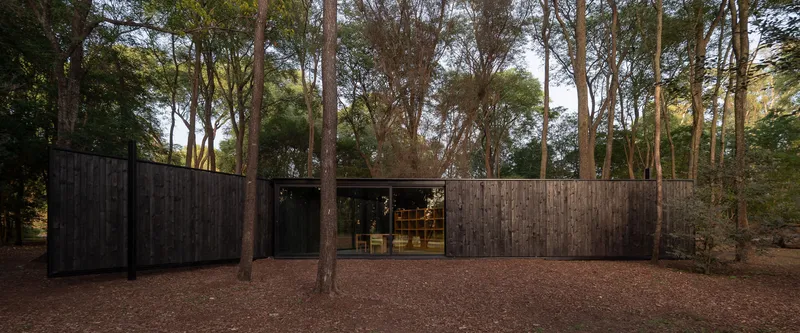
A Neutral Yet Expressive Architectural Canvas
Responding to the need for a neutral yet engaging venue to present architectural models and project displays, the pavilion’s design offers adaptability and timelessness. Its open-plan configuration can seamlessly evolve to accommodate diverse functions—from a sales gallery to a cultural or social hub—ensuring long-term relevance within the estate’s development.
Strategically sited between the historic Estancia La Paz (now a boutique hotel), the golf course bar, and the scenic lakeside promenade, the pavilion acts as a spatial connector and visual landmark. Its position ensures high visibility and accessibility for visitors navigating the estate.
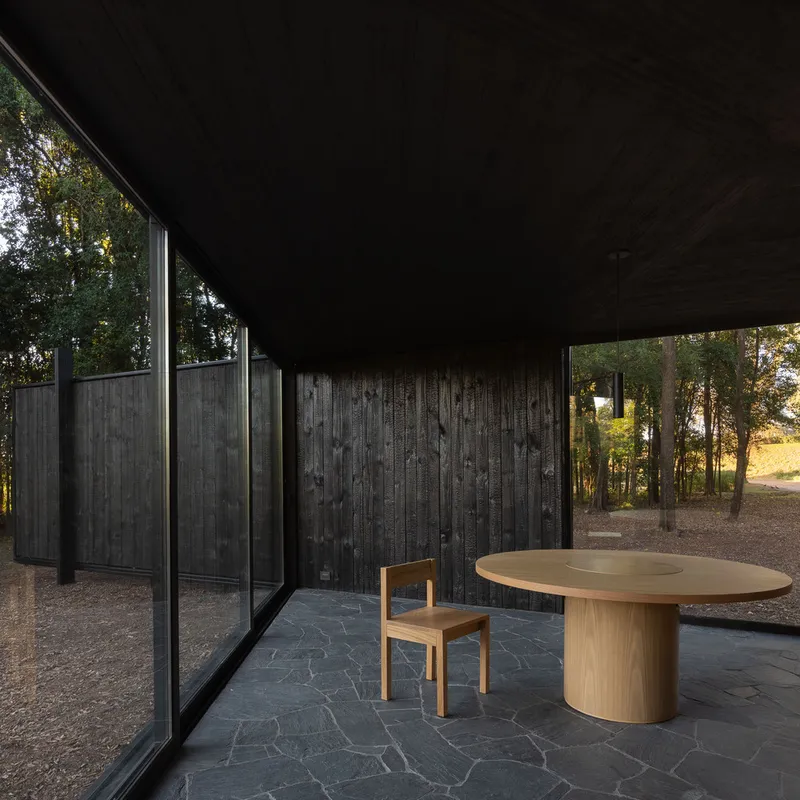
Triangular Geometry and Multi-Directional Access
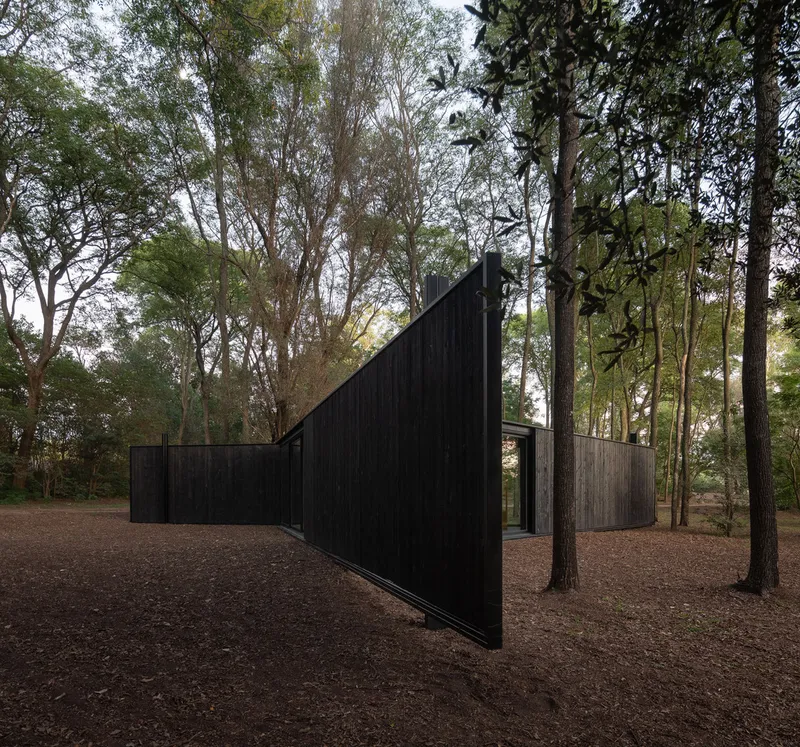
The forest site dictated a triangular floor plan with three equally significant entrances, eliminating the concept of a singular “main façade.” Each opening creates hierarchical circulation paths, allowing visitors to enter from multiple directions and reinforcing the pavilion’s non-hierarchical, inclusive design philosophy.
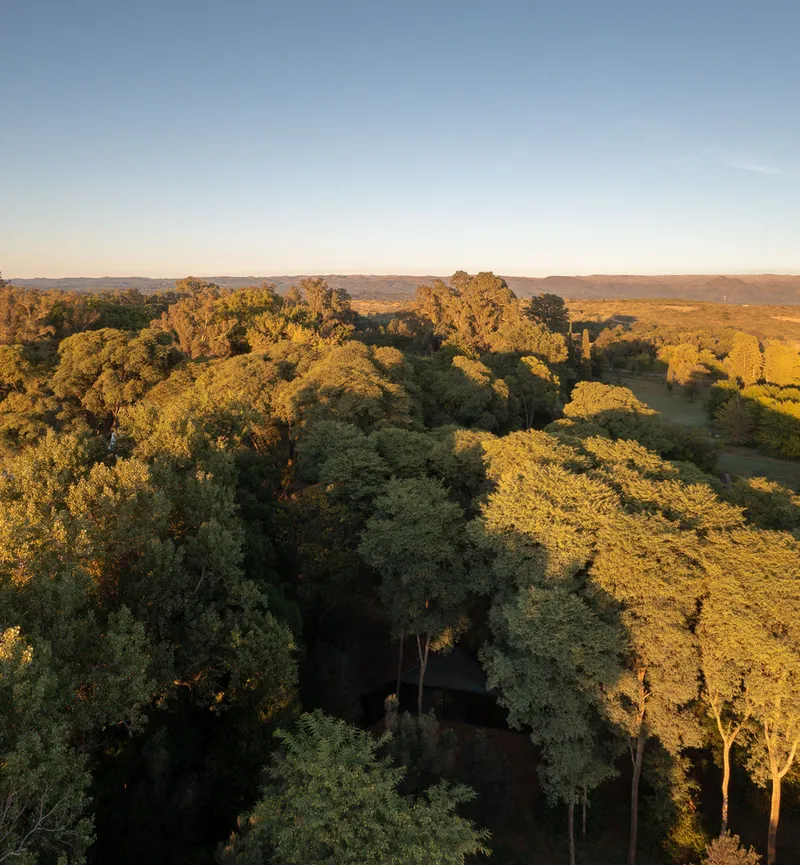
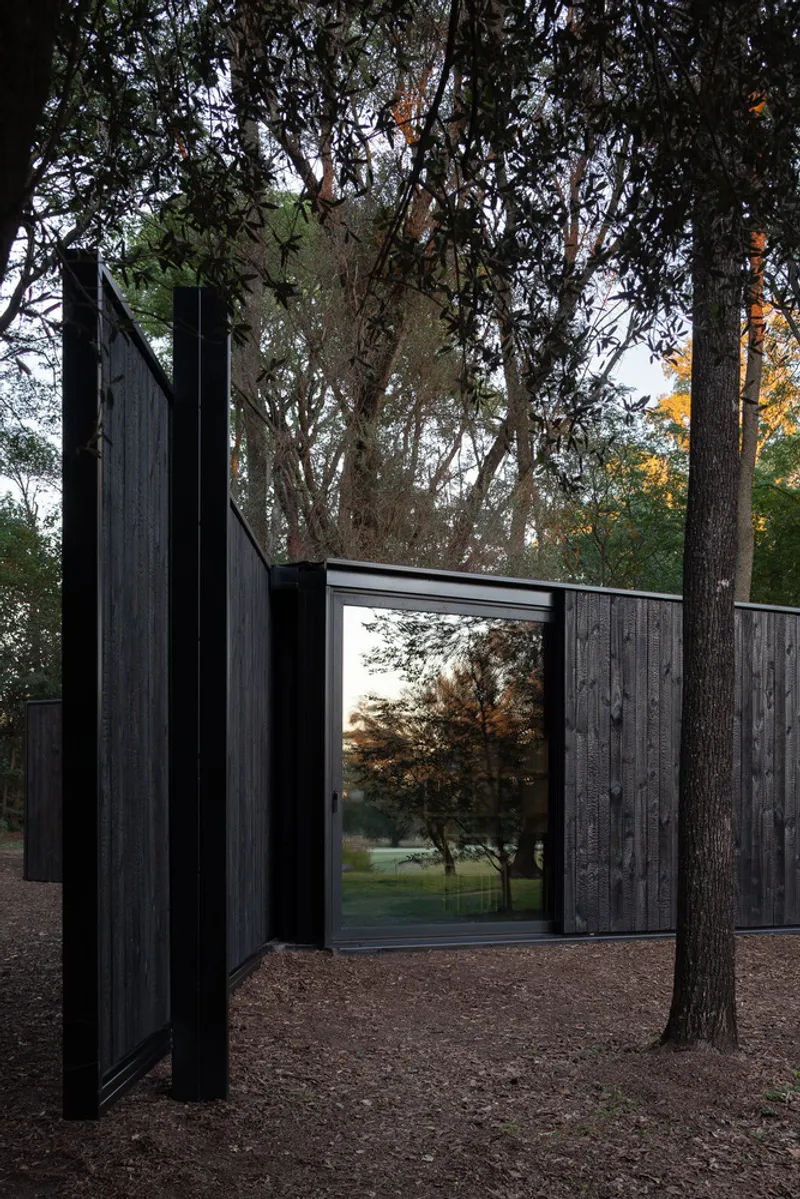
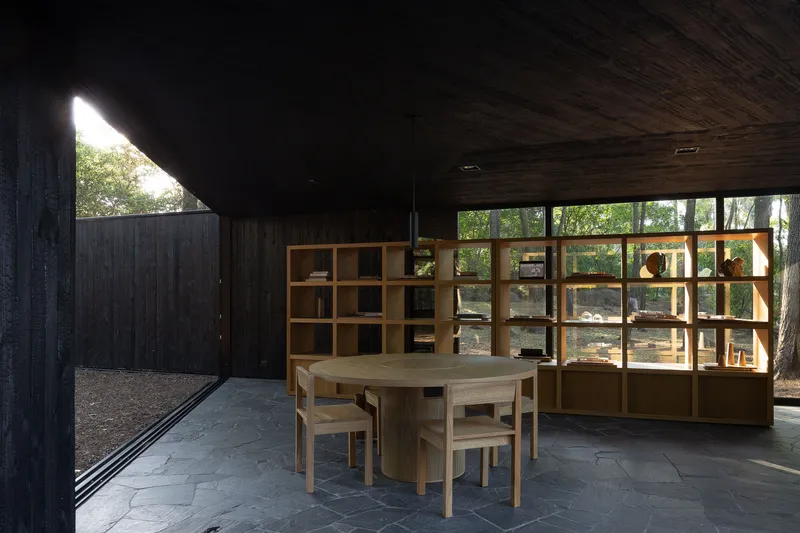
Sliding Walls and Environmental Integration
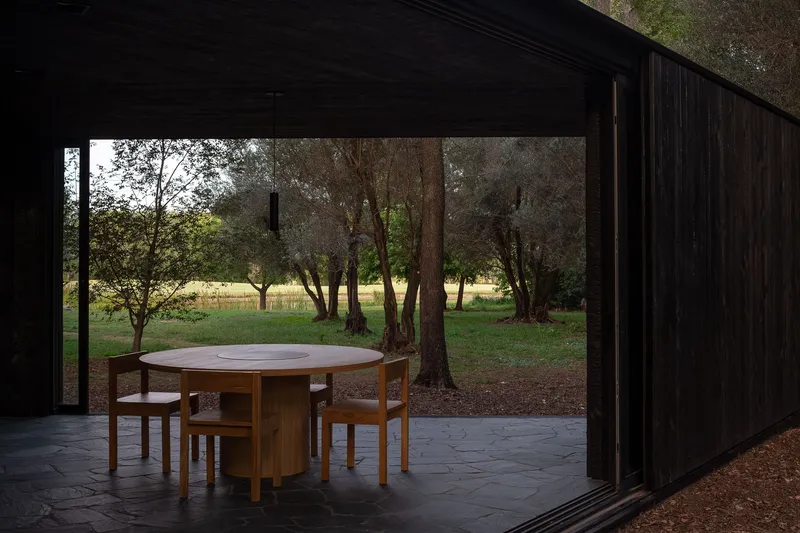
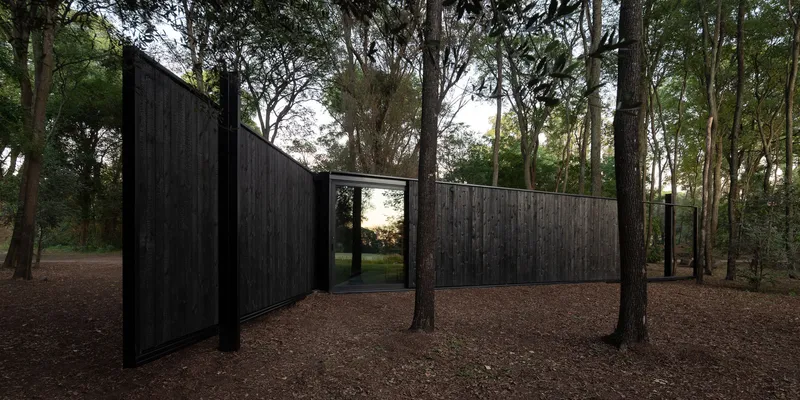
One of the pavilion’s defining features is its three nine-meter-long sliding walls, which can either completely enclose the space for privacy or open it entirely to the surrounding landscape. This kinetic design transforms the pavilion from a discreet, closed volume into an immersive, permeable structure that dissolves into the forest.
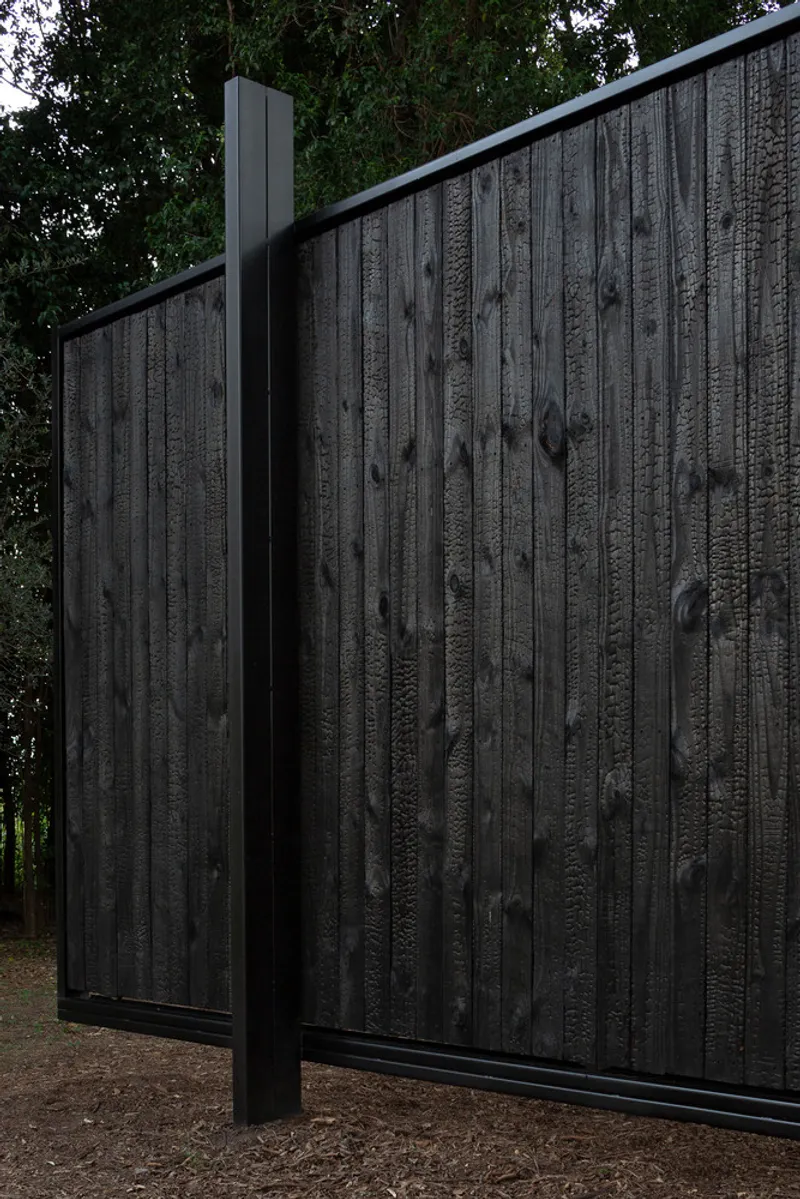
When open, the sliding panels align with the trees, encouraging fluid movement and visual transparency. When closed, their burnt wood cladding and reflective glazed surfaces create a sculptural presence, recalling the monumental land artworks of Richard Serra’s “Sight Point” or Robert Smithson’s “Spiral Jetty.”
Materiality and Construction
The pavilion’s dry construction system utilizes black-painted metal tube framing for speed and precision. Shou Sugi Ban–inspired burnt wood cladding offers a deep, textured façade that blends with the forest’s tones, while enhancing durability.
Inside, stone flooring and precisely crafted timber furniture serve as refined stages for architectural models. The restrained interior palette highlights the tactile qualities of natural materials, allowing the surrounding landscape to remain the dominant visual experience.
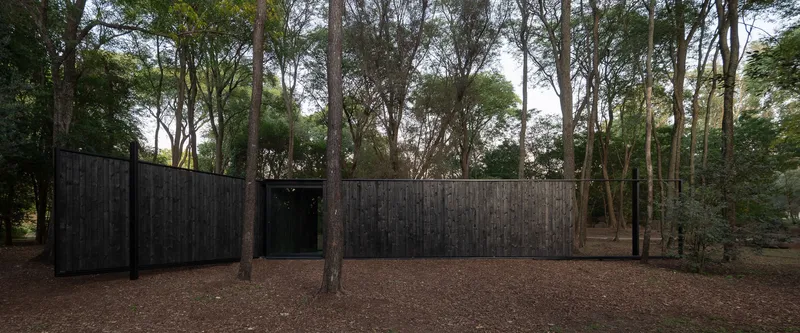
An Object in the Landscape
Whether functioning as a closed sculptural object or an open landscape pavilion, the Archipelago Pavilion stands as both a practical space for architectural promotion and a poetic intervention that strengthens the connection between built form and natural environment. It reflects a contemporary architectural narrative—one that values flexibility, material honesty, and deep integration with place.
All photographs are works of Javier Agustín Rojas


Popular Articles
Popular articles from the community


LT2A and OPEN Architectes Thread a Brick and Glass High School Through a Wooded Belgian Campus
In Braine-l'Alleud, a 3,000 m² wing for Collège Cardinal Mercier pairs pale brick with a glazed colonnade, deferring to a small chapel and a dense wood.

Architekt Andreas Gruber Scatters 23 Dark Timber Chalets Across a South Tyrolean Forest Edge
In Molini di Tures, Amonti Chalets breaks a resort into a hamlet of gabled timber houses, with parking, storage and services pushed into the slope.

Cube Design Draws an Ecological Corridor Between Two Shenzhen Hills with the Nankai Building
Beside Shenzhen's container docks, the Nankai Building pairs stacked balconies with a climbing green screen to connect two hillsides across its height.

Juan García Correa, John González and Claudia Rueda Sink a Circular Amphitheater into a Manizales Engineering Building
On the La Nubia campus in Manizales, Colombia, the S1 Building folds labs and offices into a hillside of ramped lawns that double as a campus route.

Similar Reads
You might also enjoy these articles


Hodi-Mandai Geram
Project Function: Preservation and revitalization of the Intangible heritage and socio-spatial identity of the Hodi by Housing, Cultural Memory Center, Sacred Grove, landscape, local tourism economy


Olio Towers: A Mid-Rise for Performers That Fuses Housing, Rehearsal, and Stage
Located blocks from Houston's Theater District, this modular tower stacks living units around a central performance atrium.

Oasis: Modular Green Housing Carved into Dhaka's Urban Fabric
A shortlisted Plugin Housing entry reclaims unauthorized settlements in Dhaka with stepped concrete volumes, green roofs, and ventilation-driven design.

Black Hole: A Floating Megastructure for the Post-Physical Era
Emiliano Mazzarotto envisions a spherical, self-scaling arena where e-sports, digital hotels, and holographic stadiums replace traditional public space.

Explore Architecture Competitions
Discover active competitions in this discipline

Challenge to reimagine the Iron Throne

Photograph architecture without architects

Illustrate the lost glory of Angkor Wat - Render Challenge

Design challenge to reuse E-waste
Comments (0)
Please login or sign up to add comments
No comments yet. Be the first to comment!