

Architectural Design of Nanjing Constitution Park & Urban Living Room at Green Expo Park by azLa
Nanjing Constitution Park blends legal culture with nature, creating a vibrant urban living room promoting constitutional education and community engagement.


The Nanjing Constitution Park, designed by the acclaimed architectural firm azLa, stands as a monumental public cultural landmark that embodies China’s commitment to constitutional governance and the spirit of the rule of law. Located within the vibrant Green Expo Park along the Yangtze River in Nanjing, this park is more than just a recreational space—it is a profound cultural symbol, an educational hub, and a dynamic urban living room designed for public engagement, reflection, and celebration of constitutional principles.
Project Background and Significance
The Constitution is the foundational legal framework guiding the governance and rule of law in China. Since the 18th CPC National Congress, and under the leadership of General Secretary Xi Jinping, there has been a reinforced emphasis on upholding the Constitution and integrating constitutional education into daily civic life. The Nanjing Constitution Park is a strategic response to these national priorities, serving as an innovative platform to promote constitutional awareness, education, and public participation.
Commissioned by the Nanjing Municipal People's Congress and supported by urban planning authorities, the park was designed to fill a crucial void—Nanjing previously lacked a dedicated, fully functional space for constitutional advocacy and education. The park’s construction began on December 4, 2021, coinciding with National Constitution Day, and it was officially opened to the public exactly one year later.
Site Selection and Urban Integration
The park is situated strategically in the Green Expo Park area, west of the Jiangsu Grand Theatre, stretching along the Jiajiang section of the Yangtze River waterfront. Covering over 64,530 square meters, with a Phase I built-up area of 31,162 square meters, the park harmoniously integrates into the larger urban fabric.
This location was selected for its high public accessibility, scenic riverfront views, and proximity to key cultural and transportation nodes, including the under-construction Metro Line 9 Riverside Park Station. This urban positioning transforms the site into a cultural living room for Nanjing, fostering connections between nature, law, education, and daily urban life.
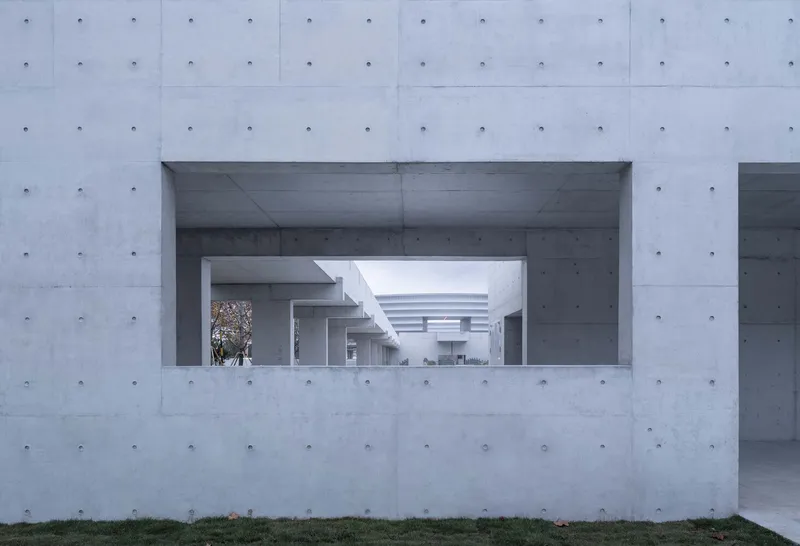
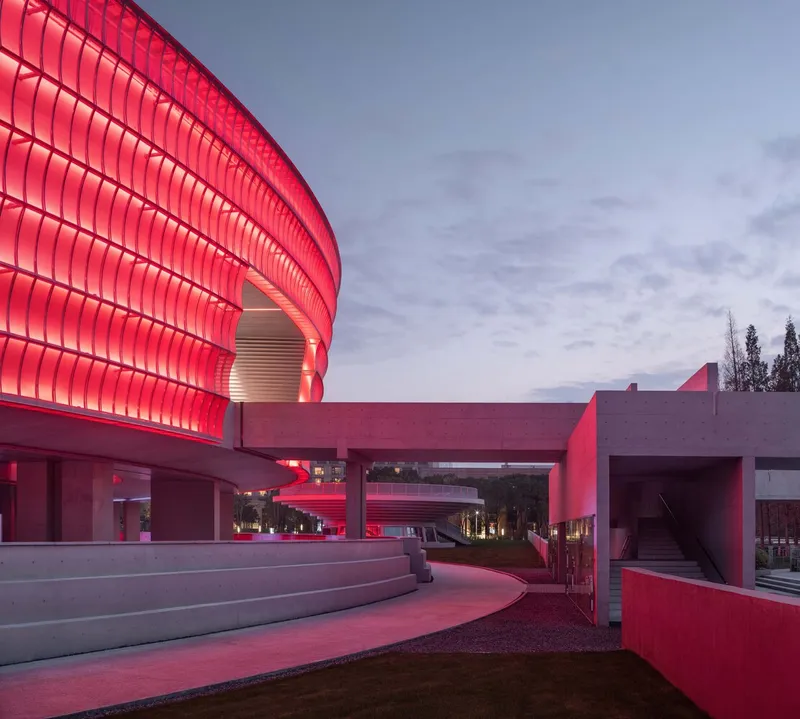
Design Philosophy: The “Three Combinations”
The design approach is centered on three key integrations:
- Legal Culture and Natural Environment: Situated along the Yangtze River, the park reflects Nanjing’s rich historical ties with the river, enhancing urban ecological civilization. The park exemplifies how legal culture can coexist and flourish in harmony with nature, creating a vibrant riverside cultural zone.
- Legal Education and Livelihood Activities: With convenient access and extensive public amenities, the park invites citizens to engage in leisure, sports, and cultural activities, while subtly embedding constitutional education. This fosters a relaxed yet meaningful environment where learning about the rule of law becomes part of everyday life.
- Legal Landscape and Current Urban Landscape: The design respects the existing layout of Green Expo Park, leveraging its superior infrastructure and ecological resources without drastic alterations. Constitutional elements are artfully integrated into the natural landscape, producing a unique, lively public space that symbolizes the rule of law within an ecological urban setting.
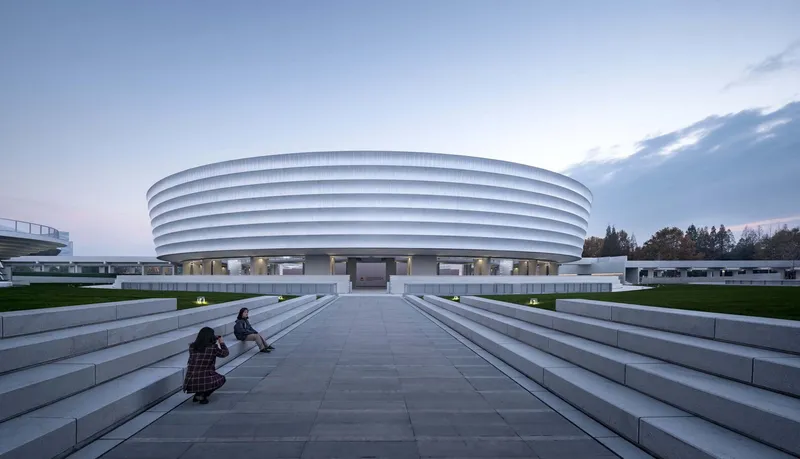
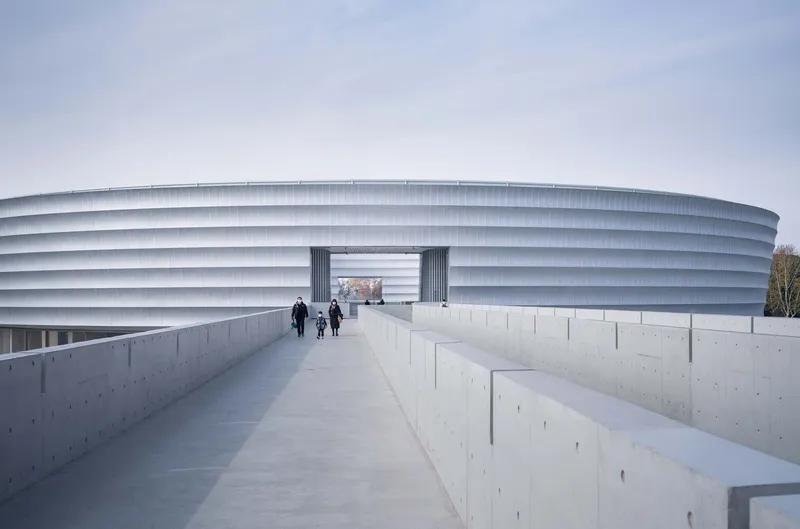
Architectural Highlights
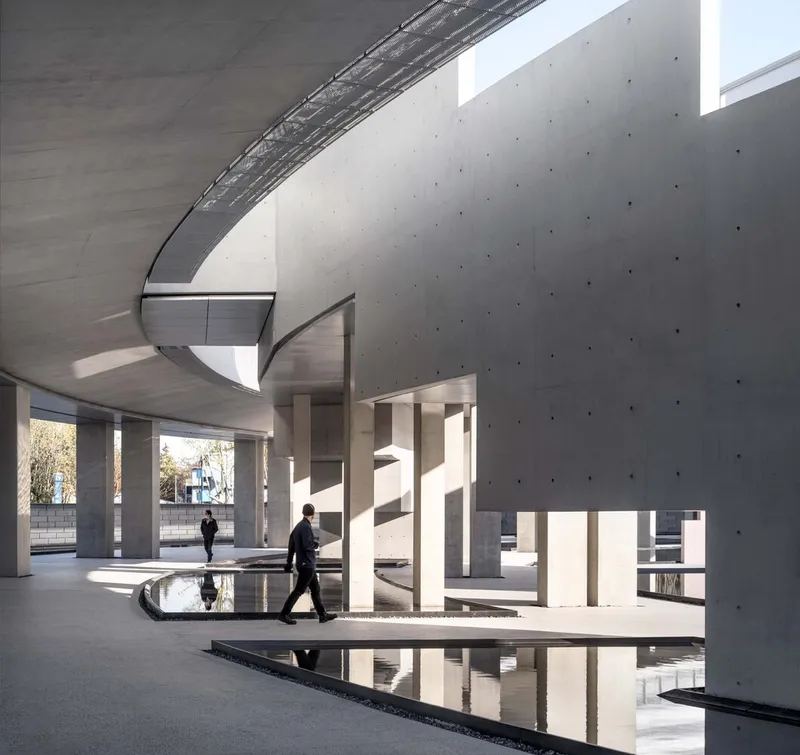
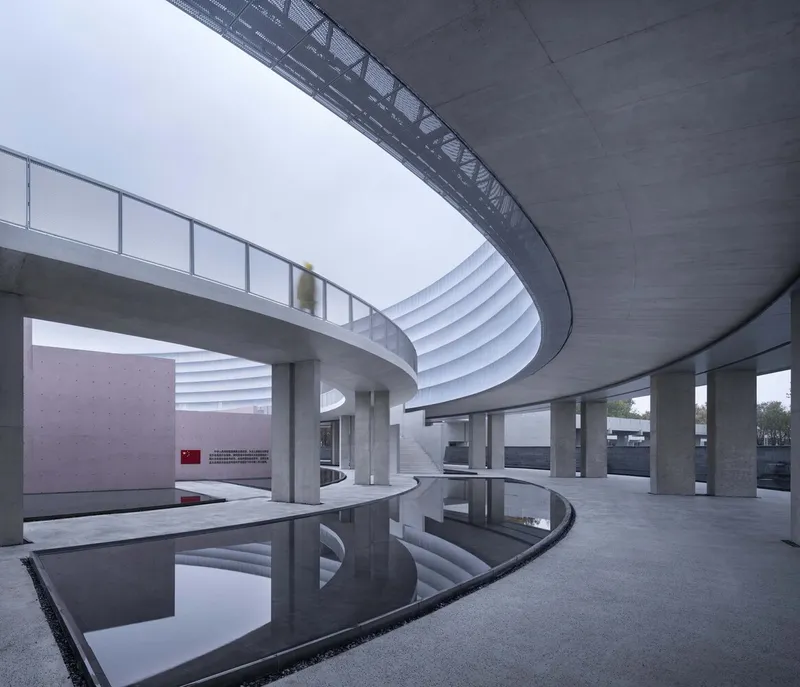
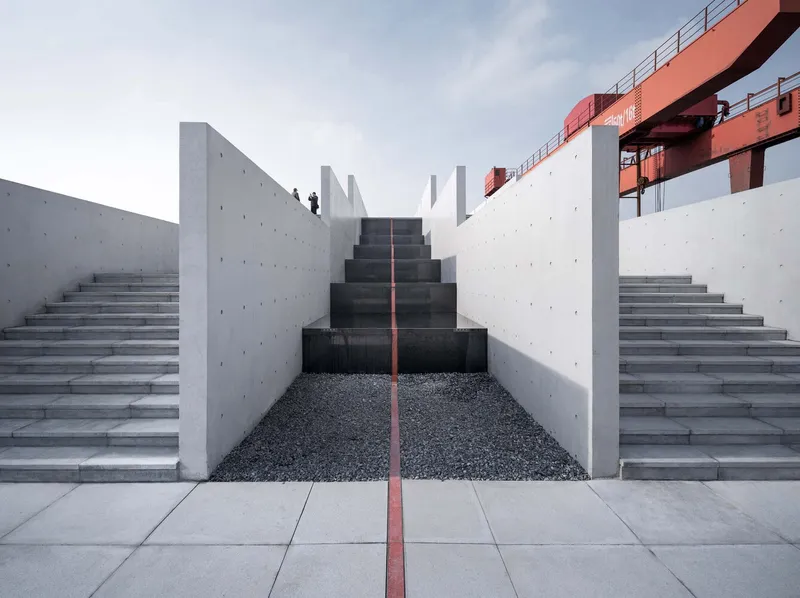
- Spatial Symbolism: The park’s spatial composition draws on traditional Chinese philosophy, combining square and circular forms representing “earth” and “sky” respectively. This geometry conveys ideas of purity, integrity, and harmony, resonating with the Constitution’s supreme status.
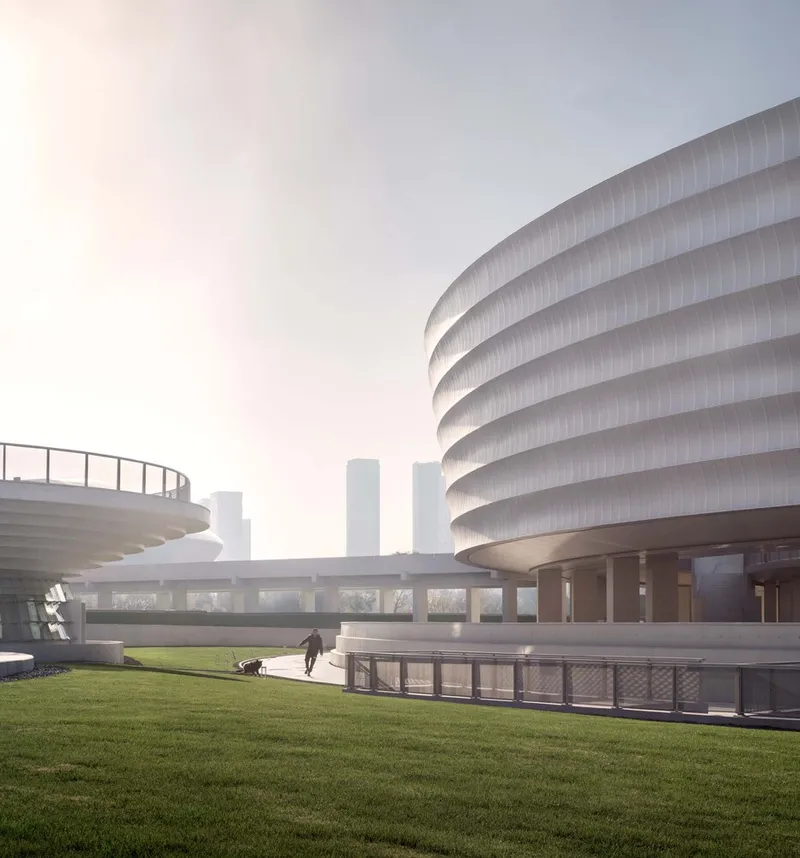
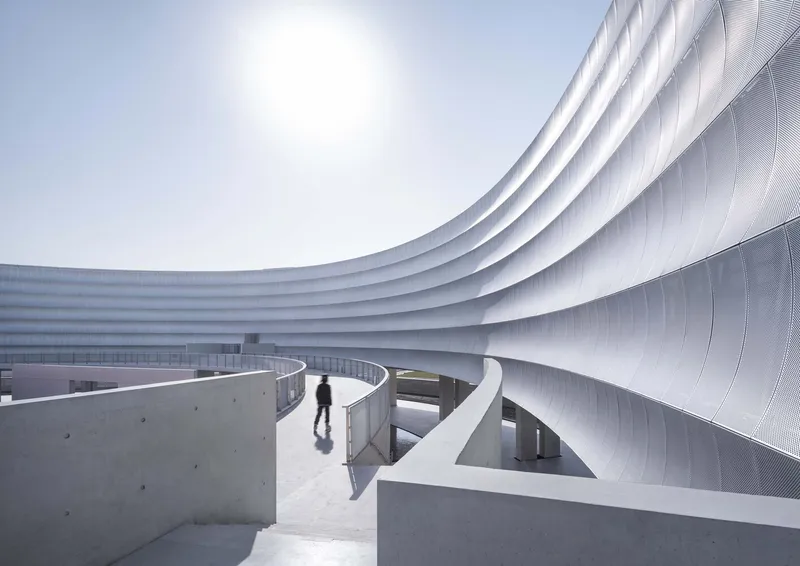
- Constitutional Exhibition Hall: The centerpiece is a grand circular exhibition hall with a 100-meter diameter encircling a square constitutional plaza. This plaza hosts key civic ceremonies such as constitutional oaths and youth coming-of-age rituals, reinforcing the park’s educational and ceremonial functions.
- Digit Metaphors: The design cleverly incorporates numerology tied to constitutional history—such as 82 meters reflecting the 1982 Constitution, and 54 referencing the 1954 Constitution—embedding these symbolic numbers into building dimensions, flag counts, and relief wall heights, enriching the park’s narrative depth.
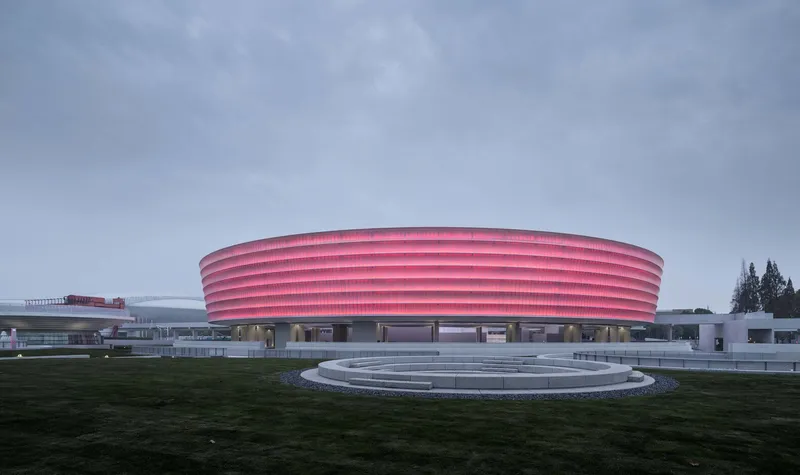
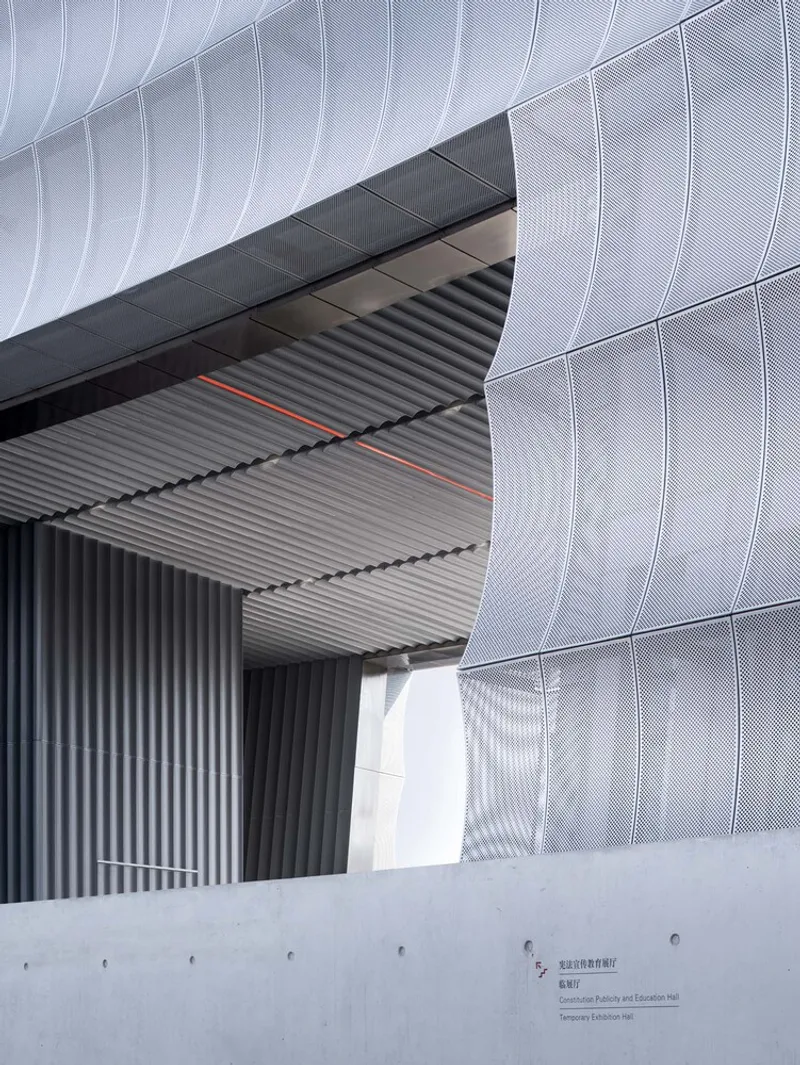
- Light and Materiality: The facade utilizes modern materials like light-transmitting concrete and stainless steel paving, enhanced by a sophisticated LED lighting system. At night, the illuminated “red lantern” shaped facade and glowing pathways evoke the spirit of the Constitution and “Red China,” creating a visually compelling nighttime identity.
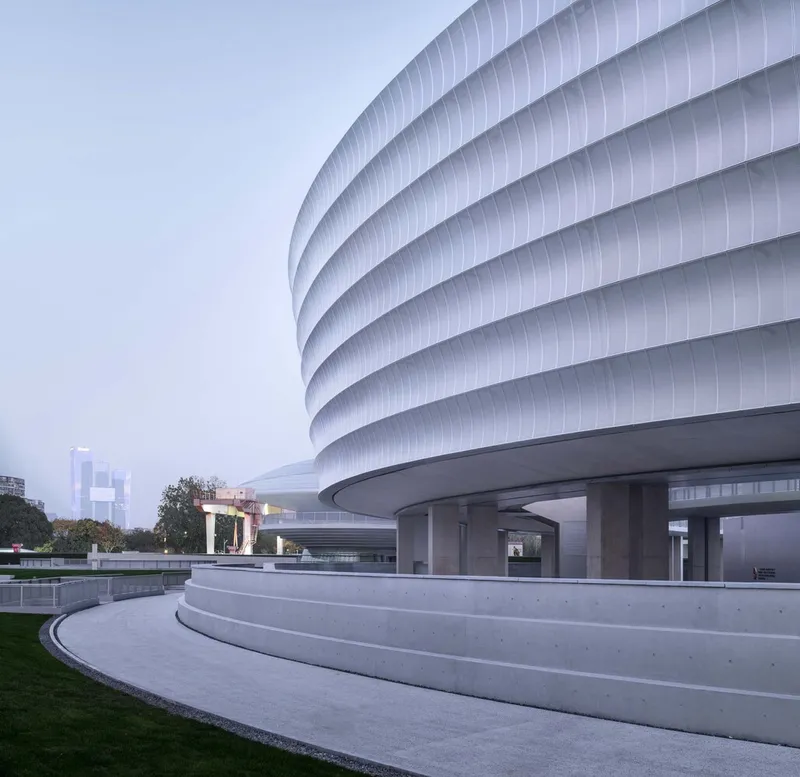
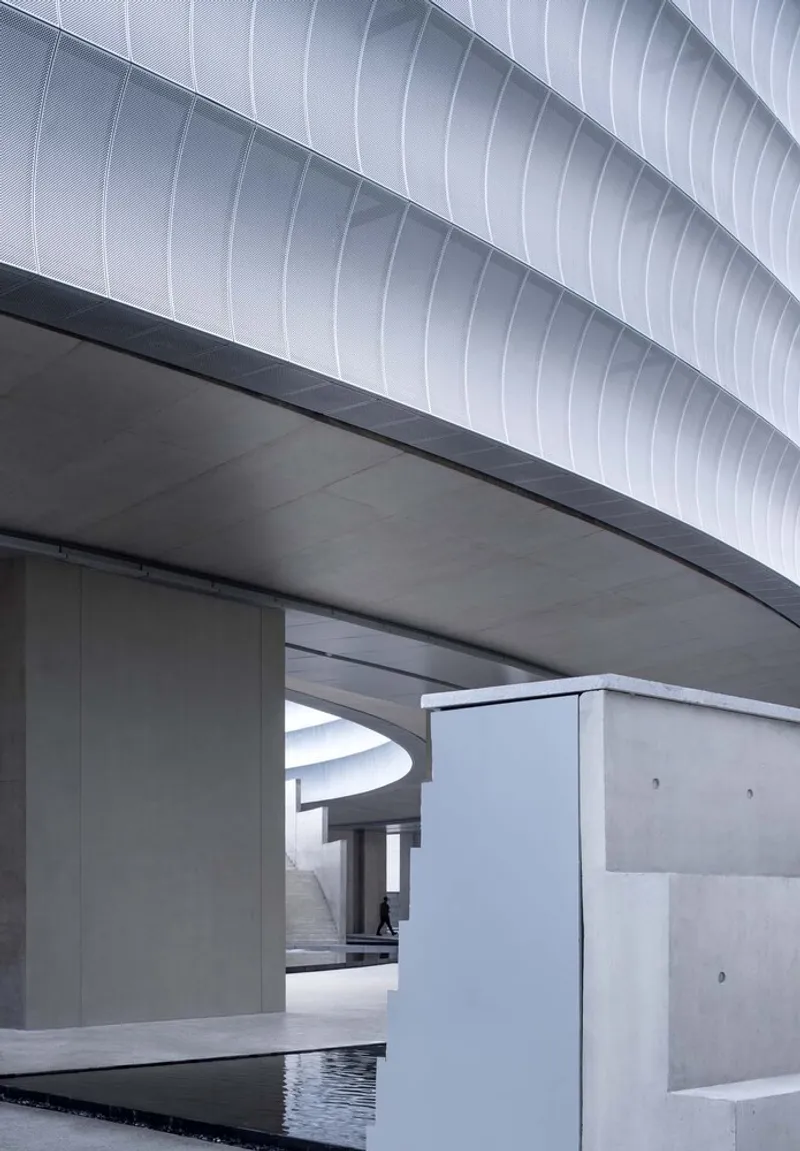
Urban Living Room in Green Expo Park
This park is a vital part of Nanjing’s “Charming Riverfront 2035” initiative, which envisions nine urban living rooms along the river. The Green Expo Park Urban Living Room integrates cultural, recreational, and ecological resources, anchored by the Constitution Park, creating a vibrant hub that meets diverse public needs.
With seamless connectivity to the Jiangsu Grand Theatre and Metro Line 9, this urban living room enhances public engagement by offering spaces for education, innovation, exhibitions, sightseeing, and leisure, strengthening the cultural fabric of Hexi New City and the wider Nanjing metropolitan area.
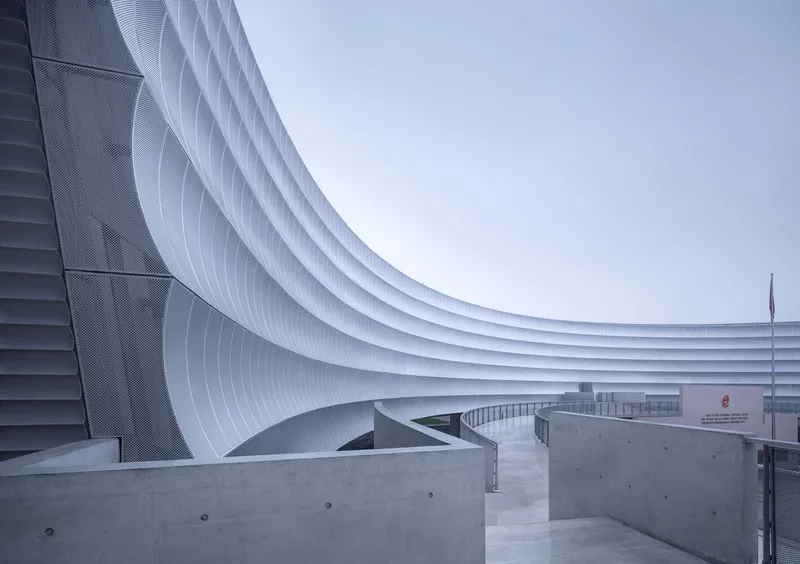
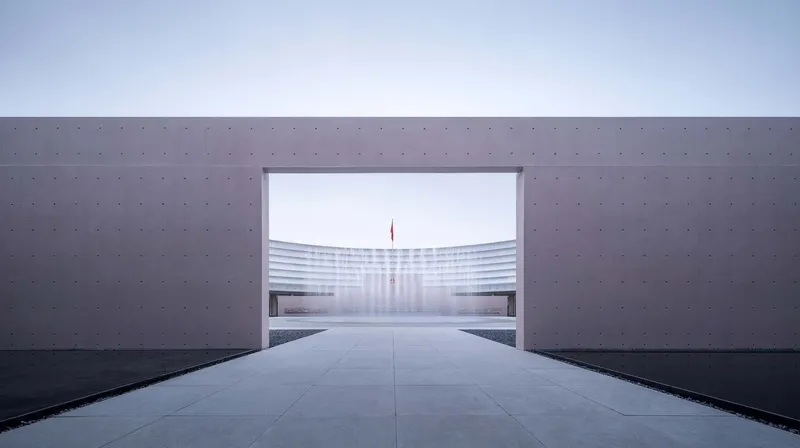
Landscape and Cultural Axis
Nanjing’s Hexi New City features a 3-kilometer-long Cultural and Sports Axis connecting key landmarks like the Olympic Sports Centre, Jiangsu Grand Theatre, and Green Expo Park. Constitution Park is a pivotal node on this axis, enhancing the cultural vitality and ecological richness of the riverfront.
Surrounded by lush ginkgo trees, hanging bell trees, and colorful foliage, the landscape design emphasizes ceremonial gravitas and public accessibility. Open lawns and recreational spaces promote democratic openness and active community life, making the park a lively symbol of constitutional spirit and public democracy.
The Nanjing Constitution Park and Urban Living Room at Green Expo Park, designed by azLa, is a pioneering example of how architecture can embody governance values, civic education, and urban vitality. Through its innovative spatial language, symbolic forms, and seamless integration with nature and urban context, it stands as a monumental testament to the rule of law and a new cultural landmark for Nanjing.


Popular Articles
Popular articles from the community


Cube Design Draws an Ecological Corridor Between Two Shenzhen Hills with the Nankai Building
Beside Shenzhen's container docks, the Nankai Building pairs stacked balconies with a climbing green screen to connect two hillsides across its height.

David Macias Steps a Doorless Stone and Plaster House Down a Tropical Colombian Hillside
In the humid hills of Colombia, Threshold House replaces the front door with an open void and terraces its 850 m² down the slope instead of fighting it.

GROUP A Strips a 1969 Rotterdam Harbor Headquarters to Its Frame and Wraps It in Timber Louvers
In Rotterdam's M4H harbor district, Ferro Offices reuses a 1969 frame, adds one timber storey and reaches BREEAM-NL Outstanding.

U.GA Architects Wraps an Oval Rooftop Pool in Curved Board-Formed Concrete on Busan's Jeollidan-gil
In Busan's Jeonpo-dong, a 454 m² mixed-use block stacks a neighborhood facility, guest rooms and an oval rooftop pool inside spiraling concrete walls.

Similar Reads
You might also enjoy these articles


Hodi-Mandai Geram
Project Function: Preservation and revitalization of the Intangible heritage and socio-spatial identity of the Hodi by Housing, Cultural Memory Center, Sacred Grove, landscape, local tourism economy


Olio Towers: A Mid-Rise for Performers That Fuses Housing, Rehearsal, and Stage
Located blocks from Houston's Theater District, this modular tower stacks living units around a central performance atrium.

Oasis: Modular Green Housing Carved into Dhaka's Urban Fabric
A shortlisted Plugin Housing entry reclaims unauthorized settlements in Dhaka with stepped concrete volumes, green roofs, and ventilation-driven design.

Black Hole: A Floating Megastructure for the Post-Physical Era
Emiliano Mazzarotto envisions a spherical, self-scaling arena where e-sports, digital hotels, and holographic stadiums replace traditional public space.

Explore Urban Design Competitions
Discover active competitions in this discipline

Design challenge to equip cities with modern furniture

Challenge to reimagine the Iron Throne

Photograph architecture without architects

Illustrate the lost glory of Angkor Wat - Render Challenge
Comments (0)
Please login or sign up to add comments
No comments yet. Be the first to comment!