
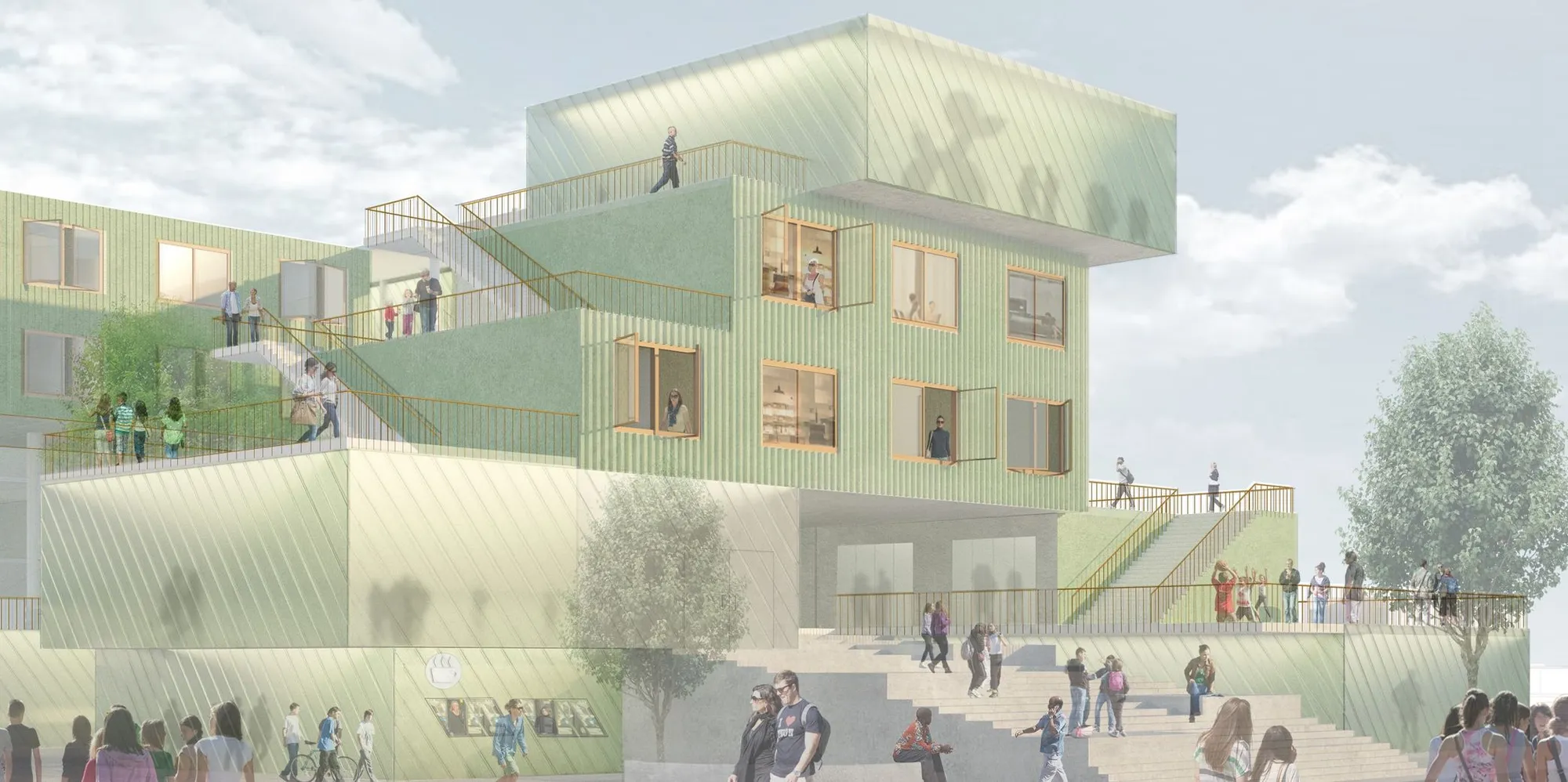
Architecture Community Center Design: Integration through COLLISION by Ramses Allende
Reinterpreting the community center from a space to meet to a place to live.


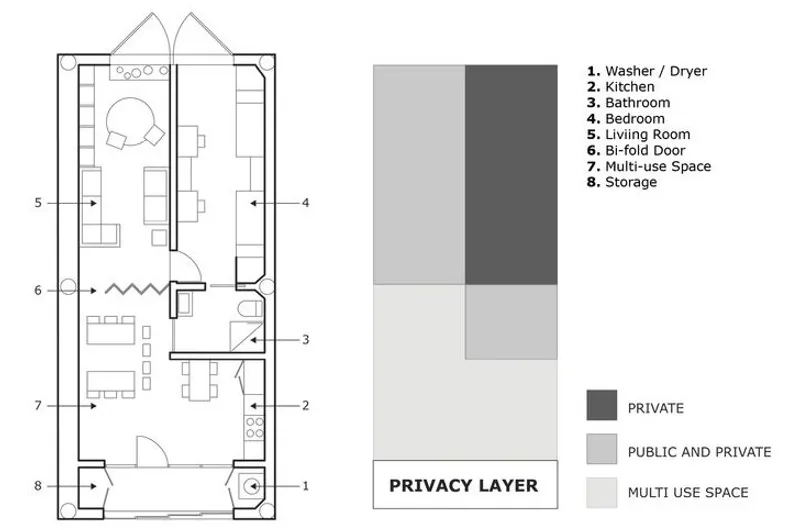
Within the student units, Ramses Allende’s Integration through COLLISION, Shortlisted entry of Overseas Oasis architecture community center design includes all the essential spaces needed for daily life. These units are carefully crafted to balance privacy with the opportunity for communal interaction, reflecting the project's innovative approach. Here's a detailed breakdown of the typical spaces within these units:
Washer/Dryer:
Each unit is equipped with a washer and dryer, providing students with the convenience of handling their laundry without needing to leave their living quarters. This feature supports self-sufficiency and contributes to a comfortable living environment.
Each unit is equipped with a washer and dryer, providing students with the convenience of handling their laundry without needing to leave their living quarters. This feature supports self-sufficiency and contributes to a comfortable living environment.
Kitchen:
The kitchen area is designed to be compact yet functional, offering all necessary appliances and ample storage. It includes a stove, refrigerator, microwave, and sink, along with counter space for meal preparation. This setup encourages students to cook for themselves and even share meals with peers, fostering a sense of community.. The kitchen area is designed to be compact yet functional, offering all necessary appliances and ample storage. It includes a stove, refrigerator, microwave, and sink, along with counter space for meal preparation. This setup encourages students to cook for themselves and even share meals with peers, fostering a sense of community.
Bedroom:
The bedroom offers a personal retreat within the unit. It features a comfortable bed, storage solutions like closets and drawers, and a desk for studying. This space ensures that students have a quiet and restful area to recharge and focus on their academic work.
The bedroom offers a personal retreat within the unit. It features a comfortable bed, storage solutions like closets and drawers, and a desk for studying. This space ensures that students have a quiet and restful area to recharge and focus on their academic work.
Living Room:
The living room serves as a central social hub within the unit. Furnished with seating arrangements such as a sofa and chairs, it is a space where students can relax, entertain guests, or collaborate on group projects. The living room design promotes interaction and communal living.. The living room serves as a central social hub within the unit. Furnished with seating arrangements such as a sofa and chairs, it is a space where students can relax, entertain guests, or collaborate on group projects. The living room design promotes interaction and communal living.
Bi-fold Door:
The inclusion of a bi-fold door enhances the flexibility of the unit’s layout. It allows spaces to be opened up or closed off as needed, providing the option to create a more open environment for socializing or a more secluded area for privacy.. The inclusion of a bi-fold door enhances the flexibility of the unit’s layout. It allows spaces to be opened up or closed off as needed, providing the option to create a more open environment for socializing or a more secluded area for privacy.
Multi-use Space:
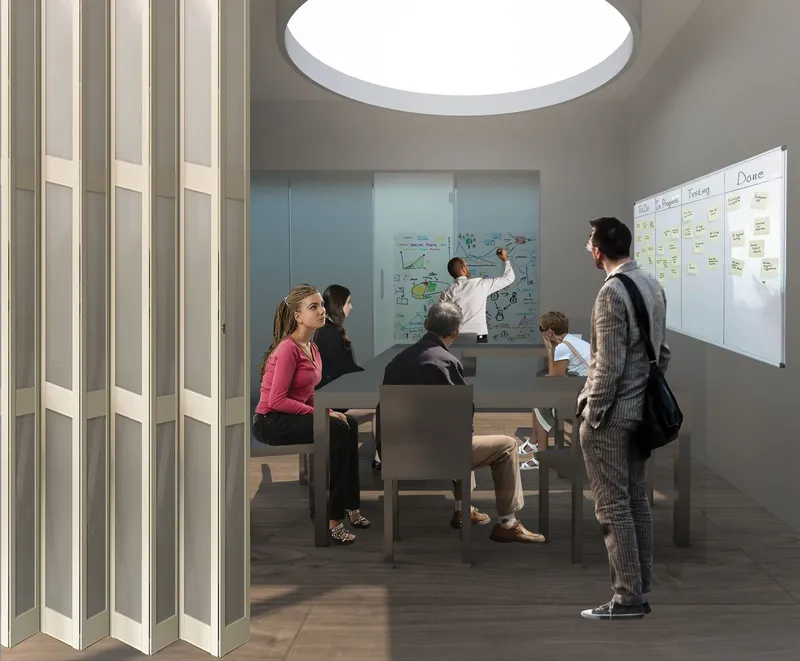
A key feature of the unit is the multi-use space, designed to host small gatherings or events. This adaptable area can serve various functions, such as a meeting spot for student clubs, a study group venue, or a place for watching movies together. It embodies the project’s aim of blending private living with opportunities for community engagement.
A key feature of the unit is the multi-use space, designed to host small gatherings or events. This adaptable area can serve various functions, such as a meeting spot for student clubs, a study group venue, or a place for watching movies together. It embodies the project’s aim of blending private living with opportunities for community engagement.
Storage:
Ample storage solutions are integrated throughout the unit to keep personal belongings organized and the living area clutter-free. This includes built-in closets, shelves, and storage compartments, ensuring that students have sufficient space to store their items neatly.
Ample storage solutions are integrated throughout the unit to keep personal belongings organized and the living area clutter-free. This includes built-in closets, shelves, and storage compartments, ensuring that students have sufficient space to store their items neatly.

Integration through COLLISION:
Living as an international student presents the challenge of finding a sense of place in an unknown environment. This struggle can impact mental health, leading to isolation. Amsterdam’s growing international student population highlights the need for better integration solutions. Ramses Allende’s project addresses this issue by reinterpreting the community center, transforming it from a mere meeting space to a vibrant living space.
Innovative Community Center Design:
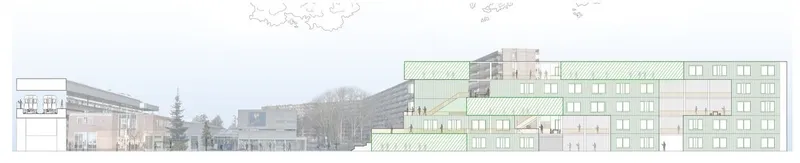
Ramses Allende’s architecture community center design fosters intimate relationships between international students, local residents, and the city. Traditional community centers passively create inviting environments, which is insufficient for non-native users. By housing students within the community center, Allende’s design collides 100 student units with culturally significant programs in Amsterdam, fostering interaction through shared spaces.
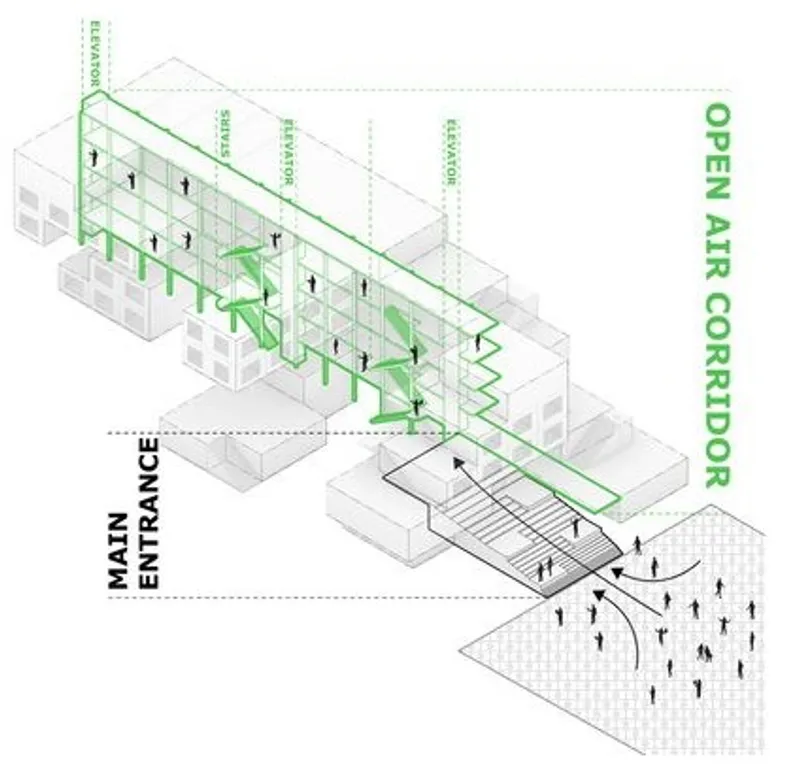
PLUS (+) HOME Concept:
One Building: Combining housing and community center.
Project Elements: Public circulation, student units, culturally significant programs
The project’s design places housing components around culturally significant programs to attract local citizens and provide students with engagement opportunities. This constant interaction fosters connections between international students and the local population.
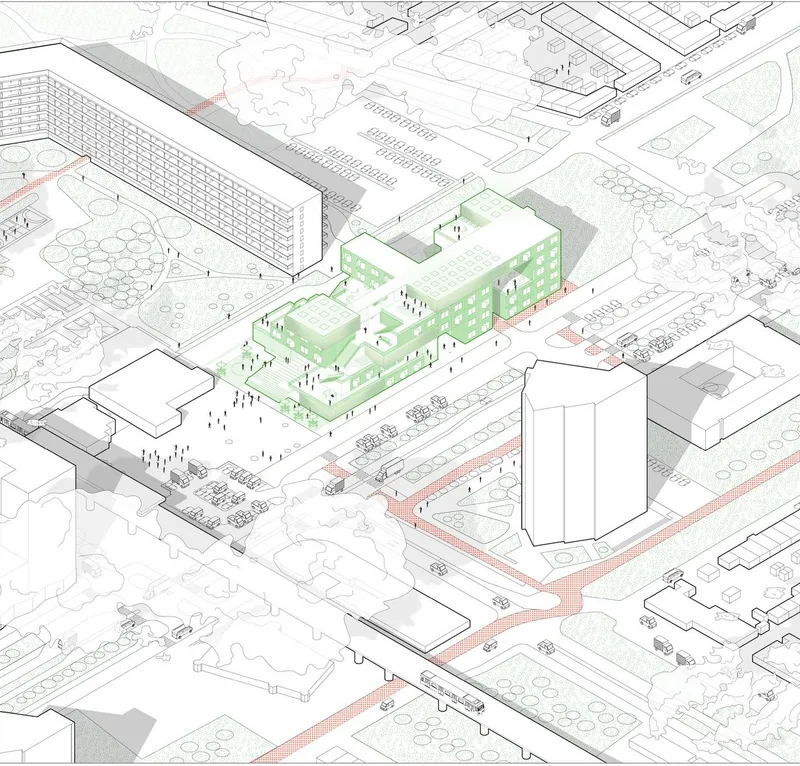
Public Space and Circulation:
Strategically located in front of a metro station, the project’s public entrance accommodates large crowds. A large public stair leads into an open-air corridor, supporting all 100 units and new programs. This corridor, used by both students and visitors, defines the project’s spine.

Public Space Accessibility and Infrastructure:
Multiple entry points lead to large plaza spaces. Expanding public circulation, the project introduces new plazas and green spaces interconnected by pedestrian and bicycle pathways. This shared infrastructure encourages interaction between international students and local residents.
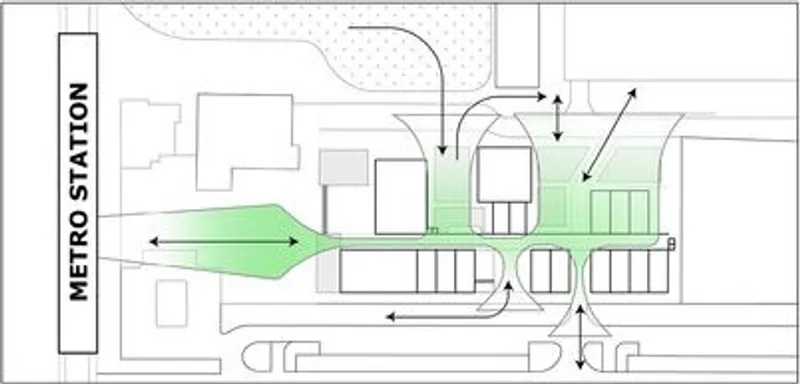
Proposed Condition:
The project creates accessible terraces by continuing plaza circulation upwards. Private spaces are distinguished using frosted glass in a diagonal pattern, creating intrigue. This design choice ensures that the functions within these spaces are vague and unknown, placing both international students and local citizens in an unfamiliar environment. The aim is to level the playing field, enabling better mutual understanding.
Ramses Allende’s “Integration through COLLISION” redefines architecture community center design. By integrating housing with public and culturally significant spaces, the project fosters deeper connections between international students and Amsterdam. This innovative approach addresses student integration challenges, creating a vibrant, interactive environment for students and local residents.




Popular Articles
Popular articles from the community


AL-JANNAH: Sustainable Architecture and Permaculture for Afghan Widows
AL-JANNAH uses sustainable architecture and permaculture to create resilient oasis of housing, learning, work and renewal for Afghan widows.

Co-Life: Senior Housing Design That Reconnects Older Adults With the City
Co-Life reimagines senior housing design through healing gardens, shared streets, workshops, and a sustainable community across generations.

EW PARK: Sustainable Architecture Reimagines the Future of Urban Parking
EW PARK reimagines city parking as a modular wooden tower combining automation, solar energy, electric mobility, and adaptable urban design.

Conexión: Biophilic Design Reimagines High-Rise Living in Hong Kong
Conexión reimagines high-rise living in Hong Kong through biophilic design, green facades, shared spaces, daylight, water and nature within.

Similar Reads
You might also enjoy these articles

Day and Night Park: A Time-Based Urban Newsstand in Beijing
A temporary urban newsstand in Beijing blending travel, light, and reading through poetic colors, compact form, and community-focused design.

Modernist Patio Renovation in El Masnou, Barcelona by Oliver Segura Arquitectura + Cebrià Arquitectura
Modernist patio renovation blending tradition and innovation with a movable pool, leveled floors, and Catalan materials in El Masnou.

Alto Residencial Coop: Cooperative Housing Development in Santiago de Compostela by Carbajo Barrios Arquitectos
A linear cooperative housing complex blending white volumes and perforated metal façades, enhancing community living, natural light, privacy, and urban integration.
Vil Genis School by BPA ARCHITECTURE – Massy, France
Vil Genis School in Massy, France, features sustainable design, south-facing classrooms, community integration, accessible spaces, and modern educational architecture.


Comments (0)
Please login or sign up to add comments
No comments yet. Be the first to comment!