
Architecture for Outer Space Habitats
The lens through which an emerging practice finds relevance

The laws of physics suggest that life on Earth will be over. Some of the speculated factors include meteorite impacts, supervolcanoes, and ice ages. It’s also been estimated that five billion years from now the Sun will eat up the Earth. We must make sure that humanity survives all these possible disasters. As Carl Sagan put it, we need an insurance policy. We need to become a space-faring civilization and a multi-planetary species. As a result, Space Architecture is an emerging profession that is aiming to bring multiple disciplines to create a positive feedback loop where scientific, technological, and philosophical research influences the practical realities of building. This essay begins with understanding the history and relevance of space architecture. It explores the challenges of designing space habitats. Subsequently, it describes the allied technologies and design techniques as solutions to the mentioned challenges.
History and relevance of space architecture
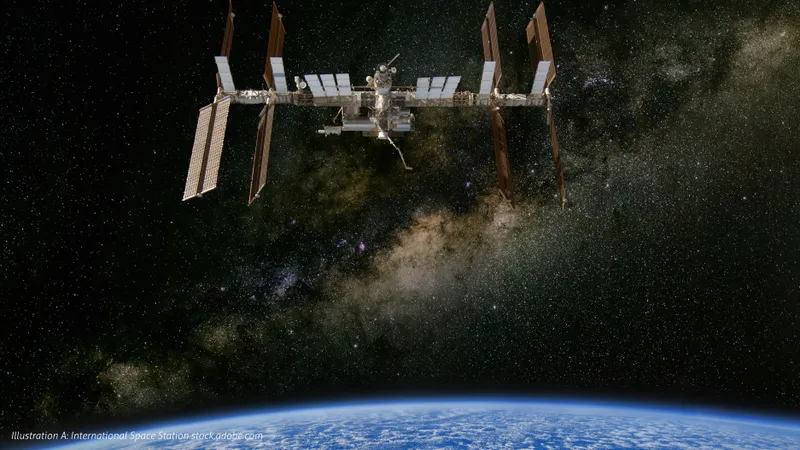
Beginning with the Apollo missions to the moon (1963 – 1972), the design of space habitats expanded to projects that housed astronauts for multiple days — Skylab, the first United States space station (1973 – 1974) — Mir, the first modular space station operated by the Soviet Union and later Russia (1986 – 2001) — and the ISS, a multinational collaborative space station (1998 to date). Additional underworks projects include studies for lunar habitats, studies for Martian habitats, and space hotels in lower orbit. (Kaku, 2018)
Engineers have sent human beings into space without much substantial input from designers and architects. The design of the existing spacecraft focuses on safety, and efficiency while lacking attention to psychological health and comfort. The first designer involved in space was the American Industrial Designer Raymond Loewy. Working at the project Skylab, Loewy incorporated ideas — personal spaces, a common dining area, and a window — that brought privacy, enhanced companionship, and provided a sense of purpose. The second person involved in providing design input was Russian Architect Galina Balashova. Balashova incorporated furniture design and a contrasting color scheme to create a sense of orientation. (De Kestelier, 2020)
Today, there are 77 government space agencies in the world and 6 space programs that have full launch capabilities and extraterrestrial landing capabilities. In addition, the intervention of enterprise has brought down the cost of space travel. Entrepreneurs such as Elon Musk, Richard Branson, and Jeff Bezos are working alongside the government space agencies to develop space tourism and space exploration. Not only they are investing their assets, but they are using sustainable strategies that allow for recyclable and reusable spacecraft. Their personal interest is as a result alleviating the burden of taxpayers.
As we move forward with these advancements, we note that participating people will be living in outer space for prolonged periods of time and as such, attention needs to be paid to their psychological wellbeing. Moreover, in space, resource conservation and sustainable recycled environments are critical. We must understand the complete cycle of resource management. Architects as master integrators at delivering an entire building environment will lead the effort of creating habitats that operate within limited needs and resources, limited energy, air, water and material, and limited space. The ongoing collaboration of research and innovation are the drivers of advancement in today’s world.
Challenges of designing space habitats
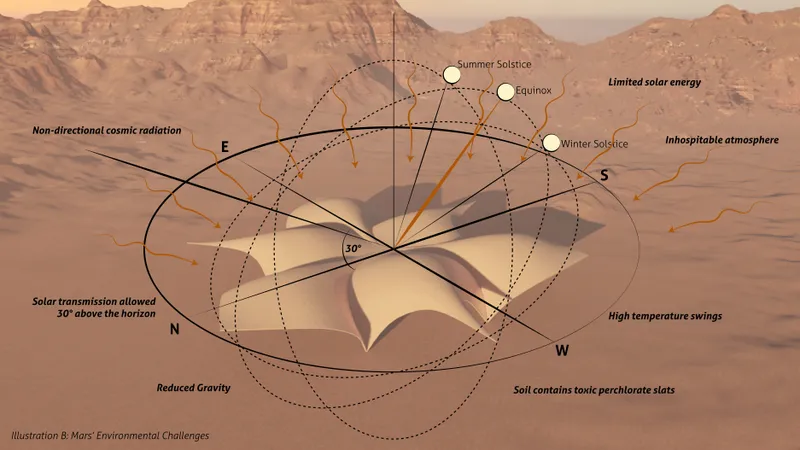
The challenges that arise while designing the habitats relate to environmental drivers — reduced gravity, inhospitable atmosphere, temperature differences, and Isolated confined environmental psychological impact (ICEPI).
A spacecraft habitat faces the limitations of the reduced overall volume and the fully enclosed isolation for the astronauts. A prolonged stay in these habitats influences greatly the stress levels of its inhabitants. Rather than looking at it as solely a transportation vehicle, or even a laboratory, we must see it as a facility that houses people 24/7. We must consider the needs of a human being as if it were their primary home in outer space.
A Moon habitat confronts the challenge of no atmosphere. The exterior enclosure of the structures must be optimized to shield them from meteorites and cosmic radiation. In addition, the lunar surface is covered in a layer of jagged dust which leads to the need for optimum filtration systems to the habitat. Another issue to contend with is the lower gravity. The Moon’s gravity is one-sixth of the Earth’s. While moving machinery will be rather easy, the astronauts would have to relearn simple movements. (NASA, 2021)
A Mars habitat would be developed in a cold, radioactive desert, where the ground is poisonous, and breathing is impossible. Because of its distance to the sun, solar power is only 40% as effective as on Earth. Therefore, the use of solar energy is limited. In addition, Mars’ atmosphere is only 1% as dense as Earth’s and is mostly made up of CO2. So, habitats would need to be pressurized and filled with an artificial atmosphere made of nitrogen and oxygen. Straight walls don’t handle well the stress of exterior and interior pressure differences, so the habitats will have rounded and smooth shapes. Due to the dense atmosphere, 50% of space radiation can reach the ground. Hence, the design of the wall section of the habitats is critical. Moreover, Mars’ soil is filled with very toxic perchlorate slats. Apertures to the habitat should remain small. (ABIBOO Studio, 2020)
Overall, the resolution of these challenges will burst in studying the availability of local resources and how to utilize them for buildings and infrastructure. The constructability mission drivers will focus on pre-integrated components, entry & descent & landing, safe site, in situ materials, and existing technology. Lastly, the human factors will consider light and views, program organization, and safety.
Allied technologies and design techniques
Historically, space habitats consist of modular architectural design. Inflatable structures have been the most used to date. They are composed of two layers of the same fabric with an air pressurized cavity. This increases the strength while solving the exterior and interior pressure differences. However, they are difficult to repair if tearing occurs. Similarly, foldable structures made of aluminum mylar panels have also been used. Following origami patterns, these structures can change shape and size through folding and unfolding. As a result, they are strong, portable, and mass efficient. (Ciardullo, 2020)
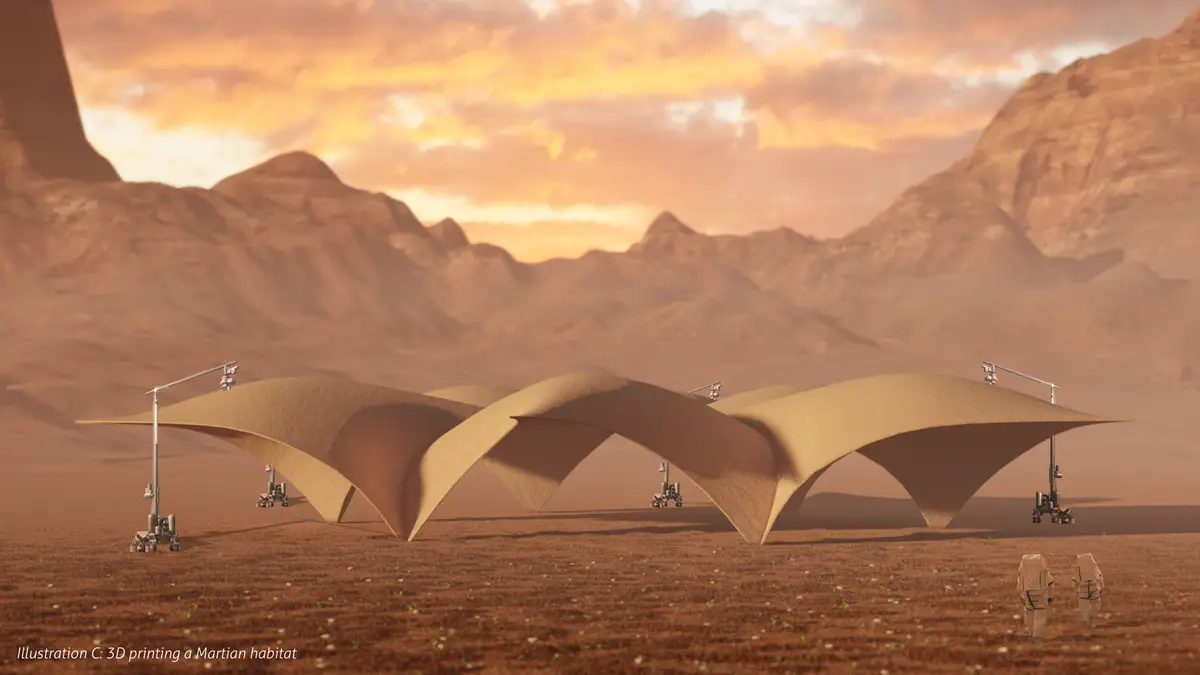
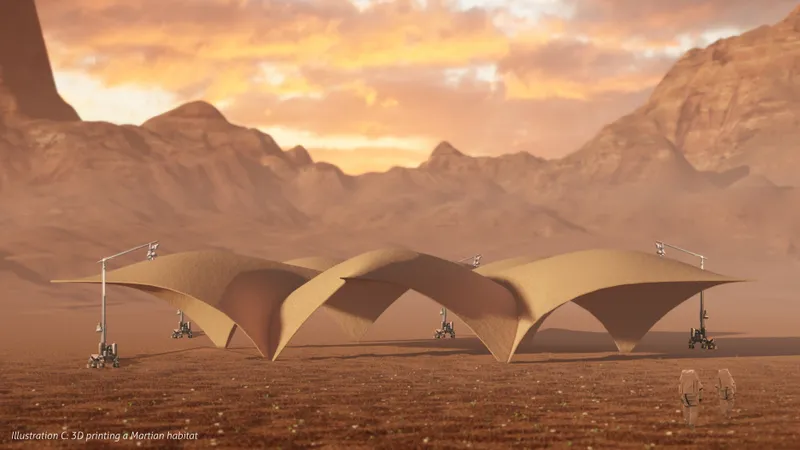
Moving beyond the system that depends on taking partially assemble parts in a spacecraft and completing the assembly on the destination, we are now working towards building the habitats from in situ resource utilization. Our current allied technologies are 3D printing and autonomous construction. 3D printing offers the possibility to go beyond modules and pre-deployed habitats. It can construct tools, roads, landing pads, and buildings. Autonomous construction is critical in space as human presence is risky and limited. We need to establish remote operations before people arrive. This method is rapid, economic, optimizable, and creates less repetitive structures.
Space agencies have been launching design competitions to engage the public in the process of technology development. For instance, the NASA 3D Printed Habitat Challenge (2015 – 2019), was a multi-phase challenge to create sustainable housing solutions for Earth and beyond. The 2015 first-place winner, The Mars Icehouse, had the innovative approach to use water as the building material. Water in its raw form acts as a very effective radiation shield by absorbing higher energy frequencies while transmitting light in the visible spectrum. Therefore, water was used as a printed material encasing it in an inflatable pressurized membrane. However, while it seems like a good concept solution, water is a limited resource. For the succeeding challenge, NASA stated a mandate to use the soil of astronomical objects, regolith, as a radiation shield and as the air bladder. (SEArch+, 2015)
Both Lunar regolith and Martian regolith can be used as the sole material to 3D print structures in situ. Using different robots, a construction system could read as follows — a robot designed to generate topographic understanding of soil-landscape would conduct ultrasonic testing for regolith/soil composition. A second robot with digging capabilities would extract regolith from the designated sites and transport its load. A third robot would traverse the build area to deposit the regolith while compacting the soil. Lastly, a fourth robot would bond the regolith layers, using concentrated microwaves to melt and change the material structure. As reusability is crucial, such automatons should be a set of modular robotic systems providing multiple purposes beyond the build phases. (Foster + Partners, 2018)
Conclusion
Space architecture is the lens through which we can see how such an emerging practice finds relevance. It challenges us to go beyond our predisposition of norms and to question how and why we design the way we do. The design for space is an extension of design in any location while creating a circular economy. Similar to the way habitats on Earth have developed through history, culture, and evolution, space habitats will mature with people’s needs and knowledge. As our experiences are affected directly by the constructed environment, space habitats will enable us to reframe our mindset of adaptation and understanding of the new worlds. The habitats will shape our psyche and lifestyle over the years as we become a multi-planetary species.
References
Kaku (2018) The Future of Humanity. Penguin Random House
De Kestelier (2020) Off-World Architecture. Available at: https://www.youtube.com/watch?v=-kfGbOJ4ev8&t=2846s
NASA (2021) Earth’s Moon. Available at: https://moon.nasa.gov/inside-and-out/overview/
ABIBOO Studio (2020) Nuwa Martian City. Available at: https://abiboo.com/nuwa-mars/
Ciardullo (2020) Emerging Fields in Architecture. Available at: https://www.youtube.com/watch?v=HHpyYLvD_YA&t=3s
SEArch+ (2015) Mars Ice House. Available at: http://www.marsicehouse.com/
Foster + Partners (2018) Mars Habitat. Available at: https://www.fosterandpartners.com/projects/mars-habitat/


Popular Articles
Popular articles from the community


The Amber Palace Opera: A Geological Fiction Surfaces on Tallinn's Baltic Waterfront
Pierre Brillard reimagines a Baltic legend as a public landscape, opera house, and waterfront promenade rooted in Tallinn's coastal identity.

Faces of the Soviet Avant-Garde: Turning Moscow's Street Names into an Open-Air Museum
A network of sculptural installations across a Moscow residential district transforms forgotten architect names into spatial encounters with cultural memor
Opera by the Sea Estonia: Three Shells Dissolving Architecture into Tallinn's Coastline
A winning opera house proposal replaces monumental form with interconnected shells that blur the boundary between building, park and Baltic Sea.

Opera on the Sea: Driftwood Logic Shapes a Timber Opera House on Estonia's Coast
Trevor Orgill's opera house translates the entangled drift of floating timber into a civic building where wood, water, and music converge.

Similar Reads
You might also enjoy these articles

Shakur's House: Exposed Brick as an Interior Organiser in a 168 m² Mashhad Residence
Brick moves indoors in this Mashhad residence, where masonry walls, glass partitions and teal planes sequence a compact home without closing it off.

Day and Night Park: A Time-Based Urban Newsstand in Beijing
A temporary urban newsstand in Beijing blending travel, light, and reading through poetic colors, compact form, and community-focused design.

Modernist Patio Renovation in El Masnou, Barcelona by Oliver Segura Arquitectura + Cebrià Arquitectura
Modernist patio renovation blending tradition and innovation with a movable pool, leveled floors, and Catalan materials in El Masnou.
Alto Residencial Coop: Cooperative Housing Development in Santiago de Compostela by Carbajo Barrios Arquitectos
A linear cooperative housing complex blending white volumes and perforated metal façades, enhancing community living, natural light, privacy, and urban integration.

Comments (0)
Please login or sign up to add comments
No comments yet. Be the first to comment!