
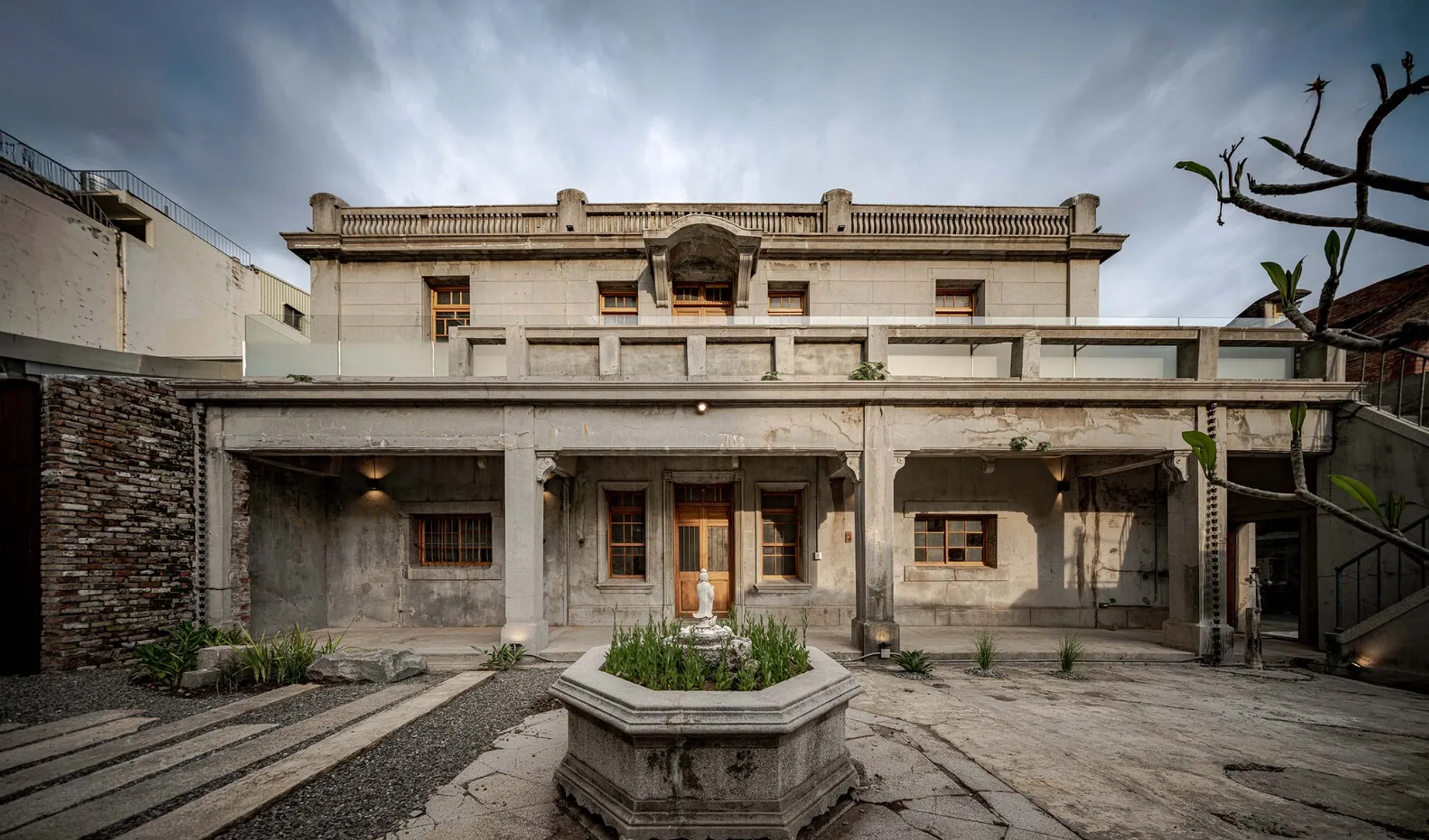
Architecture Museum, Xinyi Street of Coral Stone by A.S.Studio — A Dialogue Between Heritage and Modernity
A.S.Studio’s Tainan museum unites coral stone heritage and modern design, blending history, light, and material harmony through sensitive restoration.


Reimagining Tainan’s Architectural Legacy
Nestled in the historic Wutiaogang Cultural District of Tainan, Taiwan, the Architecture Museum, Xinyi Street of Coral Stone by A.S.Studio stands as a poetic expression of preservation and renewal. Located at No. 13–17, Xinyi Street, the museum sits amid culturally rich landmarks such as Dueyue Gate, Jifu Temple, and the former Xin Fuxing Textile Factory, embodying the layered narrative of the city’s architectural evolution.
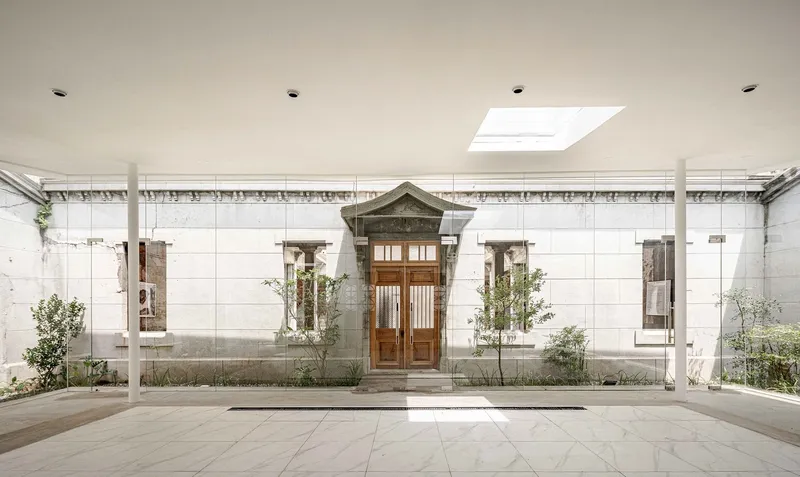
Originally constructed as the residence of Hu Cheng-Yuan, a Qing dynasty military scholar, the property underwent significant reconstruction in the 1930s under Huang Sun-Kuai. This transformation fused traditional southern Taiwanese architecture with subtle elements of early modernist ornamentation—a reflection of Taiwan’s dynamic transitions during the early 20th century.
The Challenge of Renewal
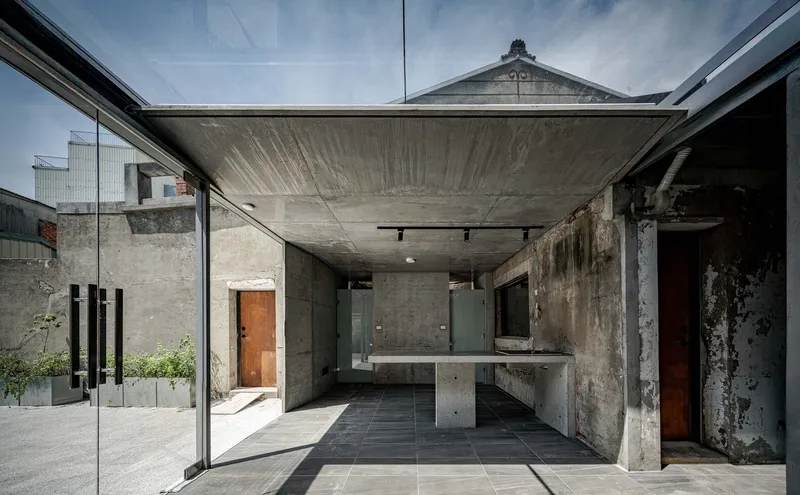
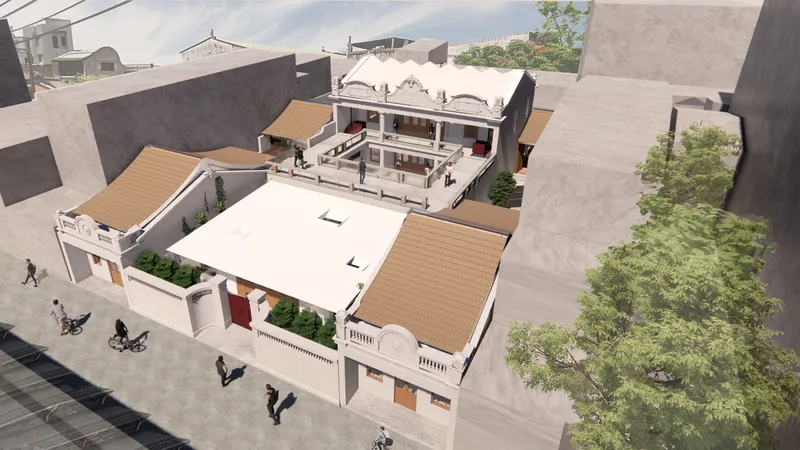
The historic complex, characterized by two elongated townhouses and a central courtyard in the classic siheyuan layout, had fallen into severe disrepair over decades of neglect and unsympathetic alterations. The once-harmonious composition of axial symmetry, stone textures, and open spatial layering had faded, prompting the need for urgent and thoughtful restoration.
A.S.Studio approached the project with a philosophy of minimal intervention—a strategy rooted in respect for the building’s material memory and cultural significance. Rather than impose a new architectural identity, the design sought to reveal the old through the new, establishing a continuous dialogue between the building’s historical essence and contemporary expression.
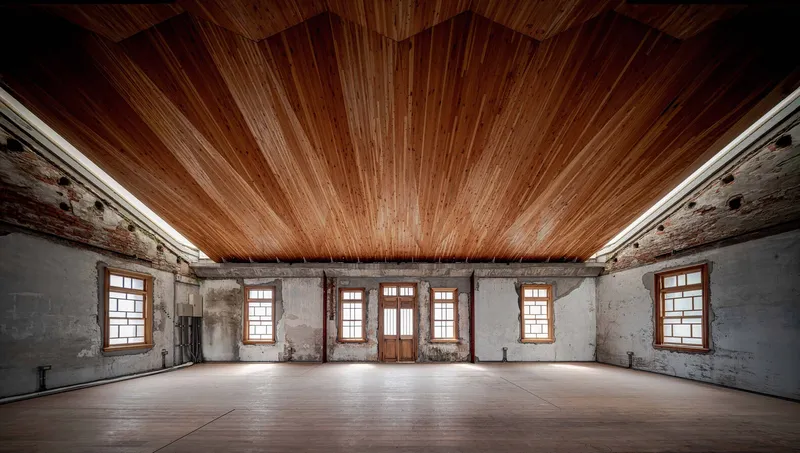
A Transparent Dialogue Between Old and New
At the heart of the restoration is a transparent façade, a deliberate gesture that frames the coral stone structure like a living exhibit. The interplay between aged coral stone, white geometric volumes, and glass planes creates a delicate threshold where past and present intersect.
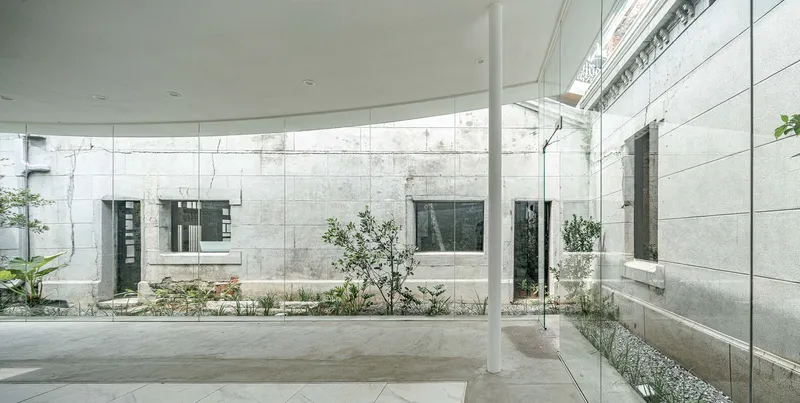
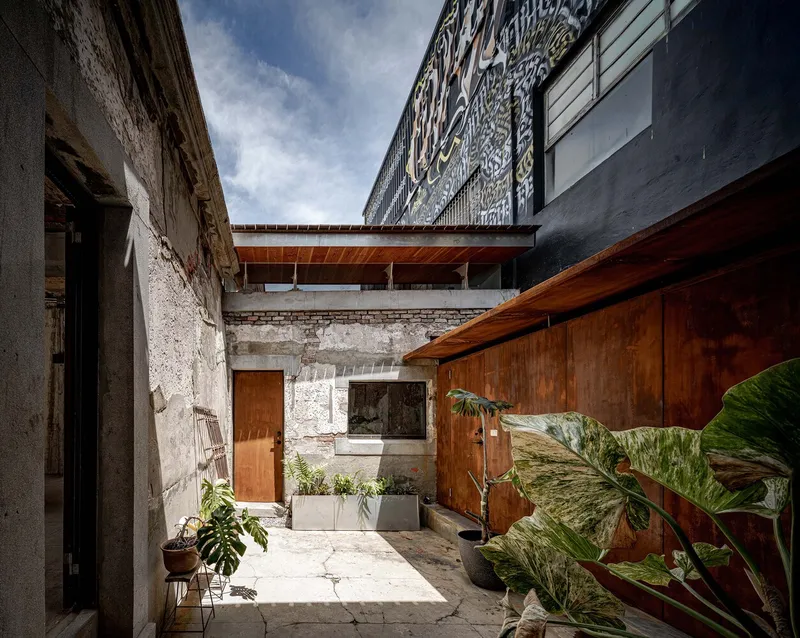
Through this transparent skin, the museum becomes both a vessel of memory and a lens for reinterpretation. Natural light filters through the façade, casting soft shadows across the coral stone walls and wooden beams—an ever-changing interplay that reflects Tainan’s subtropical light and atmospheric textures.
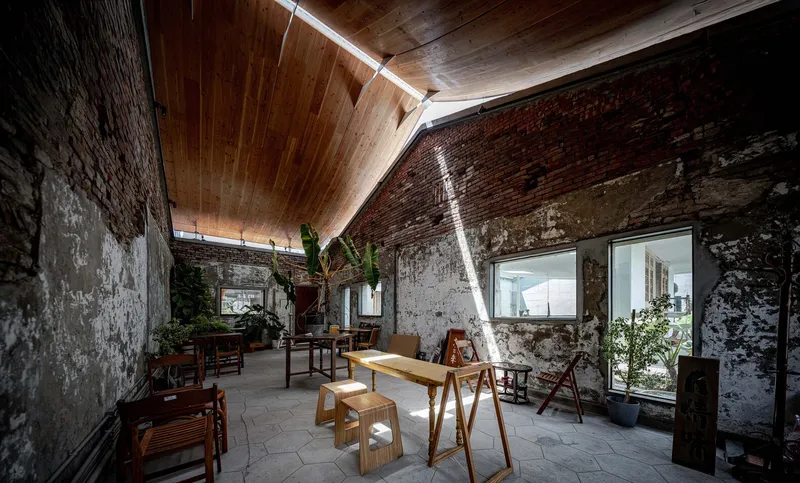
This spatial dialogue is further enhanced by strategically placed voids and green interludes, allowing visitors to experience a sensory journey that mirrors the city’s rhythm—quiet, reflective, and deeply rooted in cultural time.
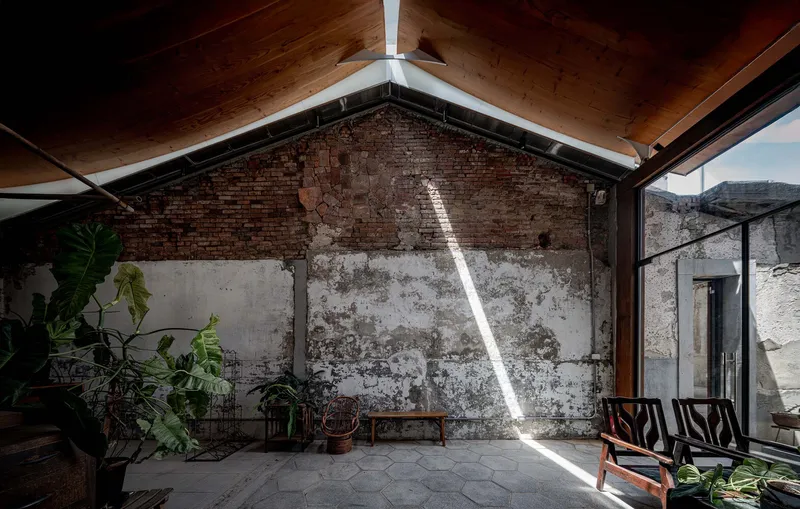
The Wooden Heart of the Museum
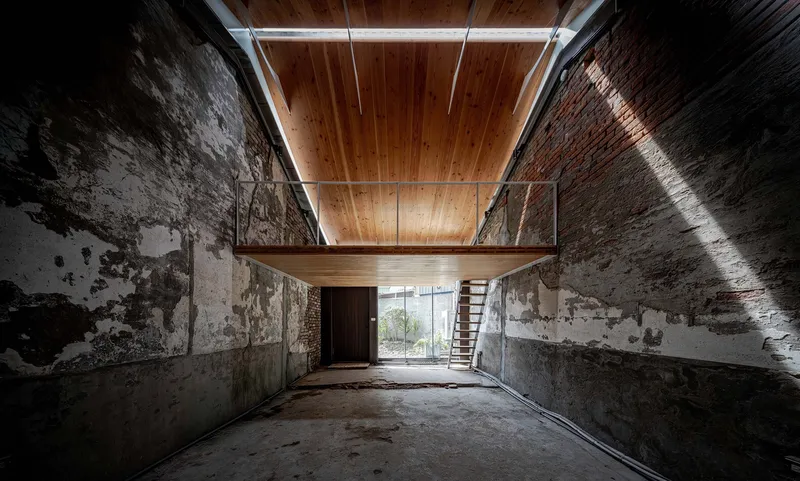
On the upper level, the design introduces a folded-plate wooden roof, redefining the building’s rhythm and spatial character. This sculptural element, described by the architects as a “pulsing wooden heart,” breathes new life into the museum. It introduces a dynamic play of light, shadow, and ventilation, while maintaining harmony with the existing masonry and timber framework.
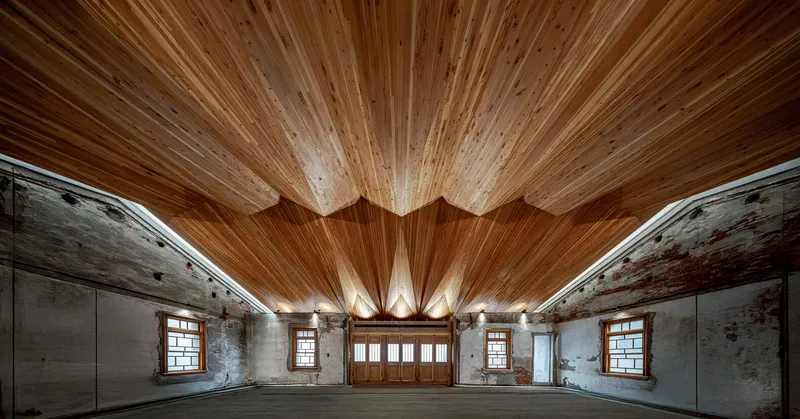
Inside, wood, steel, and coral stone coexist in perfect balance. The tactile contrast between old and new materials narrates a story of resilience and transformation—honoring the craftsmanship of the past while embracing the innovation of contemporary design.
A Living Museum of Architectural Culture
The Architecture Museum, Xinyi Street of Coral Stone transcends the boundaries of traditional restoration. It is not simply a preserved structure, but a living museum—a space where Tainan’s architectural heritage continues to evolve. Visitors are invited to explore the nuances of Taiwanese craftsmanship, urban regeneration, and cultural continuity through immersive spatial storytelling.
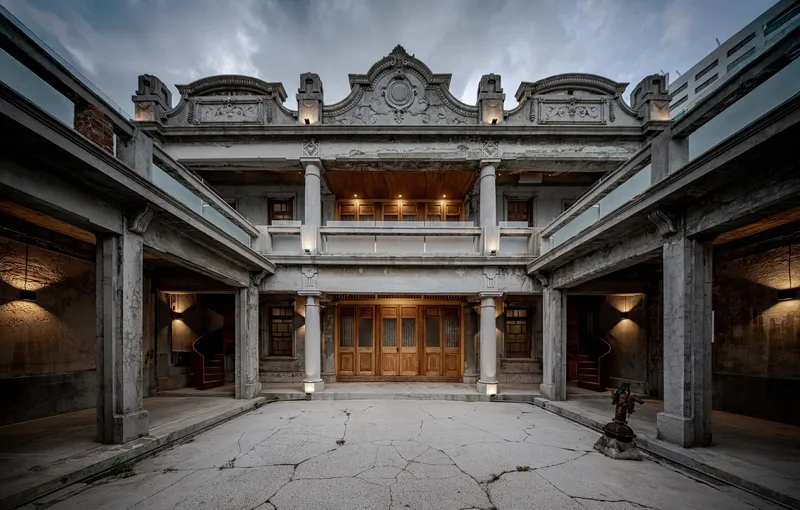
This project by A.S.Studio, led by architect Chen Kuan Fan, celebrates the spirit of Tainan as a city where history breathes through its architecture. Every beam, every stone, and every shaft of light becomes part of a larger narrative—one that speaks to the enduring relationship between memory and modernity, tradition and transformation.
Project Information
- Architects: A.S.Studio
- Lead Architect: Chen Kuan Fan
- Location: Wutiaogang Cultural District, Tainan, Taiwan
- Area: 566 m²
- Year of Completion: 2025
- Photography: OS Studio
- Curator: Miwa Negoro
- Project Type: Cultural Architecture, Renovation
All photographs are workOS Studio


Popular Articles
Popular articles from the community


Riyadh For All: Intergenerational Urban Design for Active Aging in Rabat
Riyadh For All reimagines urban design in Rabat with intergenerational co-living, adaptive courtyards, and Moroccan cultural exchange today.

The Ocean Hive: Sustainable Architecture for a Self-Sufficient Civilization at Sea
The Ocean Hive imagines sustainable architecture at sea, where modular habitats, algae, wave power and ocean waste sustain a growing colony.

Play: Fragments of Their World
Familiar architecture becomes modular playground design, creating safe spaces where displaced children can learn, connect, imagine and play.

Hill & Cross Opera: Sculptural Opera House Architecture Shaped by Tallinn’s Landscape and Identity
Hill & Cross Opera reimagines opera house architecture in Tallinn through its sculptural hill, civic plaza, glass wave and a luminous cross.


Similar Reads
You might also enjoy these articles


Hodi-Mandai Geram
Project Function: Preservation and revitalization of the Intangible heritage and socio-spatial identity of the Hodi by Housing, Cultural Memory Center, Sacred Grove, landscape, local tourism economy


Olio Towers: A Mid-Rise for Performers That Fuses Housing, Rehearsal, and Stage
Located blocks from Houston's Theater District, this modular tower stacks living units around a central performance atrium.

Oasis: Modular Green Housing Carved into Dhaka's Urban Fabric
A shortlisted Plugin Housing entry reclaims unauthorized settlements in Dhaka with stepped concrete volumes, green roofs, and ventilation-driven design.

Black Hole: A Floating Megastructure for the Post-Physical Era
Emiliano Mazzarotto envisions a spherical, self-scaling arena where e-sports, digital hotels, and holographic stadiums replace traditional public space.


Explore Cultural Architecture Competitions
Discover active competitions in this discipline



Challenge to reimagine the Iron Throne


Photograph architecture without architects


Illustrate the lost glory of Angkor Wat - Render Challenge


Bring back Drive In's
Comments (0)
Please login or sign up to add comments
No comments yet. Be the first to comment!