
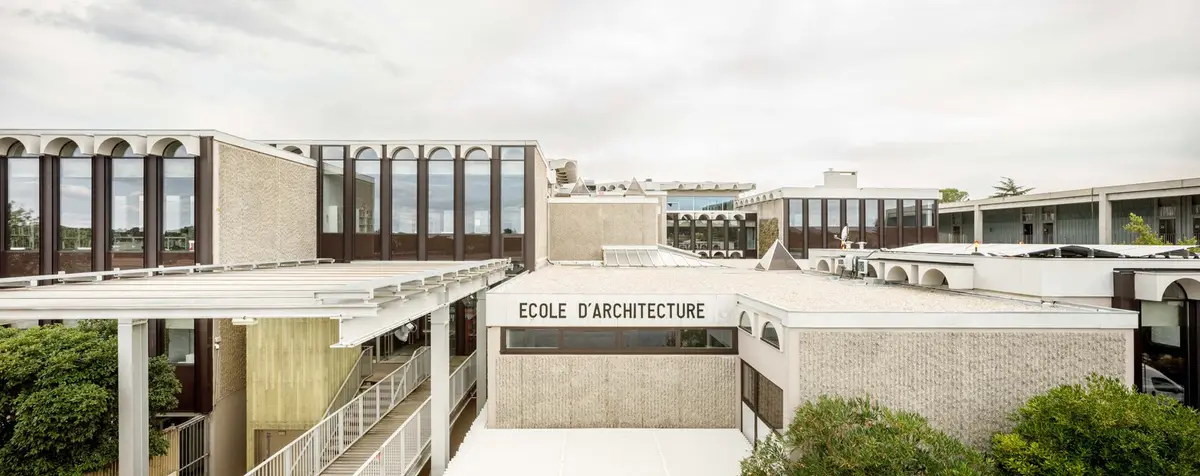
Architecture School Montpellier Renovation by Maignial Architectes & Associés — A Model for Ecological Transition
The renovated Montpellier Architecture School blends heritage with sustainable design, featuring an active façade, energy reduction strategies, and innovative climate-responsive systems.


A Sustainable Transformation for a Historic Educational Landmark
The Architecture School of Montpellier, located in the Plan des 4 Seigneurs district, has undergone a profound renovation led by Maignial Architectes & Associés. Originally built in 1970 and altered multiple times over the decades, the building has now been carefully reimagined as a high-performance, environmentally responsible educational facility. The project, completed in 2023, spans 7,300 m² and positions the school as an exemplar of sustainable educational architecture in France.
This renovation not only restores the building’s architectural identity but also integrates state-of-the-art ecological strategies. It serves as both a functional campus and an educational tool demonstrating how existing structures can be adapted to meet contemporary environmental expectations.
Balancing Heritage Preservation with Ecological Innovation
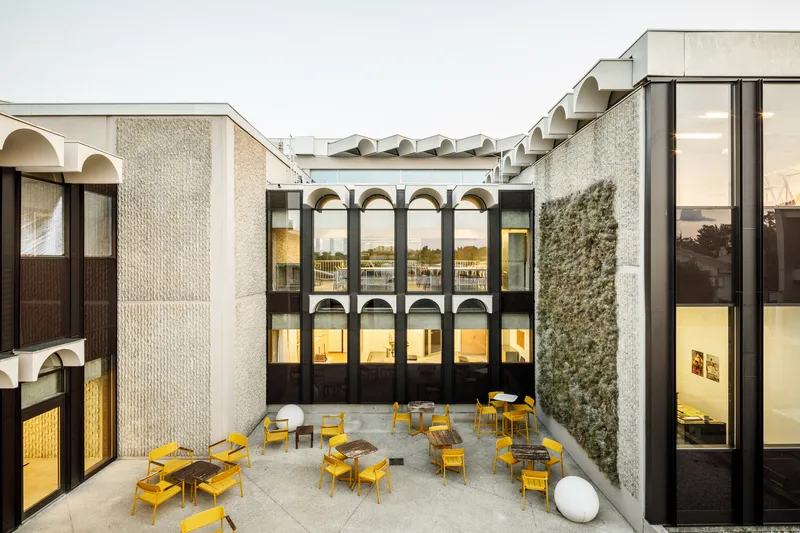
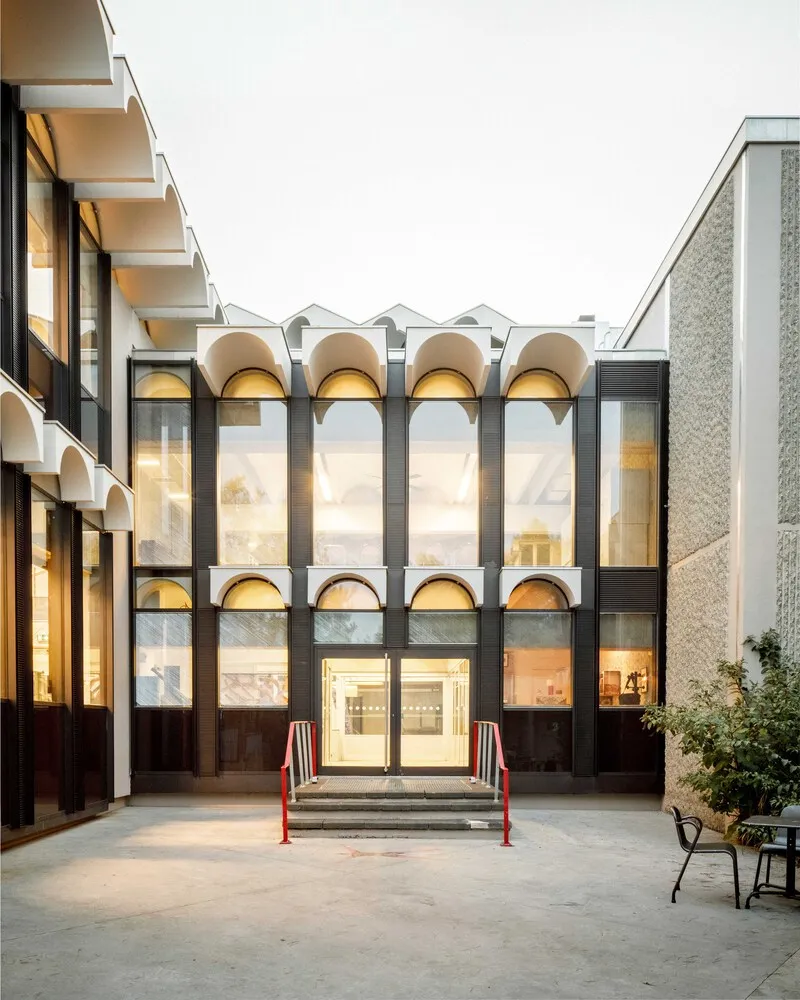
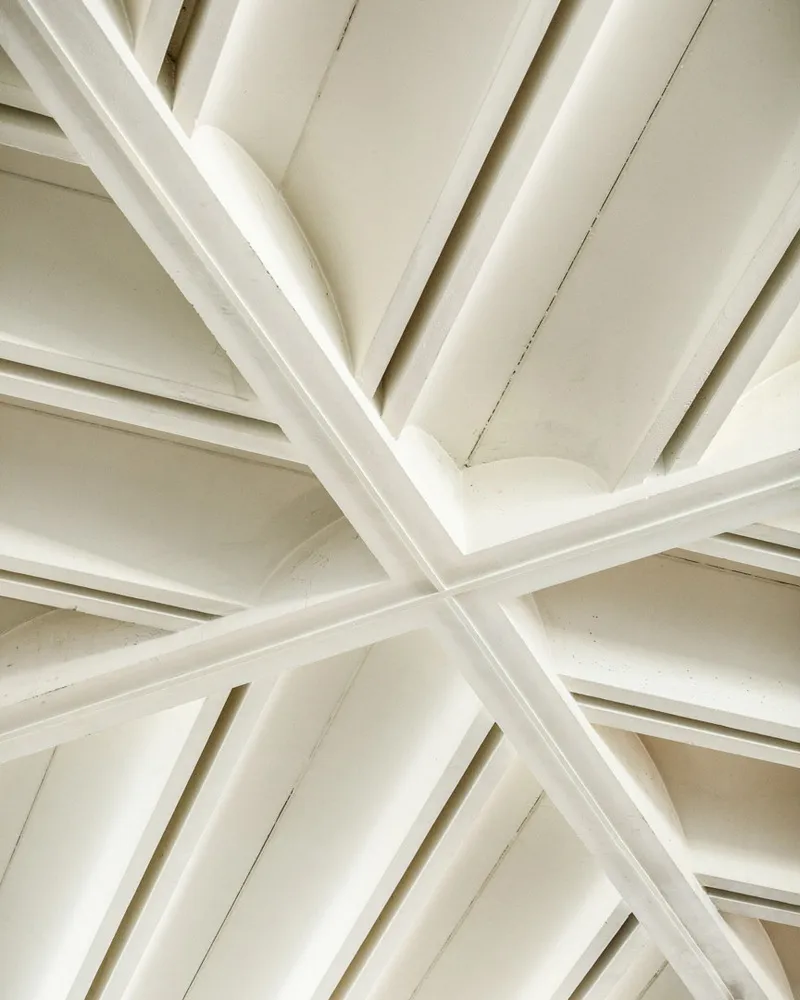
The renovation aimed to reconcile two major concerns: respecting the original architectural character and steering the building toward a low-carbon future. Some past alterations had diverged from the initial design intent, prompting the architects to peel back layers of intervention and reveal the building’s original qualities.
Today, ecological transition is a foundational challenge across all sectors, and the architects positioned this building as a prototype for energy-conscious renovation. Their strategy fuses thermal upgrades, material efficiency, and sensitive restoration to guide the school into the next century.
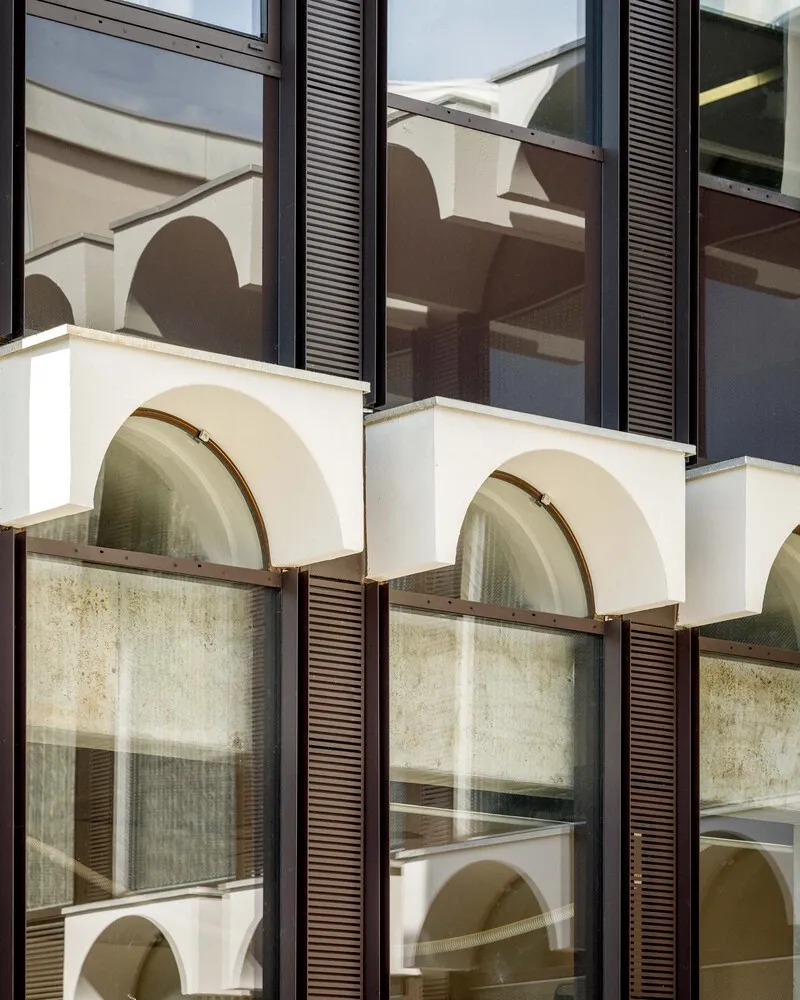
Energy Performance as a Design Driver
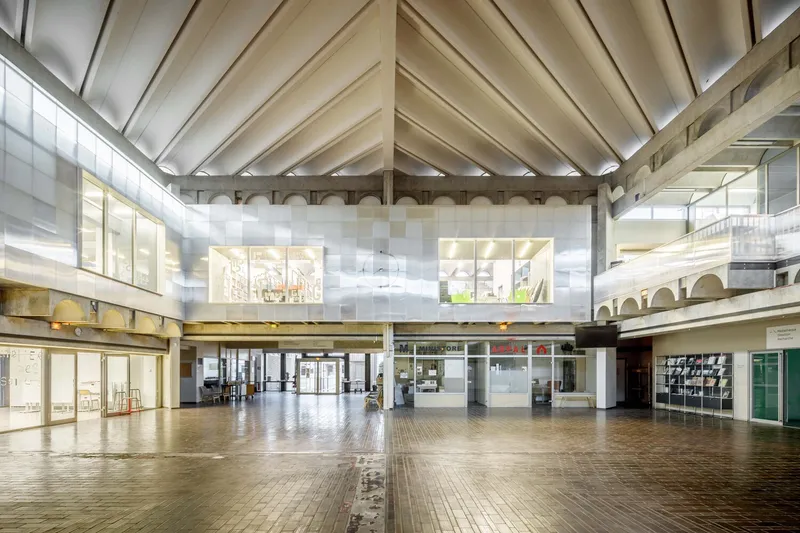
A primary target of the project was to reduce the school’s energy consumption by over 60% and significantly cut greenhouse gas emissions. To achieve this, the design team developed seasonal operational scenarios:
Winter Strategy
- Heating limited to enclosed, high-usage areas such as classrooms and offices.
- Warm air transfer systems help temper larger open spaces.
- Fan coil units replace radiators, combining heating, cooling, and air treatment in one compact element.
Summer Strategy
- Night-time over-ventilation flushes accumulated heat.
- Ceiling fans maintain thermal comfort without heavy reliance on mechanical cooling.
The project demonstrates that ecological renovation cannot rely solely on engineering upgrades; it must also consider architectural clarity and the recovery of original design features.
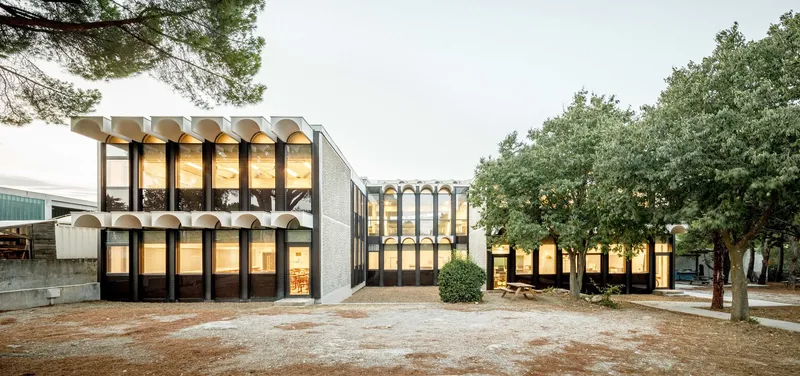
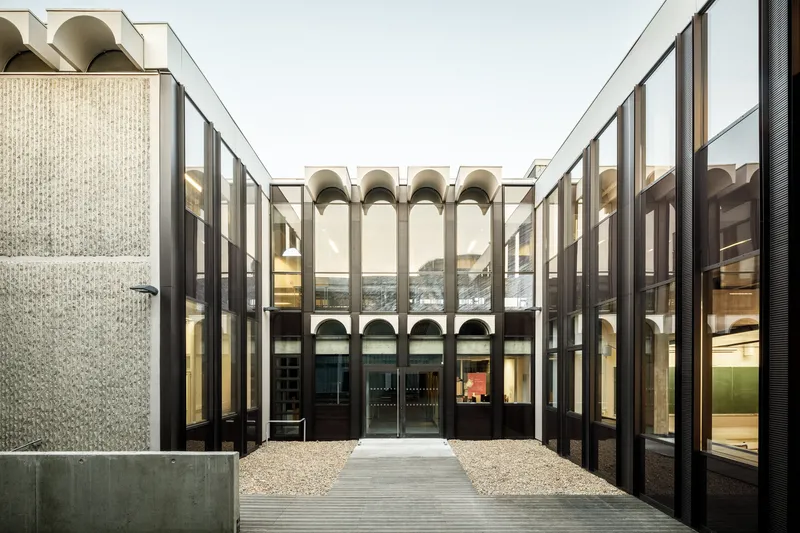
The Active Façade: A Breakthrough in Climate-Responsive Design
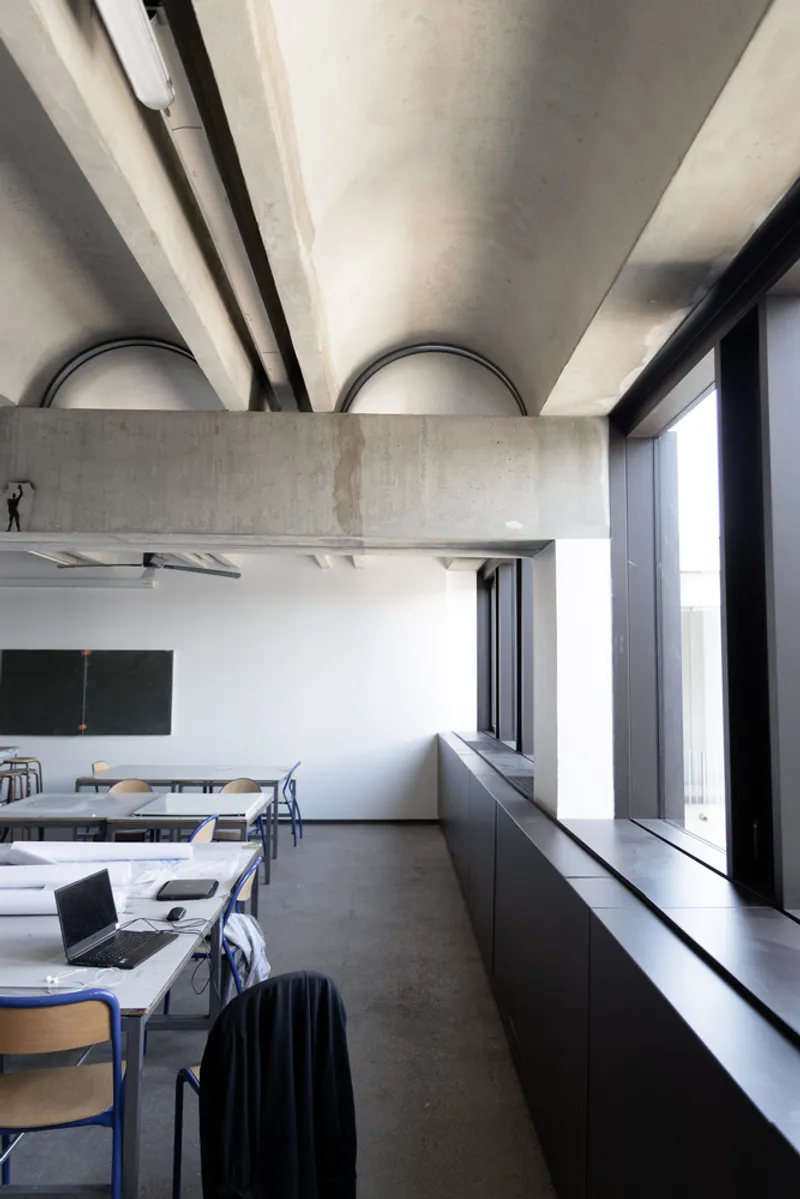
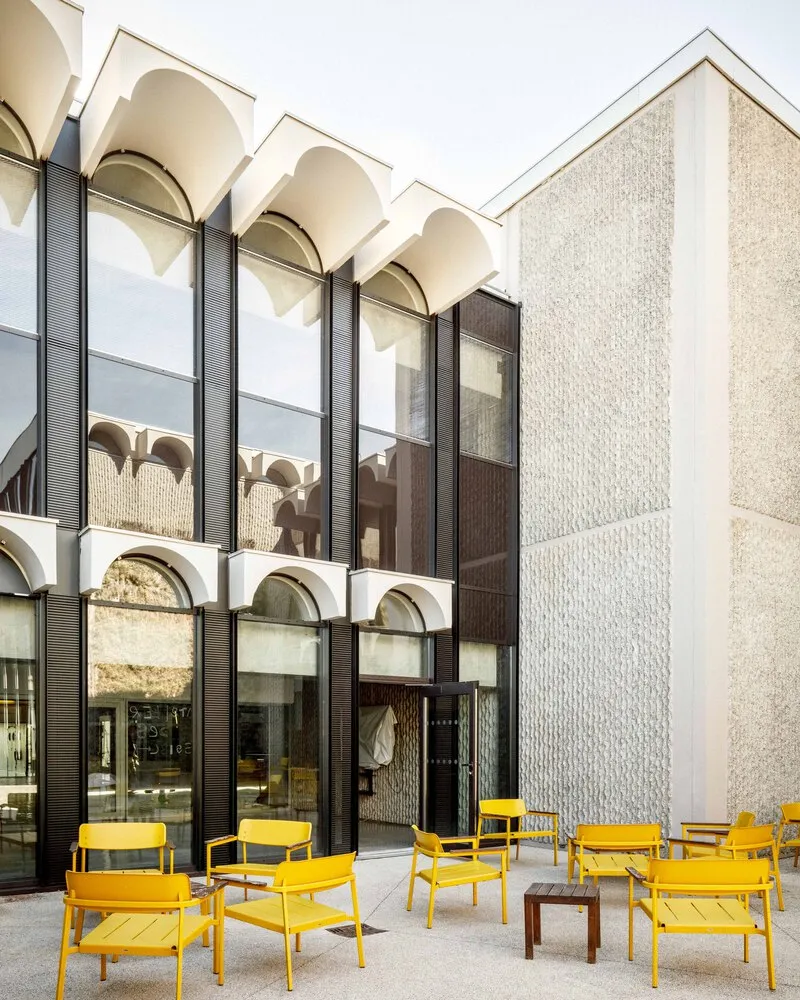
One of the most innovative components of the renovation is the introduction of a high-performance active façade system. The previous façade consisted mainly of glazing and radiators, lacking the complexity required for today’s climate challenges.
The new active façade consolidates multiple building functions into a single architectural element, significantly lowering the structure’s carbon footprint. It includes:
- High-performance insulation
- Integrated air treatment
- Heating and cooling networks hidden within vertical mullions
- Solar-control mini blinds embedded directly into the double glazing
- IMMOBLADE’s innovative year-round sun-ray management system
- Natural ventilation flaps enabling night ventilation and passive air movement
These integrated systems strike a balance between transparency, comfort, and environmental responsiveness, all while restoring harmony with the building’s original structural rhythm.
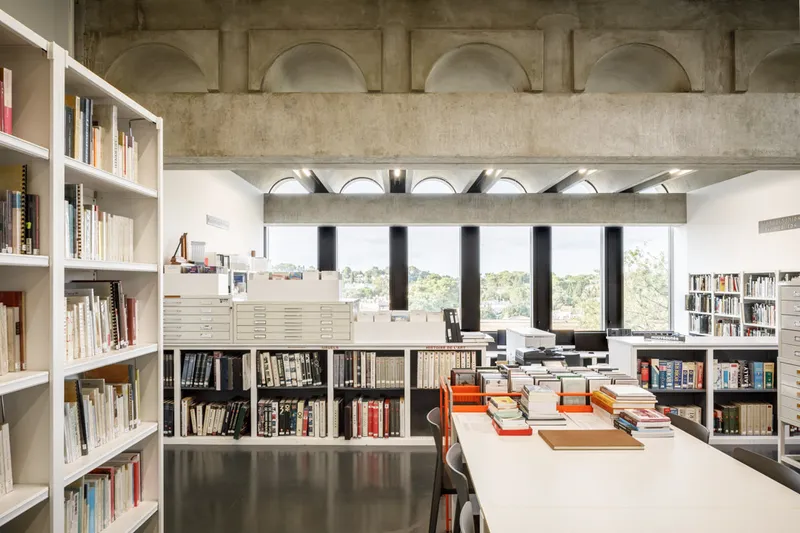
A Façade Designed for Intelligent Solar Control
The glazing system features miniaturized blind blades installed within the double glazing. Their optimized geometry ensures:
- Maximum visibility for occupants
- Reduced glare
- Controlled solar gain based on orientation
- Enhanced energy performance throughout the year
This precise calibration results from extensive testing and iterative design, ensuring the school benefits from a façade that is not only ecological but also visually and functionally coherent with contemporary architectural expectations.
Empowering Users Through Knowledge
Recognizing that sustainable buildings must be actively engaged with, the architects produced a user manual for students, faculty, and staff. The guide outlines:
- How to operate ventilation systems
- Seasonal thermal strategies
- Tips for balancing comfort with energy efficiency
- Best practices for interacting with the building’s new façade systems
This turns the renovated school into a living laboratory for ecological architecture, teaching its users how their behavior influences energy performance.

A New Chapter for Educational Architecture
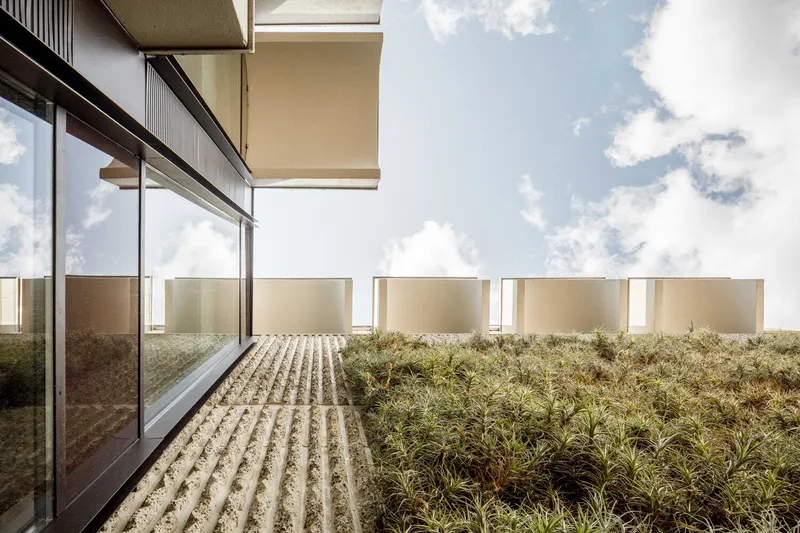
The renovation of the Architecture School of Montpellier is more than a technical upgrade—it is a cultural and ecological statement. Through a synthesis of heritage restoration, high-performance building systems, and user engagement, Maignial Architectes & Associés have crafted a campus that reflects the future of sustainable design.


Popular Articles
Popular articles from the community


The Amber Palace Opera: A Geological Fiction Surfaces on Tallinn's Baltic Waterfront
Pierre Brillard reimagines a Baltic legend as a public landscape, opera house, and waterfront promenade rooted in Tallinn's coastal identity.

Opera on the Sea: Driftwood Logic Shapes a Timber Opera House on Estonia's Coast
Trevor Orgill's opera house translates the entangled drift of floating timber into a civic building where wood, water, and music converge.


Cube Design Draws an Ecological Corridor Between Two Shenzhen Hills with the Nankai Building
Beside Shenzhen's container docks, the Nankai Building pairs stacked balconies with a climbing green screen to connect two hillsides across its height.

Singing Woman: An Opera House That Performs Before the Curtain Rises
Ovidiu Cristian Pavel's conceptual opera house translates Estonia's choral identity into a sculpted waterfront landmark facing the Baltic Sea.

Similar Reads
You might also enjoy these articles


Hodi-Mandai Geram
Project Function: Preservation and revitalization of the Intangible heritage and socio-spatial identity of the Hodi by Housing, Cultural Memory Center, Sacred Grove, landscape, local tourism economy


Olio Towers: A Mid-Rise for Performers That Fuses Housing, Rehearsal, and Stage
Located blocks from Houston's Theater District, this modular tower stacks living units around a central performance atrium.

Oasis: Modular Green Housing Carved into Dhaka's Urban Fabric
A shortlisted Plugin Housing entry reclaims unauthorized settlements in Dhaka with stepped concrete volumes, green roofs, and ventilation-driven design.

Black Hole: A Floating Megastructure for the Post-Physical Era
Emiliano Mazzarotto envisions a spherical, self-scaling arena where e-sports, digital hotels, and holographic stadiums replace traditional public space.

Explore Mes School Of Architecture Competitions
Discover active competitions in this discipline

Challenge to design public laboratory

Challenge to reimagine the Iron Throne

Photograph architecture without architects

Illustrate the lost glory of Angkor Wat - Render Challenge
Comments (0)
Please login or sign up to add comments
No comments yet. Be the first to comment!