
Arena House in Costa Rica by Álvarez Arquitectos: A Tropical Beachfront Architecture Embracing Nature
A tropical beachfront house in Costa Rica combining wood construction, ocean views, natural ventilation, and indoor-outdoor living for a sustainable coastal lifestyle.


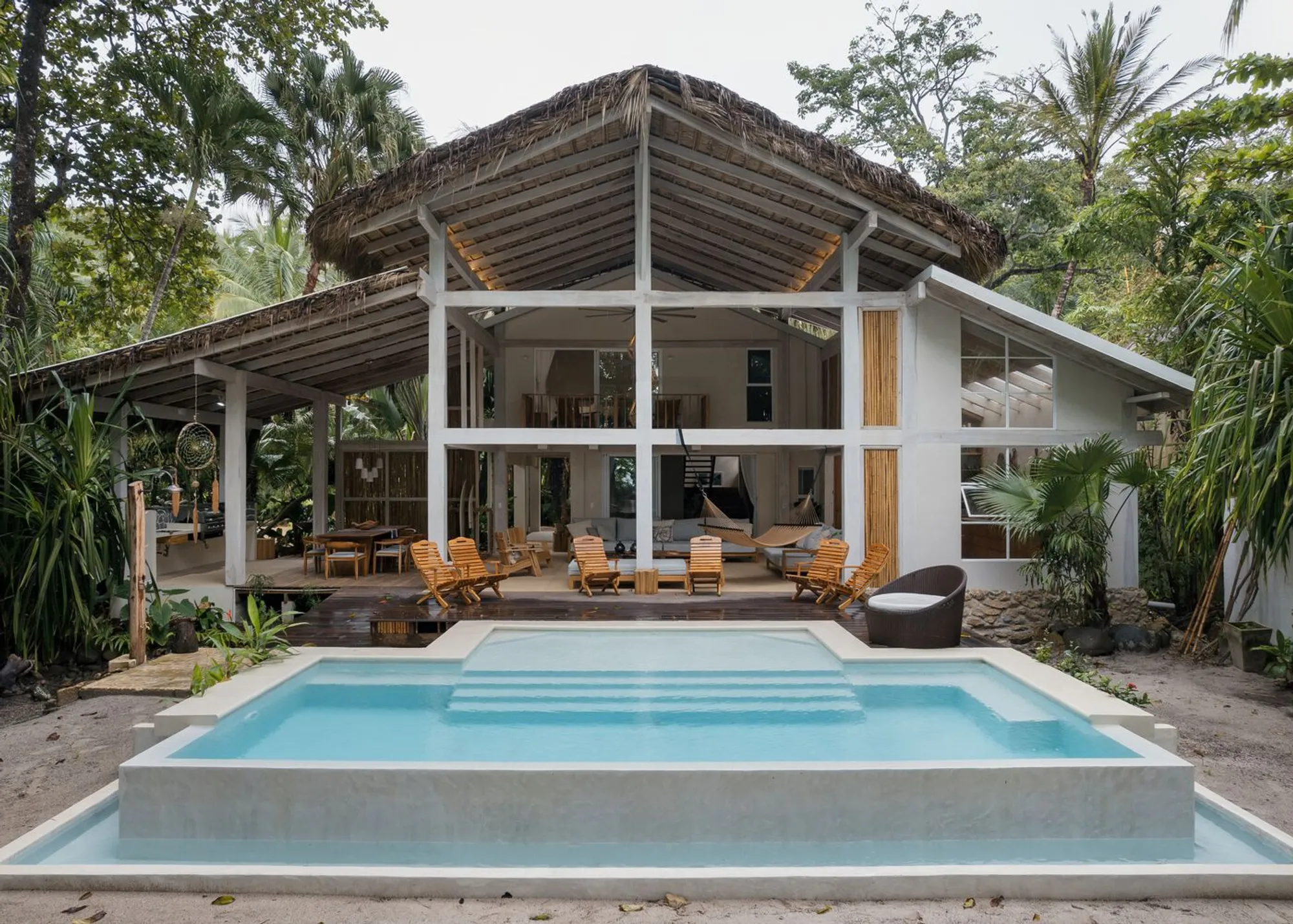
Arena House, designed by Álvarez Arquitectos, is a contemporary tropical residence located on the sandy coastline of Santa Teresa Beach. Completed in 2022, this 208-square-meter beach house presents a refined interpretation of tropical architecture, blending natural materials, open spatial planning, and sustainable strategies to respond to the coastal climate.
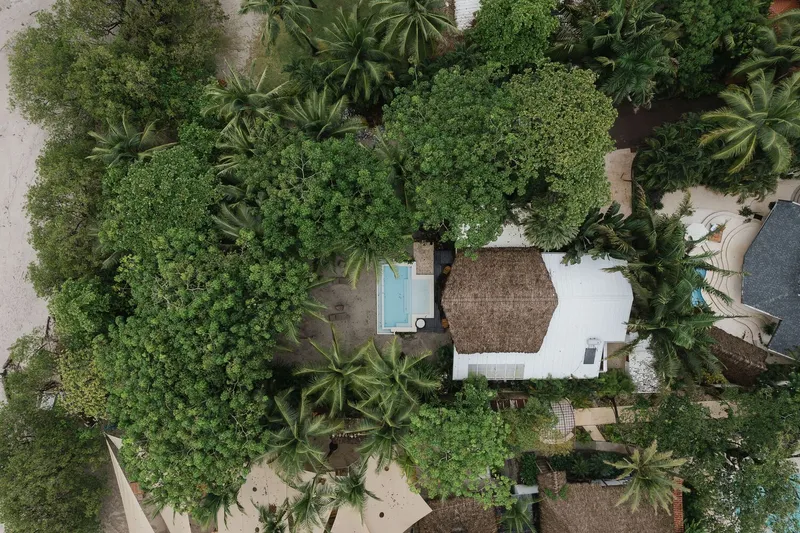
Set directly facing the ocean and surrounded by dense tropical vegetation, the residence integrates seamlessly into the natural landscape. Palm trees and native plants provide shade, natural cooling, and privacy, allowing the house to maintain a comfortable atmosphere while reinforcing its connection to the surrounding environment.
The architectural design reflects a balance between contemporary aesthetics and traditional tropical construction techniques, resulting in a serene and immersive beachfront living experience.
Tropical Site Integration and Environmental Response
The design of Arena House carefully responds to the climate and geography of Costa Rica’s Pacific coast. Positioned between palm trees and native vegetation, the house benefits from natural shading and protection from strong ocean winds.
Preserving the existing vegetation around the property was an important strategy in the project. The surrounding trees act as natural windbreaks that soften coastal gusts, improving outdoor comfort and protecting the structure from excessive exposure to the elements.
Openings and large windows are strategically oriented toward the ocean to capture sea breezes, especially during the afternoons when coastal ventilation becomes stronger. This passive cooling strategy reduces reliance on mechanical systems while enhancing the natural comfort of interior spaces.
Spatial Organization and Indoor-Outdoor Living
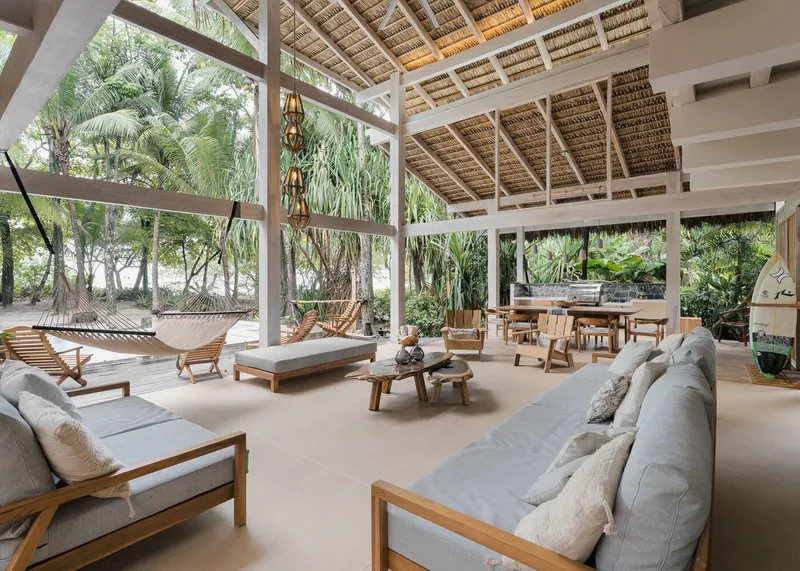
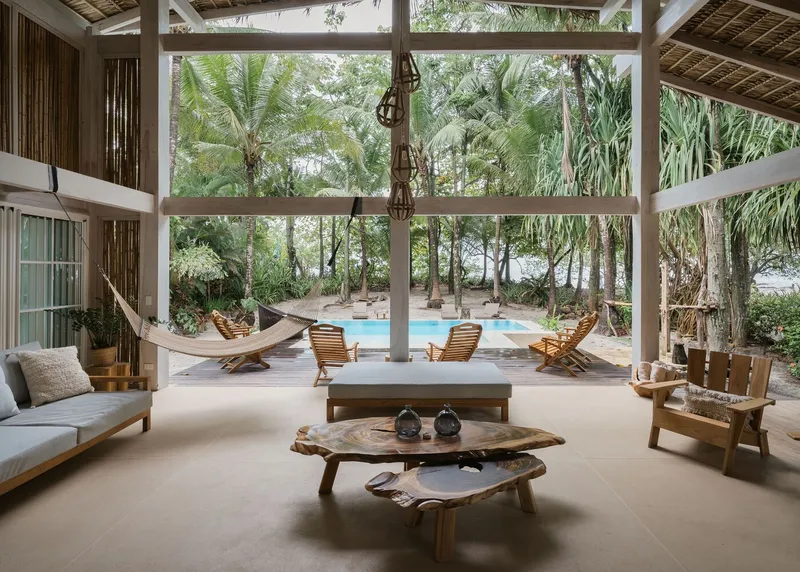
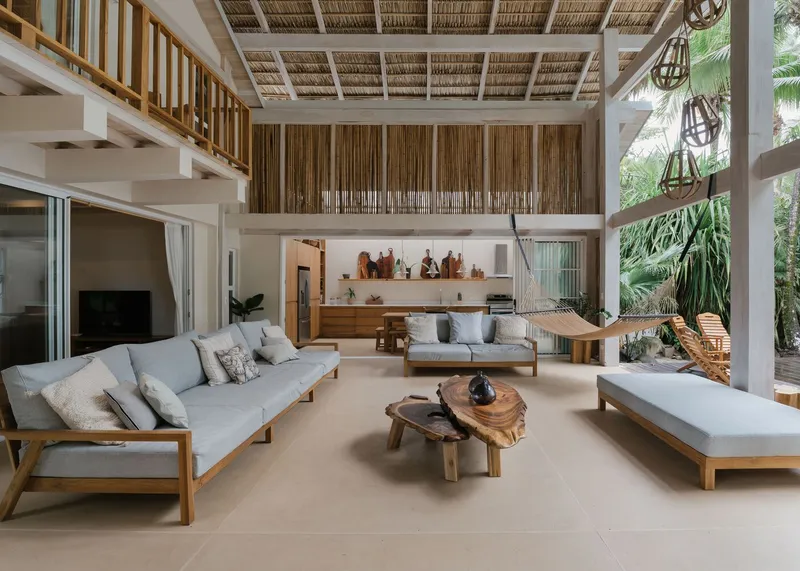
Arena House is organized as a two-story residence centered around outdoor living and ocean views. The spatial layout emphasizes a fluid transition between interior and exterior spaces, reinforcing the relaxed lifestyle associated with beachfront living.
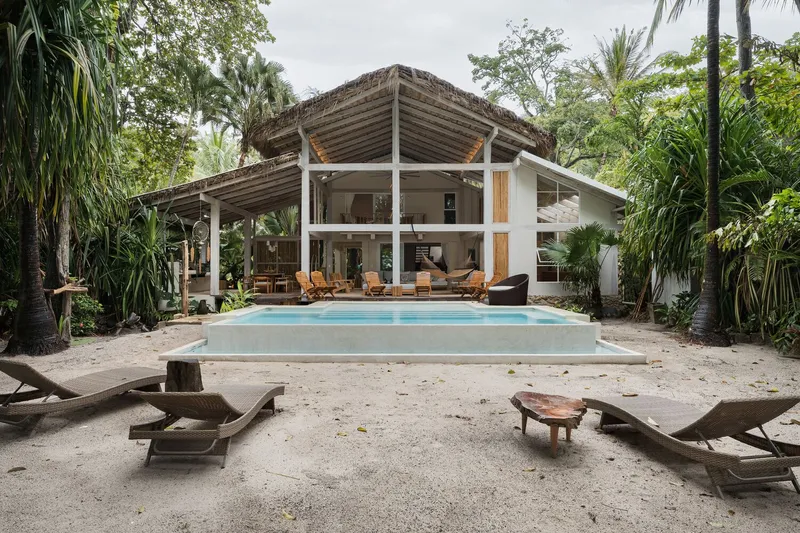
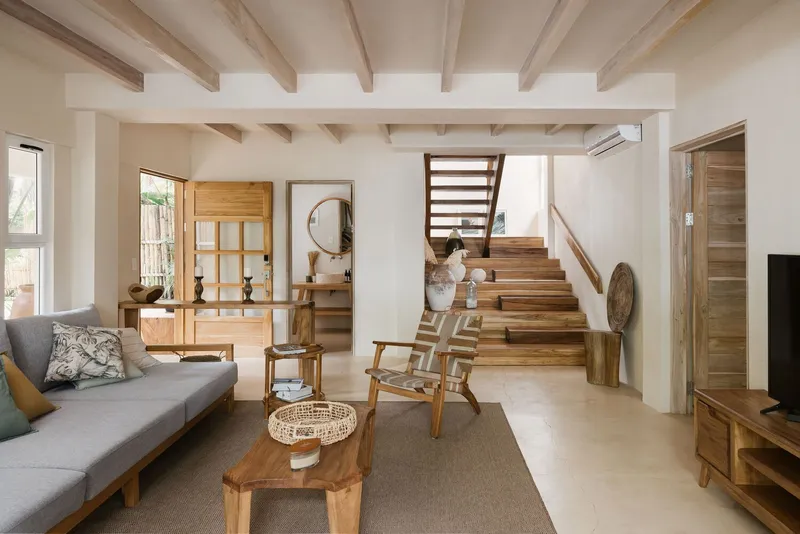
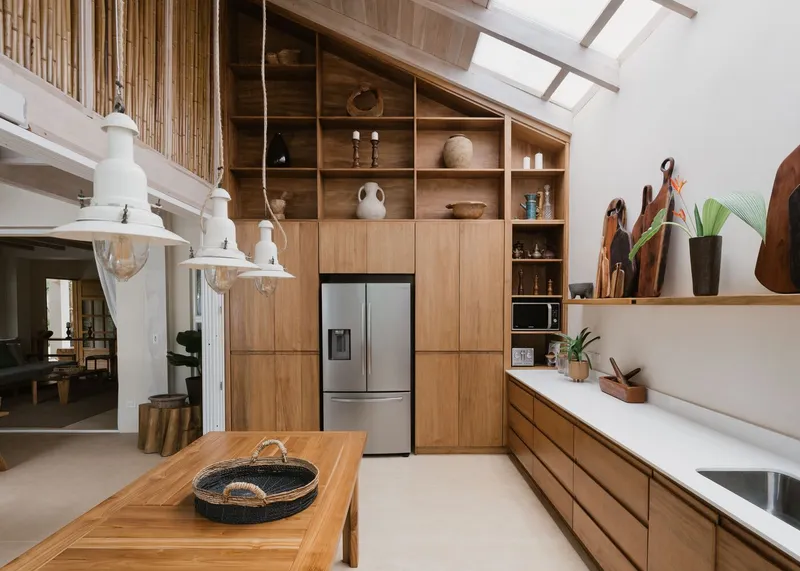
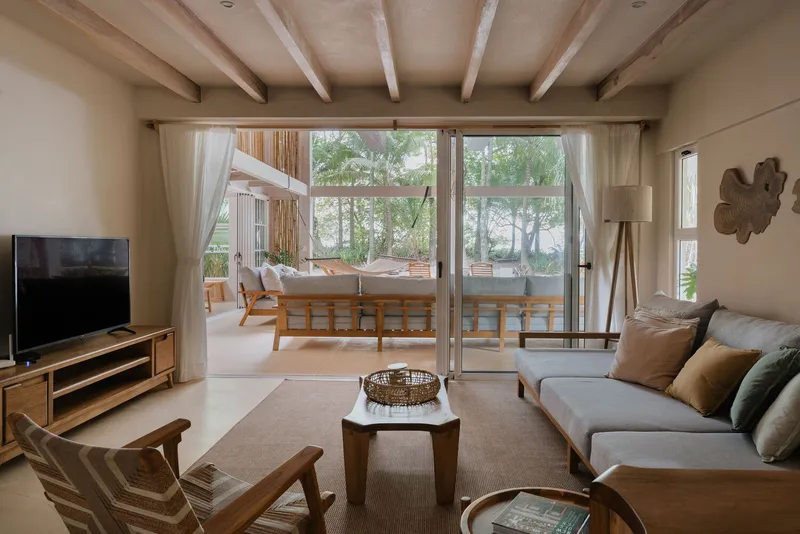
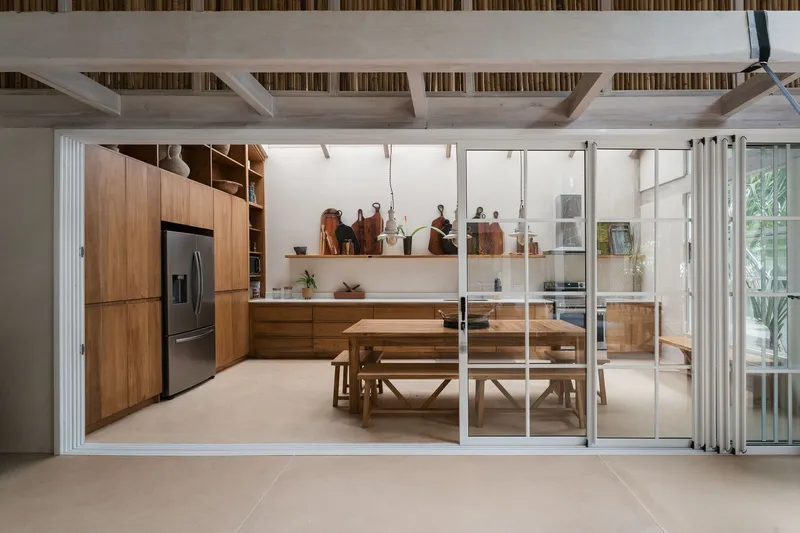
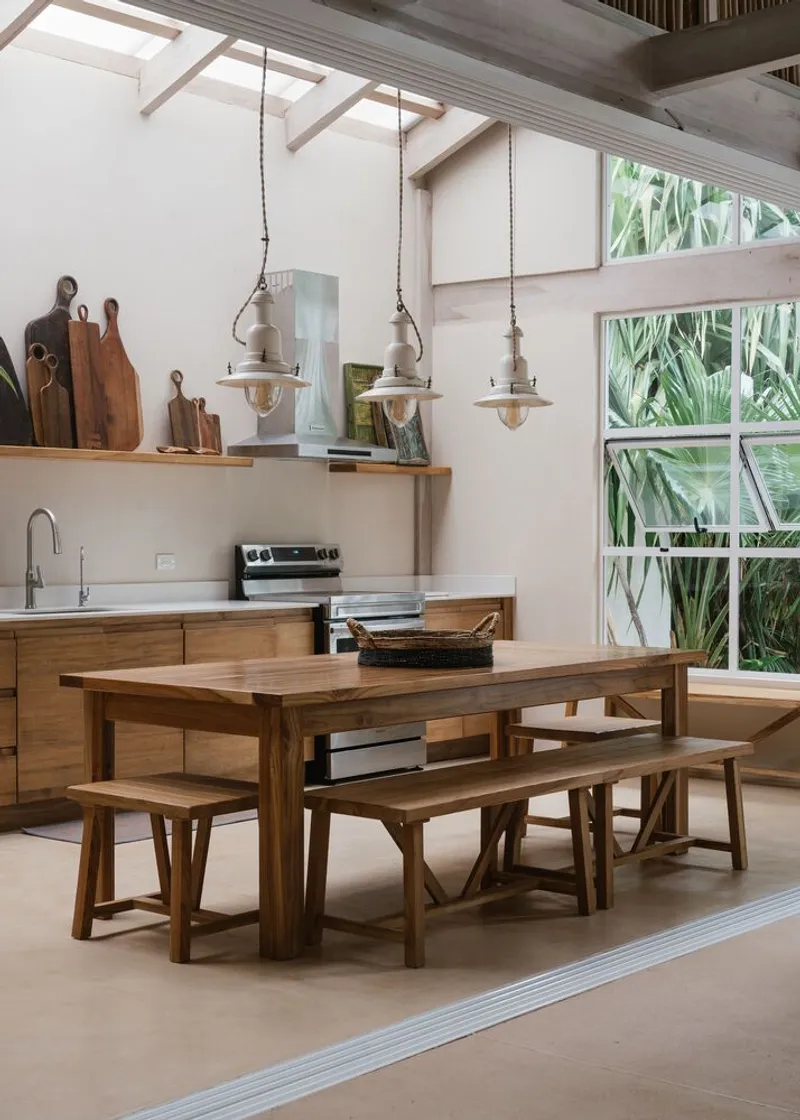
At the heart of the home is a double-height social area that serves as the primary gathering space. This central living area connects directly to the kitchen, forming an open and flexible environment for social interaction and family activities.
Large sliding openings extend the living area outward to a generous deck and swimming pool overlooking the ocean. This outdoor terrace becomes an extension of the interior living space, creating a continuous experience between the house and the surrounding landscape.
The distribution of spaces follows a layered sequence that gradually transitions from private to public zones. This design strategy allows the house to engage with the vibrant public environment of the beach while still preserving the privacy of its residents.
Bedrooms Designed for Nature Connection
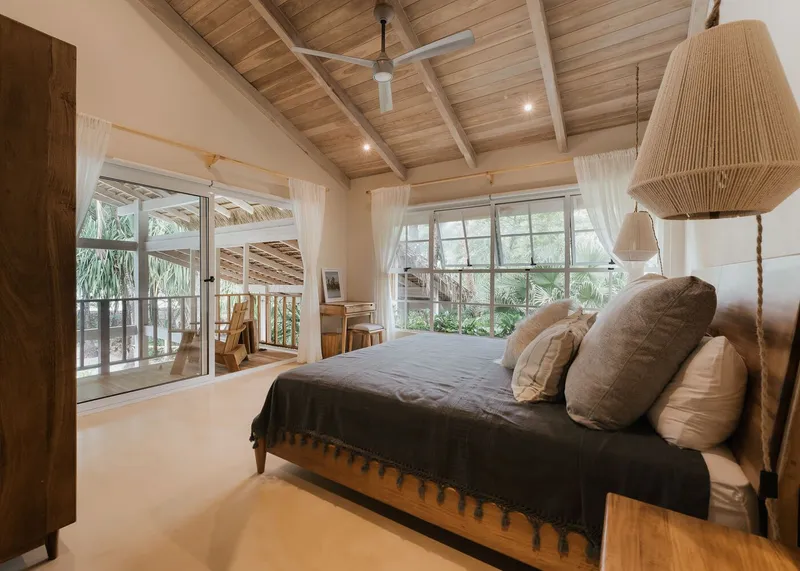
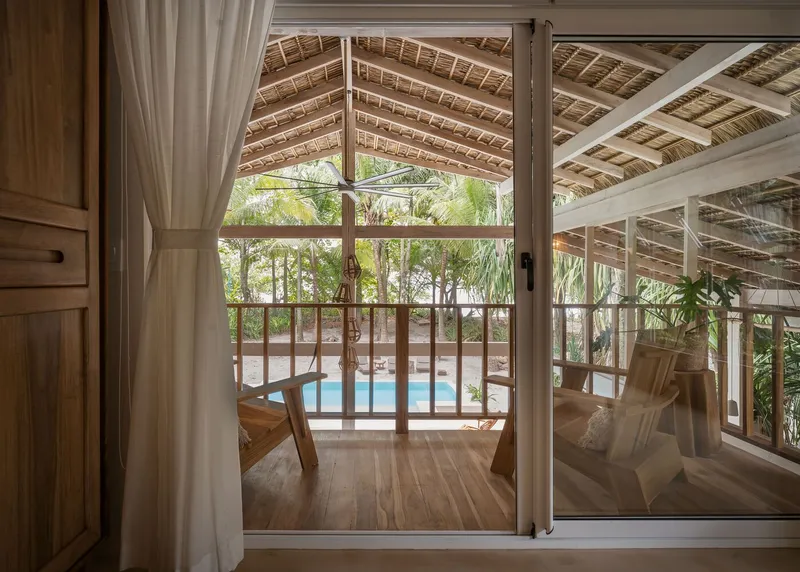
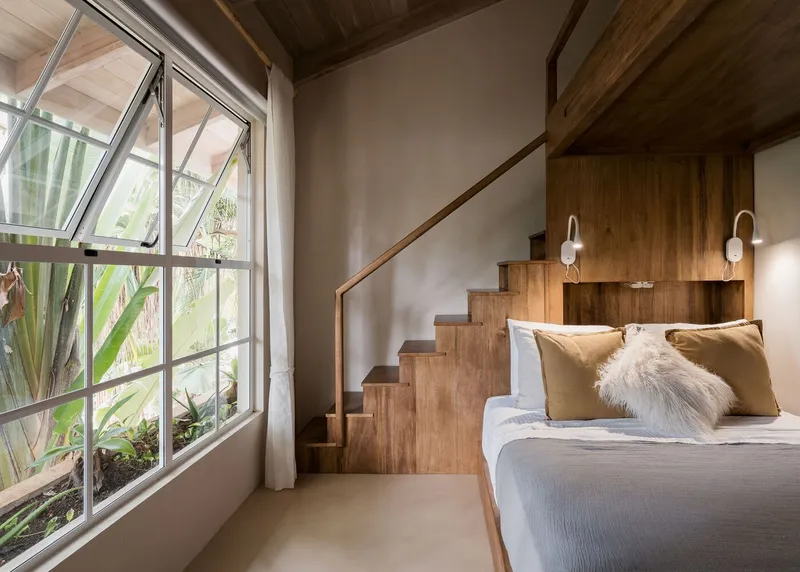
The private areas of the house are located primarily on the second floor, where bedrooms are positioned to capture views of the surrounding vegetation and the ocean horizon.
These upper-level rooms are designed with large openings that allow natural light and cross-ventilation, reinforcing the home’s tropical architectural character.
On the ground floor, an additional bedroom features a bathroom with an internal garden. This intimate green courtyard introduces nature directly into the private living space, offering a calm and refreshing atmosphere while improving natural ventilation.
Materiality and Tropical Architectural Language
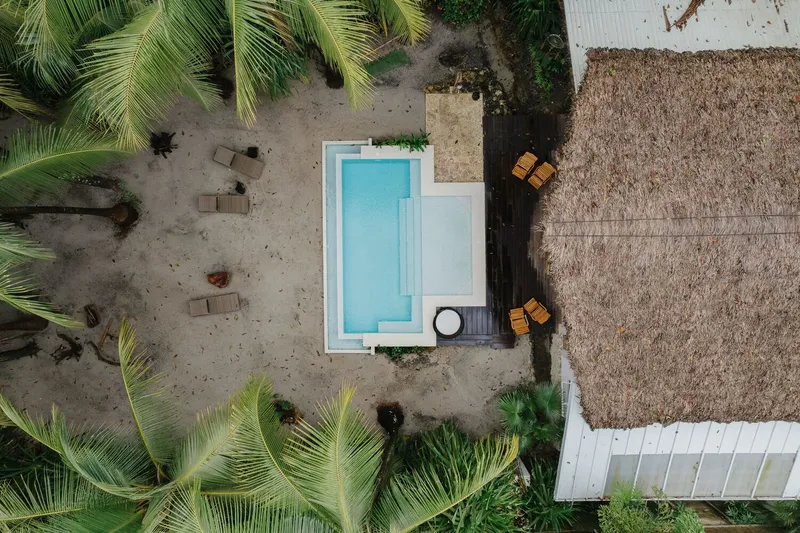
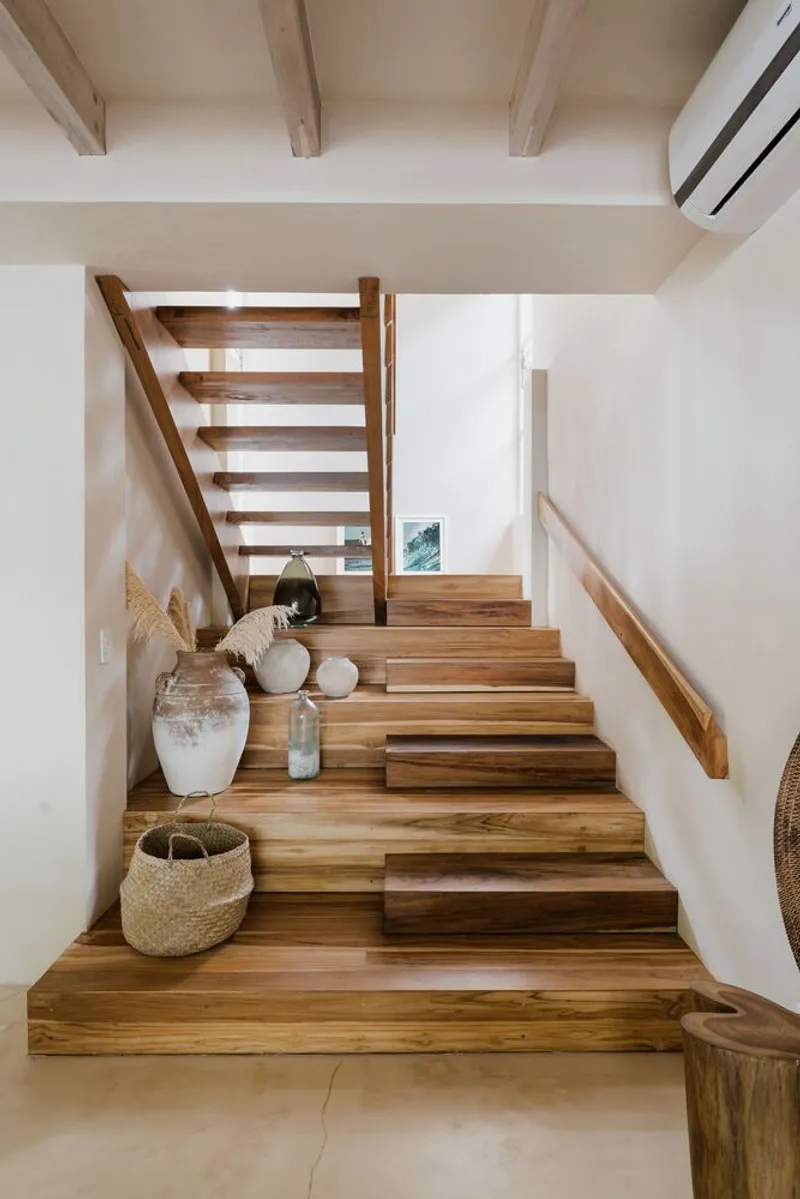
Material selection plays a crucial role in defining the character of Arena House. The primary façade features white-painted wood combined with palm elements, creating a visual identity strongly associated with tropical architecture.
Wood is used extensively throughout the structure, not only as a decorative material but also as a structural component. In coastal environments where salt exposure can affect metal elements, wood offers durability, easier maintenance, and a warmer aesthetic expression.
Additional details in wood and cane brava appear throughout the house as accents, reinforcing the architectural language and emphasizing local craftsmanship.
PVC window systems are incorporated to ensure durability and resistance to humidity, while maintaining thermal efficiency and natural ventilation.
Roof Design and Climate Adaptation
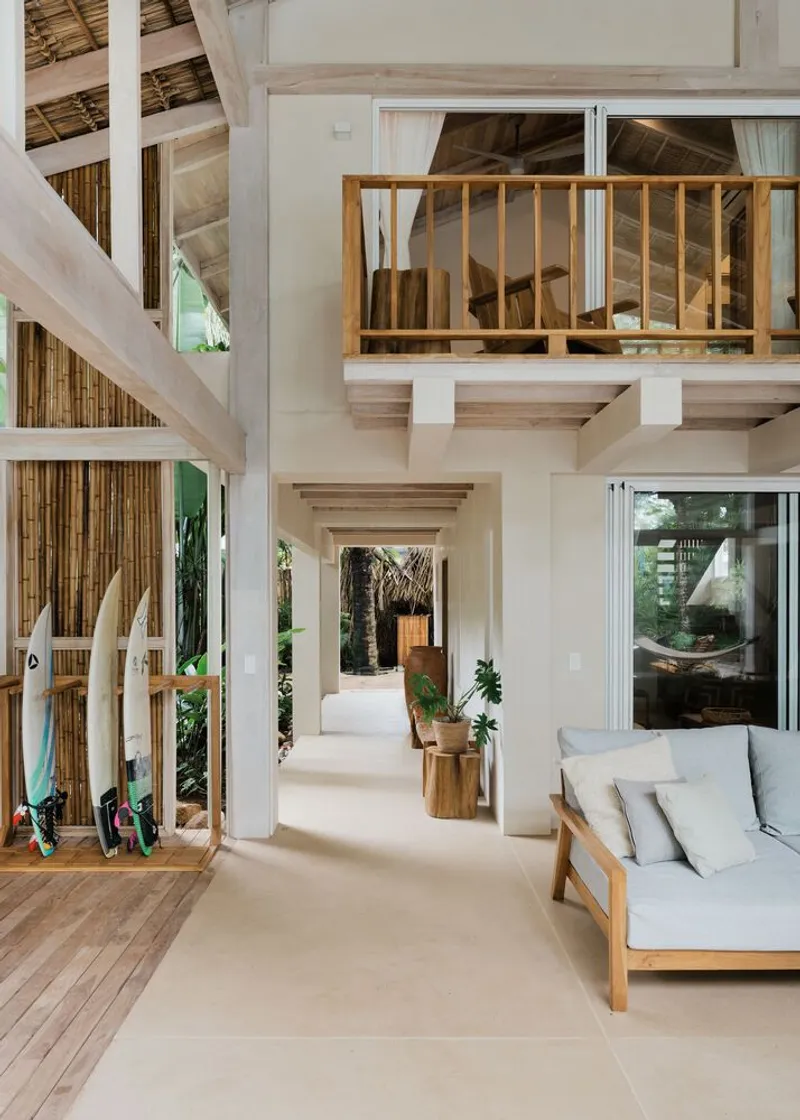
The roof of Arena House plays an important functional and aesthetic role. Its sloped design ensures efficient rainwater drainage during Costa Rica’s heavy tropical rains.
This practical feature is combined with a palm-finished roof surface that reinforces the tropical character of the architecture. The natural texture and appearance of the palm finish contribute to the house’s identity while harmonizing with the surrounding vegetation.
Through this combination of traditional materials and contemporary construction techniques, the house achieves both durability and architectural expression.
Landscape Preservation and Wind Protection
Rather than clearing the site entirely, the project maintains the existing vegetation around the perimeter of the property. This approach preserves the ecological character of the site and enhances the environmental performance of the house.
The trees and plants reduce wind velocity, filter sunlight, and create a comfortable microclimate around the residence. These natural elements also help frame views toward the ocean while maintaining privacy from neighboring areas.
This sensitive integration with the landscape reflects a broader philosophy of tropical architecture that values harmony between built structures and natural environments.
A Contemporary Tropical Beach House Experience
Arena House represents a refined example of modern tropical residential architecture. By combining open spatial design, natural materials, passive climate strategies, and landscape preservation, the project offers a comfortable and immersive coastal living environment.
The residence demonstrates how thoughtful architectural design can transform a beachfront location into a memorable living experience. Through the careful integration of nature, materiality, and spatial hierarchy, the house creates a premium retreat that celebrates both the beauty of the site and the traditions of tropical architecture.
Arena House by Álvarez Arquitectos stands as a compelling example of contemporary beach house design in Costa Rica. Its balance between tradition and innovation highlights the possibilities of sustainable tropical architecture while delivering an elegant and relaxed residential environment.
With its emphasis on natural ventilation, ocean views, and seamless indoor-outdoor living, the project successfully captures the essence of coastal life on Santa Teresa Beach.
All photographs are works of
Tony Aragón




Popular Articles
Popular articles from the community


Co-life: Sustainable Architecture for Age-Friendly Community Living
Co-life reimagines sustainable architecture for seniors through courtyards, rammed earth, shared gardens, and spaces designed for belonging.

Hill & Cross Opera: Sculptural Opera House Architecture Shaped by Tallinn’s Landscape and Identity
Hill & Cross Opera reimagines opera house architecture in Tallinn through its sculptural hill, civic plaza, glass wave and a luminous cross.

The Ocean Hive: Sustainable Architecture for a Self-Sufficient Civilization at Sea
The Ocean Hive imagines sustainable architecture at sea, where modular habitats, algae, wave power and ocean waste sustain a growing colony.

The Earth Pod: 3D Printed Homes for Resilient Refugee Communities
The Earth Pod reimagines refugee housing through 3D printed homes made from clay, combining resilience, self-sufficiency, and rapid shelter.


Similar Reads
You might also enjoy these articles

FAMM Arquitectura Organizes Ten Villas Around Courtyards and Jungle in Nosara, Costa Rica
El Molino pairs two elongated volumes with deep overhangs and timber louvers to build a compact coastal community five minutes from the beach.
Oscar Niemeyer's Ibirapuera Park Pavilions Define São Paulo's Cultural Identity in Concrete and Curve
A constellation of modernist volumes set within São Paulo's most important urban park, conceived for the city's 400th anniversary in 1954.
How Henri Picq's 1889 Paris Pavilion Traveled 11,000 Kilometers to Become Santiago's Artequín Museum
A prefabricated iron and glass pavilion built for the Paris Universal Exposition found a second life as a children's art museum in Chile.
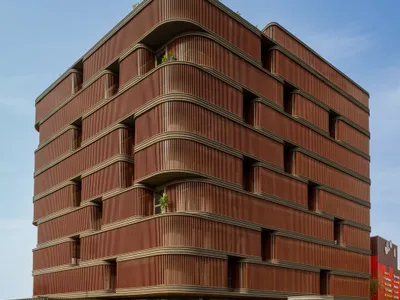
Sanjay Puri Architects Wraps a Jaipur Office Tower in Capsule-Shaped Green Buffers
A nine-level climate-responsive workplace near Jaipur Airport uses stacked planter terraces and aluminium screens to fight 40°C heat.


Explore Blocs Competitions
Discover active competitions in this discipline



Challenge to reimagine the Iron Throne


Photograph architecture without architects


Illustrate the lost glory of Angkor Wat - Render Challenge


Design challenge to reuse E-waste
Comments (0)
Please login or sign up to add comments
No comments yet. Be the first to comment!