

ARVO 16:30 Hotel by DL Atelier — A Contemporary Rural Retreat Inspired by Ming Dynasty H
A serene courtyard hotel blending light, nature, and rural architecture, offering private hot tubs, loft suites, and immersive landscape views in Maying Village.


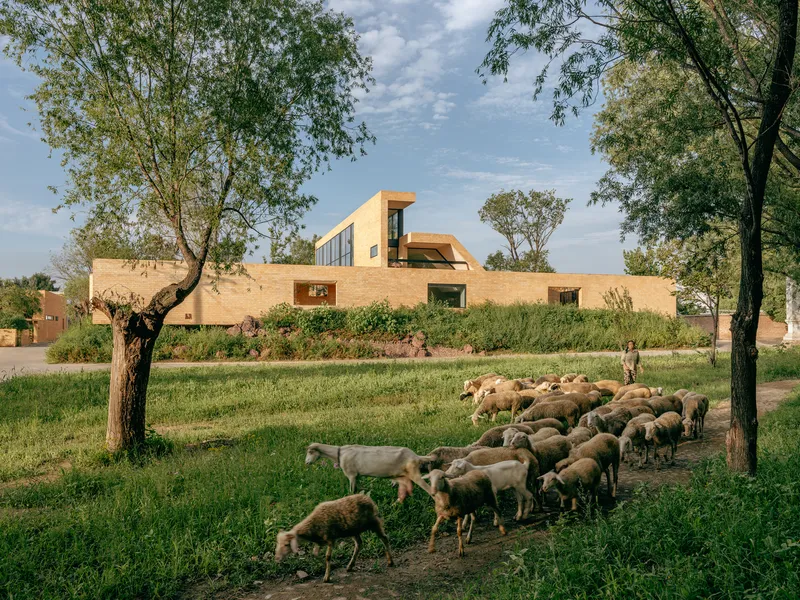
Located in Beijing’s Yanqing District, the ARVO 16:30 Hotel by DL Atelier reimagines rural hospitality through architecture rooted in history, landscape, and light. Set at the edge of Maying village—once home to a Ming Dynasty-era rammed-earth fortress—the project blends seamlessly into its agricultural context while offering a refined, contemporary stay immersed in nature.
A Site Steeped in History and Nature
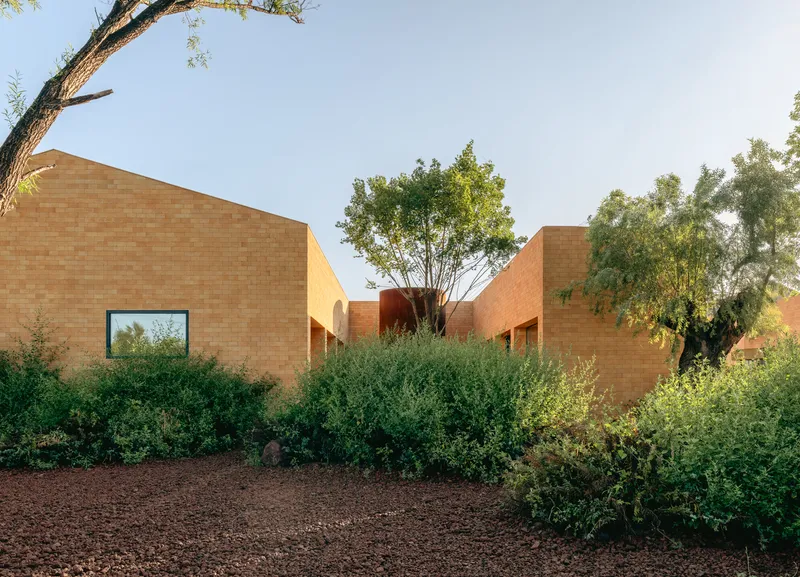
Maying Village takes its name from the ancient Maying Castle, a rectangular military fort built during the Jiajing reign of the Ming Dynasty. Over centuries, erosion and time have softened the fortress walls into natural landforms, allowing them to merge with the surrounding willow forest that has grown for over seventy years. The village retains classic northern-Chinese rural textures: hanging corn, earthy tones, open fields, and an atmosphere shaped by agrarian rhythms.
To the northwest lies Yeyahu National Wetland Park, an uninterrupted expanse of greenery and waterways. This rural vastness forms the sweeping backdrop for the hotel’s design concept.
A Contemporary Castle Rooted in the Landscape
Positioned at the village’s northwest edge, the ARVO 16:30 Hotel takes cues from the historic castle that once stood here. Instead of playful, iconic gestures used in earlier DL Atelier projects—like spacecraft forms or graphic earthworks—the architects chose a more grounded and sensitive approach.
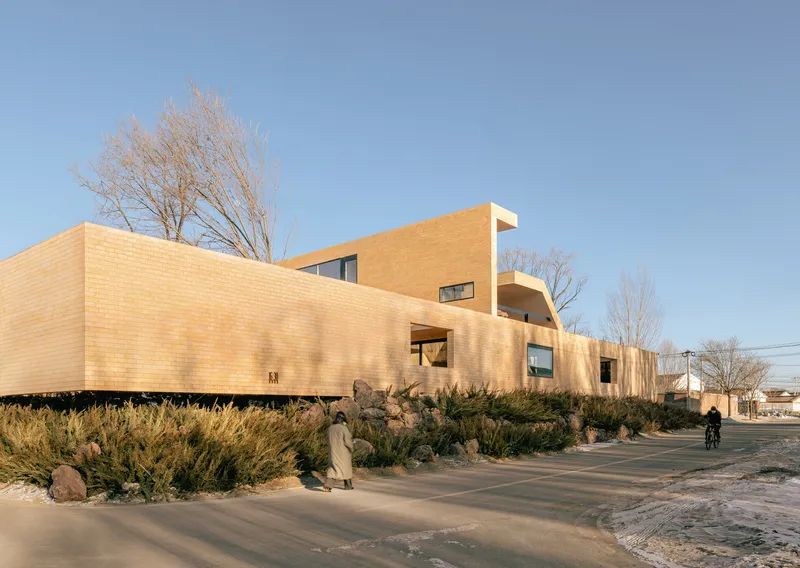
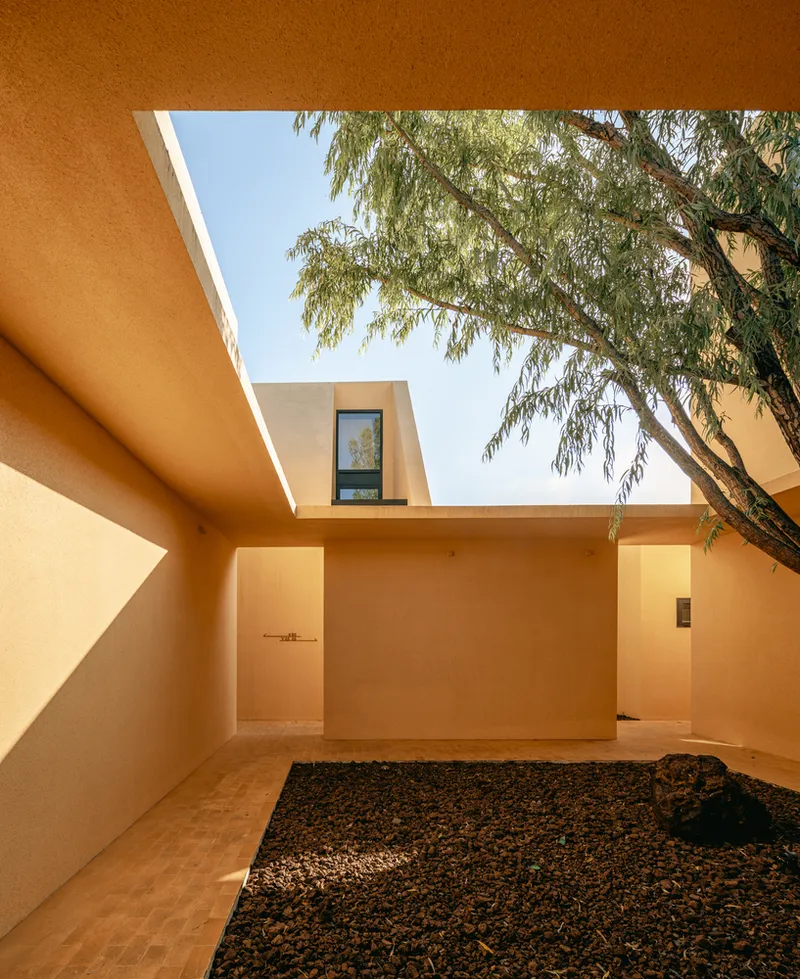
The design merges multiple courtyard typologies into a single architectural mass, creating a modern reinterpretation of a rural castle. Soft light-yellow façades echo the color of drying corn and the weathered tones of rammed earth, allowing the building to blend naturally into the village scenery.
A Hotel Designed Around Light — Especially 4:30 PM
The project’s name pays homage to a specific moment: 16:30, when the setting sun washes the southeast-facing site with warm, golden light. During the architects’ first visit, this late-afternoon sunlight, filtered through the willow groves, created an atmosphere of stillness and romance.
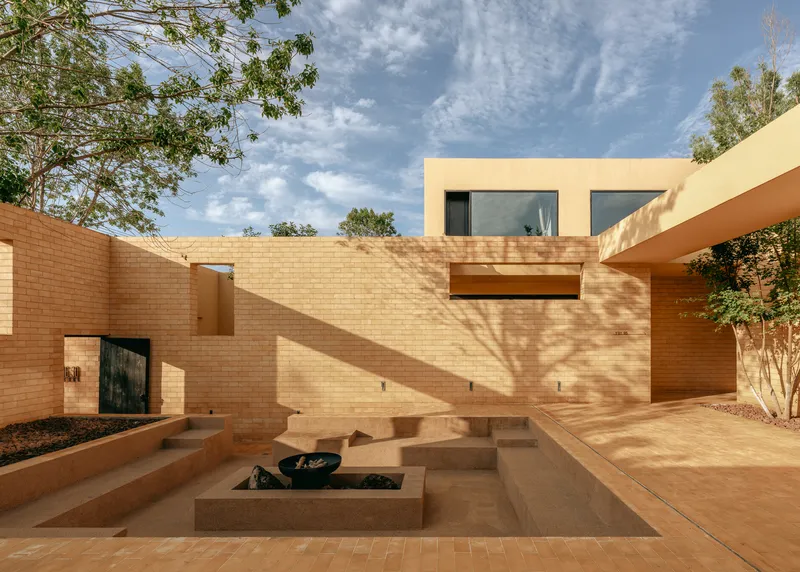
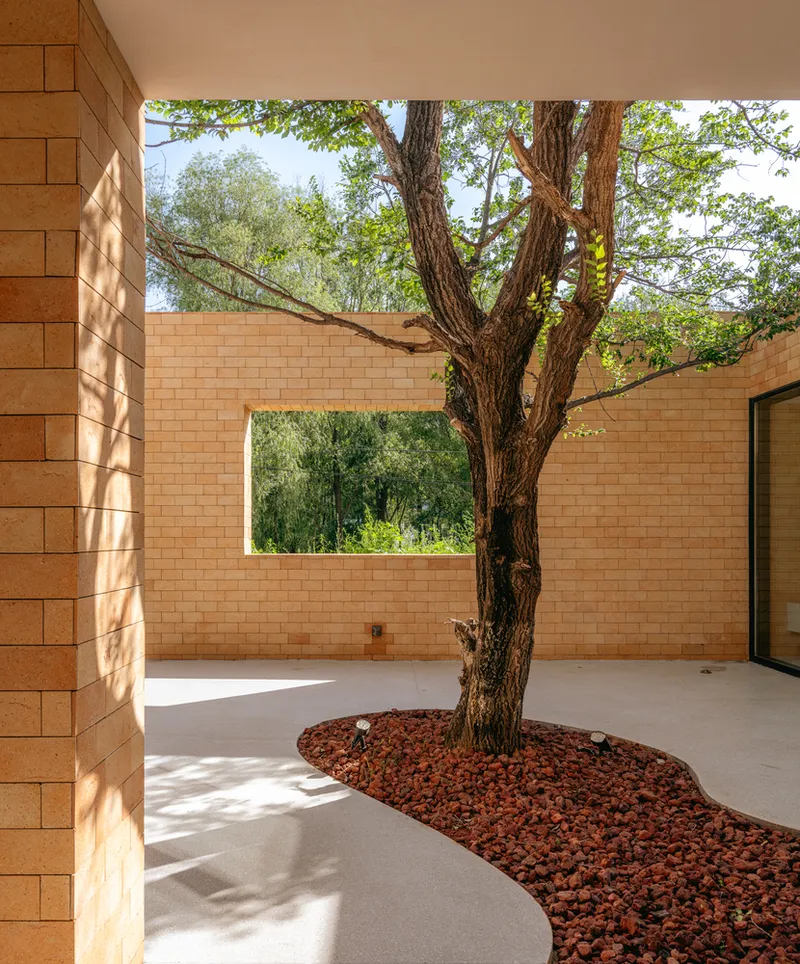
This inspired the creation of a long west-facing wall—conceived as a “curtain” for light and shadow. Throughout the day, dappled sunlight projects onto this surface, creating shifting star-like patterns that define the hotel’s tranquil, poetic ambiance.
Layered Spatial Experience and Elevated Entry Sequence
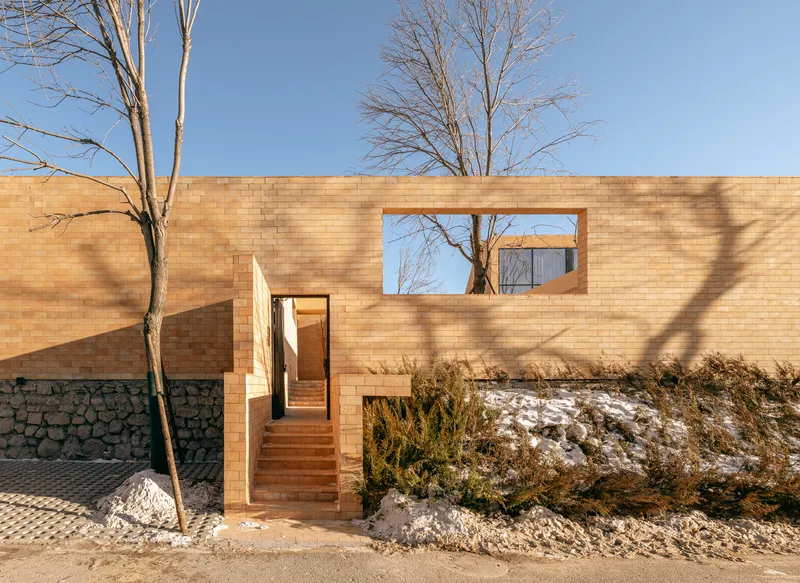
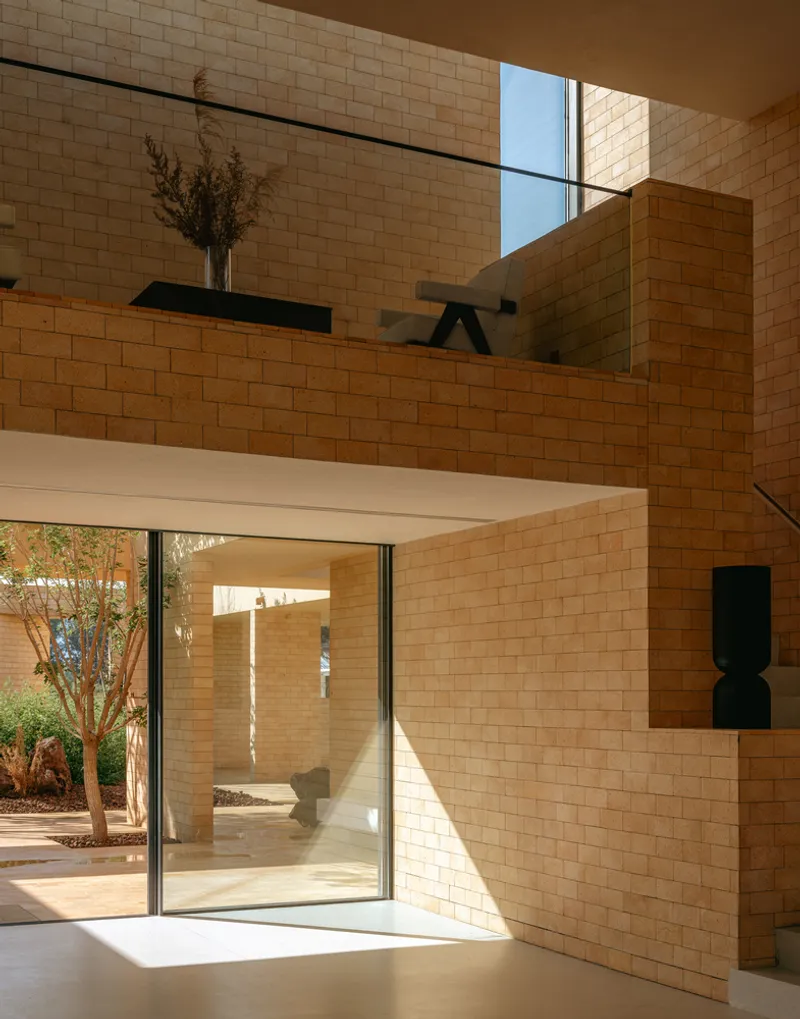
The site sits around 2 meters above the village road. DL Atelier cleverly leverages this level difference by lifting the long wall above ground to create a sheltered interspace—an elevated entrance passage that acts as a gentle threshold between the village and the hotel.
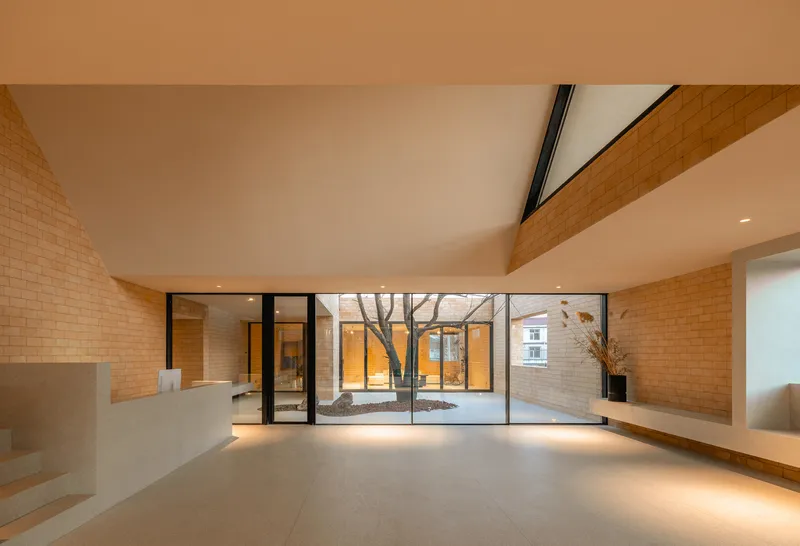
Guests enter by walking through a woodland path, passing into an inner courtyard, and then ascending a ramp toward the lobby. This sequence mimics the progression from village to fortress, from nature to architecture, from openness to intimacy.
Nested Courtyards and Fluid Indoor–Outdoor Boundaries
The hotel’s spatial layout consists of three key zones:
- Entrance and Hospitality Area
- Guest Room Area
- Recreation and Activity Area
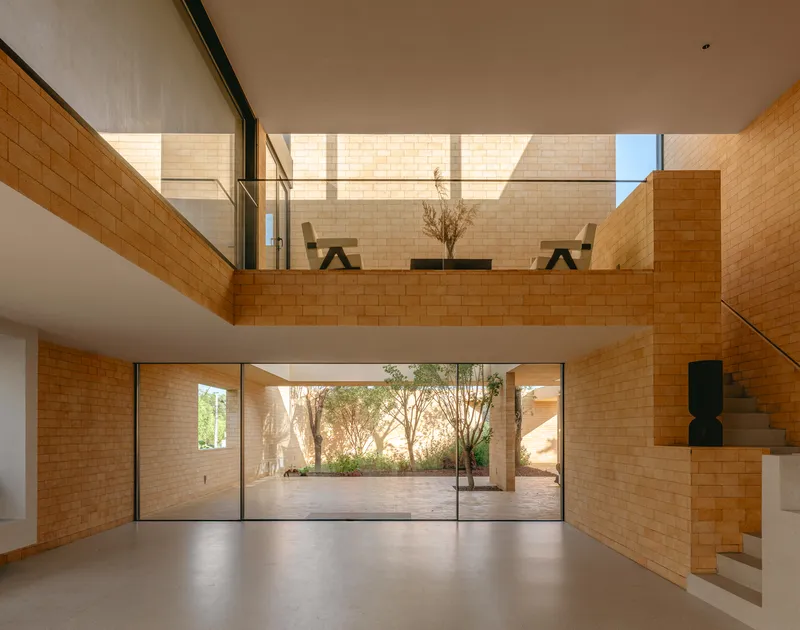
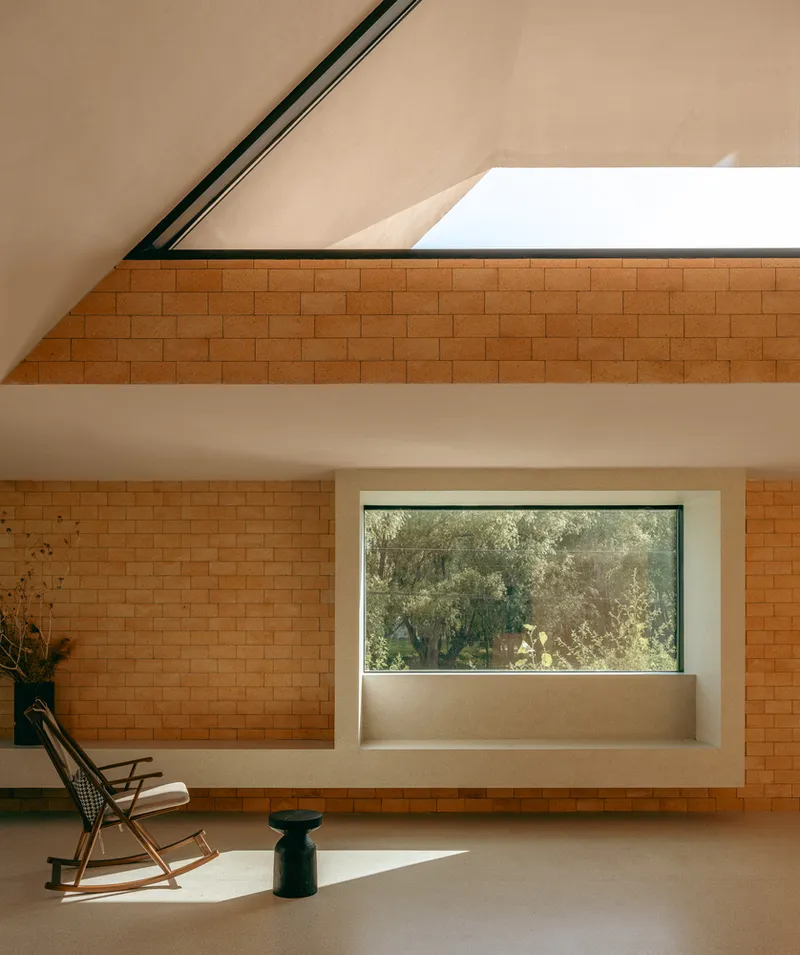
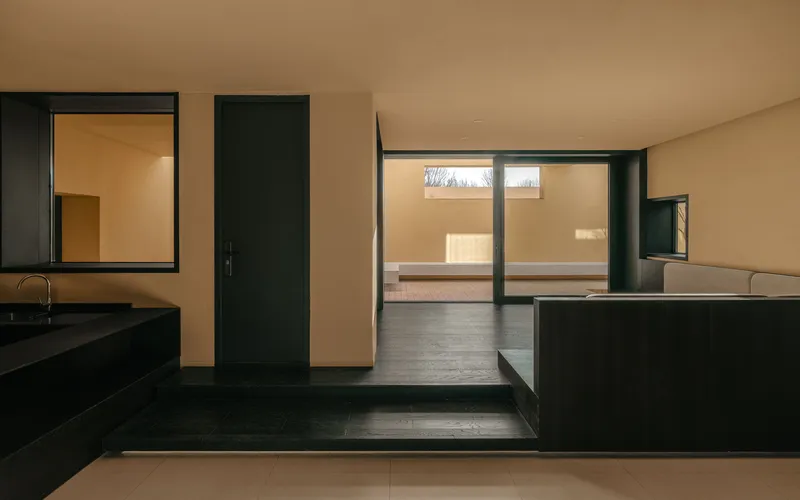
Courtyards, pathways, and transitional spaces weave these zones together. DL Atelier uses consistent exterior and interior finishes and oversized glass openings to blur boundaries, creating a sense of continuity throughout the site.
Guests experience a flowing journey where interior rooms align rhythmically with landscaped courtyards, allowing light, views, and nature to infiltrate every layer of the hotel.
Immersive Views Toward Nature
From the second-floor terrace of the lobby, guests enjoy serene vistas of the willow groves and the expansive wetland park. A square opening in the long boundary wall frames the sunset—a deliberate architectural gesture turning everyday light into a memorable experience.
A Variety of Rooms Crafted for Privacy, Comfort, and Landscape Connection
The hotel features an array of accommodation types—standard rooms, suites, and courtyard rooms—each organized to maintain privacy while preserving strong connections to the outdoors.
Standard Rooms
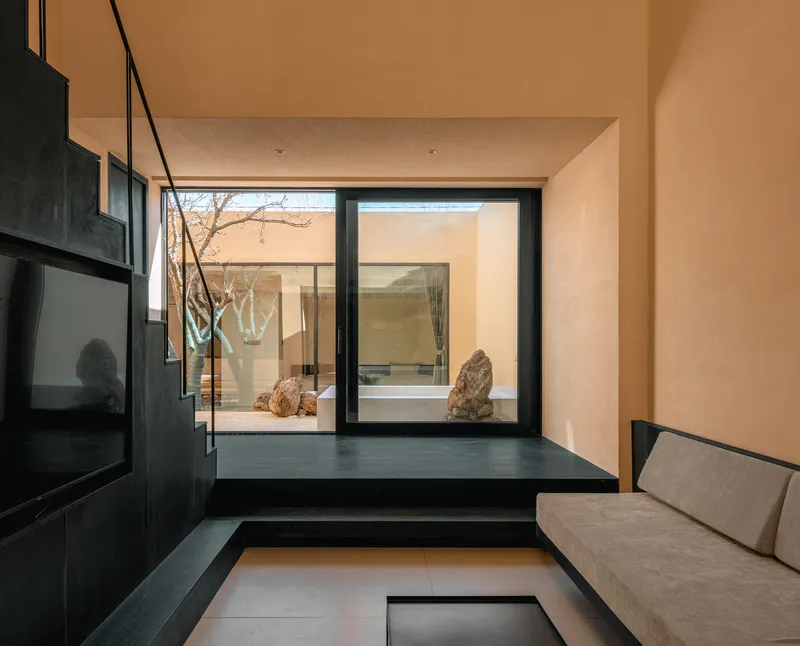
- Feature both a small private courtyard (buffering the bedroom and washroom) and a larger courtyard with a private hot tub.
- Floor-to-ceiling glass brings guests close to blooming begonias at dawn.
- Trees and falling leaves create soft patterns on the water surface.
Loft Suites
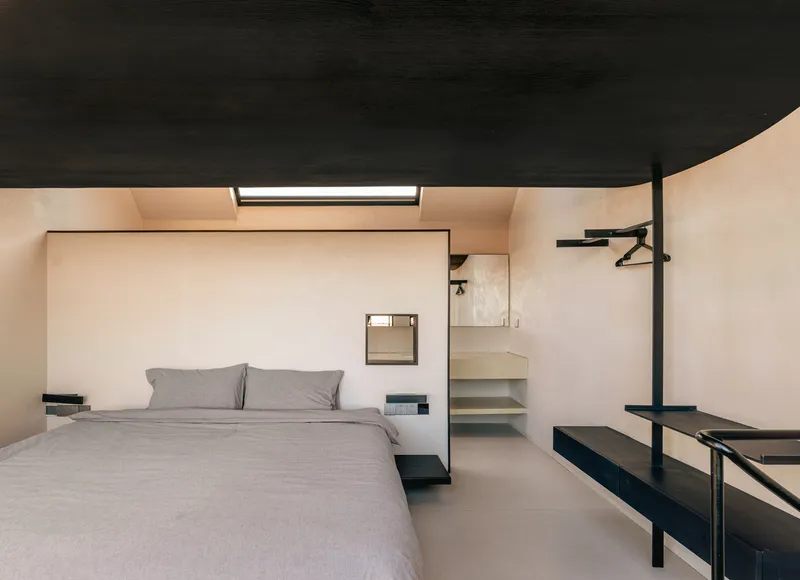
- Designed as three-story lofts connected by sculptural rotating staircases.
- The top-level hot tub sits beside a vertical window, giving guests the sensation of floating above the landscape.
- The middle-floor bedroom sits beneath the curved base of the upper tub, creating a dramatic spatial relationship.
Courtyard Rooms
- Ideal for families or groups.
- Multiple rooms share a single courtyard planted with lush greenery and equipped with a private hot tub.
- Windows face into the courtyard, creating a communal yet sheltered atmosphere.
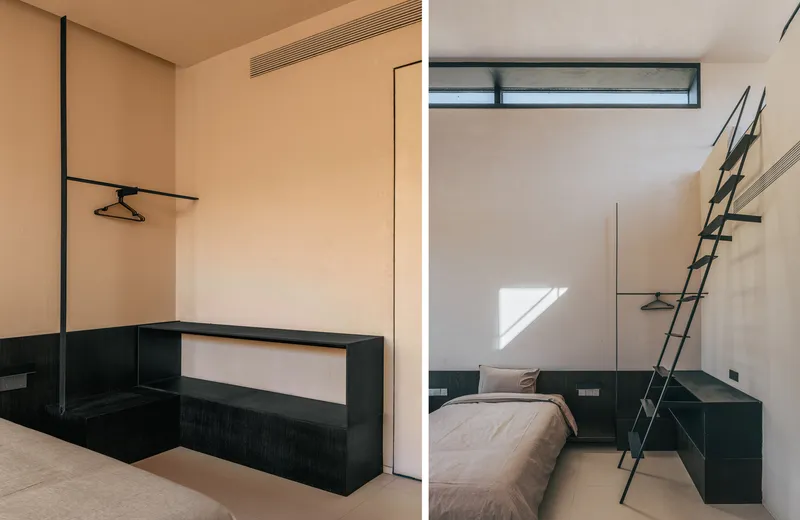
All guest rooms feature custom-designed furniture combining steel and wood, with floating forms that offset the mass of the architectural volumes.
Recreation Zones and Rural Lifestyle Experiences
To enrich the rural hospitality experience, the hotel incorporates a diverse set of public amenities:
- Restaurant
- Swimming pool
- Sunken courtyard
- Campfire and barbecue areas
- Outdoor ceremony and event spaces
- Recreation room
- Camping and leisure lawns
The restaurant is located to the north, separated by the swimming pool and a stepped courtyard. A U-shaped building encloses a shallow reflective pool, where a metal spiral staircase becomes a sculptural focal point mirrored in the water.
Geometric forms, soft yellow tones, and purified architectural volumes distinguish the hotel from traditional rural dwellings while maintaining a sense of belonging to the landscape.
A Rural Escape Crafted for the Age of Social Media
The client envisioned a social-media-worthy destination, and DL Atelier responded by rooting visual appeal in something timeless—light. The 4:30 PM sun acts as the hotel’s built-in photographic filter, transforming every courtyard, wall, and pathway into a perfect backdrop.
All photographs are works of Yumeng Zhu




Popular Articles
Popular articles from the community


Conexión: Biophilic Design Reimagines High-Rise Living in Hong Kong
Conexión reimagines high-rise living in Hong Kong through biophilic design, green facades, shared spaces, daylight, water and nature within.

Co-life: Sustainable Architecture for Age-Friendly Community Living
Co-life reimagines sustainable architecture for seniors through courtyards, rammed earth, shared gardens, and spaces designed for belonging.

Play: Fragments of Their World
Familiar architecture becomes modular playground design, creating safe spaces where displaced children can learn, connect, imagine and play.

The Ocean Hive: Sustainable Architecture for a Self-Sufficient Civilization at Sea
The Ocean Hive imagines sustainable architecture at sea, where modular habitats, algae, wave power and ocean waste sustain a growing colony.

Similar Reads
You might also enjoy these articles


Hodi-Mandai Geram
Project Function: Preservation and revitalization of the Intangible heritage and socio-spatial identity of the Hodi by Housing, Cultural Memory Center, Sacred Grove, landscape, local tourism economy


Olio Towers: A Mid-Rise for Performers That Fuses Housing, Rehearsal, and Stage
Located blocks from Houston's Theater District, this modular tower stacks living units around a central performance atrium.

Oasis: Modular Green Housing Carved into Dhaka's Urban Fabric
A shortlisted Plugin Housing entry reclaims unauthorized settlements in Dhaka with stepped concrete volumes, green roofs, and ventilation-driven design.

Black Hole: A Floating Megastructure for the Post-Physical Era
Emiliano Mazzarotto envisions a spherical, self-scaling arena where e-sports, digital hotels, and holographic stadiums replace traditional public space.


Explore Architecture Competitions
Discover active competitions in this discipline



Challenge to reimagine the Iron Throne


Photograph architecture without architects


Illustrate the lost glory of Angkor Wat - Render Challenge


Design challenge to reuse E-waste
Comments (0)
Please login or sign up to add comments
No comments yet. Be the first to comment!