
ASPJ Builds a Mayan-Inspired Timber Theater That Opens Fully onto a Public Square
In Felipe Carrillo Puerto, Mexico, sustainably harvested local wood and ancestral building knowledge produce a 1,000 m² civic stage.

A thousand square meters of public theater in a small coastal town in Quintana Roo might sound like an extravagance. But when the structure is made almost entirely from wood harvested by the community that will use it, built with techniques inherited from the Maya who have occupied this peninsula for millennia, the project becomes something closer to a civic obligation fulfilled. ASPJ, led by Emiliano García Martín and Helene Carlo, designed the Carrillo Puerto Theater not as an imported cultural institution but as a direct expression of what the region already knows how to do: build with timber, weave with vines, and live in dialogue with a subtropical landscape.
What makes the project genuinely interesting is its refusal to treat local materials as quaint decoration. The timber comes from Ejido NOH-BEC, a community forestry organization in Quintana Roo that practices integral forest management, including reforestation cycles that began after Hurricane Dean leveled vast tracts of forest in 2007. The construction modules were sized to match the actual dimensions and sections of available timber from the ejido. This is not a building that was designed first and then dressed in local wood. The wood came first, and the architecture followed.
A Roof Among the Canopy
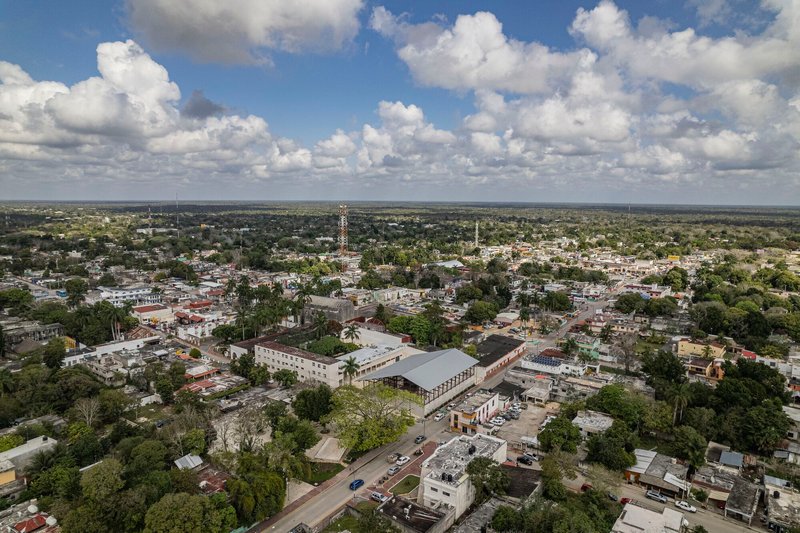
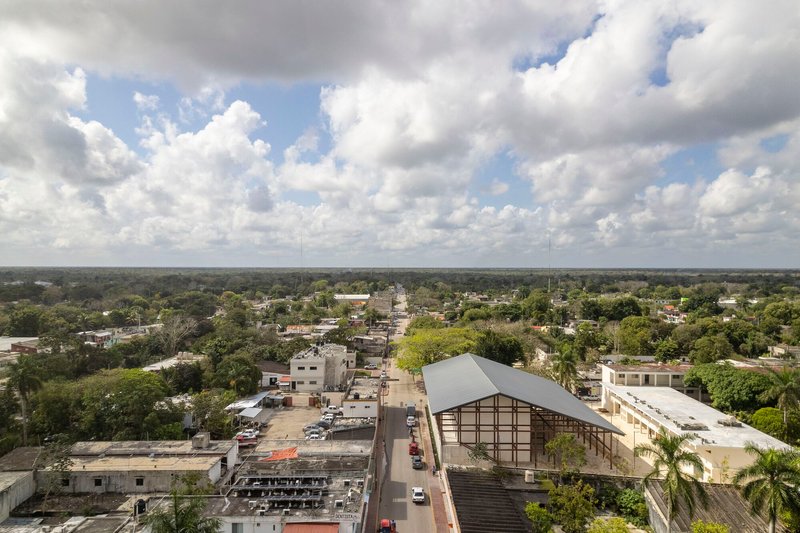
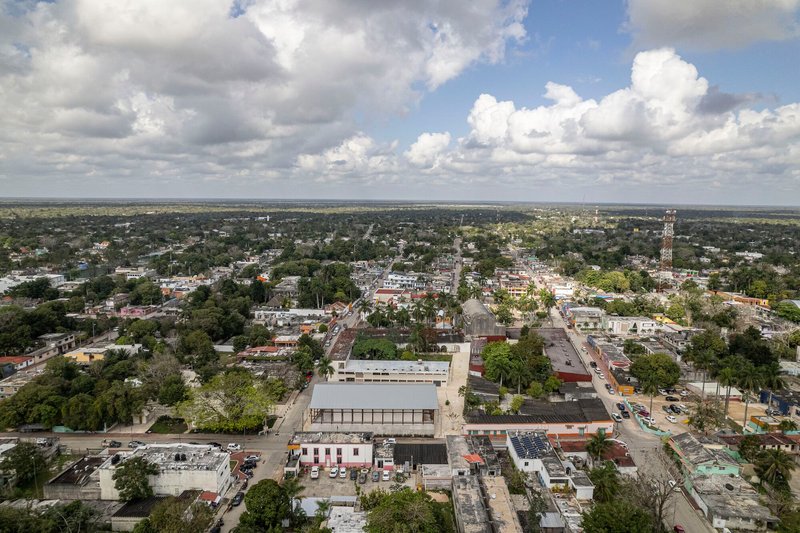
From above, the theater's broad gabled roof reads as just another volume in the canopy of palms and low-rise buildings that defines Felipe Carrillo Puerto. The scale is deliberate. ASPJ kept the profile modest enough to sit among the town's existing roofscape rather than towering over it. The exposed steel framework visible at the gable ends signals that something different is happening inside, but the overall silhouette remains deferential to its neighbors.
This is a building that was designed to be replicable across the region, and the aerial views reveal why that ambition is credible. Nothing about the form requires specialized engineering or imported materials. The gabled warehouse typology is common enough in Quintana Roo; what ASPJ changed is the material DNA and the relationship to the ground plane.
The Plaza as Stage
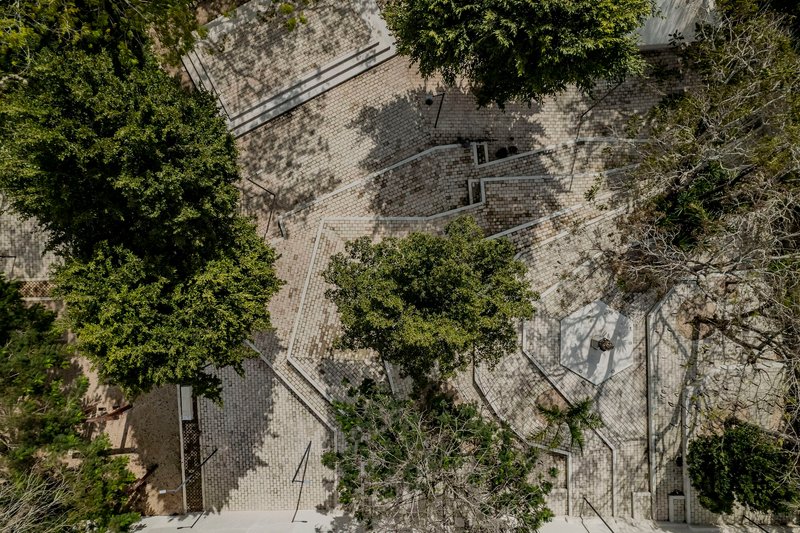
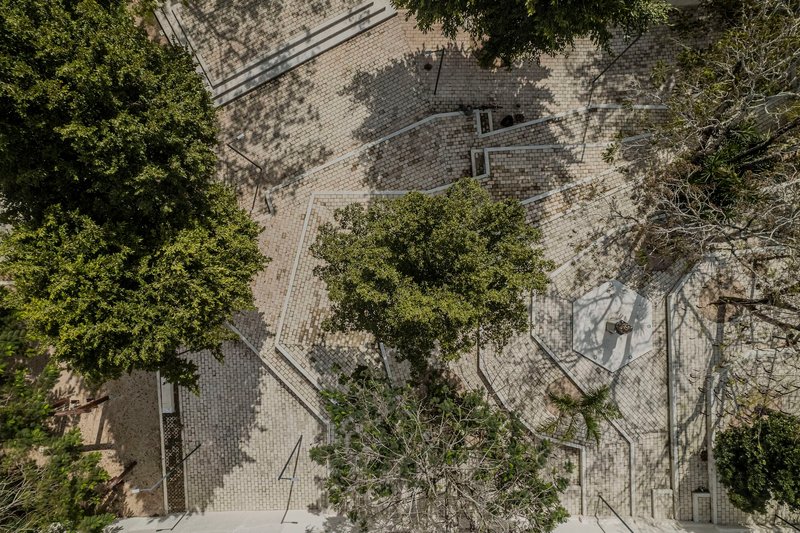
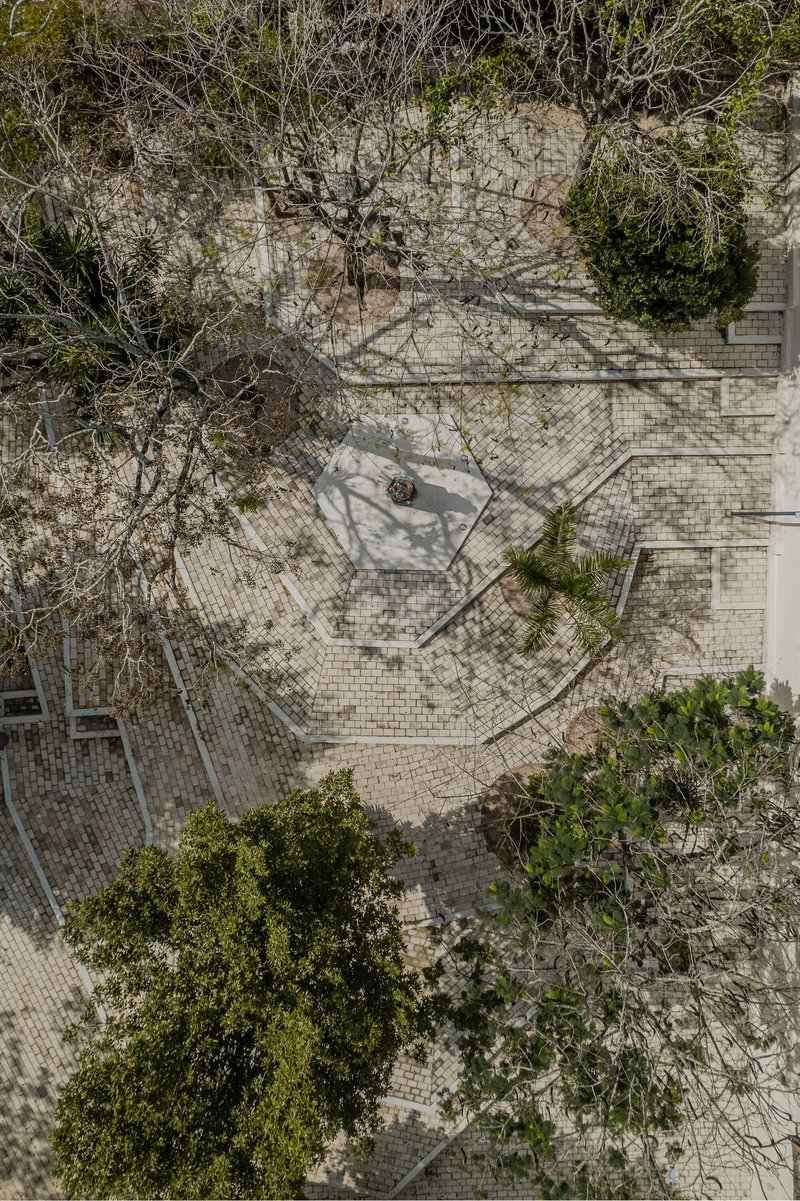
The theater's defining spatial move is its ability to open completely onto a preexisting public square, or to close entirely for controlled events. The plaza itself is no afterthought. Varied paving textures, geometric walkways, and preserved mature trees create a landscape that functions as both an outdoor lobby and an independent civic space. Diagonal pathways channel foot traffic through dappled shade, and the herringbone paving pattern gives the ground an almost textile quality.
The design assumes that the square and the theater are a single organism. When the building opens, the interior hall extends into the plaza; when it closes, the square retains its identity as a gathering place. This porosity is more than a ventilation strategy, though it certainly serves that purpose in the humid Yucatán climate. It is an argument about what a theater is: not a sealed box for passive consumption, but a permeable threshold where the life of the town flows in.
Timber Frame as Structural Language
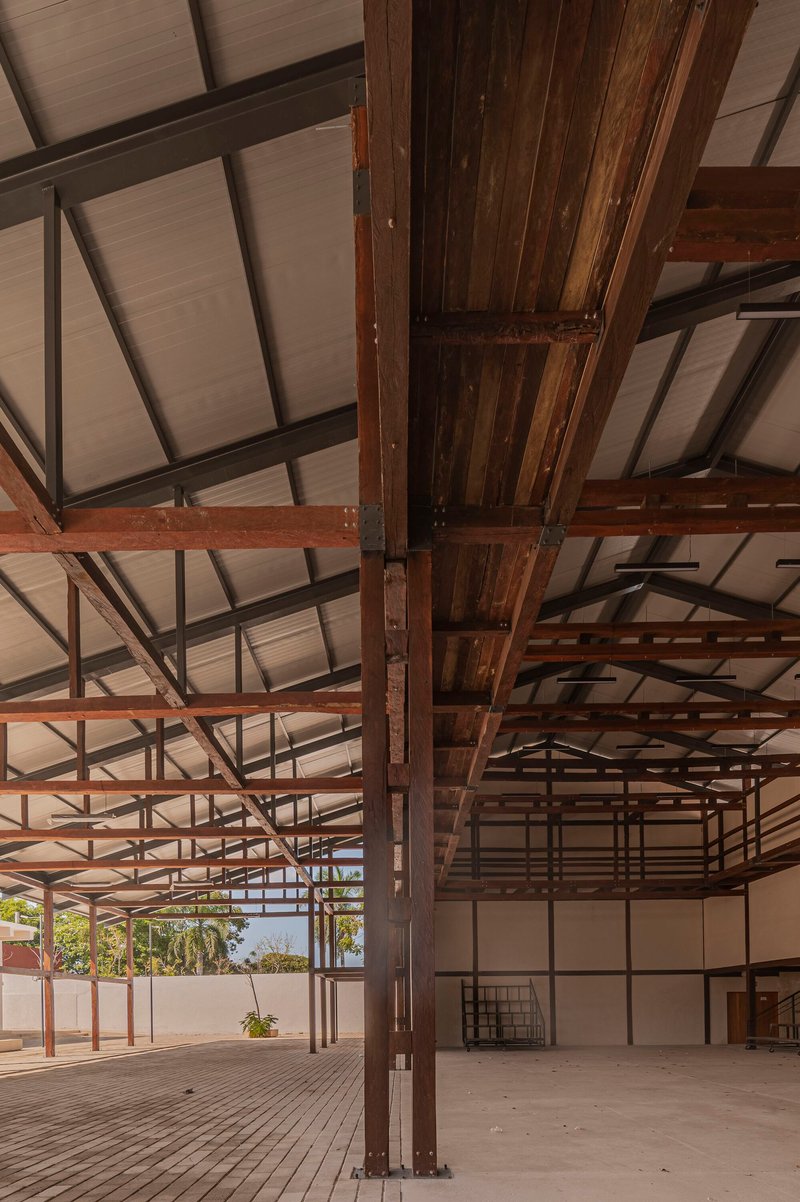
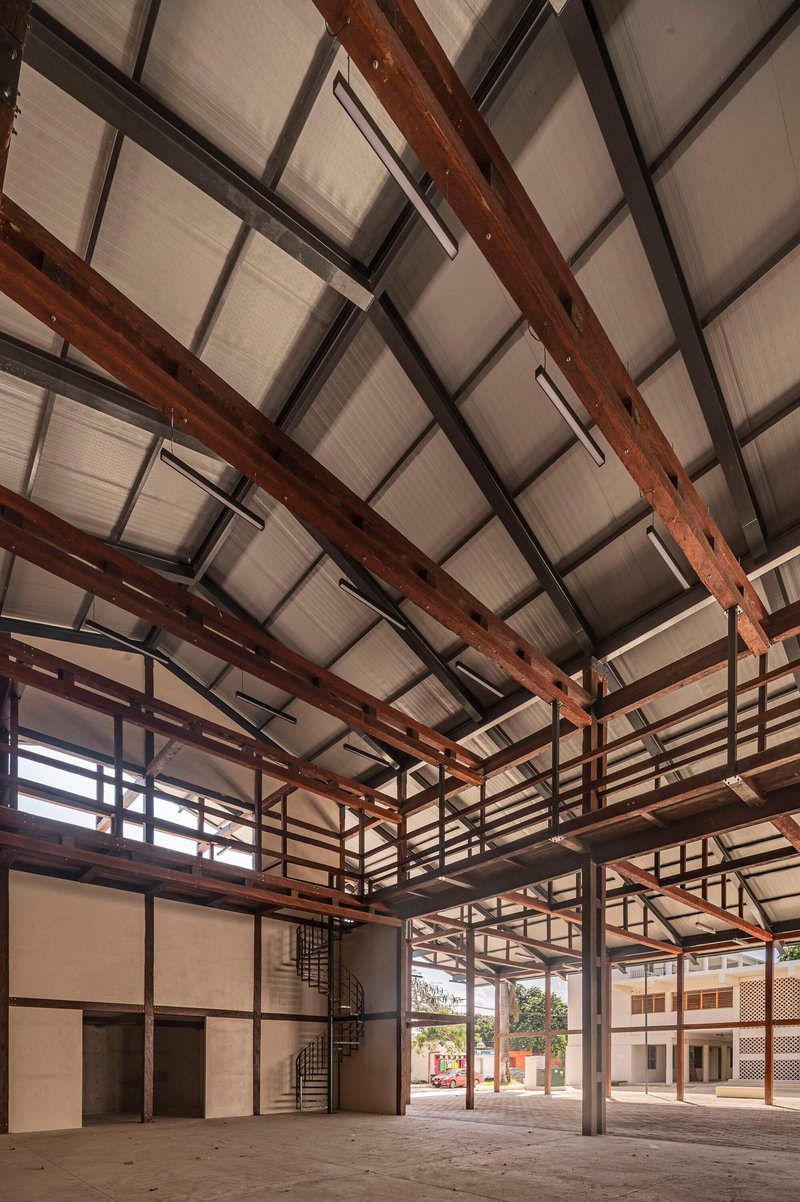
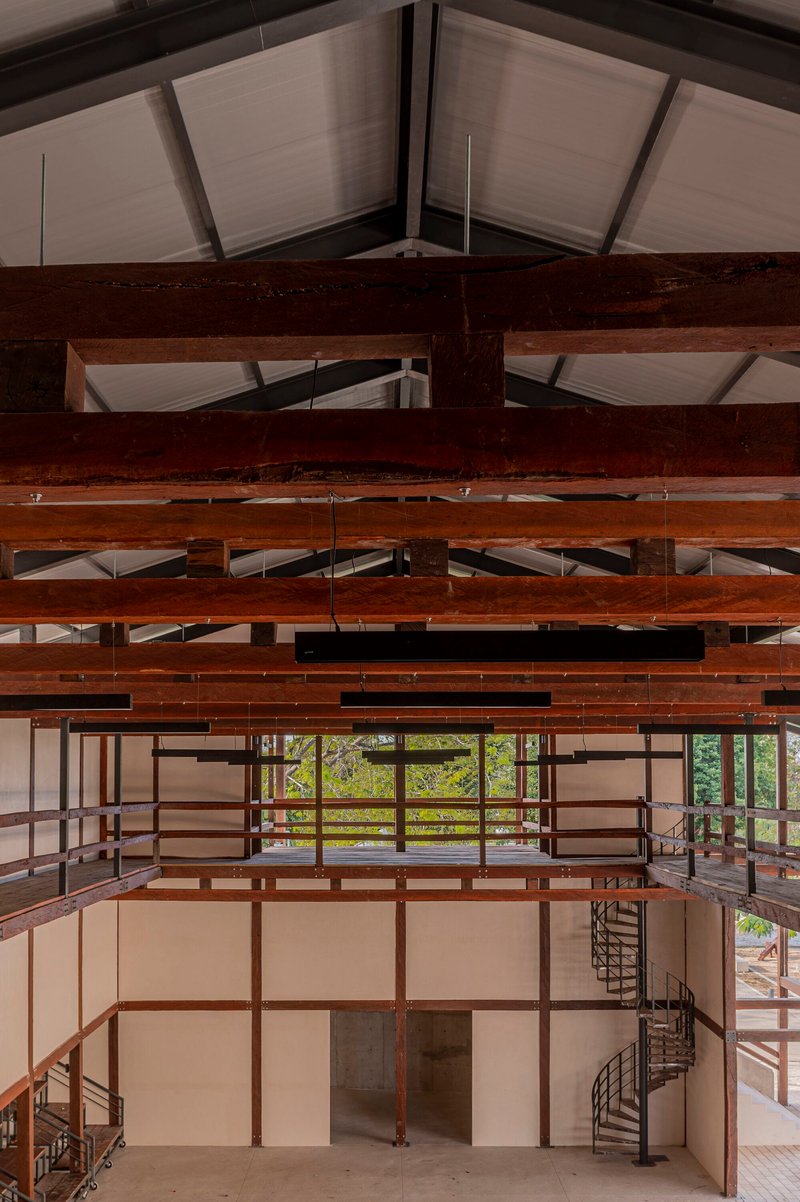
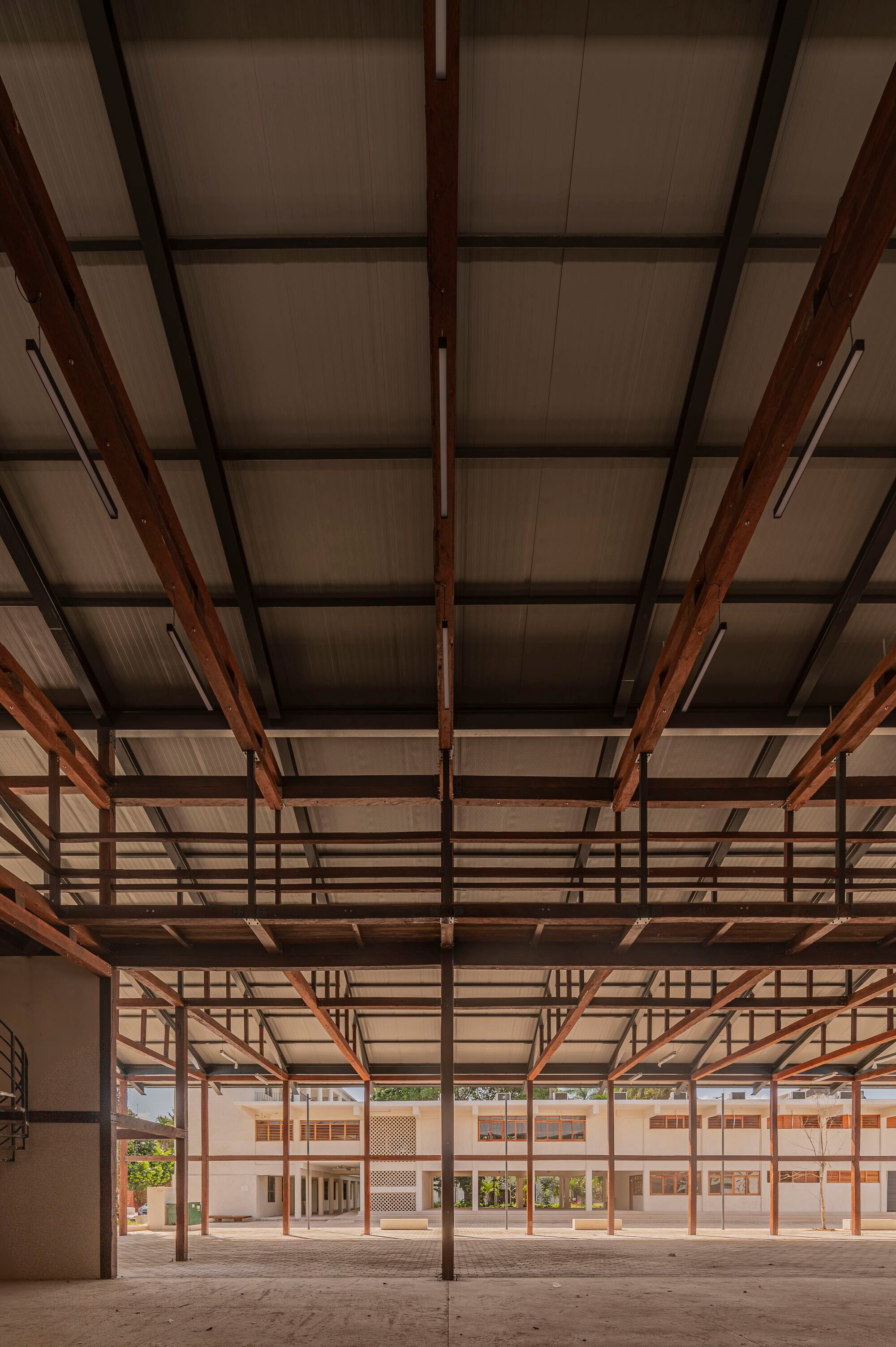
The interior reveals the structural logic most clearly. Timber beams and steel columns work in tandem, with the wood handling the roof grid and the steel providing the primary vertical support. The connections between the two materials are exposed and legible: you can see exactly how a timber beam meets a steel column, how the loads transfer, how the gridded ceiling achieves its span. Translucent panels above allow diffused daylight to fill the hall without direct solar gain, keeping the space bright and thermally manageable.
The height of the roof is critical. Drawing from the proportions of the traditional Mayan hut, where a tall pitched roof creates a thermal chimney effect, ASPJ uses the gabled volume to pull warm air upward and away from the occupied zone. This is passive climate strategy embedded in form rather than bolted on as a system. The result is a large interior hall that breathes without mechanical assistance.
The Interior Hall
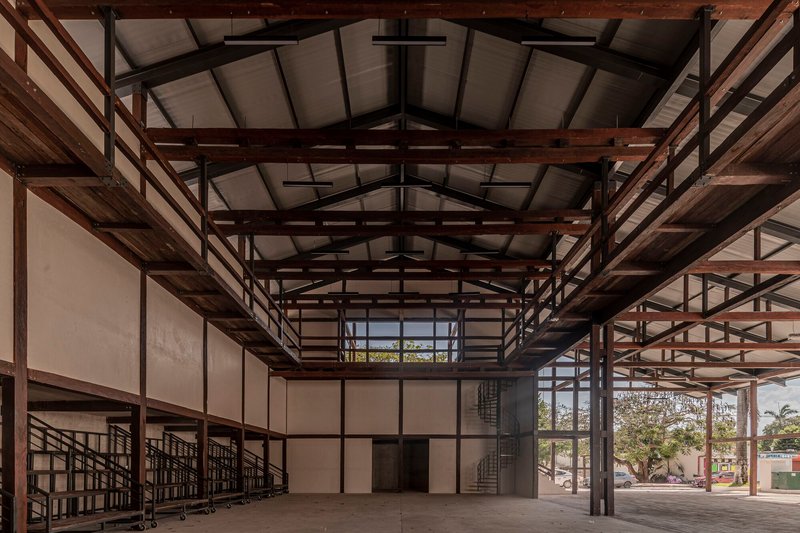
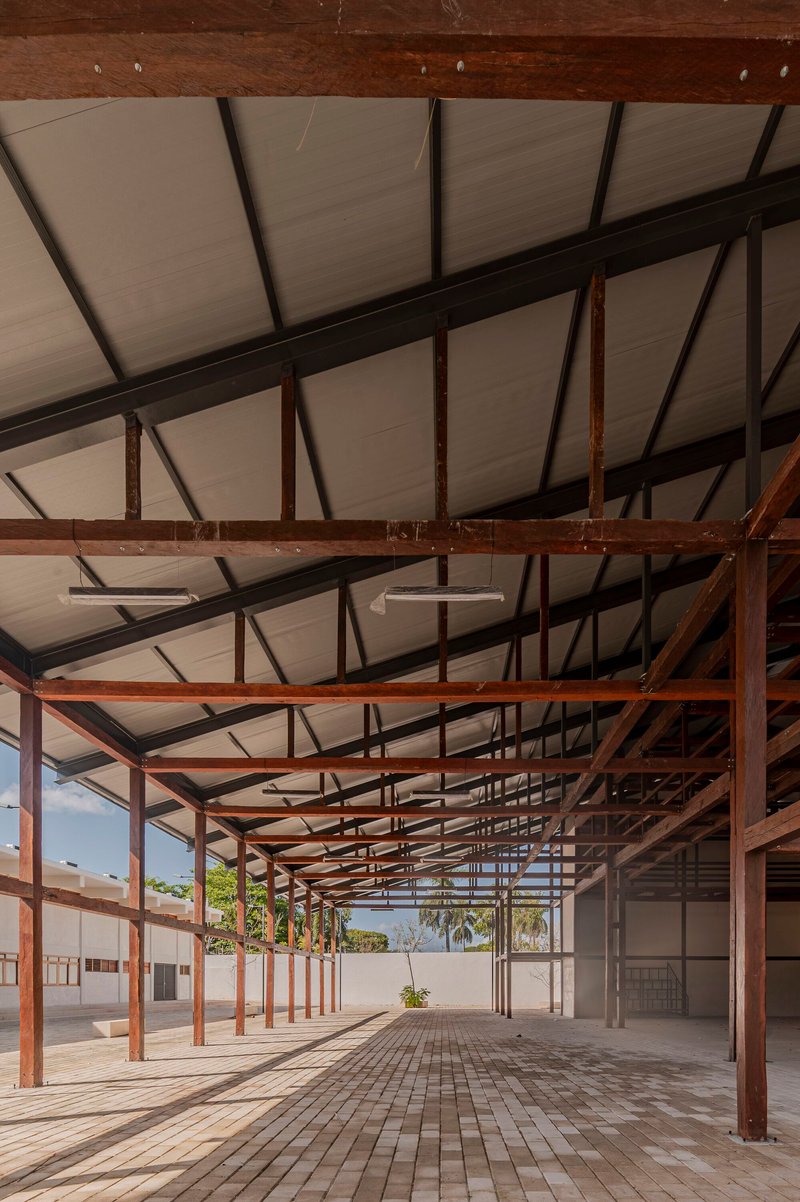
The double-height main hall is defined by its repetition: column after column, beam after beam, creating a rhythm that is both industrial and deeply handmade. Spiral staircases in steel provide access to a mezzanine level, adding a second plane of occupation without subdividing the volume. The concrete floor and brick paving keep the ground plane robust enough for heavy public use, while the timber overhead lends warmth and acoustic softness.
Glazed walls at the ends of the hall frame views back toward the courtyard and the surrounding vegetation. The building operates as a lens: it gathers the community inward for performances and events, then releases attention outward toward the landscape that produced its materials. The layered timber frame visible through these openings gives the facade a screen-like depth that changes character as the light shifts.
Colonnades and Covered Passages
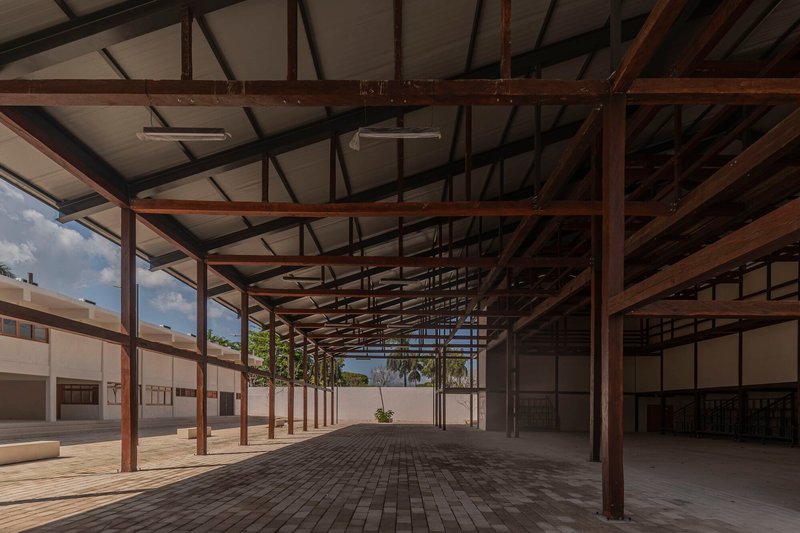
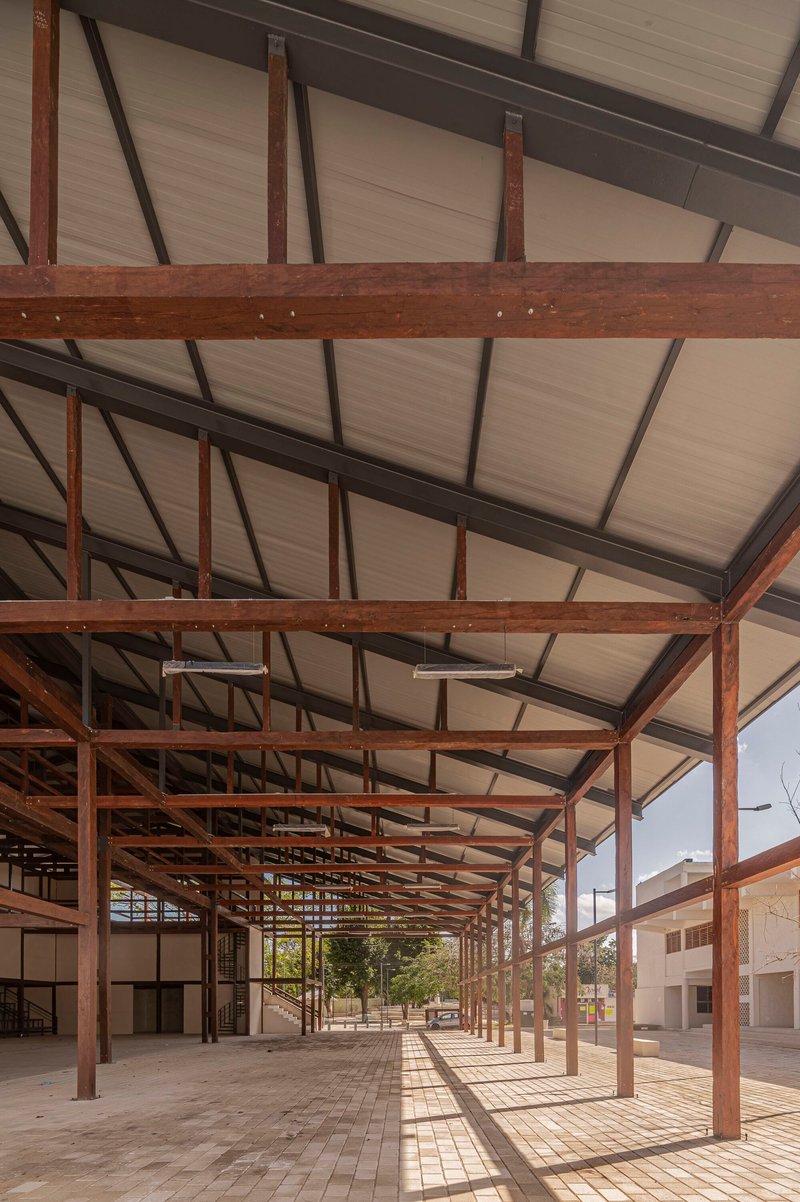
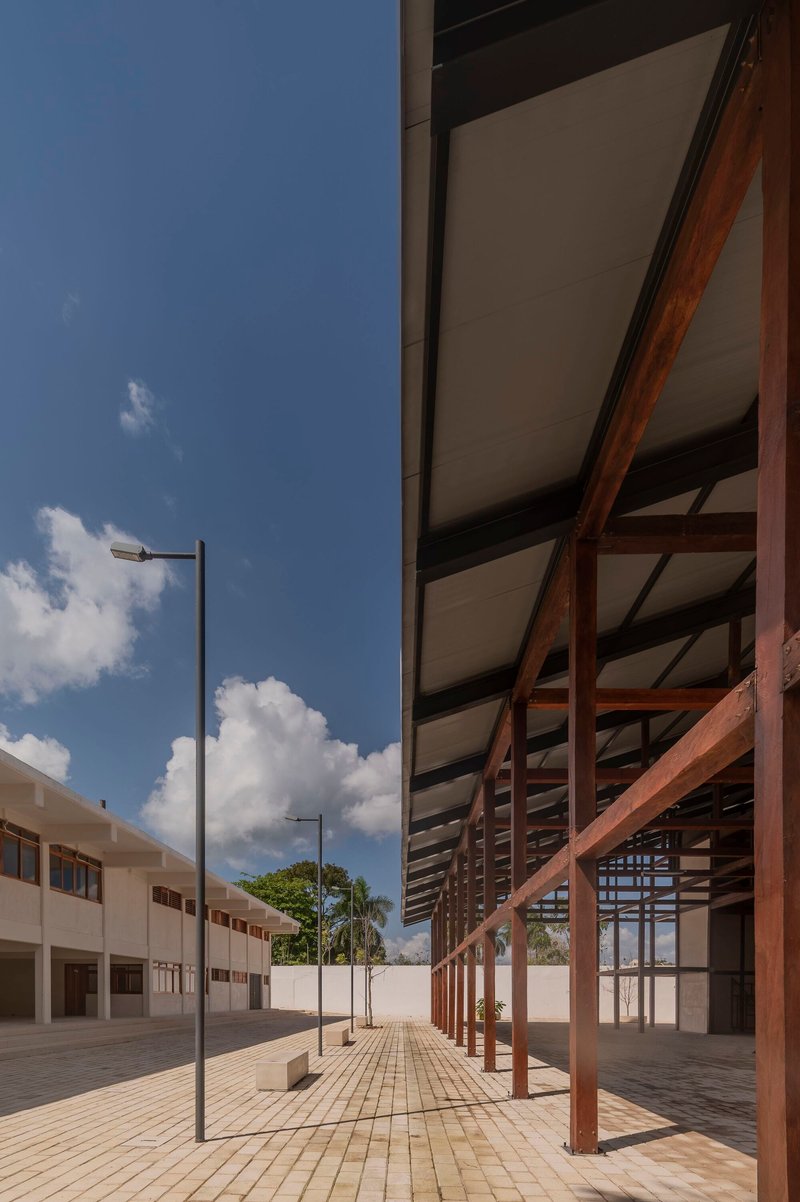
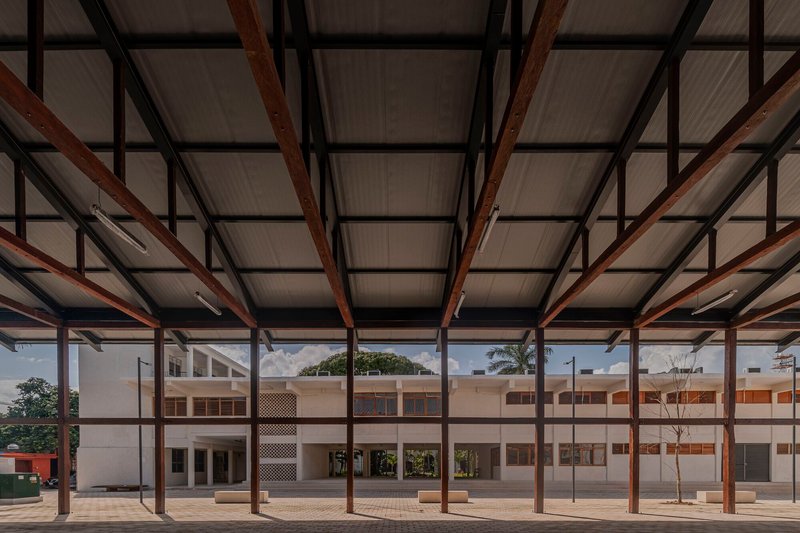
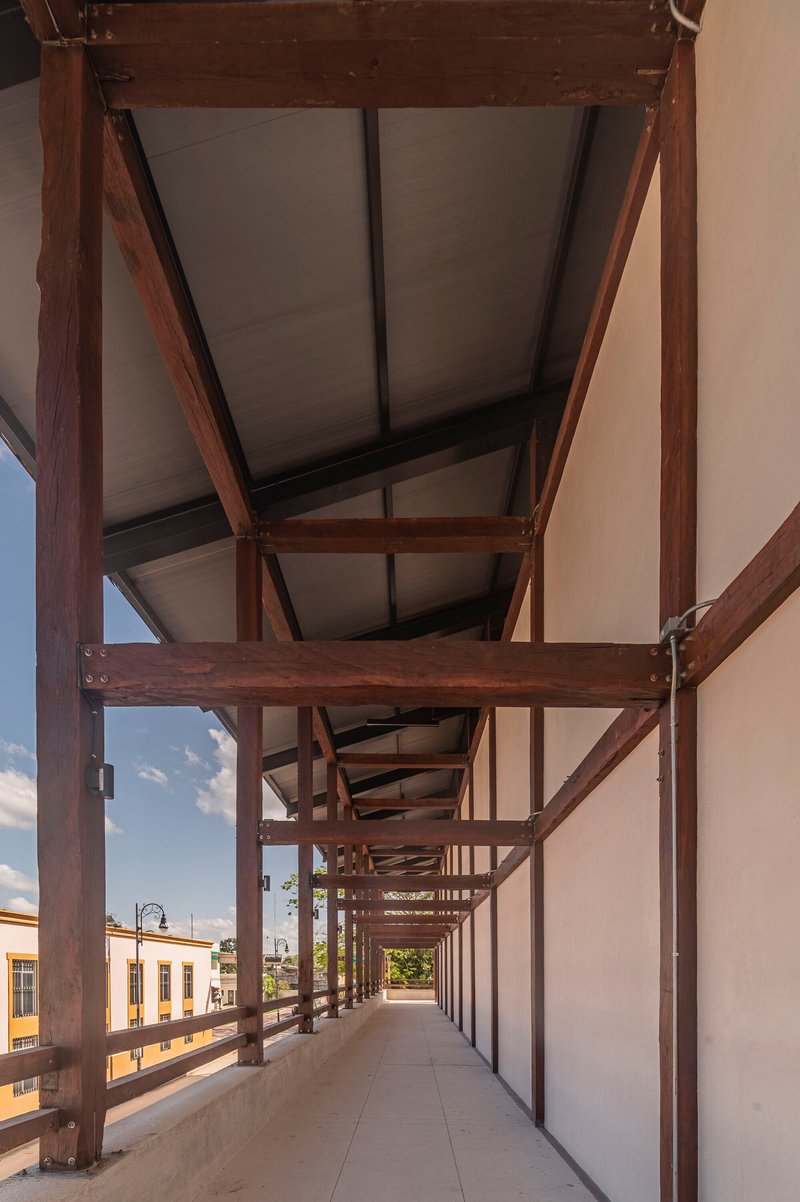
Beyond the main hall, a network of covered colonnades and walkways extends the building's presence across the site. Timber post-and-beam structures with diagonal bracing create sheltered passages along the courtyard edges. These are not corridors in the conventional sense; they are inhabitable thresholds, places where people naturally gather, lean against a column, or sit in the shade.
The detailing here is where the Mayan building tradition shows most clearly. The use of bejuco, or woven vines, in certain elements recalls the artisan traditions of local women's workshops that utilize wood pieces for crafts and construction. The weave is structural and decorative at once, a technique that resists the modern urge to separate the two. Dappled shadows from the overhead beams pattern the brick paving below, reinforcing the sense that this is architecture designed for the specific quality of Yucatecan light.
Mezzanine and Upper Walkways
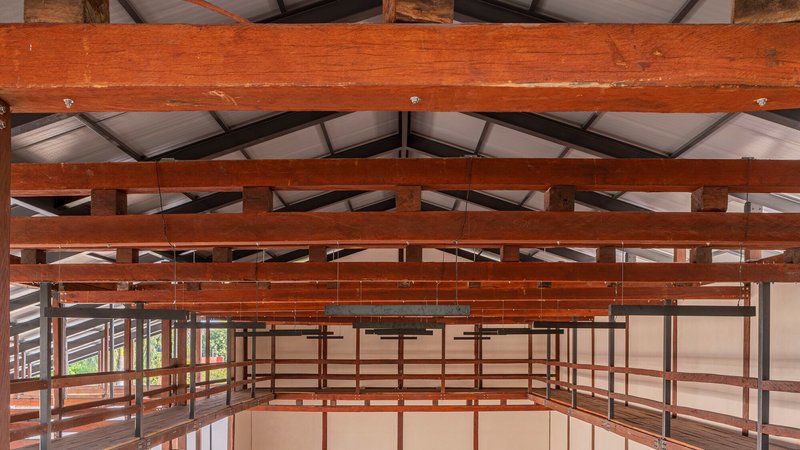
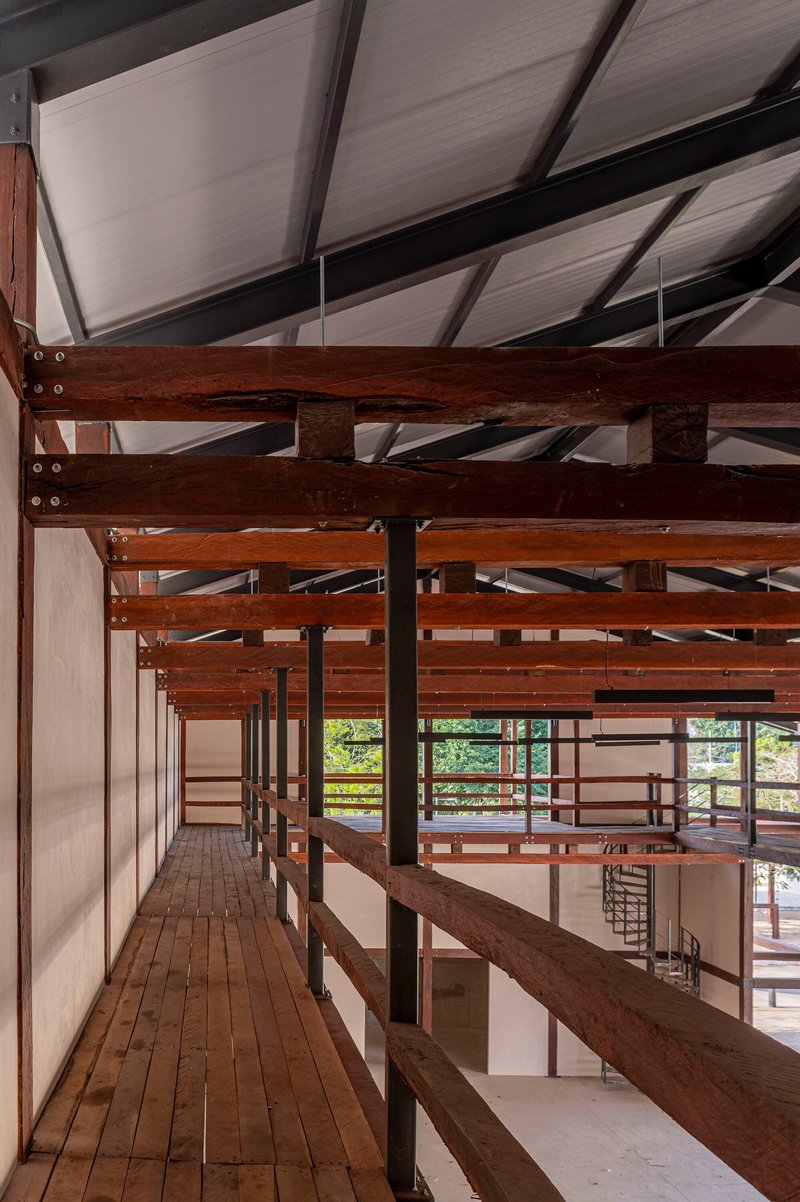
The mezzanine level offers a second register of spatial experience. Timber decking and horizontal railings create elevated walkways that frame views outward toward the town and its vegetation. The railings are deliberately transparent: horizontal members rather than solid panels, maintaining visual continuity between inside and out. From up here, the full extent of the timber roof grid becomes apparent, and you can appreciate the scale of the structural achievement.
The metal railing system paired with the timber beams overhead produces a layered composition that reads differently from every angle. It is one of the building's most photogenic conditions, but it is also functionally essential. The mezzanine allows the theater to accommodate different audience configurations and event types without permanent subdivision of the main hall below.
Plans and Drawings
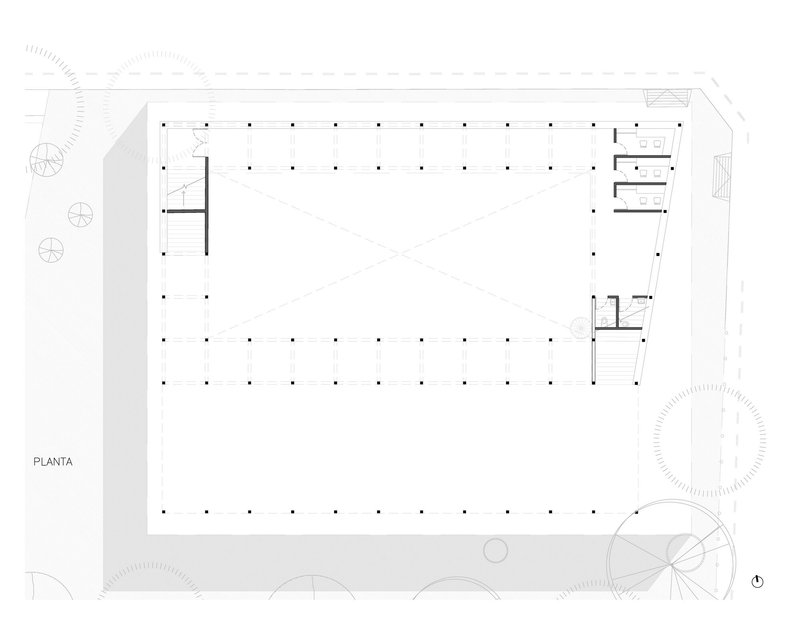
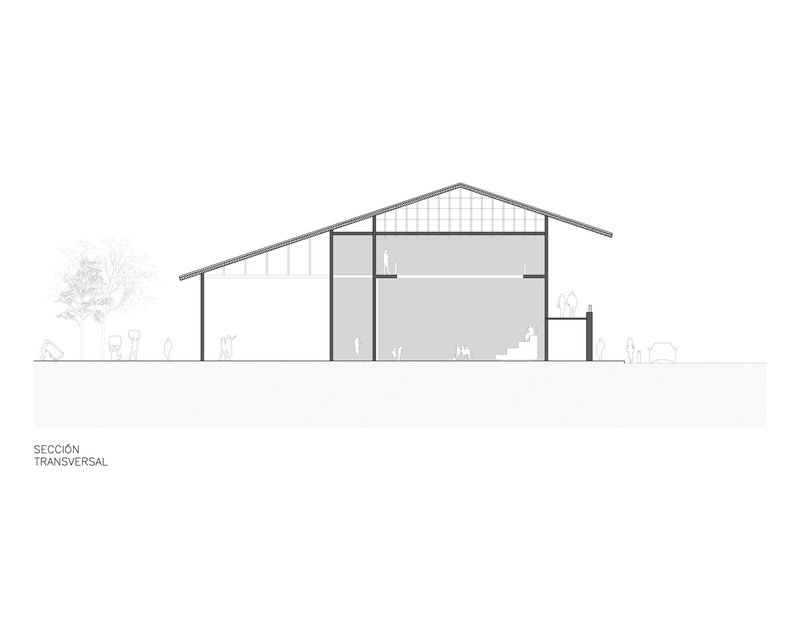
The floor plan confirms the building's structural clarity: a rectangular volume organized around a regular column grid, with service cores tucked into the corners to keep the main hall as open and flexible as possible. The cross-section through the gabled structure shows the mezzanine inserted within the double-height volume, with human figures for scale illustrating the generous proportions of both levels. The section also makes visible the roof's pitch and height, which are calibrated not just for rain shedding but for the passive ventilation strategy that keeps the hall comfortable year-round.
Why This Project Matters
The Carrillo Puerto Theater matters because it demonstrates that community-sourced materials and ancestral construction knowledge are not nostalgic gestures but viable foundations for contemporary civic architecture. The timber from Ejido NOH-BEC carries a story of ecological recovery and economic self-determination. After Hurricane Dean destroyed forests in 2007, the timber industry became a lifeline for local communities, and the ejido's certified forest management practices, including reforestation, pruning, and selective cutting, ensure that the supply chain is circular rather than extractive. Using this wood to build a public theater closes a loop between landscape, labor, and culture.
ASPJ's ambition that the building serve as an easily replicable model for the region is perhaps its boldest claim. If the dimensions of available timber can generate the structural modules, and if the traditional techniques of transforming wood and weaving vines can be taught and repeated, then the Carrillo Puerto Theater is not just a building. It is a template. In a country where public cultural infrastructure too often arrives as a prefabricated import, this project argues for architecture that grows, literally, from the ground it occupies.
Carrillo Puerto Theater by ASPJ (lead architects Emiliano García Martín and Helene Carlo), Felipe Carrillo Puerto, Mexico. 1,000 m², completed 2021. Photography by Andrés Cedillo.
About the Studio
Share Your Own Work on uni.xyz
If projects like this are the kind of work you want to make, uni.xyz is a place to publish your own, find collaborators, and enter design competitions.




Popular Articles
Popular articles from the community

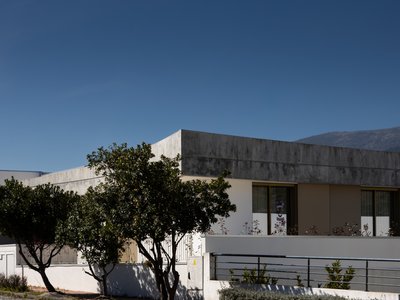
PLATAFORMArq Folds a Concrete Roof Over the Portuguese Mountains in House #474
A 220-square-meter residence in Teixoso, Portugal, wraps board-formed concrete into an angular canopy that frames the Serra da Estrela foothills.
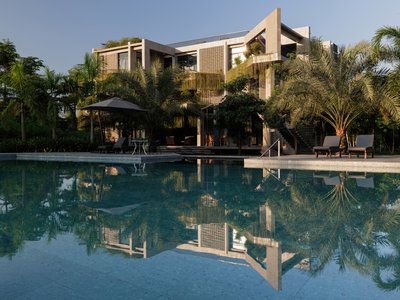
Reincarnation Weaves a Three-Story Retreat into the Green Landscape of Rural Bangladesh
Ara Manor in Narsingdi dissolves the line between domestic architecture and its lush surroundings through screens, courtyards, and planted rooftops.
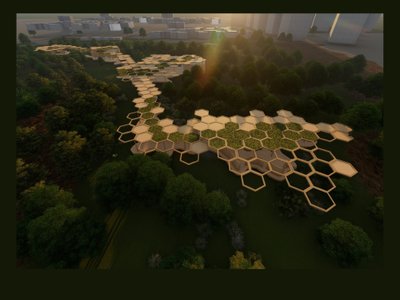
Eco Chapel: A Green Architecture Pavilion Designed in Symbiosis with the Forest
Eco Chapel uses green architecture to weave prayer, learning and reuse into a forest pavilion shaped by modular hexagonal canopies for life.
Kerry Kounnapis Packs 800 Daily Coffees into a 43-Square-Metre Melbourne Laneway Bar
Palace Coffee channels Pellegrini's and European standing bars through oxide-red steel and spotted gum timber in a Ridgway Place sliver.


Similar Reads
You might also enjoy these articles

Freebird Residence by Alexis Dornier: A Tropical Modernist Sanctuary in Bali
Floating living pavilion above pool anchors H-shaped tropical villa, blending Japanese minimalism, sustainable strategies, lush landscape, and sculptural interiors.
127af Flips a Tiny Bagnolet Rowhouse Upside Down with a Handcrafted Roof Extension
A 55-square-meter terraced house on the edge of Paris gains a luminous upper living floor through lightweight timber and steel.
1.61 Design Workshop Wraps a 600-Square-Meter Café in Vietnam in Sculptural Burgundy Drama
Reden Café & Bistro pairs a helical staircase, mosaic floors, and deep red interiors to rethink Vietnamese hospitality space.

The Unbound Brain: A School Shaped by Cognitive Architecture
Cylindrical learning pods radiate like neurons from a central cortex, turning the floor plan into a spatial model of human thought.
Explore Landscape Design Competitions
Discover active competitions in this discipline




The Global Benchmark for Architecture Dissertation Awards


The Global Benchmark for Graduation Excellence


Bring back Drive In's
Comments (0)
Please login or sign up to add comments
No comments yet. Be the first to comment!