
Atelier dmb Gives Ödön Lechner's Art Nouveau Villa a Tactile New Life for the Visually Impaired
A 1905 Budapest landmark near Városliget becomes the headquarters of the Hungarian Association of the Blind, with a 300-seat extension.

Not many heritage renovation briefs carry this level of ethical weight. The Sipeki Balás Villa, designed by Ödön Lechner between 1905 and 1907 on Hermina út at the edge of Budapest's Városliget, has served the Hungarian Association of the Blind and Partially Sighted for nearly a century. After wartime damage, partial demolition, and an uninspired 1970s wing, the building needed something beyond cosmetic restoration. Atelier dmb, led by Balázs Falvai, Márton Nagy, and Dávid Török, demolished that postwar addition and replaced it with an extension that does two things at once: it respects the Art Nouveau fabric of the original villa, and it designs every surface for users who navigate the world primarily through touch.
What makes this project genuinely interesting is the way it redefines "dialogue with heritage." The phrase is overused in architecture, but here it carries specific meaning. The extension's colored concrete base, ribbed wood cladding, and wavy concrete ceiling are not abstract gestures. They derive from decorative motifs in the Lechner villa itself, translated into a contemporary material vocabulary that can be read by fingertips as well as eyes. Tactile orientation railings, barrier-free ramps, and furniture with pronounced material contrasts give the building an accessibility logic that goes far deeper than code compliance. The project earned an ICOMOS Award in 2025 and a nomination for the EUmies Awards 2026, recognition that confirms what the building already communicates: preservation and inclusion are not separate agendas.
Heritage Meets the Street
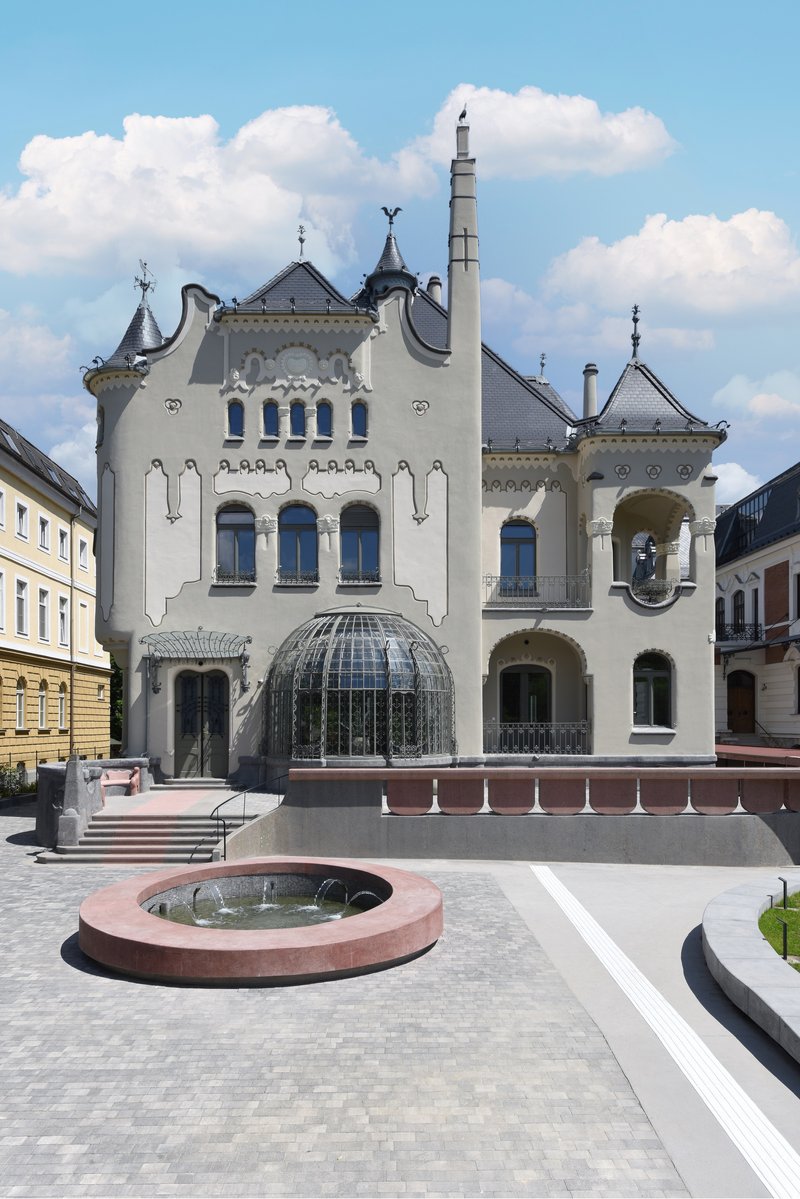
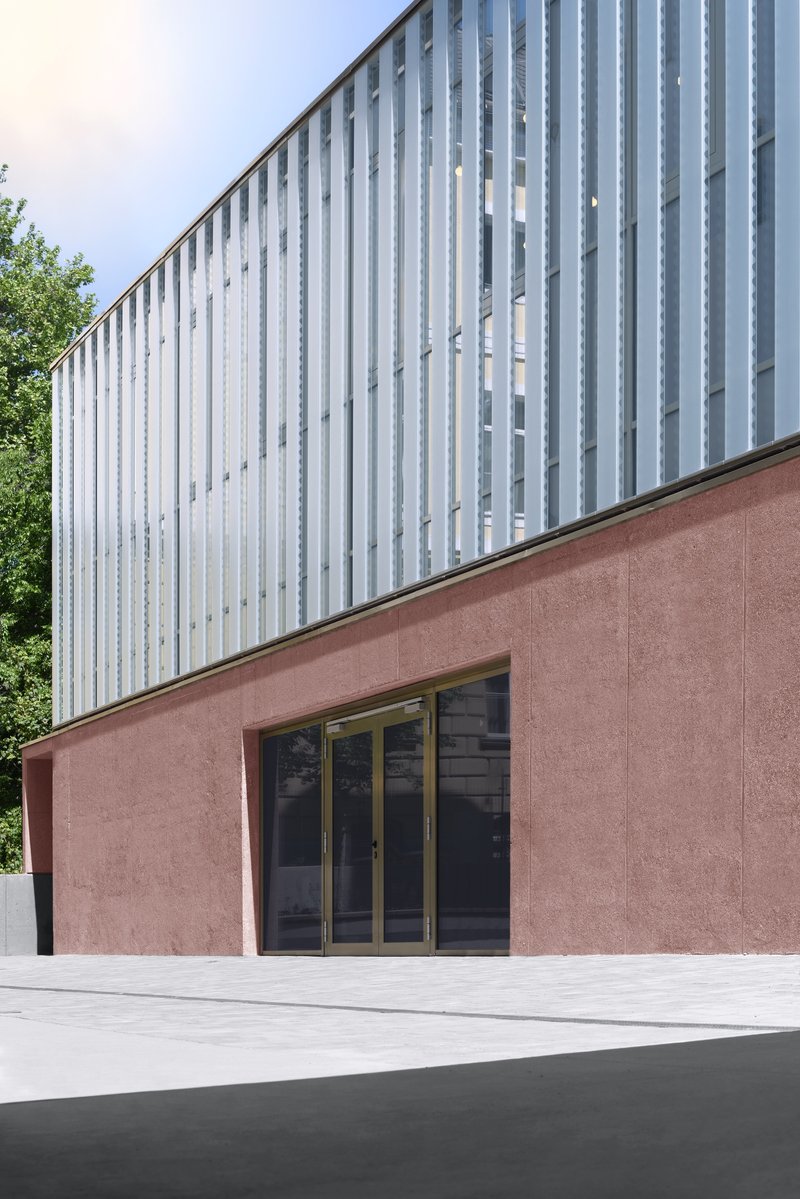
From the street, the villa's turreted silhouette and white stucco facade remain dominant. The domed glass conservatory, an original steel-structured element, anchors the public face of the building. Next to it, the extension reads as a deliberate counterpoint: a low, horizontal volume with a pink stucco base and vertical white metal cladding on its upper level. The material palette is keyed to the villa's own plaster tones, ensuring that the new wing defers in height while still asserting its own identity.
The decision to demolish the 1973 addition was critical. That earlier wing had no meaningful relationship to the Lechner original. Atelier dmb's replacement connects to the villa through what they describe as a subtle umbilical cord, a linking passage that maintains spatial separation between old and new. The result is two buildings that share a site without competing for attention.
Pink Concrete and Folk Memory
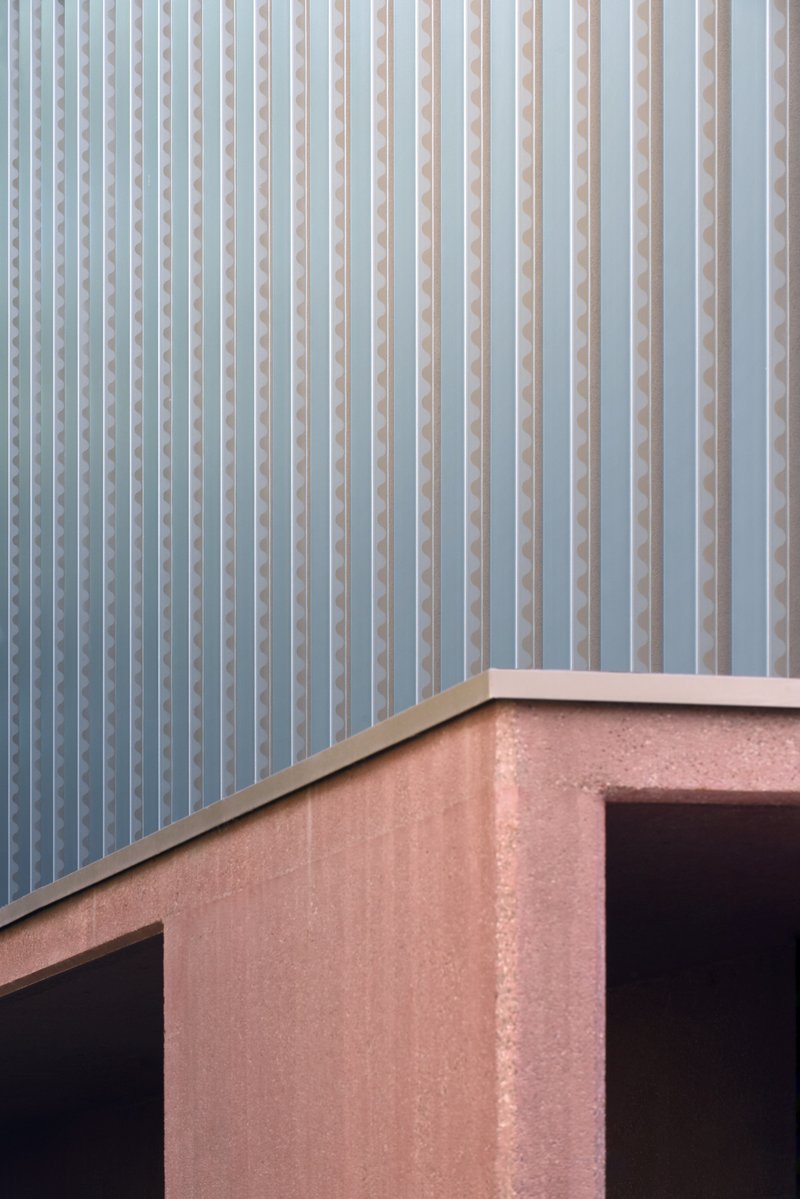
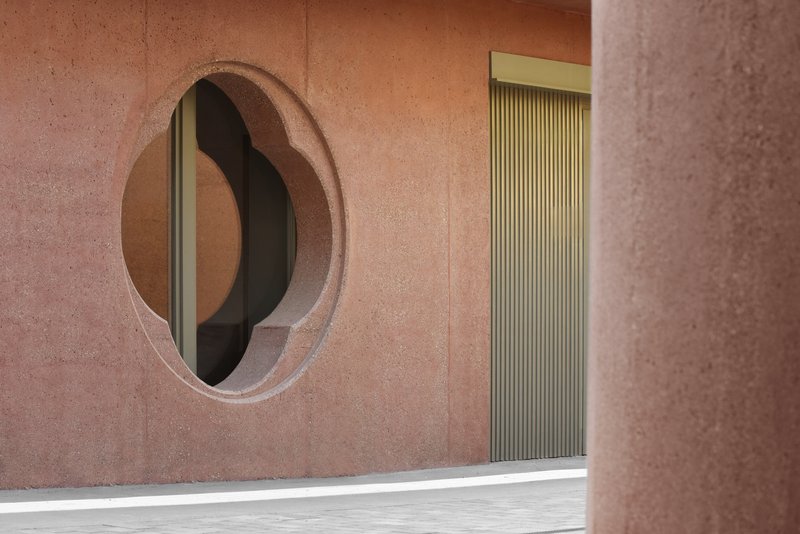
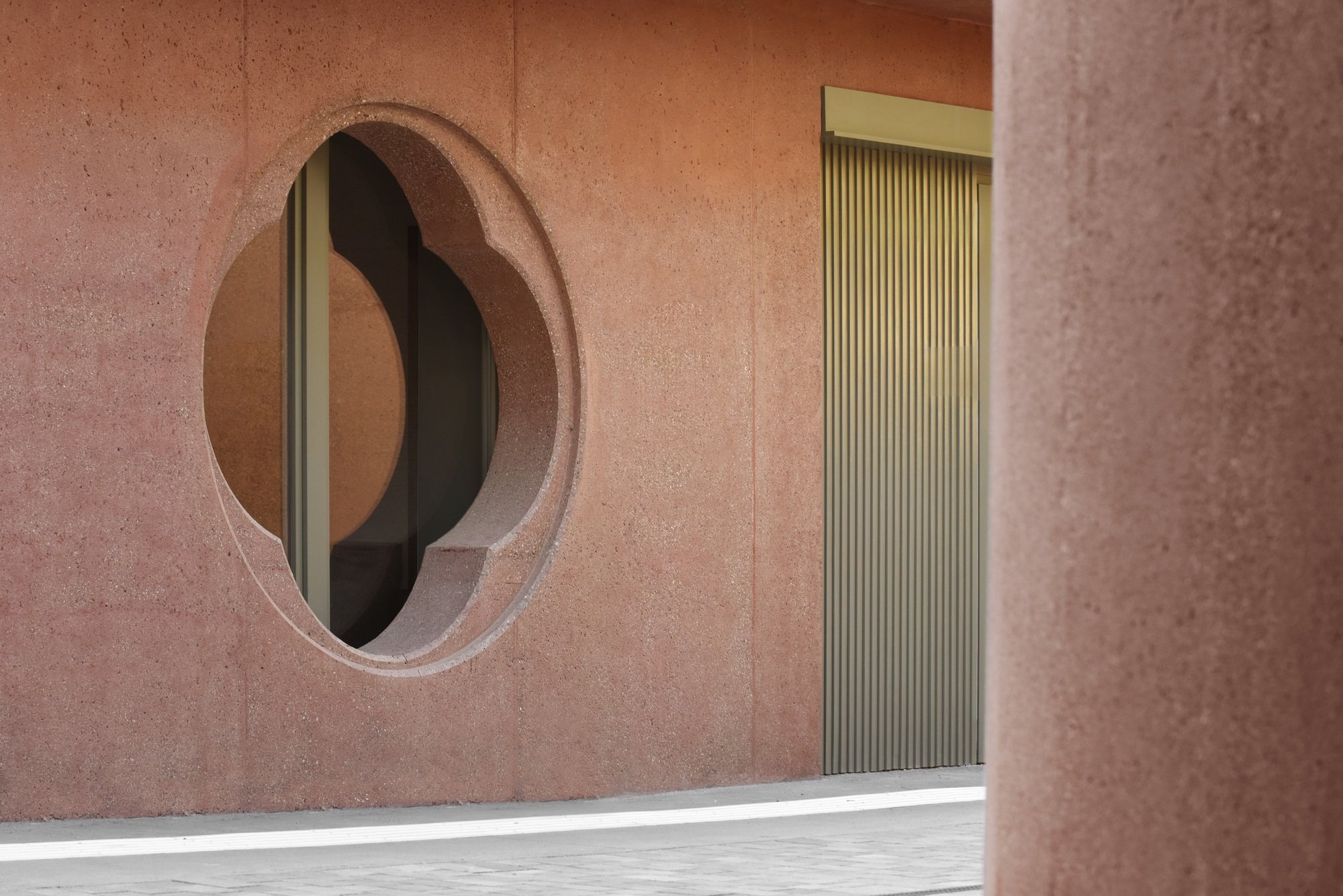
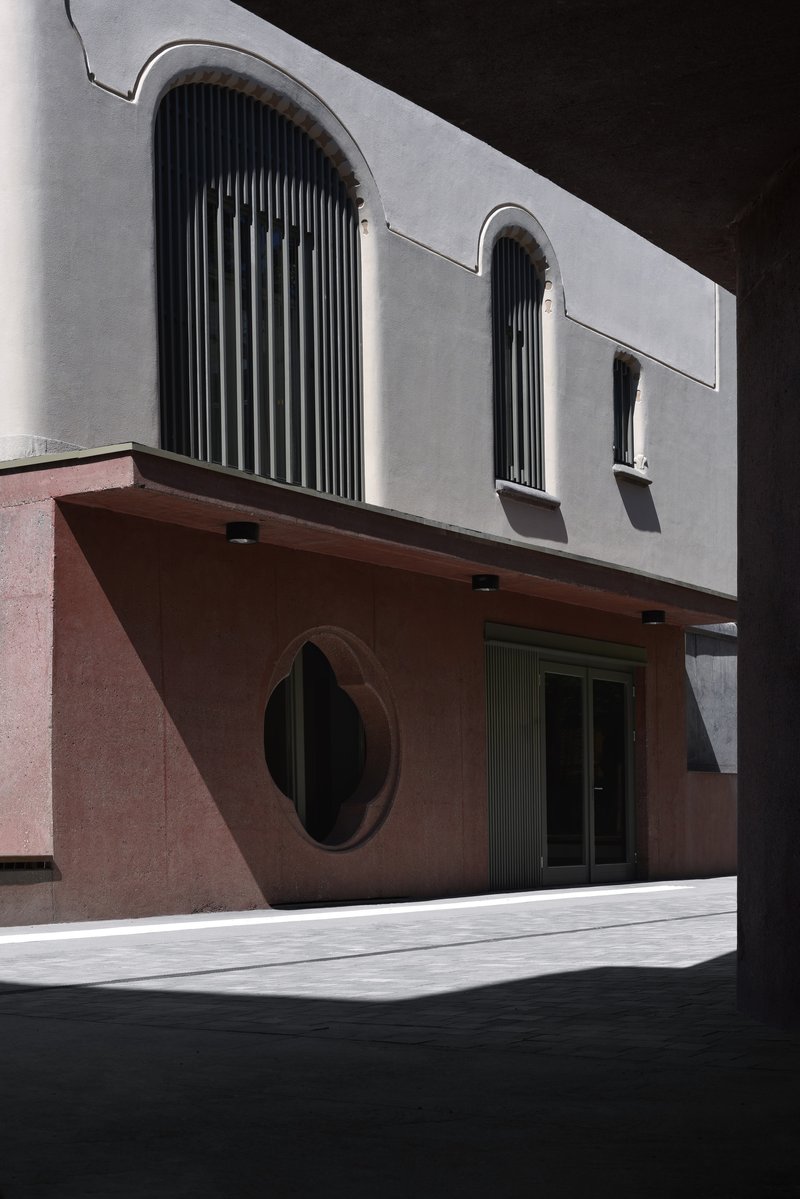
The extension's facade rewards a closer look. The pink-rendered base, complete with an organic oval window, takes its cue from Lechner's Hungarian folk art references without quoting them literally. Fluted green door surrounds nod to the villa's ornamental language while remaining clearly contemporary. The vertical white metal screen above sits in studied tension with the stucco below, a layering strategy that enriches rather than simplifies the building's surface.
Roughly 2,700 square meters of historic plaster were renovated and about 700 square meters of roof re-covered, a scope of restoration work that required craftsmanship on par with the original construction. The team's approach was to replace missing villa elements with playful contemporary insertions that make the building's multiple historical layers legible rather than erasing them.
Corridors Designed for Touch
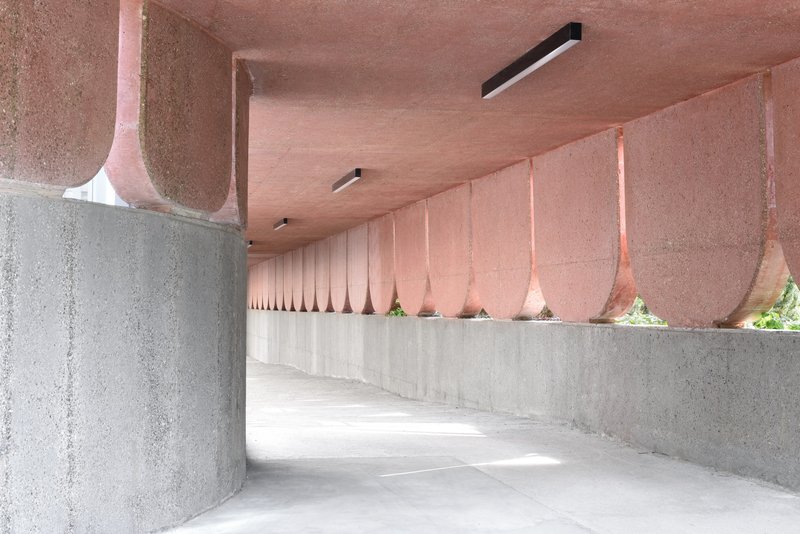
The covered walkway connecting old and new is among the project's most considered spaces. A pink scalloped ceiling overhead and gray concrete benches at the edge create a passage that is legible through sound, touch, and filtered light. This is not a corridor you rush through. It announces the transition between the villa's cellular room arrangement and the extension's larger volumes, giving occupants time and sensory cues to orient themselves.
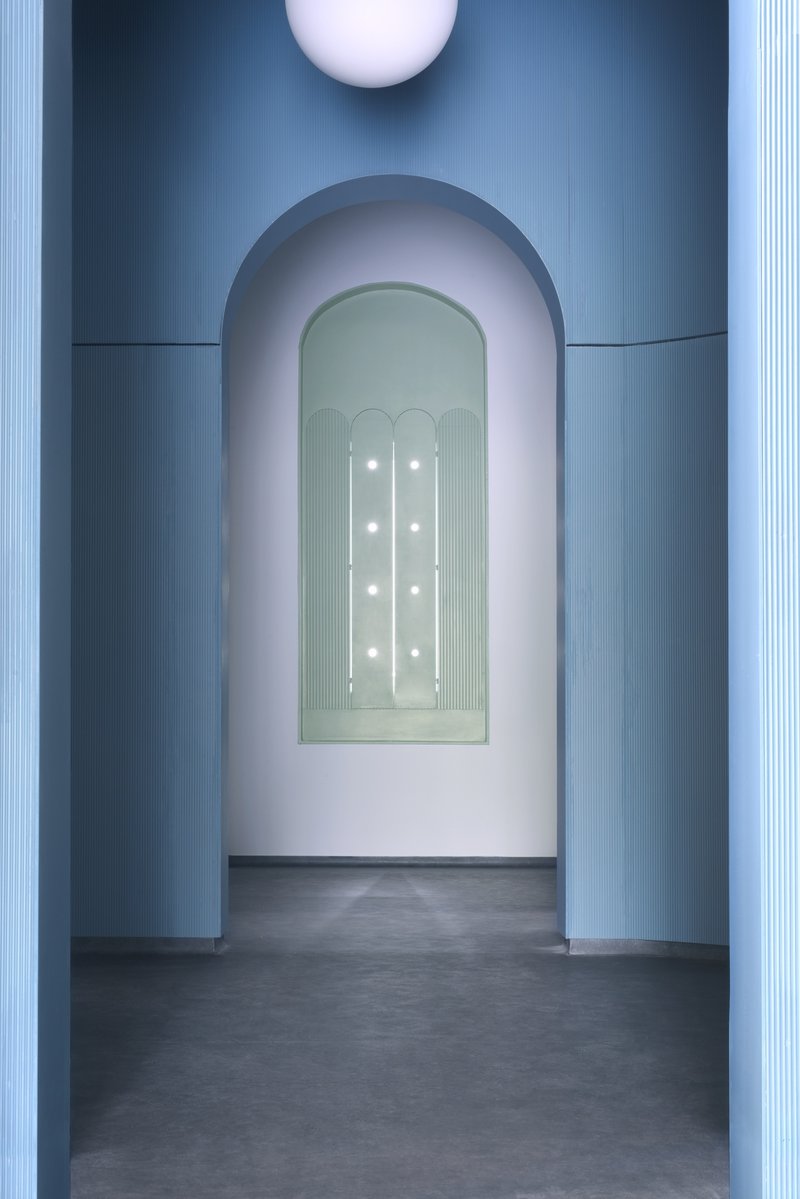
Inside the extension, corridors with tall windows cast raking sunlight across concrete floors. A vertical black radiator beneath the glass becomes a tactile landmark, warm to the touch. Elsewhere, an arched doorway frames an illuminated recess bathed in blue light, with a ceiling-mounted sphere that serves as both a decorative and wayfinding element. Every surface decision here has a second function that only becomes apparent when you imagine navigating the space without sight.
Inside the Villa's Restored Rooms
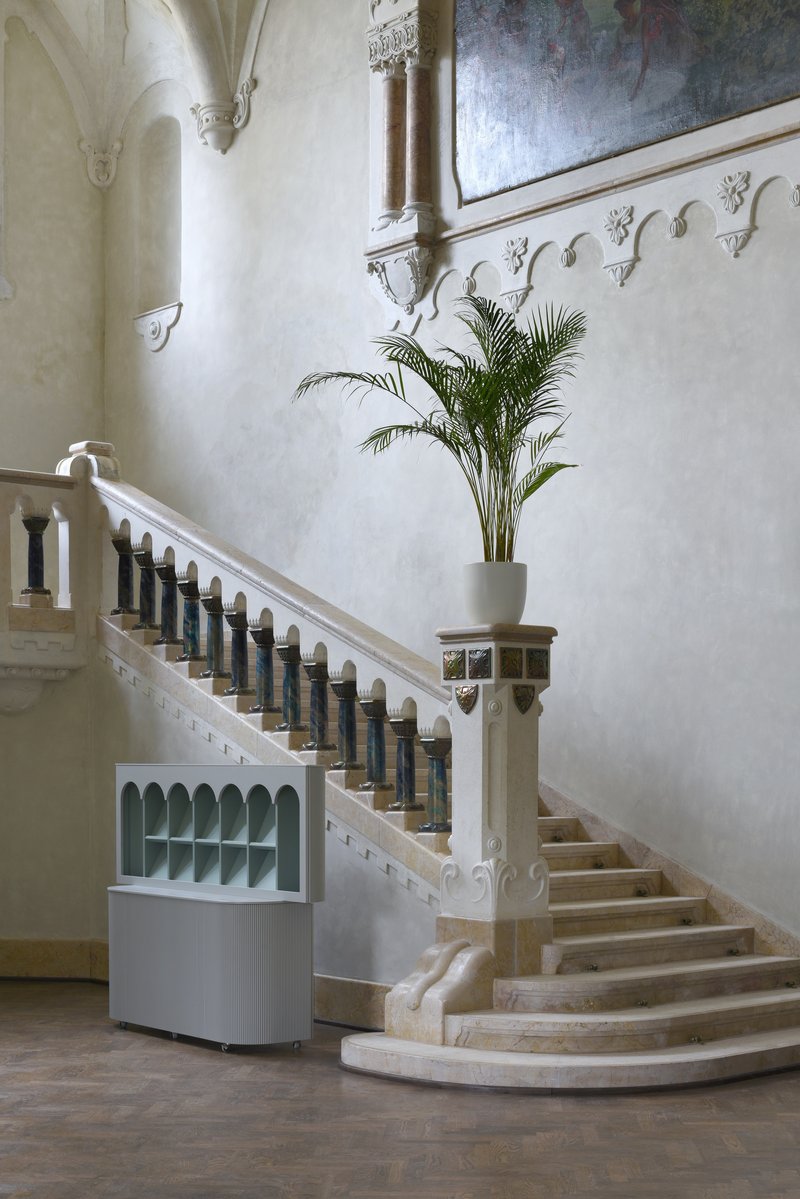
The villa's original interiors survive through their most distinctive elements. The curved stone staircase with dark metal balusters, its newel post now accompanied by a potted palm, is a reminder that Lechner worked at a scale of ornamental generosity that contemporary budgets rarely permit. Elsewhere, Zsolnay eosin-glazed tiles in their characteristic blue shimmer line fireplaces and stair surfaces, connecting the building to the broader tradition of Hungarian decorative arts from the Pécs-based manufacturer.
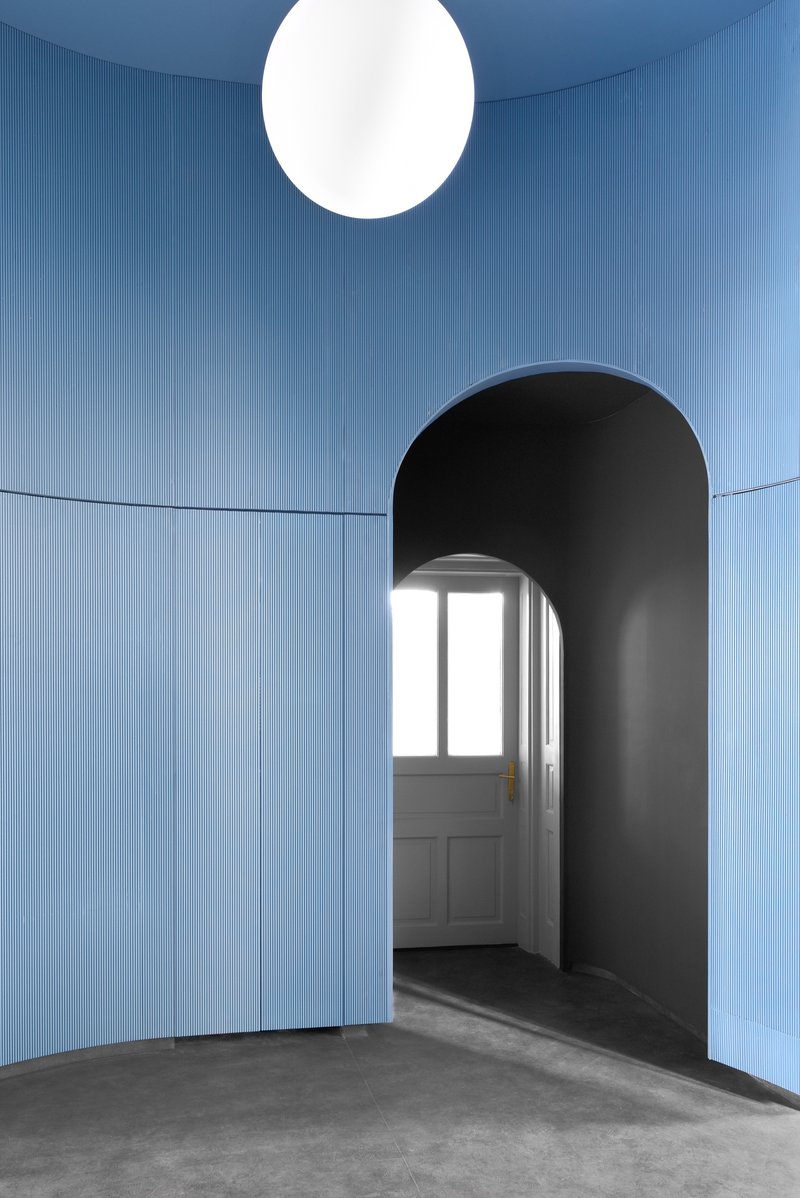
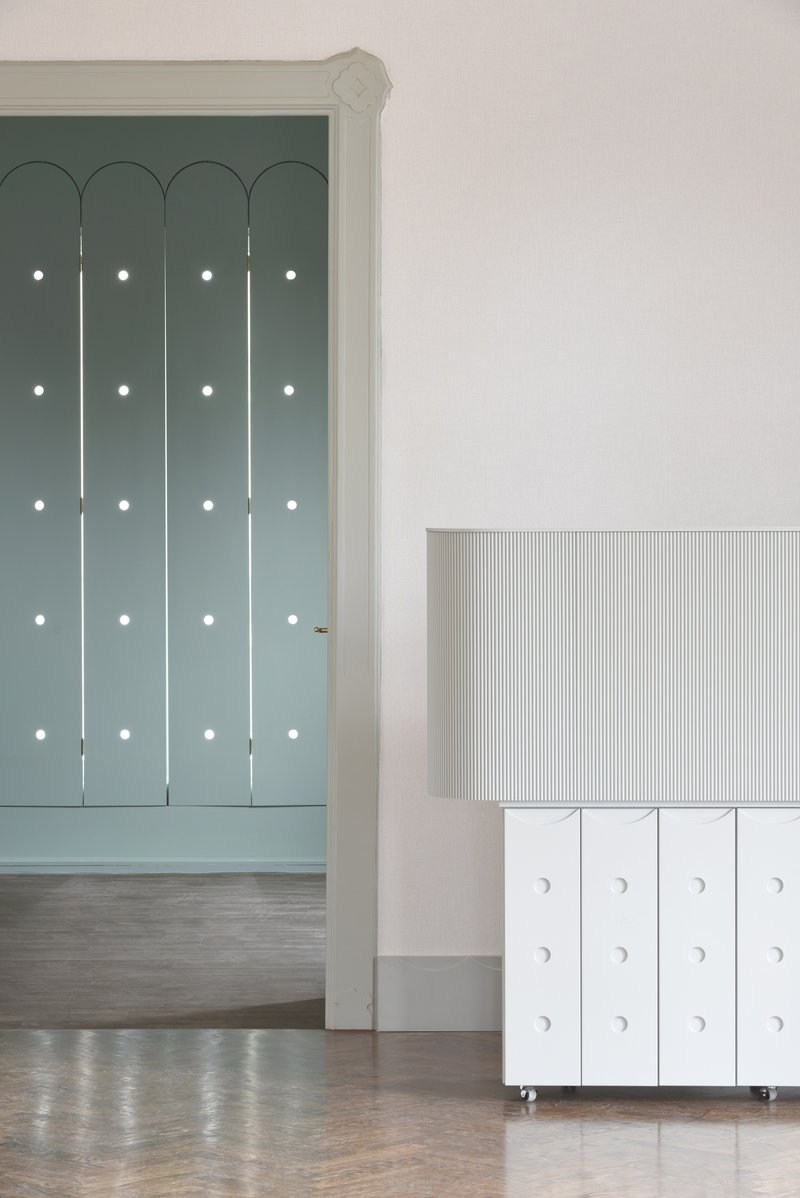
The room interiors show the project's strategy of respectful insertion. A blue-paneled room features a black arched portal that frames a white door beyond, establishing a sequence of thresholds that is visually rhythmic and, crucially, identifiable by the contrast between materials. Green arched cabinet panels with circular pulls and ribbed fronts echo the villa's Art Nouveau geometry while providing tactile differentiation for users with limited vision.
Furniture as Accessibility Infrastructure
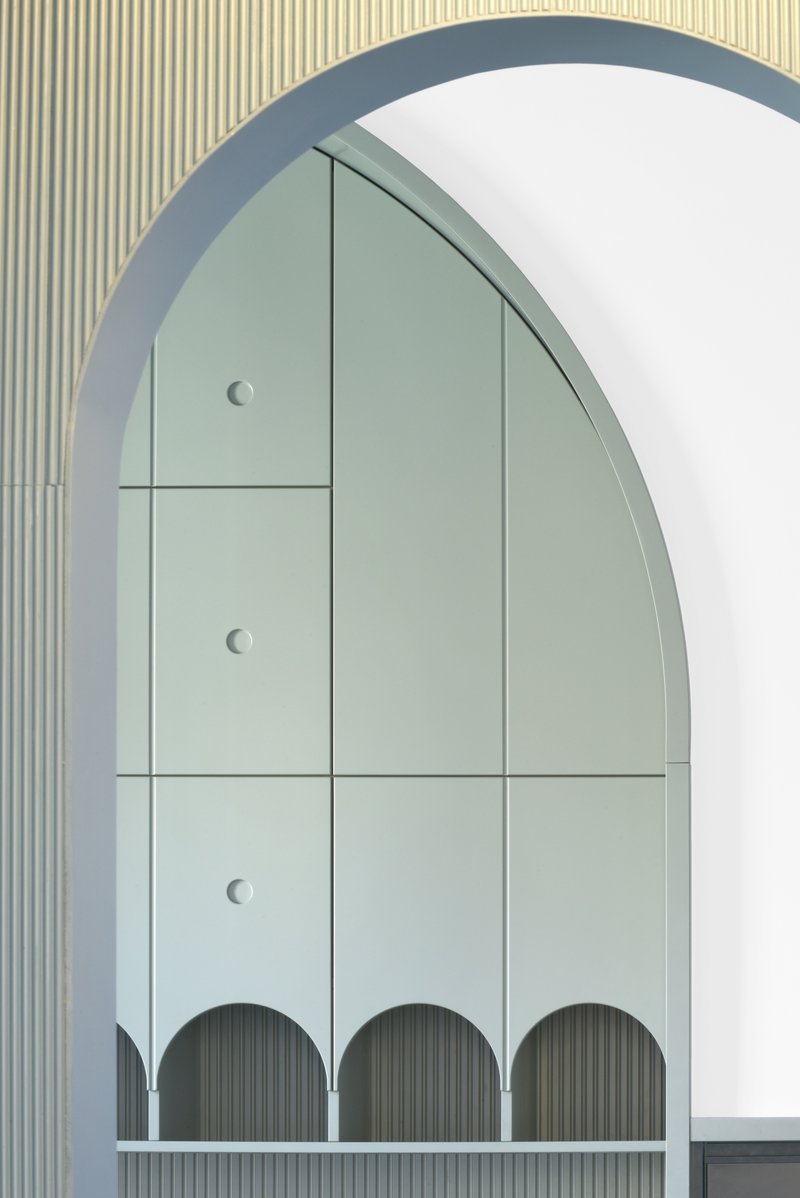
The custom furniture deserves its own discussion. Cabinets with pale green arched panels, circular pulls, and arched cutouts at the base are designed so that a visually impaired user can identify them by shape and texture alone. The wheeled cabinet with its ribbed front provides both mobility and a distinct haptic signature. None of these pieces look like "accessible furniture" in the institutional sense. They look like well-crafted objects that happen to carry more information in their surfaces than most designers bother to embed.
The 300-Person Event Hall
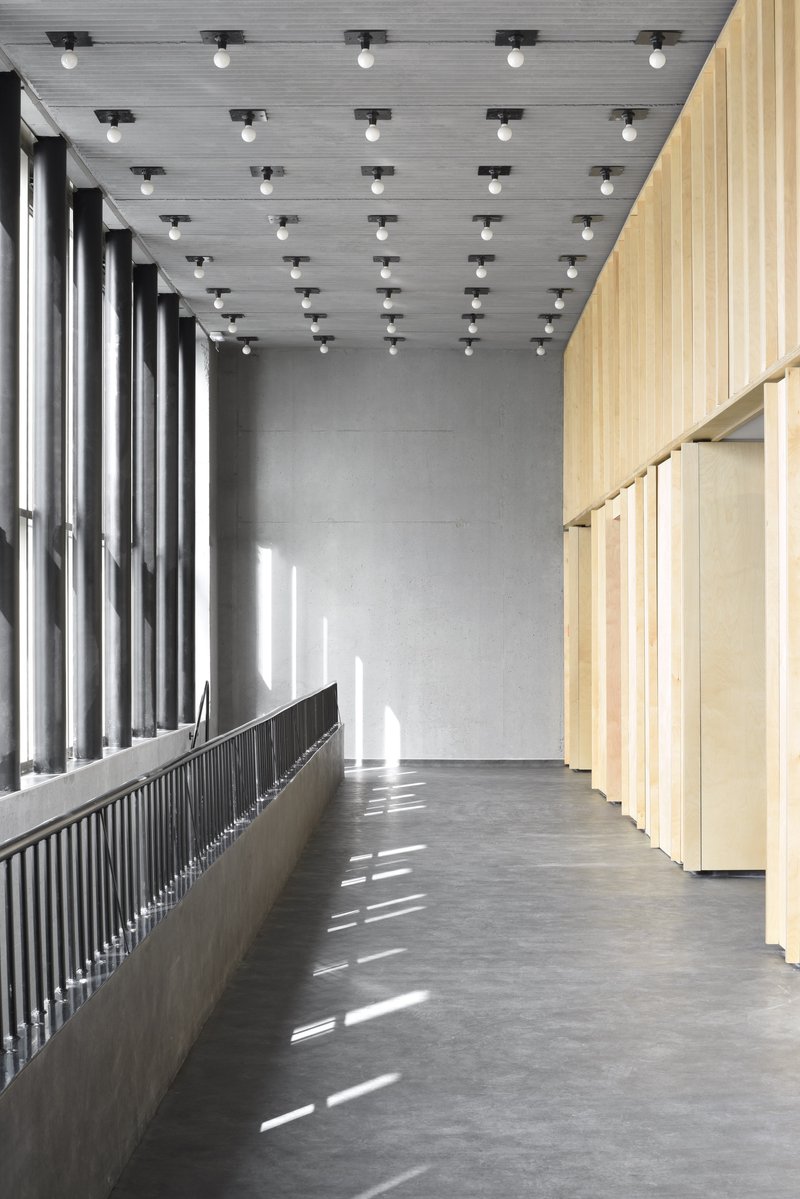
The extension's upper level houses a 300-person event hall, a completely different scale from the villa's intimate cellular rooms. The transparent glazed envelope on the upper floor creates a winter garden atmosphere, flooding the hall with daylight while maintaining a visual connection to the surrounding trees. Inside, the wavy concrete ceiling and ribbed wood cladding provide acoustic articulation and humanize what could easily have become a generic assembly space. These textures are derived directly from details in the villa, a continuity that binds old and new at the level of ornamental logic rather than stylistic imitation.
Plans and Drawings
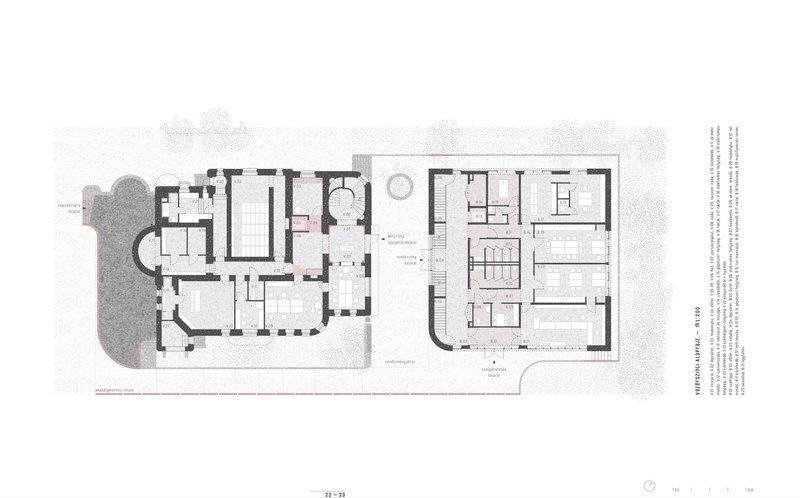
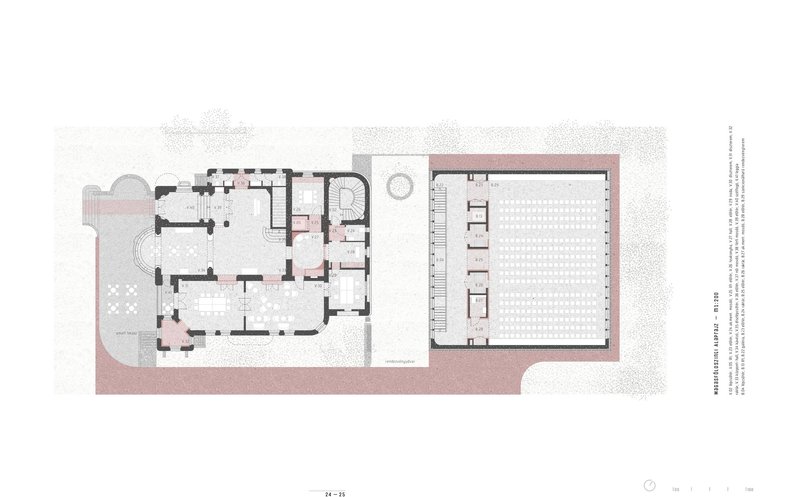
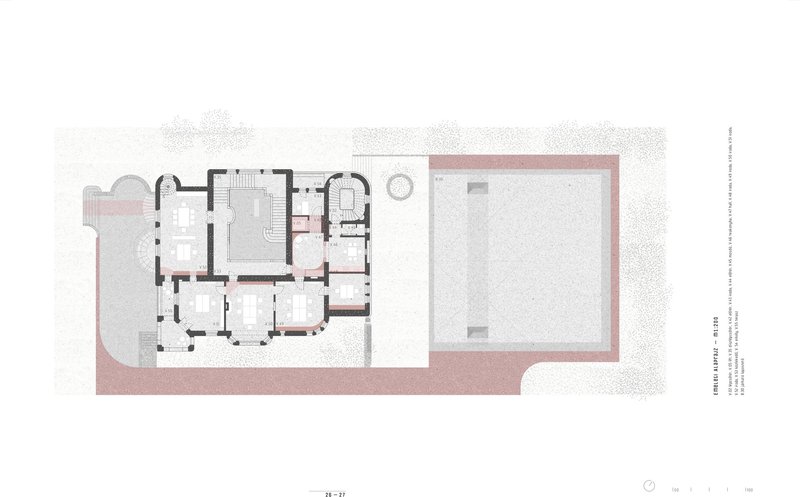
The floor plans make the spatial strategy legible. At the ground level, a tiled courtyard mediates between the historic rooms and the large gridded assembly hall. The villa retains its original cellular layout, each room a contained episode. The extension's upper plans simplify into a single large room, the event hall, flanked by an open courtyard. The contrast between the two plan types is not a deficiency. It is the project's central architectural argument: that old and new can operate at fundamentally different scales while sharing a coherent material palette.
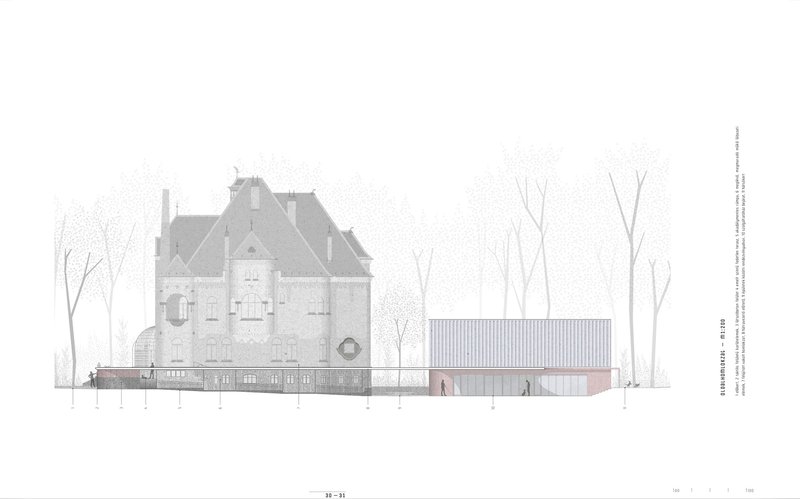
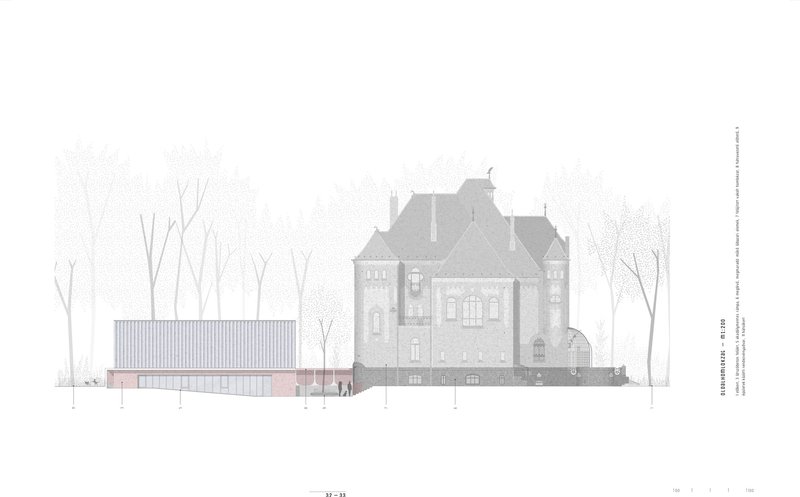
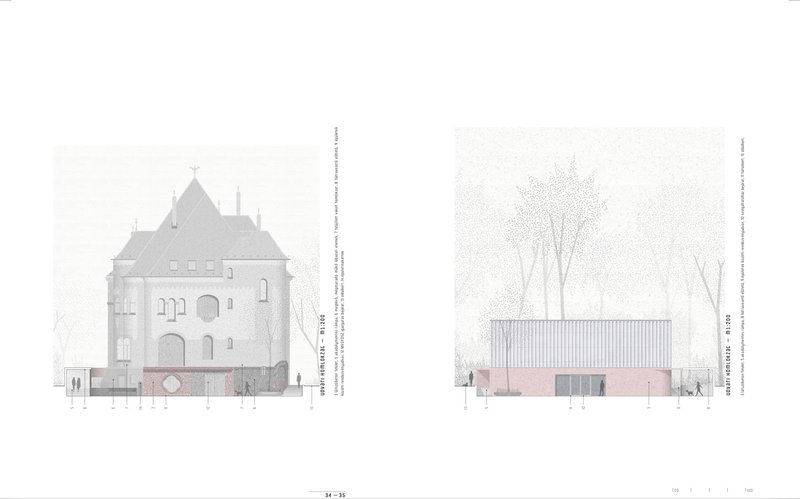
The elevations confirm the extension's deliberate restraint. The historic mansion's tower and ornamental roofline dominate the skyline. The new wing sits low, its corrugated metal cladding and pink masonry base reading as a garden pavilion rather than a rival structure. Paired elevation drawings show how the two volumes coexist among bare winter trees, each asserting its own tectonic character.
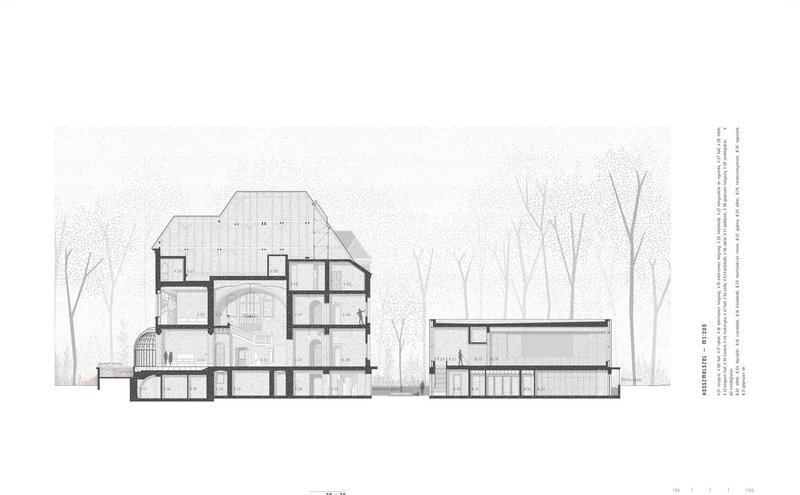
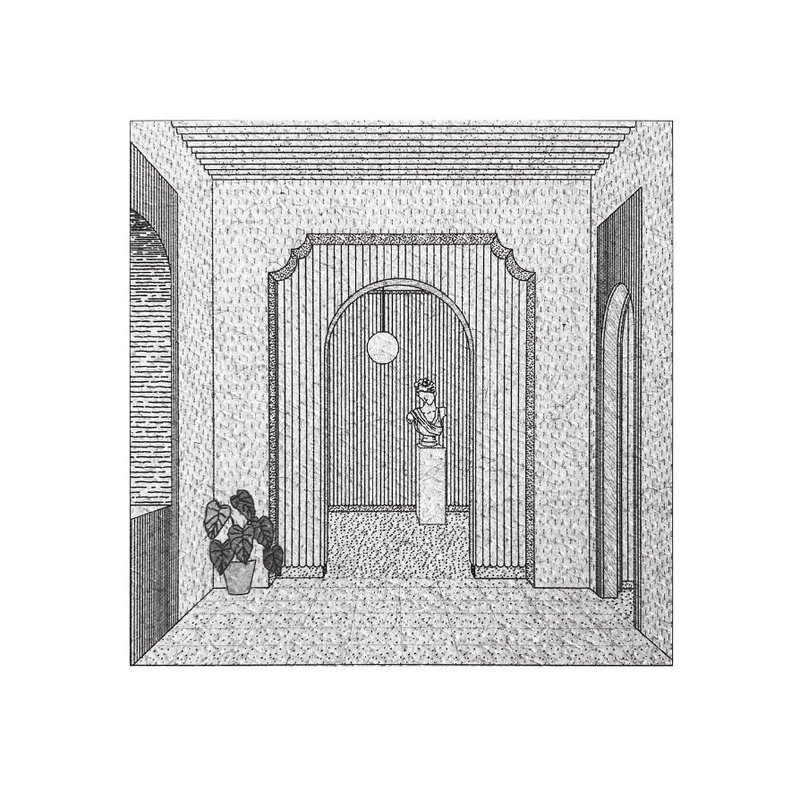
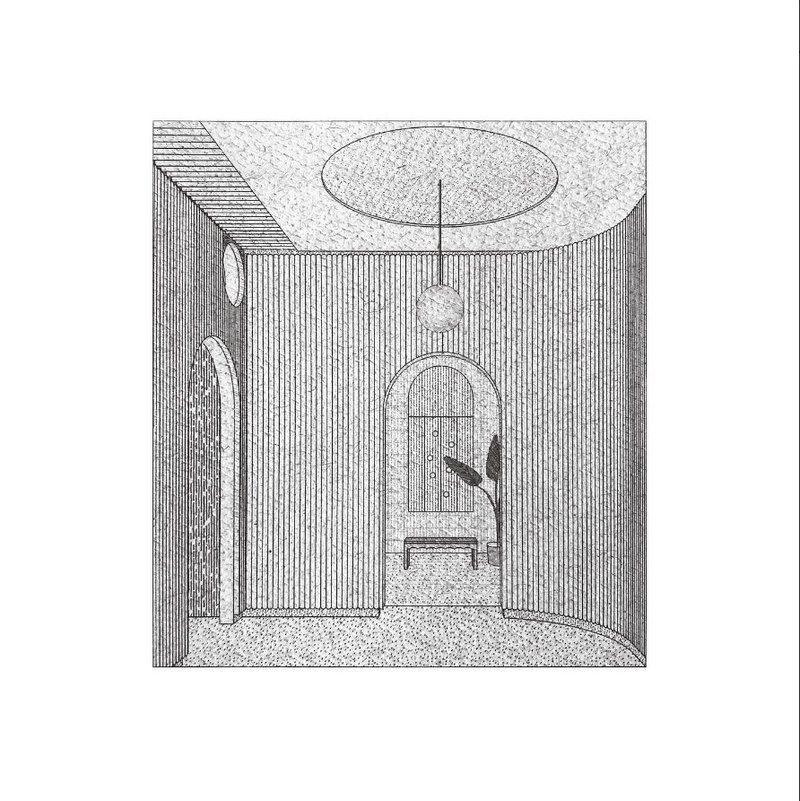
The building section reveals the pitched roofs of both volumes in profile, connected at their shared threshold. The perspective drawings show the interior world the team envisioned: fluted columns framing arched alcoves, a room with vertical fluted walls and an oval ceiling oculus. These are spaces designed to reward the body as much as the eye, their proportions tuned to acoustic and haptic as well as visual perception.
Why This Project Matters
Accessibility in architecture is too often reduced to ramp gradients and doorway widths. The Sipeki Balás Villa renovation reframes the question entirely. Here, accessibility is embedded in materiality: in the ribbed surfaces of custom furniture, in the scalloped ceilings that reflect sound, in the tactile railings that guide movement through space. Atelier dmb has demonstrated that designing for visually impaired users does not require a separate aesthetic. It requires a deeper one.
The heritage dimension is equally convincing. Rather than freezing the Lechner villa in a single historical moment, the team has made its layered history visible and touchable. A building damaged by war, scarred by a graceless 1970s addition, and now extended with genuine craft and intelligence tells a more honest story than any pristine restoration could. The ICOMOS Award and EUmies nomination acknowledge that this is heritage work of international caliber. More importantly, the building's daily users, the members and staff of the Hungarian Association of the Blind and Partially Sighted, have a headquarters that treats them not as a special case but as the reason architecture exists in the first place.
Renovation and Extension of the Sipeki Balás Villa by Atelier dmb (lead architects: Balázs Falvai, Márton Nagy, Dávid Török). Budapest, Hungary. 2,000 m². Completed 2024. Photography by Bánhegyesy Antal.
About the Studio
Share Your Own Work on uni.xyz
If projects like this are the kind of work you want to make, uni.xyz is a place to publish your own, find collaborators, and enter design competitions.




Popular Articles
Popular articles from the community

Taller MACAA Weaves Adobe Lodging into the Sacred Valley at 3,100 Meters Above Sea Level
Dormis Donata bridges permanent and temporary inhabitation through earthen construction in the agricultural highlands of Taray, Peru.
OUALALOU+CHOI Root a Regional Sports Campus in Moroccan Earth and Timber
A 10,230 square meter athletic complex in Ben Guerir uses rammed earth walls and timber screens to anchor sport in the arid landscape.
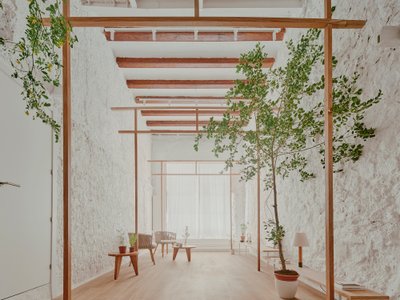
Roman Izquierdo Bouldstridge Turns an Old Barcelona Shop into a Loft Organized by Emptiness
In El Born, three timber torii frames and the Taoist concept of the void reshape 85 square meters of former commercial space into a dwelling.
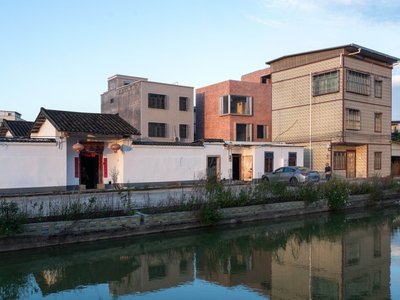
WUWU Atelier and ADINJU Rebuild an Ancestral Home in Guangdong with Quiet Brick Precision
In rural Heyuan, a 440-square-meter renovation trades spectacle for craft, turning local brick into an architecture of restrained belonging.


Similar Reads
You might also enjoy these articles

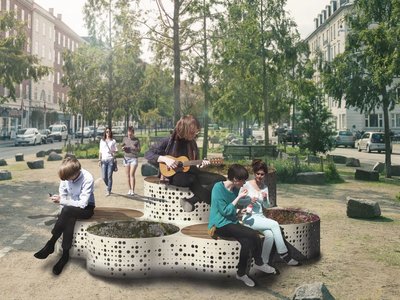
20 Most Popular Furniture Design Projects of 2025
Modular street systems, parametric benches, and insect hotels: the furniture design projects that captivated architects on uni.xyz in 2025.

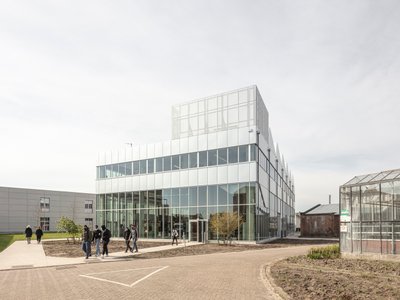
STEM School Mechelen by LAVA Architecten: A Future-Ready Educational Architecture in Belgium
Flexible, sustainable STEM school in Mechelen featuring modular classrooms, acoustic innovation, and energy-efficient design supporting future-focused collaborative learning environments.
Marvila Apartment Renovation in Lisbon: A Bright Minimalist Attic Transformation by KEMA Studio
Bright attic transformed into minimalist Lisbon apartment with skylights, sustainable materials, open plan layout, and industrial-inspired interior design elements.
20 Most Popular Commercial Architecture Projects of 2025
From sustainable market concepts to heritage factories, the commercial buildings and proposals that drew the most attention on uni.xyz this year.


Explore Architecture Competitions
Discover active competitions in this discipline




The International Standard for Design Portfolios


The Global Benchmark for Architecture Dissertation Awards


The Global Benchmark for Graduation Excellence


Challenge to reimagine the Iron Throne
Comments (0)
Please login or sign up to add comments
No comments yet. Be the first to comment!