
Atelier Write Converts a Tokyo Timber Warehouse into a Shape-Shifting Hair Salon
In Kiyosumi-Shirakawa, a ceiling-mounted rail system lets mirrors and shelves glide between salon mode and open event space.


Kiyosumi-Shirakawa sits in eastern Tokyo's Koto district, a neighborhood where old warehouses have been steadily reborn as cafes, galleries, and offices. The latest addition to that conversion culture is unravel, a hair salon designed by Atelier Write inside a two-storey timber warehouse wedged between residential homes. The client, hairdresser Hiroyuki Nagae, wanted a space that could function as a salon on ordinary days but transform into a venue for seminars, photoshoots, and pop-up events on others. That brief pushed the architects toward a genuinely flexible system rather than a fixed fit-out.
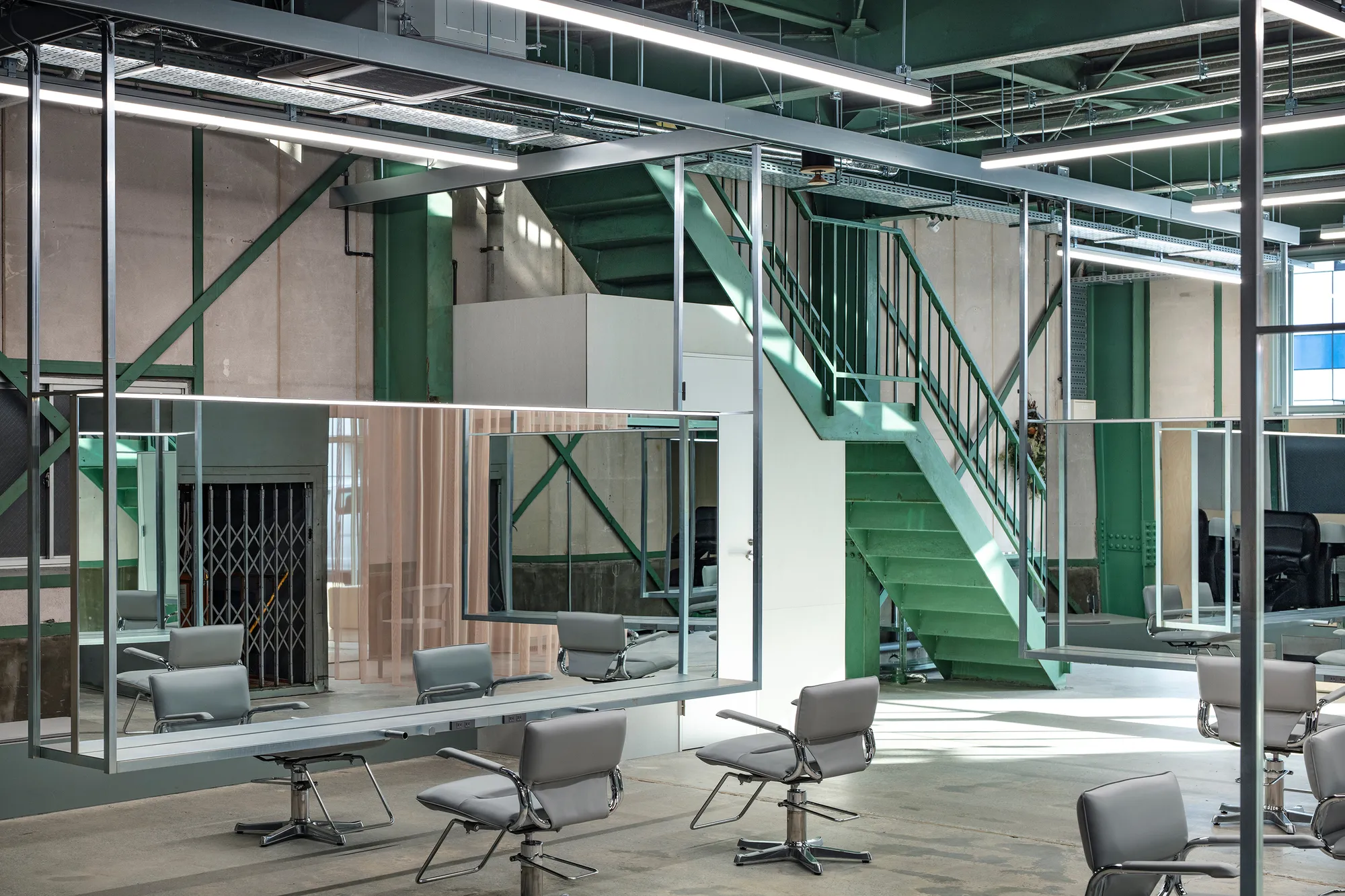
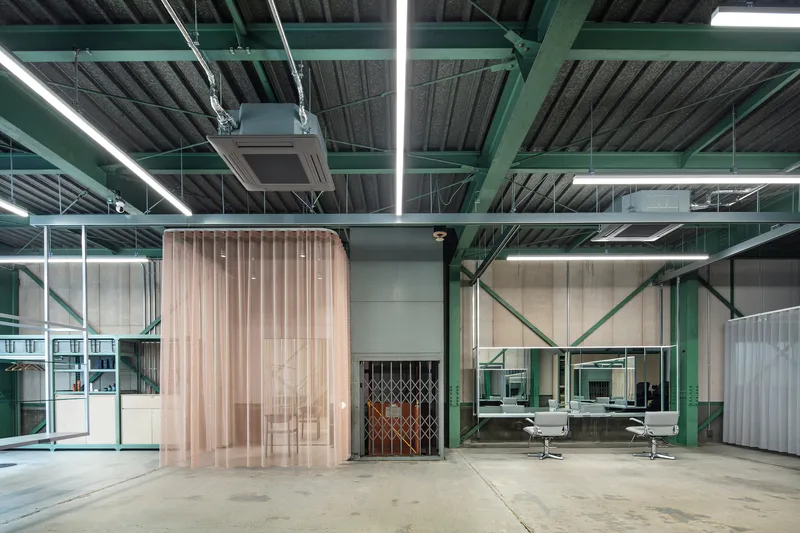
What makes unravel worth studying is the specificity of its reconfigurability. Rather than the vague "flexible space" language that typically accompanies open plans, Atelier Write engineered a ceiling-mounted rail system from which large mirrors and electro-galvanised steel shelving units hang. These elements slide between the center of the room, where they define individual styling stations, and the perimeter, where they clear the floor for gatherings. The existing warehouse framework was painted a soft pastel green and left fully exposed, its imperfections treated as character rather than problems. Across 175 square meters on two levels, the project demonstrates that a salon renovation can carry real architectural ambition.
A Warehouse That Glows at Night

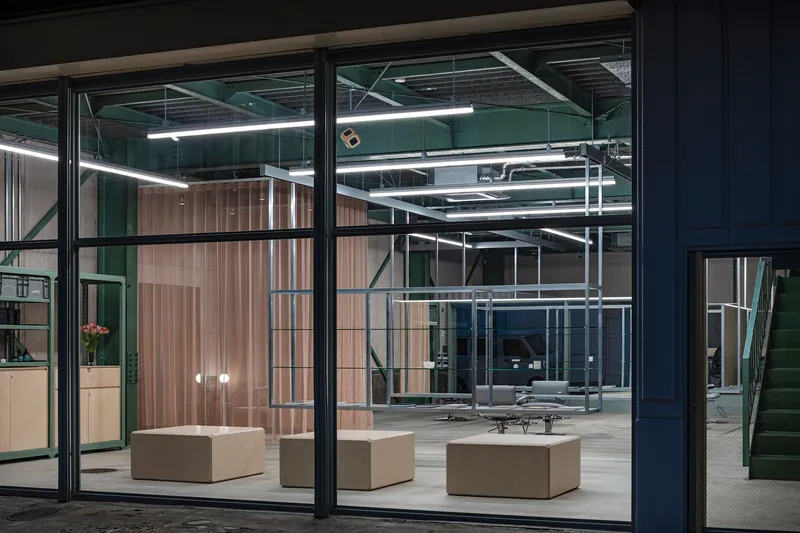
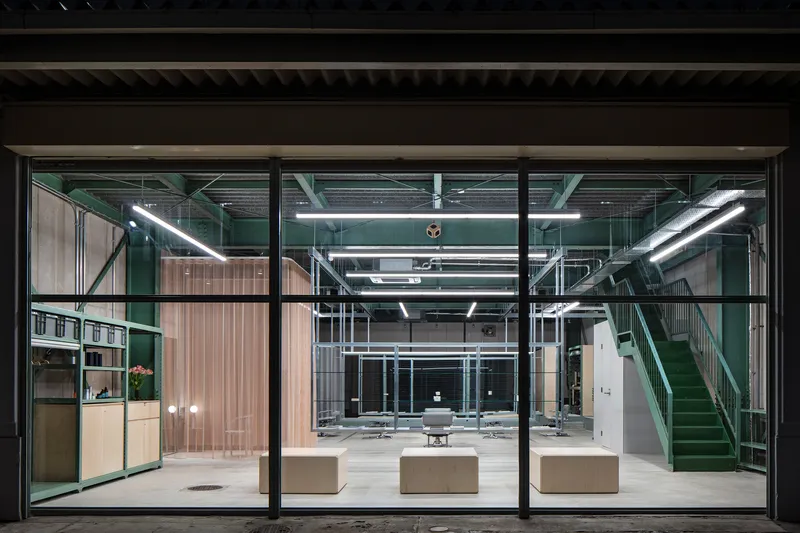
The street facade retains its corrugated metal cladding on the upper storey, a nod to the building's warehouse past. At ground level, the entire front wall is floor-to-ceiling glass, dissolving the boundary between sidewalk and salon. After dark the effect is dramatic: the green steel skeleton and fluorescent tubes turn the interior into a lantern, broadcasting the life inside to the narrow residential street. It is an honest storefront, showing everything the space is made of.
The decision to leave the ground floor so transparent also floods the interior with daylight during working hours, reducing dependence on artificial light and giving stylists and clients a direct connection to the street. For a neighborhood built on incremental warehouse conversions, this degree of openness reads as generous, almost civic.
Green Bones, Pink Curtains


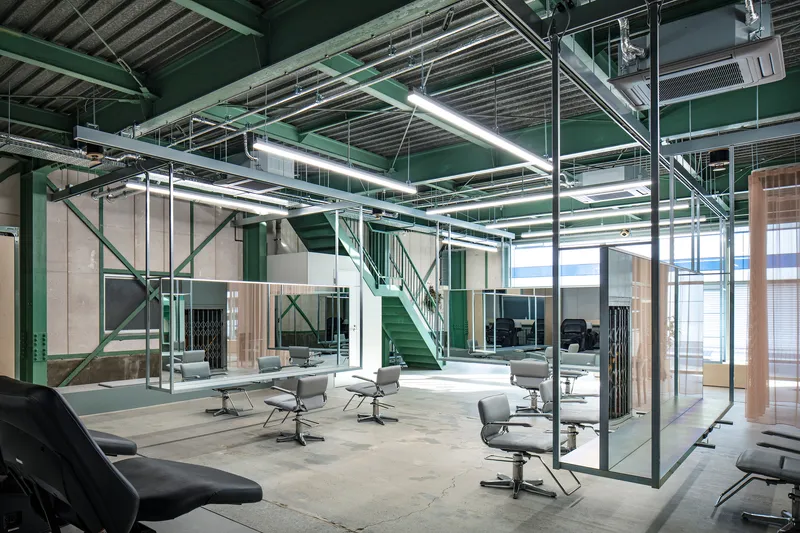
The most immediately striking detail is the color. Atelier Write painted the entire existing steel frame a pastel shade of green, from the trusses and columns to the staircase. Against the raw concrete floor and corrugated ceiling, the green reads as both industrial and strangely domestic, like scaffolding borrowed from a botanical garden. It gives the structure a visual coherence that a neutral tone would not have achieved.
Punctuating the green framework are pastel pink-toned mesh curtains supplied by Kvadrat. These curtains serve practical purposes: they screen VIP and spa areas for privacy and divide the open plan when the salon is at full capacity. But they also soften the warehouse's hard surfaces, filtering light and introducing a warmth that keeps the space from feeling clinical. The interplay between rigid steel and yielding fabric is the project's core aesthetic tension.
The Rail System That Makes It Work

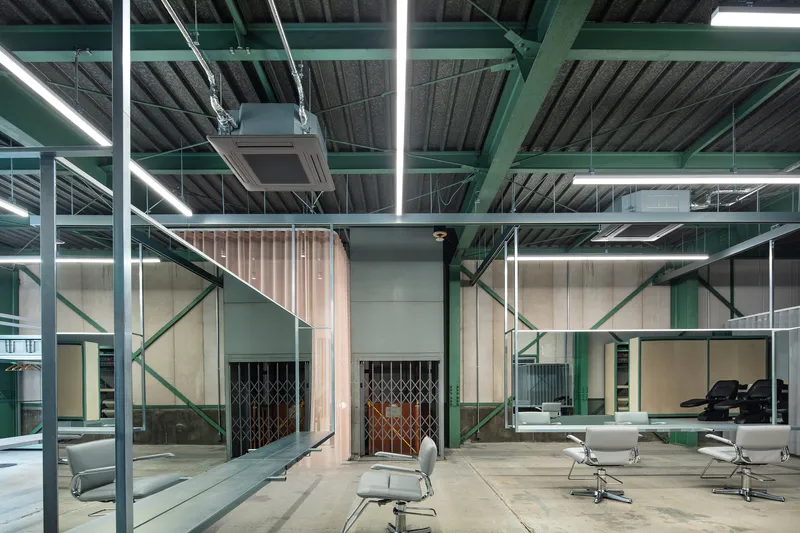
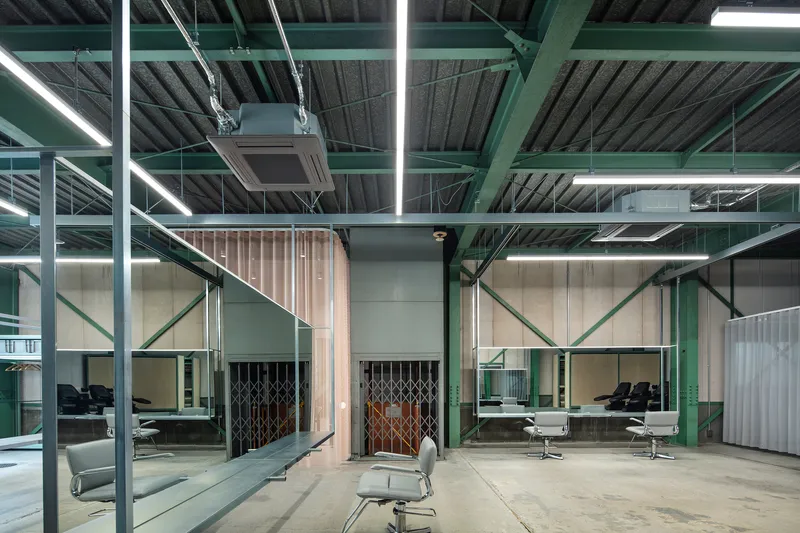
Flexibility in architecture usually means removing obstacles. Here, it means moving them. Mirrors and shelving units hang from ceiling-mounted rails and can be repositioned to configure different layouts. When the salon operates normally, these elements cluster at the center of the plan, creating paired styling stations with shared mirrors. When Nagae hosts a seminar or photoshoot, the units slide to the walls, opening a clear floor.
The shelving units do more than hold product. They integrate power outlets, allowing each station to plug in dryers and tools wherever the unit parks. It is a detail that elevates the concept from a spatial gesture to a genuinely functional system. The low timber cube tables scattered across the floor are the only truly freestanding elements, light enough to be dragged wherever they are needed.
Washing, Waiting, Working


The shampoo stations occupy a quieter zone toward the rear of the ground floor, partially screened by curved curtain panels that hang from the same rail infrastructure. Reclined washing chairs sit behind these soft barriers, offering clients a degree of intimacy without full enclosure. Industrial steel racks, repurposed from the warehouse's former life, organize the shampoo and reception areas, reinforcing the honest materiality that defines the project.
Folding metal security gates, the kind you see on shop fronts across Tokyo, appear as internal partitions. They open and close to expand or contract zones, adding another layer of adaptability that costs almost nothing. It is the kind of pragmatic borrowing that makes the project feel smarter than its budget.
Upstairs: Raw Studio Space


A green-painted steel staircase leads to the first floor, where the surfaces are left deliberately unfinished. This level functions as a studio and office, with cream seating blocks, corrugated slatted timber partitions, and glass-enclosed meeting rooms framed in white steel. The atmosphere is rougher than downstairs, closer to a co-working loft than a salon, which feels intentional. It separates the client-facing polish of the ground floor from the productive mess of the back of house.
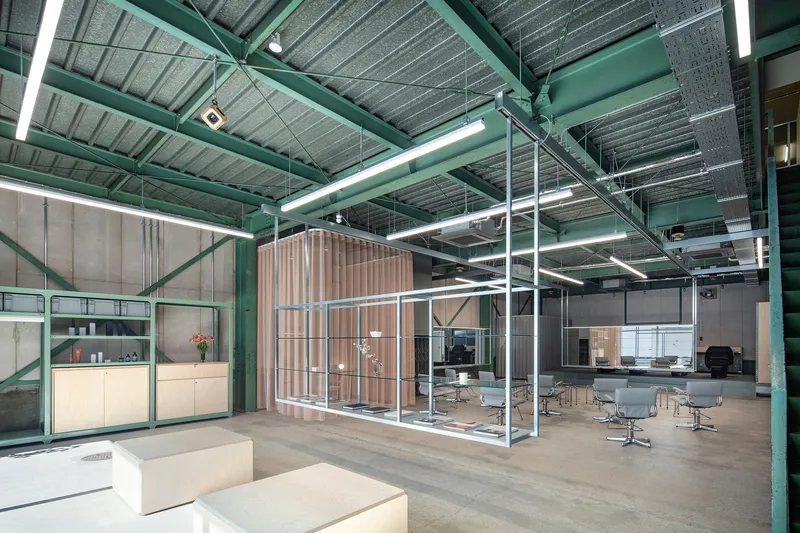
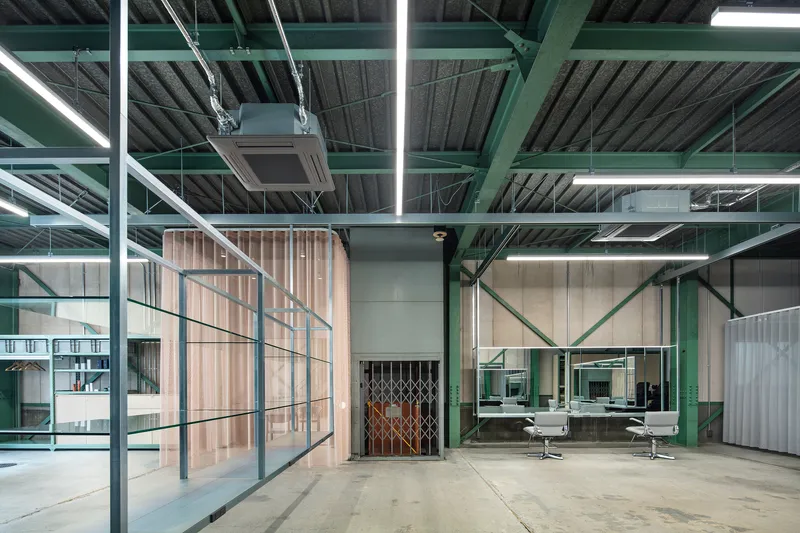
The ribbed timber volumes on this level serve as room dividers and acoustic buffers. They have a handmade quality, their slatted surfaces catching light differently throughout the day. Against the exposed green structure and polished concrete, they introduce a tactile warmth that makes the upper floor feel habitable despite its rawness.
Details and Imperfections

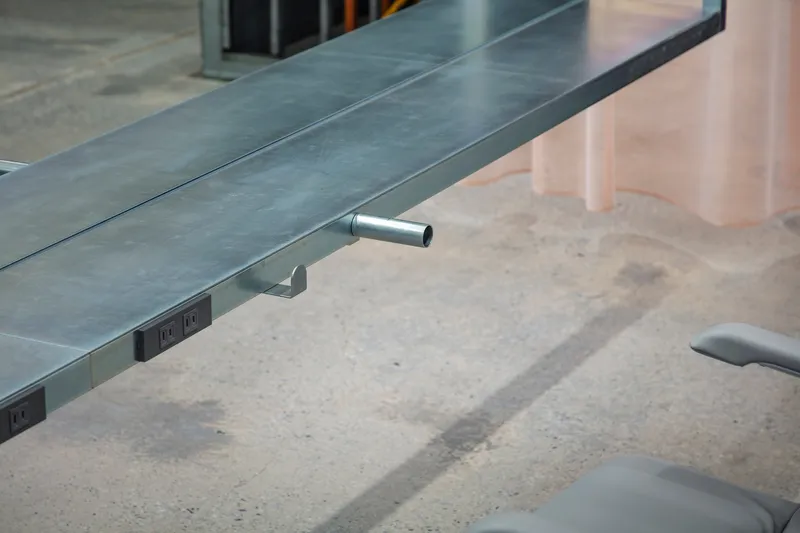

Atelier Write's approach to detailing is revealing. A close look at the floor shows visible cracks in the concrete left unrepaired. A blue-painted steel post meets a board-formed concrete wall still bearing debris from the original construction. The integrated power outlet beneath a steel desk edge sits just above a cylindrical footrest, a small but considered ergonomic move. These details communicate a philosophy: retain what exists, add only what the program demands, and do not pretend the building is something it never was.
The preservation of embodied energy is a real benefit here, not just a talking point. By retaining the warehouse structure and minimizing new construction, the project sidesteps the carbon cost of demolition and rebuild. In a city where teardowns are the default, that restraint carries weight.
Objects and Atmosphere
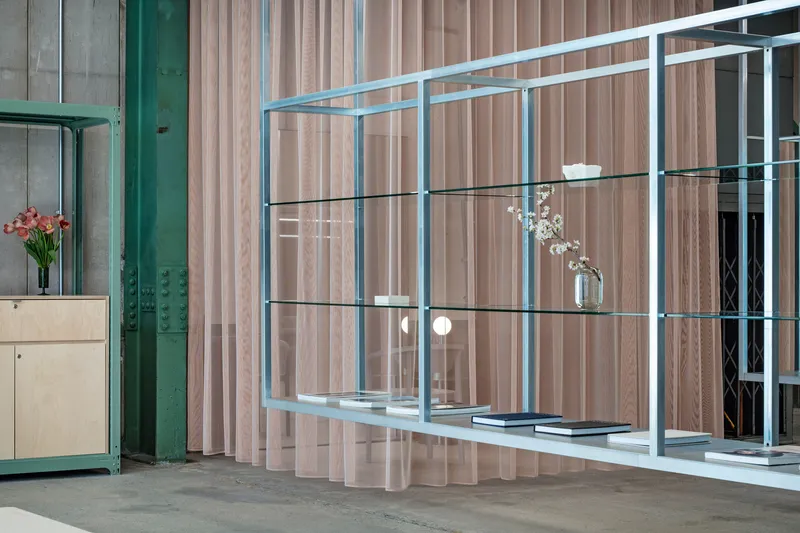
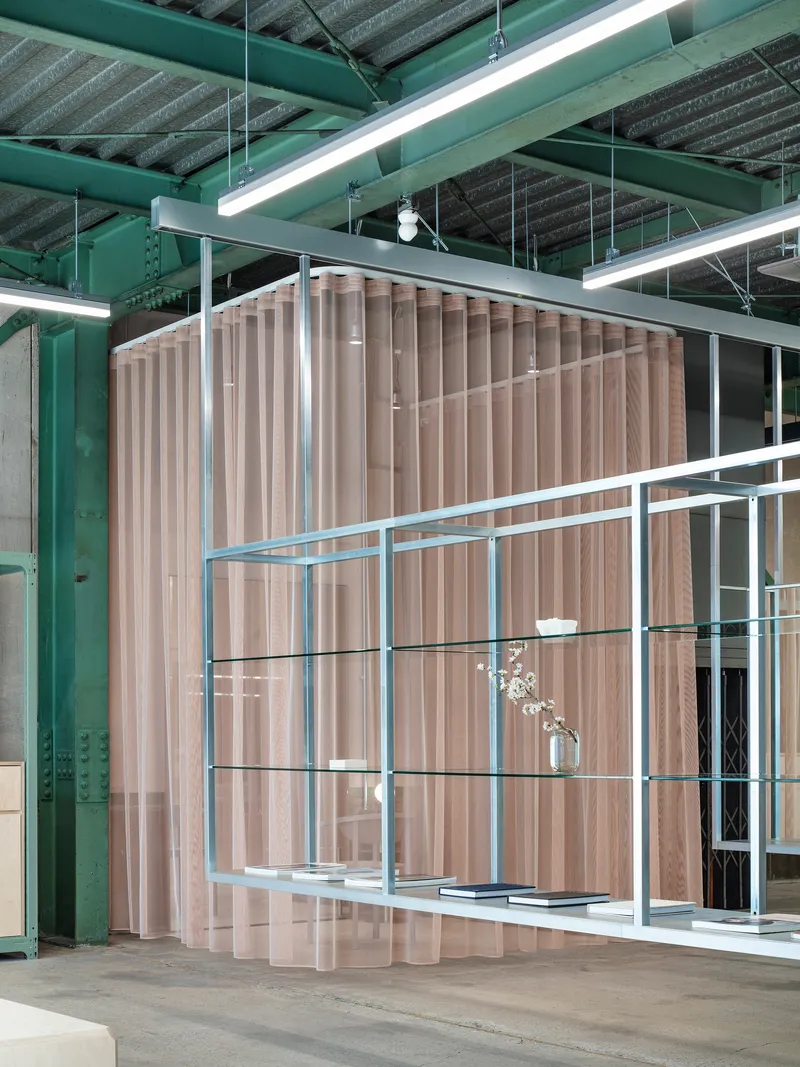
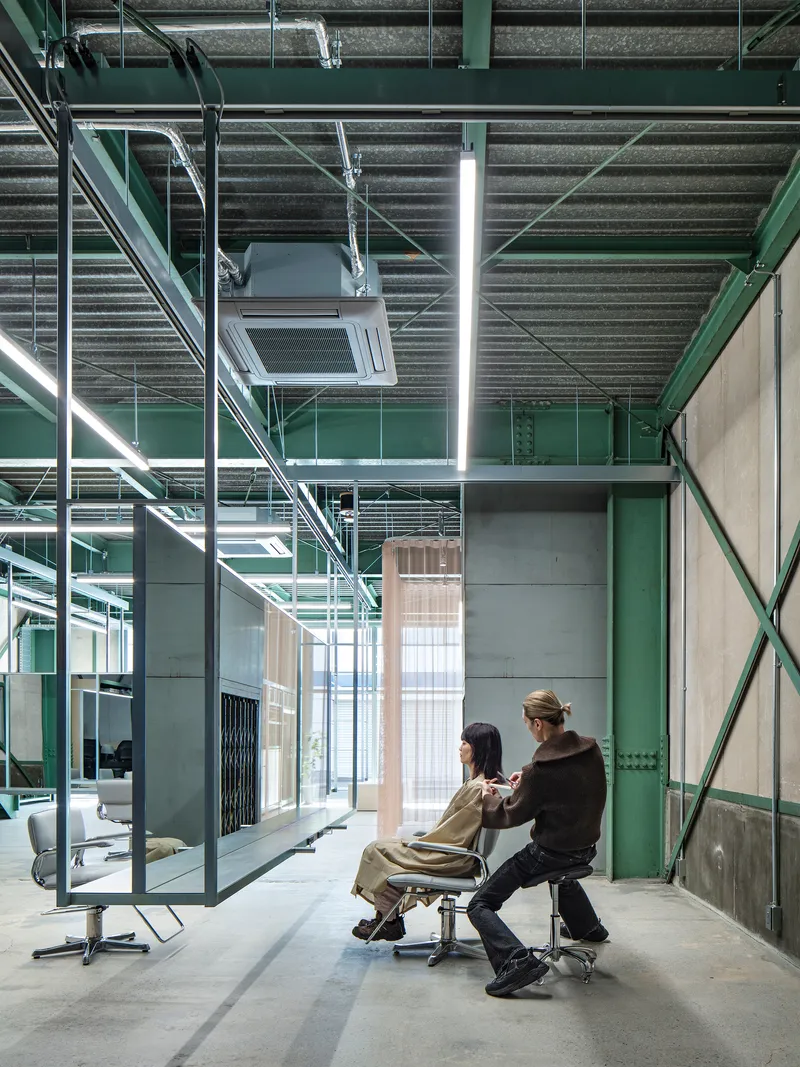
The electro-galvanised steel shelving does double duty as display furniture. Glass-topped units hold flowers, books, and product alongside the functional mirrors, blurring the line between retail environment and gallery. It is a smart move for a salon that wants to host events: the same infrastructure that supports daily hairdressing can frame an exhibition or a product launch without any reconfiguration.
Lighting, supplied by Endo Lighting and Whitelight, runs in linear fluorescent tubes along the green trusses. The effect is even and workmanlike, appropriate for a space where precision cutting happens under real scrutiny. There is no decorative lighting here, and the space is better for it.
Plans and Drawings

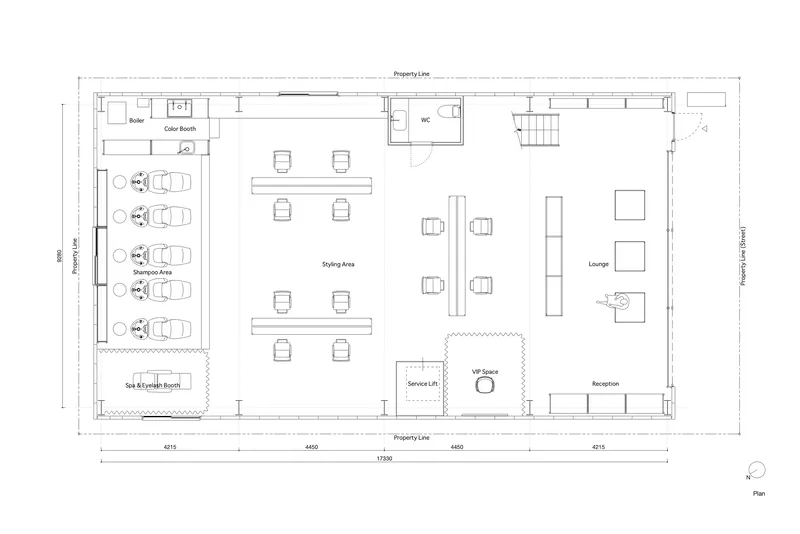

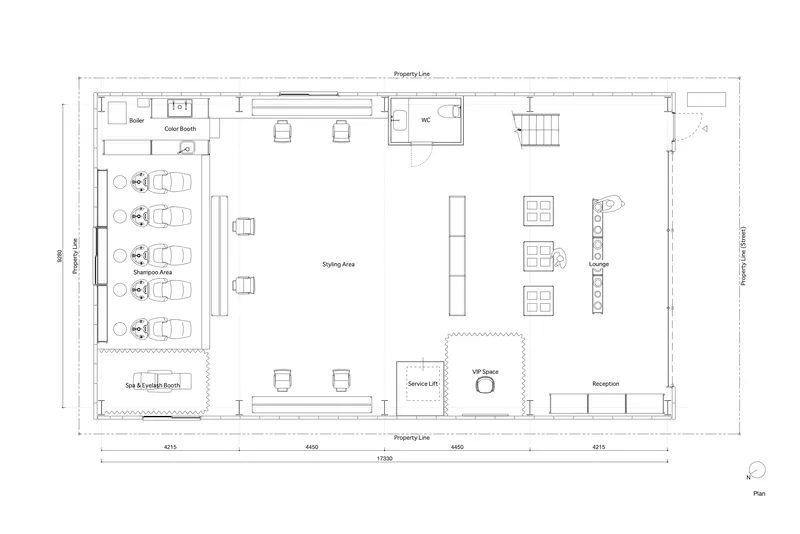
The four floor plan variations tell the real story of the project. One shows the standard salon layout with five styling stations and a lounge. Another pulls paired seating toward the center with a long service counter. A third reconfigures the room into rows of individual chairs facing inward, seminar style. The fourth scatters workstations loosely with product display tables near the lounge. Each plan occupies the same footprint; only the position of the suspended elements changes.

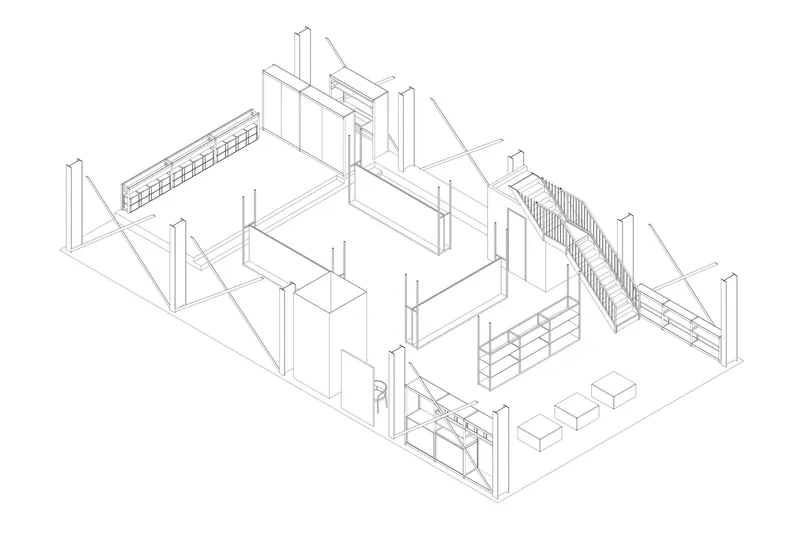
The section drawing reveals the double-height volume and the central staircase connecting the shampoo area below to the back of house above. The axonometric strips the project to its skeleton: structural frame, staircase, partition walls, and service counter. Seen this way, the new interventions are remarkably spare. The architecture is mostly the existing building, seen clearly for the first time.
Why This Project Matters
Salon design is often dismissed as interior decoration with plumbing. unravel pushes back on that assumption by treating the brief as a systems problem. The ceiling-mounted rail infrastructure, the integrated power outlets, the reuse of industrial racks and security gates: these are architectural decisions, not styling choices. They give the space a genuine capacity for transformation that most commercial interiors only claim.
More broadly, the project offers a persuasive model for adaptive reuse at a modest scale. Not every warehouse needs to become a museum or a tech campus. Some can become hair salons, and the architecture can still be rigorous. By keeping the existing structure visible and operational, Atelier Write proves that restraint and ambition are not opposites. In Kiyosumi-Shirakawa's growing ecosystem of conversions, unravel sets a standard that future projects in the neighborhood will be measured against.
unravel Hair Salon by Atelier Write. Located in Kiyosumi-Shirakawa, Tokyo, Japan. 175 m². Completed in 2026. Photography by Kenta Hasegawa.
About the Studio
Share Your Own Work on uni.xyz
If projects like this are the kind of work you want to make, uni.xyz is a place to publish your own, find collaborators, and enter design competitions.




Popular Articles
Popular articles from the community


Co-Life: Senior Housing Design That Reconnects Older Adults With the City
Co-Life reimagines senior housing design through healing gardens, shared streets, workshops, and a sustainable community across generations.

Co-life: Sustainable Architecture for Age-Friendly Community Living
Co-life reimagines sustainable architecture for seniors through courtyards, rammed earth, shared gardens, and spaces designed for belonging.

Conexión: Biophilic Design Reimagines High-Rise Living in Hong Kong
Conexión reimagines high-rise living in Hong Kong through biophilic design, green facades, shared spaces, daylight, water and nature within.

The Ocean Hive: Sustainable Architecture for a Self-Sufficient Civilization at Sea
The Ocean Hive imagines sustainable architecture at sea, where modular habitats, algae, wave power and ocean waste sustain a growing colony.


Similar Reads
You might also enjoy these articles

Bao Huynh Watercolor Atelier: A Serene Art Retreat in Hội An
Bao Huynh Watercolor Atelier in Hội An blends multifunctional art spaces, sustainable design, local materials, and family-friendly living in a serene environment.

Atelier Macri Concept Store Interior Design by CASE-REAL
Atelier Macri store features a "ko" counter, walnut wood details, cork displays, blending retail, gallery, and seamless customer experiences.

Manuel Vargas Izquierdo Stadium and High-Performance Sports Center: Architectural Excellence in Jalpa de Méndez
The Manuel Vargas Izquierdo Stadium blends sustainable design, inclusive sports facilities, and cultural-inspired architecture, revitalizing Jalpa de Méndez’s public spaces.

KAKR Buluh Awar Hall: Revitalizing Community and Ecology Through Bamboo Architecture
Community built bamboo hall revitalizes Buluh Awar village, empowering youth, restoring ecology, celebrating vernacular craftsmanship through sustainable architecture and culture.
Explore Office Building Competitions
Discover active competitions in this discipline



Challenge to reimagine the Iron Throne


Photograph architecture without architects


Illustrate the lost glory of Angkor Wat - Render Challenge


Design challenge to reuse E-waste
Comments (0)
Please login or sign up to add comments
No comments yet. Be the first to comment!