

Atlas of Superpower: Redefining Sports and Play for Families in Chao Yang Qu, China
The Atlas of Superpower is a family-oriented sports center blending playful architecture with physical activity and nature-inspired design.


the Atlas of Superpower
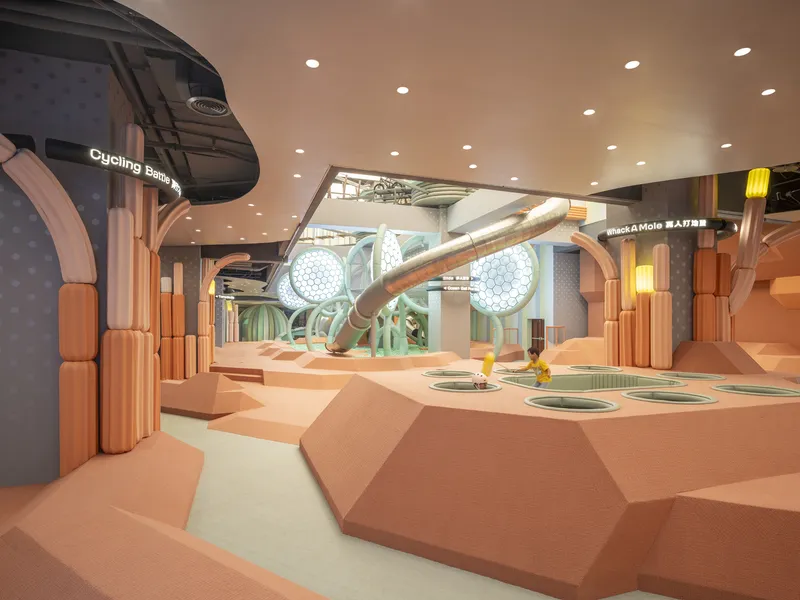
The Atlas of Superpower is an innovative sports and family activity center designed by waa in Chao Yang Qu, China. Completed in 2023, this exceptional space blends sports architecture, family-oriented play, and interactive design to promote body movement awareness and physical development through playful engagement. Inspired by nature’s most resilient organisms, the project uses the concept of superpowers to create a dynamic, multifaceted environment for family members of all ages.
Superpowers in Nature
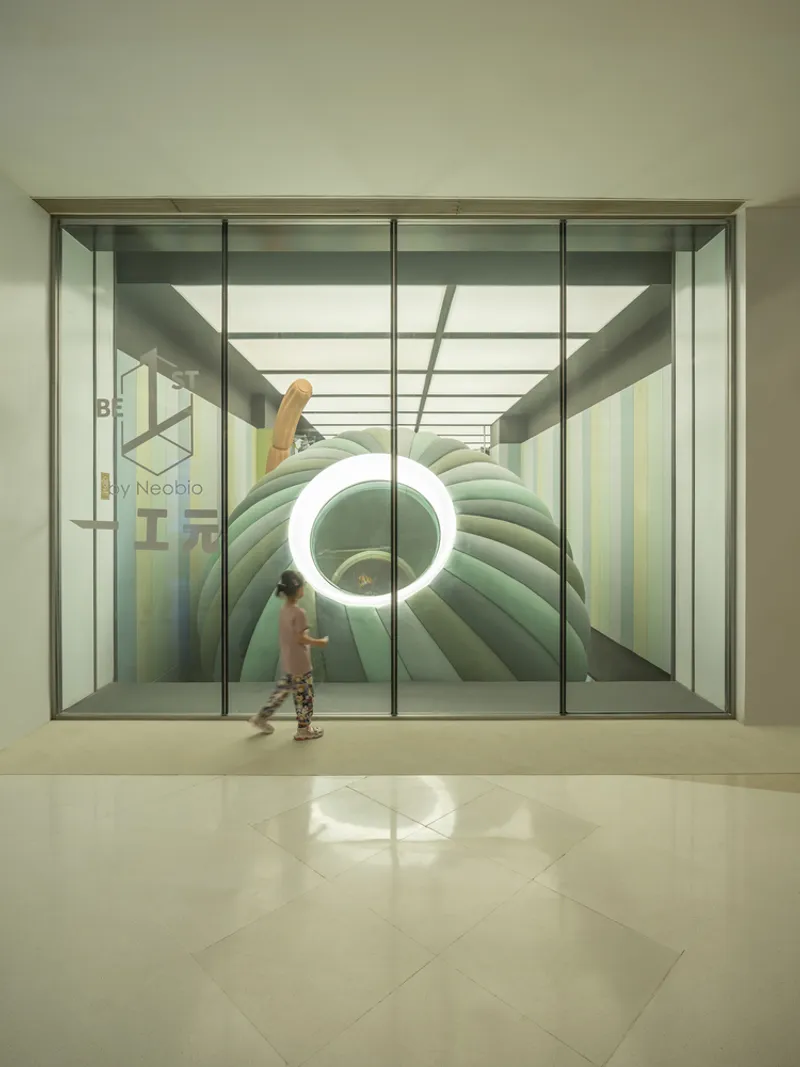
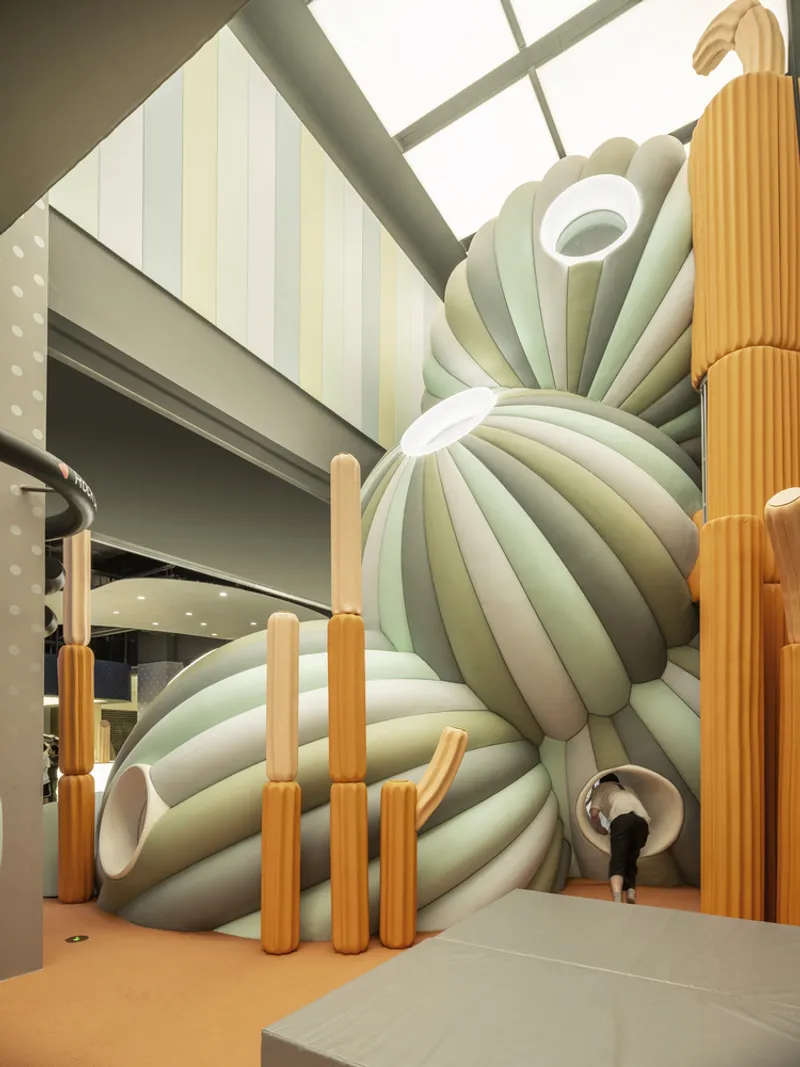
The central concept behind the Atlas of Superpower is inspired by the unique qualities found in nature. The design is based on a fictitious mythical island, featuring super organisms with special powers to survive in extreme conditions. The first edition of this sports center focuses on plants, particularly cacti, known for their remarkable ability to endure arid climates. The space features representations of three cactus species — Saguaro (Carnegiea), Golden Barrel (Echinocactus), and Prickly Pears (Opuntia) — each symbolizing different superpowers.
Exploring the Power of Cacti in Architecture
Each section of the venue embodies the survival strategies of these remarkable plants, incorporating their resilience and adaptability into the architecture. Saguaro, Golden Barrel, and Prickly Pears serve as metaphors for strength and endurance, with their features influencing the design of interactive play areas.
Design Vision: Playful and Interactive Sports Architecture
Integration of Architecture and Play
At the heart of the Atlas of Superpower is the integration of playful architecture. Waa has reimagined the traditional concept of a family sports center by blending playful elements directly into the structure. The space is designed to encourage physical activity and social engagement, with multiple areas for sports activities, interactive games, and family learning.
Barrel Cactus: A Climbing and Crawling Exploration
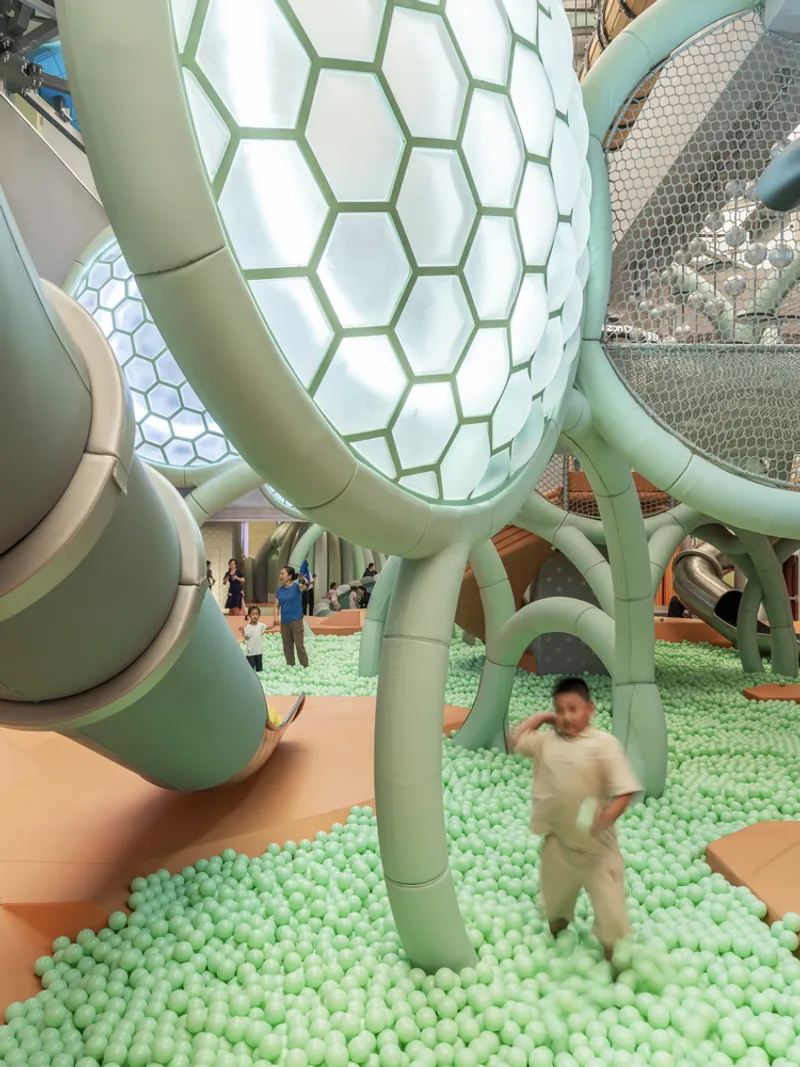
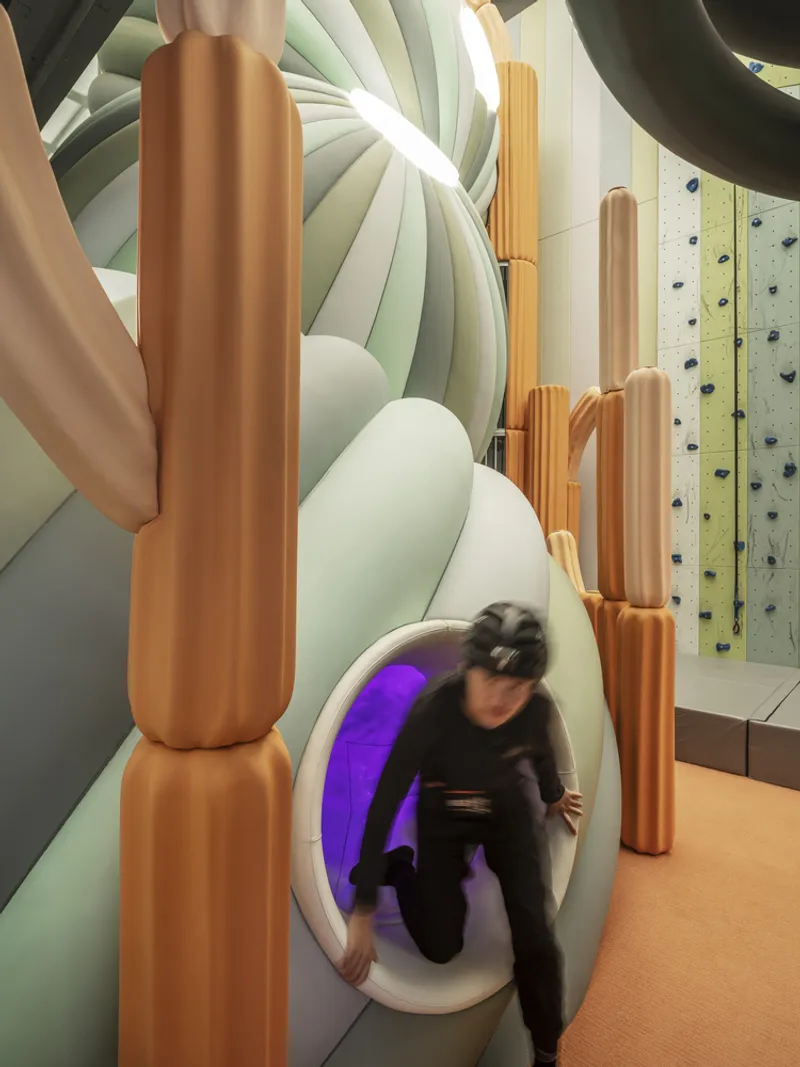
The Barrel Cactus structure is a standout feature, with seven spherical forms interconnected to create a climbing apparatus. This network allows children to exercise their climbing and crawling abilities in a dynamic and stimulating environment. The Barrel Cactus encourages exploration, as children can climb around the perimeter or crawl through the interconnected spheres, engaging their physical skills while having fun.
Hoop Cactus: A Climbing Adventure
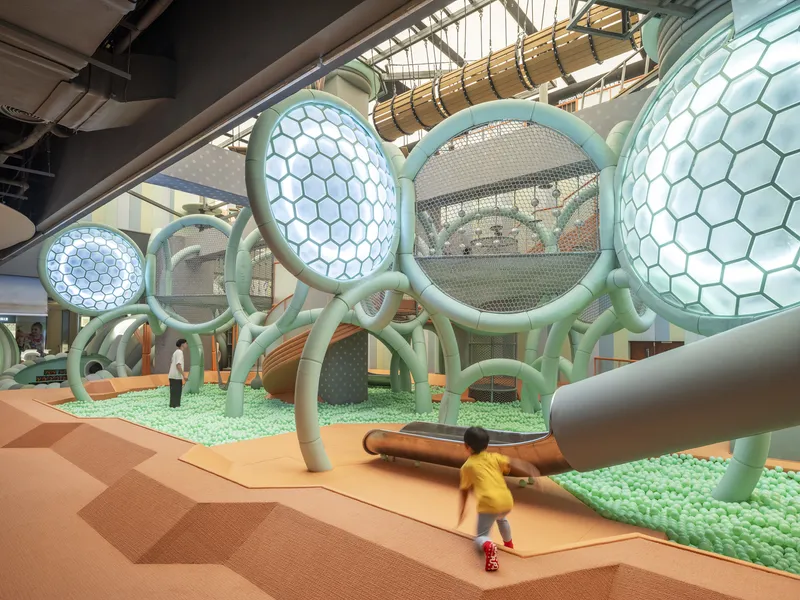
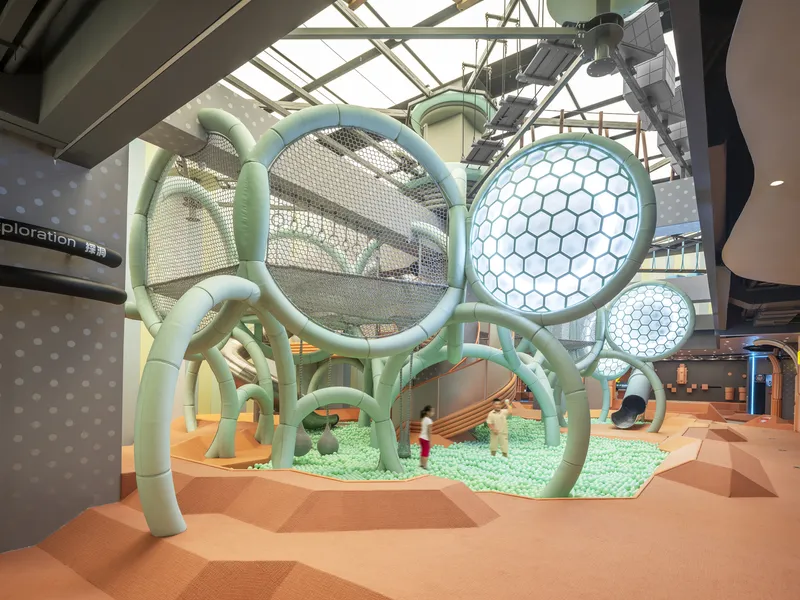
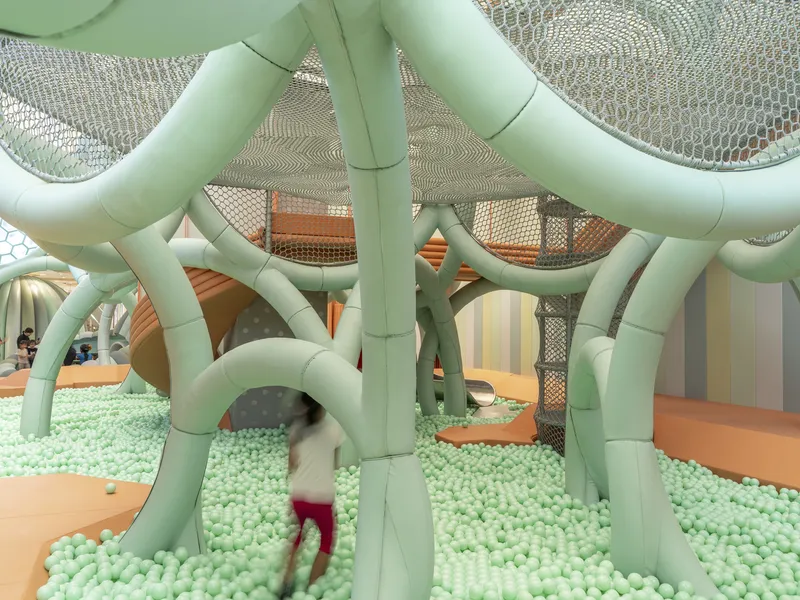
The Hoop Cactus is another central play structure in the space. Inspired by the spatial relationships found in cellular structures, this design incorporates 28 circular rings, each constructed using prefabricated steel tubes. The rings form two symmetrical radial structures, designed for a variety of activities such as high-altitude training, climbing nets, and slides. This versatile structure is a key feature in the space, providing vertical circulation and supporting the main play elements within the center.
Saguaro: Modular Play Furniture
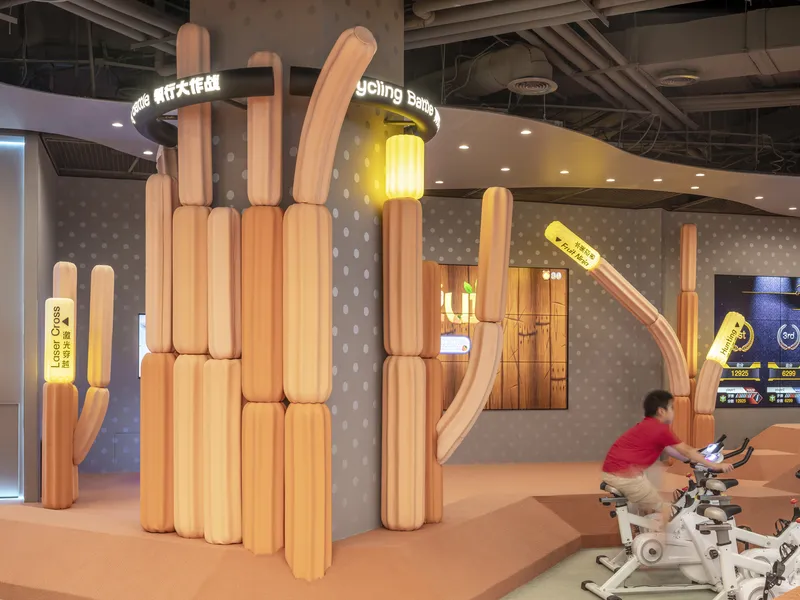
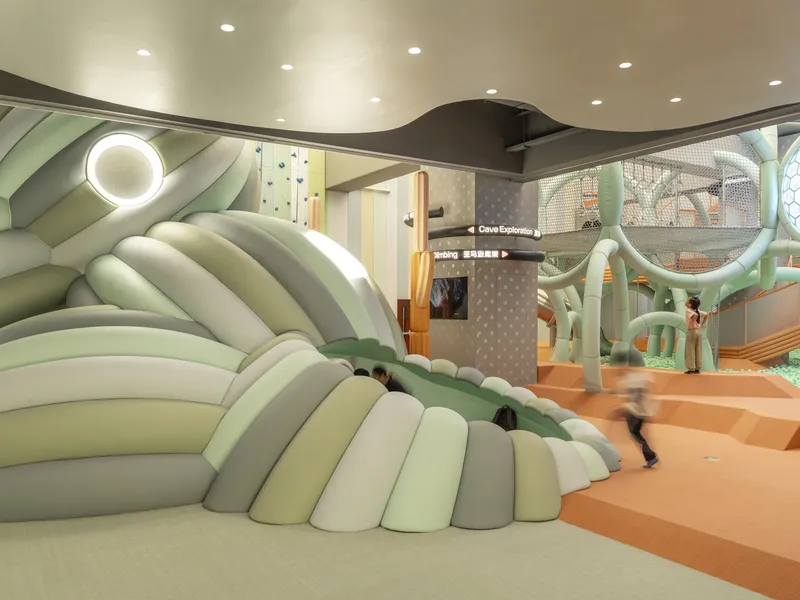
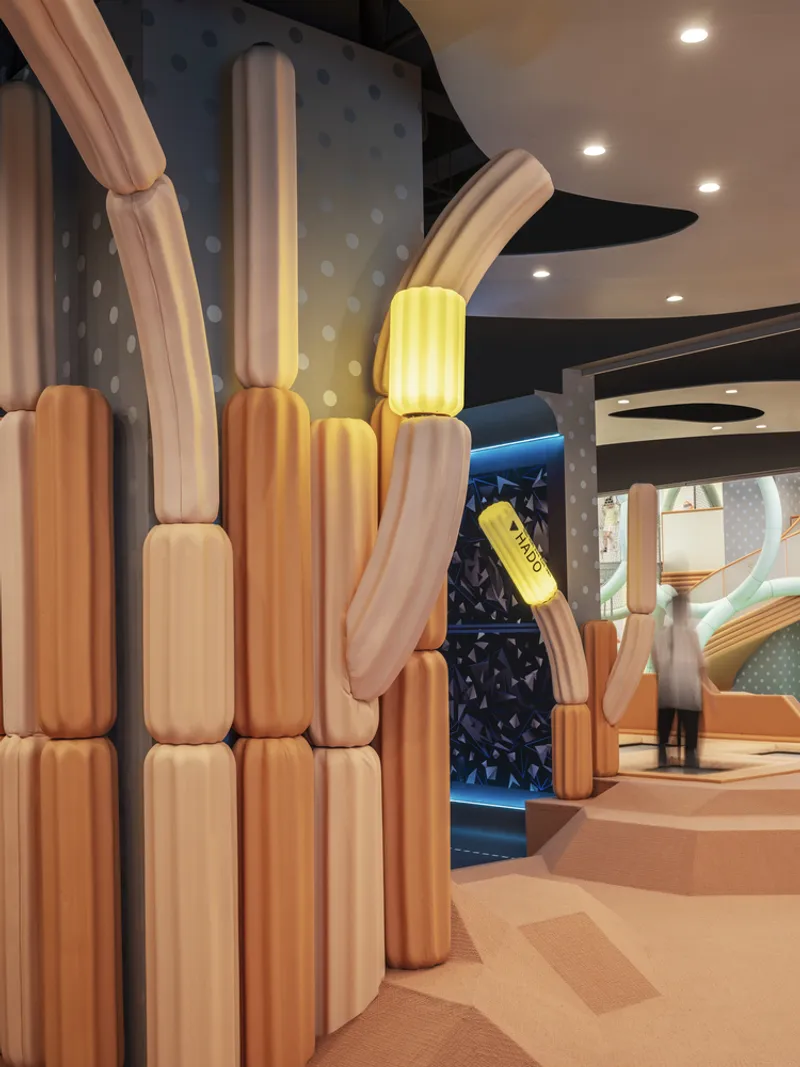
Inspired by the Saguaro cactus, the Saguaro furniture elements are designed to facilitate intuitive play. These cushioned modules are strategically placed throughout the space to encourage activities such as climbing, swinging, and jumping. Not only do they provide functional play opportunities, but they also serve as visual wayfinding tools and spatial dividers. The modular design of the Saguaro elements creates a flexible environment that enhances movement and interaction, promoting exploration and physical development.
Terrain: Sand Dunes as Physical Obstacles
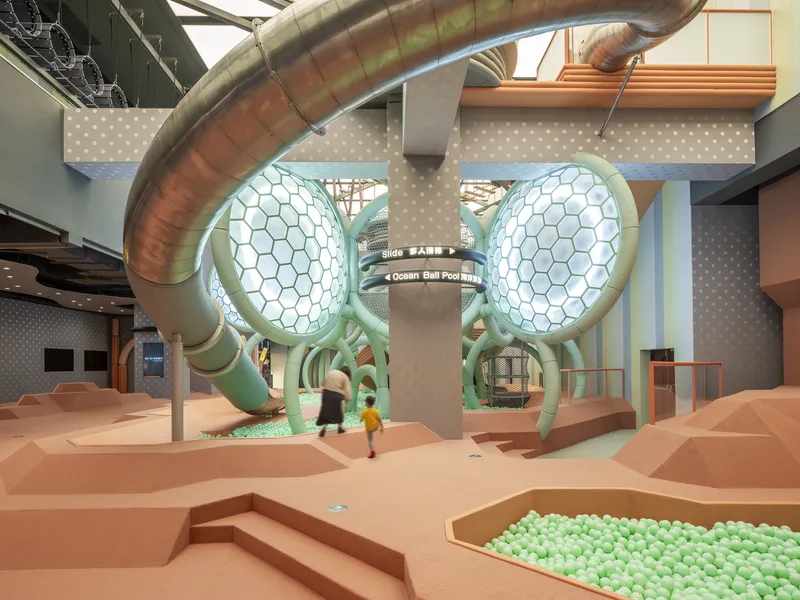
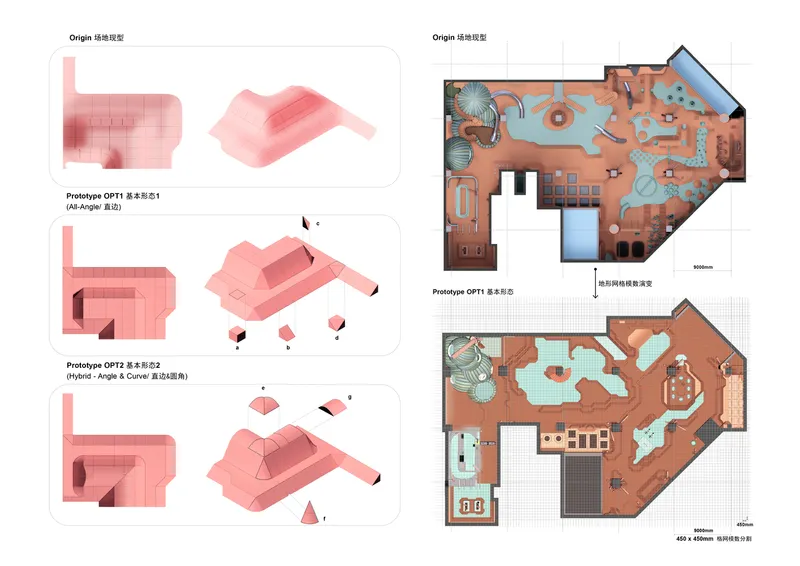
The terrain of the venue is designed to mimic the natural form of sand dunes, abstracted into trapezoidal standard blocks measuring 450x450 millimeters. These blocks are stacked and arranged in three-dimensional forms, transforming the floor into a physical obstacle training area. The varying elevations and hollow spaces created by the cactus-inspired elements provide additional challenges, making it a fully immersive and physically engaging environment for users of all ages.
The Role of Family and Sports in the Design
A Family-Oriented Sports Center
The Atlas of Superpower isn’t just a sports center; it’s a place where families can come together to engage in physical activity and learn through play. The design features spaces for yoga, exercise classes, and group VR and AR games, encouraging active participation. Traditional games are incorporated into the design alongside modern, high-tech play elements, creating a diverse and inclusive experience that caters to all family members.
Collaborative Learning and Interactive Spaces
The design also emphasizes shared learning, with spaces dedicated to group activities where families can participate in exercises together. The interactive nature of the venue encourages collaboration, helping to foster a sense of community while promoting physical well-being. The integration of playful architecture ensures that both children and adults can enjoy the space, building a connection through shared experiences.
Creating Balance: Architecture and Toy Integration
A Fusion of Architecture and Play Elements
The Atlas of Superpower achieves a unique balance between architecture and toy integration. Waa's approach demonstrates that spaces designed for playful interaction can also be functional, safe, and aesthetically pleasing. By integrating play equipment into the architectural fabric of the space, the design emphasizes the importance of both visual and functional elements.
A New Approach to Play Spaces
Instead of the traditional approach where play equipment is segregated into designated areas, waa has chosen to fuse architectural structure and play apparatus to create a more organic, integrated experience. Elements like the Barrel Cactus, Hoop Cactus, and Saguaro are seamlessly embedded within the architecture, creating fluid transitions between different zones of play. This approach not only enhances the functionality of the space but also makes it visually stimulating and engaging for users.
Enhancing Family Enjoyment Through Play and Movement
The Atlas of Superpower is a pioneering example of sports architecture that focuses on the development of body movement awareness through interactive and playful design. By drawing inspiration from the resilience of nature’s superpowers, particularly the cacti, the design offers a space that promotes physical activity, family engagement, and fun. The integration of architecture and play within the space creates an immersive environment that encourages exploration, learning, and growth.



Popular Articles
Popular articles from the community


Co-Life: Senior Housing Design That Reconnects Older Adults With the City
Co-Life reimagines senior housing design through healing gardens, shared streets, workshops, and a sustainable community across generations.

The Musturak Paradise: Senior Living Architecture for a Connected Future in Temara, Morocco
The Musturak Paradise reimagines senior living architecture in Temara via private homes, social spaces, culture, community, and shared care.

Play: Fragments of Their World
Familiar architecture becomes modular playground design, creating safe spaces where displaced children can learn, connect, imagine and play.

The Earth Pod: 3D Printed Homes for Resilient Refugee Communities
The Earth Pod reimagines refugee housing through 3D printed homes made from clay, combining resilience, self-sufficiency, and rapid shelter.


Similar Reads
You might also enjoy these articles


Hodi-Mandai Geram
Project Function: Preservation and revitalization of the Intangible heritage and socio-spatial identity of the Hodi by Housing, Cultural Memory Center, Sacred Grove, landscape, local tourism economy


Olio Towers: A Mid-Rise for Performers That Fuses Housing, Rehearsal, and Stage
Located blocks from Houston's Theater District, this modular tower stacks living units around a central performance atrium.

Oasis: Modular Green Housing Carved into Dhaka's Urban Fabric
A shortlisted Plugin Housing entry reclaims unauthorized settlements in Dhaka with stepped concrete volumes, green roofs, and ventilation-driven design.

Black Hole: A Floating Megastructure for the Post-Physical Era
Emiliano Mazzarotto envisions a spherical, self-scaling arena where e-sports, digital hotels, and holographic stadiums replace traditional public space.

Explore Sports Architecture Competitions
Discover active competitions in this discipline


Challenge to design a barrier free sports center


Challenge to design an outdoor ice-rink and park


Challenge to reimagine the Iron Throne


Photograph architecture without architects
Comments (0)
Please login or sign up to add comments
No comments yet. Be the first to comment!