
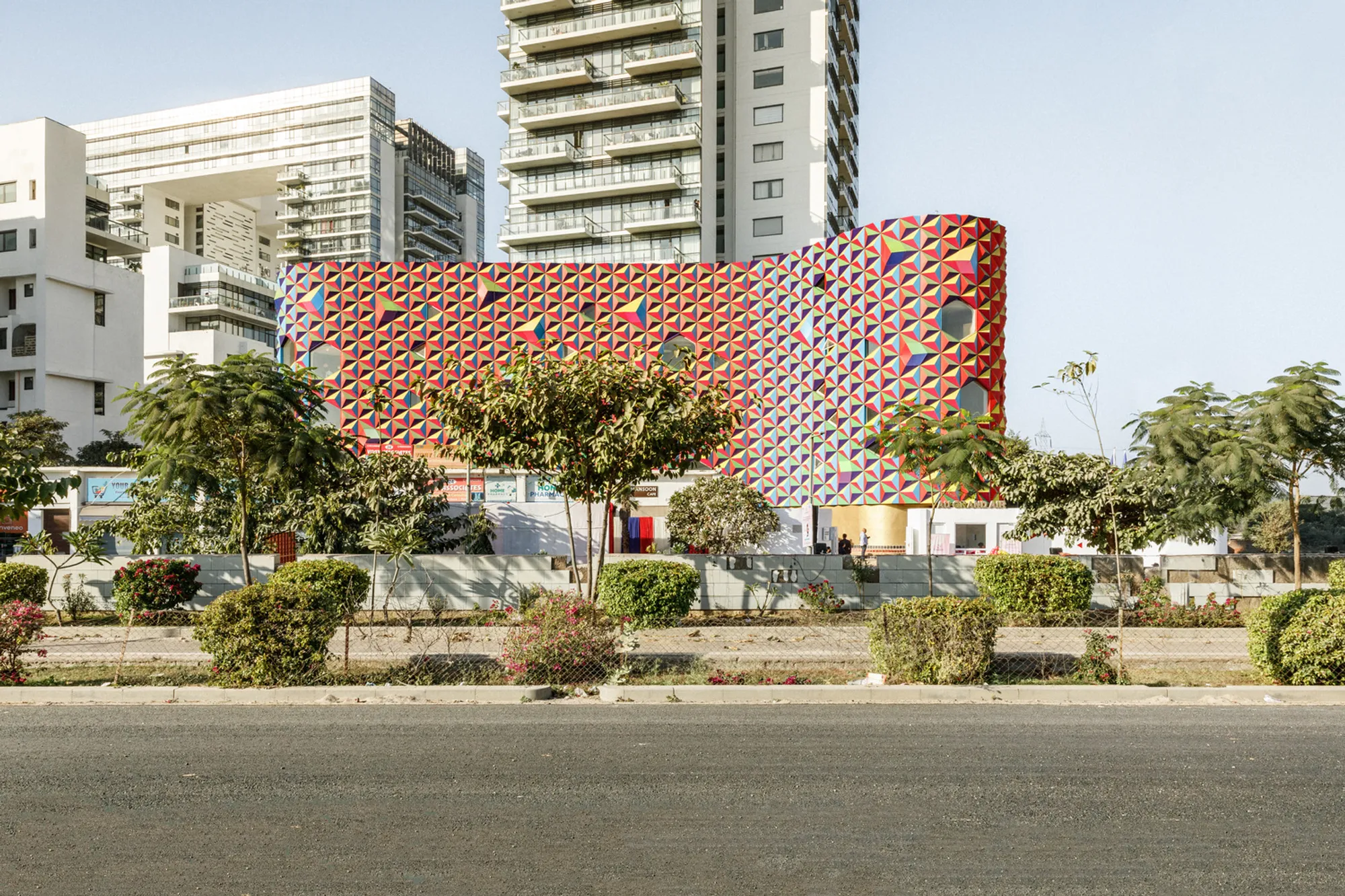
Au Grand Air Nursery & Kindergarten by Paul Le Quernec – A Vibrant Learning Space in Gurgaon, India
Au Grand Air Nursery & Kindergarten in Gurgaon by Paul Le Quernec blends playful design, vibrant façade, and child-centered educational spaces.


Au Grand Air Nursery & Kindergarten, designed by French architect Paul Le Quernec, redefines early childhood education spaces in Gurgaon, India. Completed in 2022, the project merges playful architecture, vibrant design, and contextual sensitivity to create an environment where children can learn, explore, and grow.
What makes this project unique is the story of its origin. In 2015, during a challenging phase for the architectural practice, a chance phone call from Mr. Aditya, an Indian entrepreneur with the vision to establish world-class nurseries and kindergartens in India, changed everything. After initial skepticism, the collaboration began in Paris and later took shape in India, where the project started entirely from scratch.
Context & Urban Integration
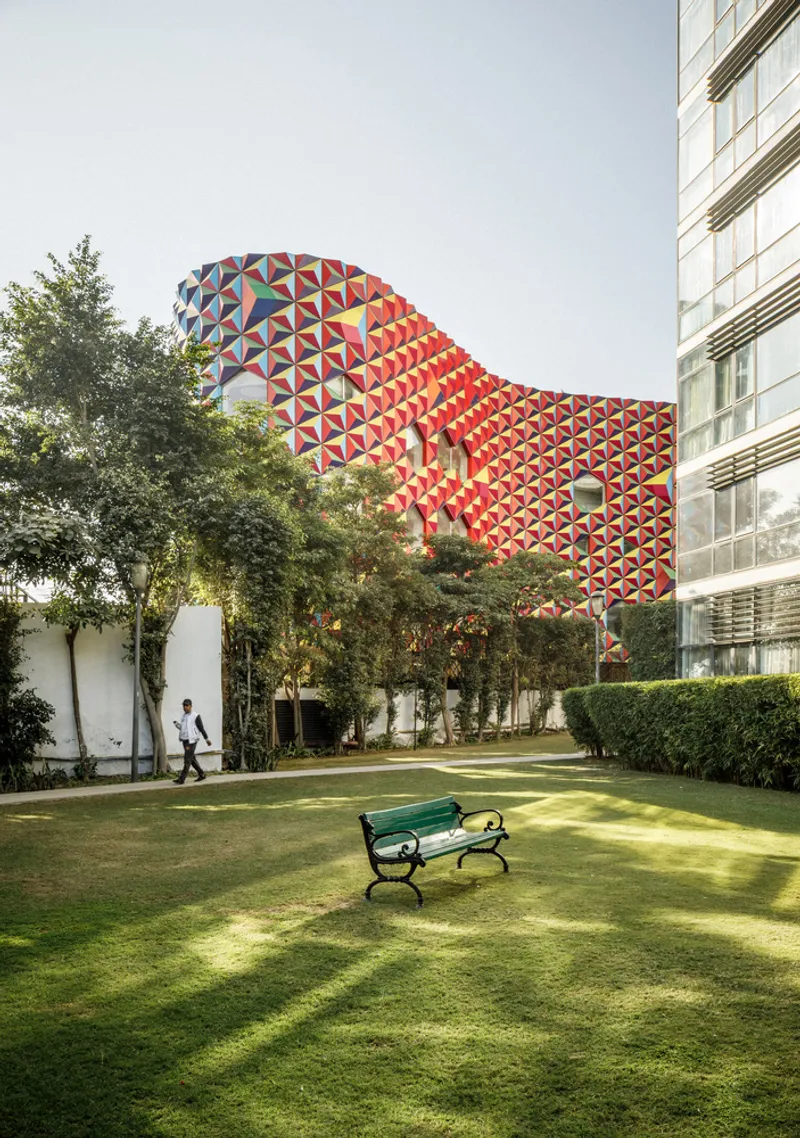
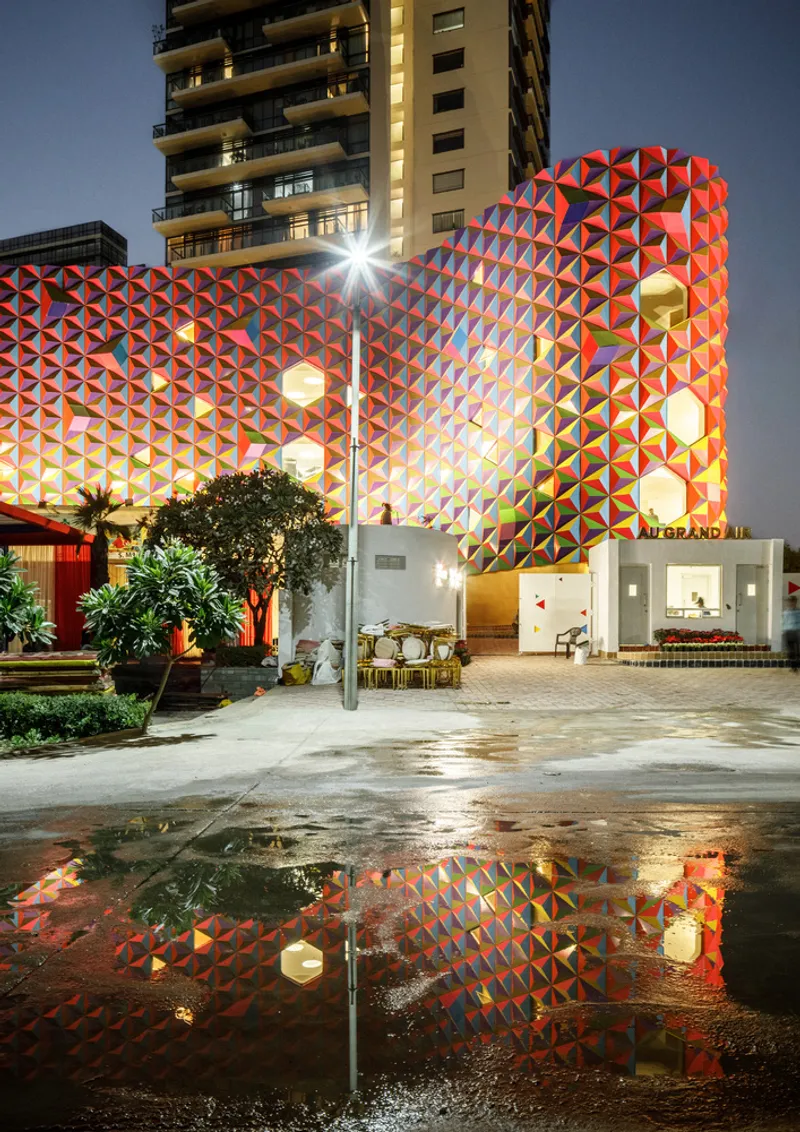
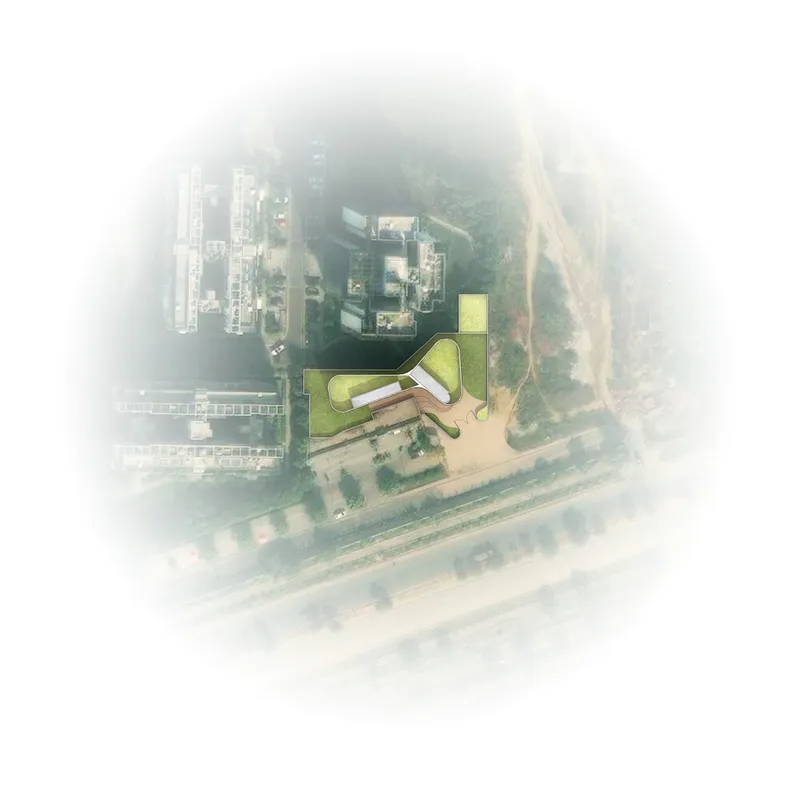
Located in Gurgaon, a rapidly growing satellite city of New Delhi, the school stands at the edge of a luxury residential district and adjacent wastelands. Surrounded by towering 30-story apartment blocks and barren landscapes, the kindergarten was designed as a symbol of contrast—a small yet striking structure that brings vitality to its neighborhood.
The building’s hammer-shaped plan emerged from navigating complex urban planning regulations in India, highlighting the architect’s adaptability. Rising nearly 15 meters high, the project establishes a bold yet childlike presence amidst Gurgaon’s rigid verticality.
Design Concept – The “Urban Child”
The ambition behind the project was clear: to design a building that breaks the monotony of surrounding towers and embodies the playfulness of children. Unlike the monochrome, monotonous high-rises nearby, the kindergarten expresses life, energy, and vibrancy.
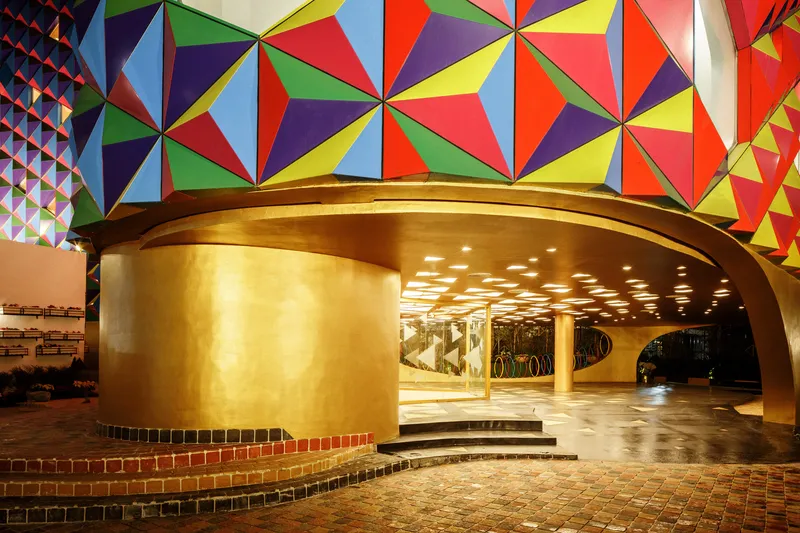
While bright colors are often stereotypically linked with childhood, Le Quernec’s approach was more nuanced. Here, color was used as a dialogue with the city rather than only for children. The interiors remain calm and restrained, while the façade radiates vibrancy, turning the school into an urban landmark.
Innovative Façade – A Vibrant Spectrum
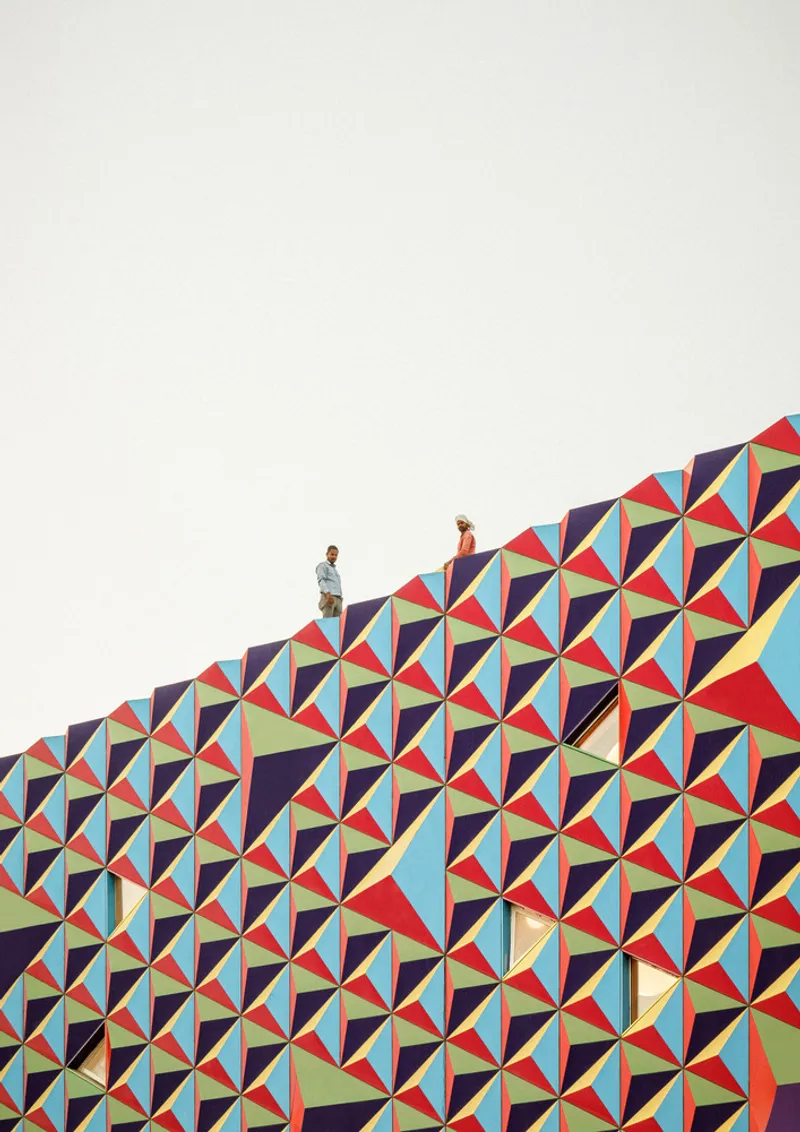
The exterior features a “pineapple-skinned” cladding system composed of three-sided pyramids. Each facet alternates between the three primary colors—cyan, magenta, yellow—and the three secondary colors—orange, green, violet.
Depending on the angle of view, light, and time of day, the façade constantly shifts in appearance. From the street, it may appear blue or orange, while from high-rise balconies it glows green or yellow. This dynamic chromatic expression symbolizes the ever-changing energy of children, bringing joy not only to the students but also to the larger community.
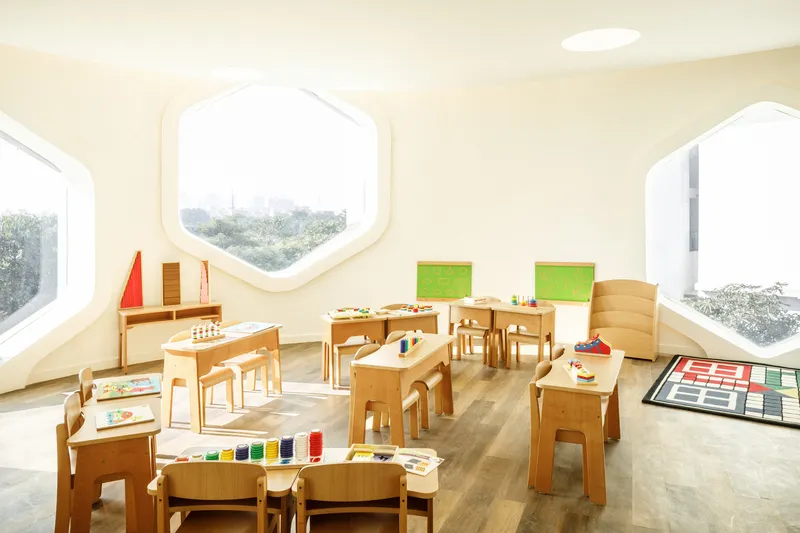
Interior Experience
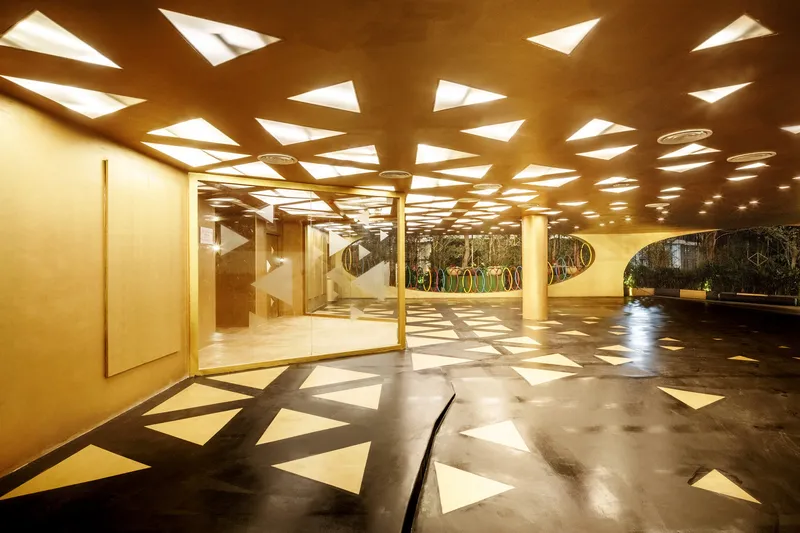
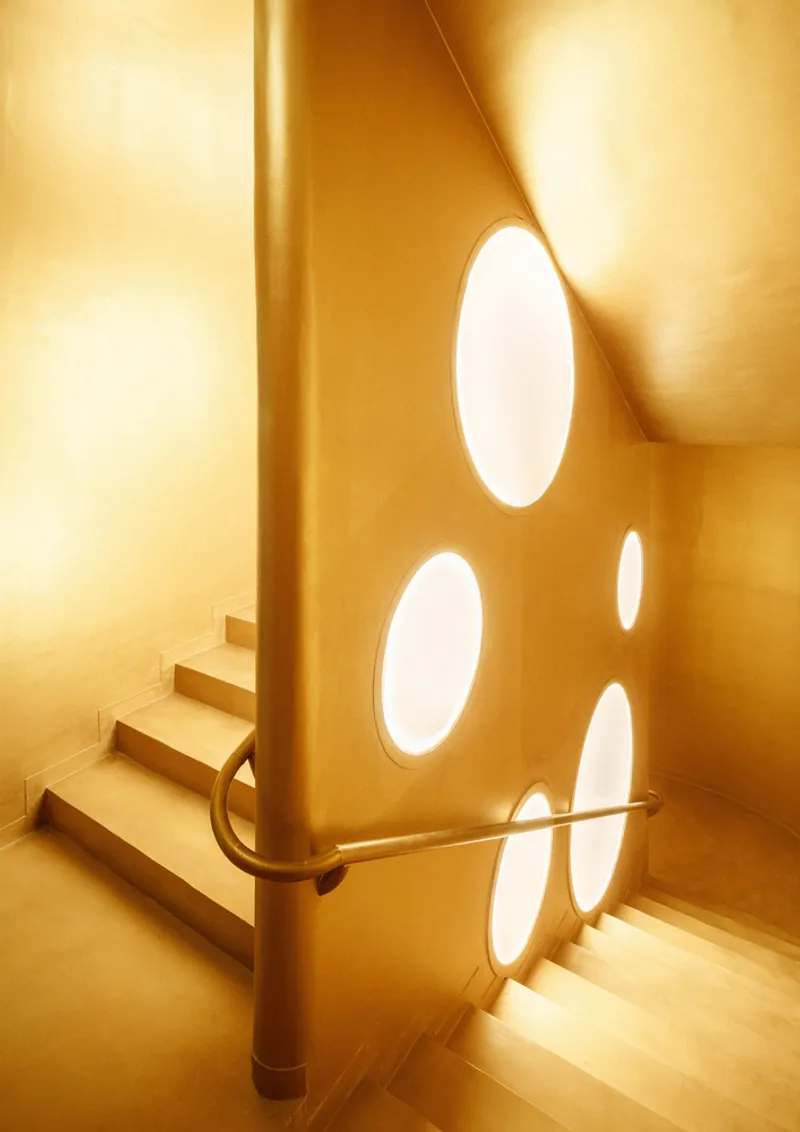
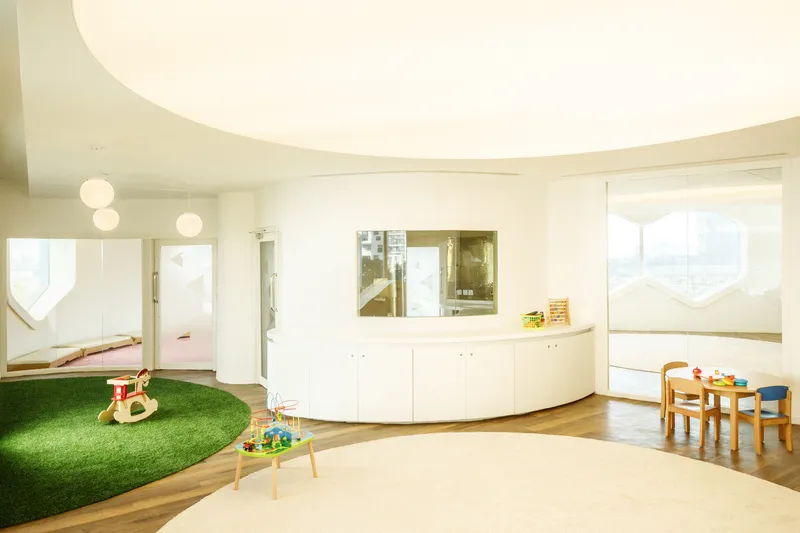
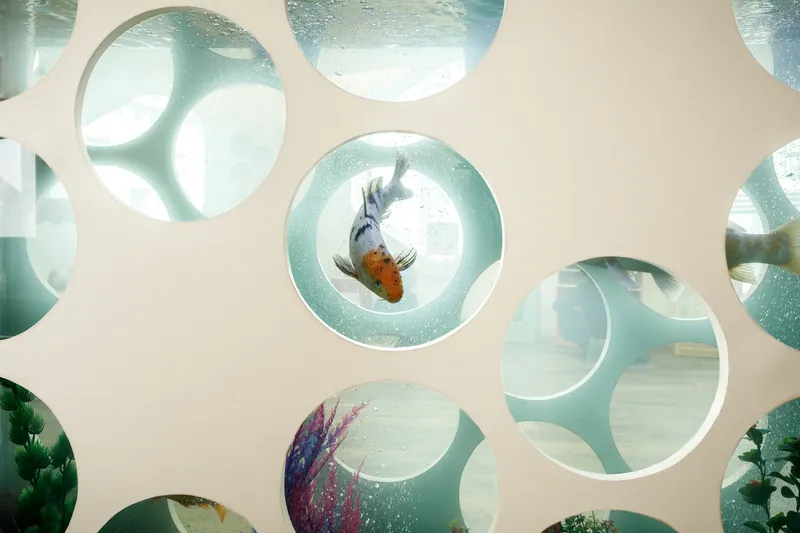
Inside, the kindergarten balances spatial openness and intimate corners, allowing children to feel both secure and free to explore. The use of natural light, fluid circulation, and warm materials fosters an atmosphere of comfort and creativity. The restrained interior palette ensures that the architecture complements rather than overwhelms the children’s activities.
A Landmark of Playful Architecture in India
The Au Grand Air Nursery & Kindergarten is more than just a school—it is an architectural statement about how educational spaces can challenge urban monotony, celebrate childhood, and inspire communities. By bringing European design sensibilities into the Indian urban landscape, Paul Le Quernec created a building that is both playful and profound, small yet significant, subtle yet striking.




Popular Articles
Popular articles from the community


Riyadh For All: Intergenerational Urban Design for Active Aging in Rabat
Riyadh For All reimagines urban design in Rabat with intergenerational co-living, adaptive courtyards, and Moroccan cultural exchange today.

The Musturak Paradise: Senior Living Architecture for a Connected Future in Temara, Morocco
The Musturak Paradise reimagines senior living architecture in Temara via private homes, social spaces, culture, community, and shared care.

Conexión: Biophilic Design Reimagines High-Rise Living in Hong Kong
Conexión reimagines high-rise living in Hong Kong through biophilic design, green facades, shared spaces, daylight, water and nature within.

Hill & Cross Opera: Sculptural Opera House Architecture Shaped by Tallinn’s Landscape and Identity
Hill & Cross Opera reimagines opera house architecture in Tallinn through its sculptural hill, civic plaza, glass wave and a luminous cross.


Similar Reads
You might also enjoy these articles


Hodi-Mandai Geram
Project Function: Preservation and revitalization of the Intangible heritage and socio-spatial identity of the Hodi by Housing, Cultural Memory Center, Sacred Grove, landscape, local tourism economy


Olio Towers: A Mid-Rise for Performers That Fuses Housing, Rehearsal, and Stage
Located blocks from Houston's Theater District, this modular tower stacks living units around a central performance atrium.

Oasis: Modular Green Housing Carved into Dhaka's Urban Fabric
A shortlisted Plugin Housing entry reclaims unauthorized settlements in Dhaka with stepped concrete volumes, green roofs, and ventilation-driven design.

Black Hole: A Floating Megastructure for the Post-Physical Era
Emiliano Mazzarotto envisions a spherical, self-scaling arena where e-sports, digital hotels, and holographic stadiums replace traditional public space.

Explore Educational Building Competitions
Discover active competitions in this discipline



Challenge to design public laboratory


Challenge to reimagine the Iron Throne


Photograph architecture without architects


Illustrate the lost glory of Angkor Wat - Render Challenge
Comments (0)
Please login or sign up to add comments
No comments yet. Be the first to comment!