
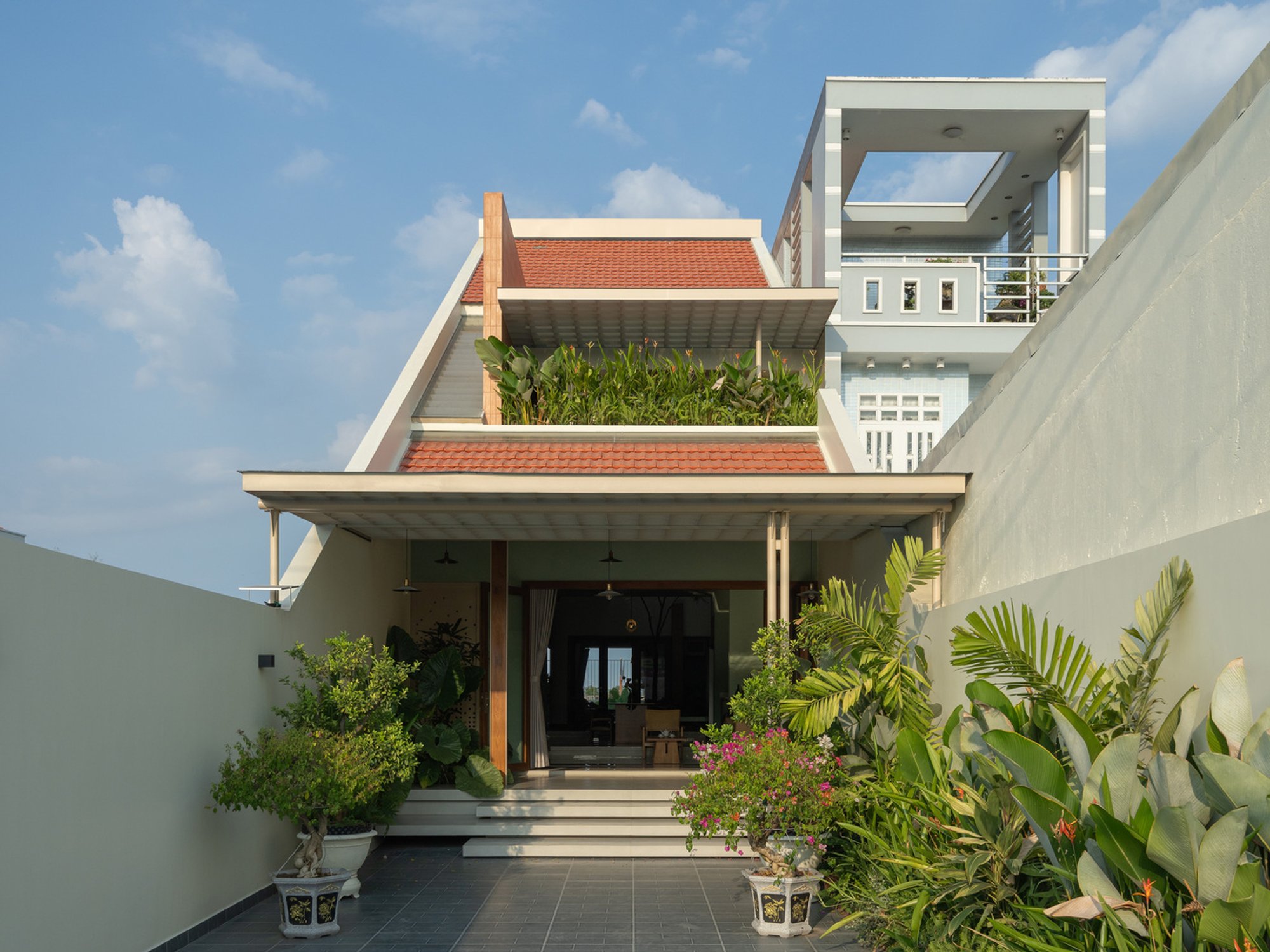
Aunt Four’s House by AHA Architects – A Modern Interpretation of Southern Vietnamese Tradition
A three-generation Vietnamese home blending tradition and modernity, featuring green buffers, courtyards, verandas, flexible spaces, passive design, and family-centered living.

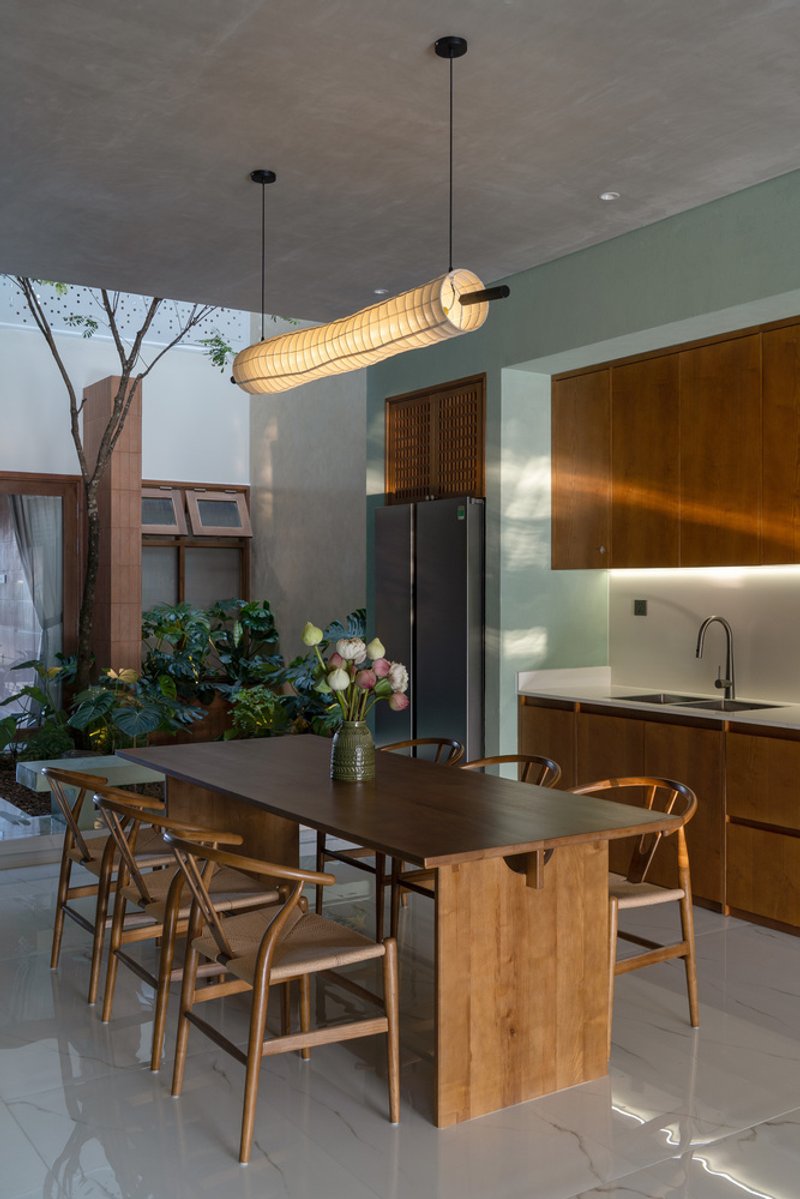
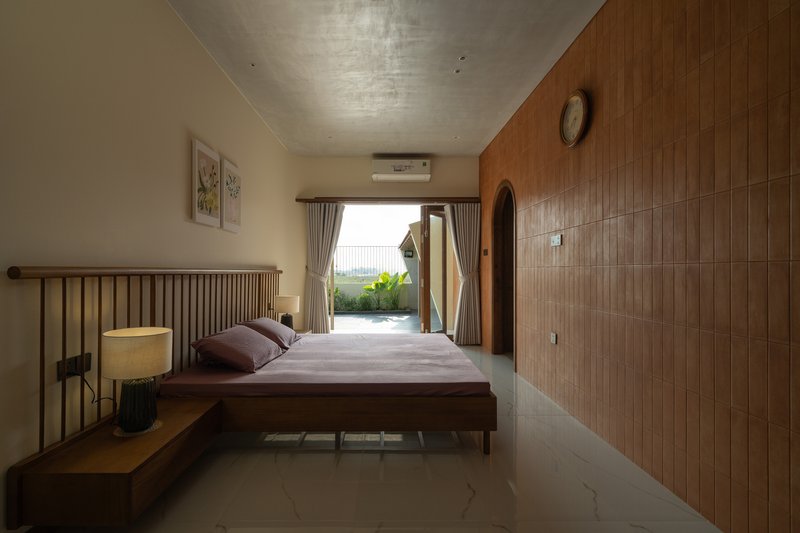
Aunt Four’s House, designed by AHA Architects, is a three-generation family residence nestled in the rural landscapes of Long An, Vietnam. Located along a busy national highway, the project confronted two major challenges: traffic noise and dust pollution. The architects’ response was both practical and poetic, introducing layered green buffers that shield the home while evoking the traditional Southern Vietnamese garden house aesthetic.
A Home Rooted in Memory and Family Heritage
More than just a dwelling, Aunt Four’s House serves as a vessel of family memories. It reflects the spirit of the previous family home where parents spent their lives and where festive gatherings once thrived. The new design ensures that holidays and celebrations remain intimate and full of joy, connecting generations through familiar rituals, laughter, and the aromas of home-cooked meals.
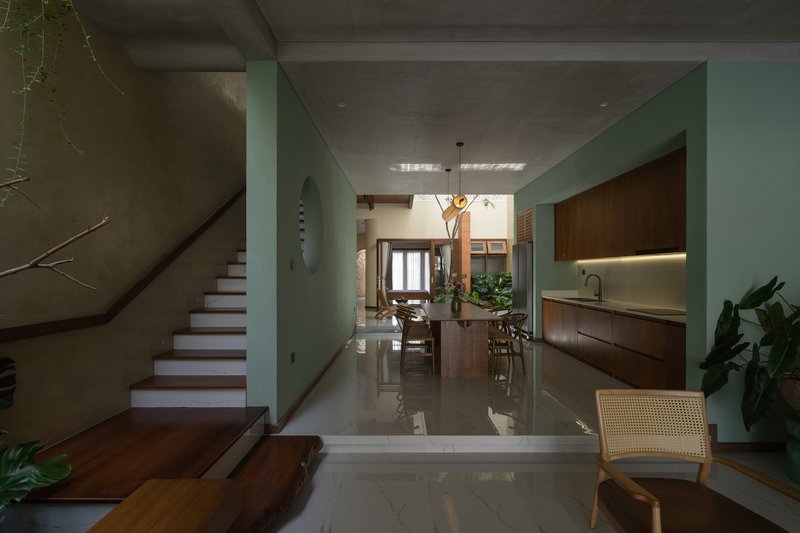
Design Strategy: Open, Buffer, Enclosed, Open
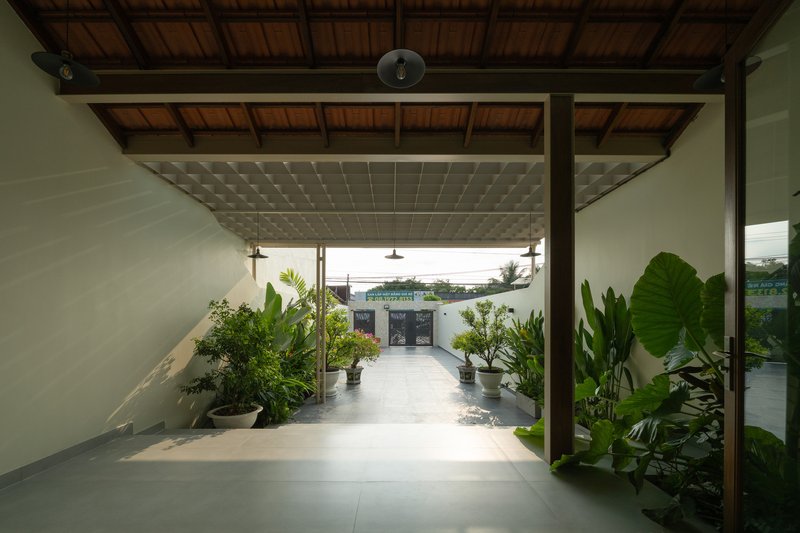
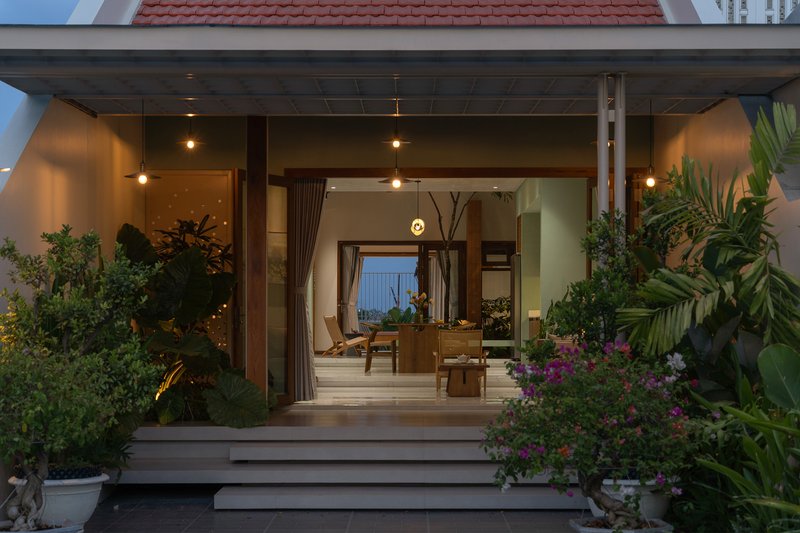
The house is strategically set back from the street, creating a generous forecourt that functions as a transitional green buffer. This open garden filters dust, reduces noise, and creates a serene threshold before entering the main house. Drawing inspiration from local architecture, the home features sloped red-tile roofs and wide front and rear verandas, enhancing both its visual identity and microclimatic comfort.
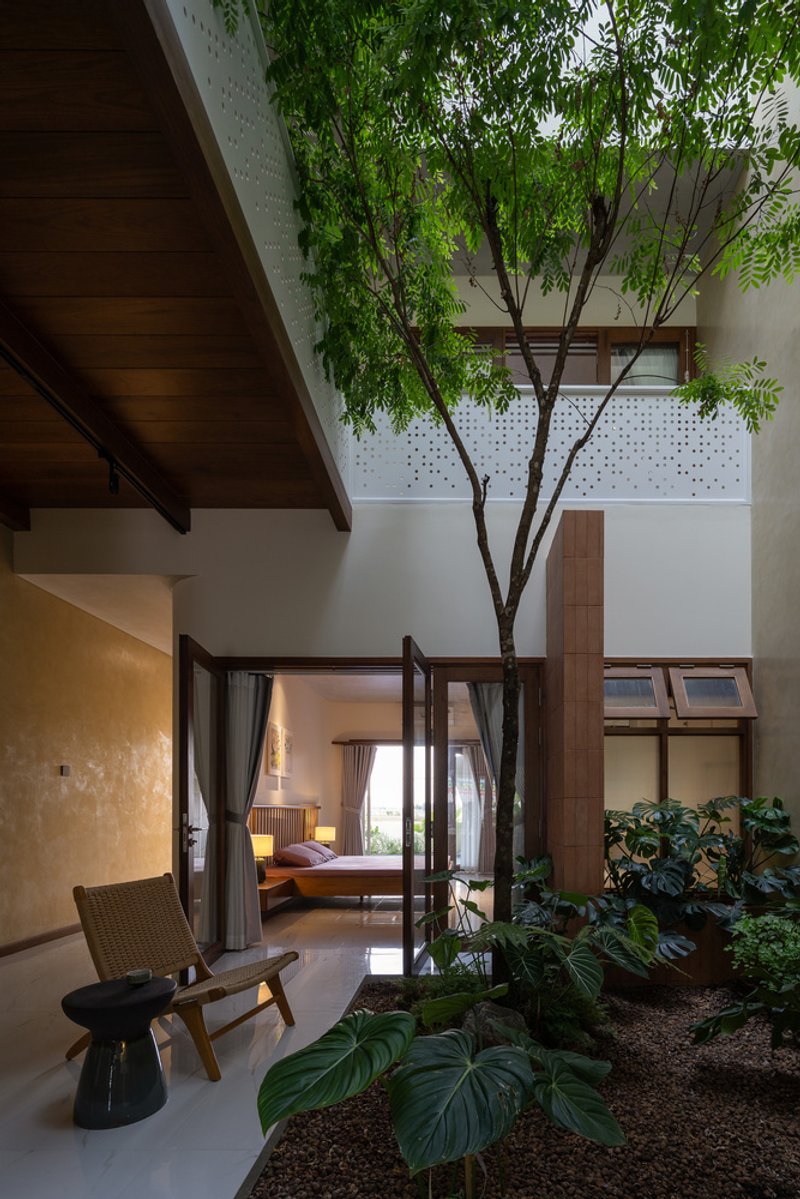
Spatial organization follows a deliberate principle: “open – buffer – enclosed – open.” Courtyards, verandas, atriums, and skylights are seamlessly interwoven to maximize cross-ventilation and daylight penetration, maintaining a strong connection between indoor and outdoor spaces.
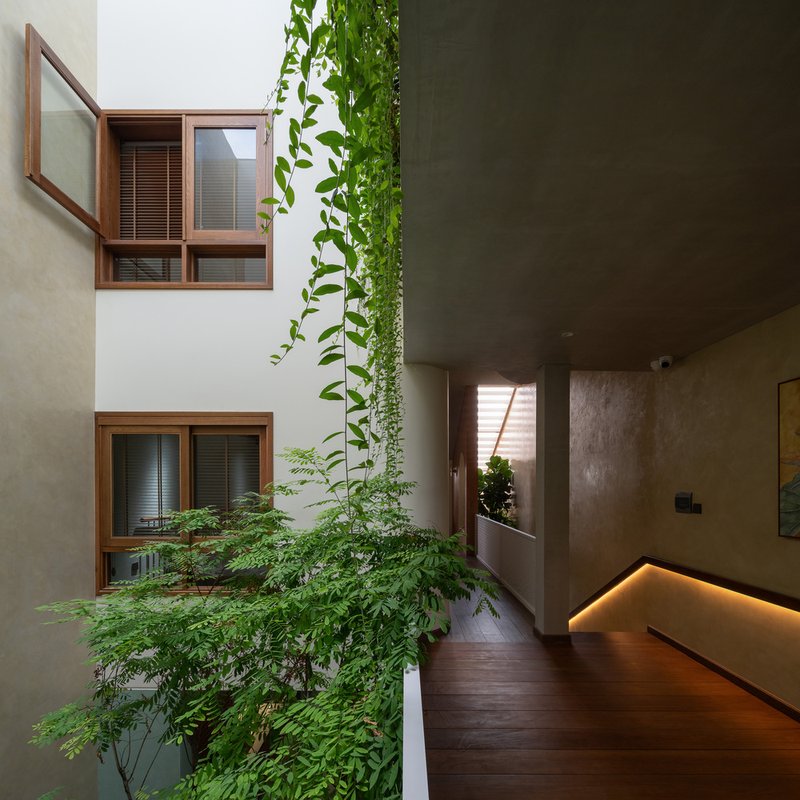
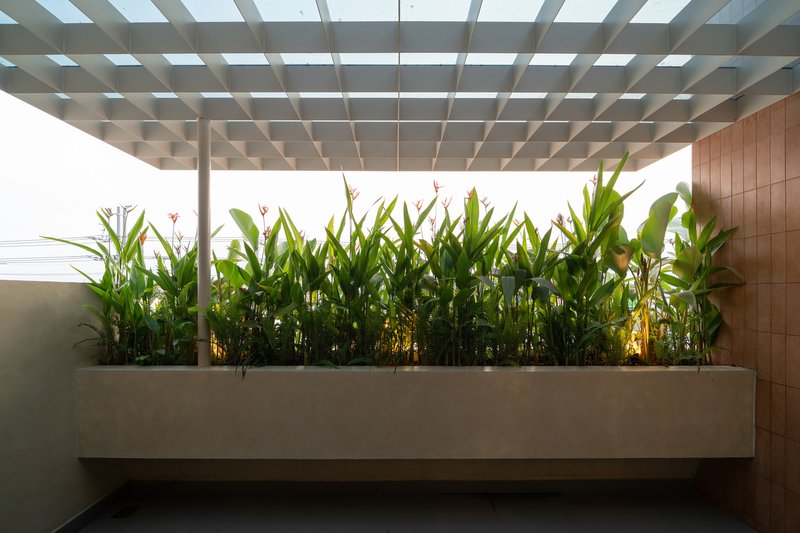
Flexible Spaces for Multigenerational Living
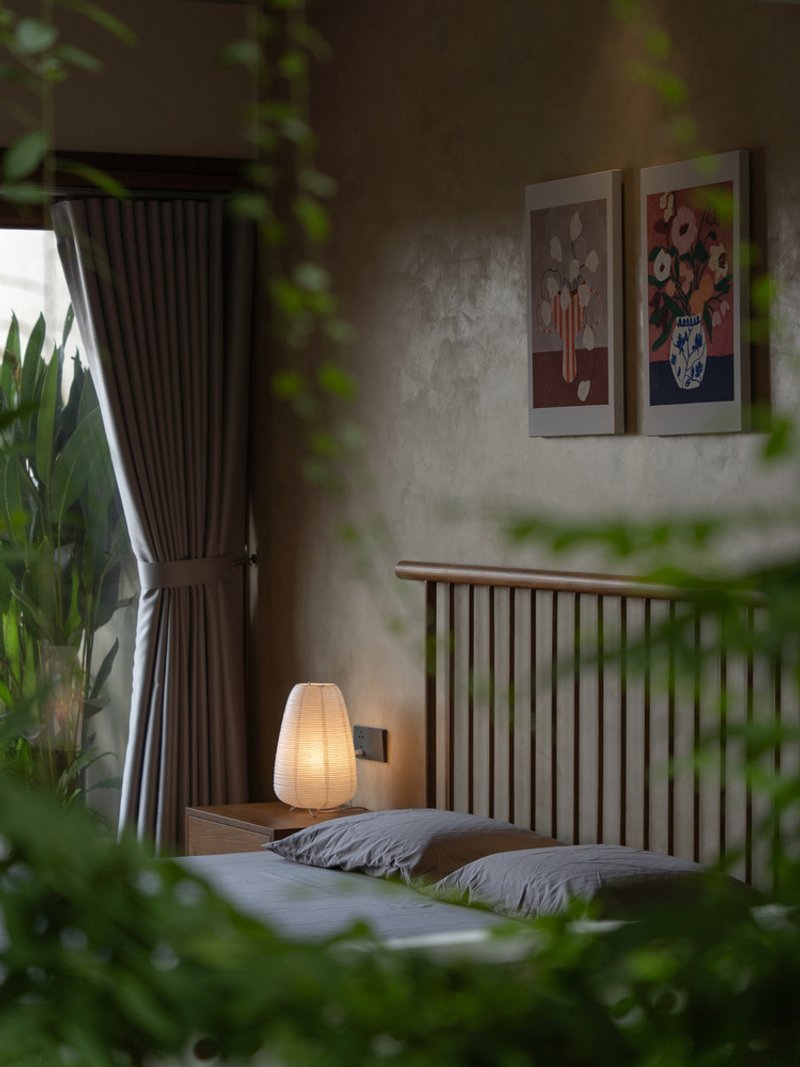
Rather than rigid layouts, the home is designed as a flexible system of spaces promoting interaction and exploration across multiple levels. For the youngest generation, bedrooms include mezzanines and spiral stairs leading to rooftop living areas. Large arched openings guide daylight into the hallways below, enriching the visual experience and fostering emotional connections between different areas of the house.
The Heart of the Home: Atrium Garden
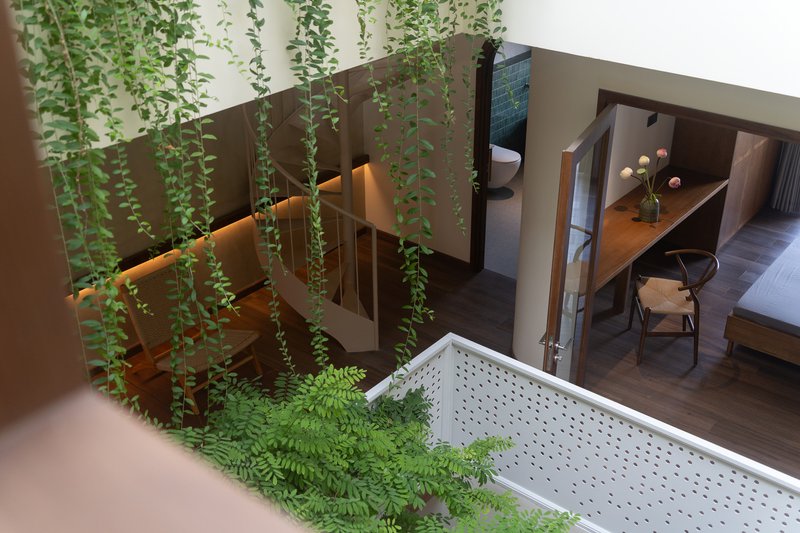
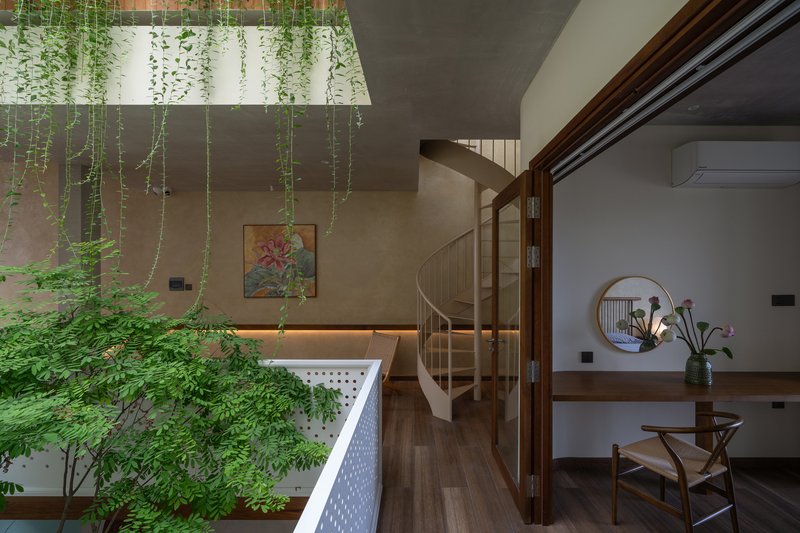
At the center of the residence lies a large atrium with a vertical garden, acting as the home’s green heart. Morning light filters through tree canopies, creating dynamic shadows, while breezes carry the scent of foliage into every room. This vertical core enhances natural ventilation, acoustic comfort, and encourages casual family interactions across levels.
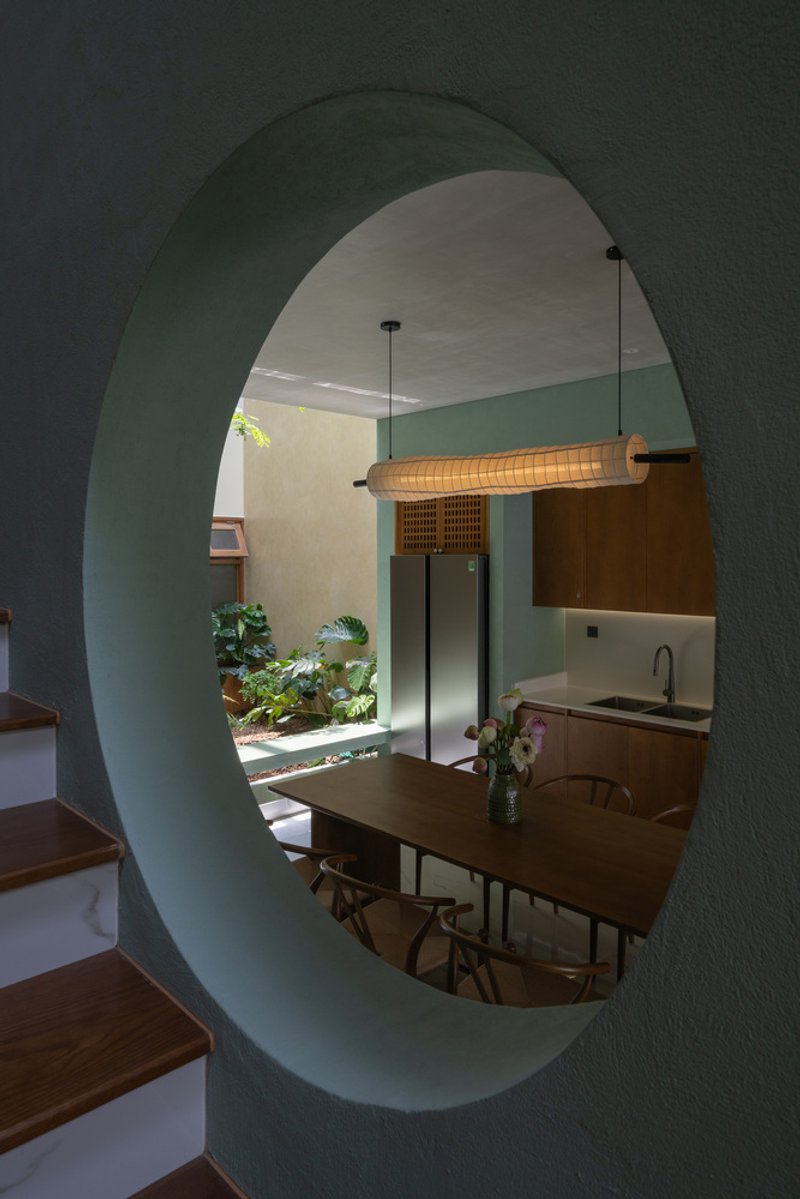
Materiality: Tradition Meets Modern Comfort
Material selection emphasizes warmth, durability, and tactility. Terracotta bricks, timber, and clay tiles create a sensory richness and provide thermal performance, while surrounding greenery softens the building’s presence. By combining vernacular forms with passive design strategies, Aunt Four’s House balances traditional cultural memory with modern living needs, demonstrating how architecture can honor the past while accommodating contemporary lifestyles.
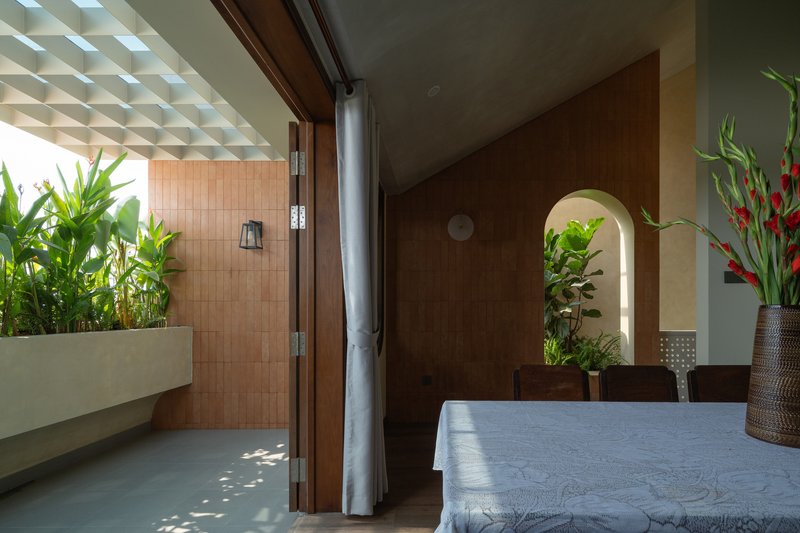
All photographs are works of Quang Dam



Popular Articles
Popular articles from the community

boq architekti Fits a Gabled Family House onto a Tiny Moravian Hillside Plot with No Room for a Garden
A 115 square meter home in South Moravia trades a garden for a rooftop terrace and a fully glazed facade facing the village below.
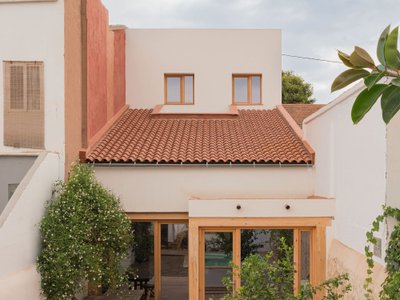
Paco Oria Estudio Rebuilds a 1949 Valencian Town House Around Timber, Terracotta, and a New Interior Patio
In Godella, Spain, a semi-detached house from the postwar era is stripped to its party walls and rebuilt with wood and ceramics.
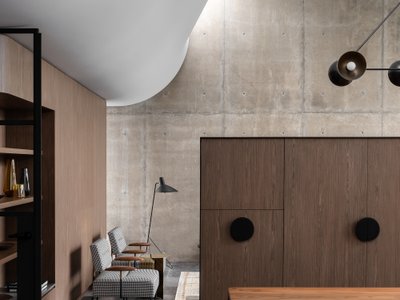
Studio Gram Unfurls a Concrete Curve Through an Adelaide Queen Anne Villa
In Rose Park, a billowing concrete threshold stitches a century-old house to a sun-chasing pavilion organized around an existing pool.
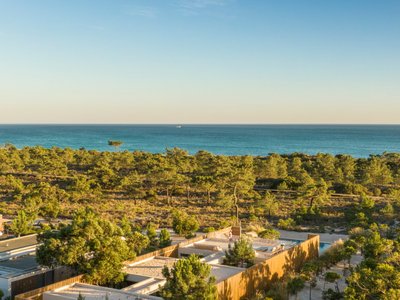
BICA Arquitectos Buries a Coastal Home in a Man-Made Dune on Portugal's Tróia Peninsula
A 300-square-meter house of timber, sand mortar, and travertine dissolves into the dune landscape it helped regenerate on the Alentejo coast.


Similar Reads
You might also enjoy these articles

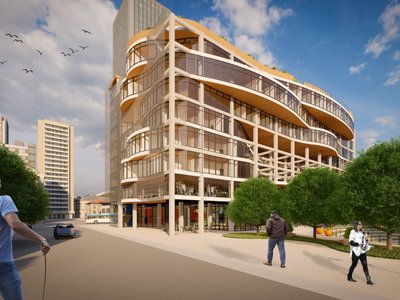
Olio Towers: A Mid-Rise for Performers That Fuses Housing, Rehearsal, and Stage
Located blocks from Houston's Theater District, this modular tower stacks living units around a central performance atrium.
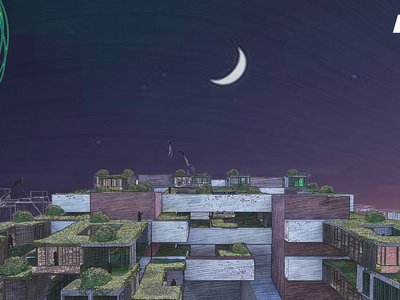
Oasis: Modular Green Housing Carved into Dhaka's Urban Fabric
A shortlisted Plugin Housing entry reclaims unauthorized settlements in Dhaka with stepped concrete volumes, green roofs, and ventilation-driven design.

Black Hole: A Floating Megastructure for the Post-Physical Era
Emiliano Mazzarotto envisions a spherical, self-scaling arena where e-sports, digital hotels, and holographic stadiums replace traditional public space.
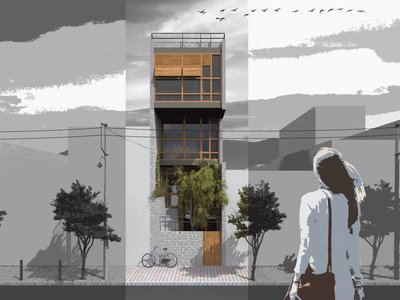
Compact & Sustainable Living in Piraeus: A Four-Level Family Home Built Around Light and Air
A narrow townhouse in one of Greece's densest port cities uses a central atrium and passive strategies to house three generations under one roof.


Explore Architecture Competitions
Discover active competitions in this discipline




The International Standard for Design Portfolios


The Global Benchmark for Architecture Dissertation Awards


The Global Benchmark for Graduation Excellence


Challenge to reimagine the Iron Throne
Comments (0)
Please login or sign up to add comments
No comments yet. Be the first to comment!