

Australian War Memorial Southern Entrance and Parade Ground by Studio.SC, Campbell, Australia
A monumental yet sensitive entrance redefining arrival, using light, geometry, and material to create a reflective, inclusive space of remembrance.


The Australian War Memorial Southern Entrance and Parade Ground, designed by Studio.SC, is a profound architectural intervention that redefines the threshold to one of Australia’s most significant cultural institutions. Located in Campbell, Canberra, the project carefully balances the need for contemporary accessibility and functionality with the solemn responsibility of honoring national memory and sacrifice.
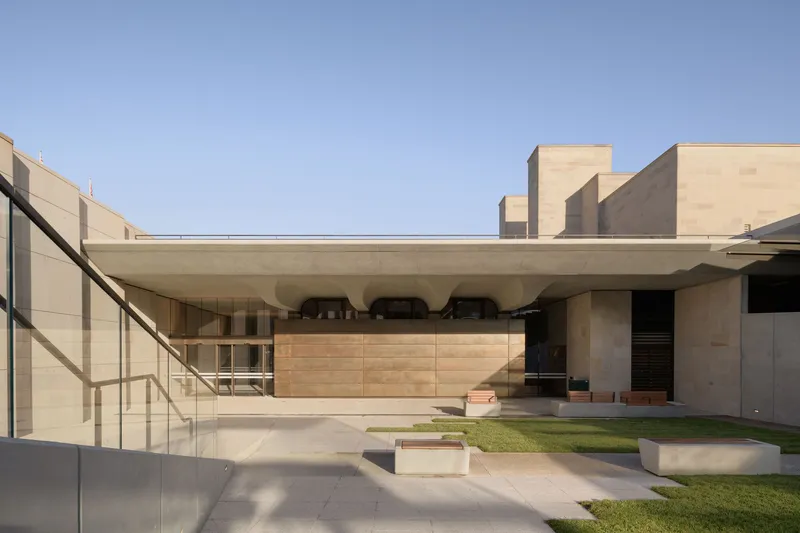
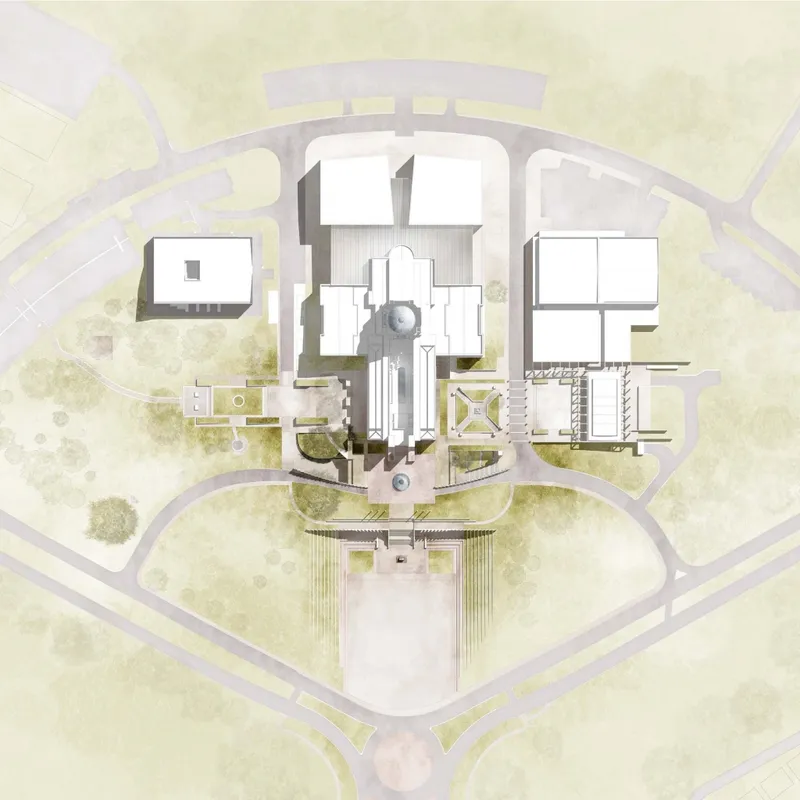
Embedded within Walter Burley Griffin’s historic master plan, the Memorial occupies a powerful axial relationship between Capitol Hill and Mount Ainslie. The new entrance strengthens this monumental alignment, reinforcing the clarity of movement and the symbolic significance of arrival. Rather than competing with the existing structure, the intervention acts as a subtle extension, clarifying spatial hierarchy while deepening the visitor experience.
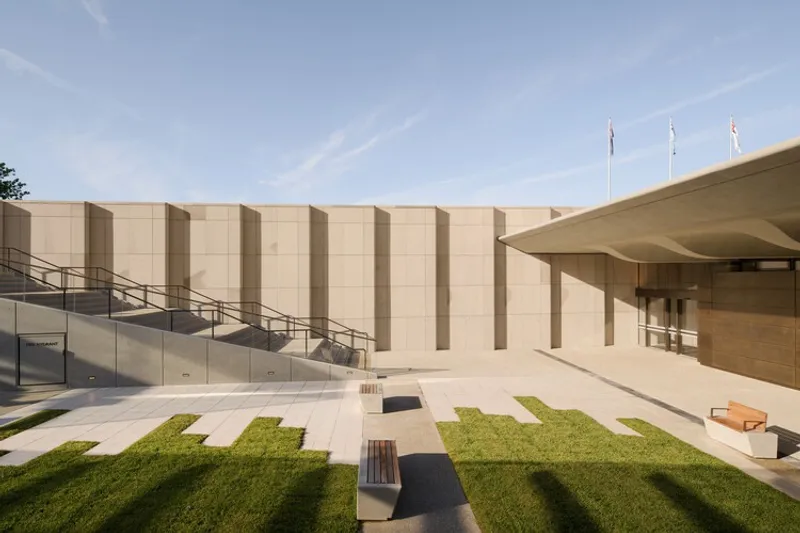
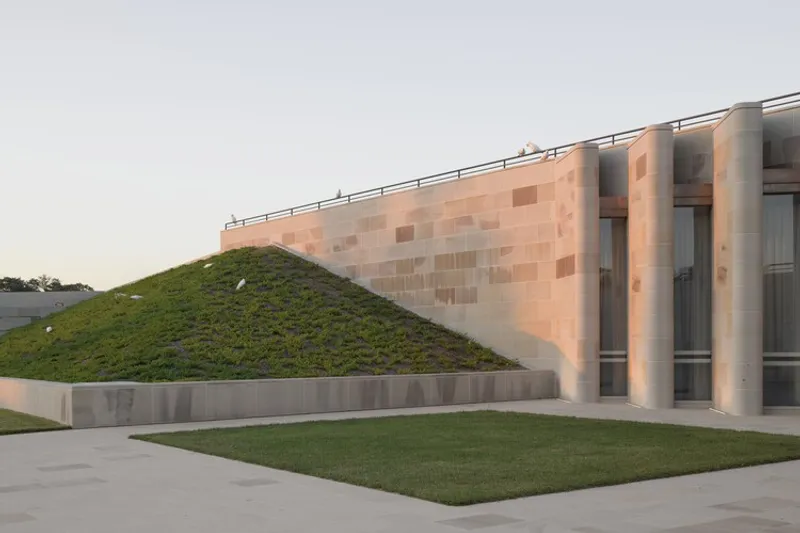
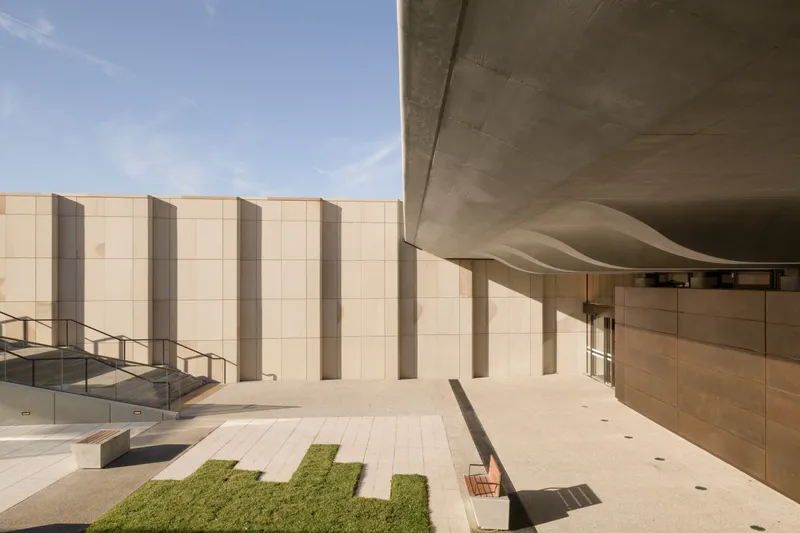
The project is structured around three primary architectural elements that guide both movement and meaning. The Focal Nexus aligns visitors with the Memorial’s symbolic heart, connecting the Hall of Memory, the Tomb of the Unknown Soldier, and the Pool of Reflection. The Guiding Wall, shaped by radial geometry, intuitively directs circulation, while the Bounding Wall defines the Parade Ground, creating a dignified enclosure that enhances the ceremonial character of the space.
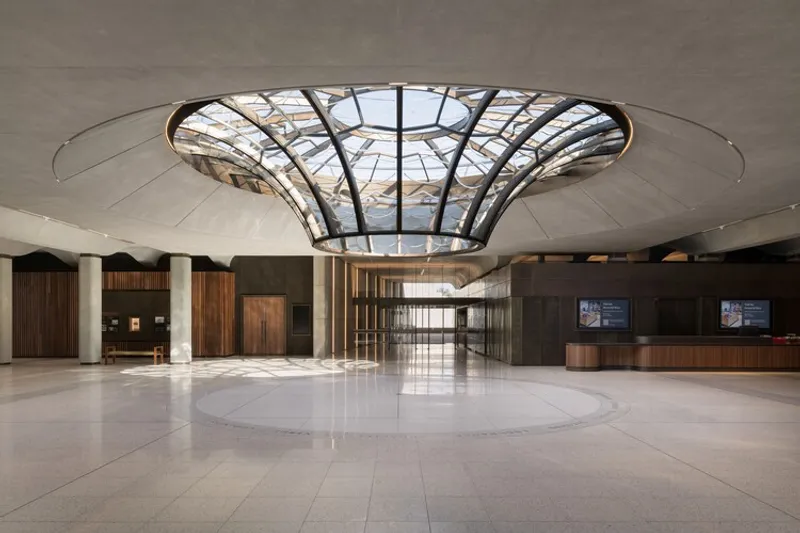
At the center of the composition lies the Oculus, a powerful spatial and symbolic gesture inspired by the dome of the Hall of Memory. This circular opening, framed by bronze-clad ribs and bespoke glazing, filters natural light into the interior below. The resulting interplay of light and shadow creates a dynamic yet contemplative atmosphere, encouraging visitors to pause and reflect. The Oculus becomes not just a physical feature but a moment of emotional resonance within the architectural sequence.
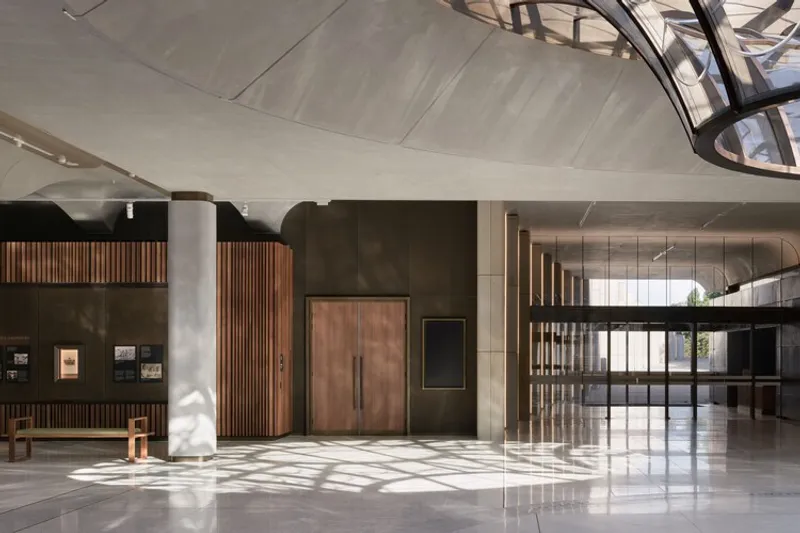
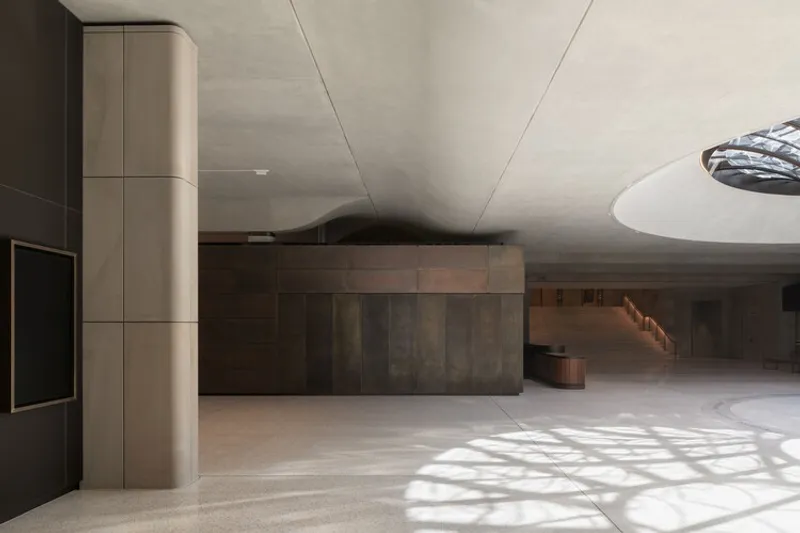
Materiality plays a critical role in maintaining continuity with the existing Memorial. Locally sourced sandstone ensures visual and contextual harmony, while off-form concrete introduces a sense of permanence and structural clarity. Bronze detailing and timber accents soften the experience, adding warmth and tactile richness to the otherwise monumental composition.
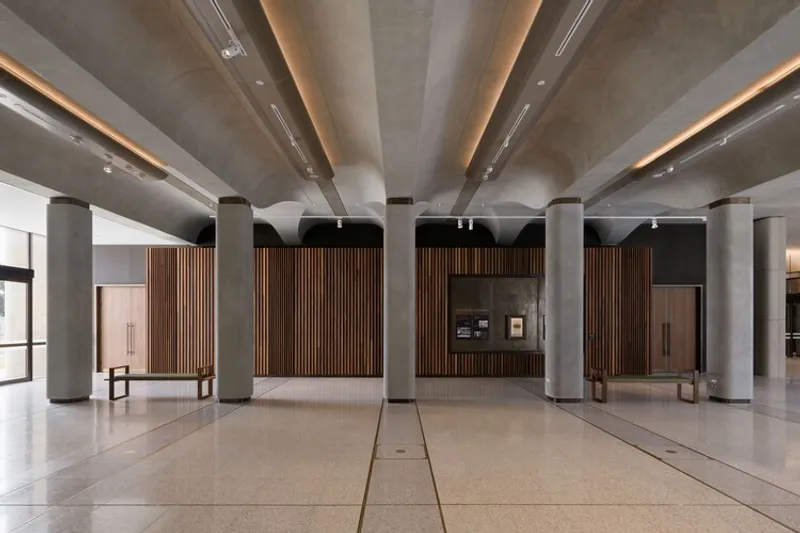
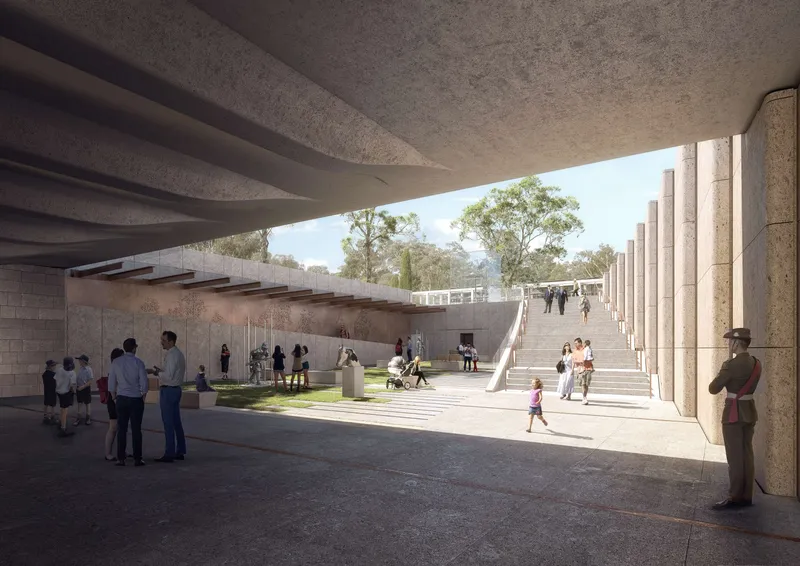
The integration of landscape further enhances the project’s sensitivity to place. Native plantings extend the architectural language into the surrounding environment, reinforcing a connection between built form and natural context. This approach ensures that the Memorial remains grounded within its broader setting while maintaining its symbolic presence.
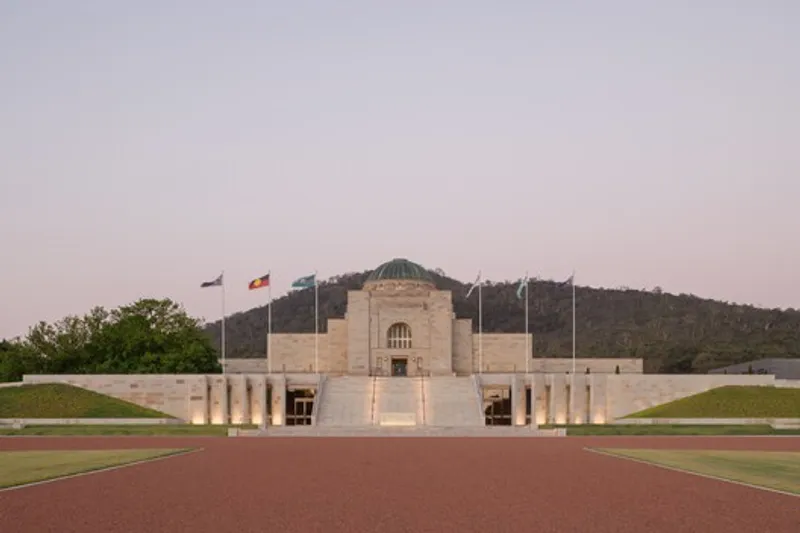
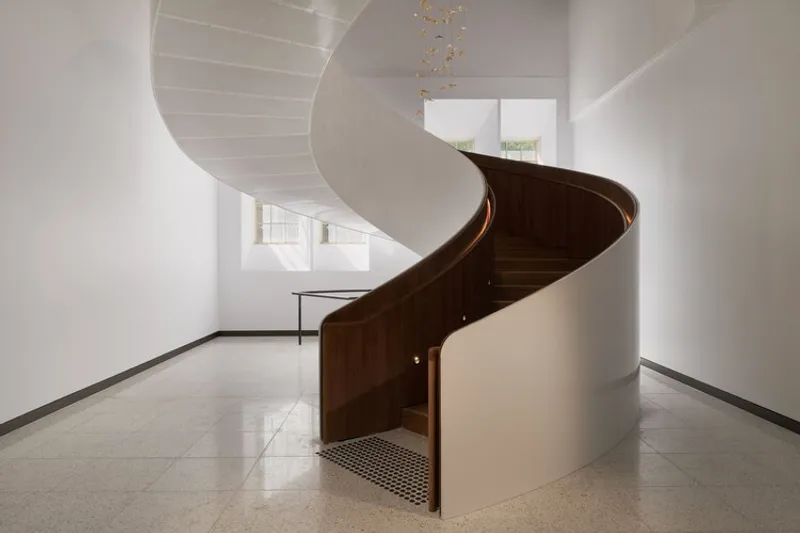
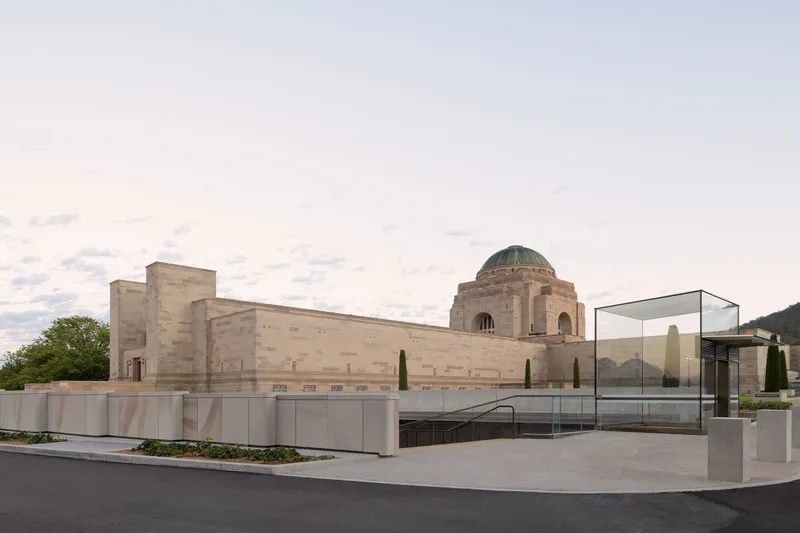
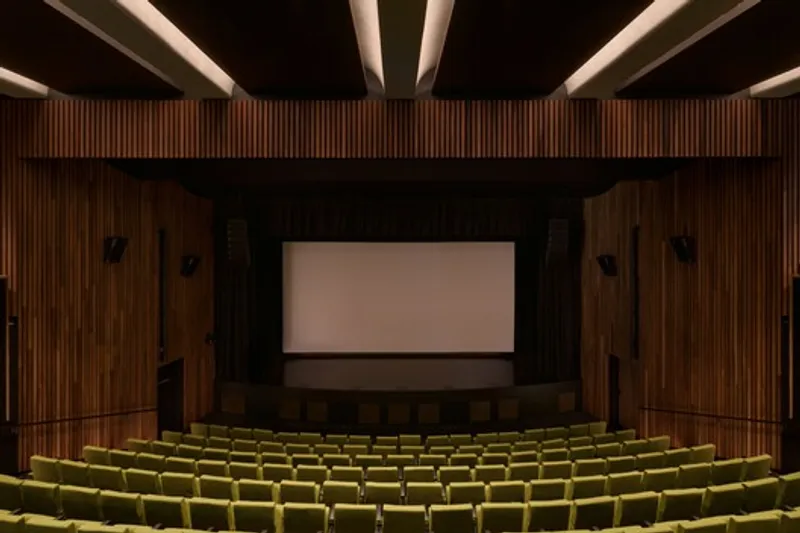
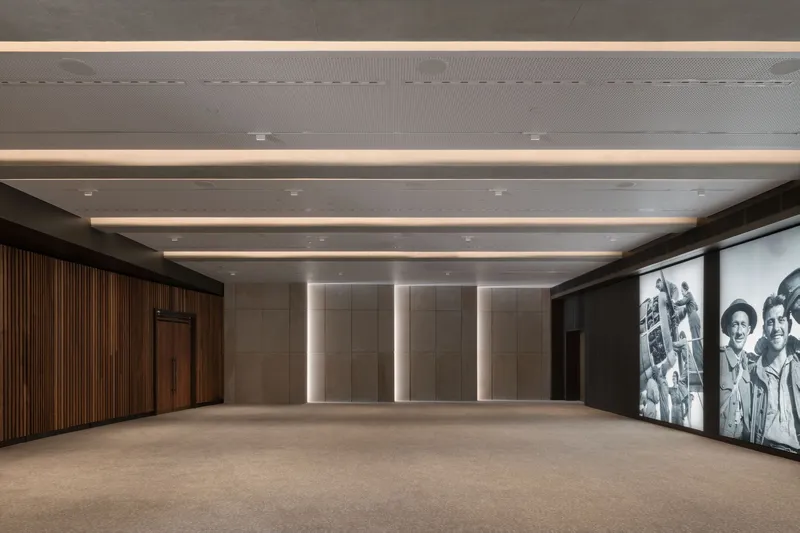
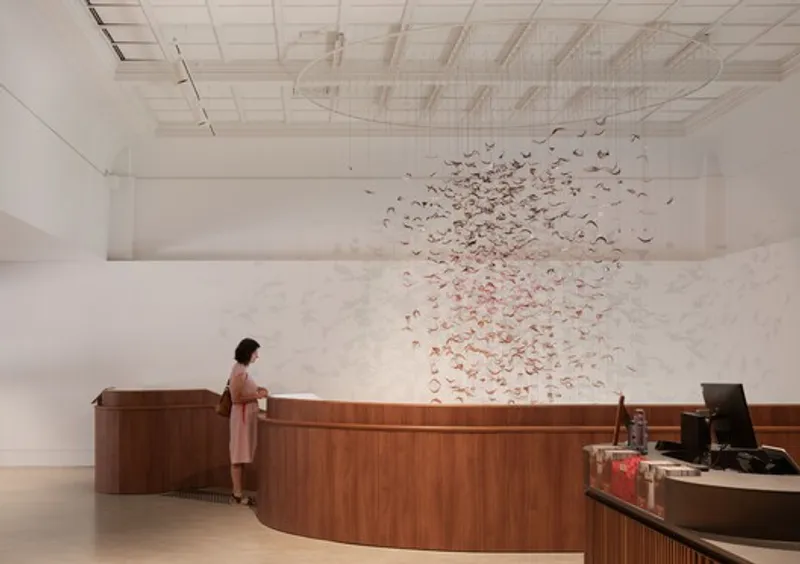
Functionally, the new entrance accommodates essential visitor amenities, including a gallery space and a theatre for commemorative events. Circulation is carefully designed to be intuitive and inclusive, ensuring accessibility for visitors of all abilities. The spatial sequence is choreographed to guide movement seamlessly, balancing openness with moments of introspection.
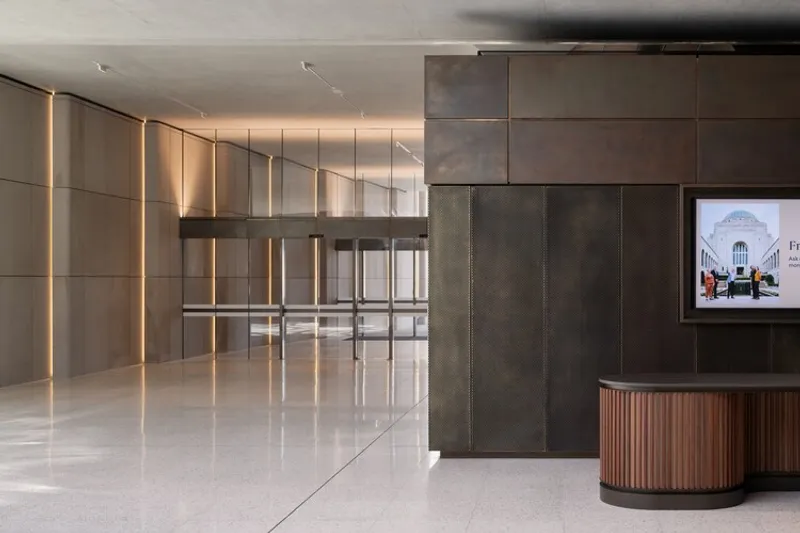
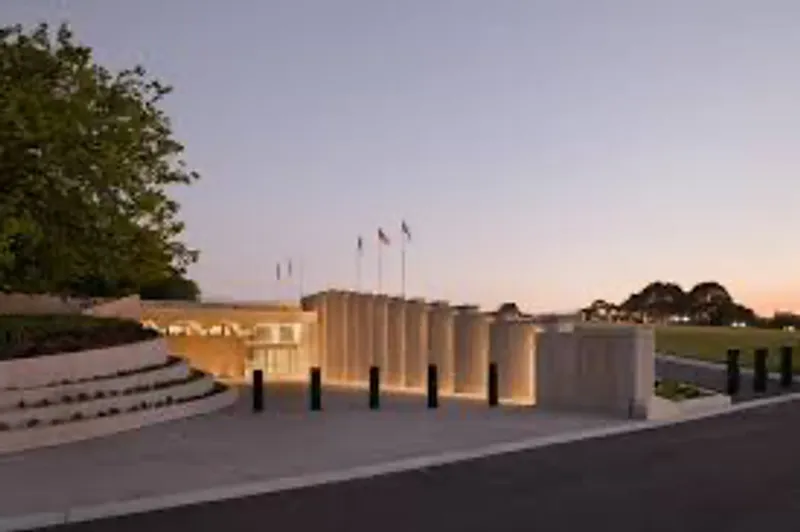
Ultimately, the Australian War Memorial Southern Entrance is more than an architectural addition: it is a rearticulation of arrival, memory, and collective experience. Through restraint, clarity, and thoughtful integration, Studio.SC has created a space that honors the past while supporting the evolving role of the Memorial in contemporary society.
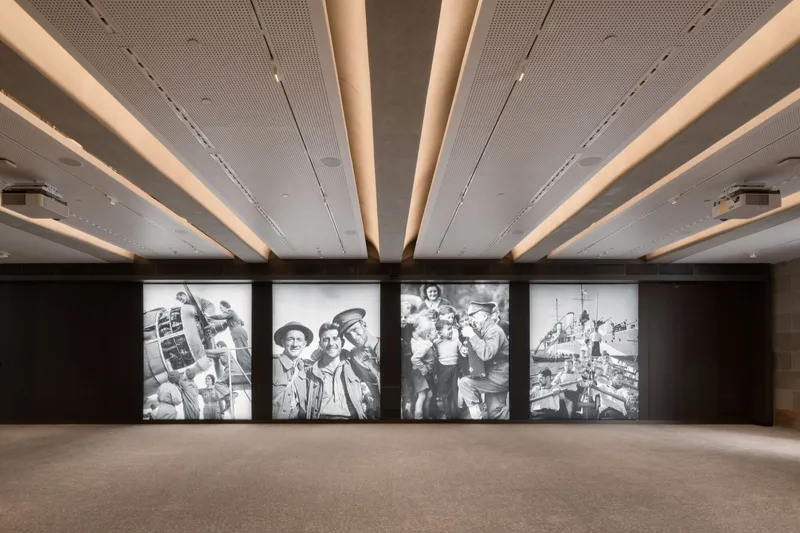
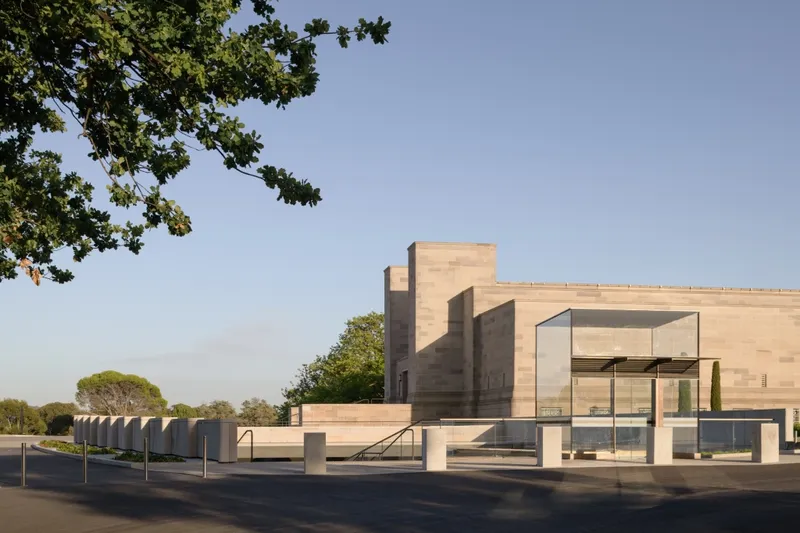
The project stands as a testament to how architecture can engage with history, offering not only a place of remembrance but also a meaningful and inclusive experience for future generations.
All the Photographs are works of Thurston Empson




Popular Articles
Popular articles from the community


Riyadh For All: Intergenerational Urban Design for Active Aging in Rabat
Riyadh For All reimagines urban design in Rabat with intergenerational co-living, adaptive courtyards, and Moroccan cultural exchange today.

Co-life: Sustainable Architecture for Age-Friendly Community Living
Co-life reimagines sustainable architecture for seniors through courtyards, rammed earth, shared gardens, and spaces designed for belonging.

Conexión: Biophilic Design Reimagines High-Rise Living in Hong Kong
Conexión reimagines high-rise living in Hong Kong through biophilic design, green facades, shared spaces, daylight, water and nature within.

The Musturak Paradise: Senior Living Architecture for a Connected Future in Temara, Morocco
The Musturak Paradise reimagines senior living architecture in Temara via private homes, social spaces, culture, community, and shared care.


Similar Reads
You might also enjoy these articles

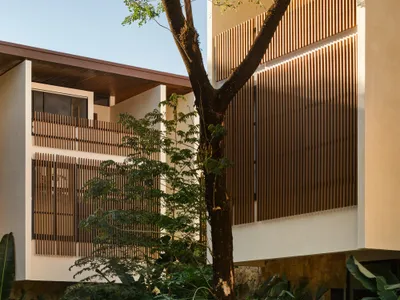
FAMM Arquitectura Organizes Ten Villas Around Courtyards and Jungle in Nosara, Costa Rica
El Molino pairs two elongated volumes with deep overhangs and timber louvers to build a compact coastal community five minutes from the beach.
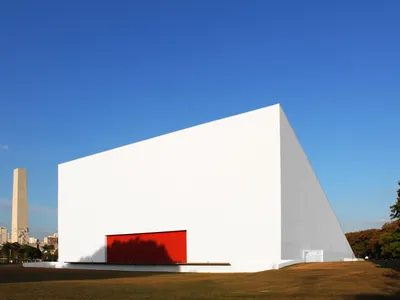
Oscar Niemeyer's Ibirapuera Park Pavilions Define São Paulo's Cultural Identity in Concrete and Curve
A constellation of modernist volumes set within São Paulo's most important urban park, conceived for the city's 400th anniversary in 1954.
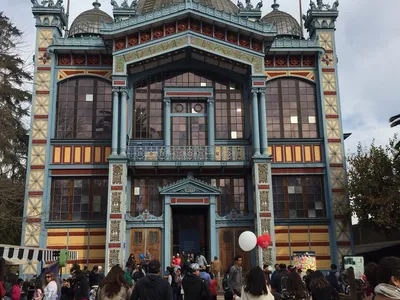
How Henri Picq's 1889 Paris Pavilion Traveled 11,000 Kilometers to Become Santiago's Artequín Museum
A prefabricated iron and glass pavilion built for the Paris Universal Exposition found a second life as a children's art museum in Chile.
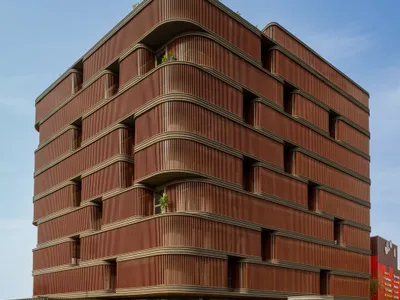
Sanjay Puri Architects Wraps a Jaipur Office Tower in Capsule-Shaped Green Buffers
A nine-level climate-responsive workplace near Jaipur Airport uses stacked planter terraces and aluminium screens to fight 40°C heat.


Explore Architecture Competitions
Discover active competitions in this discipline



Challenge to reimagine the Iron Throne


Photograph architecture without architects


Illustrate the lost glory of Angkor Wat - Render Challenge


Bring back Drive In's
Comments (0)
Please login or sign up to add comments
No comments yet. Be the first to comment!