
Ay Kiln Renewal: Reframing Craft Heritage Through Walls, Courtyards, and Spatial Narratives
Adaptive reuse of historic kiln using walls and courtyards to frame craft processes, blending heritage, production, and visitor experience spatially.


Located in Ningde, China, the Heritage “Ay” Kiln Adaptive Renewal by YFS and WUGE Studio is a sensitive transformation of a century-old ceramic production site into a layered cultural and spatial experience. Rooted in the tradition of “Ay” (硋) ceramics, an indigenous black-glazed craft positioned between pottery and porcelain, the project engages deeply with both material heritage and the evolving identity of rural production landscapes.
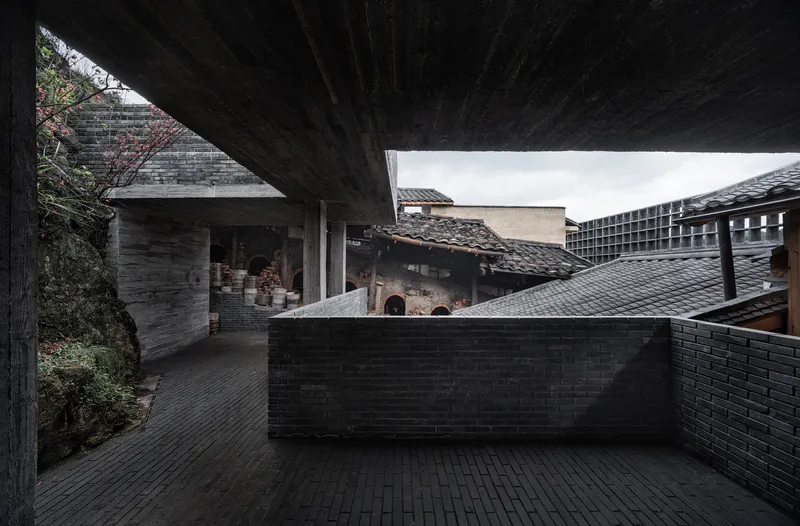
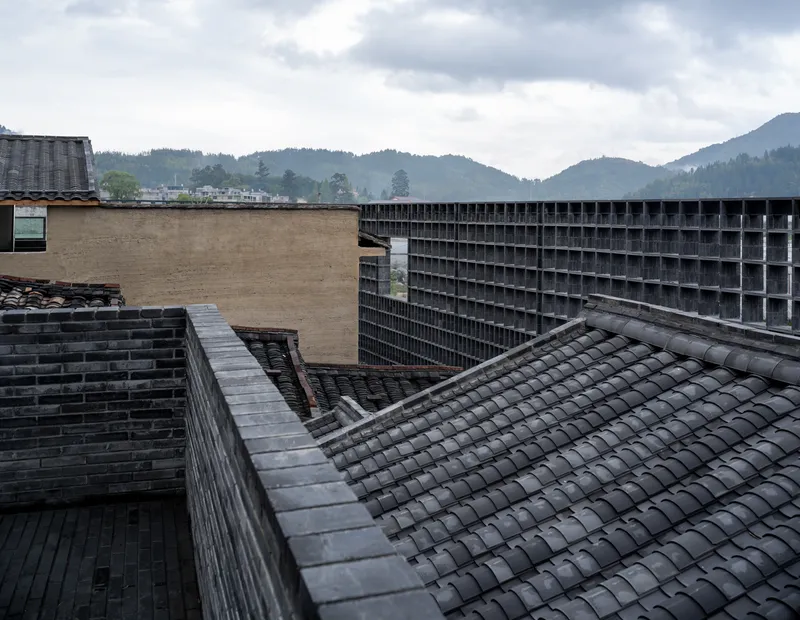
The original site is organized around a traditional dragon kiln built along a hillside, an elongated, sloping structure that has historically anchored local ceramic production. Surrounding it are elements accumulated over time: rammed-earth houses, stone outbuildings, and later brick-and-concrete additions. This assemblage reflects decades of organic growth, where spaces were extended, repaired, and adapted without a unified plan. While this incremental process embodies local craftsmanship, it also resulted in spatial fragmentation, blurring the boundaries between living, working, and displaying.
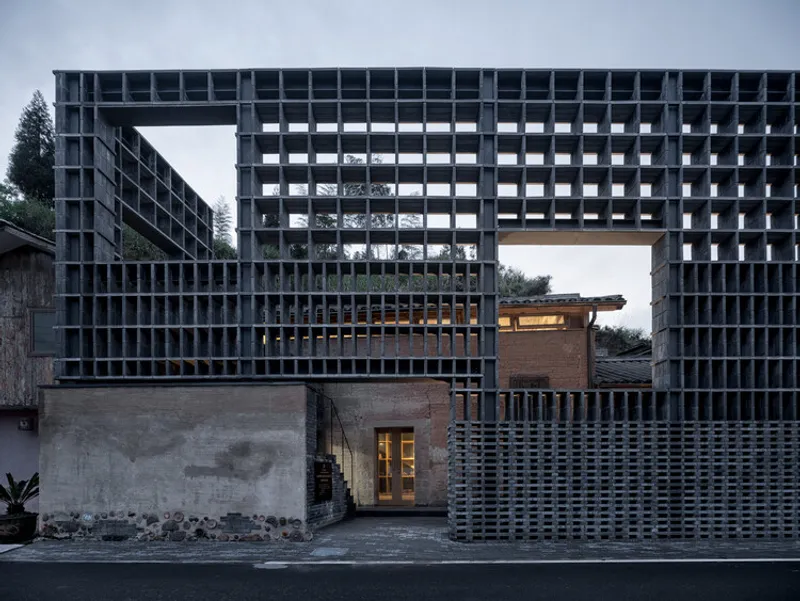
Rather than imposing a singular architectural order, the project responds by clarifying and reframing this complexity. A key intervention is the introduction of a two-story boundary wall along the edge of the site. Acting as both a physical and conceptual device, this wall organizes the previously dispersed elements, establishing a clear perimeter while allowing the existing structures to be perceived as distinct historical layers.
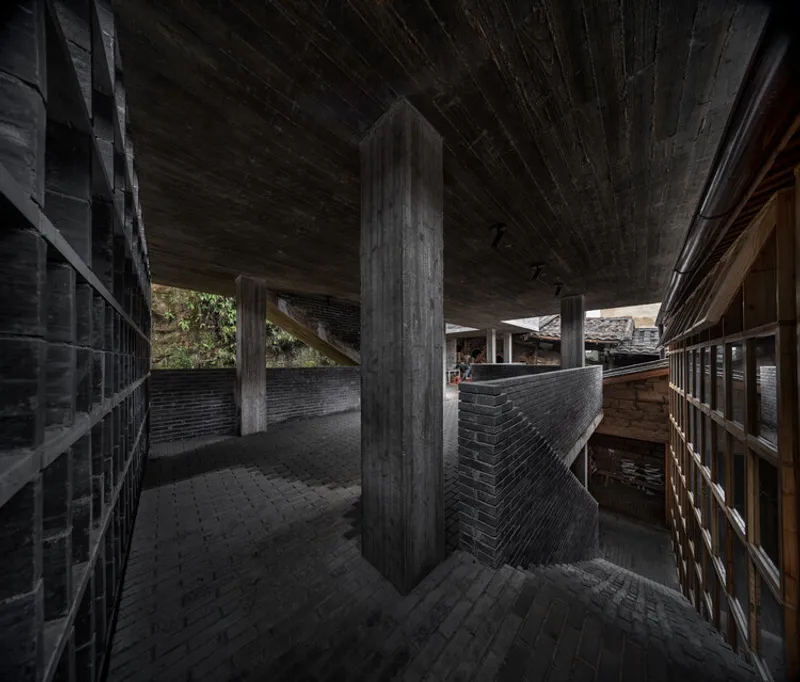
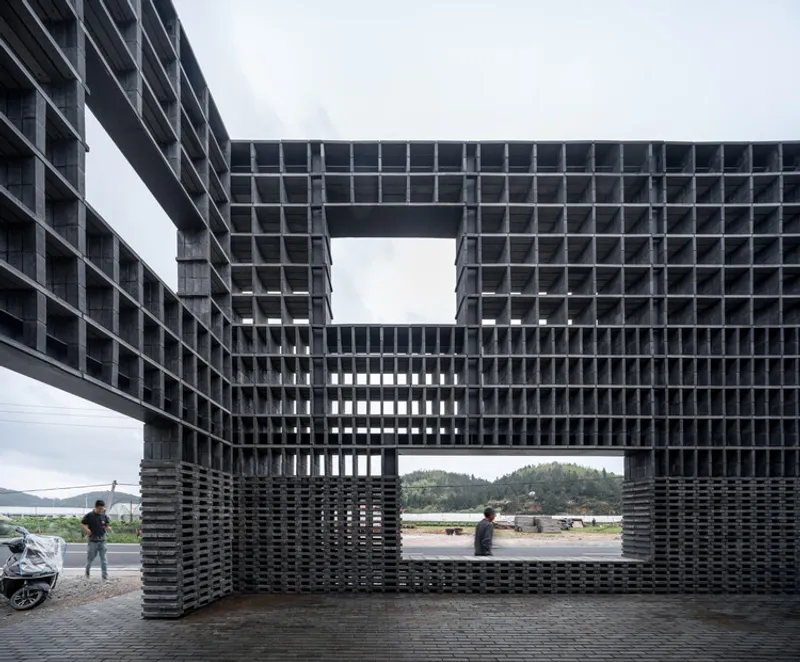
This strategy is grounded in the dialectical idea of “transparency and obstacle.” Instead of removing barriers to create openness, the design uses walls as tools for clarity. The boundary wall becomes an “obstacle” that paradoxically enhances understanding: filtering views, framing perspectives, and guiding movement. Carefully positioned openings allow glimpses into the site, transforming the act of seeing into a curated experience.
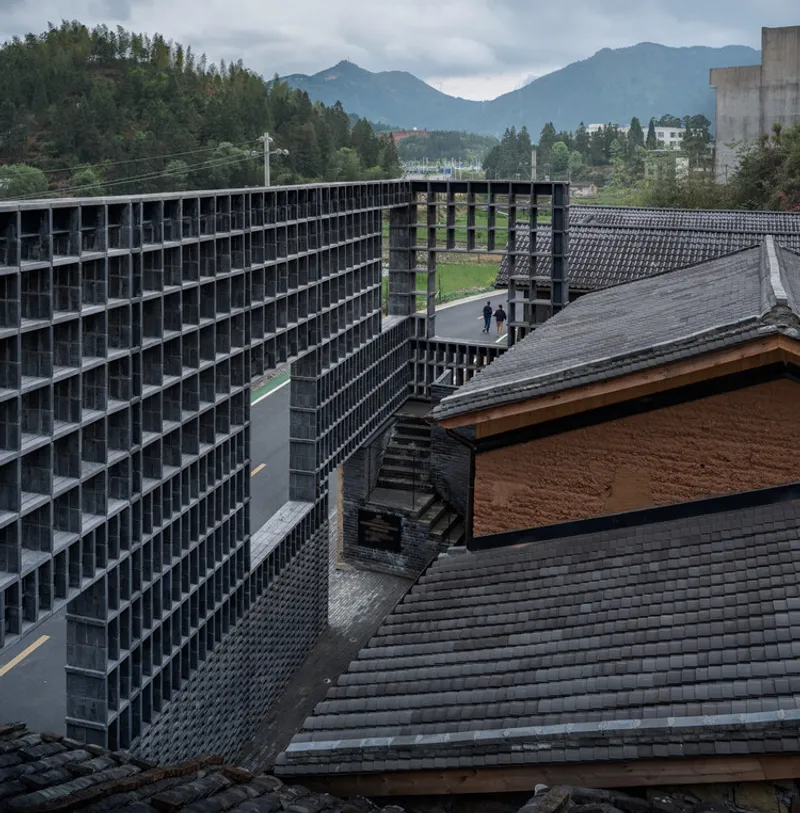
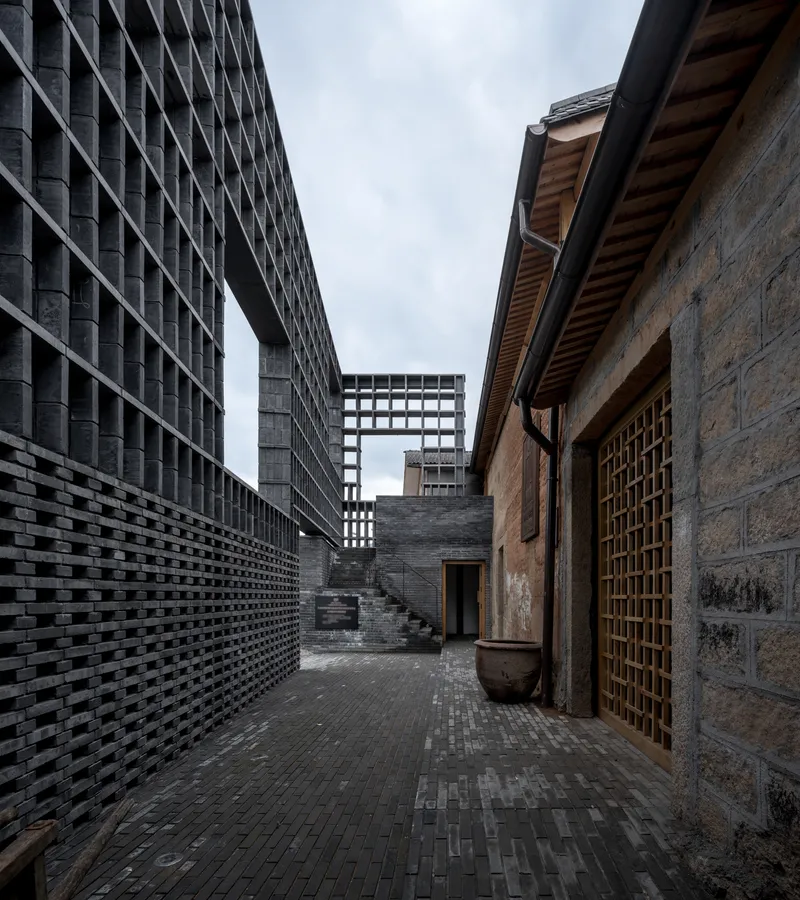
Within this newly defined boundary, the site is reorganized into three primary courtyards, each corresponding to different functions and atmospheres. The front courtyard serves as a reception and exhibition space, welcoming visitors into the narrative of the site. The central courtyard remains dedicated to production, where daily ceramic-making activities unfold. The rear courtyard connects to the natural terrain, rising with the hillside and offering elevated platforms and viewpoints that reveal the broader landscape.
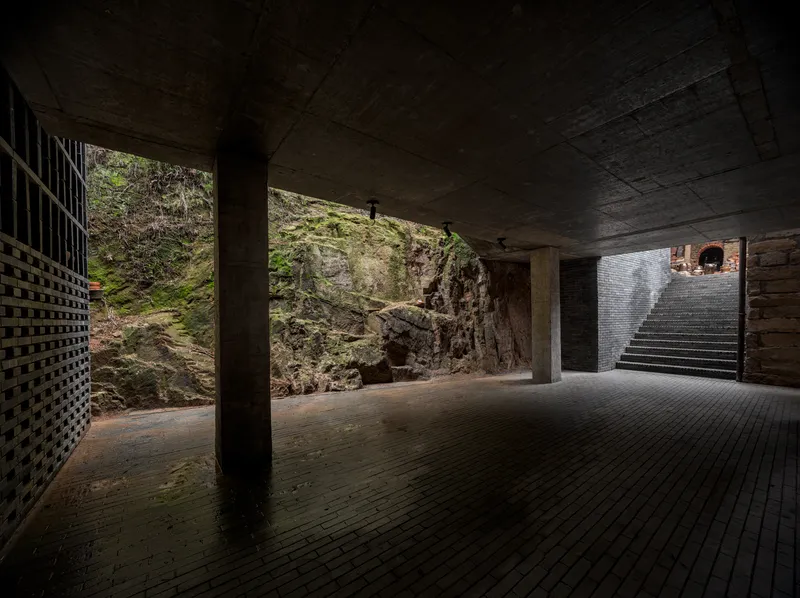
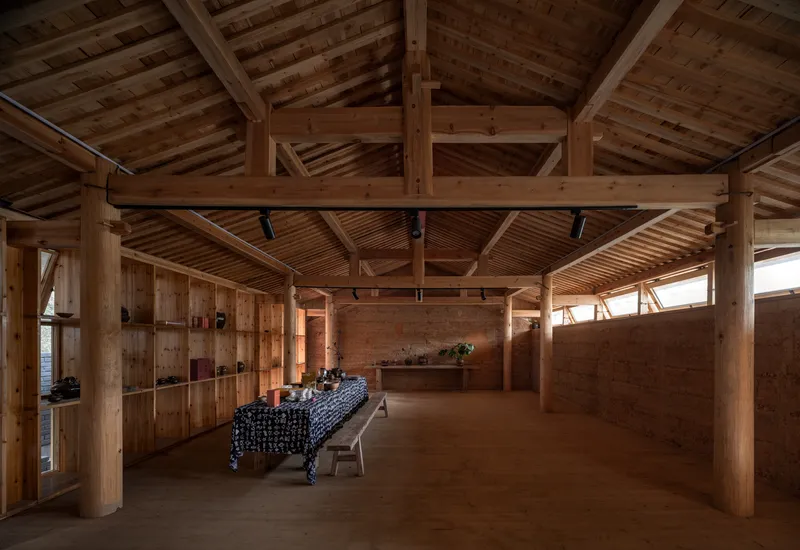
This spatial sequencing aligns with the traditional process of ceramic production: moving from raw material preparation to forming, glazing, firing, and finally display and sale. By structuring the site according to this workflow, the project transforms production into an experiential journey. Visitors do not simply observe the craft; they move through it, encountering each stage in a way that preserves both authenticity and functionality.
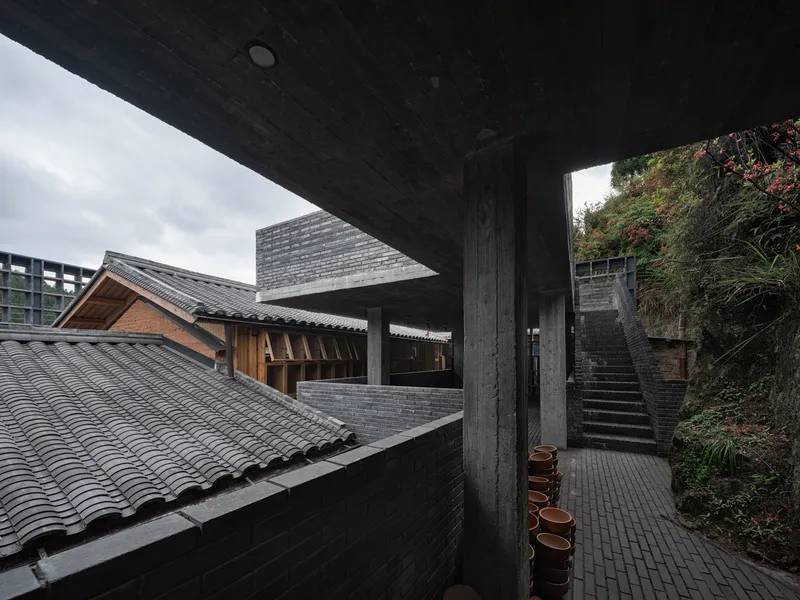
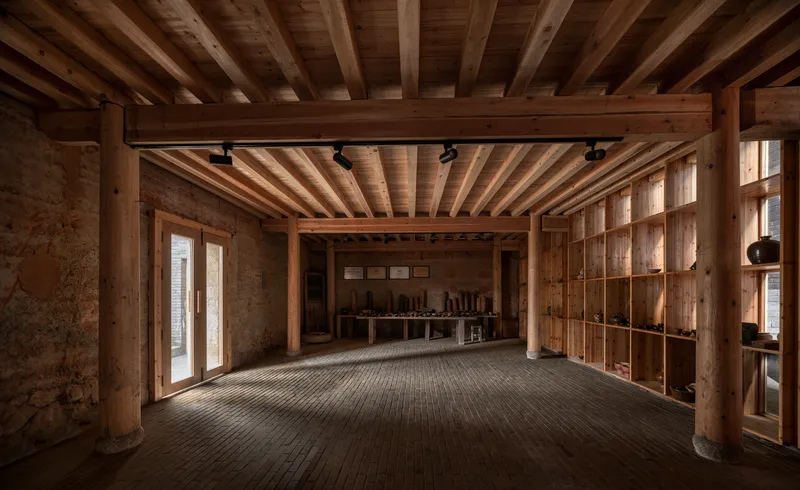
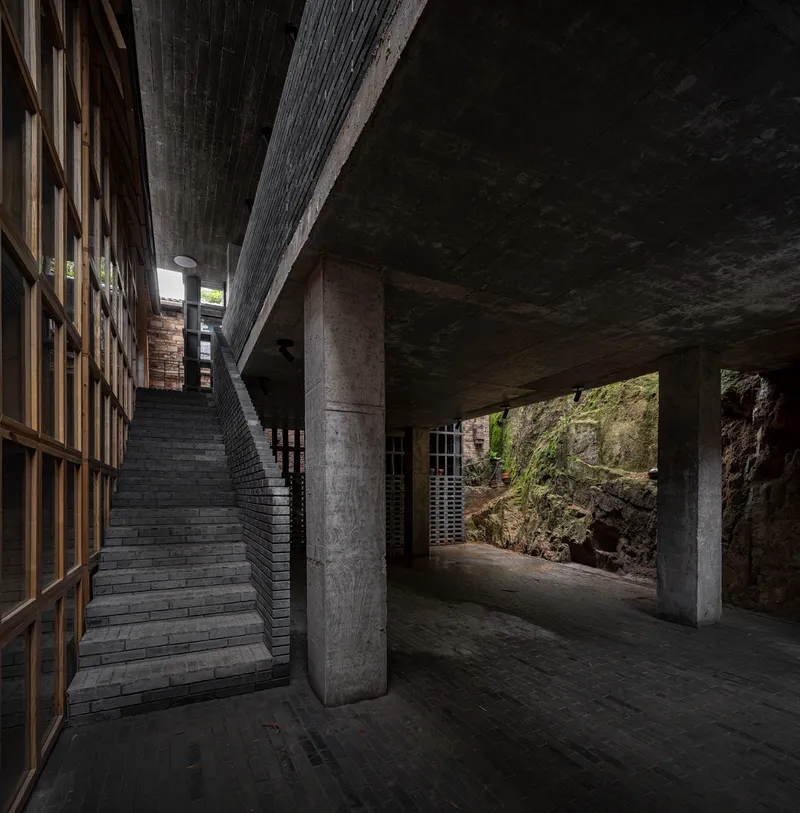
Material strategy plays a crucial role in expressing temporal continuity. Existing rammed-earth walls, stone structures, and the kiln itself are preserved and reinforced, maintaining their tactile and historical presence. Where intervention is necessary, new materials are introduced with restraint and clarity. Timber frameworks, glass elements, and concrete platforms are carefully integrated, allowing the distinction between old and new to remain legible.
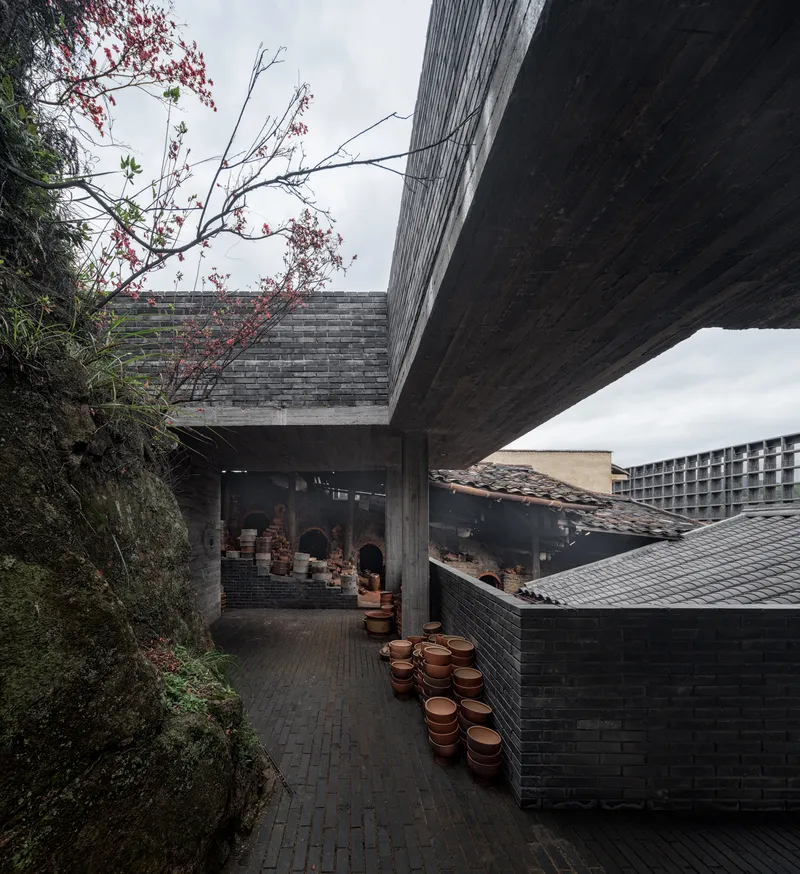
The newly constructed rear platforms employ a beamless concrete slab system with a subtle wood-grain texture, mediating between the solidity of rock and the softness of earth. This material dialogue bridges natural terrain and built form, reinforcing the project’s connection to its environment.
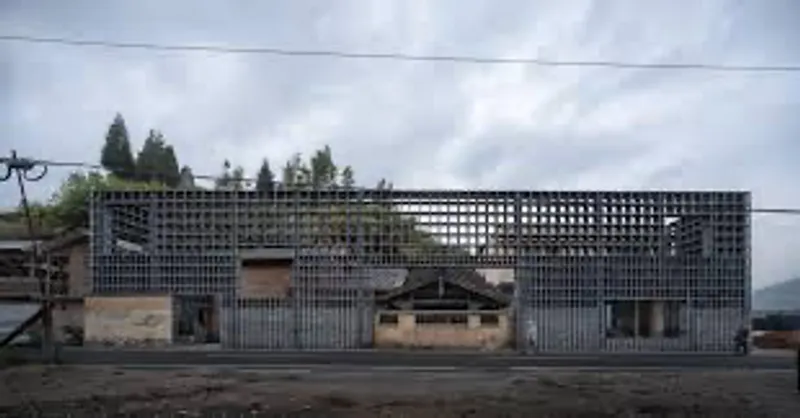
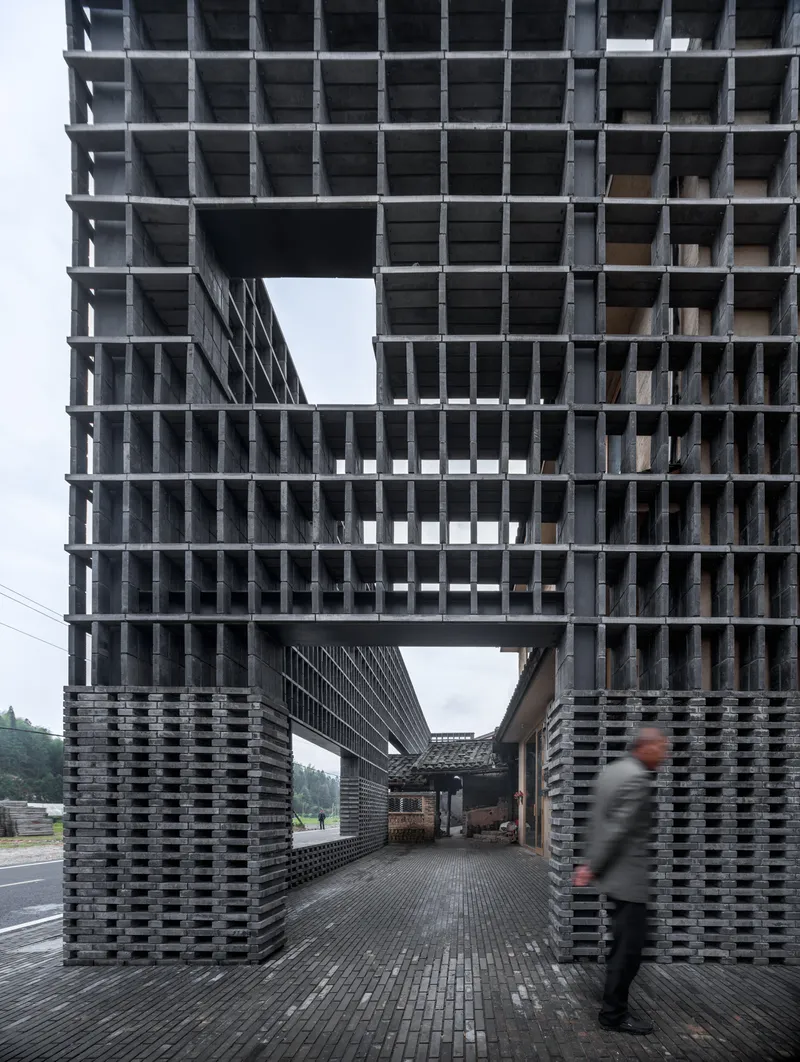
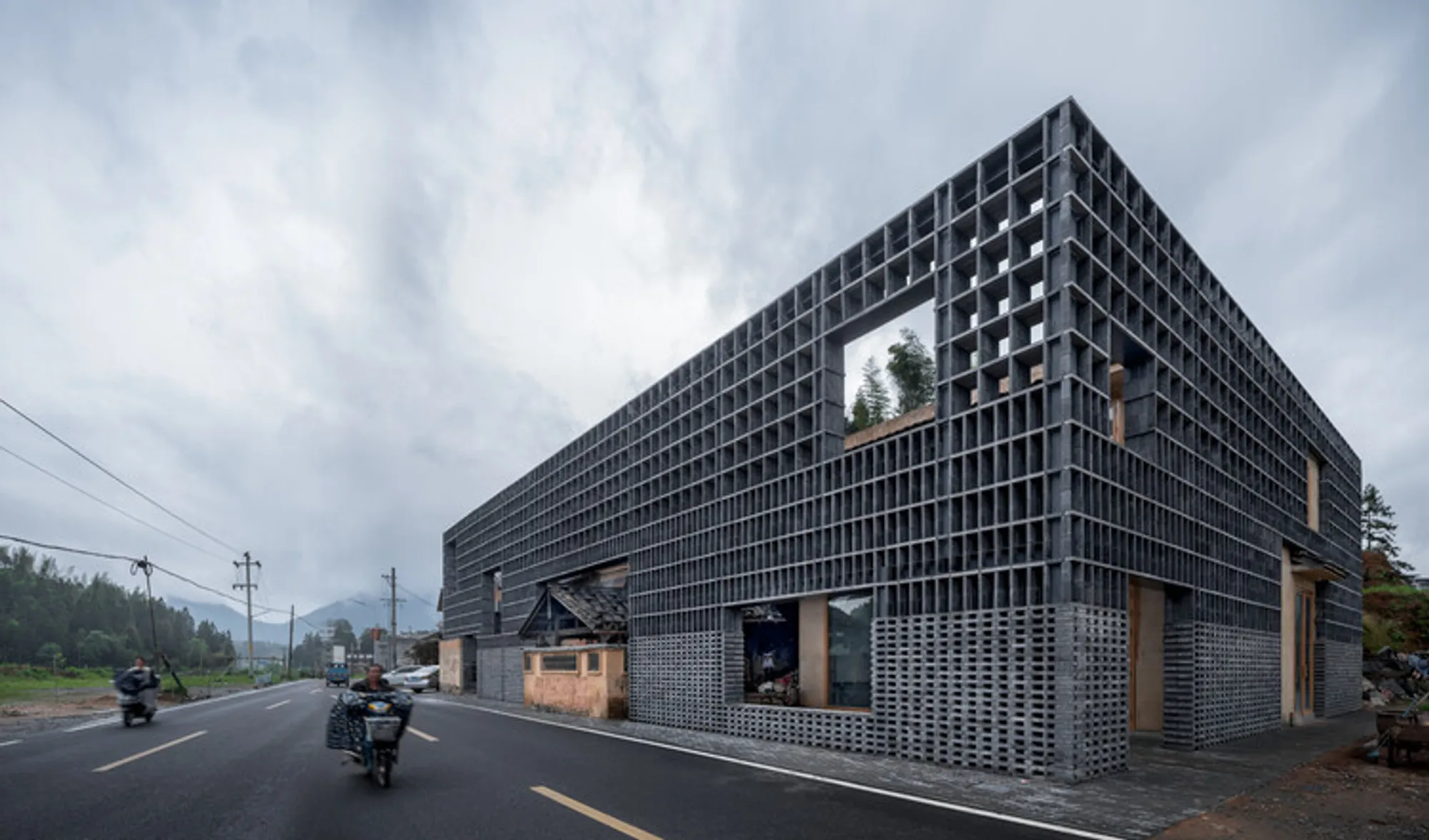
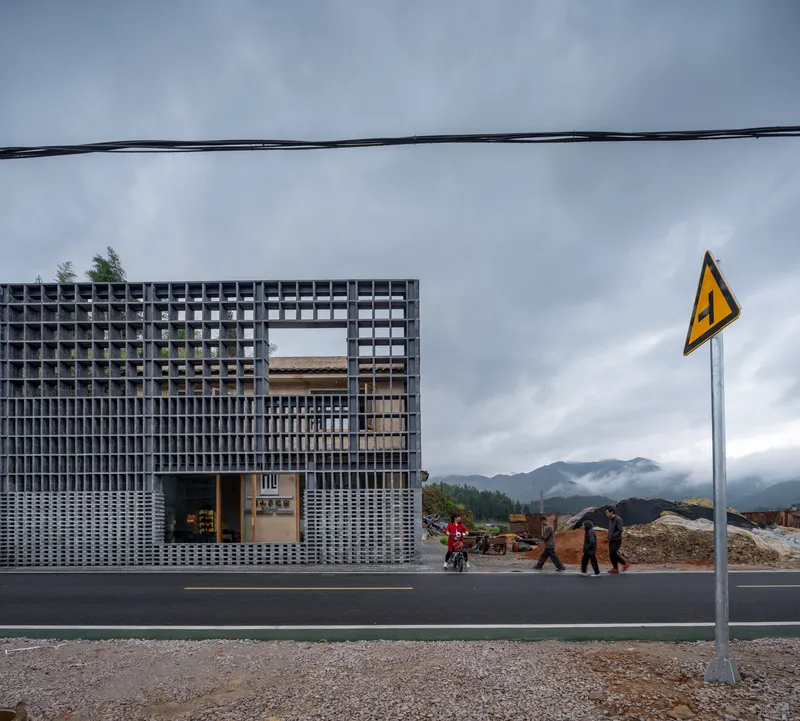
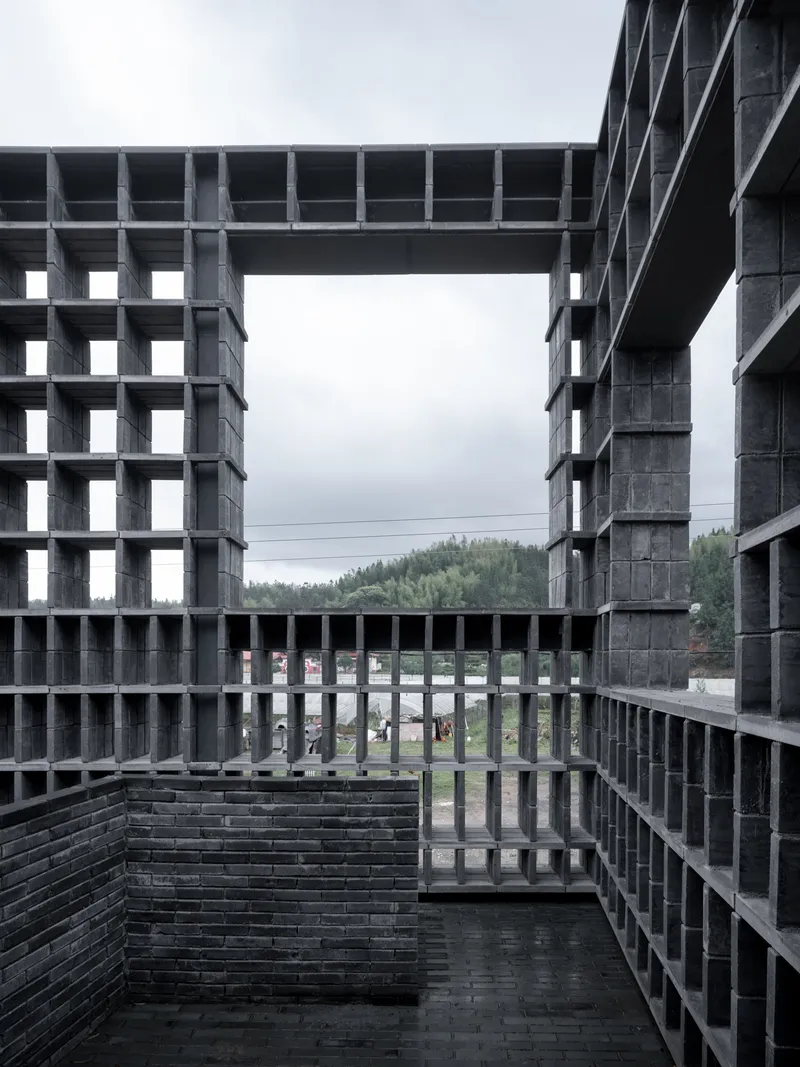
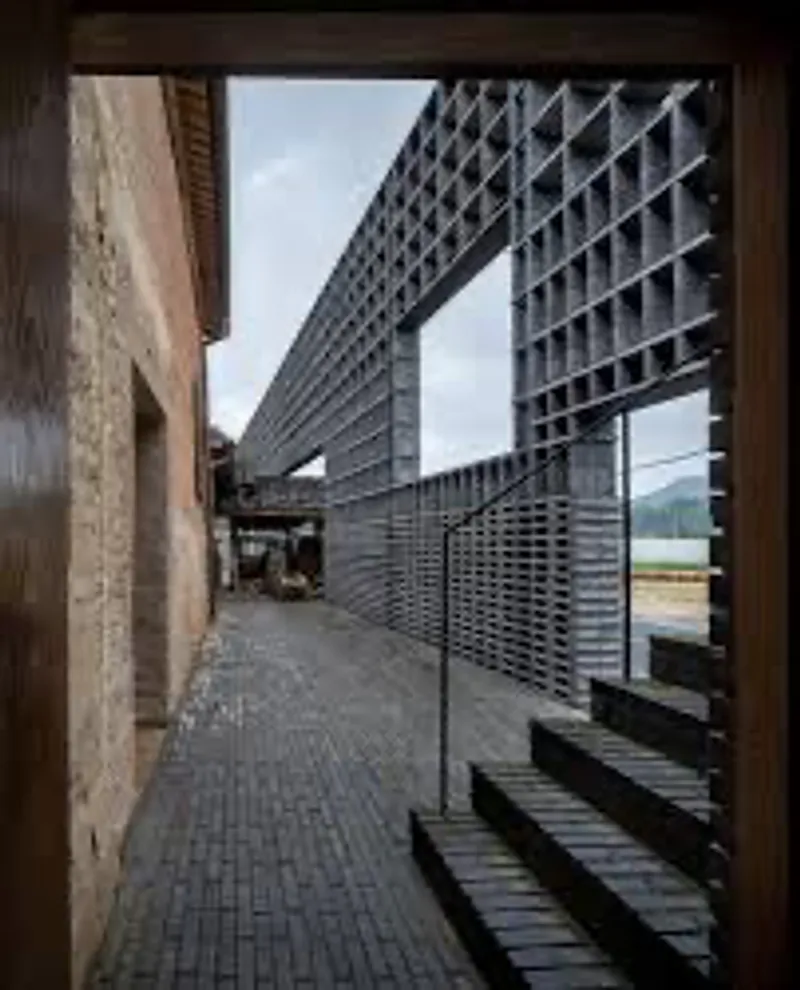
One of the most striking elements is the eight-meter-high grey-brick boundary wall. Beyond its structural role, it acts as a symbolic and spatial device. The wall is composed of modular brick units arranged in gradients: from dense to porous: creating a dynamic interplay of light, air, and visibility. This porosity echoes the airflow of the kiln itself, while also producing a visual tension between mass and lightness.
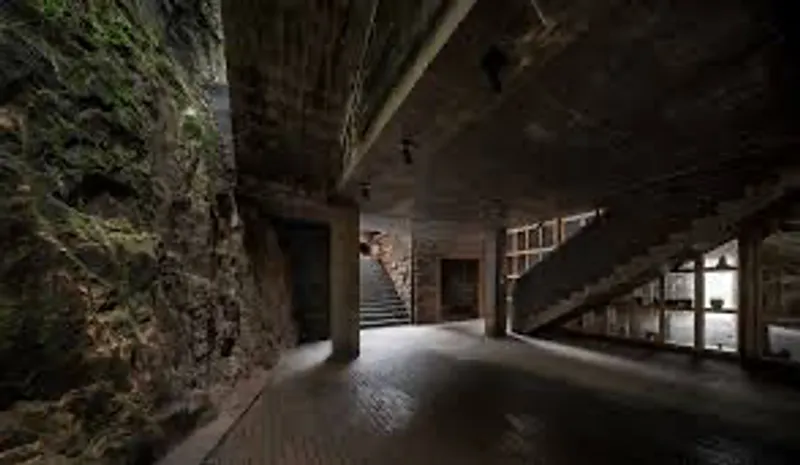
Structurally supported by a steel frame and rebar lattice, the wall becomes both a screen and a frame. Its openings align with key elements of the site, translating the three-dimensional process of ceramic production into a series of framed compositions. In this way, the wall functions simultaneously as boundary, mediator, and narrative device.
Ultimately, the Ay Kiln Renewal is not simply a preservation project but a reinterpretation of heritage. It acknowledges the layered history of the site while introducing a new architectural order that enhances clarity, experience, and cultural value. By transforming production into exhibition and obstacles into instruments of perception, the project creates a space where craft, architecture, and landscape converge, offering a renewed framework for understanding and sustaining intangible cultural heritage.
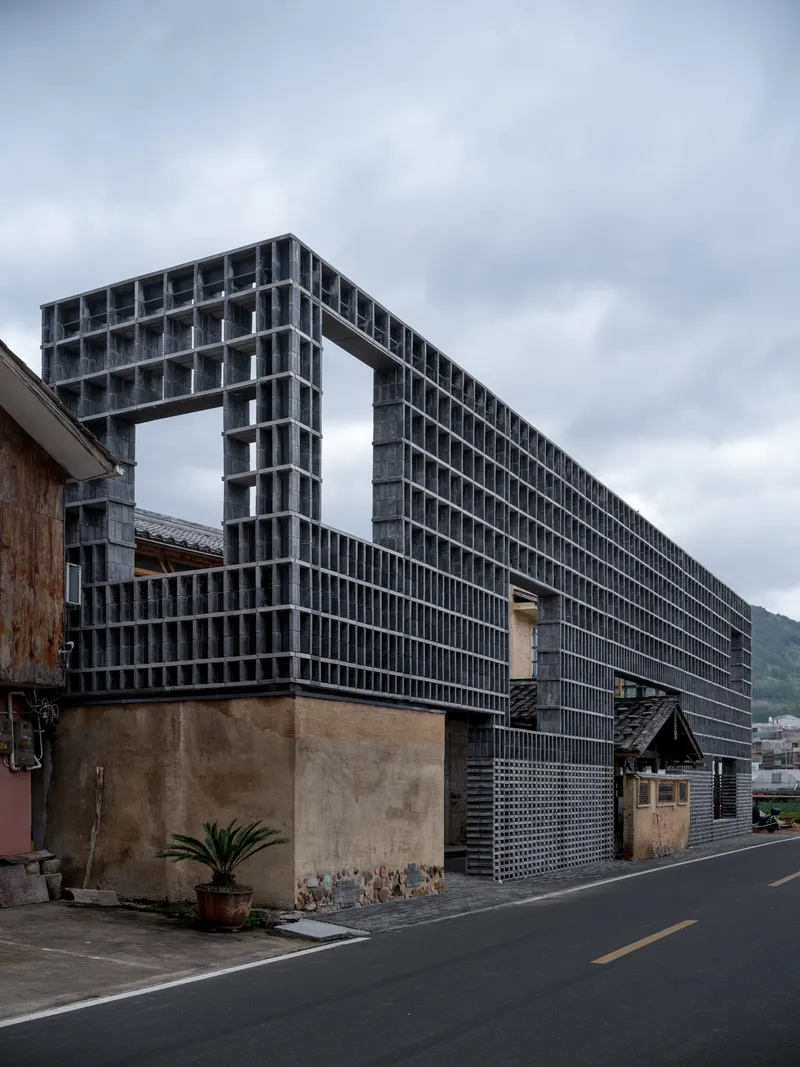
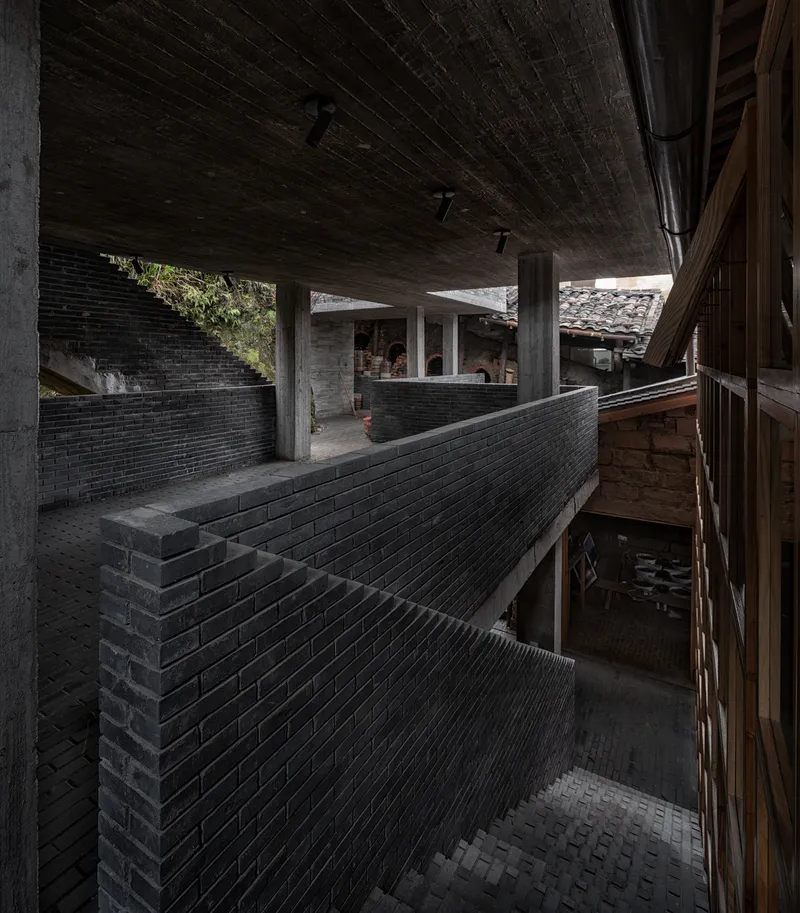
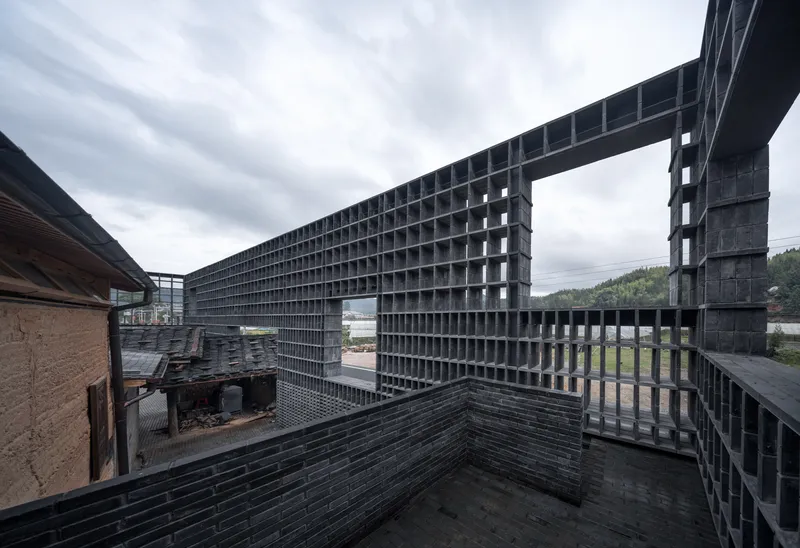
All the Photographs are works of Qingshan Wu



Popular Articles
Popular articles from the community


Hill & Cross Opera: Sculptural Opera House Architecture Shaped by Tallinn’s Landscape and Identity
Hill & Cross Opera reimagines opera house architecture in Tallinn through its sculptural hill, civic plaza, glass wave and a luminous cross.

The Musturak Paradise: Senior Living Architecture for a Connected Future in Temara, Morocco
The Musturak Paradise reimagines senior living architecture in Temara via private homes, social spaces, culture, community, and shared care.

Co-life: Sustainable Architecture for Age-Friendly Community Living
Co-life reimagines sustainable architecture for seniors through courtyards, rammed earth, shared gardens, and spaces designed for belonging.

Co-Life: Senior Housing Design That Reconnects Older Adults With the City
Co-Life reimagines senior housing design through healing gardens, shared streets, workshops, and a sustainable community across generations.


Similar Reads
You might also enjoy these articles


FAMM Arquitectura Organizes Ten Villas Around Courtyards and Jungle in Nosara, Costa Rica
El Molino pairs two elongated volumes with deep overhangs and timber louvers to build a compact coastal community five minutes from the beach.

Oscar Niemeyer's Ibirapuera Park Pavilions Define São Paulo's Cultural Identity in Concrete and Curve
A constellation of modernist volumes set within São Paulo's most important urban park, conceived for the city's 400th anniversary in 1954.
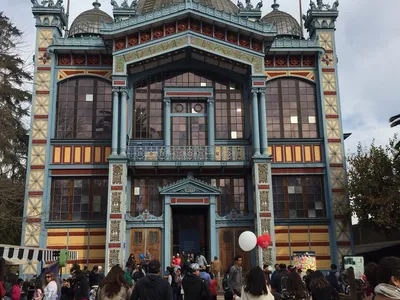
How Henri Picq's 1889 Paris Pavilion Traveled 11,000 Kilometers to Become Santiago's Artequín Museum
A prefabricated iron and glass pavilion built for the Paris Universal Exposition found a second life as a children's art museum in Chile.

Sanjay Puri Architects Wraps a Jaipur Office Tower in Capsule-Shaped Green Buffers
A nine-level climate-responsive workplace near Jaipur Airport uses stacked planter terraces and aluminium screens to fight 40°C heat.


Explore Architecture Competitions
Discover active competitions in this discipline



Challenge to reimagine the Iron Throne


Photograph architecture without architects


Illustrate the lost glory of Angkor Wat - Render Challenge


Design challenge to reuse E-waste
Comments (0)
Please login or sign up to add comments
No comments yet. Be the first to comment!