
Baan Dam by Housescape Design Lab: A Black House Rooted in Thai Craft and Contemporary Living
Baan Dam blends local craftsmanship, black finishes, and courtyards to create a contemporary Thai home rooted in tradition.

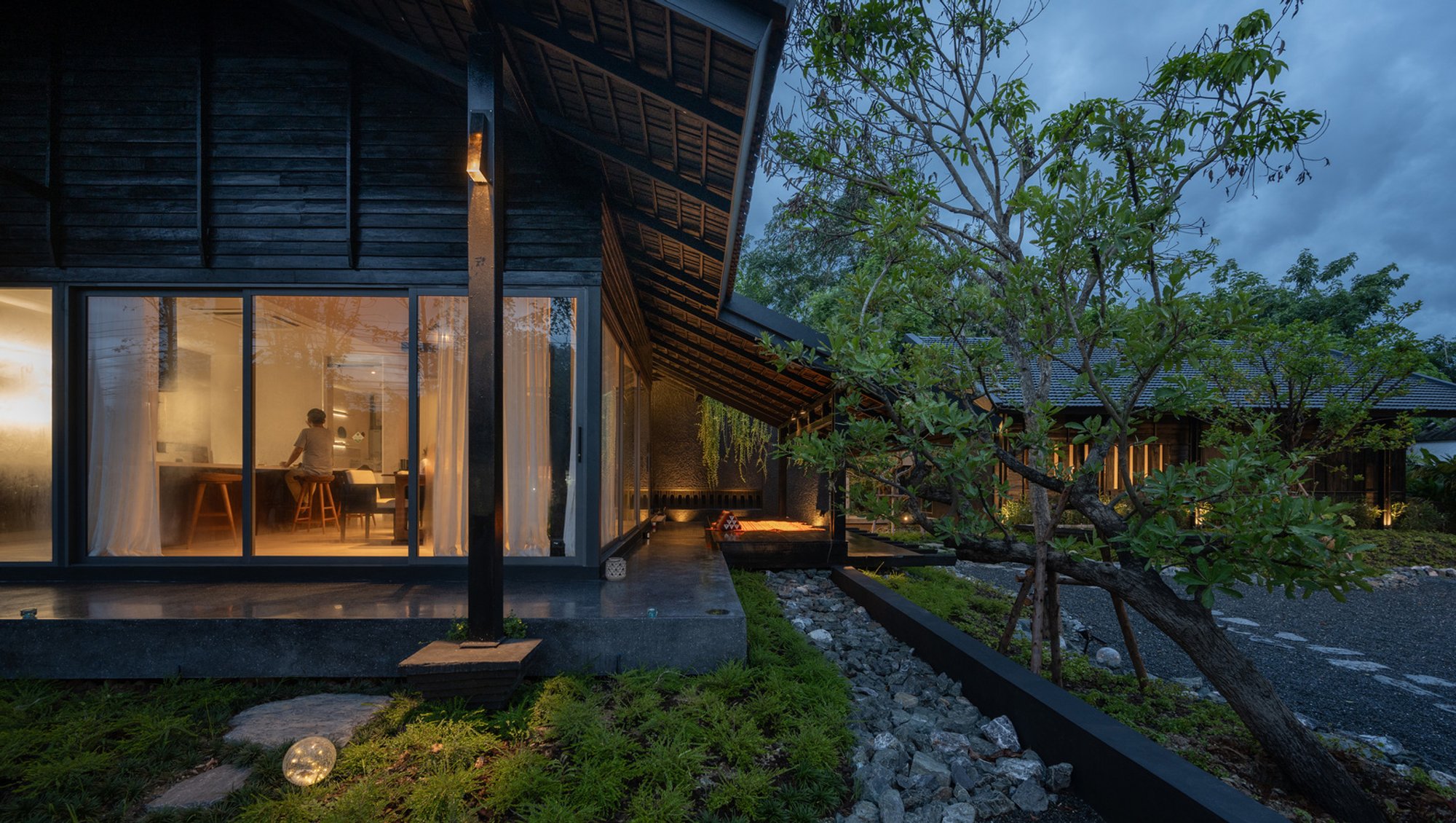
Baan Dam, which translates to “Black House” in Thai, is an exquisite residential project designed by Housescape Design Lab in the vibrant city of Chiang Mai, Thailand. Nestled in a region known for its rich cultural heritage and natural beauty, this home represents a thoughtful blend of contemporary architecture, local craftsmanship, and sustainable design principles.
A House Shaped by Local Context and Community
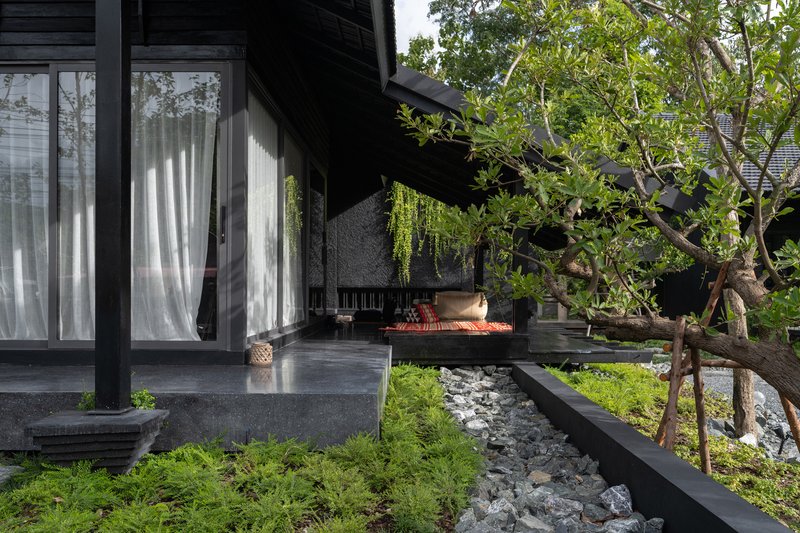
The homeowner envisioned a residence that would honor the cultural essence of Chiang Mai while seamlessly integrating modern living. But this was not a call for pure natural material use; rather, it was a challenge to create a home that actively supports local production and responds to environmental concerns. The architects focused on using materials that are visible and familiar in daily Thai life, amplifying their potential in an architectural context.
Courtyard-Driven Architecture
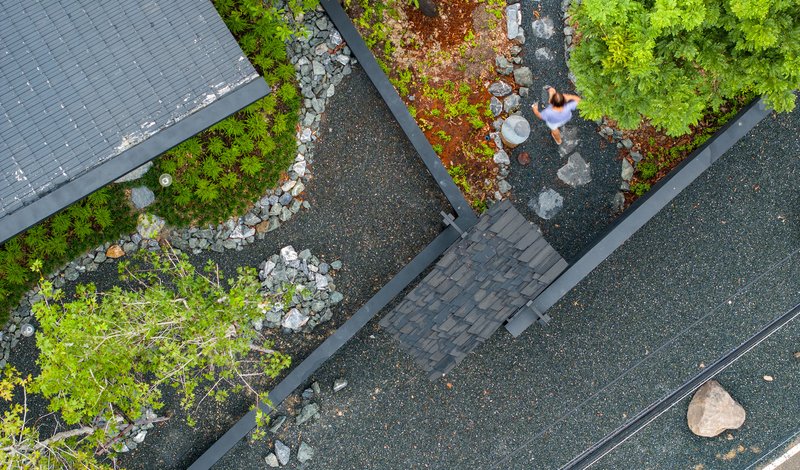
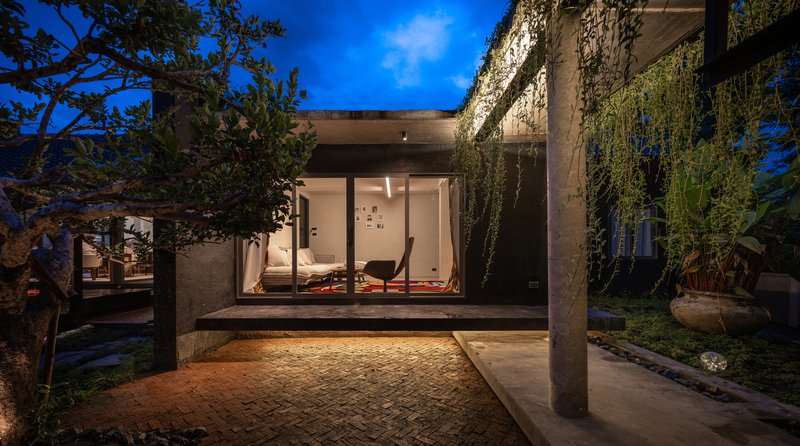
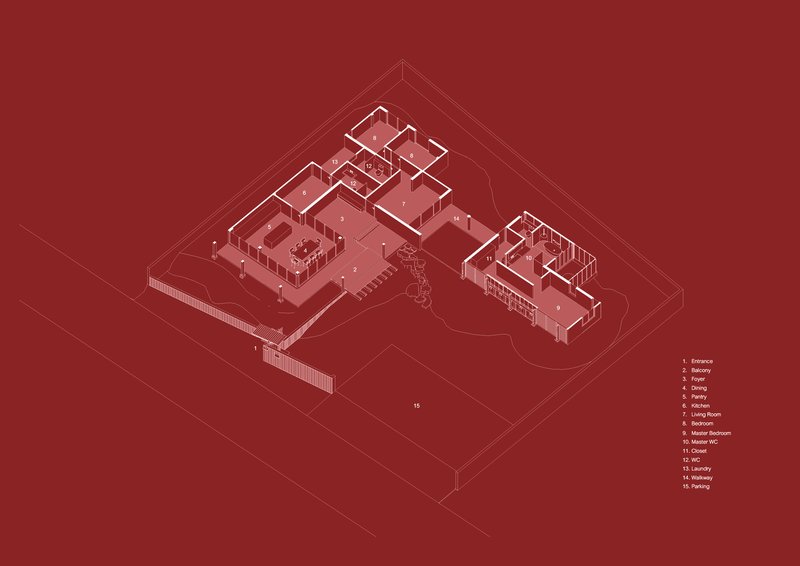
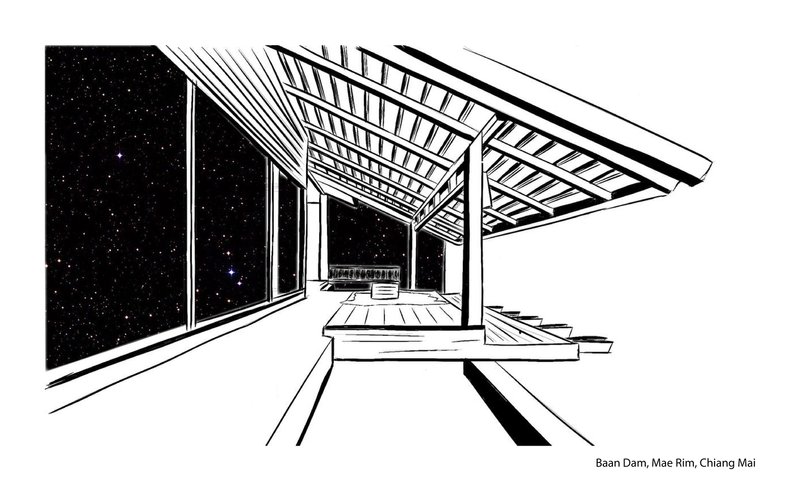
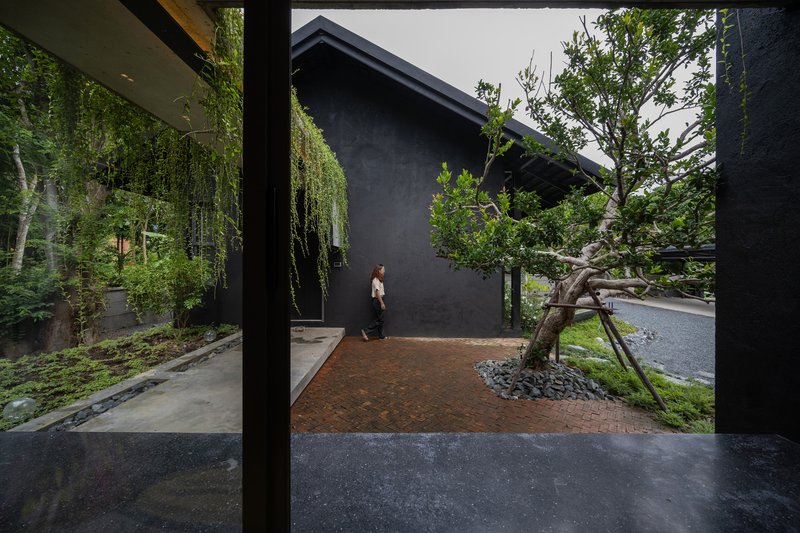
Baan Dam is defined by a sequence of three courtyards, each with distinct functions. The largest, a landscaped courtyard, is enclosed by a U-shaped building and serves as a social hub for outdoor activities like camping and gatherings. The housescape courtyard at the entrance features baked clay flooring, evoking traditional Thai homes and connecting semi-public zones, such as the dining area and Tern (transitional veranda), with the rest of the house. The third, a small corridor yard, leads to the private main bedroom, offering separation and intimacy.
Shading, Climate, and the Challenge of Black
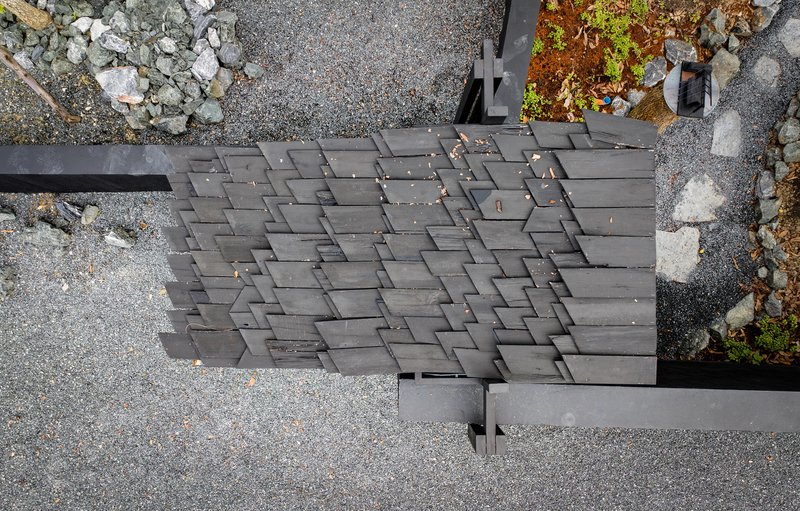
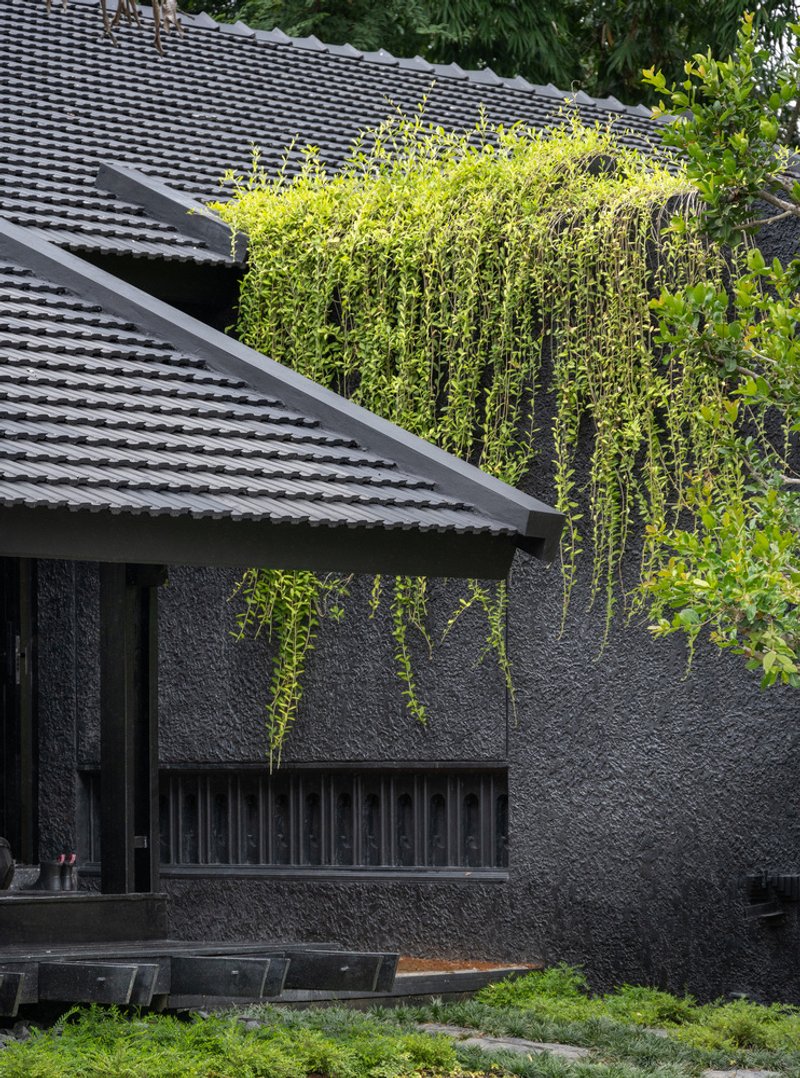
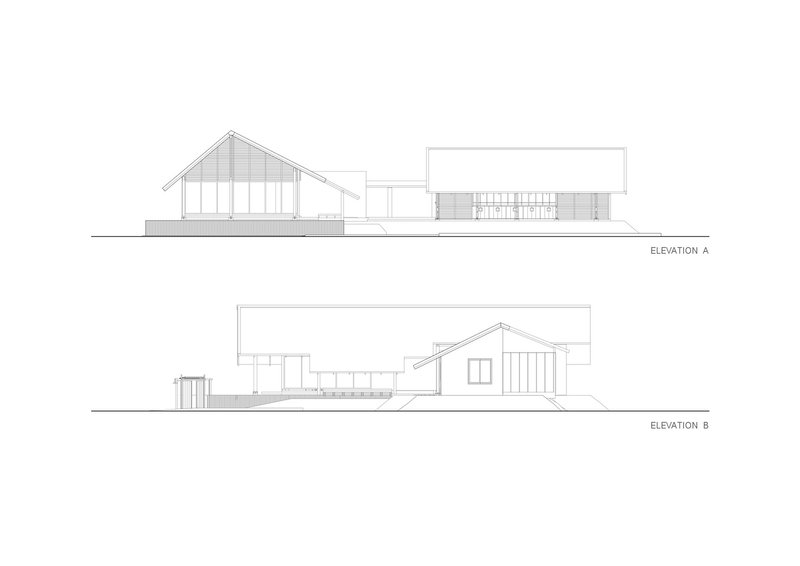
In a region known for its hot, humid climate and heavy rainfall, the design pays special attention to shading and ventilation. To honor the house’s namesake, the architects used only black tiles—hand-painted by local artisans because factory-made black cement tiles were unavailable. Almost 20,000 tiles were individually prepared, then installed using traditional craftsmanship. The roof was cleverly divided into two sections, joined by a concrete slab to reduce seams and prevent water leakage.
The Heart of the Home: Dining as Identity
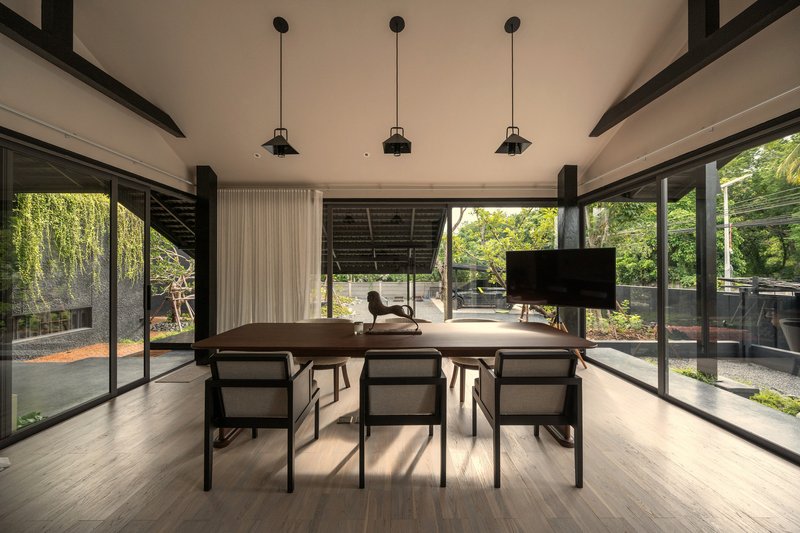
The dining area takes center stage, reflecting the homeowner’s love for cooking and hosting. Positioned at a crucial intersection within the house, this space blurs boundaries between indoors and outdoors, connecting the garden, Tern, and main living areas. When fully opened, it transforms into a large communal zone, where the experience of dining merges with nature and architecture.
Materiality and Tactile Expression
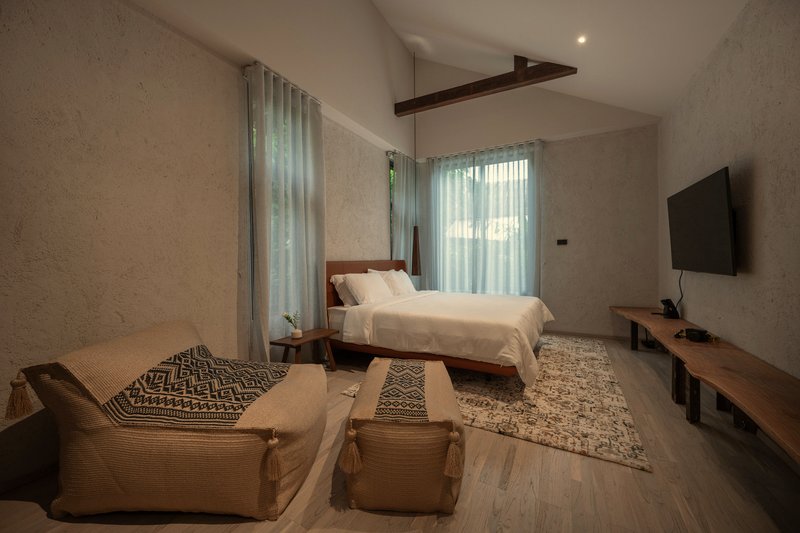
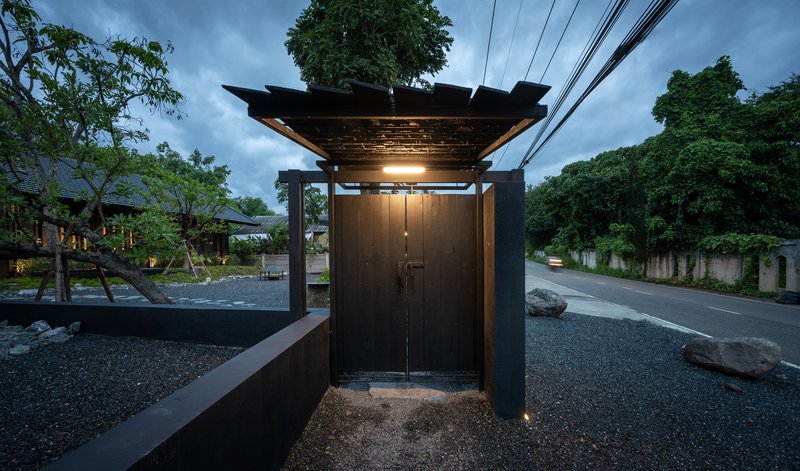
Inside, walls are finished with a mix of concrete and rice husks, applied with semi-smooth plaster that evokes rural textures. Exterior walls carry an almost smooth finish but retain slight irregularities to create a subtle, textured character. A signature feature is the black entrance wall, crafted using a deeply textured technique called Salad Dok, which interacts beautifully with shifting sunlight, revealing intricate details over the course of the day.
Privacy Through Design
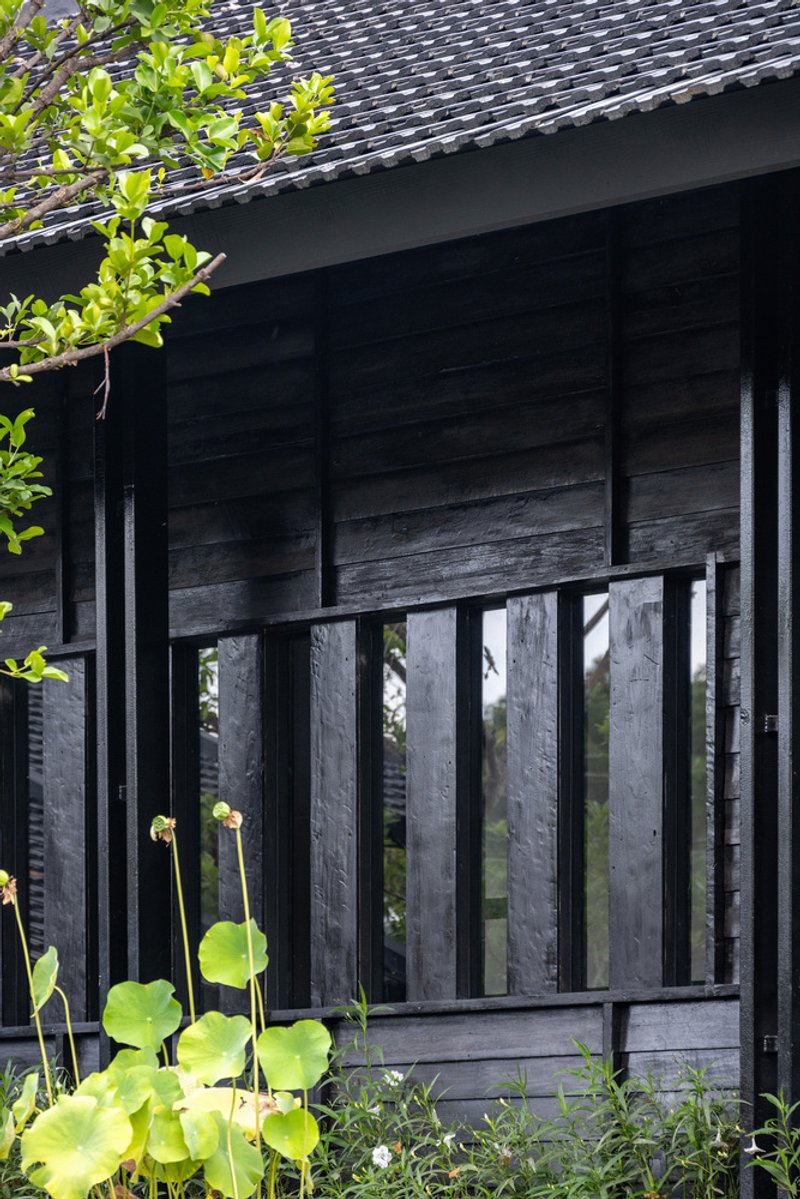
In the primary bedroom suite, local wooden sliding windows create compact voids for privacy, replacing larger glazed openings seen in communal areas. Here, the open-plan layout eliminates doors between bathroom and bedroom, relying instead on the careful arrangement of spaces to maintain privacy and flow.
Happening Craftsmanship: A Dialogue Between Time, Place, and Function
Baan Dam embraces what the architects call “Happening Craftsmanship”—crafting elements deeply tied to specific moments and their surroundings. Take the entrance gate’s door handle: it frames a reflection pool when the door is left ajar, transforming a simple functional object into a poetic gesture.
The design also incorporates “indented corners,” drawn from traditional Thai architecture, which subtly shift perspectives and add efficiency and narrative. A standout detail is the foot-washing tap near the entrance, a modern reinterpretation of a customary Thai ritual, blending steel with minimalist references to traditional forms—all finished in black.
Experimentation as a Design Language
Above all, Baan Dam is an exploration of material experimentation, where beauty emerges from process and imperfection. By using materials tested and refined in the studio, the house becomes a timeless prototype—one that challenges conventional domestic architecture and offers new possibilities for living.
All Photographs are works of Rungkit Charoenwat




Popular Articles
Popular articles from the community

Kaffeebühnen: Coffee Shop Architecture Designed as a Civic Stage Between Vienna’s City and Park
Kaffeebühnen turns coffee shop architecture into a civic stage, linking Vienna’s park edge, urban life, warm timber yards, and coffee craft.
Kerry Kounnapis Packs 800 Daily Coffees into a 43-Square-Metre Melbourne Laneway Bar
Palace Coffee channels Pellegrini's and European standing bars through oxide-red steel and spotted gum timber in a Ridgway Place sliver.
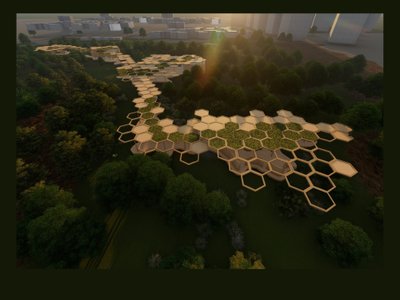
Eco Chapel: A Green Architecture Pavilion Designed in Symbiosis with the Forest
Eco Chapel uses green architecture to weave prayer, learning and reuse into a forest pavilion shaped by modular hexagonal canopies for life.

IKC de Geluksvogel: Sustainable School Architecture Designed for Free Movement and Digital Learning
IKC de Geluksvogel turns sustainable school architecture into a flexible Maastricht campus for digital learning, nature, and free movement.


Similar Reads
You might also enjoy these articles

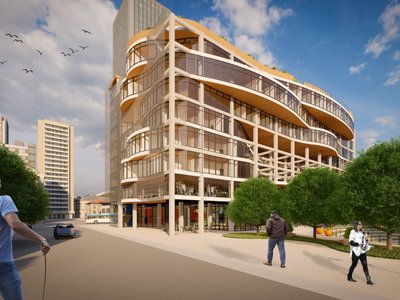
Olio Towers: A Mid-Rise for Performers That Fuses Housing, Rehearsal, and Stage
Located blocks from Houston's Theater District, this modular tower stacks living units around a central performance atrium.
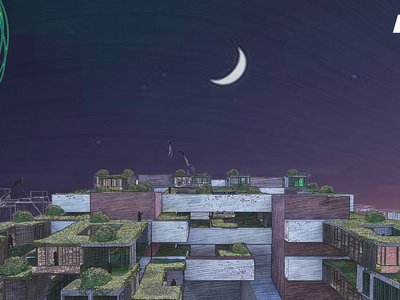
Oasis: Modular Green Housing Carved into Dhaka's Urban Fabric
A shortlisted Plugin Housing entry reclaims unauthorized settlements in Dhaka with stepped concrete volumes, green roofs, and ventilation-driven design.

Black Hole: A Floating Megastructure for the Post-Physical Era
Emiliano Mazzarotto envisions a spherical, self-scaling arena where e-sports, digital hotels, and holographic stadiums replace traditional public space.
Compact & Sustainable Living in Piraeus: A Four-Level Family Home Built Around Light and Air
A narrow townhouse in one of Greece's densest port cities uses a central atrium and passive strategies to house three generations under one roof.


Explore Housing Competitions
Discover active competitions in this discipline




The International Standard for Design Portfolios


The Global Benchmark for Architecture Dissertation Awards


The Global Benchmark for Graduation Excellence


Challenge to reimagine the Iron Throne
Comments (0)
Please login or sign up to add comments
No comments yet. Be the first to comment!