

Baba Beski’s Tomb by ZAV Architects – A Contemplative Garden Monument in Golestān, Iran
Baba Beski’s Tomb by ZAV Architects blends woven rebar with nature, symbolizing life, death, incompleteness, and transformation within Golestān’s garden.


Where Architecture, Nature, and Memory Converge in Northern Iran
A Garden Transformed into a Sanctuary
Baba Beski spent his days in a large private garden in northern Iran, welcoming friends and followers. After his death, he was buried there according to his will. His family chose not to limit the site to a private resting place but instead envisioned it as a semi-public garden of reflection, allowing the space to carry forward his legacy of openness and hospitality.


Honoring Life and Death Through Design
The tomb sits close to the spaces where Beski lived, reinforcing the connection between life, death, and continuity. The design reflects a profound philosophical idea: decay feeds new growth, and incompleteness is the natural state of existence. This duality—life and death as intertwined rather than opposed—became the conceptual foundation of the project.
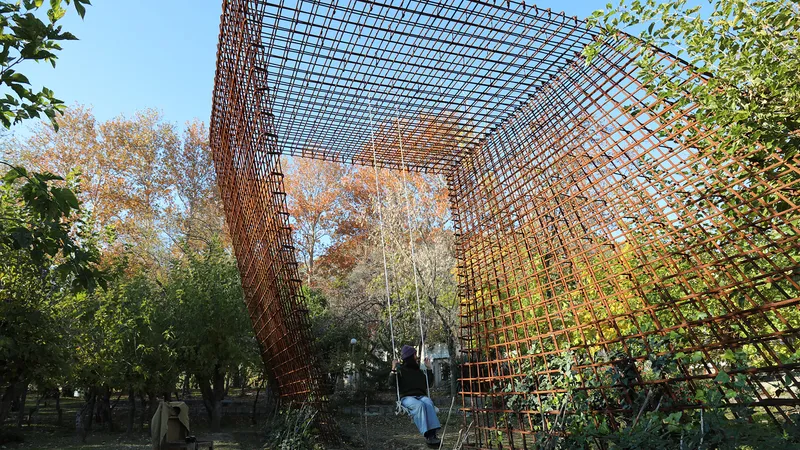
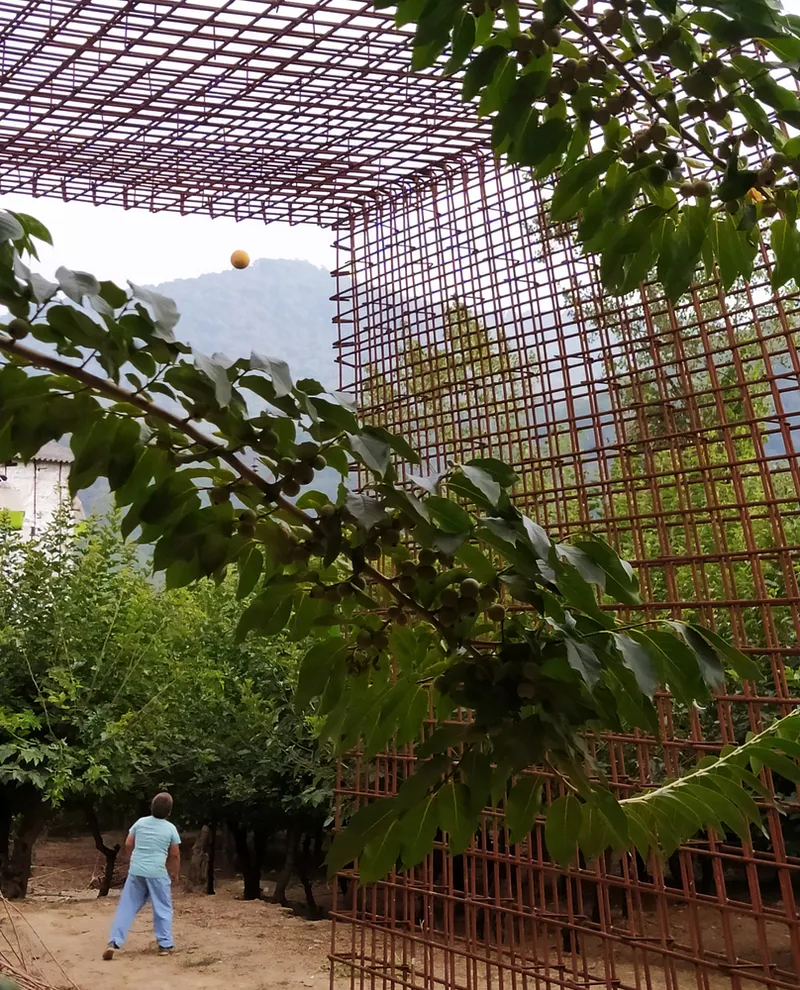
Embracing the State of Incompleteness
ZAV Architects embraced the philosophy of incompleteness, creating a design that avoids finality. The garden and man-made structures coexist in a suspended state, representing the cycle of genesis and degeneration. Instead of permanence, the architecture highlights transformation, growth, and decay.
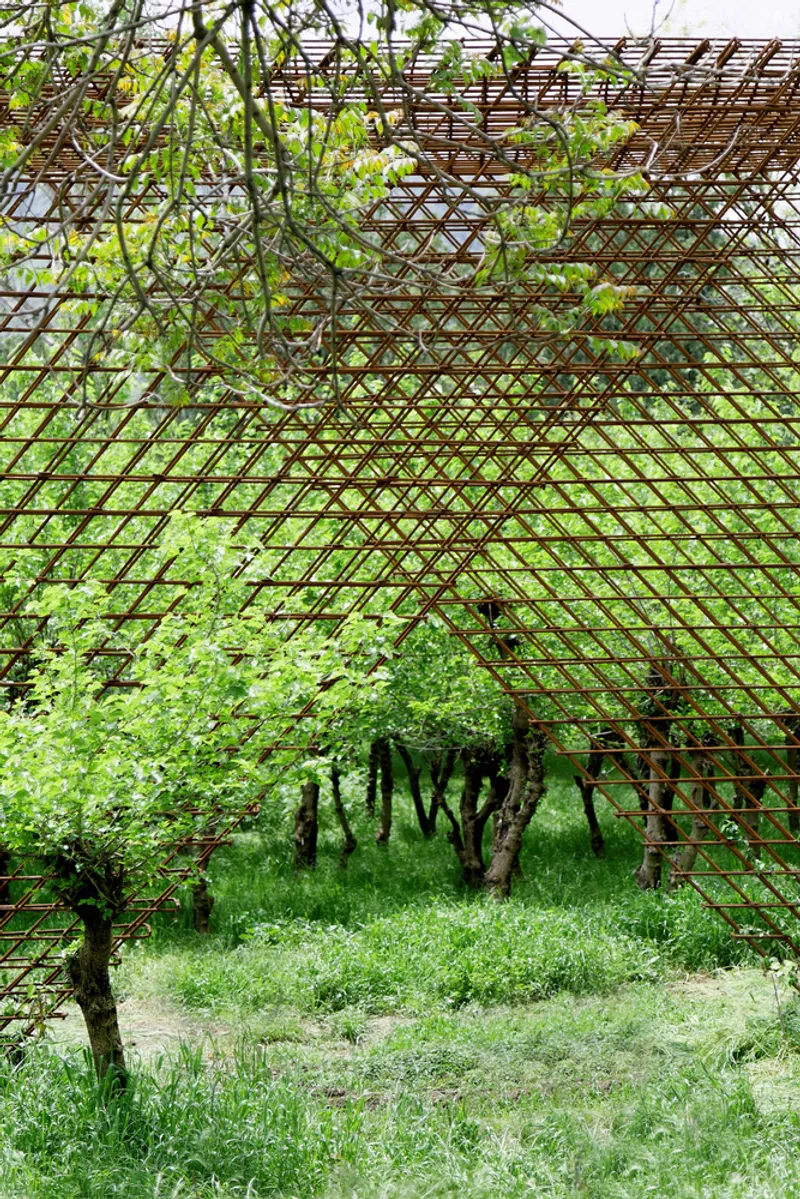

Woven Rebar as a Monumental Structure
At the heart of the tomb lies a structure of woven rebar, a material usually hidden within reinforced concrete. Here, it is exposed, raw, and intentionally unfinished. Two thin angled planes rise to support the structure, creating a delicate balance between instability and strength. Its minimal footprint underscores the sense of openness, while the material’s vulnerability invites nature to take over.
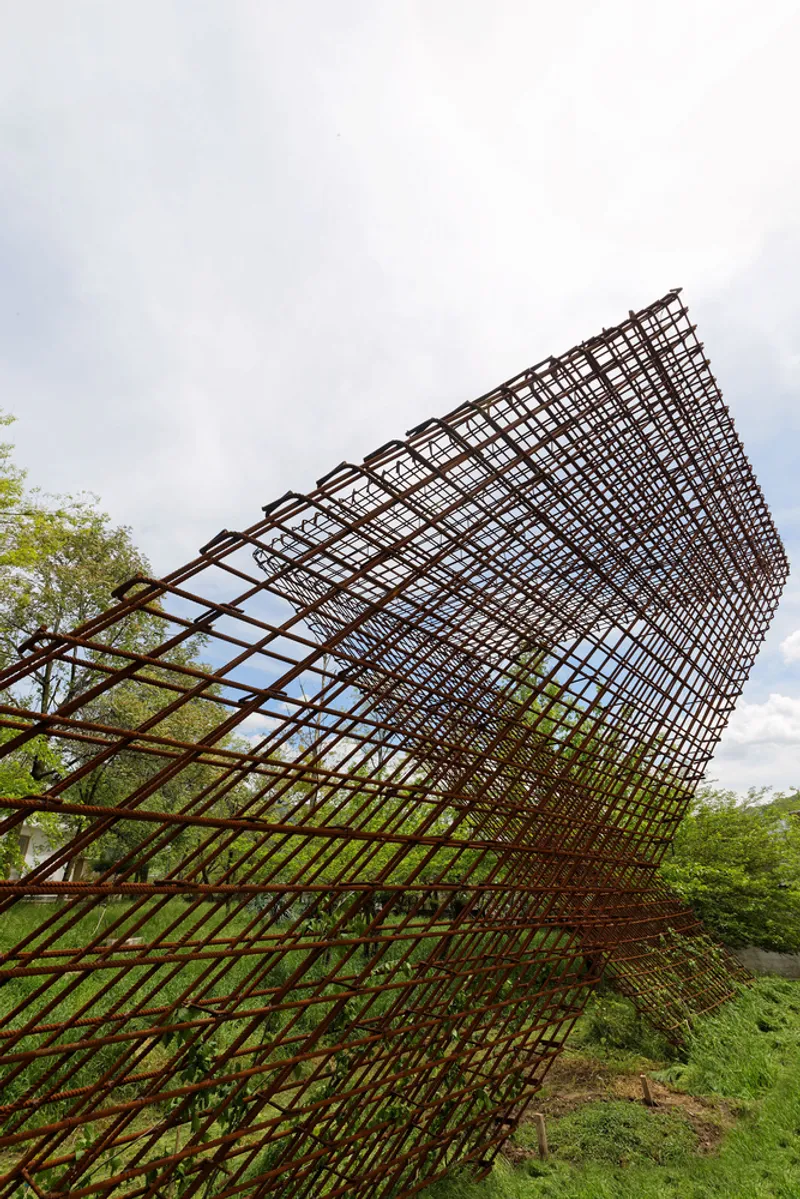
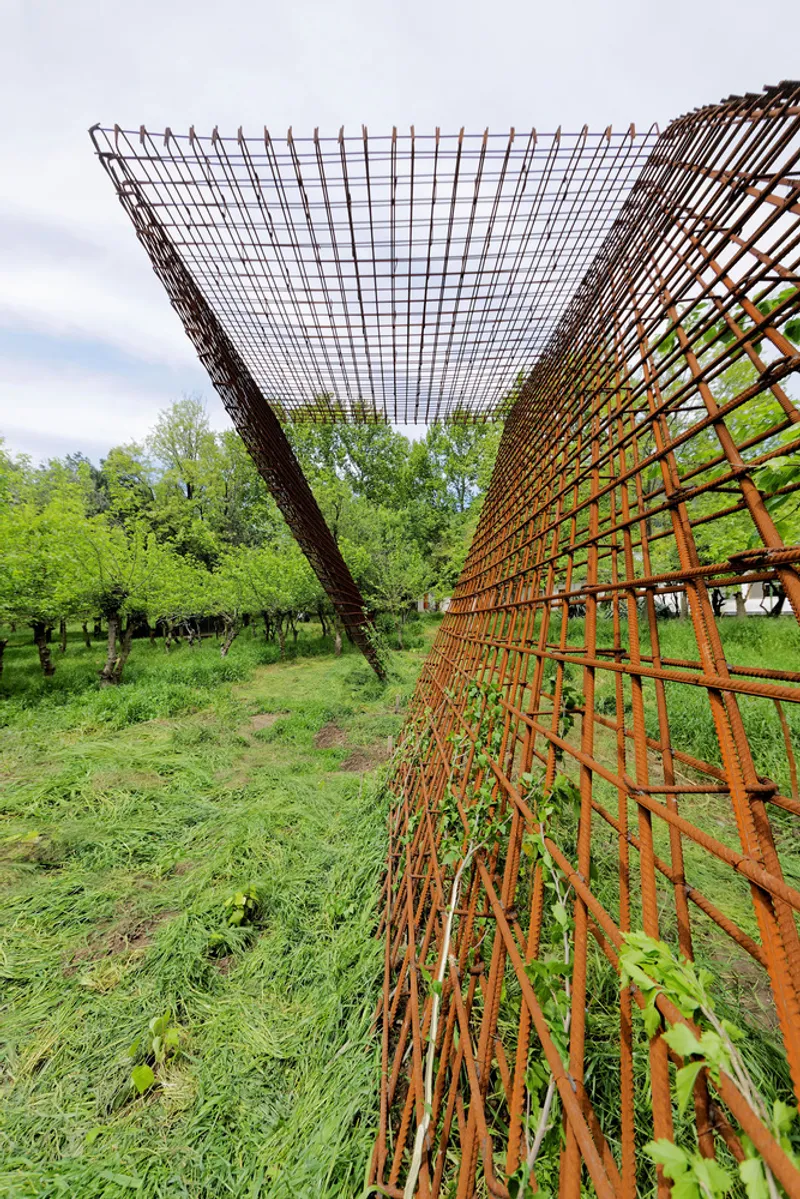
Architecture Overtaken by Nature
Over time, the rebar rusts and climbing plants weave through it, gradually transforming the tomb into part of the living garden landscape. This slow merging symbolizes the inevitable return of the built environment to nature, reinforcing the theme of impermanence and renewal.
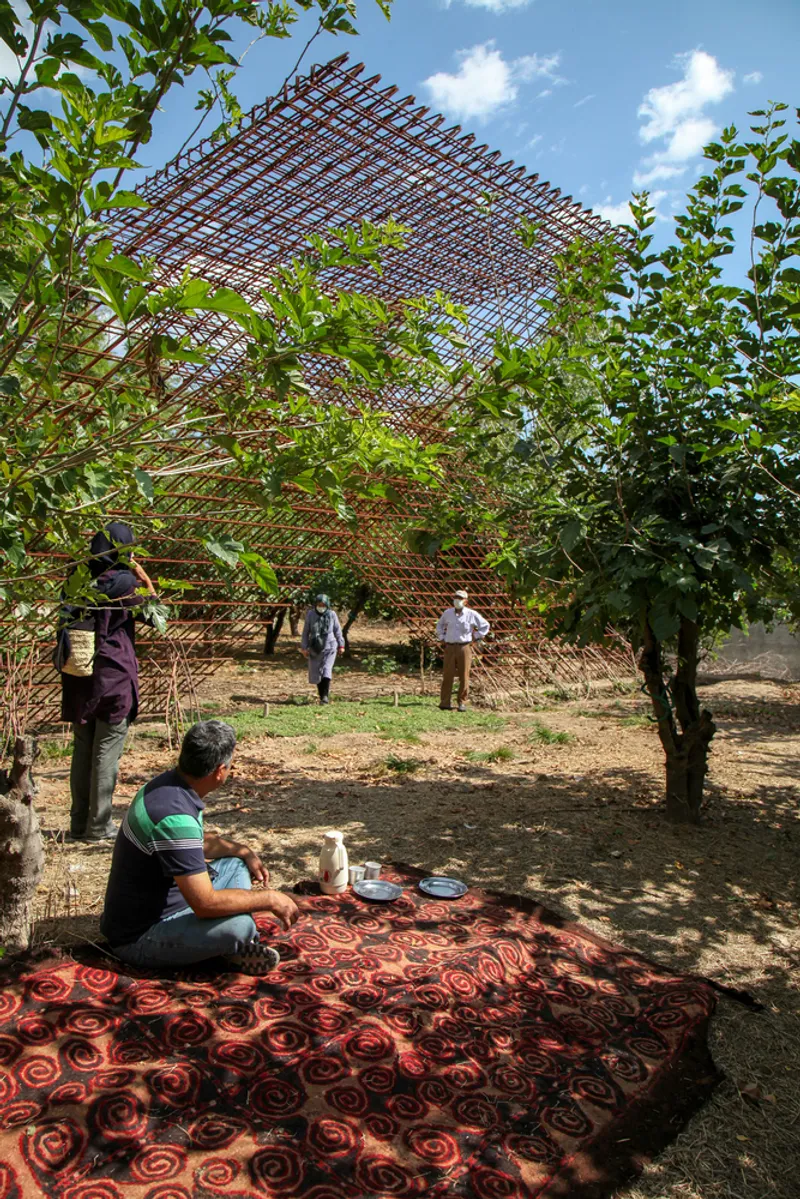
A Garden in Transition
This tomb represents the first phase of turning Baba Beski’s private retreat into a public garden. Future phases will adapt his living spaces into communal areas, expanding the site into a public sanctuary for meditation, memory, and regeneration.

All Photographs are works of Soroush Majidi


Popular Articles
Popular articles from the community


Architekt Andreas Gruber Scatters 23 Dark Timber Chalets Across a South Tyrolean Forest Edge
In Molini di Tures, Amonti Chalets breaks a resort into a hamlet of gabled timber houses, with parking, storage and services pushed into the slope.

U.GA Architects Wraps an Oval Rooftop Pool in Curved Board-Formed Concrete on Busan's Jeollidan-gil
In Busan's Jeonpo-dong, a 454 m² mixed-use block stacks a neighborhood facility, guest rooms and an oval rooftop pool inside spiraling concrete walls.

GROUP A Strips a 1969 Rotterdam Harbor Headquarters to Its Frame and Wraps It in Timber Louvers
In Rotterdam's M4H harbor district, Ferro Offices reuses a 1969 frame, adds one timber storey and reaches BREEAM-NL Outstanding.

LT2A and OPEN Architectes Thread a Brick and Glass High School Through a Wooded Belgian Campus
In Braine-l'Alleud, a 3,000 m² wing for Collège Cardinal Mercier pairs pale brick with a glazed colonnade, deferring to a small chapel and a dense wood.

Similar Reads
You might also enjoy these articles


Hodi-Mandai Geram
Project Function: Preservation and revitalization of the Intangible heritage and socio-spatial identity of the Hodi by Housing, Cultural Memory Center, Sacred Grove, landscape, local tourism economy


Olio Towers: A Mid-Rise for Performers That Fuses Housing, Rehearsal, and Stage
Located blocks from Houston's Theater District, this modular tower stacks living units around a central performance atrium.

Oasis: Modular Green Housing Carved into Dhaka's Urban Fabric
A shortlisted Plugin Housing entry reclaims unauthorized settlements in Dhaka with stepped concrete volumes, green roofs, and ventilation-driven design.

Black Hole: A Floating Megastructure for the Post-Physical Era
Emiliano Mazzarotto envisions a spherical, self-scaling arena where e-sports, digital hotels, and holographic stadiums replace traditional public space.

Explore Architecture Competitions
Discover active competitions in this discipline

Challenge to design a portable theatre

Challenge to design a portable music platform

Challenge to design an open learning module for the elderly

Challenge to reimagine the Iron Throne
Comments (0)
Please login or sign up to add comments
No comments yet. Be the first to comment!