

Baby Pluto by Adrià Garrido Verdú
A community workshop in Valencia using superadobe construction to protect creative spaces through local materials, social collaboration, and closed material cycles.


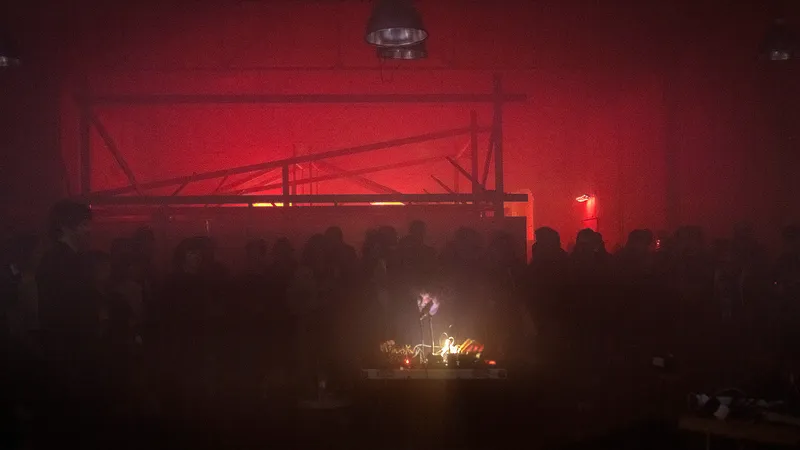
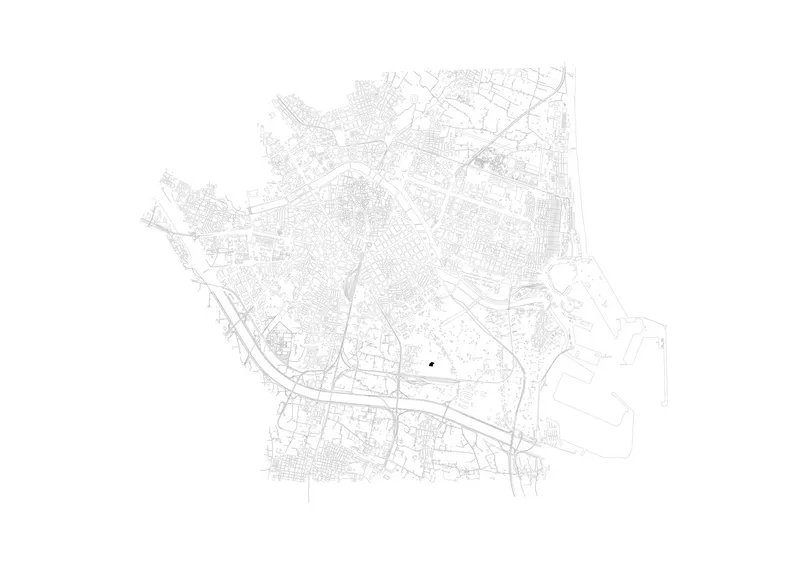
Baby Pluto, designed by Adrià Garrido Verdú, is an architectural and social statement embedded in the fragile territory of La Punta, Valencia. Positioned between the monumental City of Arts and Sciences and the industrial container port of Pinedo, the project emerges as a small but powerful act of resistance—an autonomous creative enclave within a landscape increasingly threatened by large-scale infrastructural development.
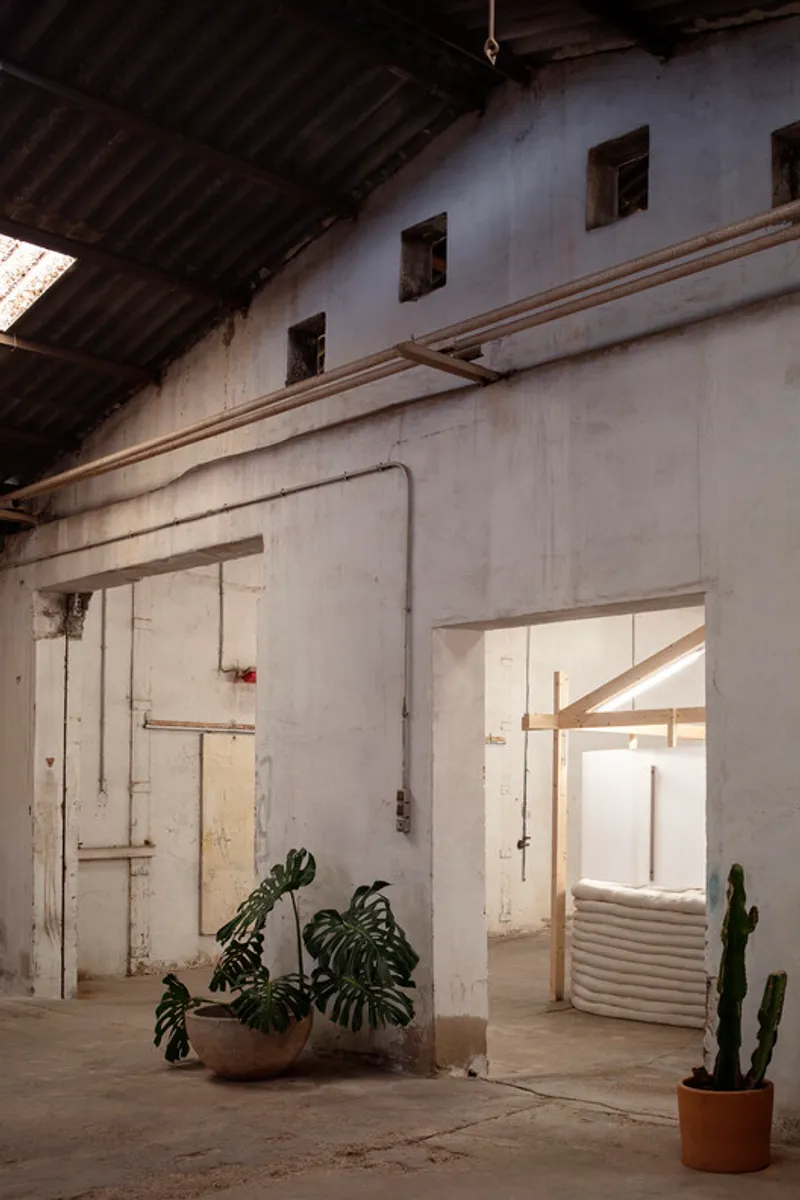
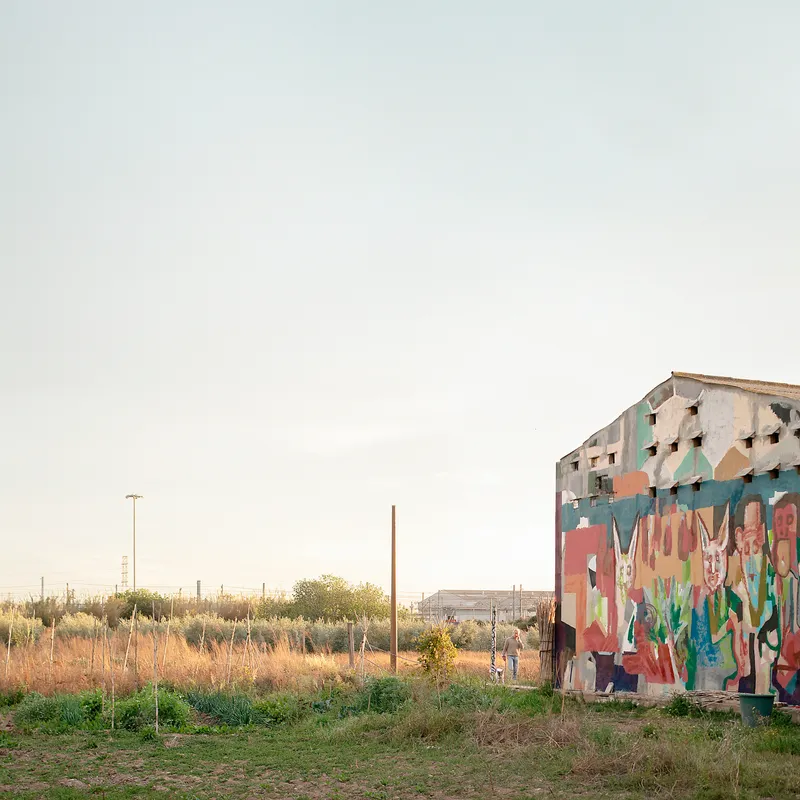
Conceived as an extension of the existing Pluto workshops, Baby Pluto occupies an adjoining warehouse and expands the collective’s mission: to safeguard spaces for creation, collaboration, and local culture just ten minutes by bicycle from Valencia’s city center.
A Creative Island in a Hostile Context
La Punta is a territory under pressure. Surrounded by macro-projects and infrastructural expansion, its agricultural and cultural identity has been progressively eroded. In this context, Pluto has become a refuge for dozens of artists and makers who actively defend local, non-commercial culture.
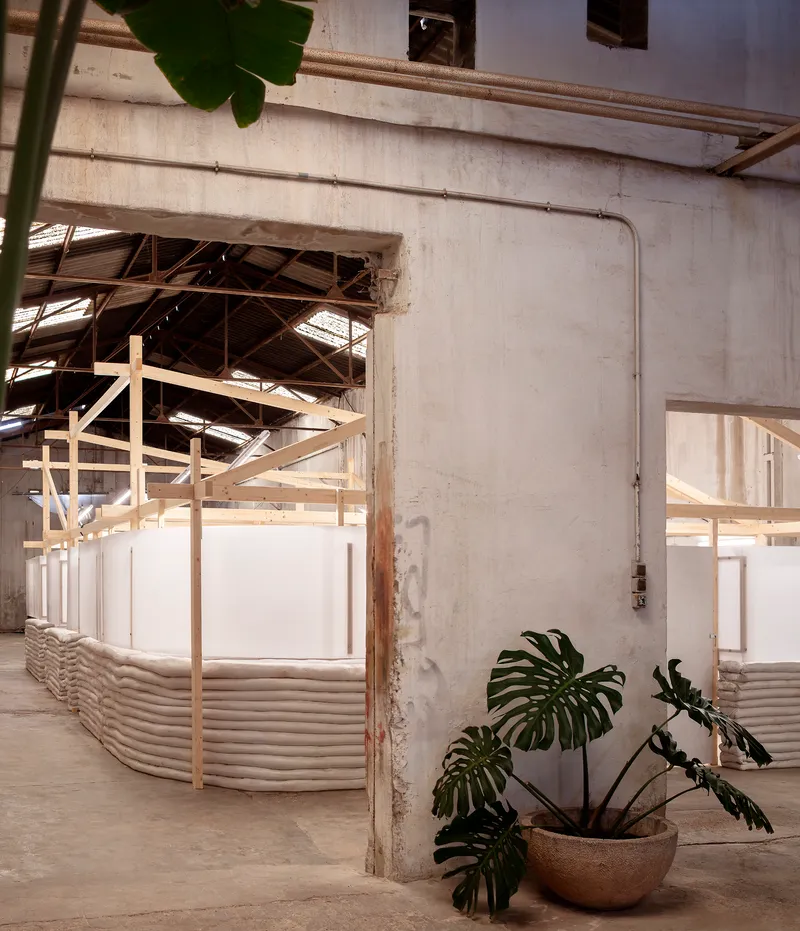
Baby Pluto reinforces this role by establishing six new alternative workspaces, offering young Valencian artists dignified conditions for production within an agricultural environment. Rather than isolating itself from its surroundings, the project embraces its rural context, positioning creativity as something that can—and must—coexist with the land.
Architecture as Protection
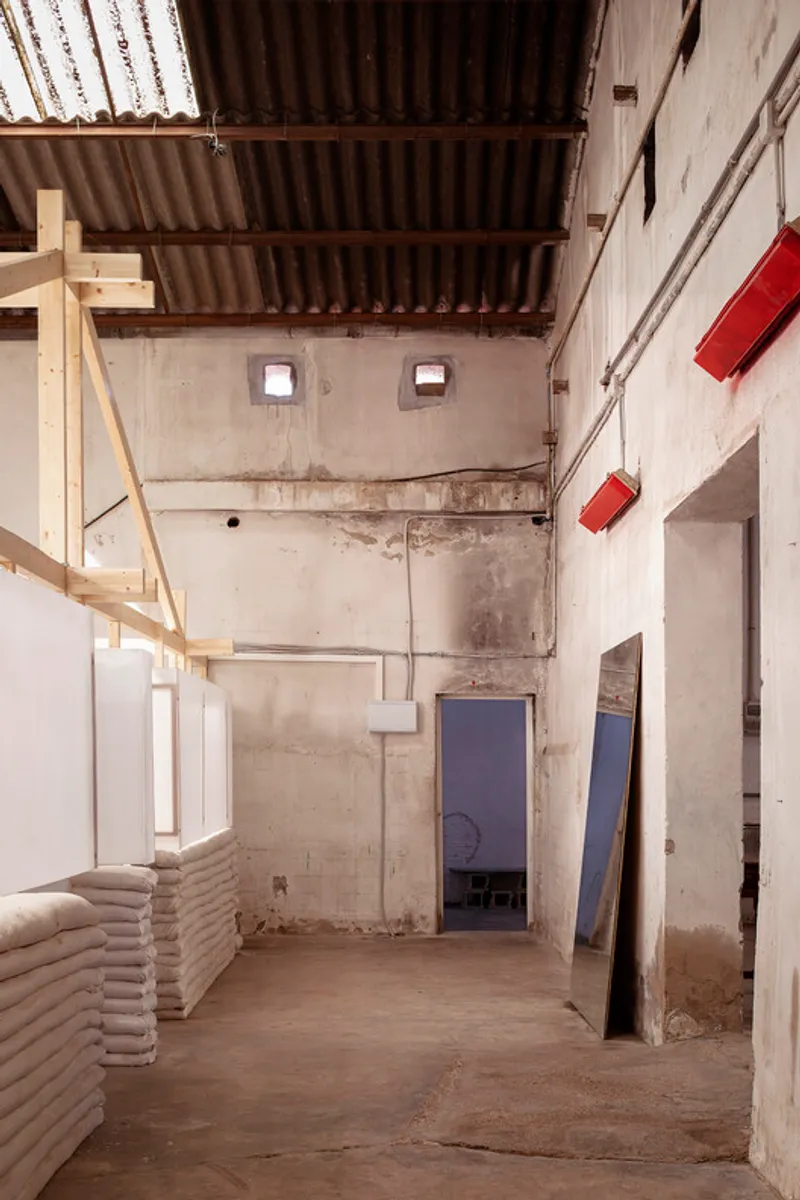
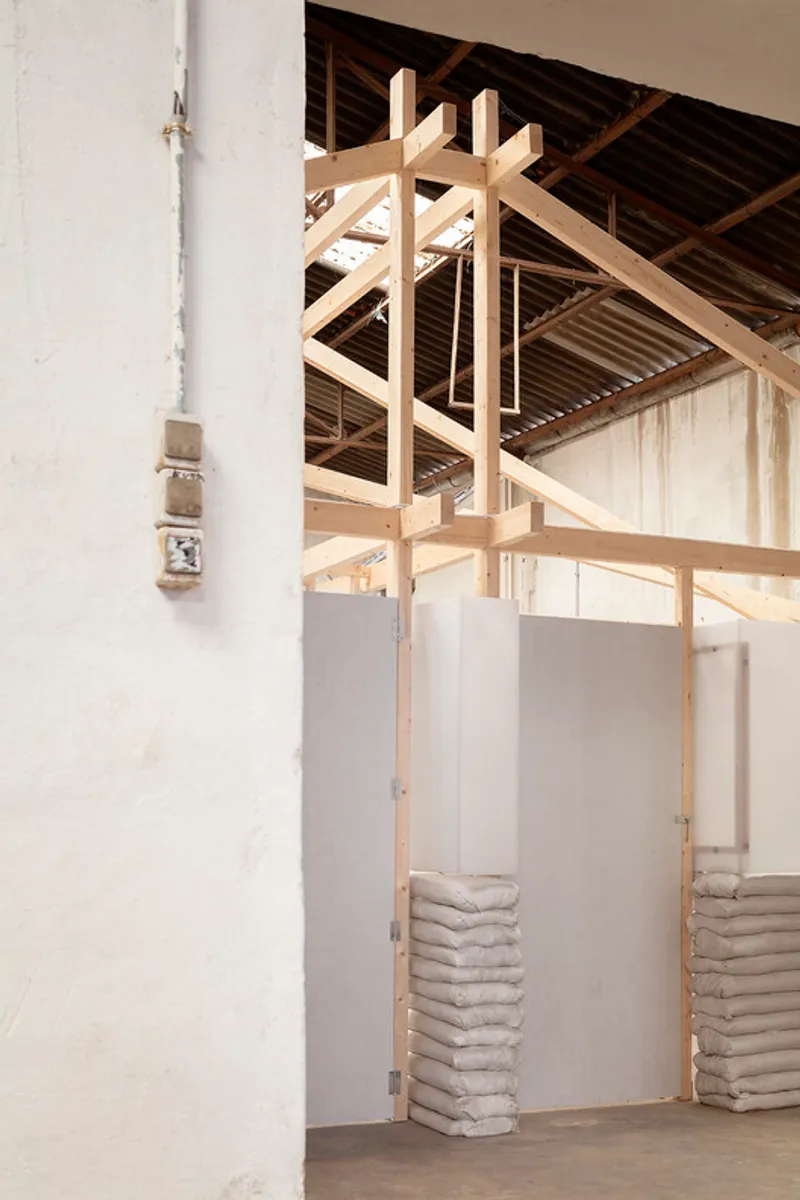
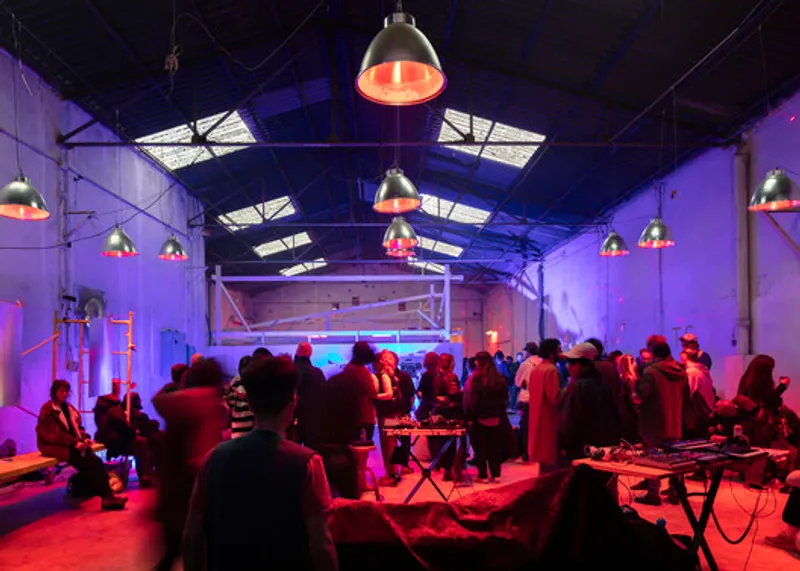
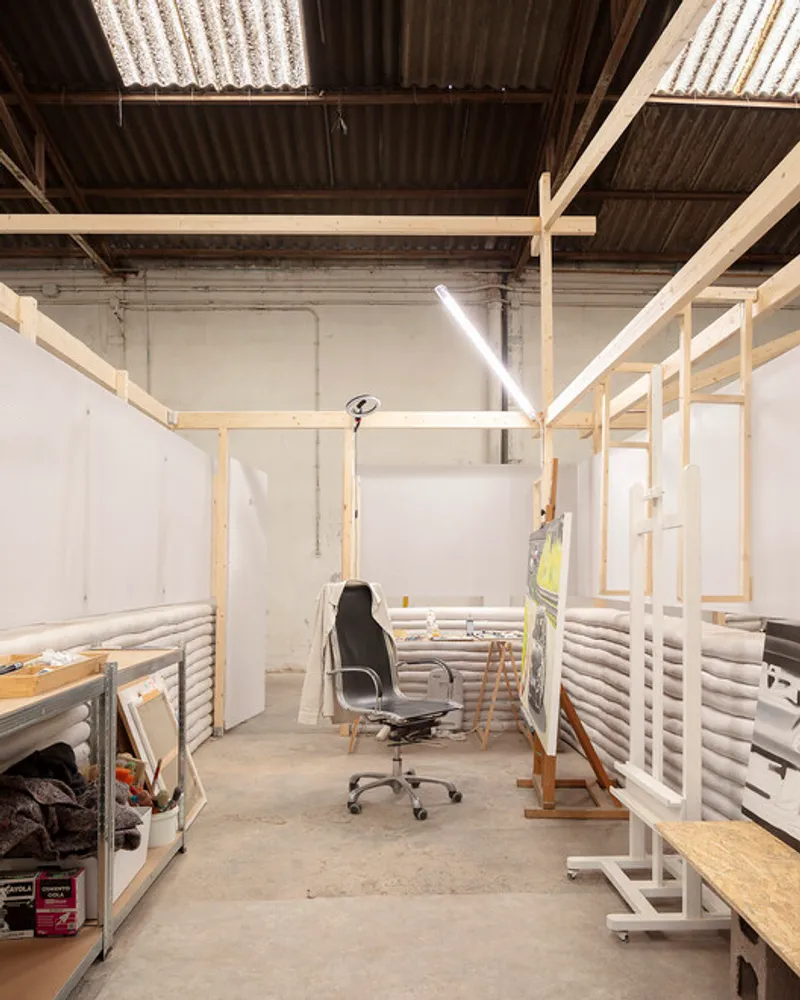
The existing warehouse is treated as a second skin, a protective envelope within which a new internal architecture unfolds. Inside, the space is conceived as a fortress for art—a place that shields creative processes from an increasingly mercantile and dehumanized society.
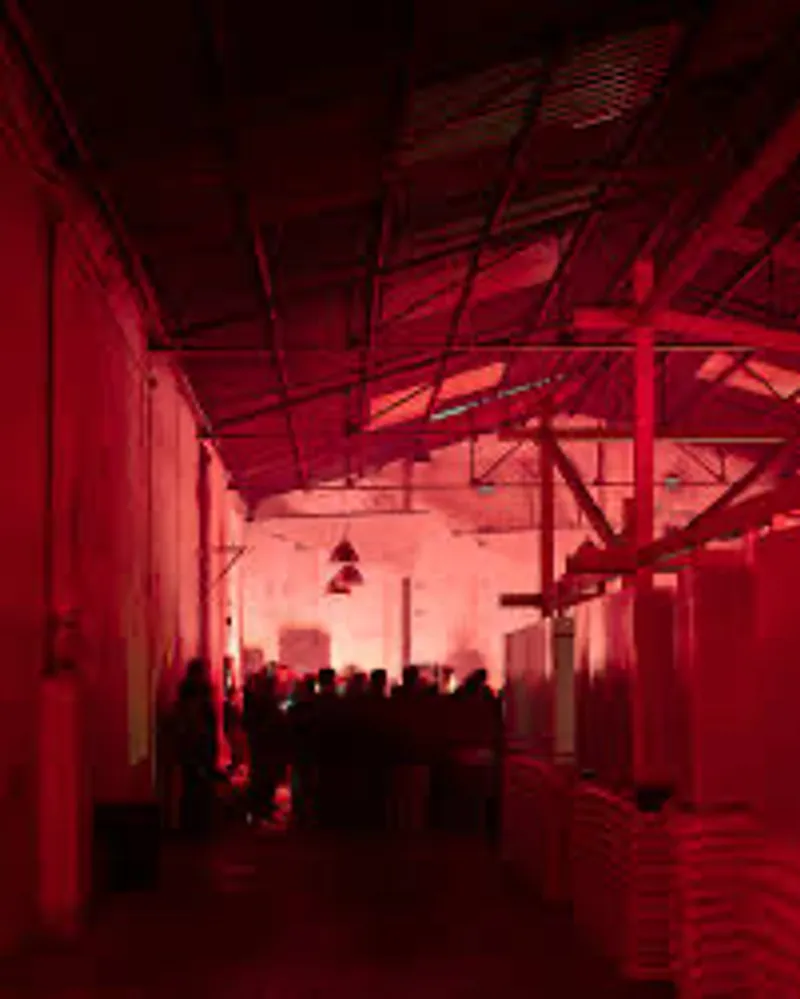
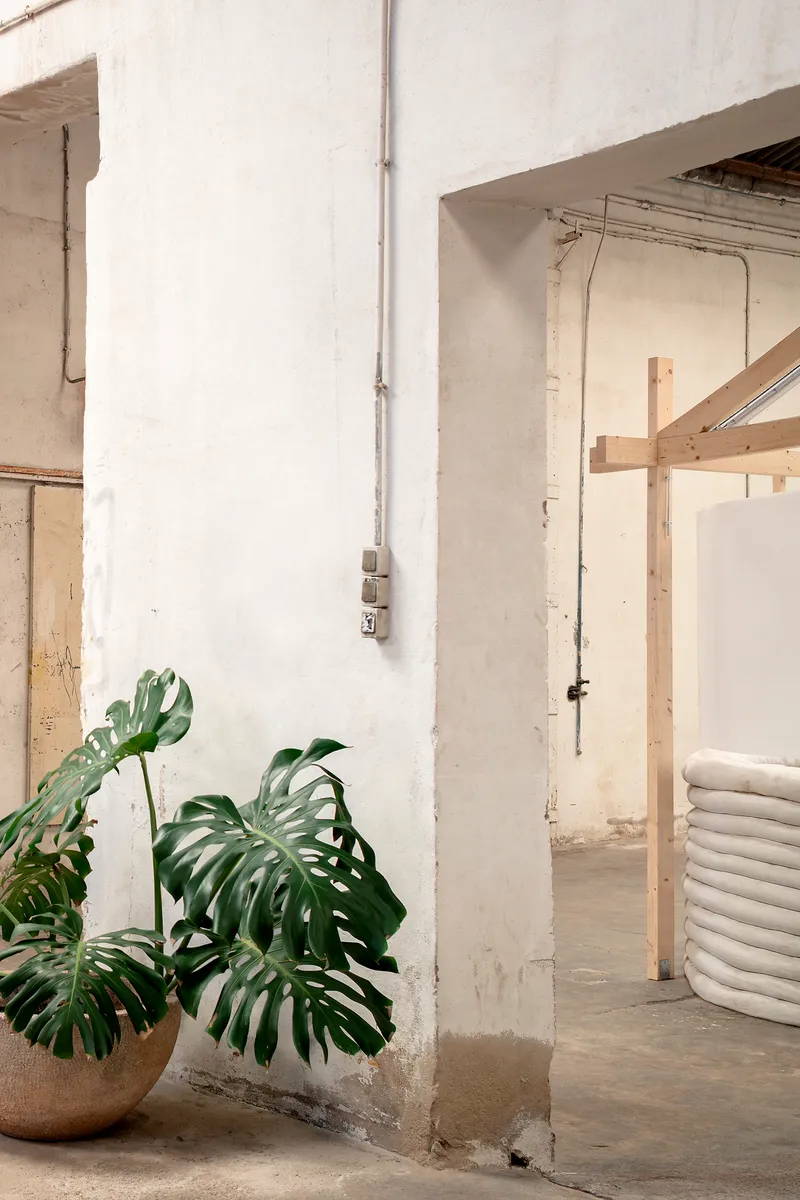
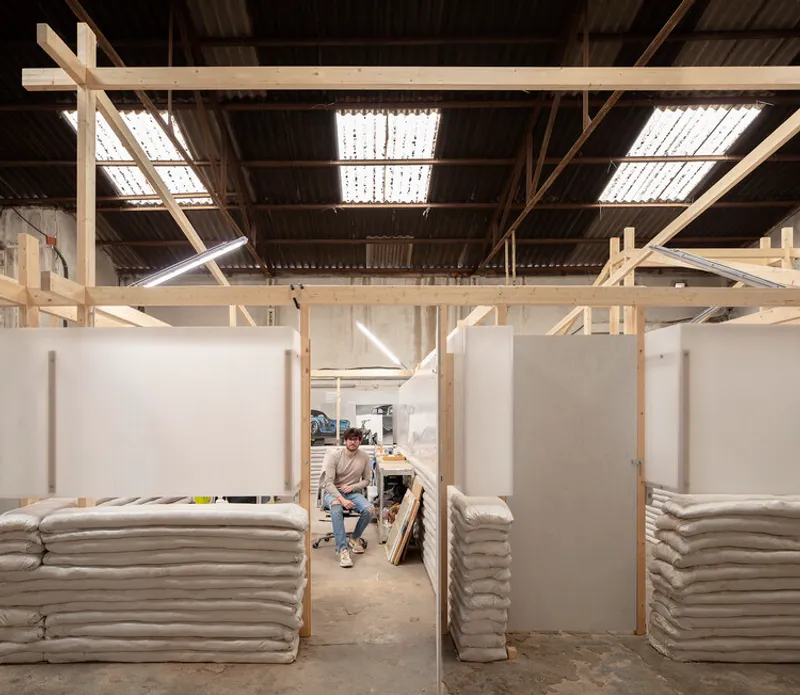
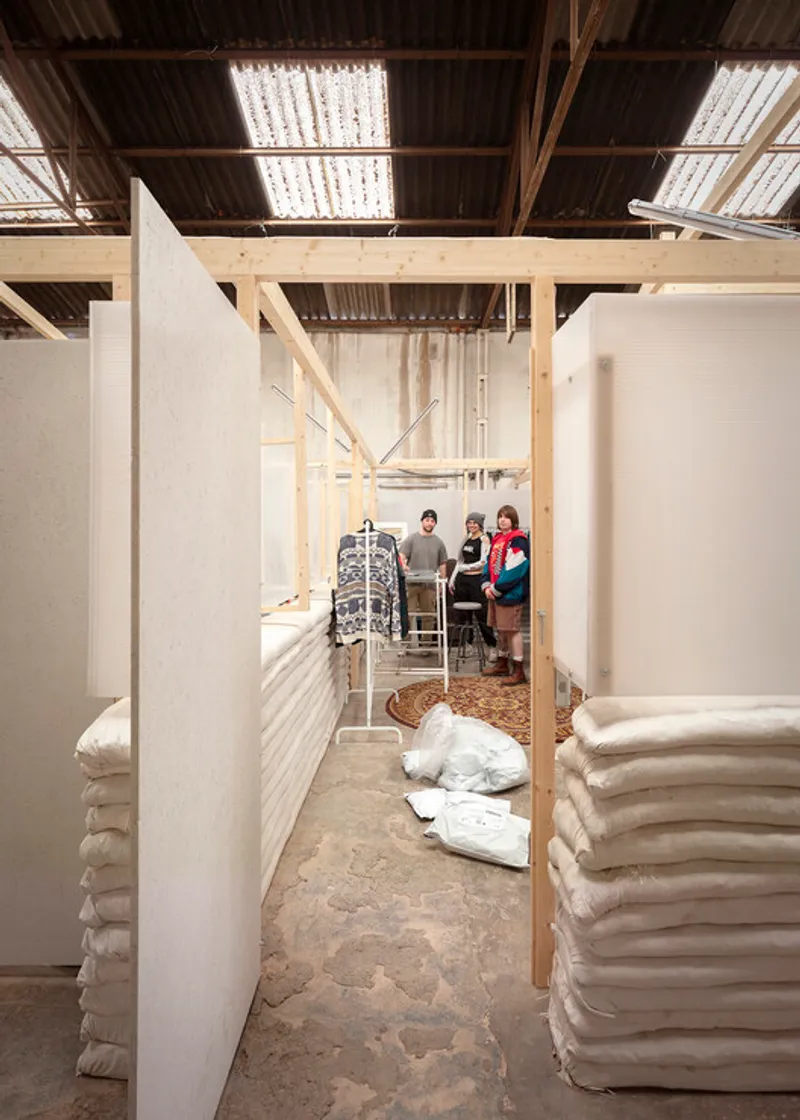
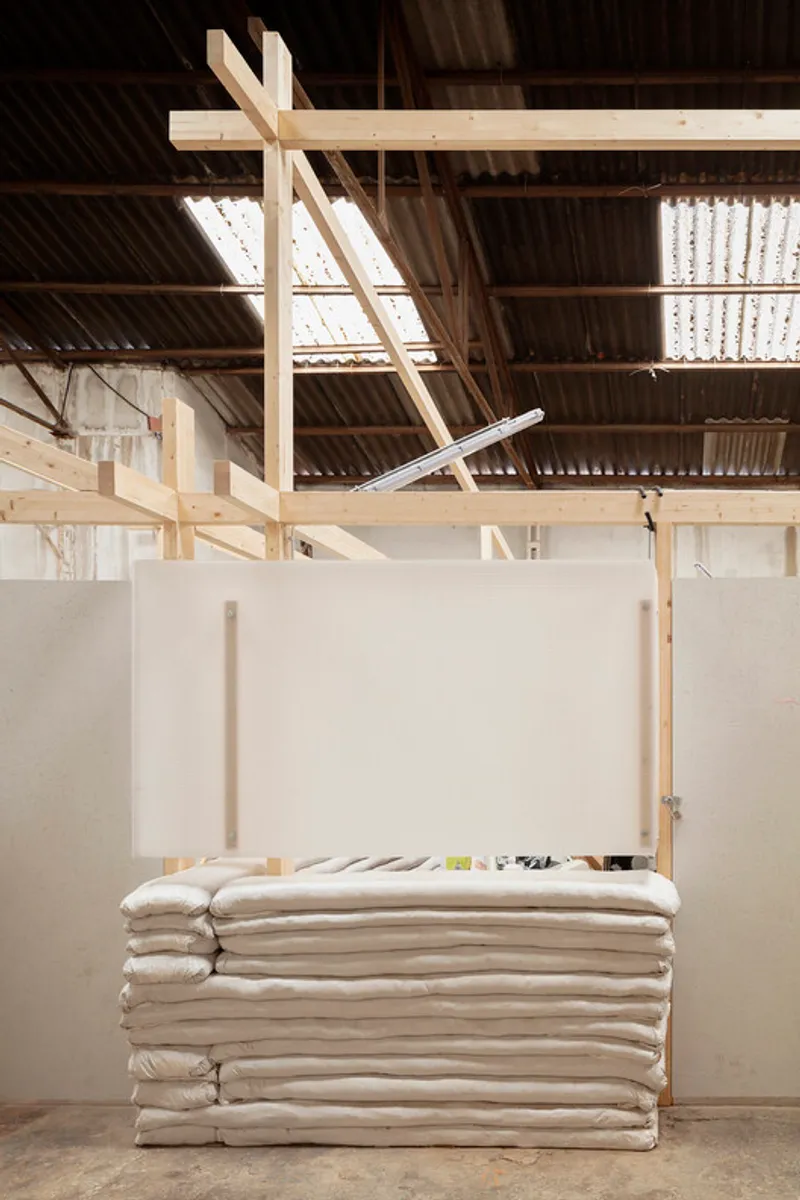
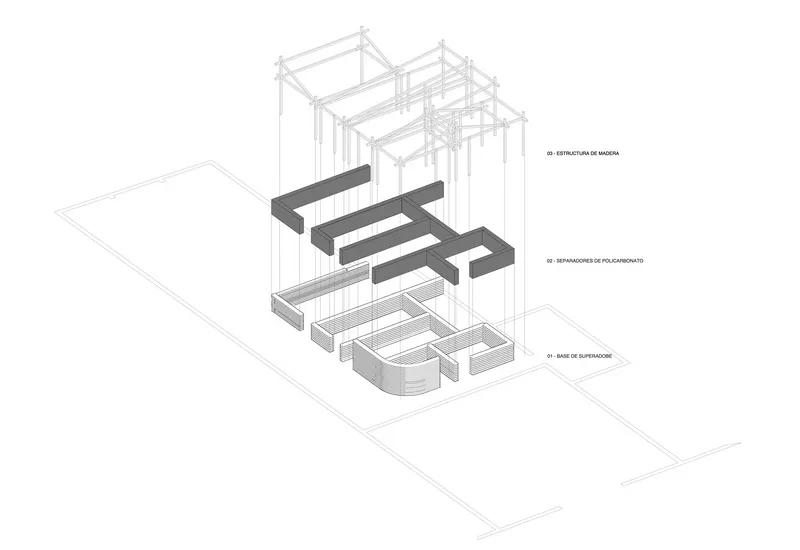
This idea of protection is made explicit through the metaphor of trenches. In conflict zones, sandbag trenches defend vulnerable bodies; here, they defend fragile creative practices. The workshops are delimited using the superadobe construction method, a vernacular technique that involves filling raffia sacks with earth and stacking them in continuous layers.
The resulting walls are thick, tectonic, and grounded—forming a strong perimeter that contrasts sharply with the lighter, more flexible interiors they contain.
Superadobe and the Ethics of Material Use
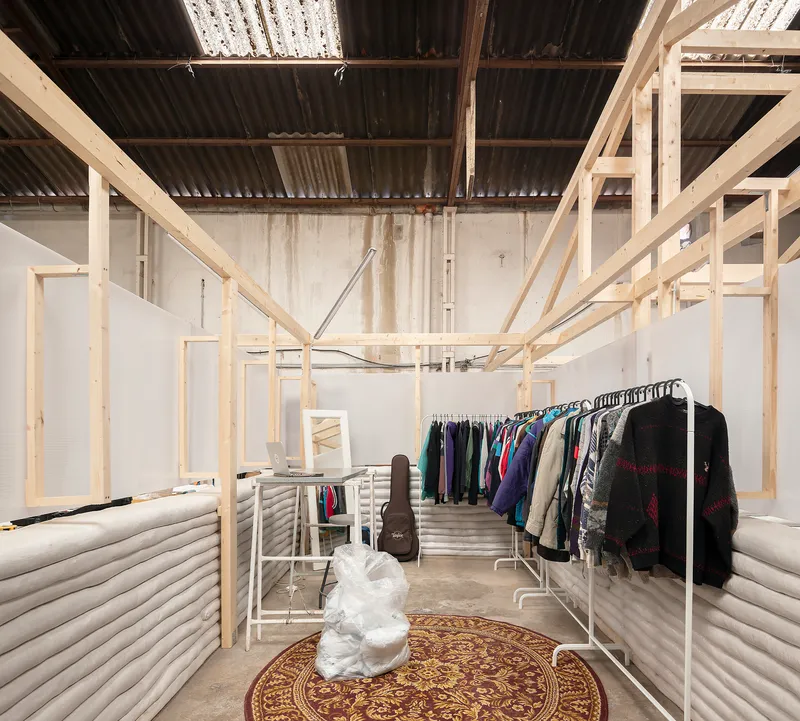
Superadobe is typically used in remote areas or post-disaster contexts due to its reliance on locally available soil and minimal industrial input. In Baby Pluto, its use is both pragmatic and symbolic.
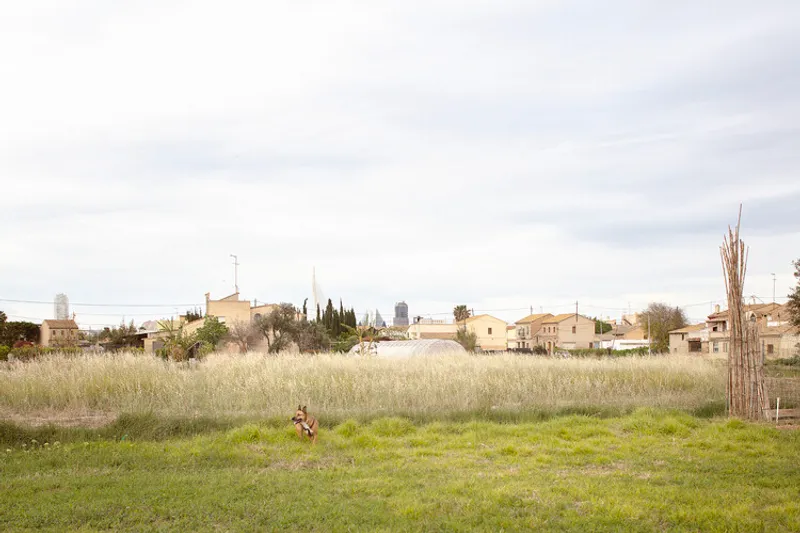
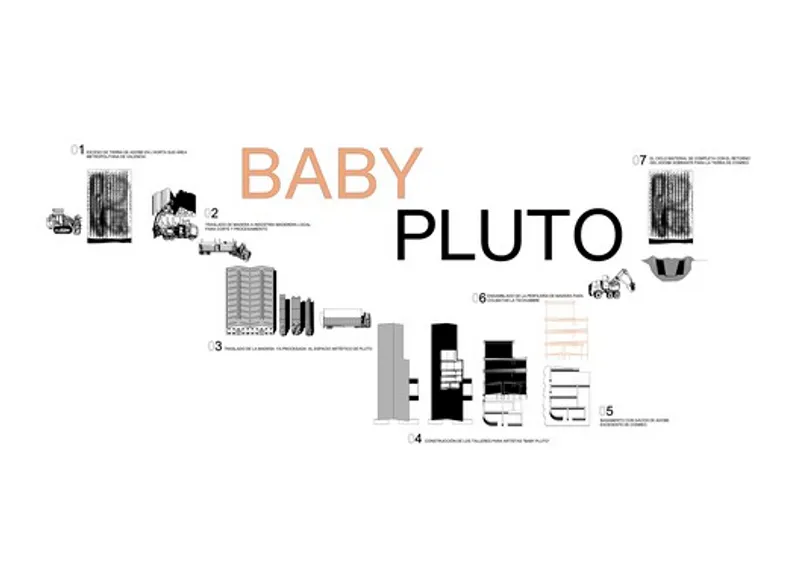
After working the adjacent vegetable garden, the site had a surplus of approximately 10 tonnes of fertile soil. Rather than treating this as waste, the project transformed it into its primary construction material. No cementitious additives were used, ensuring that when the workshops eventually reach the end of their life, all materials can return to the land, fertile and intact.
This approach allows the project to close the material cycle, aligning architecture with agricultural rhythms and environmental responsibility.
Lightness Within the Earth
Inside the superadobe perimeter, a light pinewood structure defines each individual workshop. This inner layer is deliberately open, airy, and adaptable, allowing each craftsperson to personalize their space—covering, revealing, or reinterpreting it according to their practice.
The architecture is thus structured around a deliberate contrast:
- Heavy, earthen boundaries that provide protection and permanence
- Light, wooden interiors that encourage freedom, experimentation, and change
This tension between weight and lightness mirrors the balance between shelter and openness that creative work requires.
A Human Microcosm
Baby Pluto is as much a social project as it is an architectural one. Every aspect of its realization is rooted in local collaboration:
- The soil comes from the surrounding fields
- The pinewood is sourced from the neighborhood timber store
- The carpenter is one of the workshop’s resident craftsmen
- Construction labor included a Russian refugee and a Valencian musician navigating precarious livelihoods
- The architect himself lives five minutes away by bike
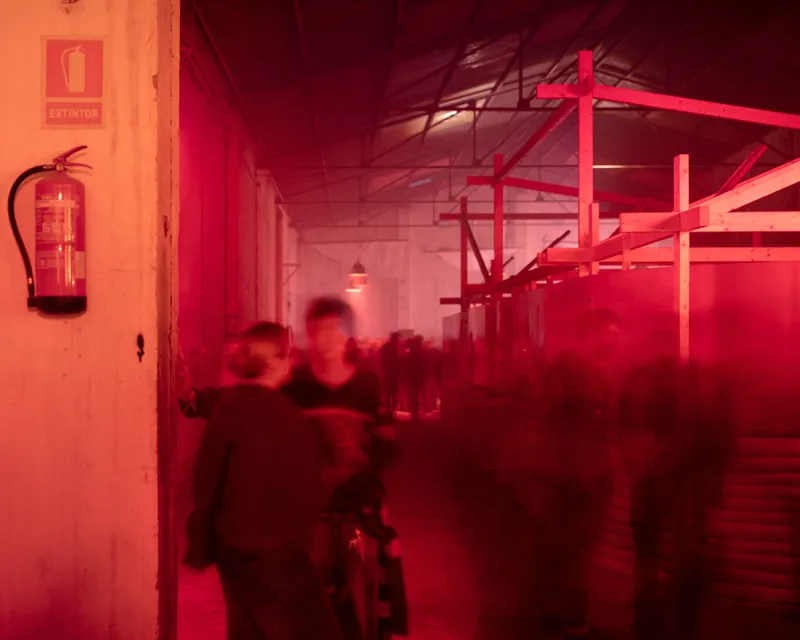
This constellation of people forms a human microcosm, demonstrating how architecture can support social inclusion, local economies, and shared knowledge.
An Architecture of Uncertainty
The lifespan of Baby Pluto is intentionally undefined. Its architecture accepts impermanence as a condition rather than a failure. When the project ends, the soil will return to the fields of l’Horta Sud, leaving no waste, no scars—only the memory of a place where art once found refuge.

In doing so, Baby Pluto challenges conventional notions of permanence, value, and success in architecture. It proposes instead a model based on care, adaptability, and responsibility.
A Quiet Act of Resistance
Baby Pluto does not seek visibility through form or spectacle. Its power lies in its ethics, its material honesty, and its commitment to people and place. It is architecture as resistance—not loud or monumental, but grounded, collective, and deeply human.
In a city where creative spaces are increasingly displaced, Baby Pluto stands as proof that architecture can still create room for culture to breathe.
All the Photographs are works of Milena Villalba



Popular Articles
Popular articles from the community


Co-Life: Senior Housing Design That Reconnects Older Adults With the City
Co-Life reimagines senior housing design through healing gardens, shared streets, workshops, and a sustainable community across generations.

The Ocean Hive: Sustainable Architecture for a Self-Sufficient Civilization at Sea
The Ocean Hive imagines sustainable architecture at sea, where modular habitats, algae, wave power and ocean waste sustain a growing colony.

Riyadh For All: Intergenerational Urban Design for Active Aging in Rabat
Riyadh For All reimagines urban design in Rabat with intergenerational co-living, adaptive courtyards, and Moroccan cultural exchange today.

The Musturak Paradise: Senior Living Architecture for a Connected Future in Temara, Morocco
The Musturak Paradise reimagines senior living architecture in Temara via private homes, social spaces, culture, community, and shared care.

Similar Reads
You might also enjoy these articles


Hodi-Mandai Geram
Project Function: Preservation and revitalization of the Intangible heritage and socio-spatial identity of the Hodi by Housing, Cultural Memory Center, Sacred Grove, landscape, local tourism economy


Olio Towers: A Mid-Rise for Performers That Fuses Housing, Rehearsal, and Stage
Located blocks from Houston's Theater District, this modular tower stacks living units around a central performance atrium.

Oasis: Modular Green Housing Carved into Dhaka's Urban Fabric
A shortlisted Plugin Housing entry reclaims unauthorized settlements in Dhaka with stepped concrete volumes, green roofs, and ventilation-driven design.

Black Hole: A Floating Megastructure for the Post-Physical Era
Emiliano Mazzarotto envisions a spherical, self-scaling arena where e-sports, digital hotels, and holographic stadiums replace traditional public space.


Explore Architecture Competitions
Discover active competitions in this discipline



Challenge to reimagine the Iron Throne


Photograph architecture without architects


Illustrate the lost glory of Angkor Wat - Render Challenge


Design challenge to reuse E-waste
Comments (0)
Please login or sign up to add comments
No comments yet. Be the first to comment!