
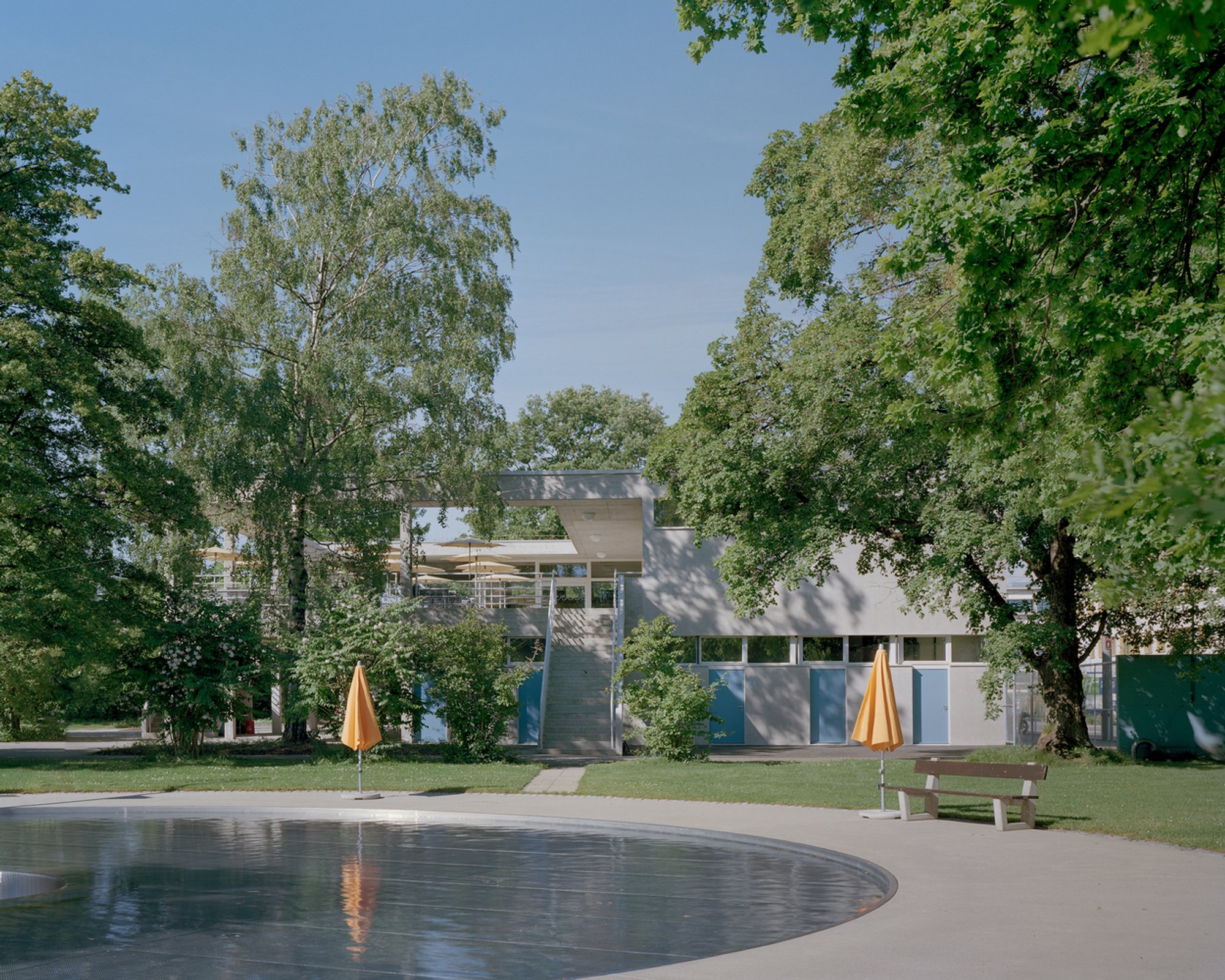
Bachgraben Public Pool Restaurant: Modernist Restoration and Adaptive Reuse by MET Architects
MET Architects revive a 1960s modernist pool restaurant with sensitive restoration, sustainable upgrades, and functional spaces for community, dining, and staff.

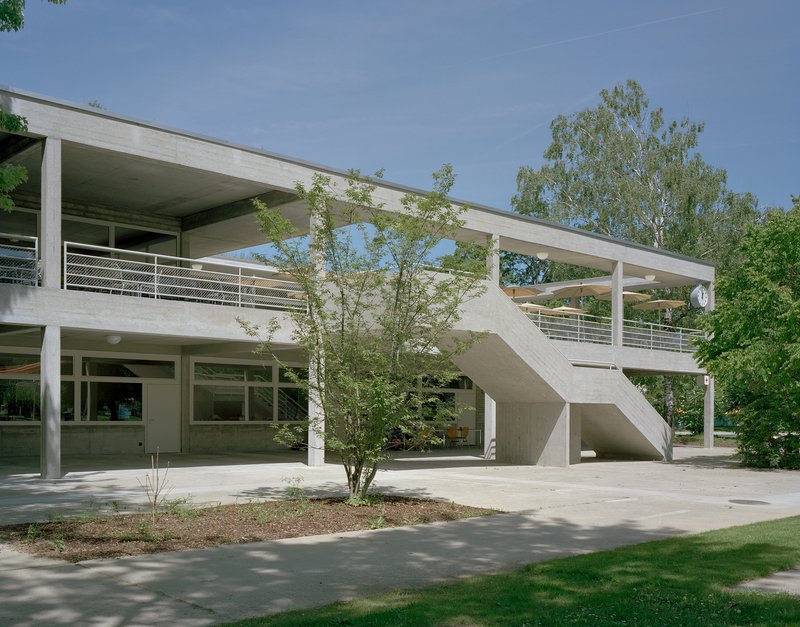
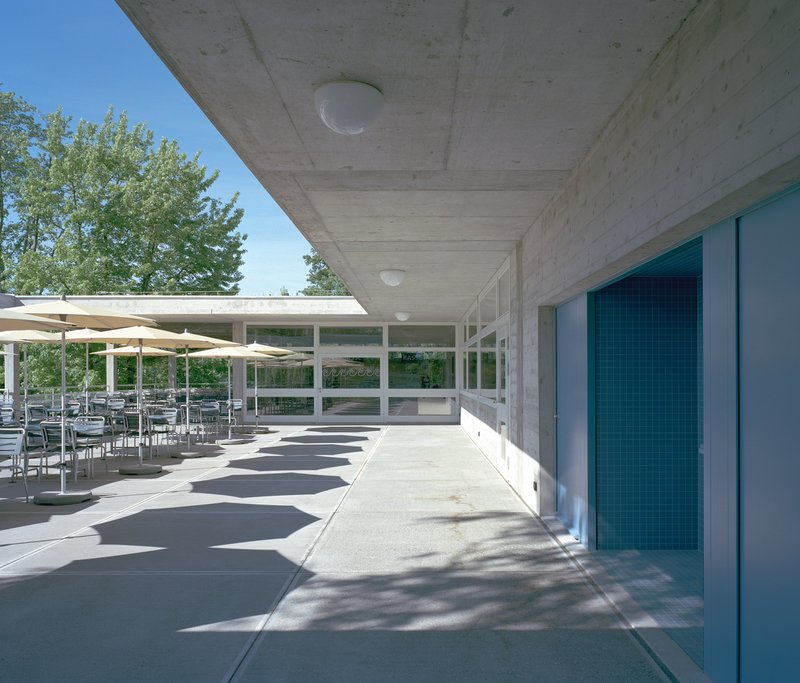
The Bachgraben Public Pool Restaurant in Allschwil, Switzerland, has been thoughtfully revitalized by MET Architects, transforming a dormant mid-century structure into a vibrant community hub. Originally designed in 1962 by Otto and Walter Senn with engineer Heinz Hossdorf, the building is an important example of post-war modernism and is listed in the Basel-Stadt monument preservation inventory. After decades of partial updates—and the restaurant’s closure in 2011—the service building required a comprehensive and sensitive refurbishment to restore functionality while preserving its architectural heritage.
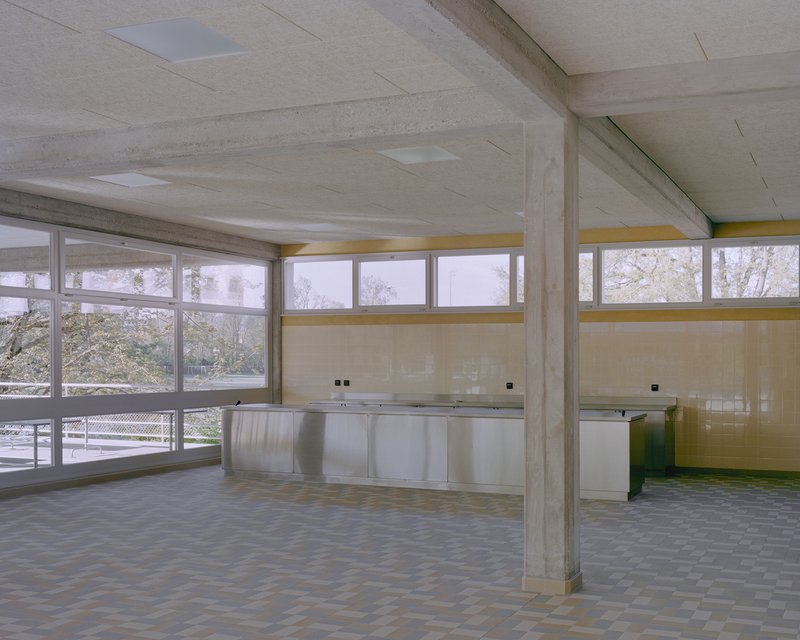
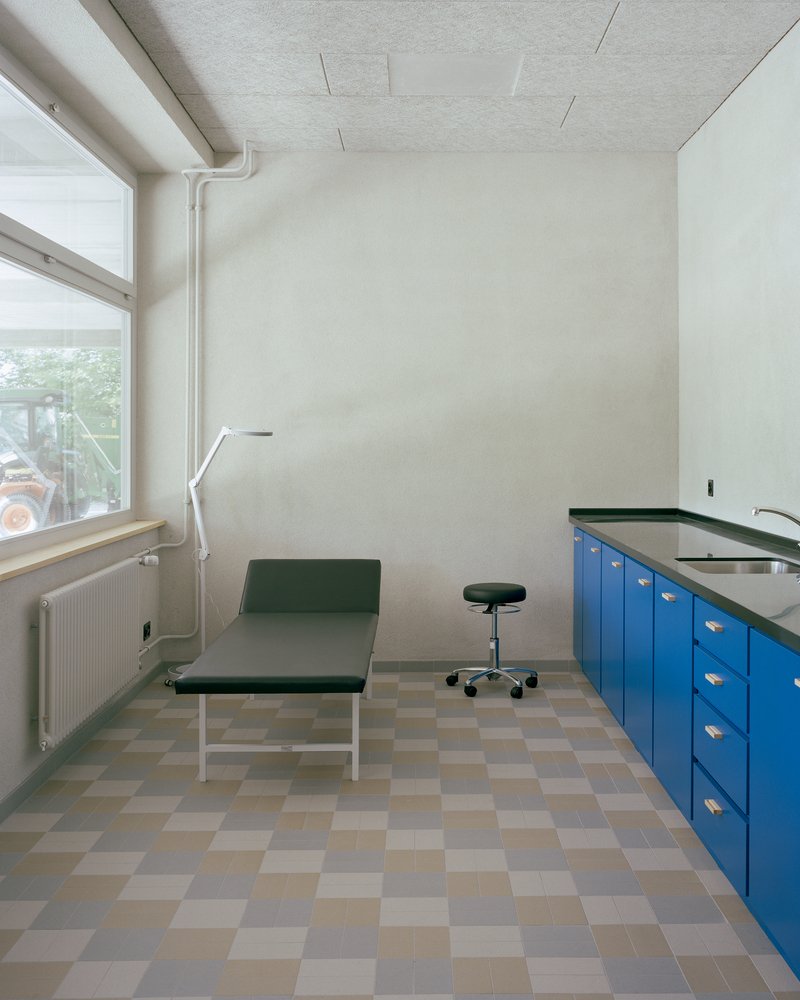
MET Architects were commissioned to redesign the building for three uses: a self-service restaurant, staff facilities, and a youth centre. Their strategic decision to relocate the youth centre to the former caretaker’s house allowed for a more respectful restoration of the main structure. This approach ensured that all new interventions—structural elements, spatial reorganizations, and technical upgrades—remained fully subordinate to the protected modernist framework.
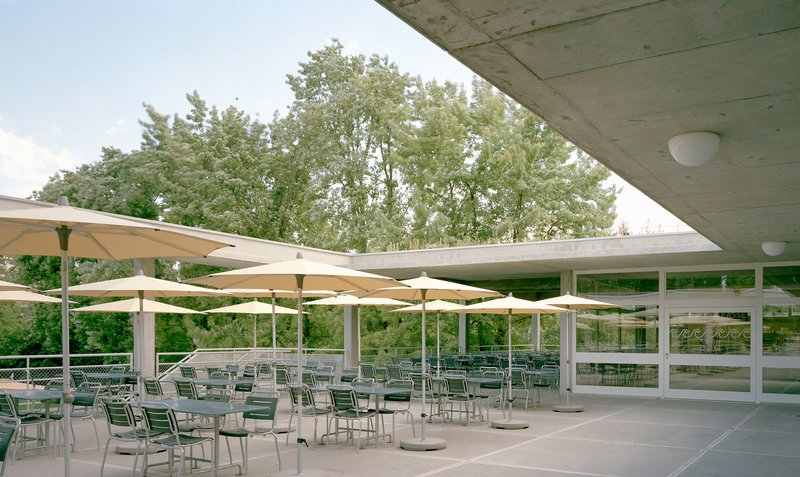
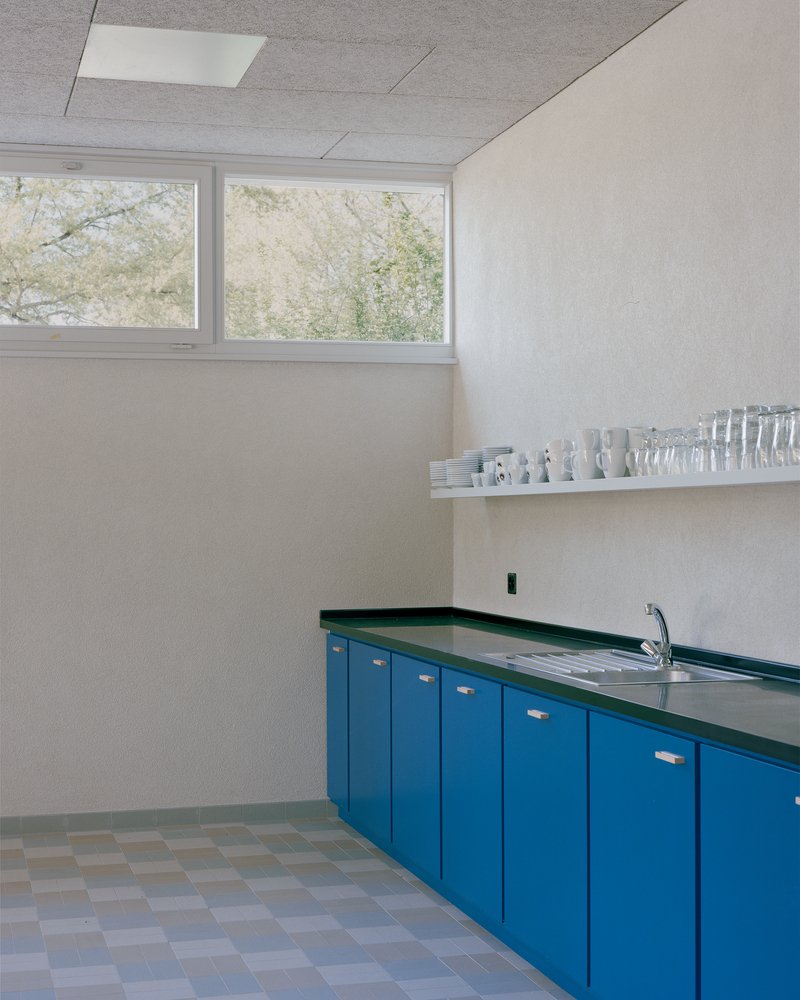
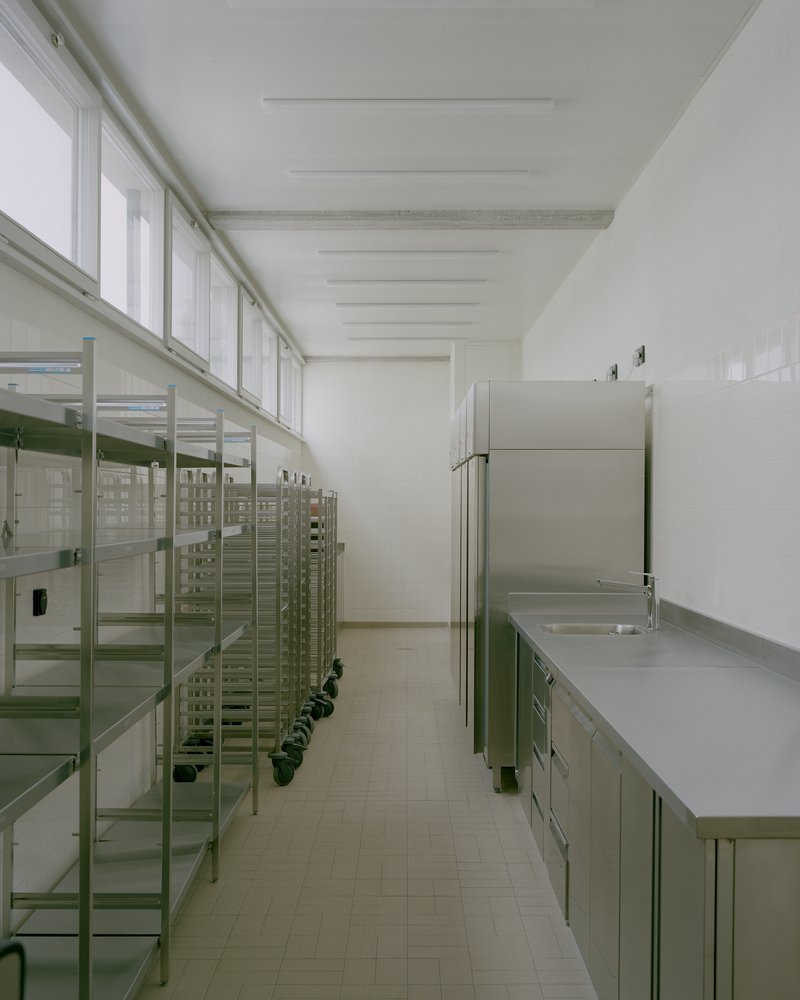
The upper floor, once home to an oversized production kitchen, was reconfigured into an open, accessible self-service restaurant connected to a covered terrace with views over the pool. A new kitchen and service rooms were introduced along the street-facing façade, while newly inserted concrete beams seamlessly align with the original structural rhythm. At ground level, the architects introduced public restrooms, changing rooms, staff break areas, a first-aid room, a multipurpose space, and a garage, all connected through newly created openings designed with great sensitivity to the existing envelope.
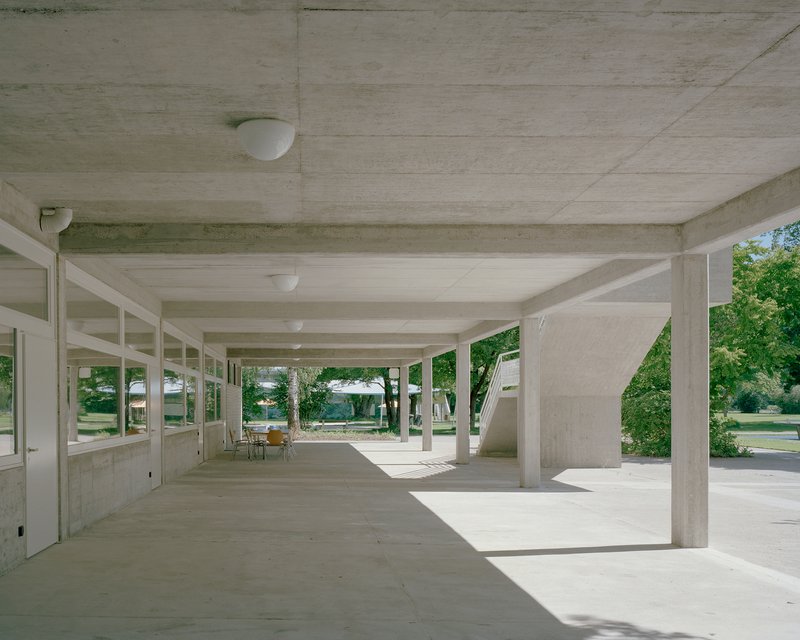
A significant element of the renovation involved the sustainable restoration of the exposed concrete façade, which had suffered from corrosion and multiple surface treatments. Instead of opting for demolition, MET Architects collaborated with heritage authorities to strip damaged layers, repair reinforcement, waterproof the surface, and carefully reinstate the characteristic color and texture of the original concrete.
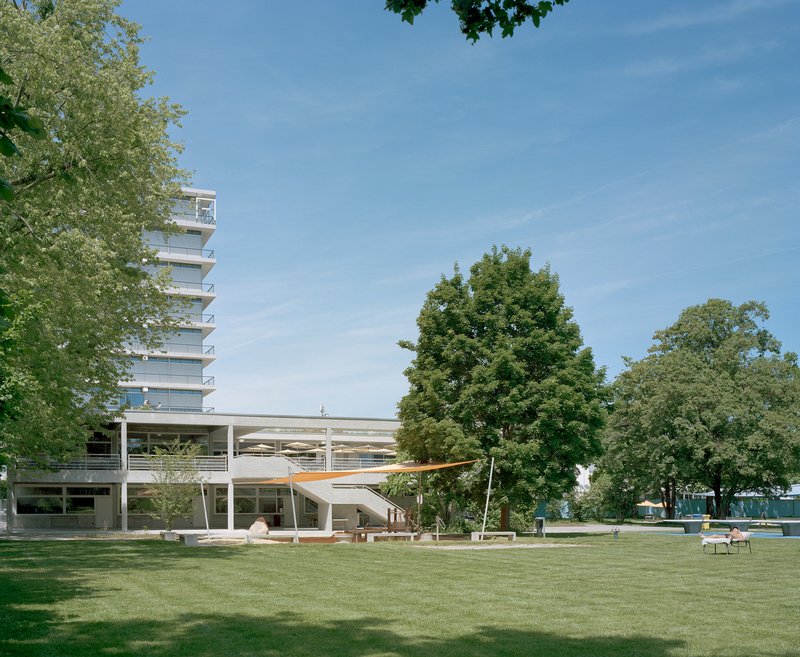
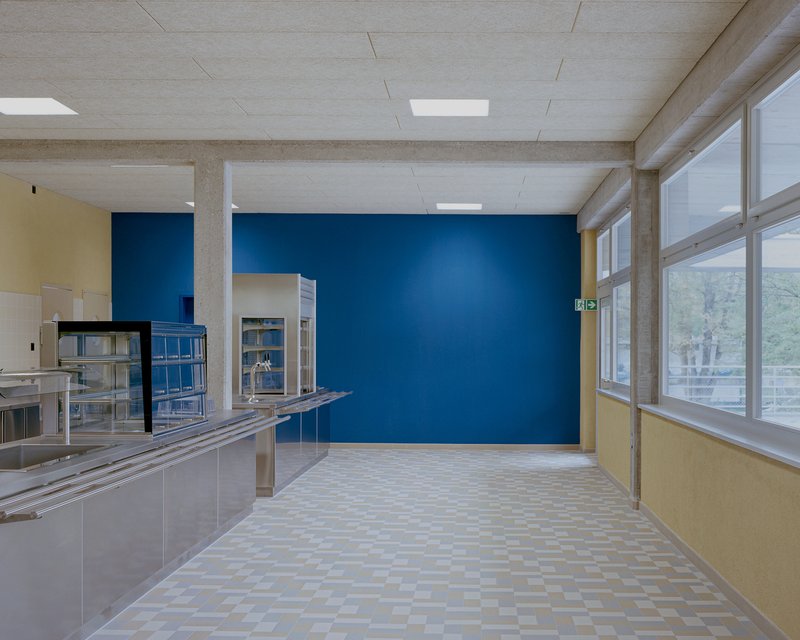
The project also integrates targeted energy-efficient upgrades while respecting the building’s fabric. The team replaced the original interior insulation, installed new double-glazed wooden windows, and added solar shading. A heat pump with geothermal probes and a discreet photovoltaic array on the green roof now provides most of the building’s energy needs.
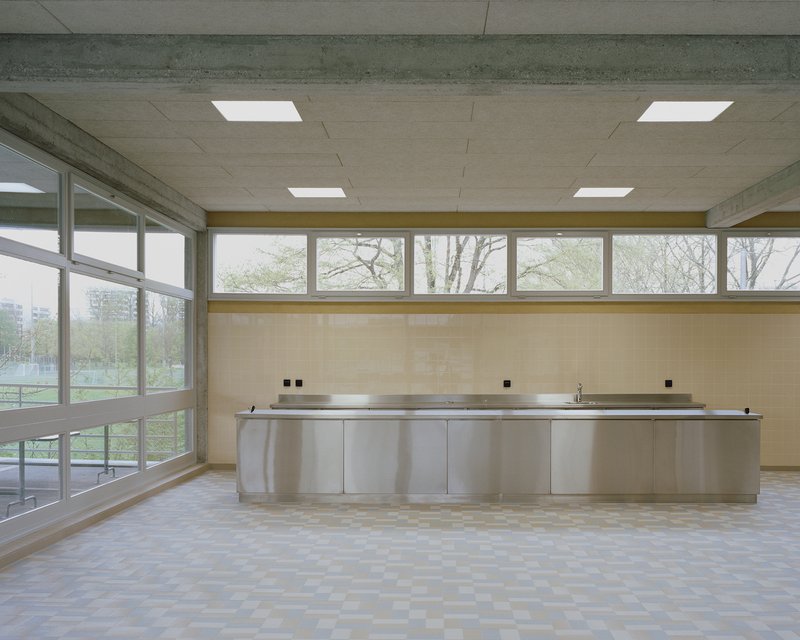
Internally, the once-closed-off spaces were reimagined to accommodate up to 7,000 weekend visitors, with durable new surfaces inspired by the facility’s 1960s origins. A retro tile pattern in fresh pool colours adds a vibrant identity, while public zones are unified with bold royal blue finishes. Staff areas maintain a muted, functional aesthetic true to the building’s modernist roots.
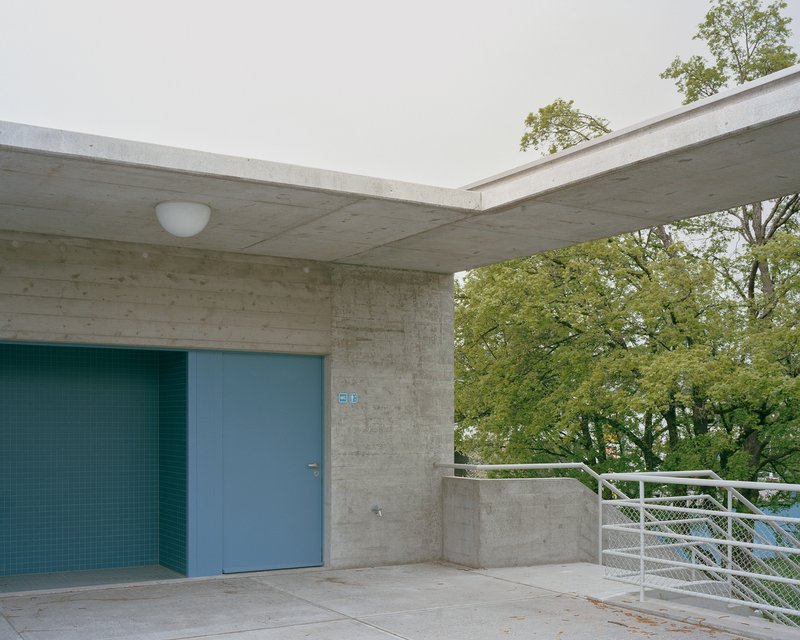
All photographs are works of Barbara Bühler




Popular Articles
Popular articles from the community

ONA Threads Four Board-Formed Concrete Cabins Along a 260-Meter-Deep Site in Mendoza
At the edge of Argentina's wine country, a set of curved concrete lodges negotiate a razor-thin parcel between city and mountain.
S.O.S Architects Scatters a Cluster of Timber Pavilions Across a Chiang Rai Hillside
The Wood Cabin arranges shingled gabled volumes along the slopes of Doi Chang, framing mountain vistas from every room and courtyard.
Pablo Senmartin Suspends a Steel-and-Timber Refuge Above a River Forest in Córdoba
An 80-square-meter dwelling on pilotis camouflages itself among the trees of Mayu Sumaj, designed to be dismantled without waste.

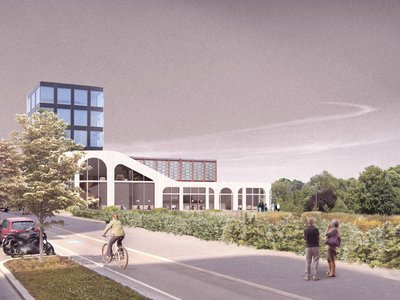
The Flow: Coffee Shop Interior Design Where Time, People, and Process Intertwine
The Flow reimagines Viennese coffee culture through arched forms, warm interiors, music, reading, work, and social gathering.


Similar Reads
You might also enjoy these articles

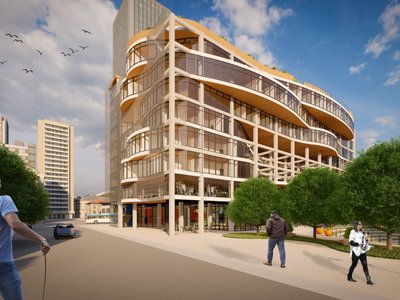
Olio Towers: A Mid-Rise for Performers That Fuses Housing, Rehearsal, and Stage
Located blocks from Houston's Theater District, this modular tower stacks living units around a central performance atrium.
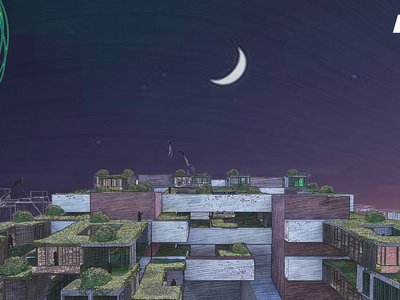
Oasis: Modular Green Housing Carved into Dhaka's Urban Fabric
A shortlisted Plugin Housing entry reclaims unauthorized settlements in Dhaka with stepped concrete volumes, green roofs, and ventilation-driven design.

Black Hole: A Floating Megastructure for the Post-Physical Era
Emiliano Mazzarotto envisions a spherical, self-scaling arena where e-sports, digital hotels, and holographic stadiums replace traditional public space.
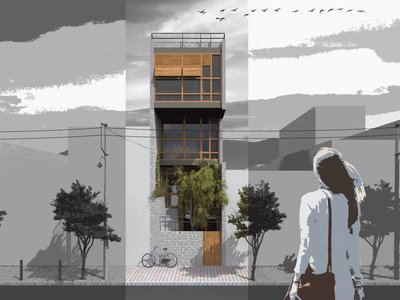
Compact & Sustainable Living in Piraeus: A Four-Level Family Home Built Around Light and Air
A narrow townhouse in one of Greece's densest port cities uses a central atrium and passive strategies to house three generations under one roof.


Explore Hospitality Building Competitions
Discover active competitions in this discipline




The International Standard for Design Portfolios


The Global Benchmark for Architecture Dissertation Awards


The Global Benchmark for Graduation Excellence


Challenge to reimagine the Iron Throne
Comments (0)
Please login or sign up to add comments
No comments yet. Be the first to comment!