

Baghdad Nuclear Autarky Tower: Pioneering the Future of Sustainable Nuclear Energy in Iraq
A visionary project combining nuclear energy with sustainable architecture to address Iraq’s energy crisis and the global climate challenge.


The Baghdad Nuclear Autarky Tower, an innovative design by Siyuan Liu and a shortlisted entry in the prestigious UnIATA '24 Awards, offers a ground-breaking solution to Iraq's energy crisis and the global climate challenge. Situated in Baghdad, this vertical community merges nuclear power with modern sustainable architecture, promoting nuclear energy as a carbon-free, scalable solution for the 21st century's energy demands. Through its human-centric design, which integrates cultural, educational, and social spaces, the tower not only provides energy but also fosters community engagement and reshapes public perception of nuclear power.

The Challenge of Energy Sustainability in Iraq
Iraq, a major oil producer, faces a paradoxical energy crisis. While the country holds abundant fossil fuel resources, it grapples with persistent electricity shortages, particularly during the peak summer seasons. These power deficits, combined with the country's aging infrastructure and over-reliance on fossil fuels, make it highly vulnerable to energy market fluctuations. Additionally, Iraq's susceptibility to climate change, marked by extreme heat and water scarcity, intensifies the need for reliable, low-carbon energy solutions.
Nuclear energy, with its near-zero carbon emissions and ability to provide consistent, "base-load" energy, is positioned as the key to addressing Iraq’s energy needs while contributing to global climate goals. However, historical factors, such as the Osirak Nuclear Reactor controversy, have left a legacy of skepticism and fear regarding nuclear power within Iraq. Siyuan Liu’s Baghdad Nuclear Autarky Tower seeks to overcome these challenges by integrating nuclear technology into a transparent, educational, and community-oriented environment.
Nuclear Energy: A Scalable and Carbon-Free Solution
Nuclear energy is one of the few scalable, carbon-free energy resources available today. While renewable energy sources like solar and wind play a crucial role in reducing environmental impacts, their intermittent nature limits their capacity to provide the consistent, high-energy output needed for growing global demands. In contrast, nuclear power plants offer a continuous energy supply with minimal greenhouse gas emissions, making them an essential component in combating climate change.
Historically, nuclear reactors have undergone significant technological advancements. The progression from Generation II reactors, developed in the 1950s, to the modern Generation IV designs has focused on enhancing safety, efficiency, and versatility. Today's reactors are built to address past concerns while delivering superior operational lifespans and higher efficiency.
The Design: Maslow’s Hierarchy of Needs as Architectural Strategy
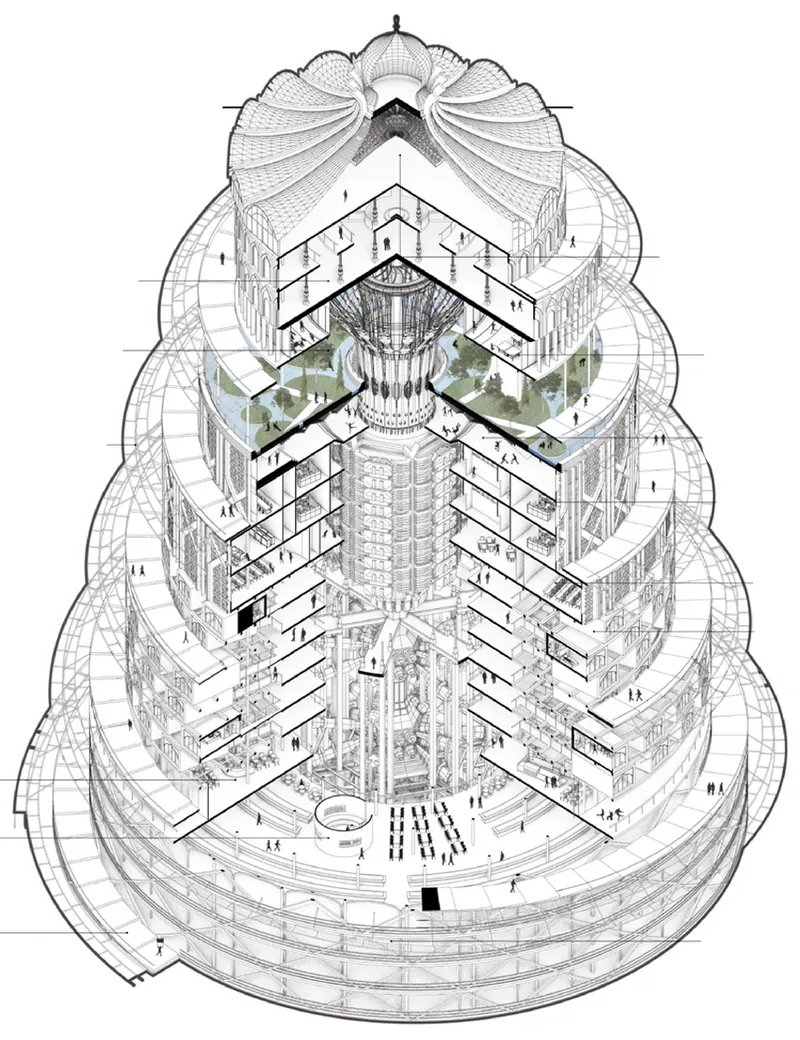
The Baghdad Nuclear Autarky Tower stands as more than a power plant; it is a self-sustaining vertical community where every layer of human need is thoughtfully addressed. Inspired by Maslow’s Hierarchy of Needs, the tower’s design considers the physical, emotional, and psychological well-being of its inhabitants.
Basic Needs and Safety: At the base of the tower are facilities designed to meet essential needs like food, water, shelter, and security. The residential housing units are crafted with Islamic architectural elements, offering privacy, noise insulation, and cultural harmony. Additionally, livestock farms and markets ensure that residents have access to fresh, locally-sourced food.
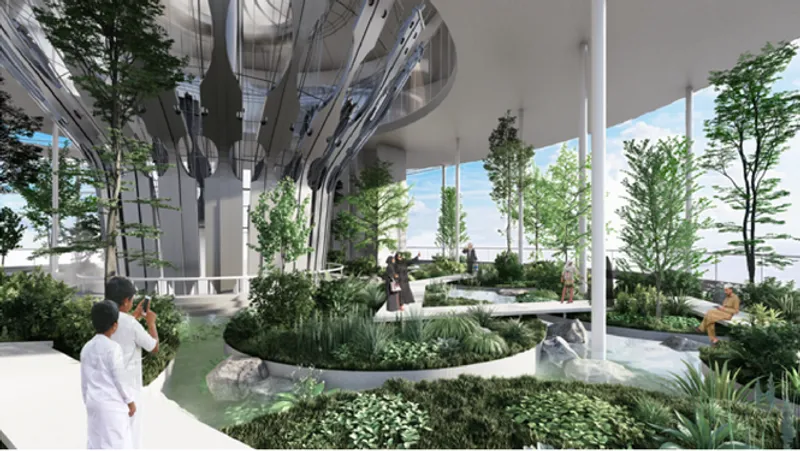
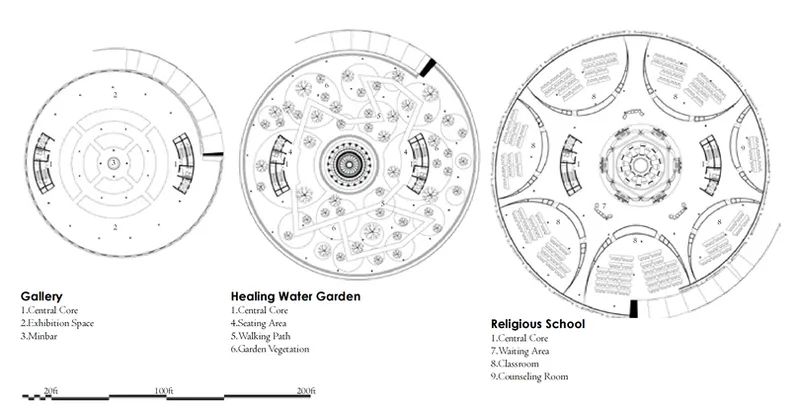
Spiritual and Emotional Fulfillment: The tower integrates spaces for spiritual reflection, such as mosques and healing water gardens. The garden, sustained by recycled steam from the nuclear turbines, provides a sanctuary where residents can find peace and tranquility amidst a verdant, sustainable landscape. These spaces reflect the tower's emphasis on holistic well-being, encouraging community cohesion through shared cultural and spiritual practices.
Social Connections and Esteem: Recreational facilities, schools, and healthcare centers provide opportunities for social interaction and personal development. The design encourages communal living, where residents can engage in leisure activities, sports, and educational pursuits, all within the confines of the tower. This integration of social and public spaces fosters a sense of belonging and community engagement.
Self-Actualization: At the highest level of the tower, spaces are dedicated to personal growth and self-fulfillment. Educational outreach programs and cultural centers provide opportunities for learning and creativity, ensuring that the tower is not only a place of residence but also a center for intellectual and spiritual enrichment.
Public Engagement and Education: Shaping Perceptions of Nuclear Energy
A crucial element of the Baghdad Nuclear Autarky Tower is its focus on public engagement and education. Historically, nuclear energy has been met with fear and skepticism, largely due to a lack of transparency and understanding. Drawing lessons from the Osirak Nuclear Reactor incident, this project places a strong emphasis on fostering public trust through openness and education.
The design incorporates educational spaces, where visitors can learn about nuclear energy, its benefits, and its safety measures. By integrating these learning centers within the tower, the project seeks to demystify nuclear power and position it as a viable, safe, and sustainable energy solution. In doing so, the tower becomes not just a power plant but a community hub where knowledge, culture, and innovation intersect.

Core Synergy: A Fusion of Technology and Community Living
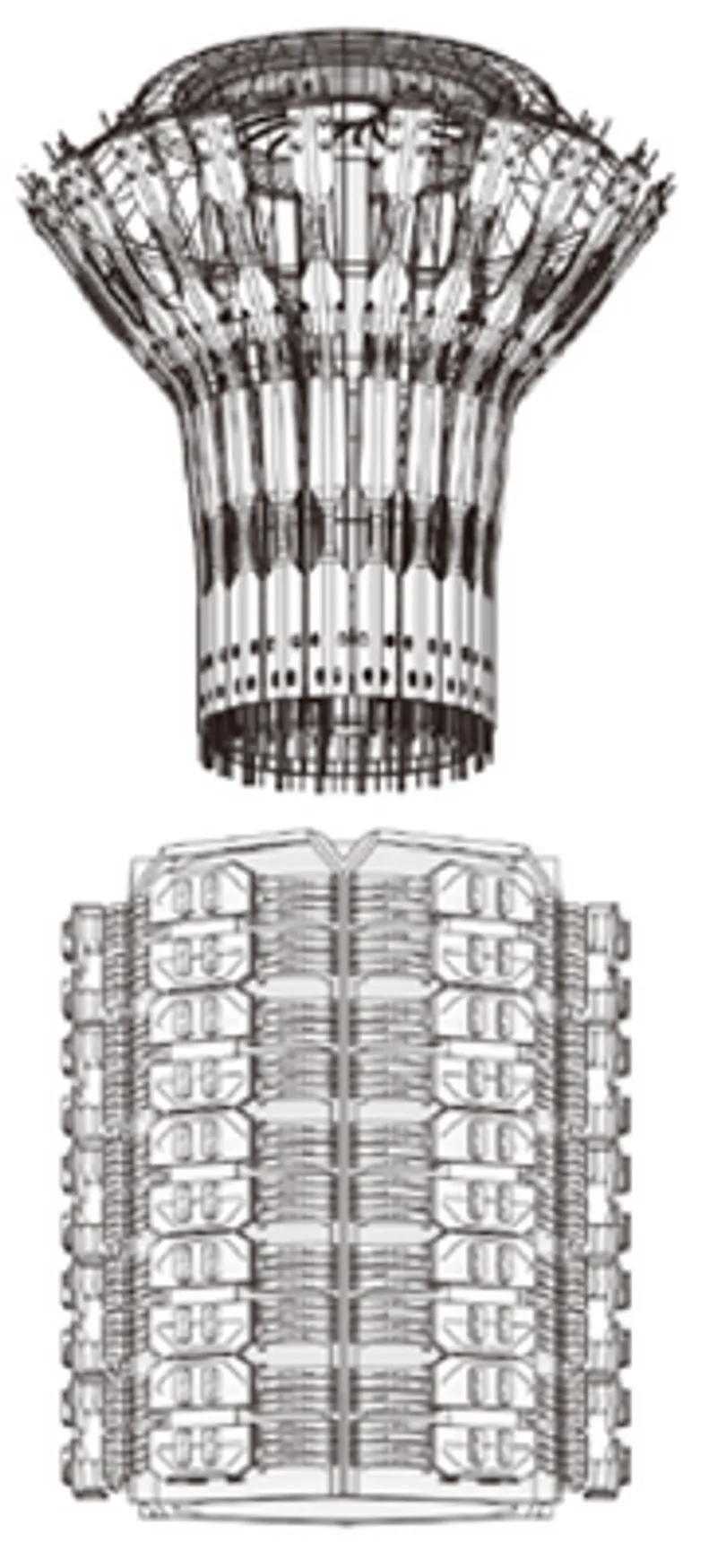
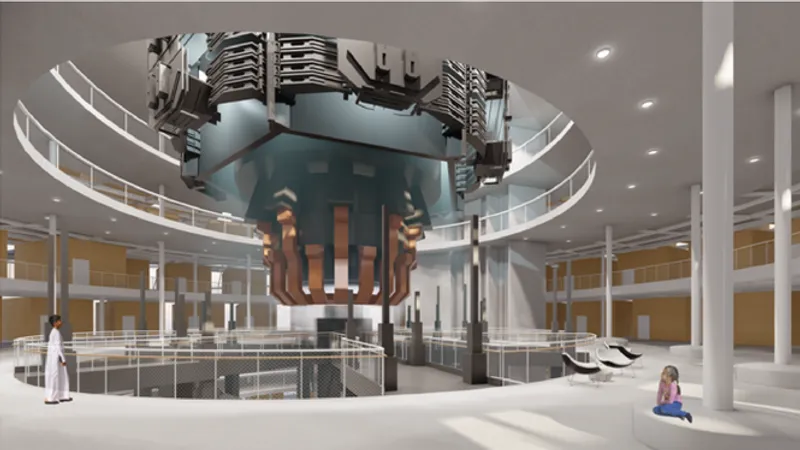
At the heart of the tower is the nuclear reactor, seamlessly integrated within a multi-functional space. The reactor, enclosed within circular balconies, serves as both the core energy provider and a symbol of technological progress. The surrounding spaces are designed to accommodate the social, cultural, and practical needs of the community, ensuring that the reactor is both a functional and symbolic centerpiece.
This fusion of high technology with community living exemplifies the project’s commitment to reshaping perceptions of nuclear energy. The reactor, once a symbol of fear, is now positioned as a vital component of a sustainable, self-sufficient future. The tower’s design demonstrates how nuclear energy can be safely and effectively integrated into daily life, offering a blueprint for other regions seeking to diversify their energy sources.
Addressing Iraq’s Humanitarian and Environmental Crisis
Iraq's long-standing conflicts and reliance on a monolithic energy structure have contributed to a severe humanitarian crisis. Millions of civilians have been displaced, healthcare infrastructure has collapsed, and food and water shortages have exacerbated the suffering of the population. The Baghdad Nuclear Autarky Tower addresses these crises by providing a stable, scalable energy source that supports not only economic development but also humanitarian relief.
The tower’s self-sufficient design ensures that residents have access to essential resources like food, water, and electricity. Its agricultural spaces support local food production, while its advanced energy systems provide a reliable power supply. By addressing the basic needs of the population, the project helps to alleviate the pressures of displacement and resource scarcity, offering a model for sustainable recovery and growth in war-torn regions.
Moreover, the tower’s design prioritizes environmental sustainability. Iraq, with its dry climate and vulnerability to climate change, stands to benefit immensely from low-carbon energy solutions. Nuclear power, as a scalable and reliable energy source, provides the consistent energy output needed to mitigate the effects of climate change while supporting Iraq's development.
The Future of Energy in Iraq
The Baghdad Nuclear Autarky Tower presents a bold vision for Iraq's future. By embracing nuclear energy, the country can diversify its energy supply, reduce its reliance on fossil fuels, and address its electricity shortages. The tower’s design serves as a model for how nuclear energy can be safely and sustainably integrated into urban environments, offering a blueprint for other regions facing similar challenges.
Through its innovative combination of energy technology, sustainable architecture, and community engagement, the tower not only meets Iraq's immediate energy needs but also paves the way for a cleaner, more resilient future. By shifting public perceptions of nuclear power and demonstrating its potential for safe, large-scale energy production, the Baghdad Nuclear Autarky Tower offers a compelling vision for the future of energy in Iraq and beyond.


Popular Articles
Popular articles from the community


David Ortega Stacks a Two-Story Mexico City Penthouse Around a Steel Stair and a Pergola-Shaded Roof Terrace
In Colonia Roma, a 300 m² penthouse uses oak joinery, a planted steel stair and a slatted roof pergola to make a new-build apartment feel like a house.

Jaramillo Van Sluys Arquitectura and Urbanismo Turn a Demolished Registry Lot in Quito into an Orchard Plaza
In Quito's Centro Histórico, a 2,800 m² plaza exposes the San Agustín convent wall and redraws its lost Augustinian orchard in volcanic stone.

GROUP A Strips a 1969 Rotterdam Harbor Headquarters to Its Frame and Wraps It in Timber Louvers
In Rotterdam's M4H harbor district, Ferro Offices reuses a 1969 frame, adds one timber storey and reaches BREEAM-NL Outstanding.

Cube Design Draws an Ecological Corridor Between Two Shenzhen Hills with the Nankai Building
Beside Shenzhen's container docks, the Nankai Building pairs stacked balconies with a climbing green screen to connect two hillsides across its height.

Similar Reads
You might also enjoy these articles


Vereda Arquitetos Renovates a 40-Square-Meter Apartment Inside Niemeyer's Copan Building
A compact unit in São Paulo's most iconic residential tower gets a material overhaul that pairs exposed concrete with bold blue Formica.

Shakur's House: Exposed Brick as an Interior Organiser in a 168 m² Mashhad Residence
Brick moves indoors in this Mashhad residence, where masonry walls, glass partitions and teal planes sequence a compact home without closing it off.

Day and Night Park: A Time-Based Urban Newsstand in Beijing
A temporary urban newsstand in Beijing blending travel, light, and reading through poetic colors, compact form, and community-focused design.

Modernist Patio Renovation in El Masnou, Barcelona by Oliver Segura Arquitectura + Cebrià Arquitectura
Modernist patio renovation blending tradition and innovation with a movable pool, leveled floors, and Catalan materials in El Masnou.

Explore Infrastructure Design Competitions
Discover active competitions in this discipline

Challenge to reimagine the Iron Throne

Photograph architecture without architects

Illustrate the lost glory of Angkor Wat - Render Challenge

Design challenge to reuse E-waste
Comments (0)
Please login or sign up to add comments
No comments yet. Be the first to comment!