
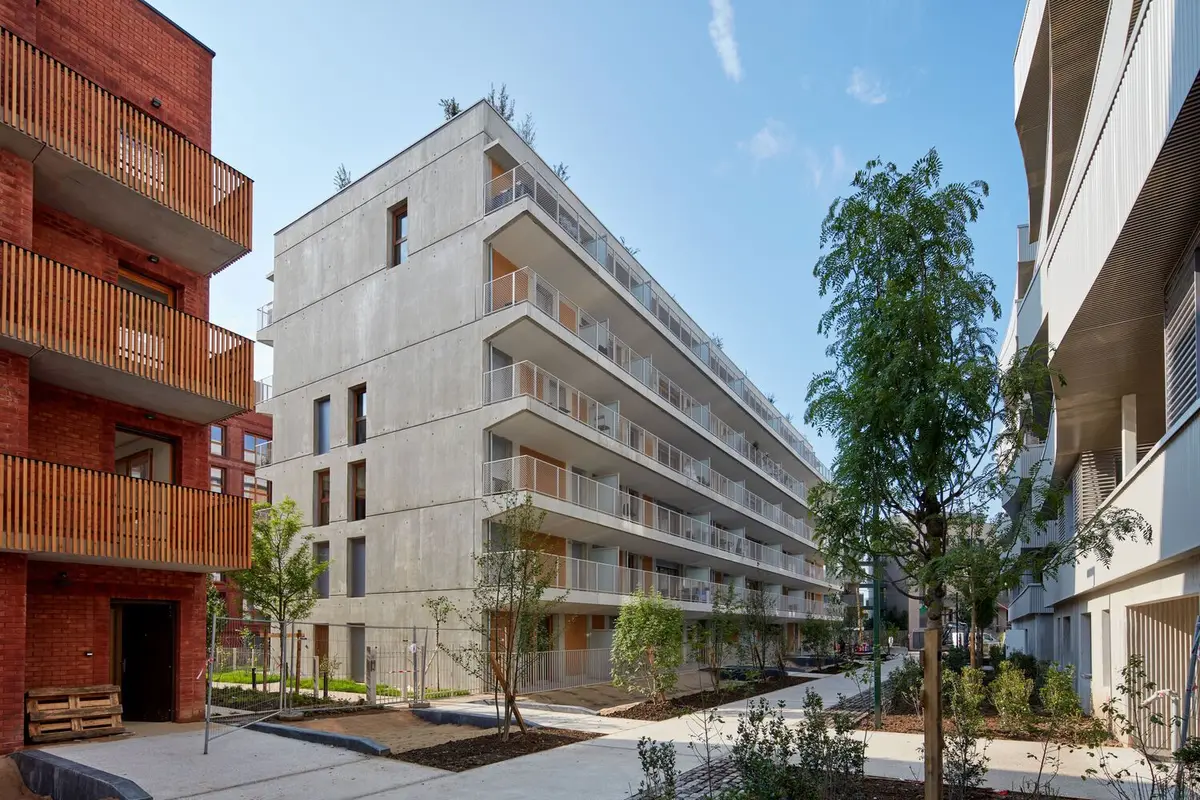
Bagneux Apartment Building: A Contemporary Model for Low-Carbon Housing in France
A low-carbon housing project in Bagneux uses mud-brick facades, exterior corridors, double-oriented apartments, and passive comfort strategies for urban living.


Located in Bagneux, the Bagneux Apartment Building by toa | architectes associés offers a compelling vision for sustainable collective housing rooted in material honesty, climatic intelligence, and social responsibility. Completed in 2024, the 2,960 m² residential project delivers 42 apartments while redefining the architectural potential of raw earth construction in an urban European context.
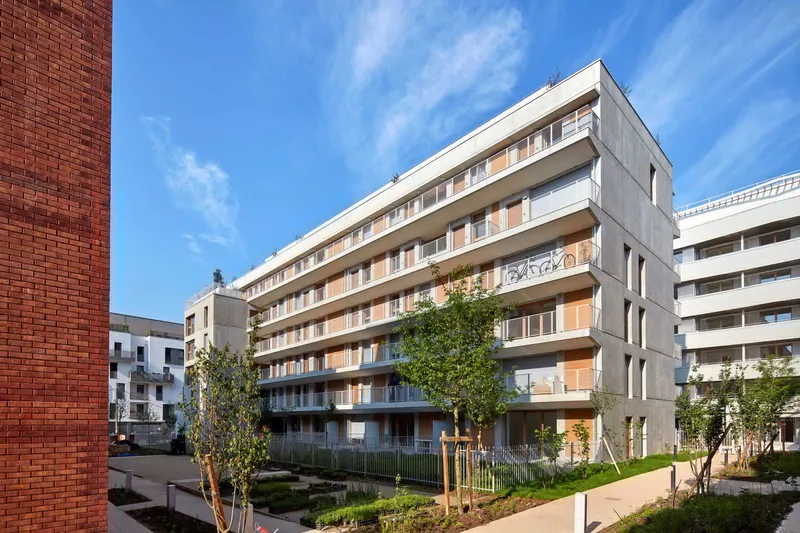
Architectural Concept: Inhabited Earthen Strata
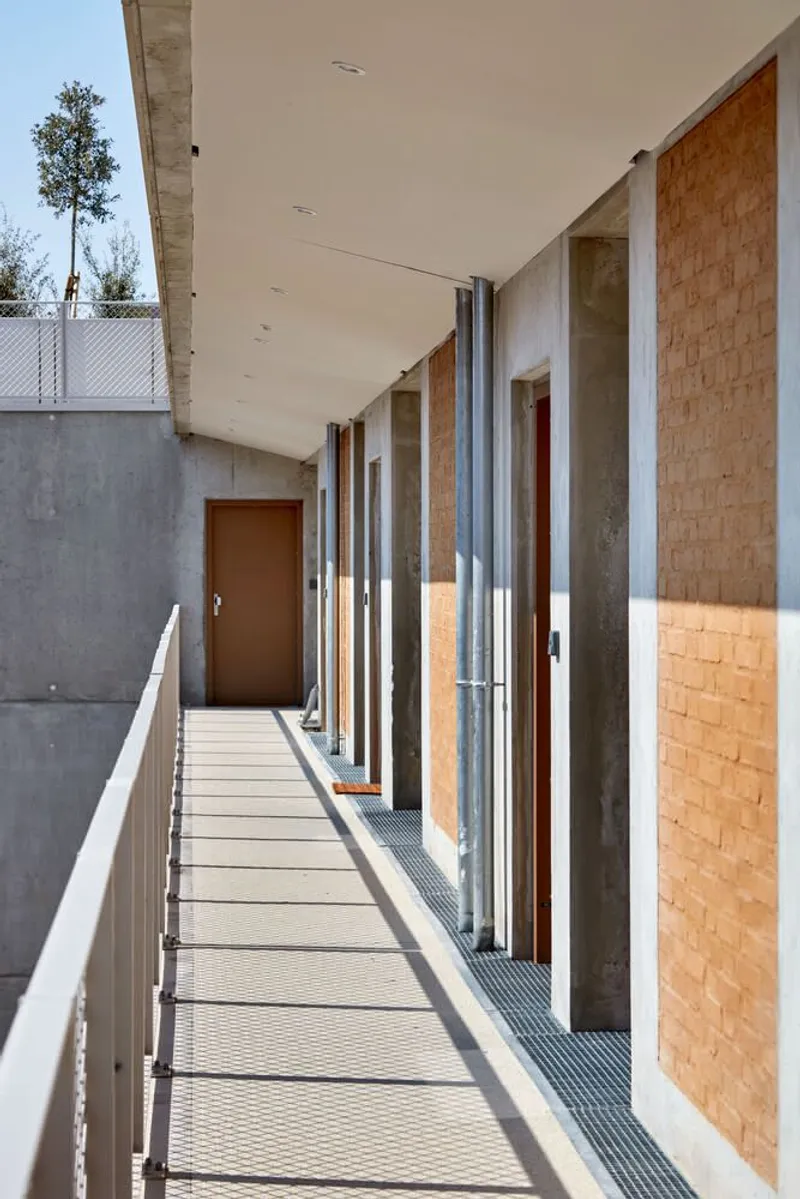
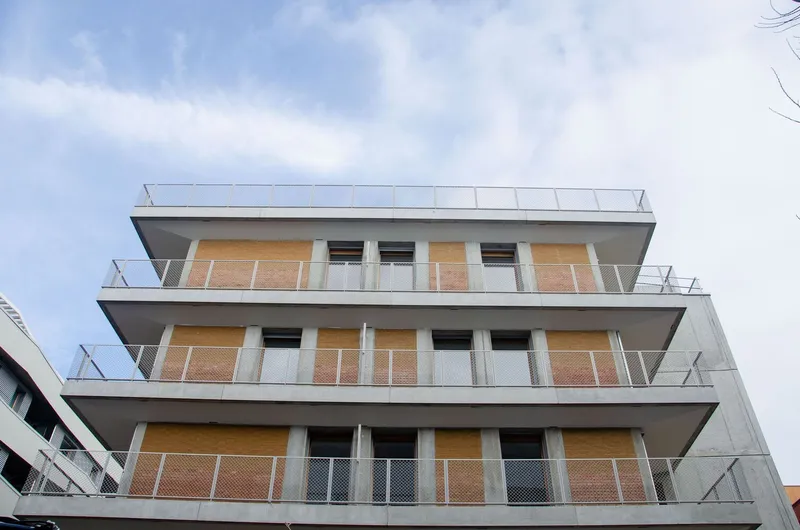
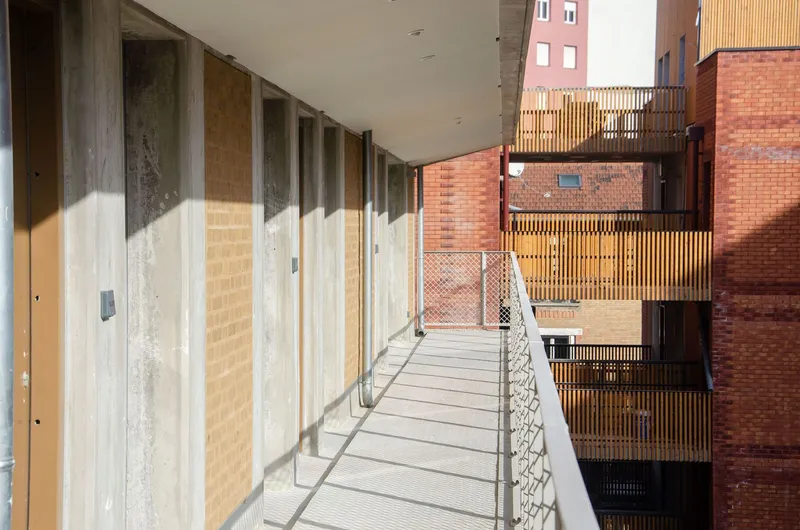
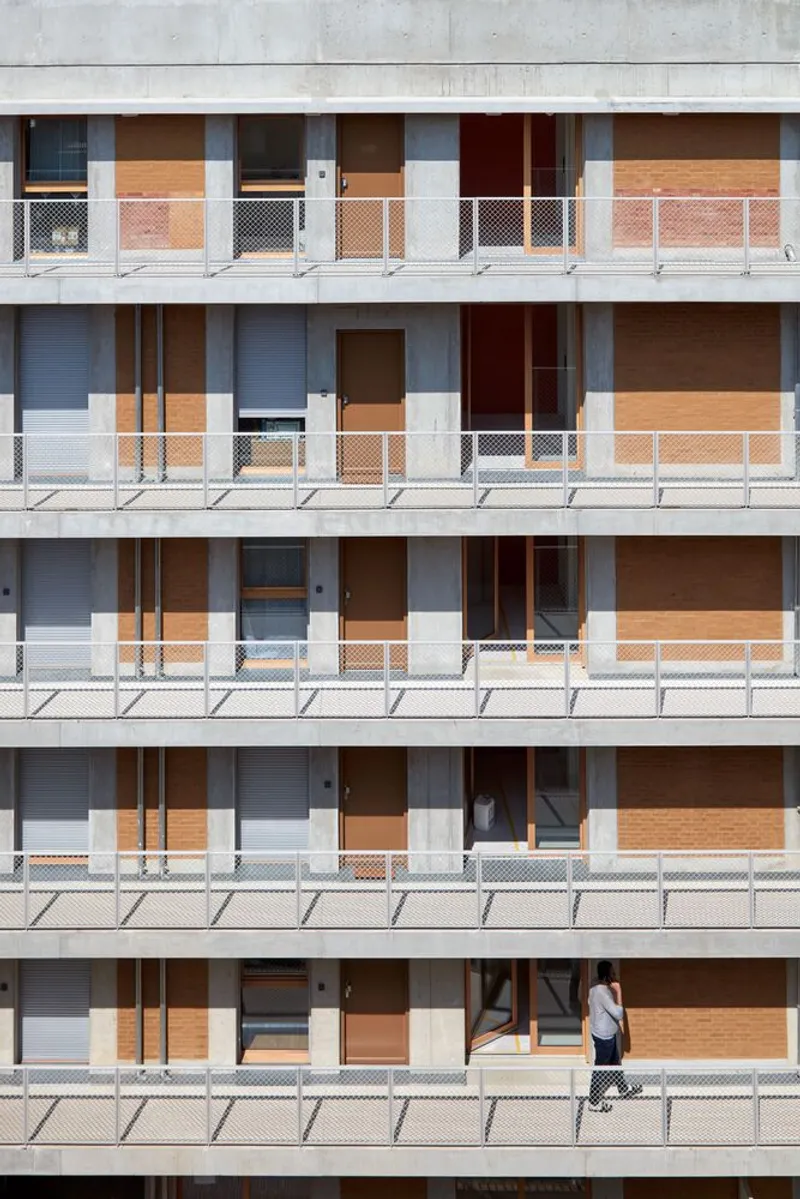
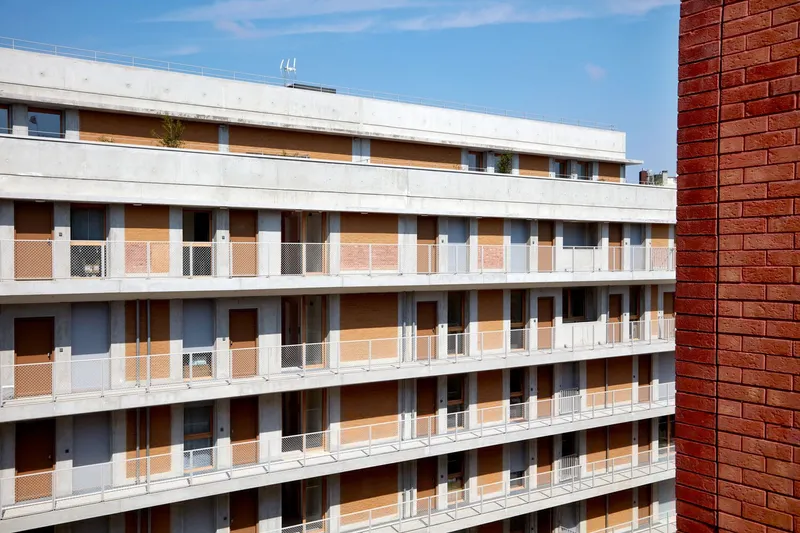
Conceived as a superposition of inhabited earthen layers, the building’s expressive mud brick façades establish a strong yet calming presence within the district. These textured elevations act as a backdrop for exterior corridors and balconies, which are integral to the building’s typology. This configuration ensures every apartment benefits from double orientation, improving daylight access and cross-ventilation, while also shielding the adobe façades from direct exposure to harsh weather conditions.
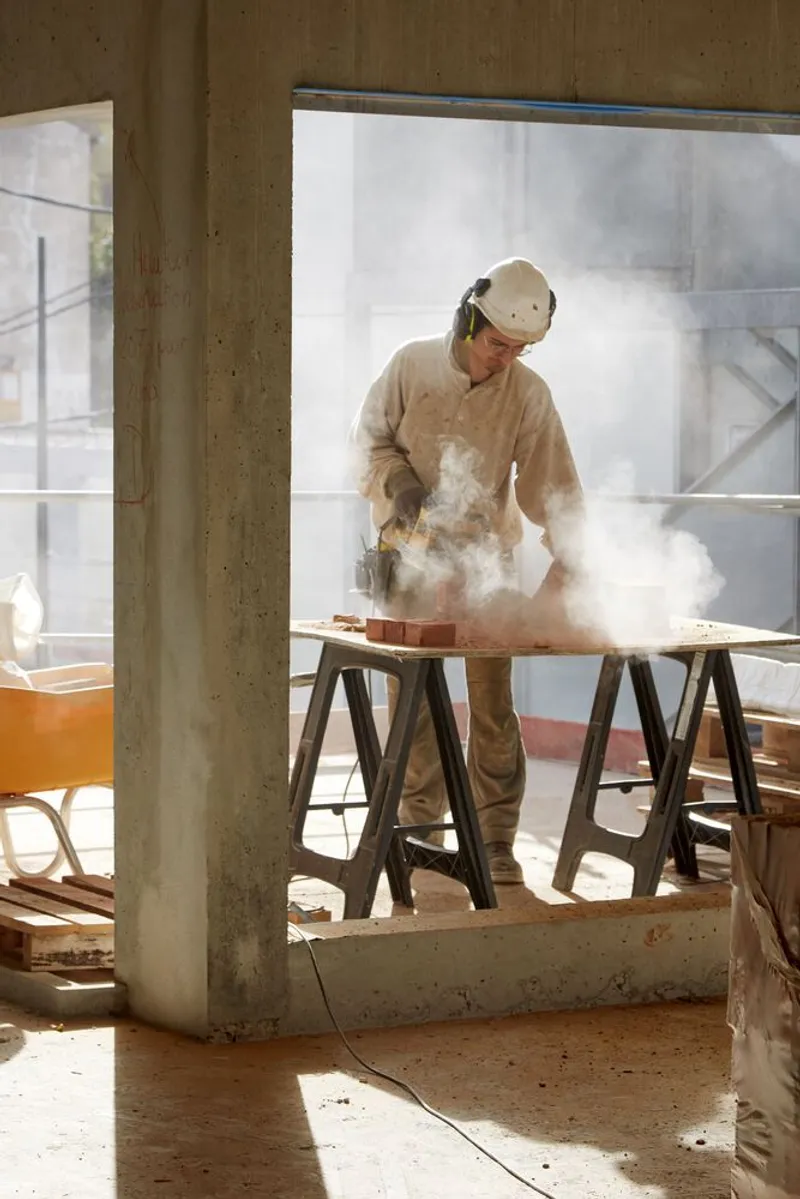
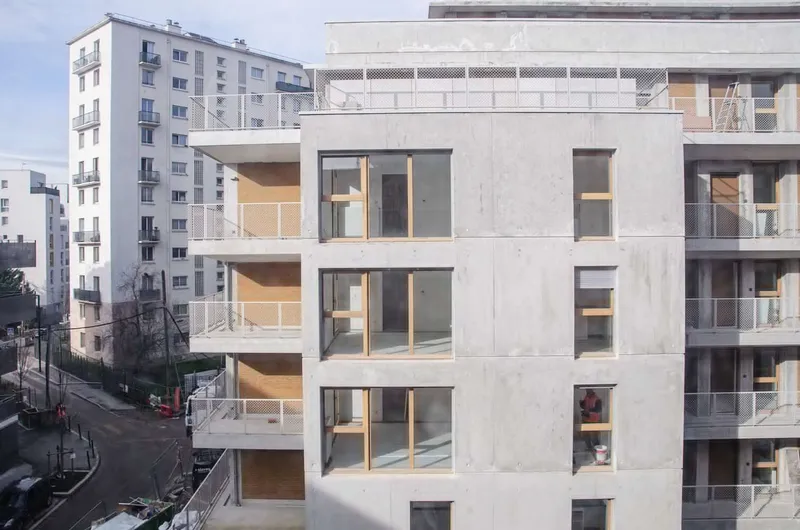
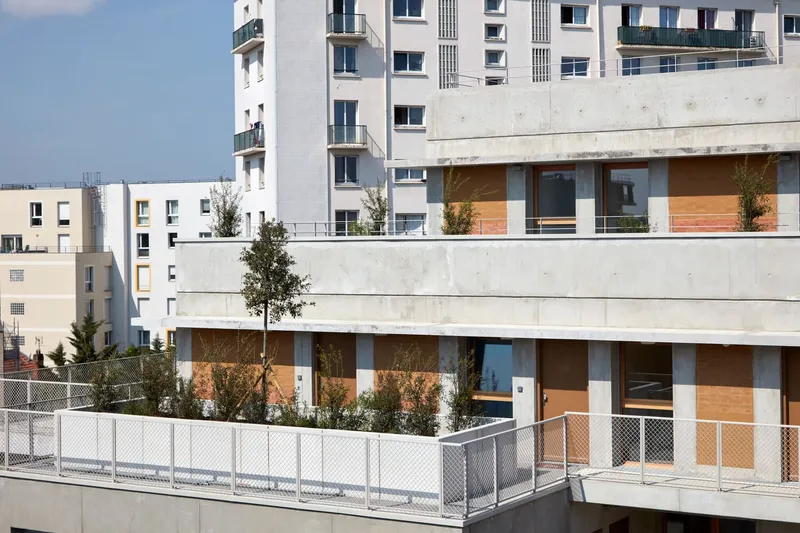
The circulation strategy shapes a domestic and human-scaled environment, where movement through the building remains visually and spatially connected to its surroundings. Duplex penthouses crown the structure, opening onto generous peripheral terraces that extend living spaces outdoors and reinforce the relationship between architecture and climate. All dwellings are oriented toward pedestrian pathways and shared gardens, fostering a sense of openness, greenery, and collective calm within a dense residential fabric.
Environmental Performance: Raw Earth as a Low-Carbon Strategy
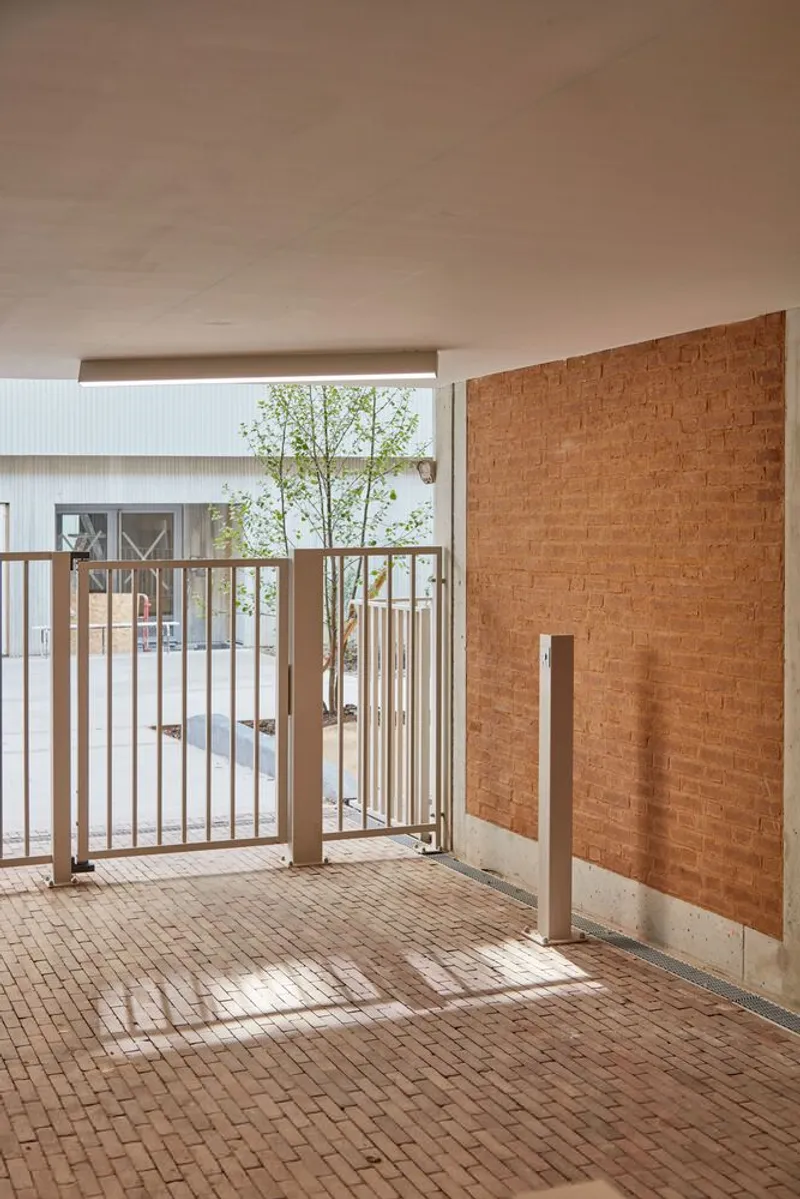
Sustainability lies at the core of the project’s architectural and technical approach. Designed as a low-carbon housing model, the building is constructed using mud bricks, a recyclable, geo-sourced material with minimal environmental impact. The earth used for construction is locally sourced, significantly reducing transportation emissions and embodied carbon.
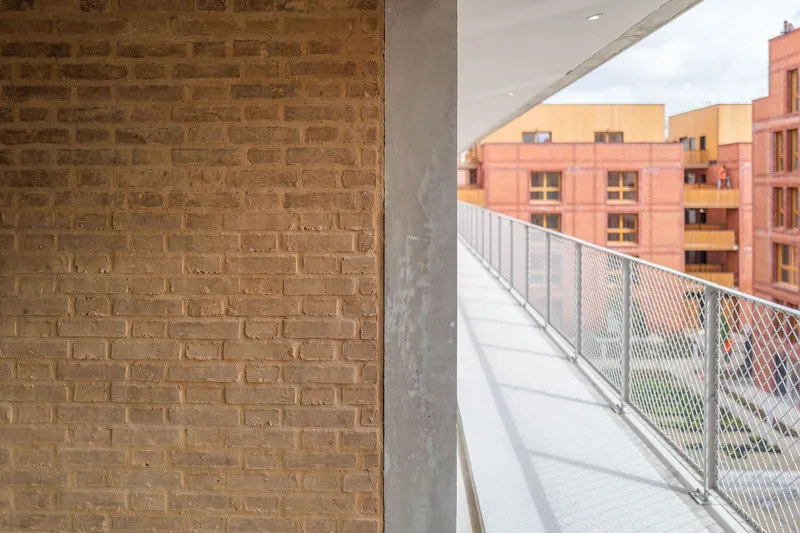
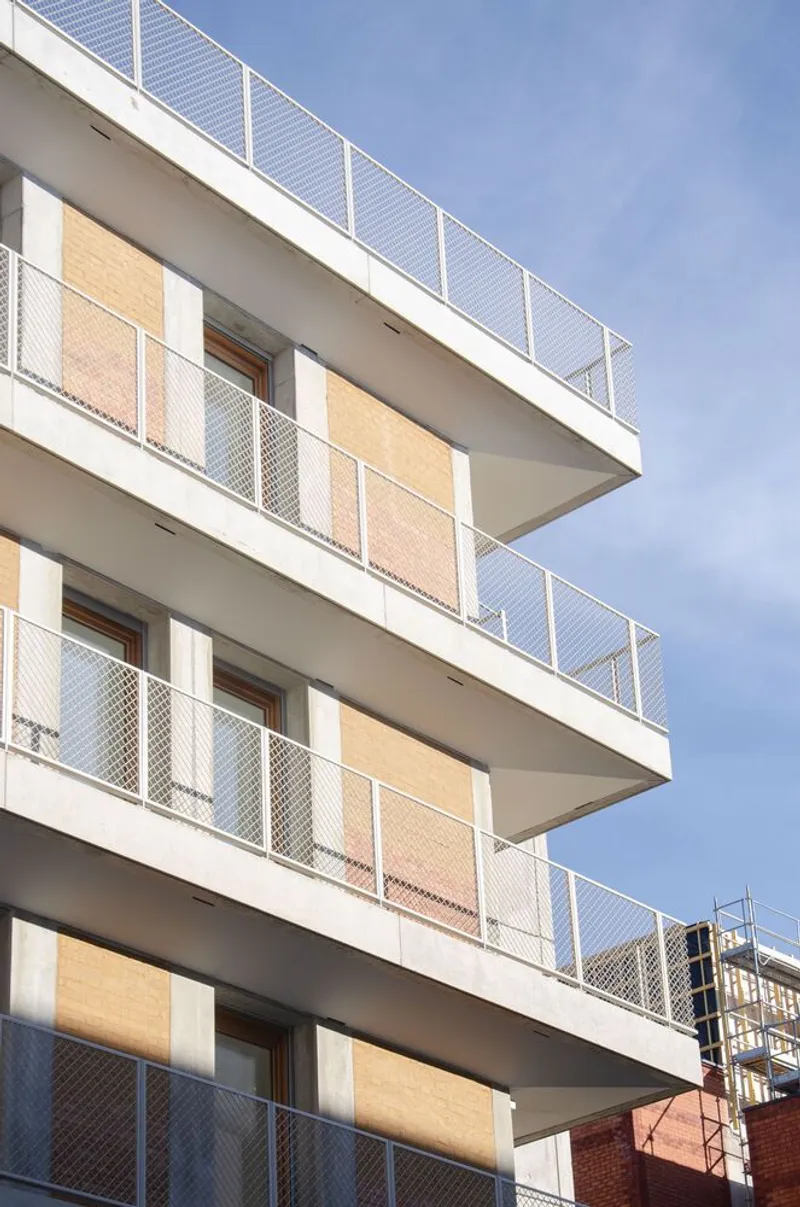
The earthen bricks are produced by the artisanal Dewulf brickworks using low mechanization and open-air drying, further minimizing energy consumption during fabrication. Beyond its ecological credentials, earthen construction provides substantial thermal and hygrothermal benefits, naturally regulating indoor temperatures and humidity levels. This passive performance enhances occupant comfort year-round while reducing reliance on mechanical heating and ventilation systems.
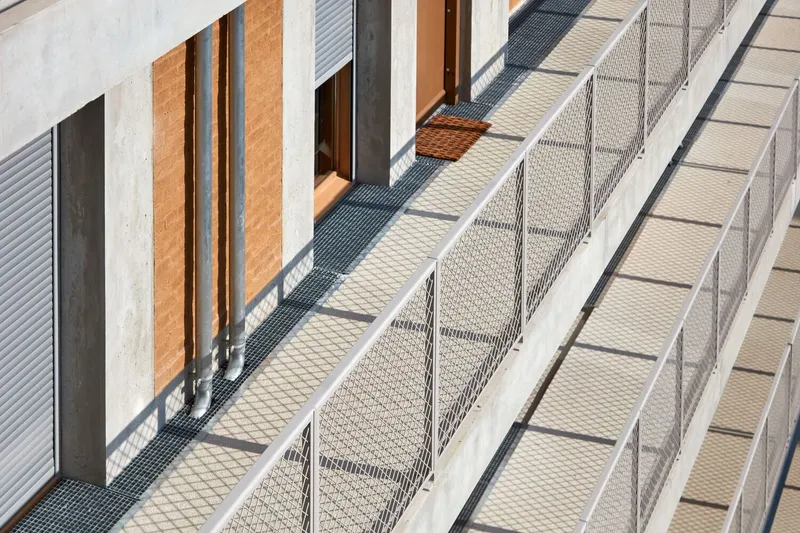
At the apartment scale, west, east dual exposure layouts promote efficient natural ventilation, limiting the need for energy-intensive systems and reinforcing the project’s climate-responsive design philosophy.
Social Dimension: Democratizing Earthen Architecture
Beyond environmental performance, the use of raw earth carries a strong social ambition. Although earthen construction remains underregulated and often perceived as costly, the project seeks to democratize its use within contemporary housing. Throughout the design and construction process, toa | architectes associés actively engaged clients, public officials, contractors, and future residents to build confidence in this natural material.
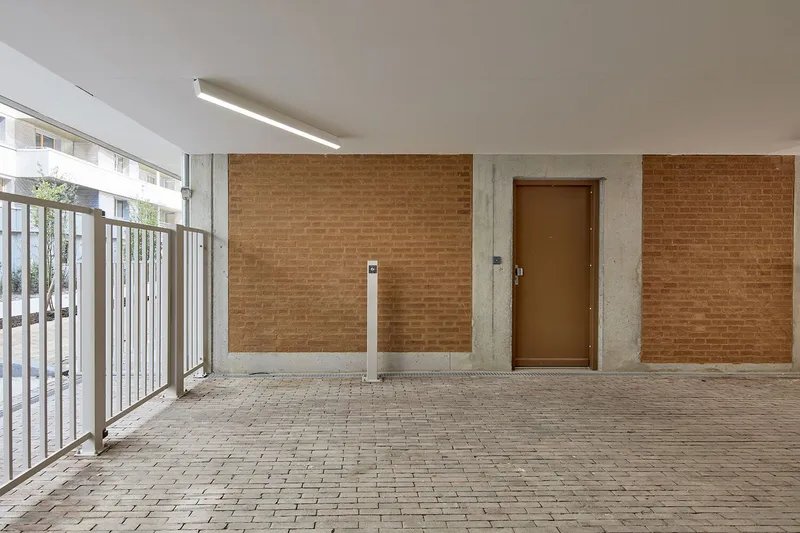
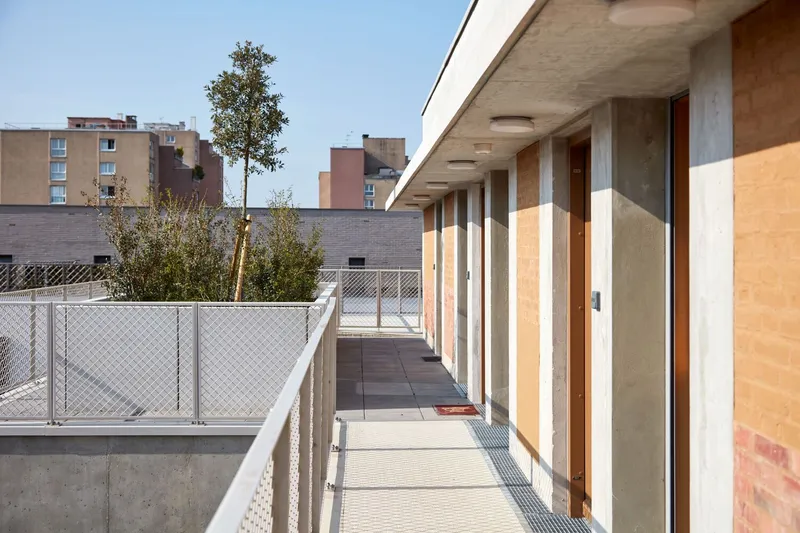
Through guidance, education, and collaboration, the project successfully overcame technical and cultural reservations, demonstrating that raw earth can serve as a viable, durable, and desirable alternative to conventional concrete construction. In doing so, the Bagneux Apartment Building positions itself as both an architectural prototype and a catalyst for broader adoption of sustainable materials in urban housing.
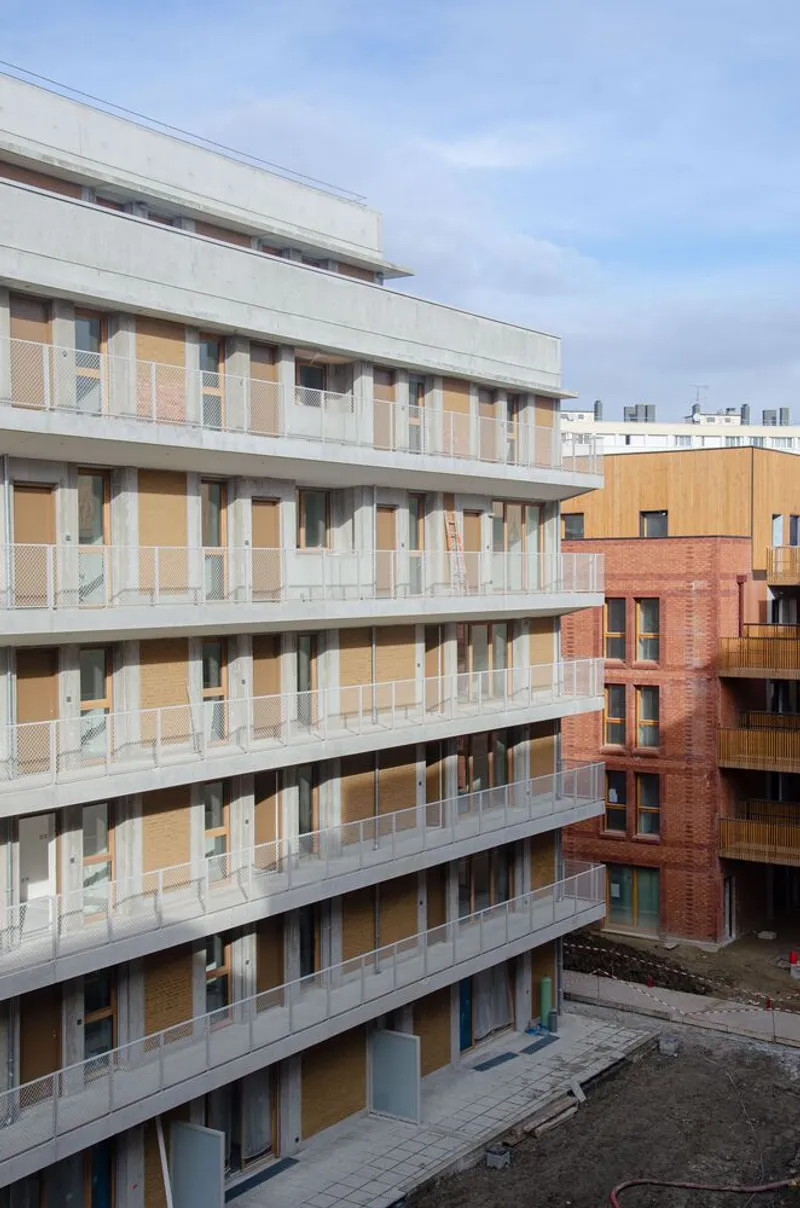
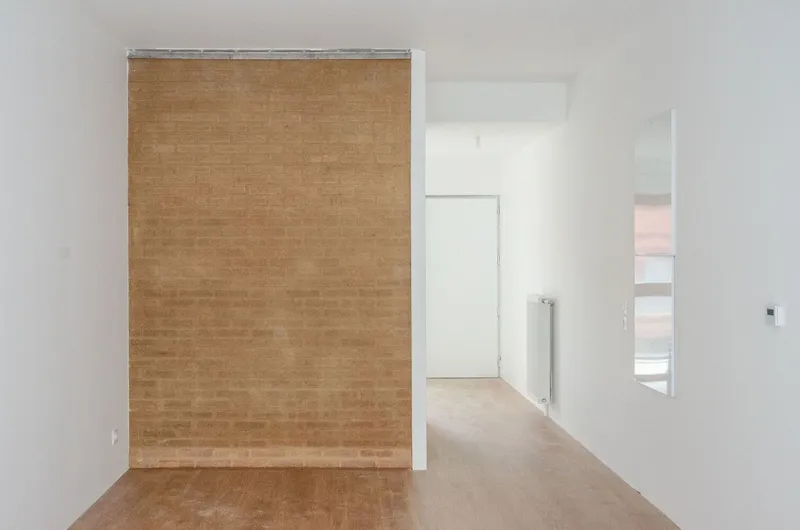
Project Facts
- Project: Bagneux Apartment Building
- Location: Bagneux, France
- Program: Residential (42 apartments)
- Architects: toa | architectes associés
- Area: 2,960 m²
- Year: 2024
- Photographs: Frédéric Delangle, Yang Zhou
- Project Management: Groupe Gambetta
- Construction Engineering: Bérim
All photographs are works of
Frédéric Delangle, Yang Zhou


Popular Articles
Popular articles from the community


Co-Life: Senior Housing Design That Reconnects Older Adults With the City
Co-Life reimagines senior housing design through healing gardens, shared streets, workshops, and a sustainable community across generations.

The Ocean Hive: Sustainable Architecture for a Self-Sufficient Civilization at Sea
The Ocean Hive imagines sustainable architecture at sea, where modular habitats, algae, wave power and ocean waste sustain a growing colony.

Conexión: Biophilic Design Reimagines High-Rise Living in Hong Kong
Conexión reimagines high-rise living in Hong Kong through biophilic design, green facades, shared spaces, daylight, water and nature within.

Co-life: Sustainable Architecture for Age-Friendly Community Living
Co-life reimagines sustainable architecture for seniors through courtyards, rammed earth, shared gardens, and spaces designed for belonging.

Similar Reads
You might also enjoy these articles


FAMM Arquitectura Organizes Ten Villas Around Courtyards and Jungle in Nosara, Costa Rica
El Molino pairs two elongated volumes with deep overhangs and timber louvers to build a compact coastal community five minutes from the beach.

Oscar Niemeyer's Ibirapuera Park Pavilions Define São Paulo's Cultural Identity in Concrete and Curve
A constellation of modernist volumes set within São Paulo's most important urban park, conceived for the city's 400th anniversary in 1954.

Sanjay Puri Architects Wraps a Jaipur Office Tower in Capsule-Shaped Green Buffers
A nine-level climate-responsive workplace near Jaipur Airport uses stacked planter terraces and aluminium screens to fight 40°C heat.
RHO Converts a Berlin Spree-Side Industrial Courtyard into Enkime's 1,000 m² Agency Headquarters
A social media agency's new home in Charlottenburg trades glossy branding for concrete waffle ceilings, glazed tile, and sheer curtains.

Explore Living Building Competitions
Discover active competitions in this discipline

Challenge to design mud housing for contemporary communities

Challenge to reimagine the Iron Throne

Photograph architecture without architects

Illustrate the lost glory of Angkor Wat - Render Challenge
Comments (0)
Please login or sign up to add comments
No comments yet. Be the first to comment!