

Bamboo Architecture in Mexico: A Sustainable Design Revolution
Exploring how bamboo architecture in Mexico blends sustainability, biomimicry, and innovation through the Bamboo Restaurant by Jorge Kelleher.


Bamboo Architecture in Mexico
Bamboo architecture is reshaping sustainable design practices worldwide, and Mexico is no exception. The Bamboo Restaurant in Playa del Carmen, designed by Jorge Kelleher, exemplifies how this eco-friendly material can create stunning, functional spaces that harmonize with nature.
This article explores how bamboo is revolutionizing architecture in Mexico, blending tradition, sustainability, and cutting-edge technology.
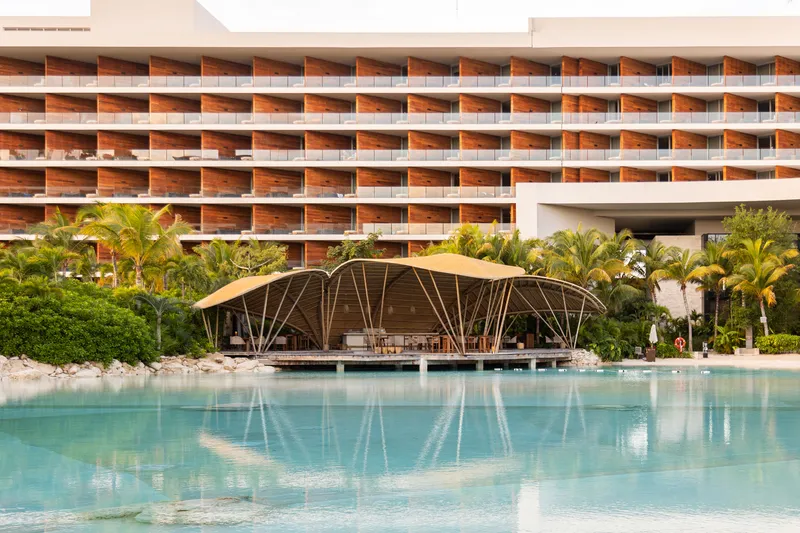
A Showcase of Bamboo Excellence: The Bamboo Restaurant
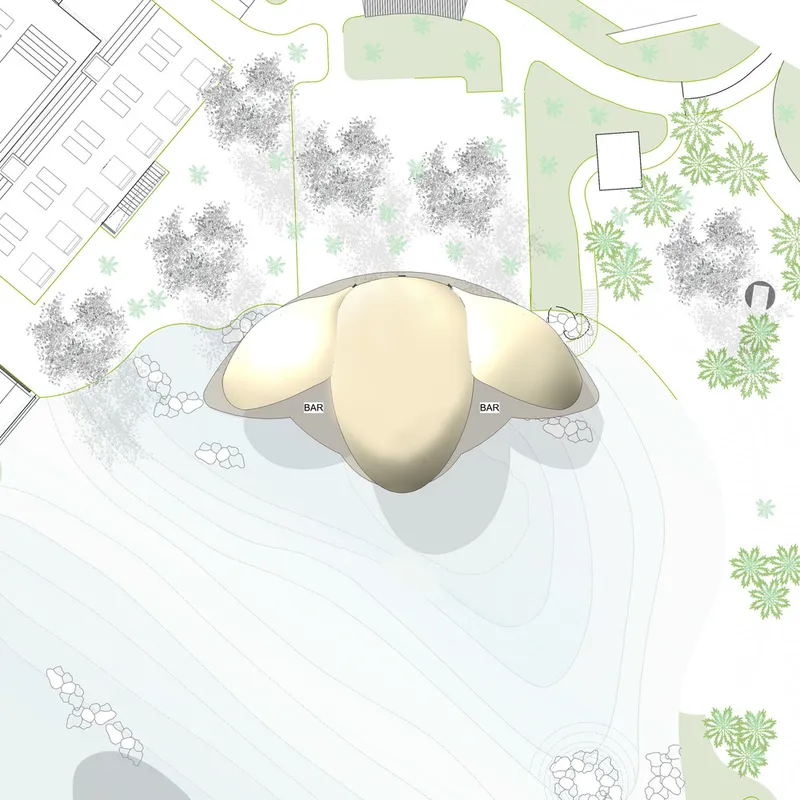
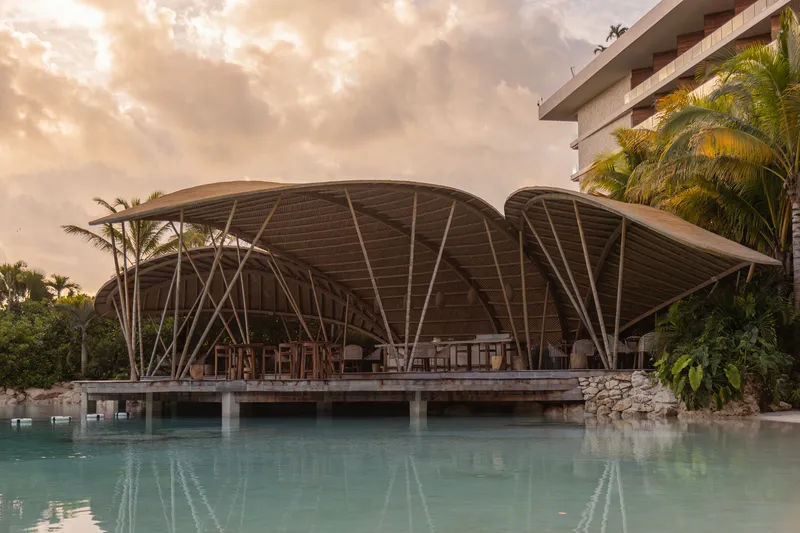
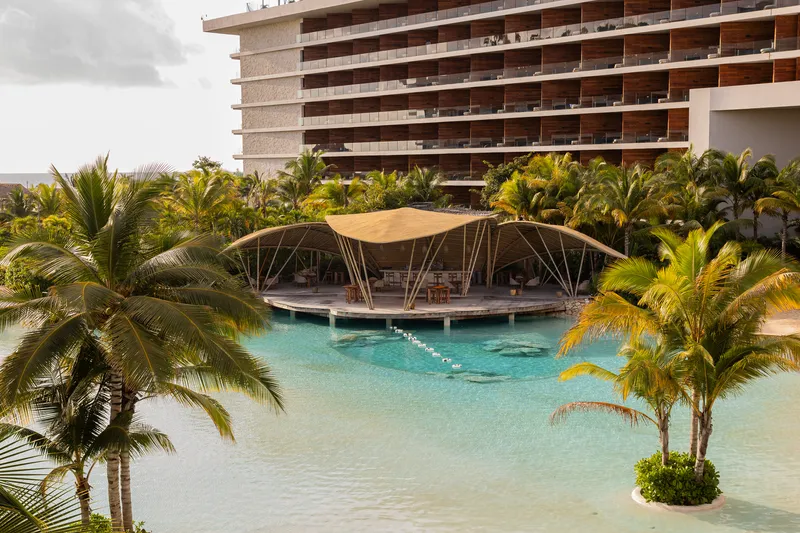
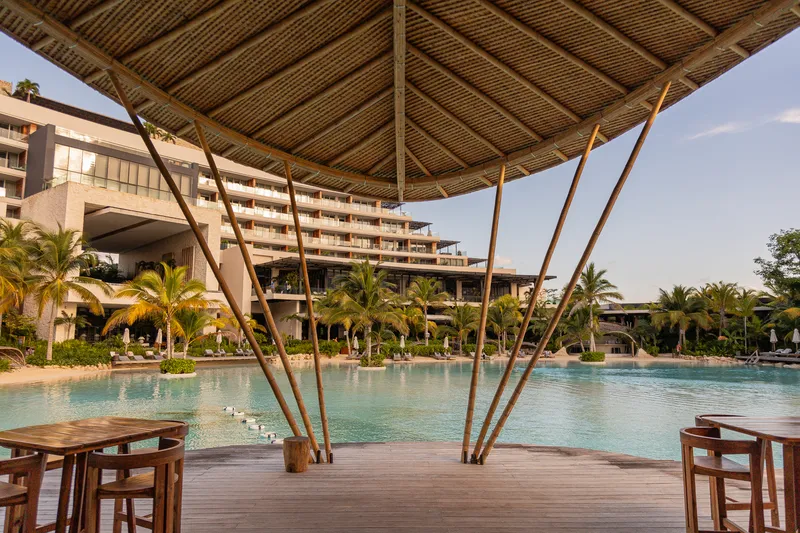
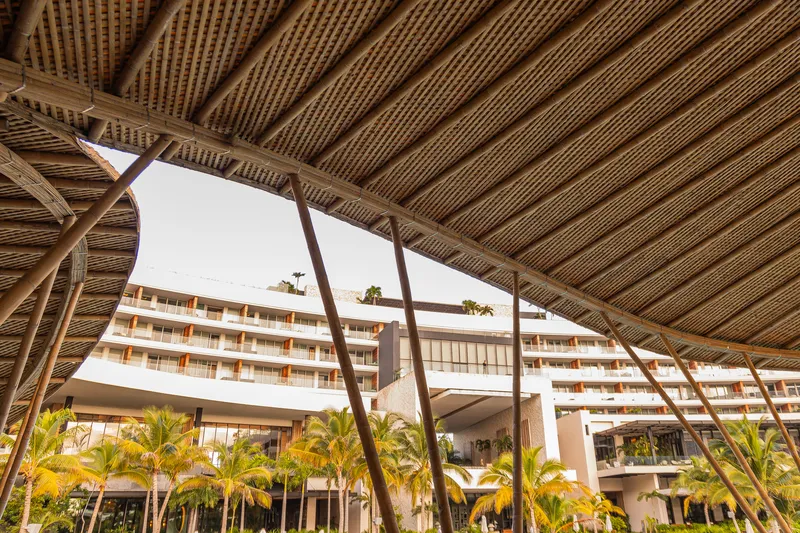
Nestled within the Secrets Moxché Playa del Carmen hotel, the Bamboo Restaurant is a shining example of bamboo architecture in Mexico. Completed in 2021, this 245 m² structure draws inspiration from the region’s endemic vegetation. The restaurant’s design combines biomimicry with sustainable materials, resulting in a visually striking and environmentally responsible space.
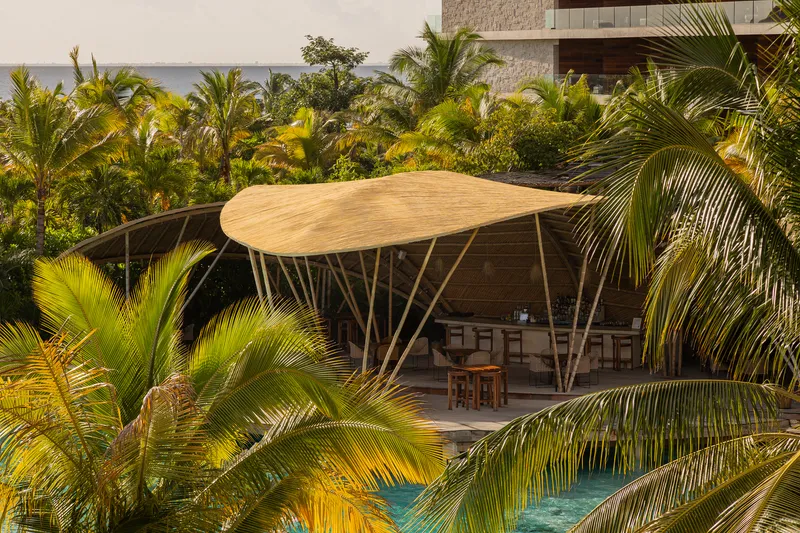
The Design Philosophy: Biomimicry Meets Innovation
At the heart of the Bamboo Restaurant’s design is a biomimetic approach that mimics the structural principles of leaves.
- Organic Geometry: The structure mirrors the lamina and petiole of leaves, with central columns acting as supportive stems.
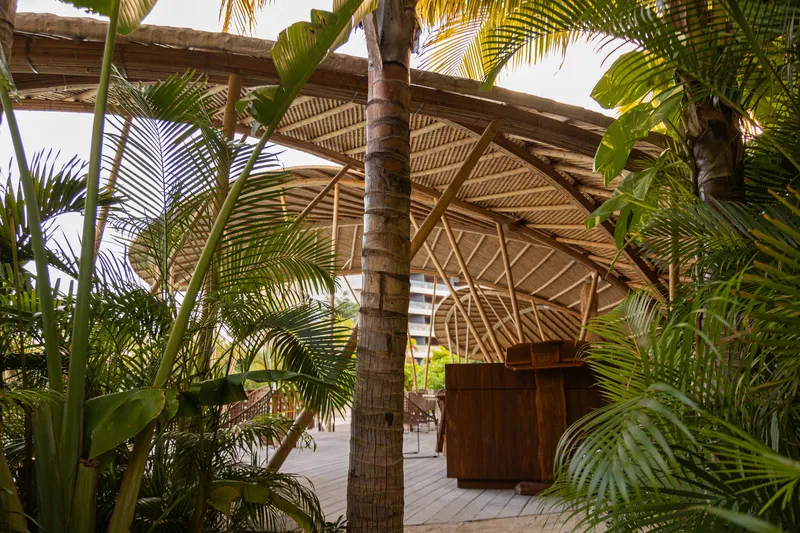
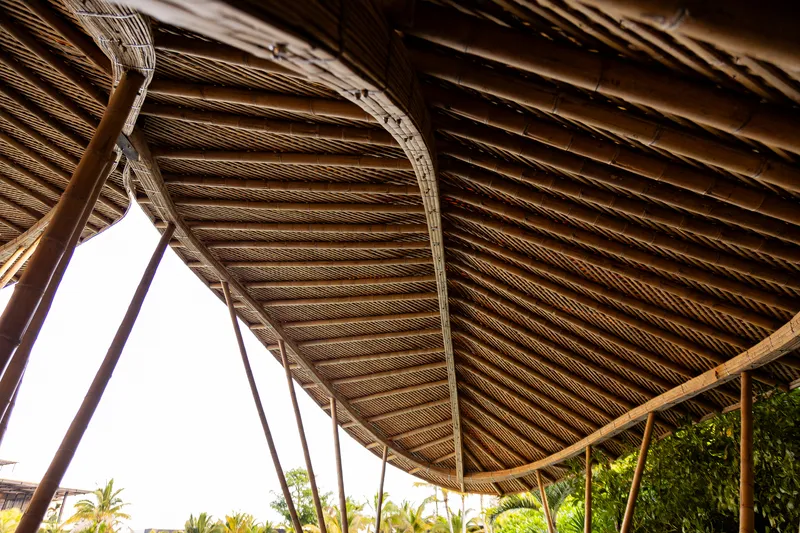
- Natural Flow: The curved columns seamlessly transition into beams, creating a fluid, organic roof that integrates with the surrounding environment.
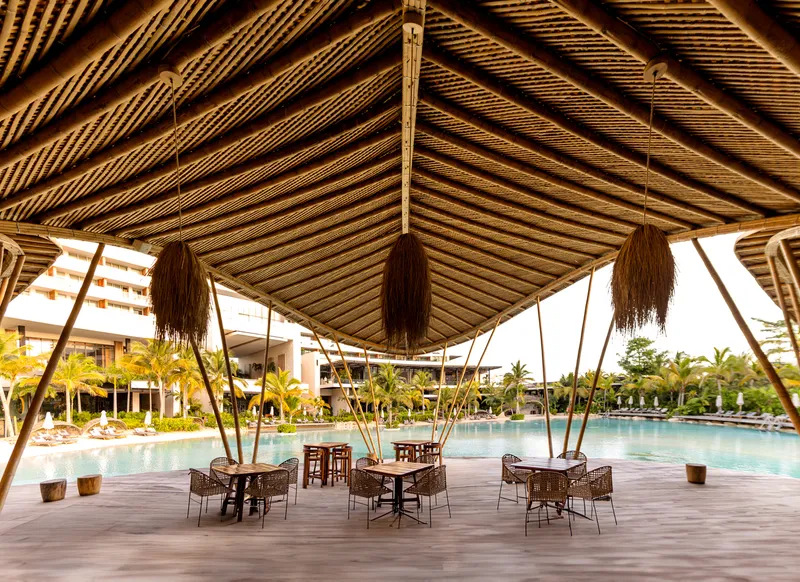
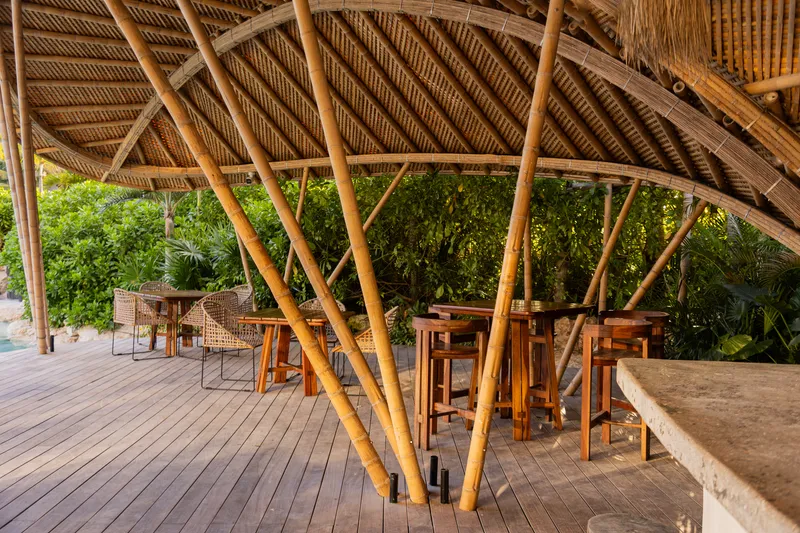
- Visual Elegance: The rhomboidal weaving pattern of bamboo slats enhances the interior ambiance with its intricate textures.
Why Bamboo? A Material for Sustainability and Creativity
Bamboo has become a cornerstone of sustainable architecture in Mexico due to its versatility and eco-friendliness.
- Renewability: Bamboo grows rapidly and requires minimal resources, making it a sustainable alternative to traditional materials like concrete or steel.
- Strength and Flexibility: Bamboo’s structural properties allow for lightweight yet durable designs, enabling creative architectural solutions.
- Local Sourcing: Using locally available Guadua Angustifolia bamboo reduces the carbon footprint and supports regional economies.
The Role of Technology in Bamboo Architecture
Modern bamboo architecture in Mexico, including the Bamboo Restaurant, relies heavily on technology to optimize designs.
- 3D Modeling: Advanced software simulated bamboo’s behavior, allowing architects to perfect the structural integrity and minimize material waste.
- Precision Construction: Digital tools facilitated the design of custom metal bases that act as the foundation for the central columns.
- Cost Efficiency: By quantifying materials and costs upfront, the project balanced sustainability with economic feasibility.
Breaking Down the Structure: A Closer Look
Central Columns
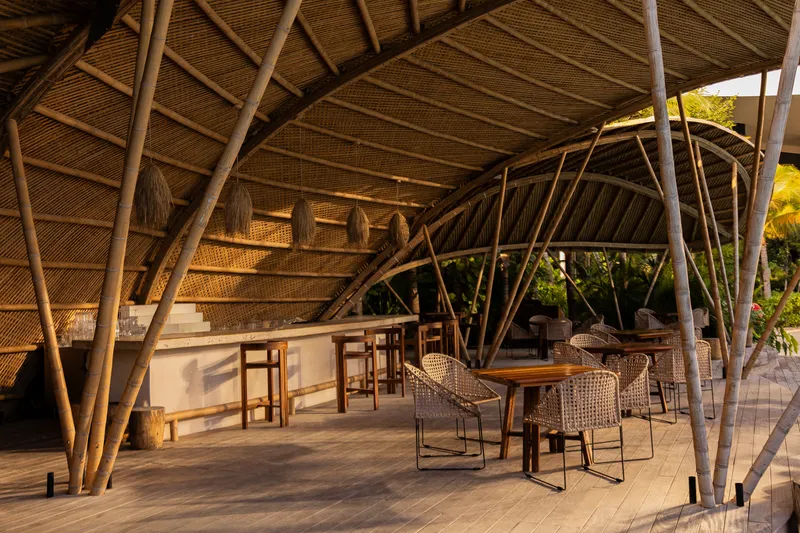
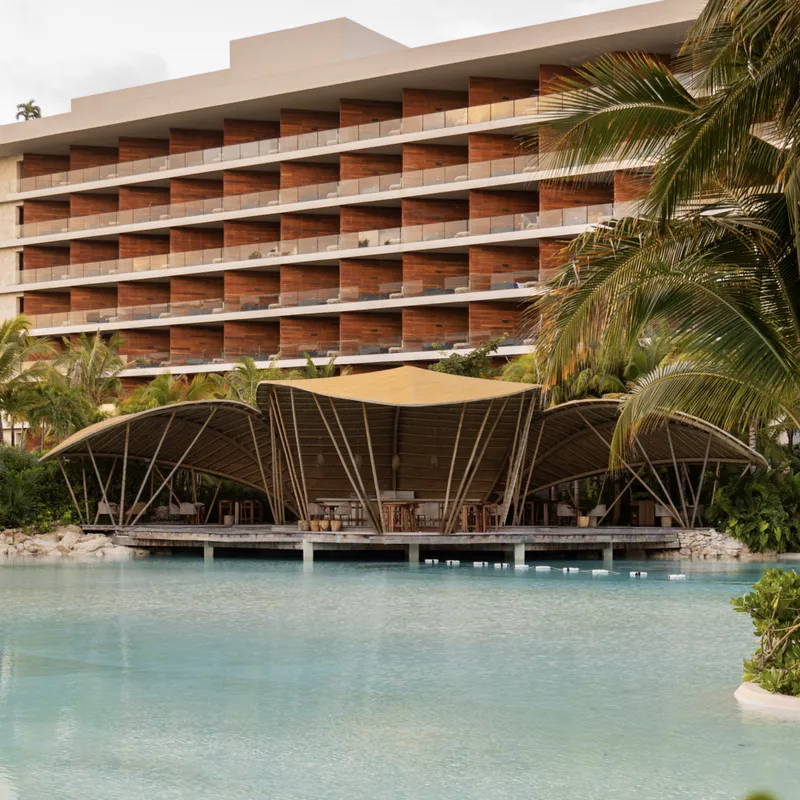
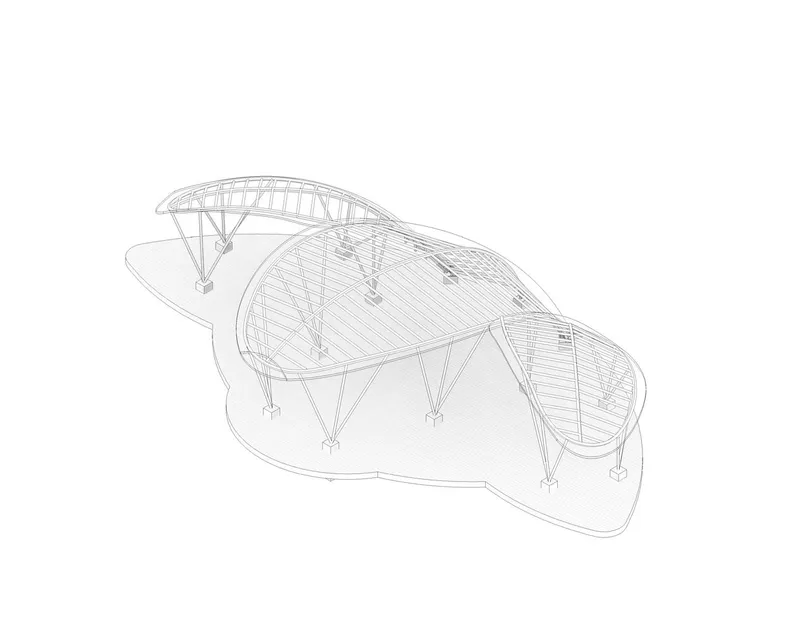
The initial supports were custom-designed metal pieces, anchoring the curved bamboo columns. These columns emulate plant stems, with natural inclinations that add an ornamental and structural quality to the space.
Roof Design
The bamboo roof showcases a rhomboidal weaving pattern, creating a lightweight canopy. This intricate design maximizes ventilation and allows natural light to filter into the restaurant, reducing reliance on artificial lighting.
Bamboo Architecture in Mexico: A Growing Trend
The Bamboo Restaurant is just one example of how architects in Mexico are leveraging bamboo to redefine sustainable design. Other notable projects across the country showcase bamboo's potential in creating eco-friendly, innovative spaces that resonate with cultural and environmental values.
- Eco-Lodges and Resorts: Bamboo structures are increasingly popular in coastal resorts, blending seamlessly with tropical environments.
- Public Spaces: Parks and community centers are adopting bamboo for its aesthetic appeal and low environmental impact.
- Residential Projects: From private homes to multi-family housing, bamboo offers an affordable and sustainable building solution.
The Future of Bamboo Architecture in Mexico
Bamboo architecture is not just a passing trend but a revolutionary approach to sustainable design in Mexico. Projects like the Bamboo Restaurant highlight how biomimicry, advanced technology, and eco-conscious materials can transform the architectural landscape.
As bamboo continues to gain traction, Mexico is poised to become a global leader in sustainable architecture. Whether you’re an architect, a developer, or simply an enthusiast, exploring bamboo architecture in Mexico offers valuable insights into the future of eco-friendly design.


Popular Articles
Popular articles from the community


Aquadapt: An Underwater Habitat That Rewrites Its Rooms by the Hour
Curved modules ring the seabed while one shell shifts from breakfast room to cinema, farm and football pitch as residents' needs change.


Juan García Correa, John González and Claudia Rueda Sink a Circular Amphitheater into a Manizales Engineering Building
On the La Nubia campus in Manizales, Colombia, the S1 Building folds labs and offices into a hillside of ramped lawns that double as a campus route.

Singing Woman: An Opera House That Performs Before the Curtain Rises
Ovidiu Cristian Pavel's conceptual opera house translates Estonia's choral identity into a sculpted waterfront landmark facing the Baltic Sea.

Cube Design Draws an Ecological Corridor Between Two Shenzhen Hills with the Nankai Building
Beside Shenzhen's container docks, the Nankai Building pairs stacked balconies with a climbing green screen to connect two hillsides across its height.

Similar Reads
You might also enjoy these articles


Hodi-Mandai Geram
Project Function: Preservation and revitalization of the Intangible heritage and socio-spatial identity of the Hodi by Housing, Cultural Memory Center, Sacred Grove, landscape, local tourism economy


Olio Towers: A Mid-Rise for Performers That Fuses Housing, Rehearsal, and Stage
Located blocks from Houston's Theater District, this modular tower stacks living units around a central performance atrium.

Oasis: Modular Green Housing Carved into Dhaka's Urban Fabric
A shortlisted Plugin Housing entry reclaims unauthorized settlements in Dhaka with stepped concrete volumes, green roofs, and ventilation-driven design.

Black Hole: A Floating Megastructure for the Post-Physical Era
Emiliano Mazzarotto envisions a spherical, self-scaling arena where e-sports, digital hotels, and holographic stadiums replace traditional public space.

Explore Bamboo Construction Competitions
Discover active competitions in this discipline

Challenge to reimagine the Iron Throne

Photograph architecture without architects

Illustrate the lost glory of Angkor Wat - Render Challenge

Design challenge to reuse E-waste
Comments (0)
Please login or sign up to add comments
No comments yet. Be the first to comment!