
Barrier-Free Centre: Inclusive Healthcare Architecture for Dementia Care and Intellectual Disability Support
Barrier-Free Centre redefines inclusive healthcare architecture with dementia-friendly design, sensory gardens and accessible care spaces.


As global populations age, dementia is becoming one of the most pressing healthcare challenges of the 21st century. Millions of people worldwide are currently living with dementia, a neurological condition that gradually affects memory, cognition, and daily functioning. Despite the scale of this challenge, many cities still lack specialized care environments designed specifically for people with dementia.
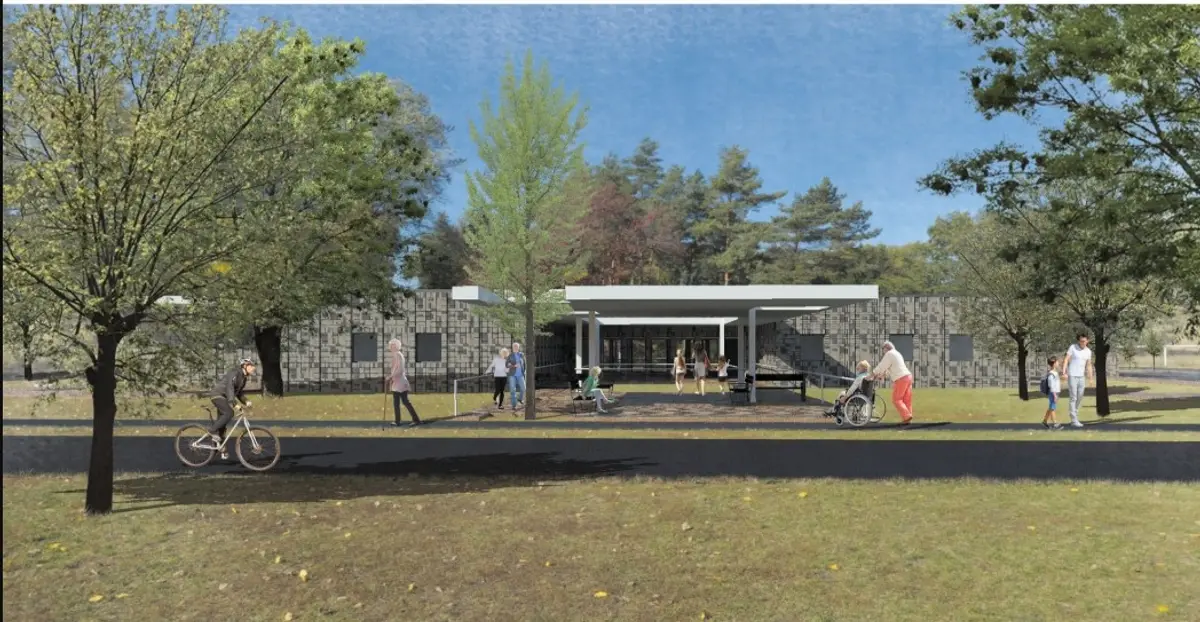
The BARRIER-FREE CENTRE - HEALTH CARE SPACE FOR PEOPLE , a project by Magdalena Śmieja, addresses this urgent need through thoughtful inclusive healthcare architecture. Designed as both a day care facility and a round-the-clock care centre, the project proposes a therapeutic architectural environment tailored for people with dementia and individuals with intellectual disabilities.
Developed in collaboration with nonprofit organizations, the project focuses on creating a supportive, safe, and accessible spatial environment that enhances well-being for patients, caregivers, staff, and families. Through careful spatial planning, sensory landscapes, and barrier-free accessibility, the centre demonstrates how architecture can play a critical role in healthcare and rehabilitation.
Understanding Dementia and the Role of Space
Dementia is a broad category of brain disorders that causes long-term and often gradual deterioration in cognitive abilities. The condition most commonly affects people above the age of 65 and often leads to difficulties with memory, communication, navigation, and everyday tasks.
Individuals living with dementia frequently experience:
- Difficulty performing everyday activities
- Problems navigating familiar environments
- Memory loss and disrupted conversation flow
- Challenges with language and numbers
- Emotional and behavioral changes
Architecture has the potential to mitigate many of these challenges. Carefully designed environments can reduce confusion, enhance orientation, promote independence, and support therapeutic activities.
The Barrier-Free Centre responds to these needs through dementia-sensitive spatial design, integrating intuitive circulation, sensory stimulation, and accessible infrastructure.
Site Context: Gliwice, Poland
The project is located in Gliwice, Poland, one of the major cities in the Silesia region. The site lies within the city centre yet maintains a relatively quiet urban atmosphere. Surrounding the site are low-rise buildings from the 19th century, a modern hospital nearby, and significant green spaces.
The location offers several advantages:
- Proximity to medical infrastructure
- Excellent public transport connections
- A calm urban environment suitable for therapy and recovery
- Access to greenery and open landscape
These contextual factors influenced the project’s planning strategy. The building integrates with its surroundings while maintaining a calm, protected environment for residents.
Inclusive Healthcare Architecture: Program and Function
The Barrier-Free Centre integrates multiple healthcare functions within a unified architectural framework. The spatial program is organized into three primary components:
Round-the-Clock Care
This zone accommodates residents requiring continuous supervision and medical support. It includes:
- Residential care units
- Staff support spaces
- Medical supervision areas
- Relaxation zones for residents
The design prioritizes safety, comfort, and intuitive movement throughout the space.
Day Care Facilities
Day care services allow people in the earlier stages of dementia to participate in therapy, social activities, and rehabilitation while returning home in the evening. This program includes:
- Therapy rooms
- Activity spaces
- Meeting areas for families
- Rehabilitation facilities
This structure supports gradual transitions between independent living and full-time care.
Shared Community Spaces
Community integration plays an important role in the project. Shared areas are designed to support social interaction and collective activities, including:
- Common lounges
- Gastronomy areas
- Outdoor meeting spaces
- Therapeutic gardens
These spaces encourage interaction between residents, staff, relatives, and the surrounding community.
Spatial Strategies for Dementia-Friendly Design
Designing architecture for dementia requires careful consideration of spatial clarity, safety, and sensory cues. The Barrier-Free Centre incorporates several strategies to support users with cognitive impairments.
Visual Orientation and Wayfinding
The interior design uses clear visual contrasts between walls and floors to improve spatial perception. Non-reflective materials reduce visual confusion, while distinct color cues help residents identify rooms and circulation paths.
Barrier-Free Accessibility
The building eliminates architectural barriers that may hinder movement for elderly users or people with disabilities. Handrails are integrated along corridors and entrances, while staff doors are discreetly embedded within walls to maintain clear spatial organization.
Personalized Room Identification
Residential units are designed with individualized entrances and identifiable features, helping residents recognize their personal spaces more easily.
Sensory Guidance Elements
Special materials and sensory walls help residents navigate the building by providing tactile and visual orientation cues.
These architectural strategies collectively create a safer and more understandable environment for users experiencing cognitive decline.
Therapeutic Landscape: The Five Senses Garden
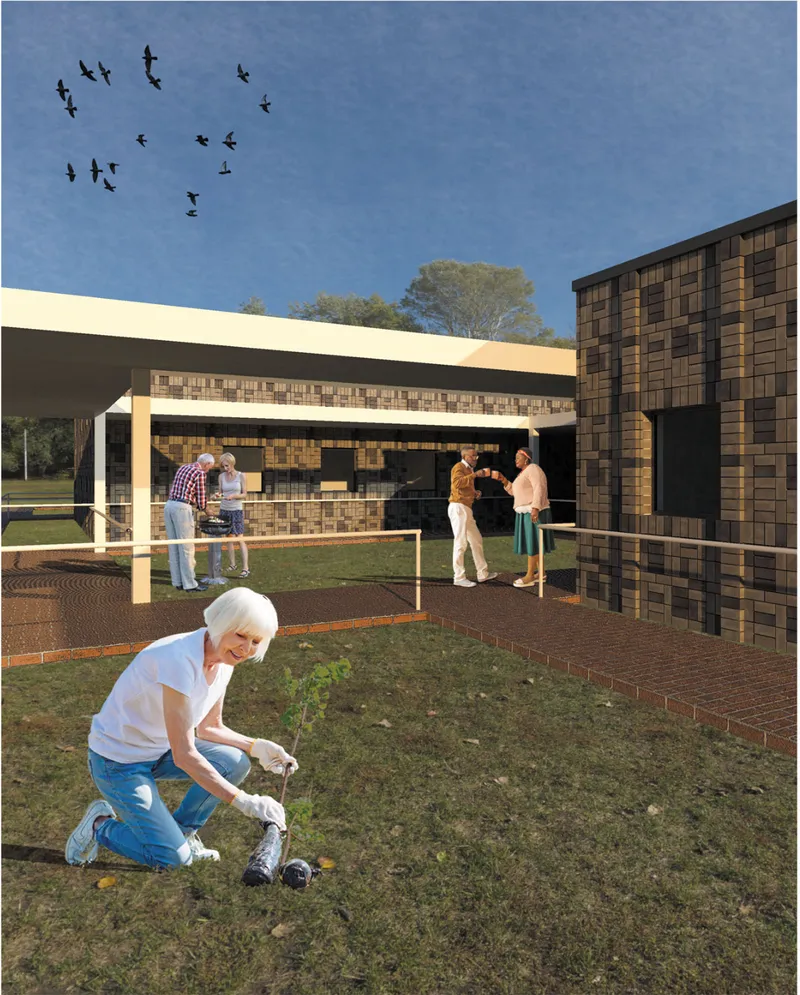
One of the most innovative aspects of the project is the Five Senses Garden, a therapeutic outdoor environment designed to stimulate sensory perception and encourage interaction with nature.
Research demonstrates that contact with nature significantly improves mental well-being and cognitive engagement for people with dementia. The garden design integrates spaces that stimulate each of the five senses.
Sight
The landscape includes diverse vegetation, flowers, and seasonal plants that create visual variety throughout the year. Outdoor cinema areas also support shared experiences.
Hearing
Water features, rustling leaves, and surrounding nature produce gentle acoustic stimulation. Residents can also hear activity from nearby social spaces such as the gastronomy point.
Smell
Flower beds and aromatic plants create distinct olfactory experiences, while outdoor dining areas bring the scent of food preparation into the garden.
Touch
Tactile surfaces and gardening opportunities allow residents to engage directly with textures and plants.
Taste
Vegetable gardens and fruit patches enable residents to participate in planting and harvesting activities. Meals prepared from these ingredients strengthen the connection between environment and daily life.
These therapeutic gardens function not only as recreational areas but also as essential components of dementia therapy.
Architectural Form and Spatial Organization
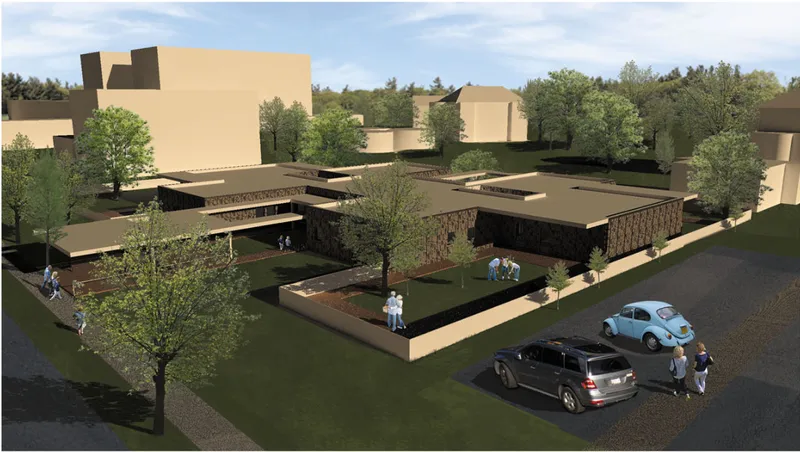
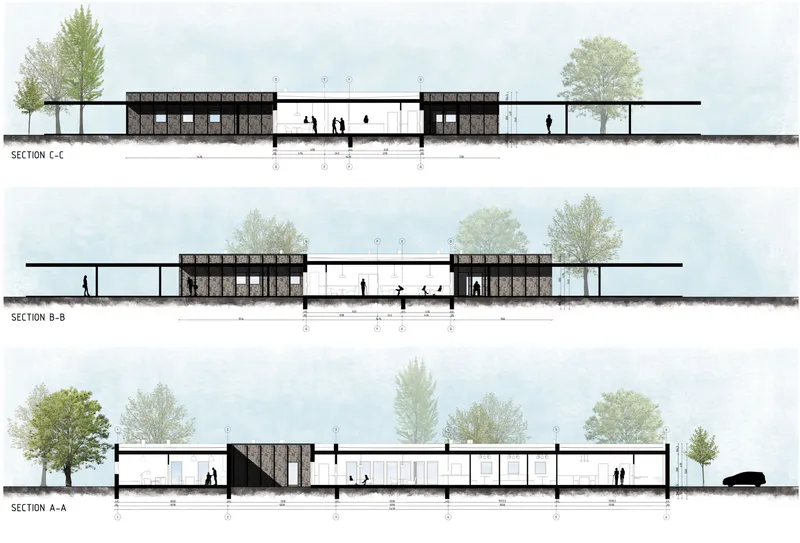
The building’s form emerges from a modular grid system that separates the different programmatic zones while maintaining strong spatial connections between them.
The massing strategy introduces multiple volumes that surround internal courtyards and outdoor therapy areas. This arrangement allows natural light to penetrate deeply into the building while also creating sheltered outdoor spaces.
A central atrium connects the main program areas, providing a communal heart for the centre. Circulation routes are simple and intuitive, minimizing confusion for residents.
Outdoor leisure areas and relaxation zones extend the therapeutic landscape beyond the building envelope.
Facade Concept: Architecture Inspired by Neuroscience
One of the most distinctive features of the Barrier-Free Centre is its facade design, which is based on scientific research into Alzheimer’s disease.
The brick facade is derived from computational simulations of synaptic plasticity and memory patterns within the hippocampus. These simulations generate graphic patterns representing healthy and pathological neural structures.
The resulting facade composition translates these patterns into a brick grid. Three variations of brick arrangement correspond to the building’s three main program zones:
- Round-the-clock care
- Common spaces
- Day care facilities
Subtle shifts in brick placement create a visually dynamic surface while maintaining a cohesive architectural identity.
Beyond aesthetics, the facade also carries symbolic meaning. The variation in brick patterns reflects the diversity of cognitive experiences among individuals with dementia, reinforcing the project's message of empathy and inclusion.
Interior Atmosphere and Materiality
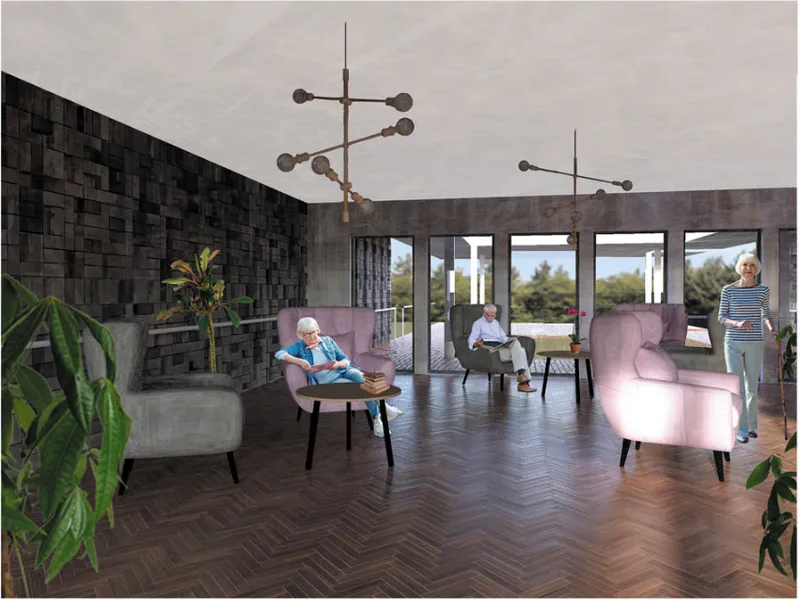
Inside the building, the design emphasizes warmth, comfort, and familiarity. Natural materials such as wood and brick contribute to a domestic atmosphere rather than an institutional one.
Large windows frame views of the surrounding gardens, allowing natural light and landscape to become integral components of the interior environment.
Furniture arrangements encourage social interaction while maintaining clear circulation paths.
These spatial qualities help residents feel safe and supported within the environment.
Social Impact and Future Implications
The Barrier-Free Centre demonstrates how architecture can directly support healthcare outcomes and improve quality of life for vulnerable populations.
By combining inclusive healthcare architecture, dementia-friendly design, and therapeutic landscapes, the project proposes a new model for care facilities that prioritizes dignity, independence, and well-being.
Importantly, the centre also addresses the needs of caregivers and families. By providing professional care services within a supportive architectural environment, the project helps reduce the emotional and physical burden placed on relatives.
As dementia cases continue to rise globally, projects like the Barrier-Free Centre highlight the importance of integrating healthcare, architecture, and community support.
The Barrier-Free Centre by Magdalena Śmieja represents a thoughtful and compassionate response to the growing challenge of dementia care. Through inclusive design strategies, sensory landscapes, and research-driven architectural concepts, the project transforms healthcare architecture into a therapeutic environment.


Popular Articles
Popular articles from the community


Lunar Spiral: Space Architecture Shaped by the Mathematics of the Universe
Lunar Spiral reimagines space architecture through Fibonacci geometry, lunar regolith, levitating habitats, and self-sustaining Moon living.

The Ocean Hive: Sustainable Architecture for a Self-Sufficient Civilization at Sea
The Ocean Hive imagines sustainable architecture at sea, where modular habitats, algae, wave power and ocean waste sustain a growing colony.

Co-Life: Senior Housing Design That Reconnects Older Adults With the City
Co-Life reimagines senior housing design through healing gardens, shared streets, workshops, and a sustainable community across generations.

Play: Fragments of Their World
Familiar architecture becomes modular playground design, creating safe spaces where displaced children can learn, connect, imagine and play.

Similar Reads
You might also enjoy these articles

Eco Chapel: A Green Architecture Pavilion Designed in Symbiosis with the Forest
Eco Chapel uses green architecture to weave prayer, learning and reuse into a forest pavilion shaped by modular hexagonal canopies for life.
Kaffeebühnen: Coffee Shop Architecture Designed as a Civic Stage Between Vienna’s City and Park
Kaffeebühnen turns coffee shop architecture into a civic stage, linking Vienna’s park edge, urban life, warm timber yards, and coffee craft.
Healing Façade: Sustainable Architecture for Reforestation, Community, and Sacred Ecology in Ethiopia
Healing Façade reimagines sustainable architecture as a living wall that restores soil, catches water and renews Ethiopia's forest churches.


Urban Forest: A Vertical Ecosystem for 5,000 Workers in Singapore's Changi Business Park
Radially stacked pods and layered green decks turn a 7-acre plot into 47 acres of ecological workspace projected for 2040.


Comments (0)
Please login or sign up to add comments
No comments yet. Be the first to comment!