

Baugruppe D2 by IFUB* – Innovative Cooperative Housing in Berlin
Baugruppe D2 by IFUB* is a sustainable Berlin cooperative housing project featuring flexible apartments, green courtyards, communal spaces, and modern ecological design.


Baugruppe D2, designed by IFUB*, is a striking example of cooperative housing in Berlin’s dynamic urban context. Located in central Neukölln, this unique project was developed by 15 families seeking an ecological, community-focused, and modern living environment. Baugruppen, a cooperative housing model popular in Berlin, allow future residents to actively participate in both design and planning, blending the advantages of private ownership with shared communal spaces.

Urban Integration and Design Concept
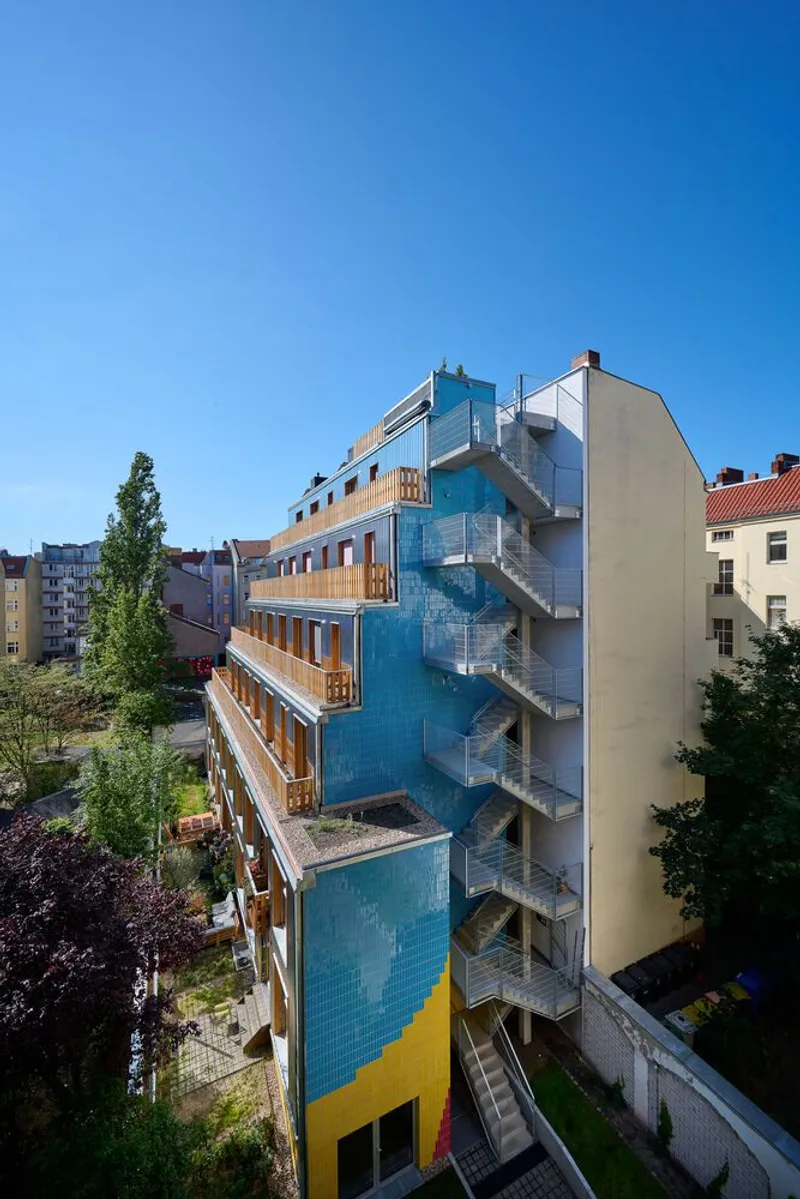
The plot at Donaustraße 2, previously occupied by a workshop and garage rental company, presented challenges for urban integration due to its elongated shape and partially developed courtyard. IFUB* designed the front building to fill a critical gap at a small T-junction, creating a harmonious dialogue with neighboring structures. The building’s striking pinnacle echoes surrounding gables, balancing eave heights and visually enhancing the streetscape. The facade, punctuated with windows and a contrasting base, ensures a seamless urban fit, while the first floor houses commercial units to revitalize the neighborhood.
The colorful glazed clinker bricks reference 1970s Neukölln facades and link the front building to the garden house at the rear. South-facing balconies and terraces maximize natural light and outdoor access, while flexible apartment layouts allow units to be combined or subdivided, ensuring long-term adaptability.

Sustainable and Ecological Architecture
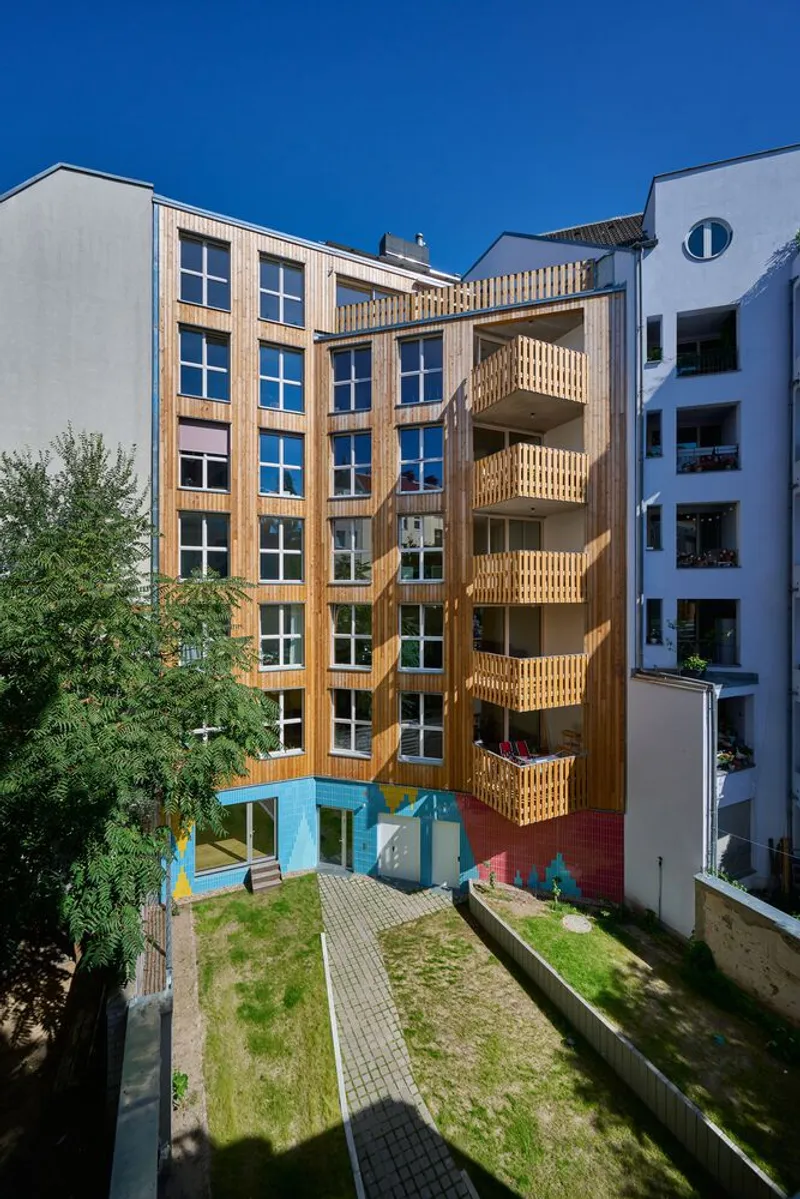
Sustainability is central to Baugruppe D2. The project uses a hybrid construction method, combining solid structures with timber-based enclosures to meet sound insulation and fire safety standards. The front building features larch wood cladding with jointless panels, complemented by white-glazed wooden windows and galvanized steel flashing. The garden house uses aluminum panels and glazed clinker bricks for non-combustible facades. Local materials, including the Berliner clinker brick slips, ensure a minimal ecological footprint.
The site prioritizes green communal spaces. Private gardens are partitioned by planted borders, and vertical surfaces are densely planted with edible plants. Roof terraces on both buildings provide panoramic views down Pannierstraße toward Görlitzer Park, encouraging social interaction and community cohesion.


Flexible Interiors and Resident Participation
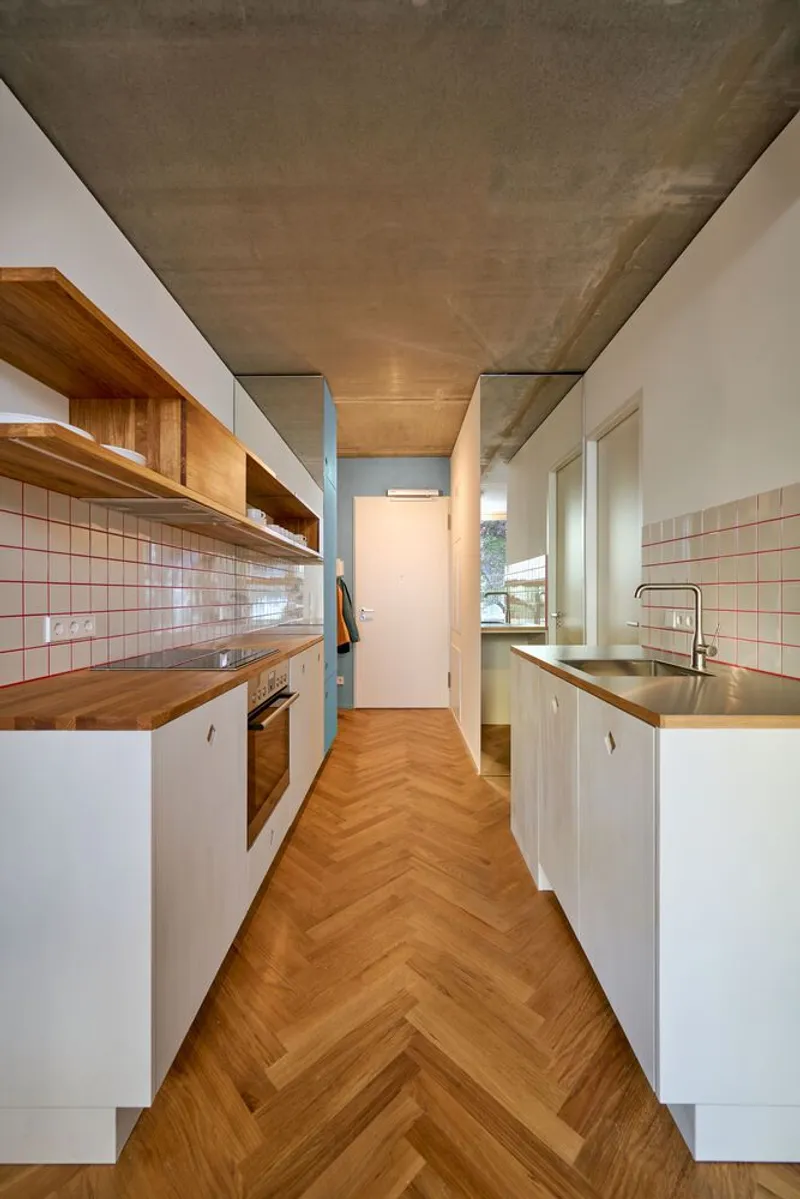
Interiors of the apartments were co-designed with residents, offering freedom in flooring, kitchen, and bathroom finishes. Apartments in the front building feature loggia-style balconies, combining shelter with openness, while maisonettes in the garden house include large wooden lift-and-slide doors to enhance indoor-outdoor living. IFUB* designed kitchens and staircases using healthy materials like spruce treated with linseed oil and oiled oak, integrating thoughtful details and sustainable finishes.
Bathrooms reflect individual preferences, with vertical 10x30 cm tiles in gradient colors, colored niches, and combinations of terrazzo floors with black or white fixtures. Each apartment balances functionality with aesthetic appeal, promoting comfort, flexibility, and durability.

Energy Efficiency and Building Services
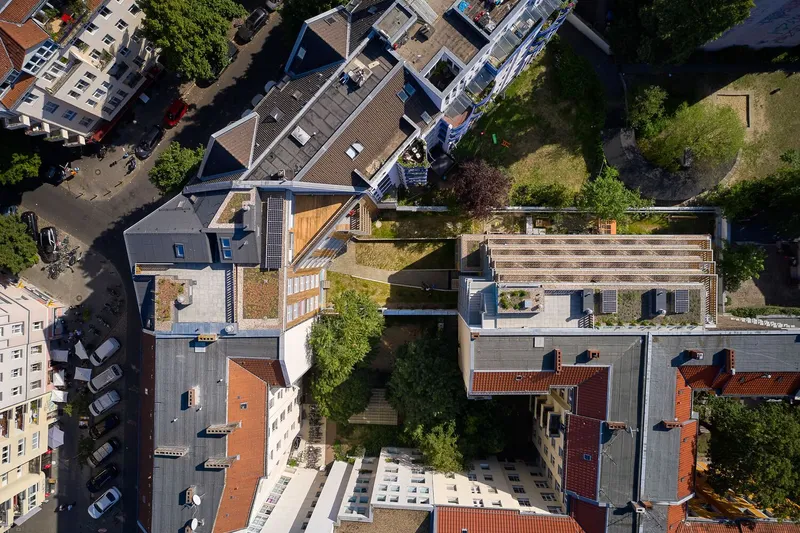
Baugruppe D2 incorporates a heat pump system using exhaust air to generate domestic hot water, combined with district heating and photovoltaic modules on the roof. This approach ensures energy efficiency, reduced CO2 emissions, and passive air exchange throughout the apartments. By eliminating underground car parking and prioritizing bicycle access, the design enhances sustainability while maintaining a clutter-free, green courtyard.


A Model for Cooperative Urban Living
Baugruppe D2 exemplifies innovative Berlin housing, demonstrating how cooperative initiatives can combine ecological design, resident participation, and urban integration. With its thoughtful mix of materials, flexible layouts, and communal spaces, it sets a benchmark for sustainable, community-oriented city living.
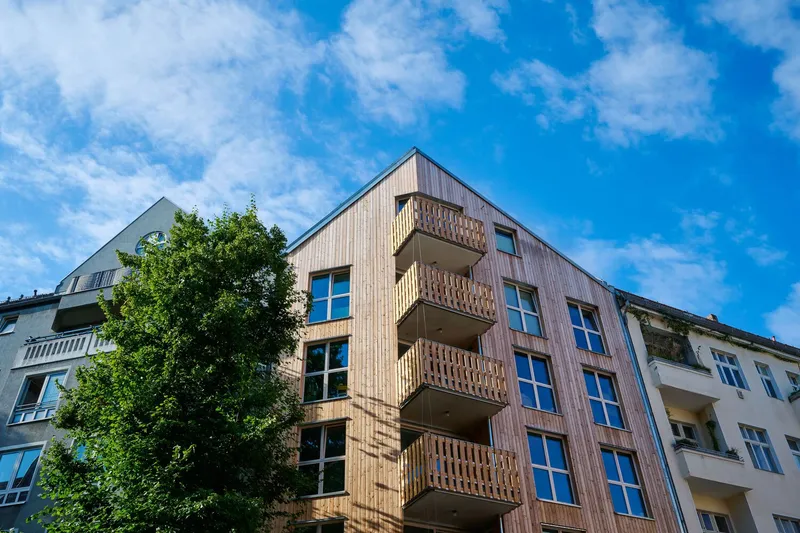
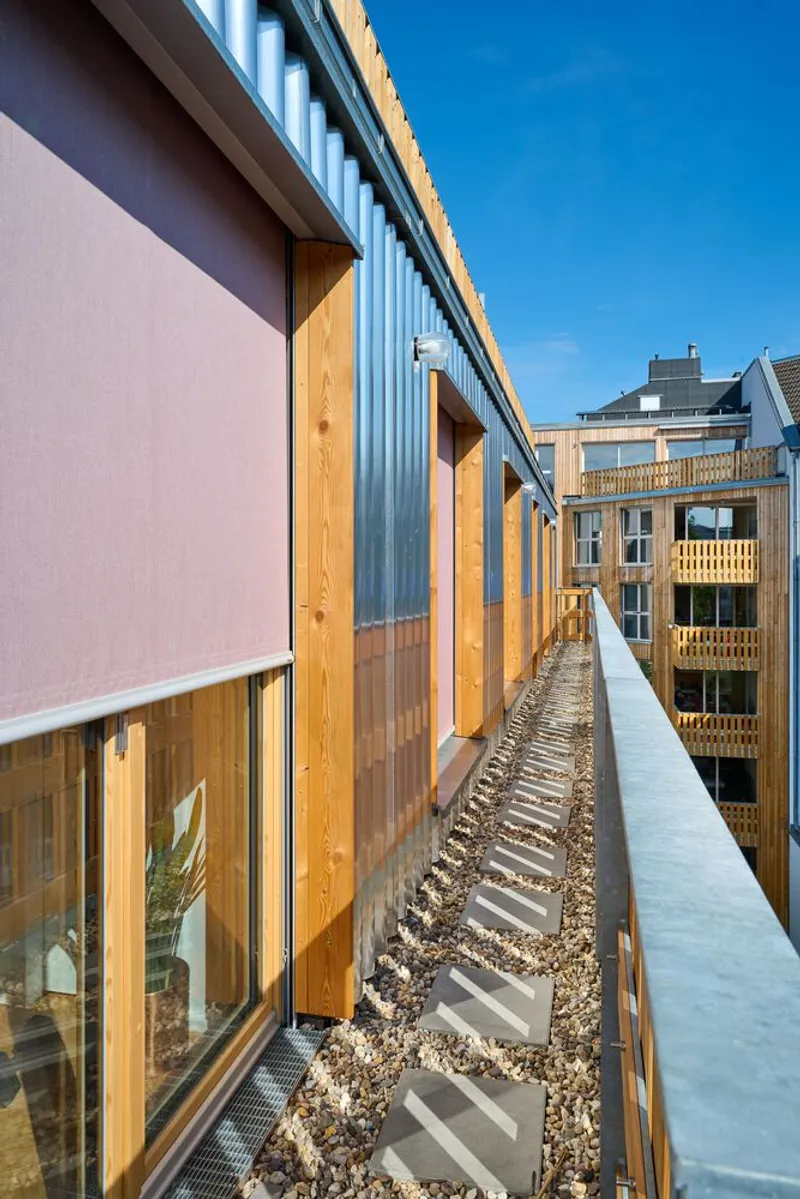
All photographs are works of Thomas Straub


Popular Articles
Popular articles from the community


Juan García Correa, John González and Claudia Rueda Sink a Circular Amphitheater into a Manizales Engineering Building
On the La Nubia campus in Manizales, Colombia, the S1 Building folds labs and offices into a hillside of ramped lawns that double as a campus route.

David Ortega Stacks a Two-Story Mexico City Penthouse Around a Steel Stair and a Pergola-Shaded Roof Terrace
In Colonia Roma, a 300 m² penthouse uses oak joinery, a planted steel stair and a slatted roof pergola to make a new-build apartment feel like a house.

U.GA Architects Wraps an Oval Rooftop Pool in Curved Board-Formed Concrete on Busan's Jeollidan-gil
In Busan's Jeonpo-dong, a 454 m² mixed-use block stacks a neighborhood facility, guest rooms and an oval rooftop pool inside spiraling concrete walls.

Architekt Andreas Gruber Scatters 23 Dark Timber Chalets Across a South Tyrolean Forest Edge
In Molini di Tures, Amonti Chalets breaks a resort into a hamlet of gabled timber houses, with parking, storage and services pushed into the slope.

Similar Reads
You might also enjoy these articles


Hodi-Mandai Geram
Project Function: Preservation and revitalization of the Intangible heritage and socio-spatial identity of the Hodi by Housing, Cultural Memory Center, Sacred Grove, landscape, local tourism economy


Olio Towers: A Mid-Rise for Performers That Fuses Housing, Rehearsal, and Stage
Located blocks from Houston's Theater District, this modular tower stacks living units around a central performance atrium.

Oasis: Modular Green Housing Carved into Dhaka's Urban Fabric
A shortlisted Plugin Housing entry reclaims unauthorized settlements in Dhaka with stepped concrete volumes, green roofs, and ventilation-driven design.

Black Hole: A Floating Megastructure for the Post-Physical Era
Emiliano Mazzarotto envisions a spherical, self-scaling arena where e-sports, digital hotels, and holographic stadiums replace traditional public space.

Explore Housing Competitions
Discover active competitions in this discipline

Challenge to reimagine the Iron Throne

Photograph architecture without architects

Illustrate the lost glory of Angkor Wat - Render Challenge

Design challenge to reuse E-waste
Comments (0)
Please login or sign up to add comments
No comments yet. Be the first to comment!