

Interpreting philosophies of Bauhaus Neue
Framing future of design education


Overview
There are moments in history when a confluence of ideas, people, and broader cultural and technological forces creates a spark. Sometimes the spark amounts to nothing more than a flicker. But if conditions are right, it can erupt into a dazzling, brilliant light that, while burning for only a brief moment, changes the world around it.
Bauhaus movement
The Bauhaus was one of these – a place that despite the economic turmoil and cultural conservatism of the world around it, offered a truly radical, international and optimistic vision of the future. The origins of the Bauhaus lie in the late 19th century, in anxieties about the soullessness of modern manufacturing, and fears about art's loss of social relevance. The Bauhaus aimed to reunite fine art and functional design (applied arts), creating practical objects with the soul of design. The effect was eventually designed good design was made accessible to people at an effective price.
100 years later in a world where rampant shifts in technology and automation, how can we change the dated outlook to design education fundamentally?
Bauhaus school existed for barely 14 years, yet what it did was highly exceptional in the standards of today. What did Bauhaus School do so right that schools of today are struggling to do? In a world where design is again becoming an aesthetic instead of core thought - how can design education rethink the relevance of design in future?
"The Bauhaus strives to bring together all creative effort into one whole, to reunify all the disciplines of practical art - sculpture, painting, handicrafts, and crafts - as inseparable components of a new architecture"
Challenge
Most schools today may be replicating the techniques of Bauhaus as is. But the times have changed and the techniques used by Bauhaus might not be fit for the current times. However, the philosophies of Bauhaus transcend barriers of time as even Sir Norman Foster affirms the “Ideologies of Bauhaus are more relevant today than ever.”
Design Challenge: How can we reinterpret the philosophies of Bauhaus to create a new design school that fosters a futuristic, bold and radical learning environment in the context of today and tomorrow?
The design challenge began with design disciplines that exist today like Architecture, Visual Communication Design, Graphic Design, Textile design or Conceive new disciplines entirely springing from fundamental learning programmes. The competition did not focus on creating curriculums but innovation in spaces that nurture them.
The jury for the competition consisted of esteemed designers, professionals and academicians from around the world. The Lead Jurors for the competitions were as follows:
Asaf T. Mann, Partner Architect, Mann Shinar Architects, Israel
Martin Schmidt Radic, Director, Schmidt Arquitectos Asociados, Chile


"Some of the Best of competition projects are:"
Winning Project: BAUHAUS NODE
By: Aldo Vinciguerra, Urta Halili & Kastriot Mavraj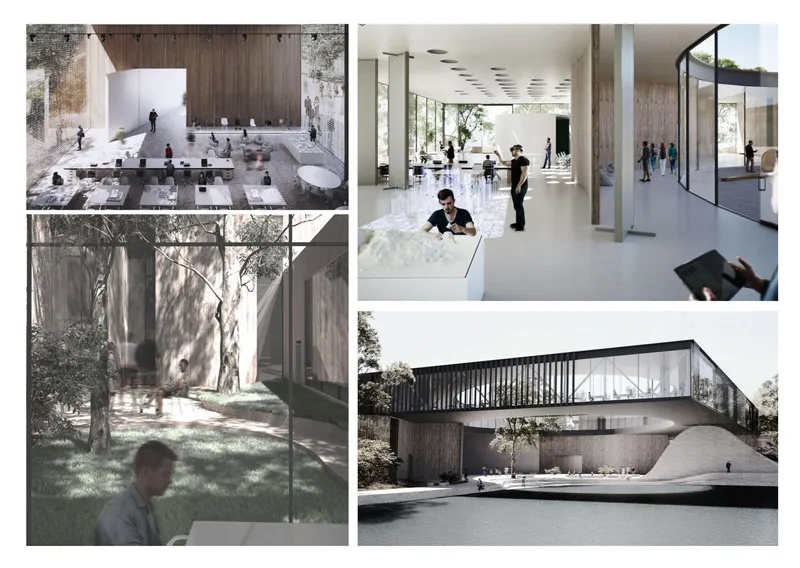
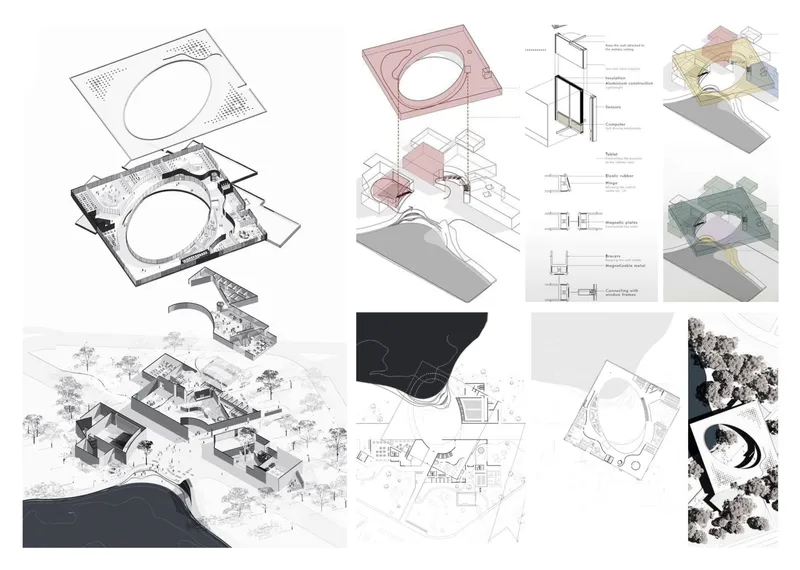
Description: The education in the future will focus more on innovation and creativity aided by digitalization characterizing the new era. The Bauhaus node is designed so that it will adapt to the changes that will happen in the future. Giving a great importance in interacting with society, the design school is placed in a location where people gather. The main concept behind the design is an architectural school, a combination of three main elements: art, technology and the environment. The above-mentioned elements involve important issues adjusting today's design challenges. The design of the building itself takes in consideration all of these elements as well.
-----------------
Runner - Up: WARNING! EXPERIMENTATION AHEAD
By: Pauline Dubois & Jean-Francois Letourneau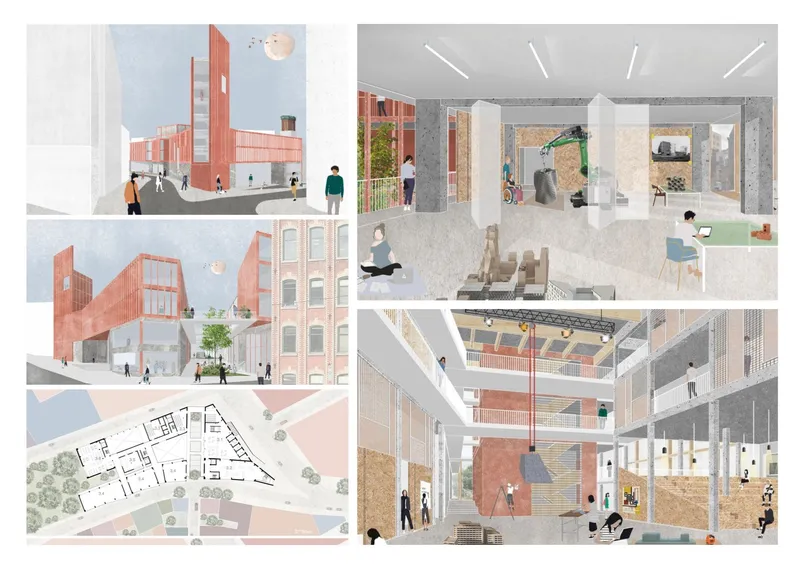
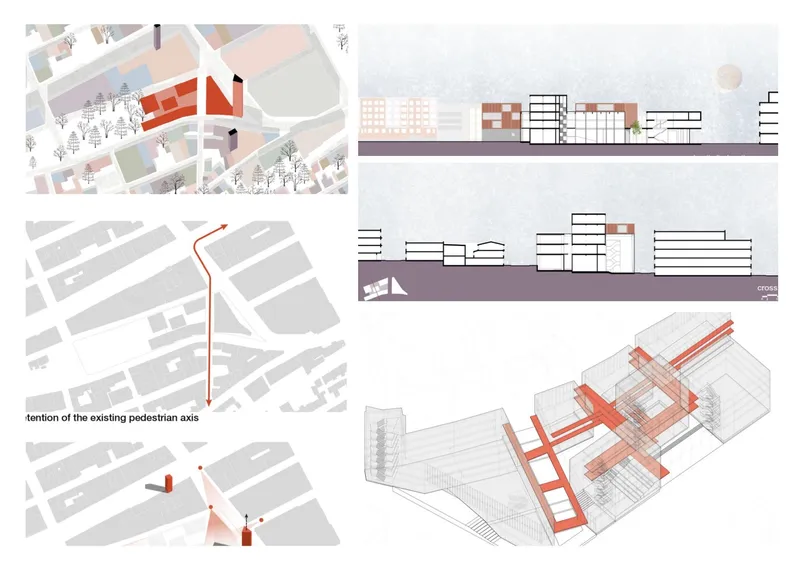
Description: The school of experimentation valorizes transdisciplinary learning because enlightenment comes when ideas collide. It sets its roots deeply into the urbanized fabric of the city so that it becomes a creative catalyst for the contemporary city to stimulate innovation and creative thinking. The most important principle of the project is to place experimentation at the heart of learning. Today, experimentation and the creative process have disappeared from contemporary cities and from daily life because of the deindustrialization process and delocalization. Through this school, we aspire to reintegrate making and doing in the process of education and in the city. This new approach of pedagogy linked with urbanity will create effervescence through the sharing of disciplines and know-how.
----------------------
People’s Choice: KRISIS
By: Katarina Bankovic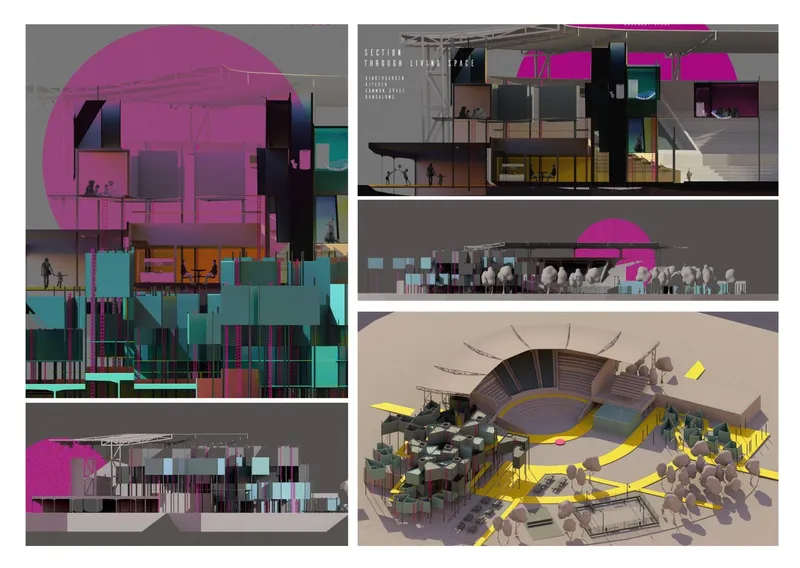
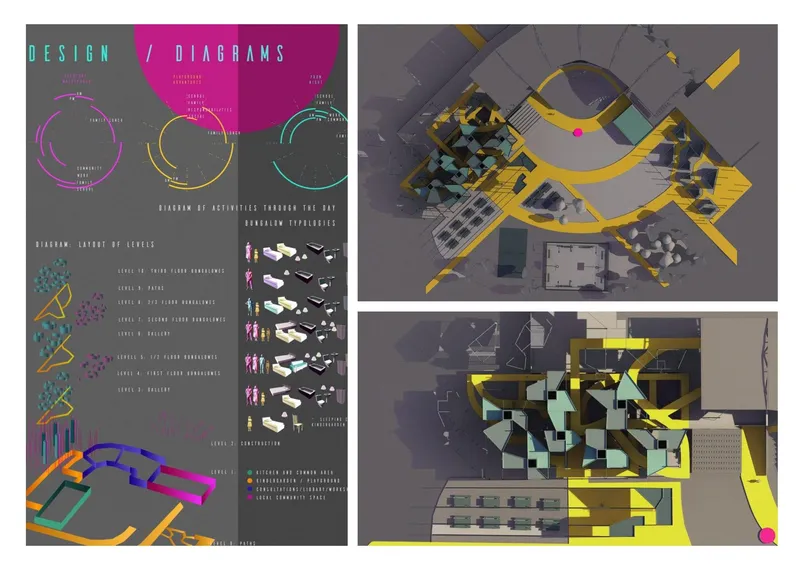
Description: Krisis is a survival workshop. It is a humane quarantine. It is imagined as a transitional place for people who find themselves in crisis. One day at a workshop is imagined as a simulation of an everyday life that is now, after a change, becoming a reality for those people. Location is in Athens, at an abandoned airport, currently used as a refugee camp. The idea for the Krisis first started as an addition to the Bauhaus idea of joining arts and science. What seemed missing were humanities and social sciences. Later on, ideas evolved so that the primary focus shifted completely to questions and problems of people, society, general health and current mentality. What I wanted to create was a shelter for people in need.
-----------------
Institutional Excellence Award: Step by step
By: Nikolina Rasovic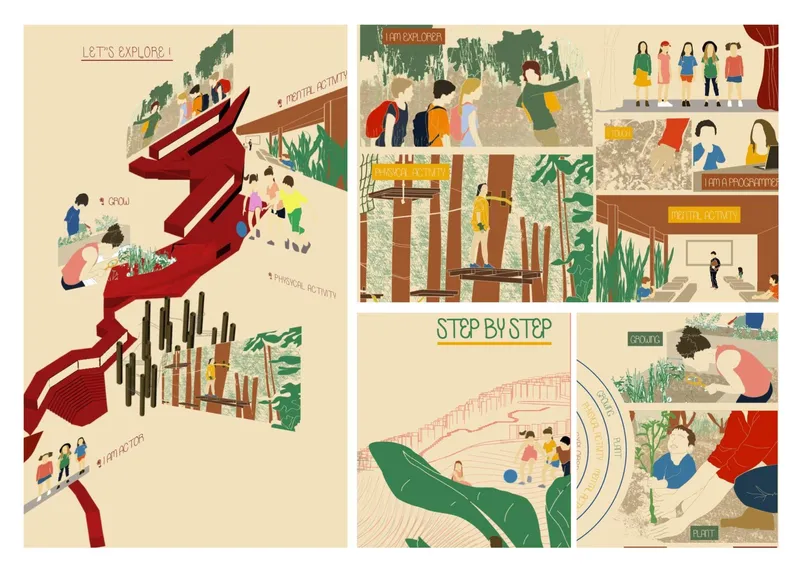
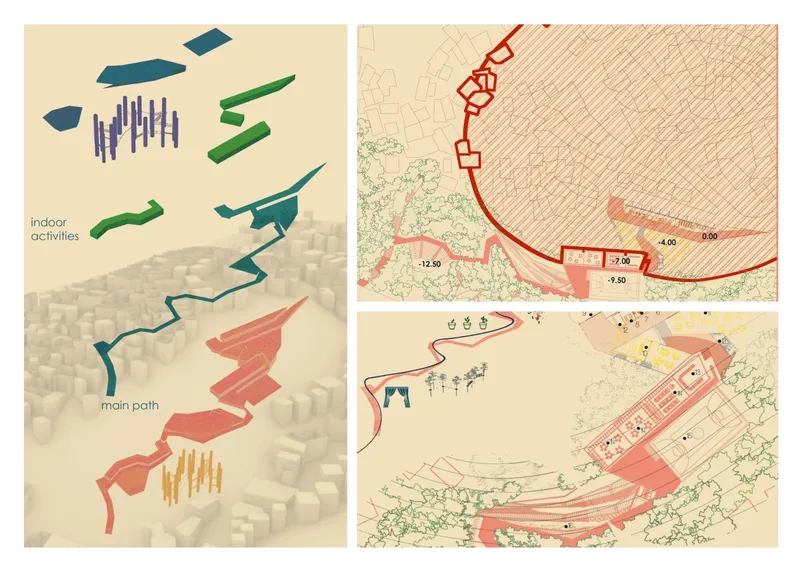
Description: Children are past, present and future. Embedded in an environment they do not have the opportunity to meet the world in proper way.The new paradigm of this mission seeks to create a world in which all children survive, have the possibility to learn and are protected from abuse, neglect and exploitation, and step by step to change the world. The concept of this institution design is dynamic movement through space which guides a child to touch, experience space around him. With starting points in Rio de Janeiro where children are growing up in poverty, facing tough challenges from young ages as hunger, malnutrition and limited access to education and medical services this institution tends to incorporate all that together creating space that flows through favela.
------------------
Institutional Excellence Award: KANDINSKY PROGRAM
By: Emil Pinaroc, Gepo de Mesa, Gabriel Brioso & Remil Jusayan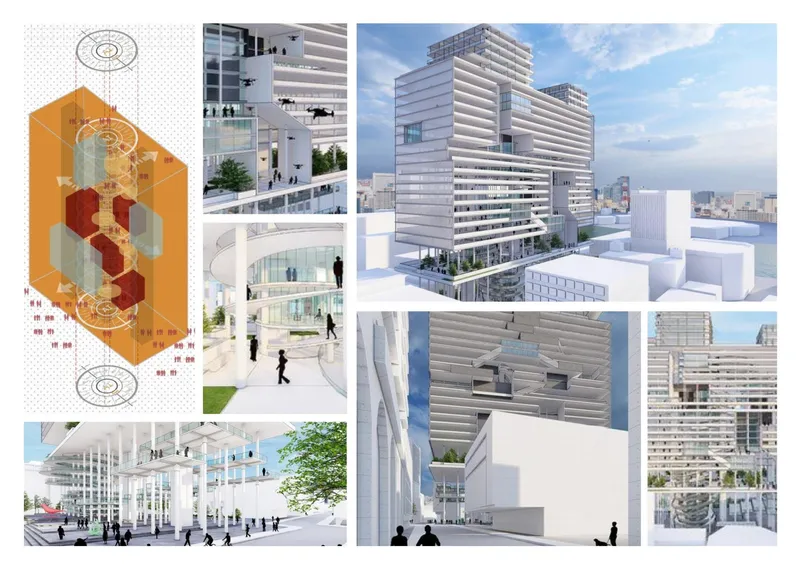

Description: The new Bauhaus envisions the future of design education in the lens of Data+Craft. Architecture is endangered in today's age. We live in the 4th Industrial Revolution where generative plans and architecture are the norms. This proposal restructures the Bauhaus principles in a Kandinsky-Esque social container aiming to rethink the use of data in design.
-----------------------
Editor's Choice: VILLEGIATURA
By: Andjela Krca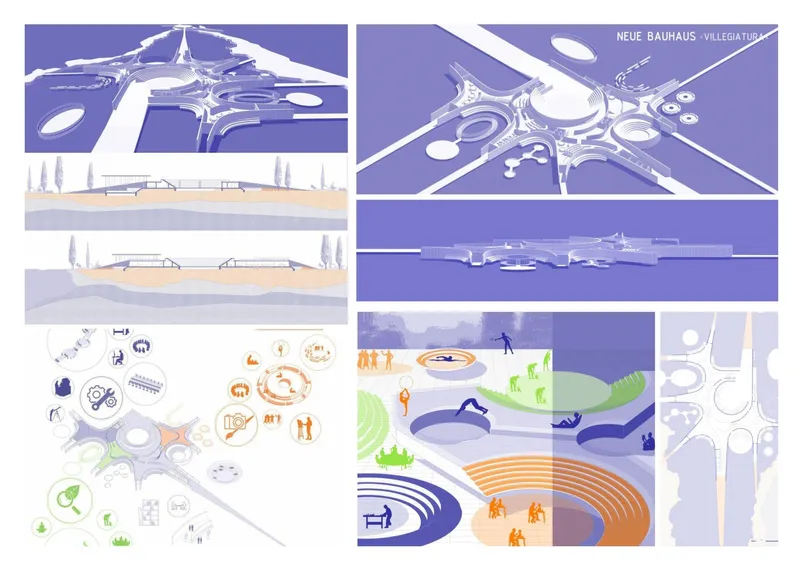
Description: The idea of a new BAUHAUS is the idea of a school between schools i.e. a place for recognition of potentials, discovering abilities, developing personalities, finding oneself and one's interests between general high school knowledge and a more focused college education. The concept of the school starts with the setting up of three pavilions for the natural, social and technical sciences. Each pavilion contains spaces for workshops and various accompanying facilities inside or outside the pavilion. By taking away from the interior space, it gives importance to the outside space. In these places, new content is available intended for various outdoor activities in the field of education or leisure and recreation.
-------------------------
Discover the full results here: https://uni.xyz/competitions/bauhaus-neue/entries
Discover the design brief here: https://uni.xyz/competitions/bauhaus-neue/info/about
Follow us on social media: Facebook | Instagram | LinkedIn | Twitter | Youtube
Discover other design competitions to participate here: https://uni.xyz/competitions



Popular Articles
Popular articles from the community


Co-life: Sustainable Architecture for Age-Friendly Community Living
Co-life reimagines sustainable architecture for seniors through courtyards, rammed earth, shared gardens, and spaces designed for belonging.

The Musturak Paradise: Senior Living Architecture for a Connected Future in Temara, Morocco
The Musturak Paradise reimagines senior living architecture in Temara via private homes, social spaces, culture, community, and shared care.

The Ocean Hive: Sustainable Architecture for a Self-Sufficient Civilization at Sea
The Ocean Hive imagines sustainable architecture at sea, where modular habitats, algae, wave power and ocean waste sustain a growing colony.

Riyadh For All: Intergenerational Urban Design for Active Aging in Rabat
Riyadh For All reimagines urban design in Rabat with intergenerational co-living, adaptive courtyards, and Moroccan cultural exchange today.

Similar Reads
You might also enjoy these articles
The Musturak Paradise: Senior Living Architecture for a Connected Future in Temara, Morocco
The Musturak Paradise reimagines senior living architecture in Temara via private homes, social spaces, culture, community, and shared care.

The Leaf Center: Cultural Center Architecture for Social Integration in Amsterdam
Cultural center architecture becomes a bridge at The Leaf Center, connecting international students with Amsterdam through art and exchange.

Conexión: Biophilic Design Reimagines High-Rise Living in Hong Kong
Conexión reimagines high-rise living in Hong Kong through biophilic design, green facades, shared spaces, daylight, water and nature within.

Wander to Wonder: Modular Playground Design for Children in Kutupalong Refugee Camp
Wander to Wonder uses modular playground design to create flexible, imaginative play spaces for children in Kutupalong refugee camp.
Comments (0)
Please login or sign up to add comments
No comments yet. Be the first to comment!