
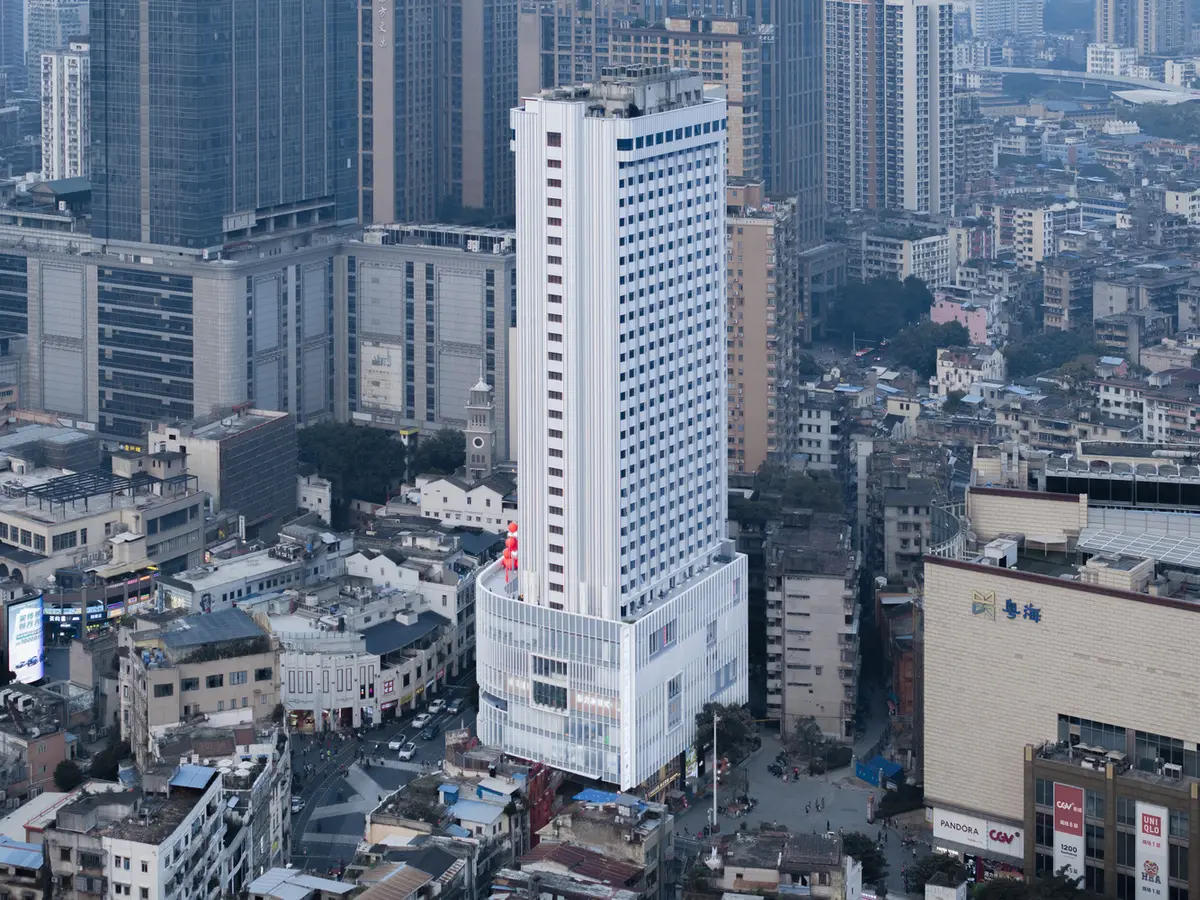
Beijing Road Yue Chao Lou Shopping Center by Atelier cnS: CICADA ART
Vertical retail renovation reinterpreting Lingnan arcade culture into multi-level streets, blending commerce, art, youth culture within Guangzhou’s historic Beijing Road.


Located on Beijing Road, one of Guangzhou’s oldest and most iconic commercial streets, the Beijing Road Yue Chao Lou Shopping Center represents a contemporary transformation rooted deeply in Lingnan cultural heritage. Once known as the Chao Building, the structure carried the fashionable memories of Guangzhou’s post-80s generation. However, with the decline of traditional grid-style retail and changing consumption patterns, the building gradually lost its vitality. In 2024,Atelier cnS: CICADA ART completed a comprehensive renovation that repositions the project as a new-generation urban commercial landmark, redefining retail through spatial experience, cultural continuity, and youth-oriented programming.
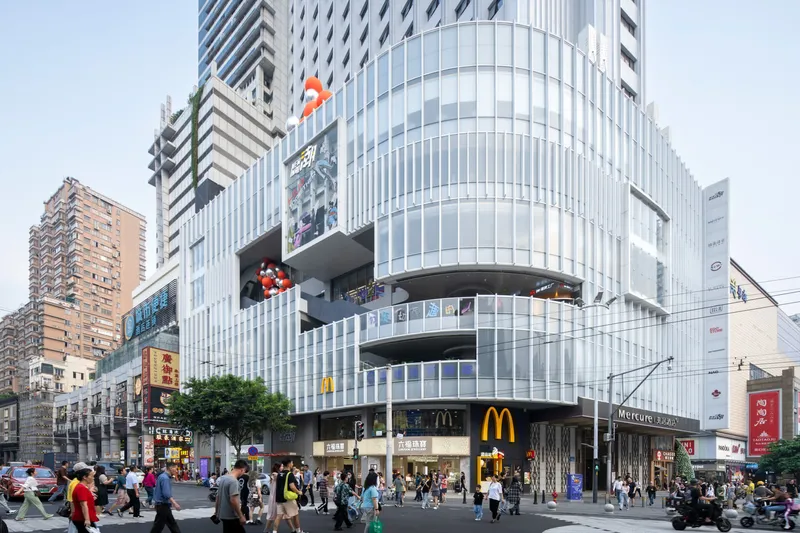
The renewed Yue·Chao Building NEW IN stands within a historically layered urban fabric dominated by traditional Lingnan arcade architecture. Spanning a total area of 11,000 square meters, the building consists of a 30-story tower with a six-story podium integrating retail spaces and hotel functions. Rather than erasing its past, the renovation preserves key architectural features and local cultural symbols while reconstructing circulation, spatial organization, and public interfaces to respond to contemporary urban life.
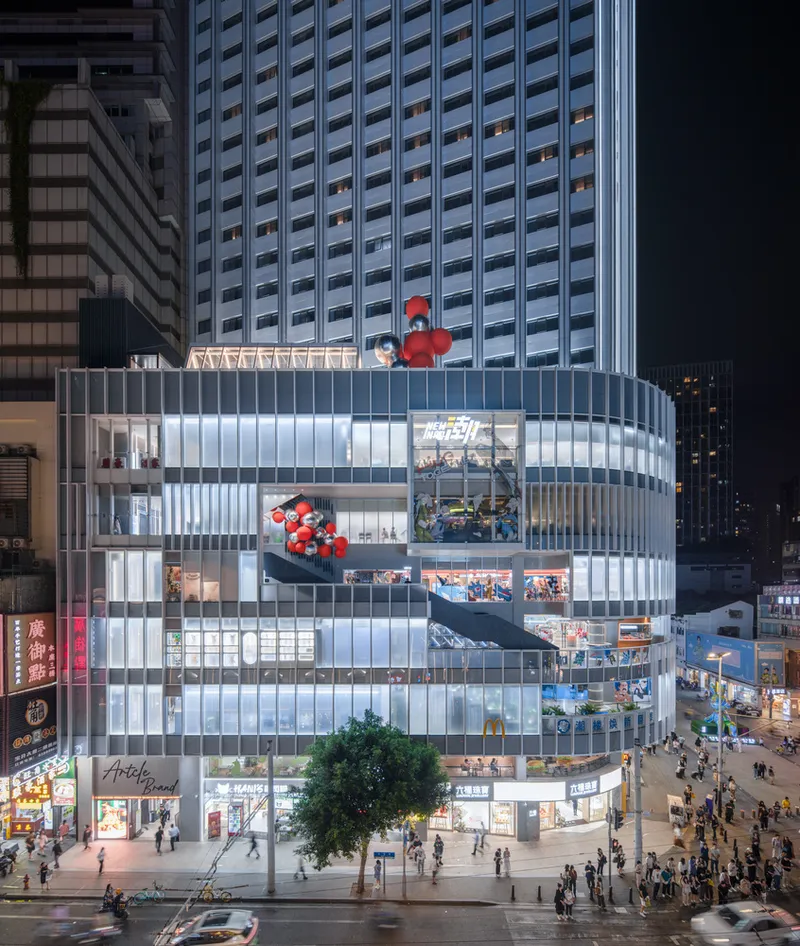
A central design strategy transforms the traditional horizontal street into a vertical commercial experience. Drawing inspiration from the elevated arcades that line Beijing Road, the architects reinterpreted this Lingnan spatial typology by extending arcades vertically across multiple levels. Each floor incorporates an arcade-like walkway, forming a multi-level commercial street that connects retail, exhibition, and social spaces into a continuous urban promenade. This concept establishes a “multi-ground-level” commercial environment, blurring the boundaries between indoor and outdoor space while enhancing pedestrian flow and visual connectivity.
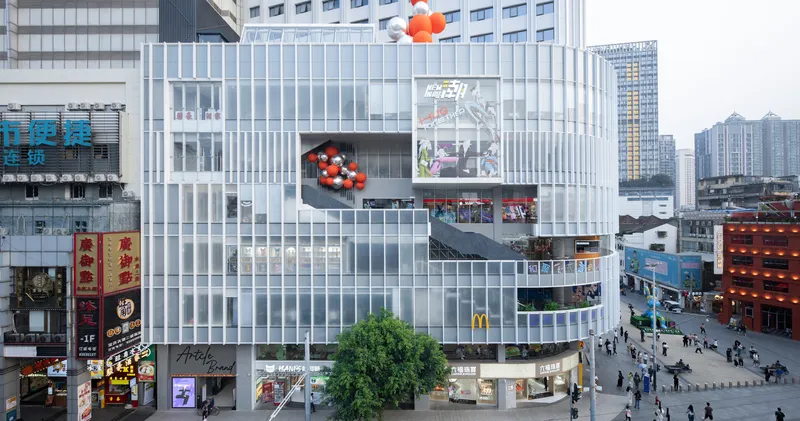
The project introduces a new commercial model that integrates commerce, art, and scenography. Trend-driven retail, experiential installations, art exhibitions, and social events are interwoven throughout the podium, creating a vibrant urban destination that supports emerging lifestyles and youth culture. Rather than functioning as a conventional shopping mall, the building operates as a cultural platform: one that encourages exploration, interaction, and community engagement within a dense city center.
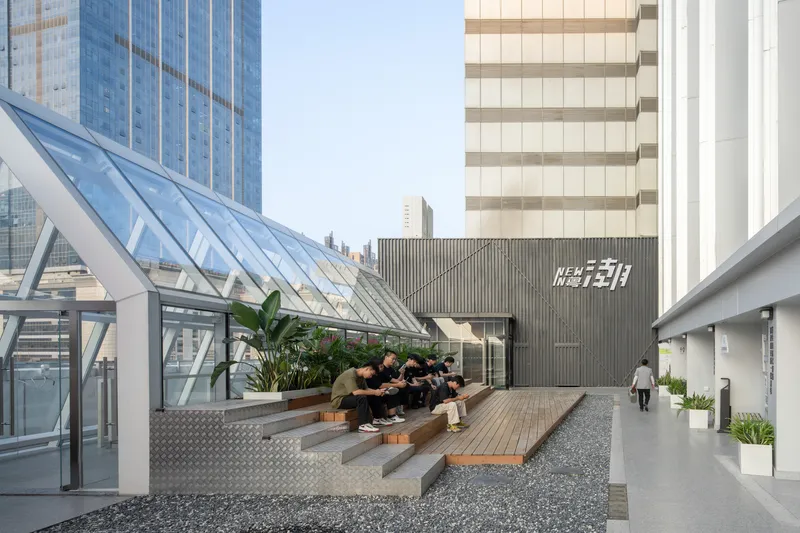
The façade plays a critical role in expressing this transformation. The vertical arcade stair system extends Lingnan arcade culture upward, forming a dynamic and recognizable architectural identity. Named the “182 Arcade Stairway” after the building’s street address, the stairway acts as both circulation and event infrastructure. It can be reconfigured to host exhibitions, performances, social gatherings, or temporary installations, functioning alternately as an urban gallery, a shared living room, or a vertical garden. This adaptability reinforces the building’s role as a flexible cultural venue rather than a fixed commercial object.
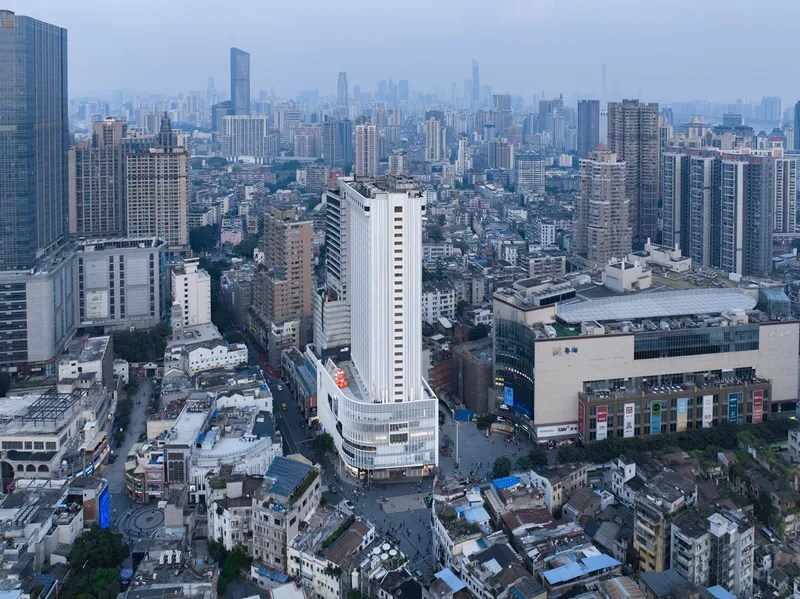
Internally, the design embraces the concept of an ANTI-MALL, rejecting rigid retail grids in favor of curated, scenario-based spaces. The interior layout prioritizes experiential quality over commercial segmentation, reducing visual and physical boundaries between individual units. Retail, food, entertainment, and knowledge-based programs are carefully curated to form a cohesive leisure ecosystem centered on fashion, dining, culture, and creativity. This approach enhances spatial continuity and encourages longer stays, social interaction, and emotional engagement.
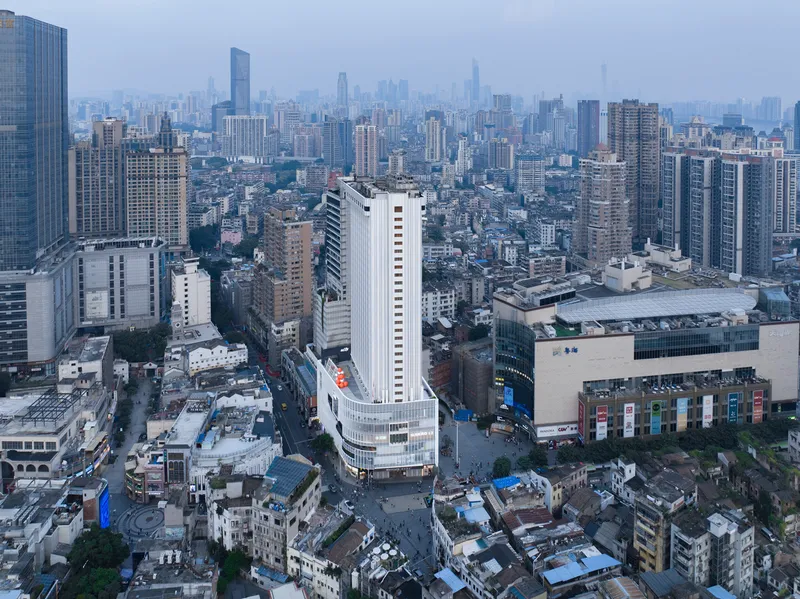
By merging architectural renewal with cultural storytelling, the Beijing Road Yue Chao Lou Shopping Center revitalizes a declining commercial structure into a contemporary urban catalyst. The project not only continues Guangzhou’s trendy cultural lineage but also redefines how commercial architecture can serve as a social condenser, cultural stage, and urban living room within a historic city context.
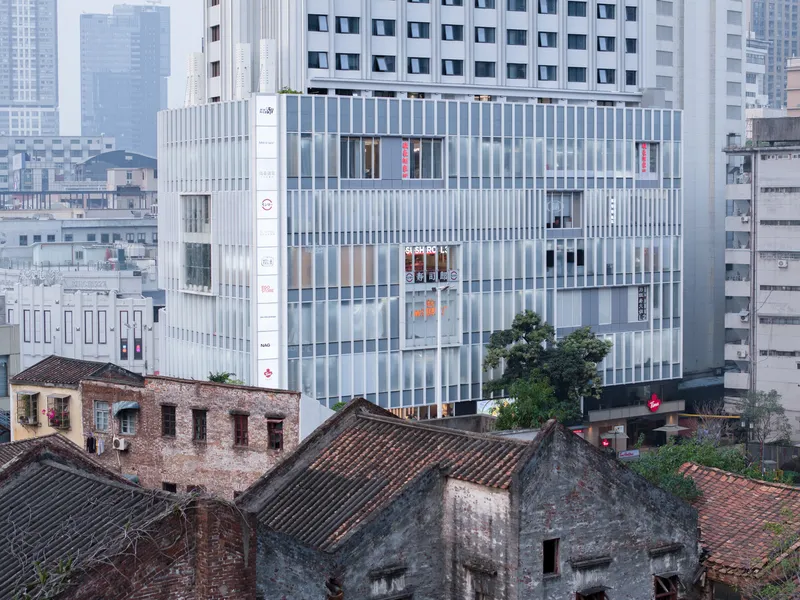
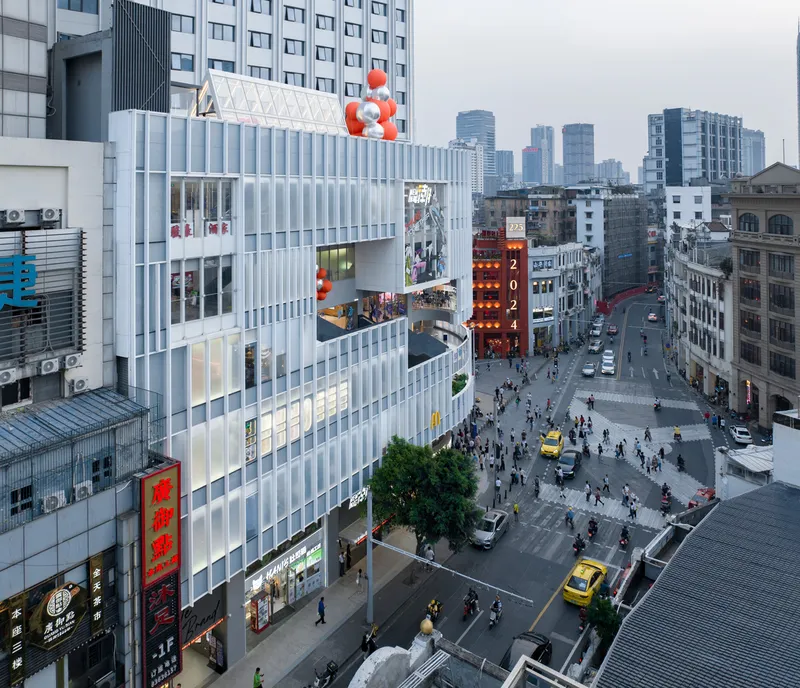
All photographs are works of Siming Wu, Jierui Ma


Popular Articles
Popular articles from the community


Extended Shell: Retrofitting Kolkata's Balconies as Living Urban Thresholds
A modular retrofit system recovers the social and environmental intelligence of Kolkata's historic verandas for contemporary Park Street residents.

Tsunami Convergenics: Turning Catastrophic Ocean Forces into Underwater Housing Infrastructure
A speculative underwater settlement off the coast of Onagawa, Japan, treats tsunamis and typhoons as energy sources rather than threats.

The Amber Palace Opera: A Geological Fiction Surfaces on Tallinn's Baltic Waterfront
Pierre Brillard reimagines a Baltic legend as a public landscape, opera house, and waterfront promenade rooted in Tallinn's coastal identity.

Opera by the Sea Estonia: Three Shells Dissolving Architecture into Tallinn's Coastline
A winning opera house proposal replaces monumental form with interconnected shells that blur the boundary between building, park and Baltic Sea.

Similar Reads
You might also enjoy these articles


Hodi-Mandai Geram
Project Function: Preservation and revitalization of the Intangible heritage and socio-spatial identity of the Hodi by Housing, Cultural Memory Center, Sacred Grove, landscape, local tourism economy


Olio Towers: A Mid-Rise for Performers That Fuses Housing, Rehearsal, and Stage
Located blocks from Houston's Theater District, this modular tower stacks living units around a central performance atrium.

Oasis: Modular Green Housing Carved into Dhaka's Urban Fabric
A shortlisted Plugin Housing entry reclaims unauthorized settlements in Dhaka with stepped concrete volumes, green roofs, and ventilation-driven design.

Black Hole: A Floating Megastructure for the Post-Physical Era
Emiliano Mazzarotto envisions a spherical, self-scaling arena where e-sports, digital hotels, and holographic stadiums replace traditional public space.

Explore Shopping Center Competitions
Discover active competitions in this discipline

Challenge to reimagine the Iron Throne

Photograph architecture without architects

Illustrate the lost glory of Angkor Wat - Render Challenge

Bring back Drive In's
Comments (0)
Please login or sign up to add comments
No comments yet. Be the first to comment!