
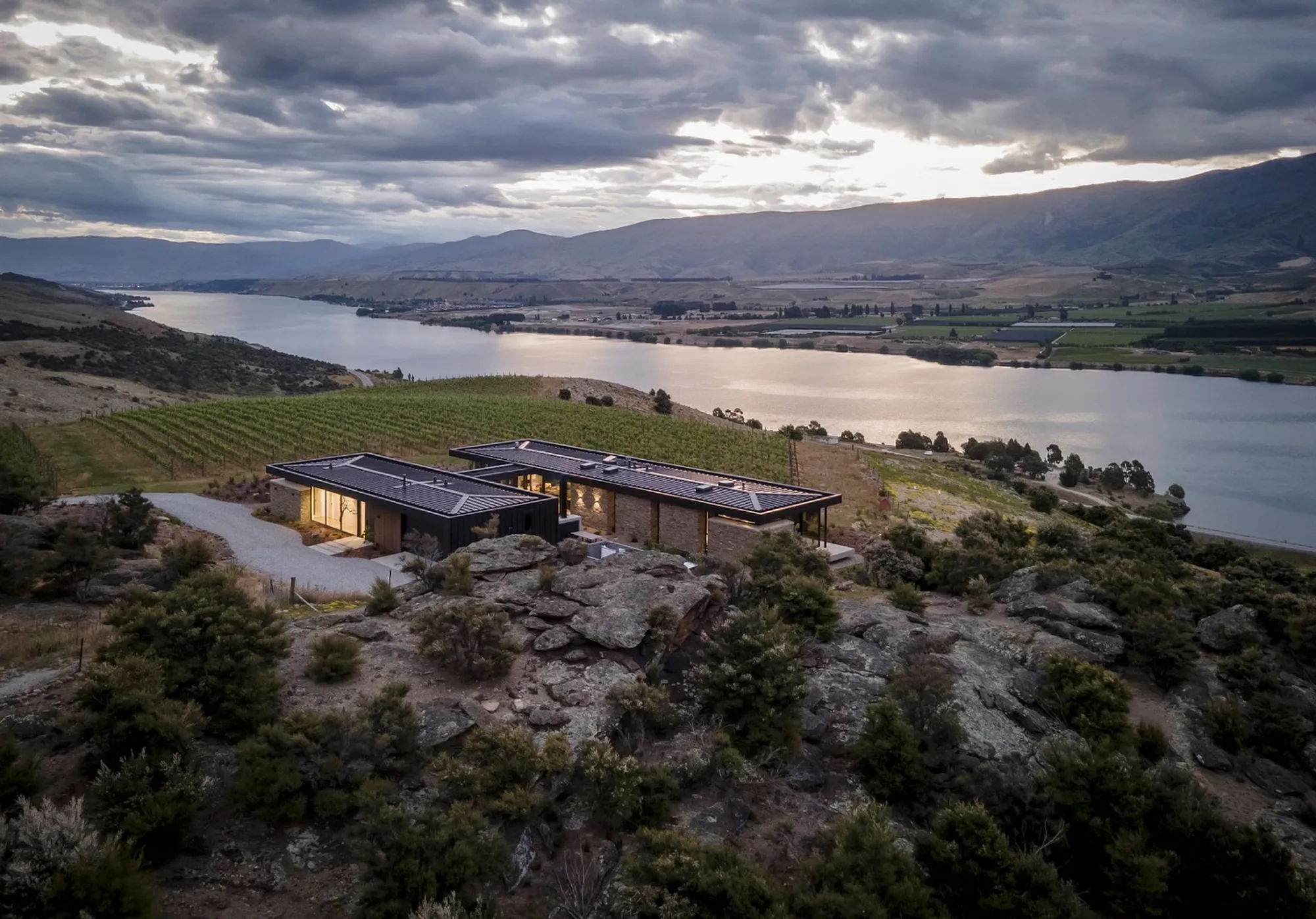
Bendigo Terrace House by Condon Scott Architects: A Floating Pavilion in the Otago Foothills
A minimalist pavilion-style home in Otago, New Zealand, embracing panoramic views, passive design, local materials, and seamless indoor-outdoor living.


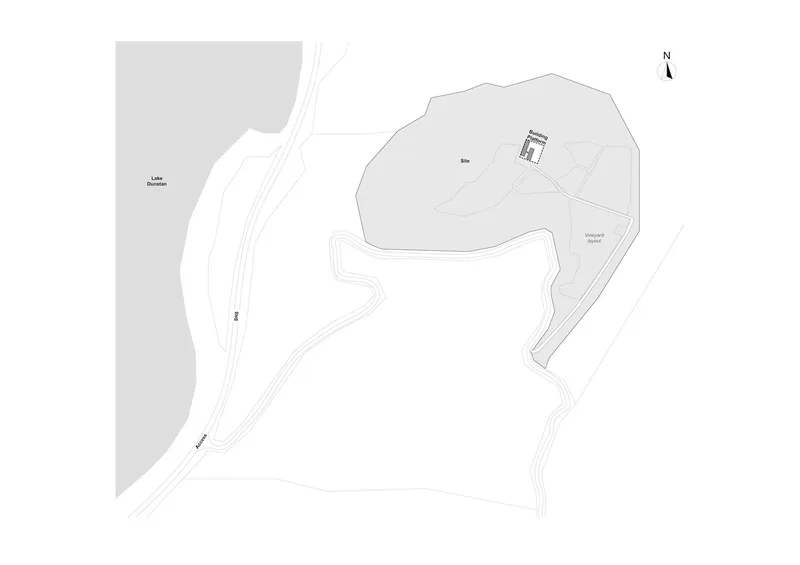
Nestled within a vineyard landscape at the base of the Dunstan Mountains in Central Otago, the Bendigo Terrace House by Condon Scott Architects is a refined example of minimal residential architecture that maximizes its dramatic natural surroundings. Designed as a permanent residence, the home responds to its remote location with a pavilion-like form that captures uninterrupted panoramic views, all-day sunlight, and the serenity of the Otago region.
Minimalist Pavilion Design with Maximum Impact
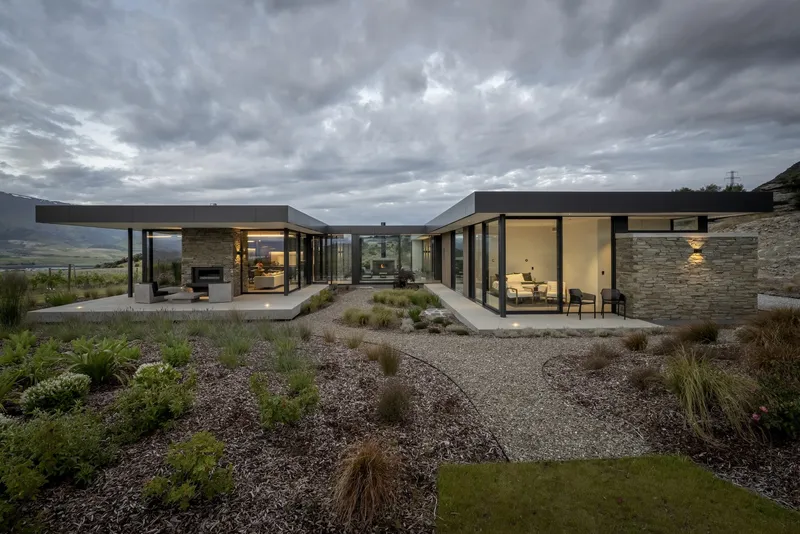
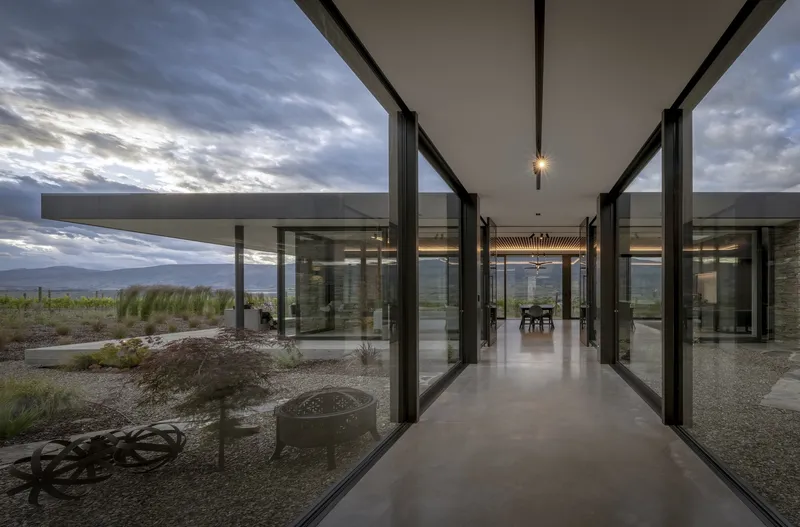
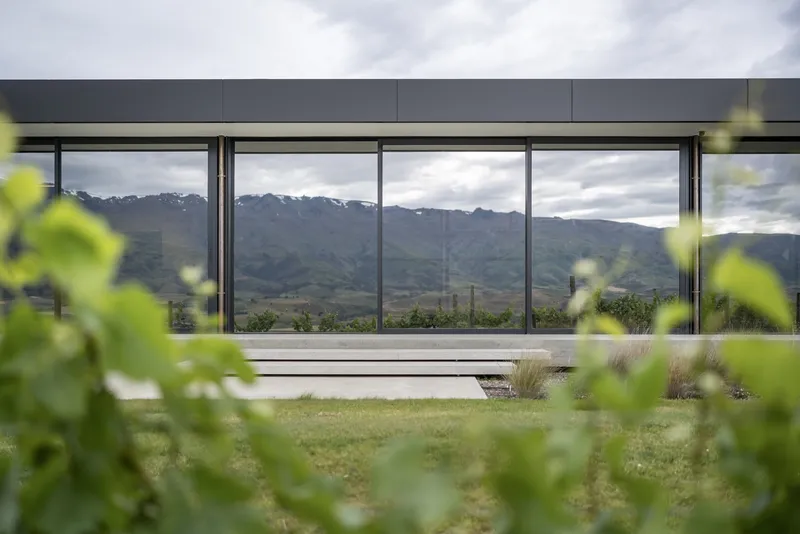
The architectural concept centers on clarity and simplicity—an expression of modern minimalism deeply connected to the land. The residence is defined by two horizontal planes: a roof and a cantilevered concrete floor slab. Between them, fully glazed walls dissolve the boundary between indoors and outdoors, allowing the home to visually "float" above its schist-strewn site. This floating effect is enhanced by a negative space perimeter around the slab, lending lightness to the structure’s solid base.
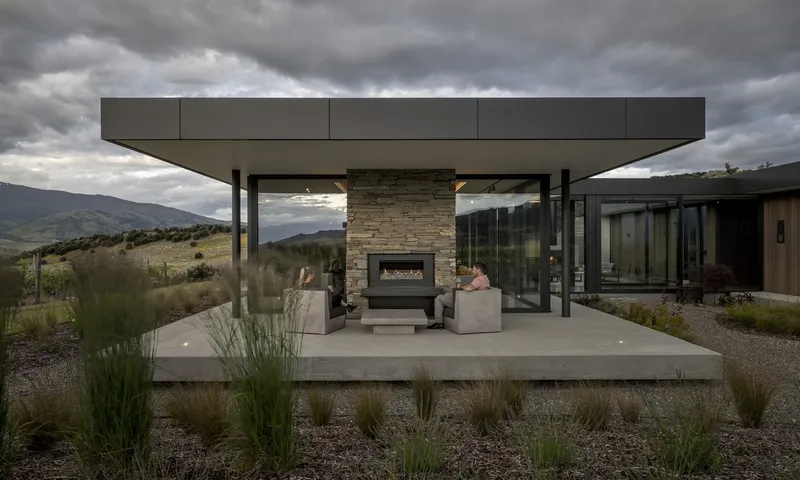
Framing the Landscape with Thoughtful Architecture
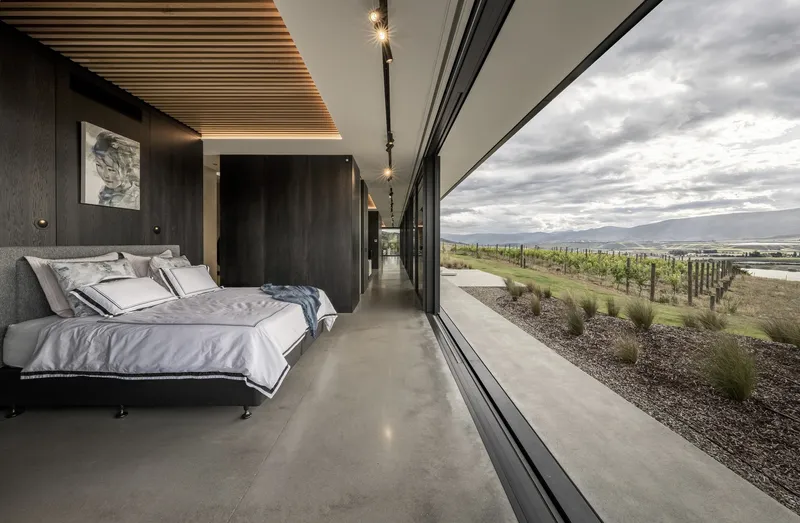
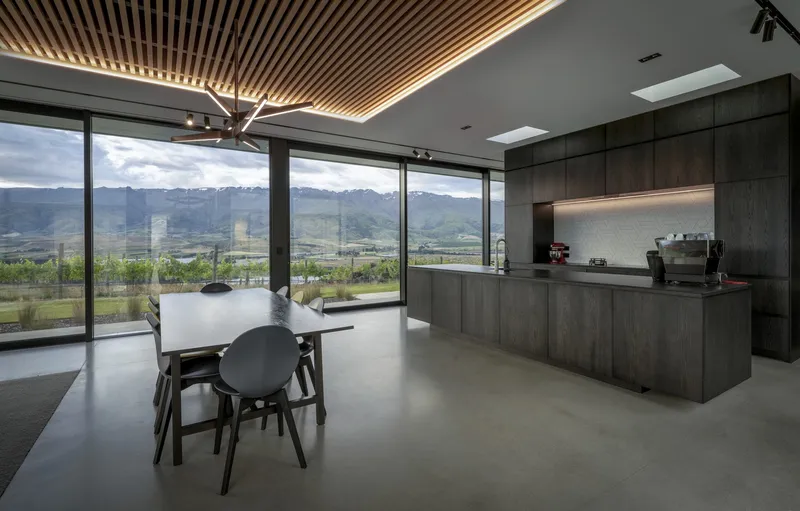
Set at a height of three meters, the expansive roof line ensures the mountain vistas remain unobstructed, providing a cinematic view from every living area. Internally, carefully positioned service pods are set back from the glazing to create generous circulation paths that maintain uninterrupted sightlines across the valley. Retractable windows and doors disappear into the walls, creating seamless transitions between the home’s interior spaces and the surrounding vineyards.
An H-Shaped Layout for Wind Protection and Outdoor Living
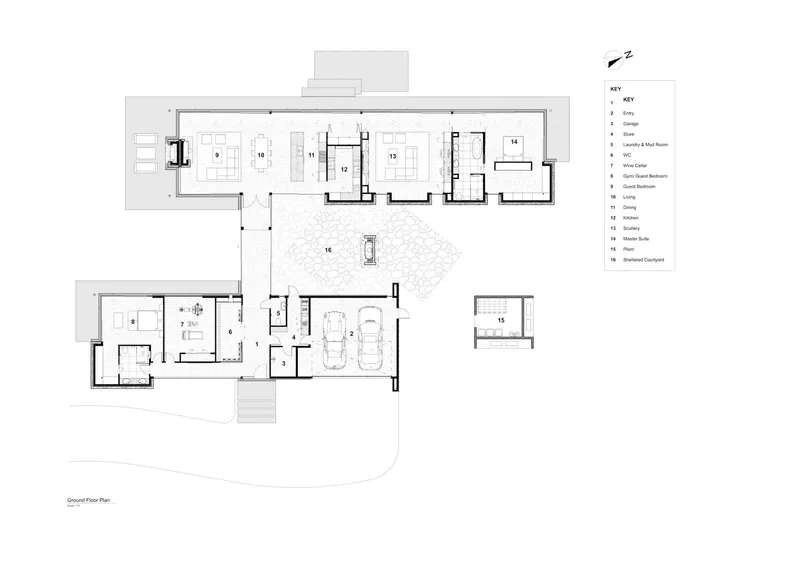
Given the site’s exposure to high winds, the architects employed an H-shaped floor plan to carve out a series of sheltered courtyards and terraces. This strategic layout ensures year-round use of outdoor spaces, providing comfort and privacy while enhancing thermal performance through passive solar design strategies.
Sustainable Design with Local Materials
Environmental performance was a key consideration throughout the project. The cantilevered roof extends a full meter beyond the floor slab, minimizing solar gain in summer while welcoming winter light to warm the concrete floors. These polished slabs act as thermal mass, naturally regulating indoor temperatures in response to seasonal fluctuations.
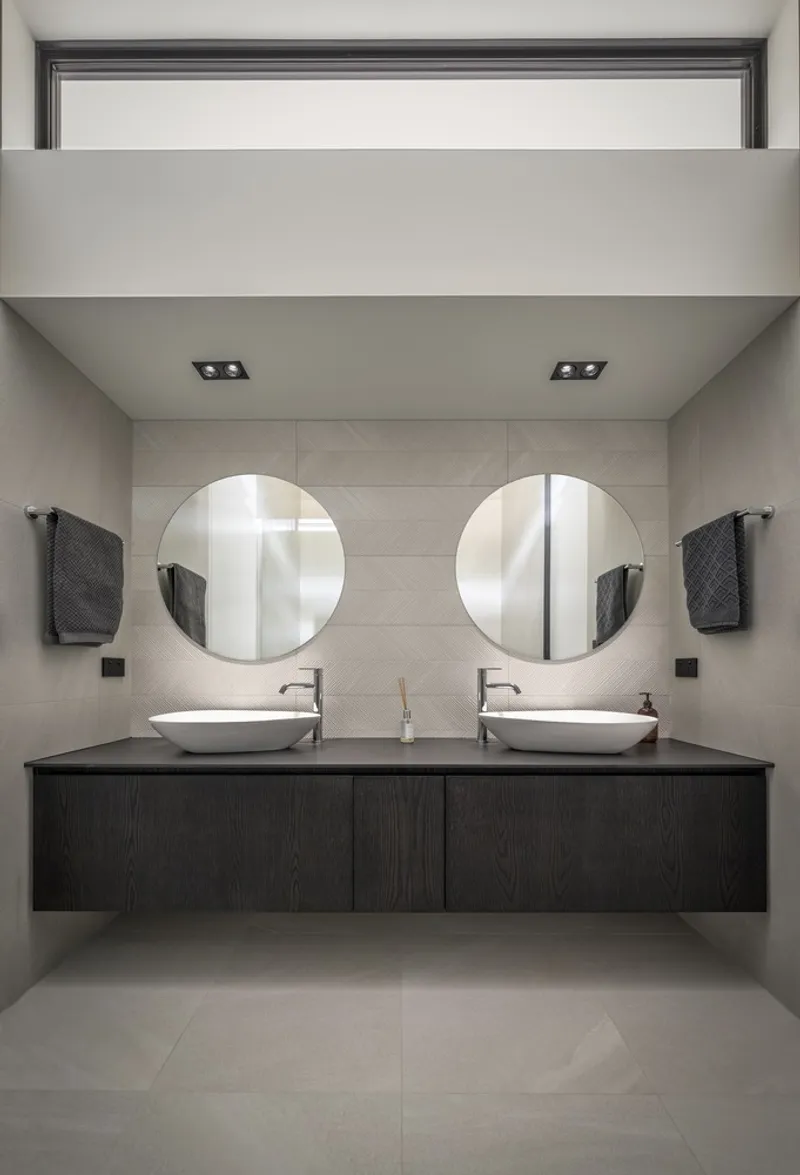
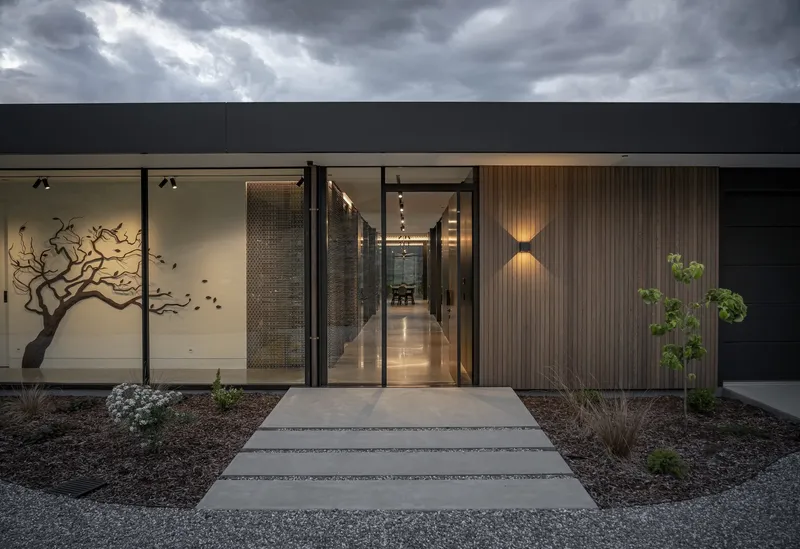
Externally, the home is clad in vertical light-stained cedar and locally sourced schist stone, connecting the architecture to the geology and history of the Central Otago region. The stone, sourced from a nearby gully, roots the home firmly in place and evokes the area’s pioneering heritage. Inside, a minimal palette of dark-stained timber, natural veneers, and timber batten ceilings enhances acoustic quality while maintaining a sense of warmth and restraint.
Phased Construction and Client Collaboration
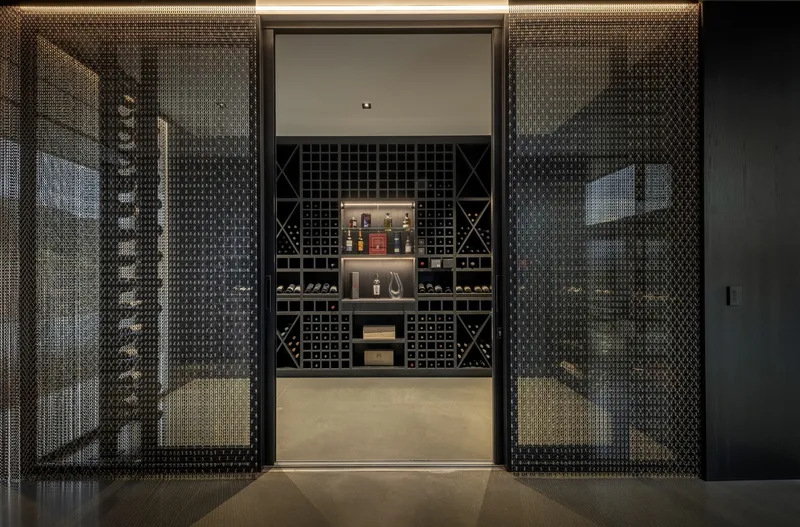
To expedite livability, the construction of the home was carried out in two stages. The initial pavilion—comprising the main living areas and master suite—was prioritized, with the second wing, containing guest bedrooms, a wine cellar, and utility spaces, completed a year later. Despite being based overseas, the clients remained actively involved in the project, navigating the challenges of pandemic-era construction, including lockdowns and supply chain disruptions. Their close collaboration with the architects and trust in the construction team were instrumental to the project’s success.
Bendigo Terrace House stands as a harmonious blend of contemporary design, sustainable architecture, and regional materiality—offering a model for modern living in remote and exposed natural landscapes. It exemplifies how architecture can both elevate and respect its environment through intelligent planning, craftsmanship, and contextual awareness.
All Photographs are works of Simon Larkin




Popular Articles
Popular articles from the community


Lunar Spiral: Space Architecture Shaped by the Mathematics of the Universe
Lunar Spiral reimagines space architecture through Fibonacci geometry, lunar regolith, levitating habitats, and self-sustaining Moon living.

Hill & Cross Opera: Sculptural Opera House Architecture Shaped by Tallinn’s Landscape and Identity
Hill & Cross Opera reimagines opera house architecture in Tallinn through its sculptural hill, civic plaza, glass wave and a luminous cross.

The Musturak Paradise: Senior Living Architecture for a Connected Future in Temara, Morocco
The Musturak Paradise reimagines senior living architecture in Temara via private homes, social spaces, culture, community, and shared care.

Conexión: Biophilic Design Reimagines High-Rise Living in Hong Kong
Conexión reimagines high-rise living in Hong Kong through biophilic design, green facades, shared spaces, daylight, water and nature within.


Similar Reads
You might also enjoy these articles


Hodi-Mandai Geram
Project Function: Preservation and revitalization of the Intangible heritage and socio-spatial identity of the Hodi by Housing, Cultural Memory Center, Sacred Grove, landscape, local tourism economy


Olio Towers: A Mid-Rise for Performers That Fuses Housing, Rehearsal, and Stage
Located blocks from Houston's Theater District, this modular tower stacks living units around a central performance atrium.

Oasis: Modular Green Housing Carved into Dhaka's Urban Fabric
A shortlisted Plugin Housing entry reclaims unauthorized settlements in Dhaka with stepped concrete volumes, green roofs, and ventilation-driven design.

Black Hole: A Floating Megastructure for the Post-Physical Era
Emiliano Mazzarotto envisions a spherical, self-scaling arena where e-sports, digital hotels, and holographic stadiums replace traditional public space.


Explore Housing Competitions
Discover active competitions in this discipline



Challenge to reimagine the Iron Throne


Photograph architecture without architects


Illustrate the lost glory of Angkor Wat - Render Challenge


Design challenge to reuse E-waste
Comments (0)
Please login or sign up to add comments
No comments yet. Be the first to comment!