
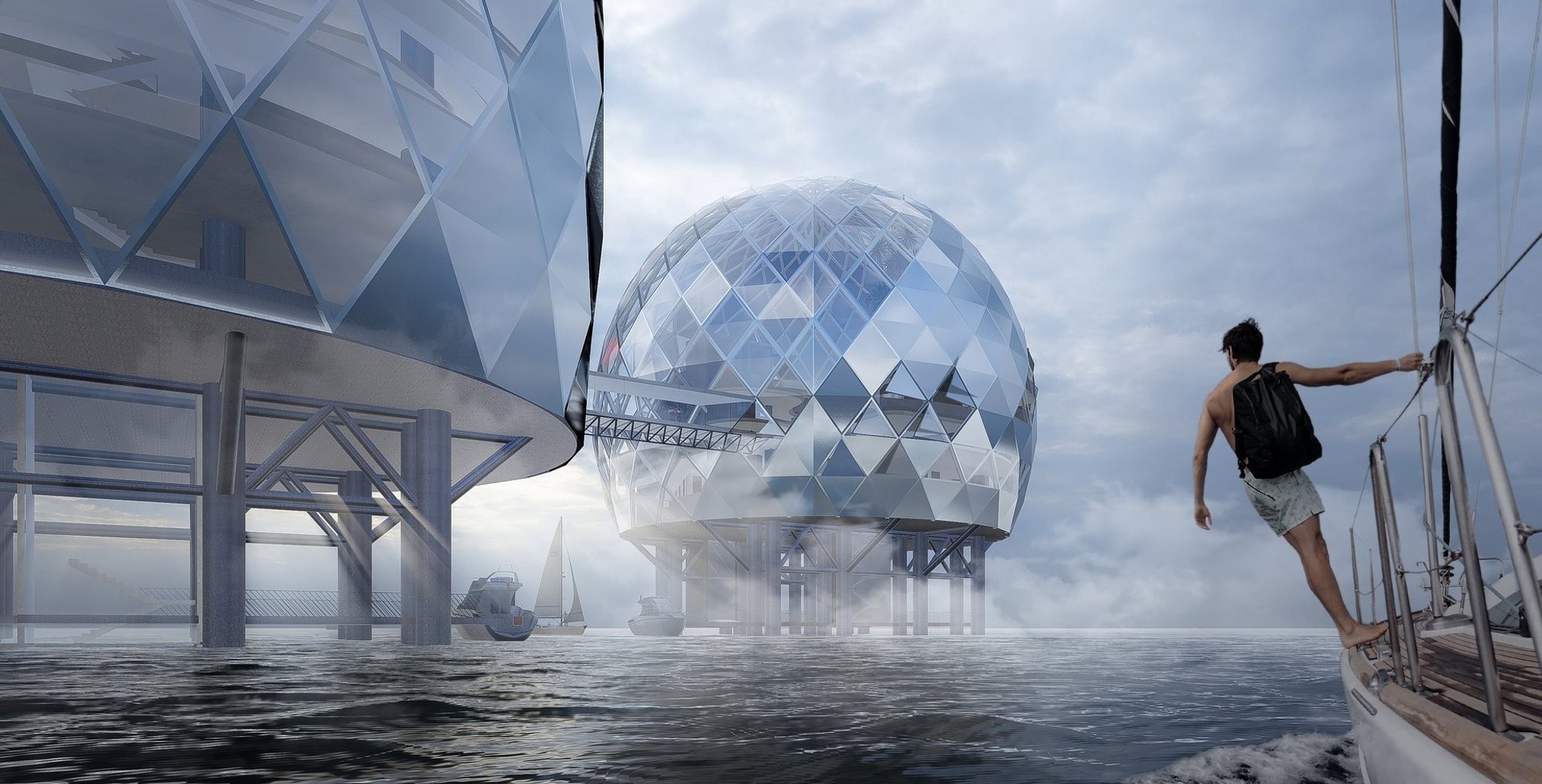
Between Sky and Water | Futuristic Ocean Architecture Reimagining Offshore Oil Rigs
A futuristic ocean architecture concept transforming abandoned oil rigs into immersive marine research and cultural destinations.

As climate discussions reshape the future of architecture, adaptive reuse projects are becoming increasingly significant in redefining industrial infrastructure. Between Sky and Water explores this idea through a visionary proposal that transforms abandoned offshore oil rigs into a futuristic ocean architecture destination dedicated to marine research, tourism, and cultural engagement.
Designed by Agur-Andri Tarmo, the project received an Honorable Mention in the Proximity Island 2019 competition. The proposal imagines a new identity for industrial relics floating in the open sea, converting them into immersive spaces where architecture, science, and nature coexist.
Rather than treating the oil rig as obsolete infrastructure, the project reinterprets it as an architectural landmark suspended between the sky and the ocean. The result is a sculptural marine observatory and science center that creates a dialogue between humanity and the vastness of the sea.
Reimagining Offshore Infrastructure Through Futuristic Ocean Architecture
The project addresses one of the most pressing architectural questions of the contemporary era: how can industrial structures be repurposed sustainably instead of demolished?
In Between Sky and Water, the oil rig becomes more than an engineering artifact. It evolves into a destination for exploration, learning, recreation, and ecological awareness. Positioned in the middle of the ocean, the structure offers visitors a rare opportunity to disconnect from urban routines and reconnect with marine environments.
The architecture intentionally embraces isolation. Unlike mainland buildings connected through roads and dense urban networks, this structure exists independently within the open sea. The absence of conventional infrastructure enhances its symbolic role as a remote outpost of human curiosity and environmental observation.
This approach aligns strongly with emerging trends in sustainable adaptive reuse architecture, where old industrial systems are transformed into experiential public spaces.
Architecture Inspired by the Mystical Nature of the Sea
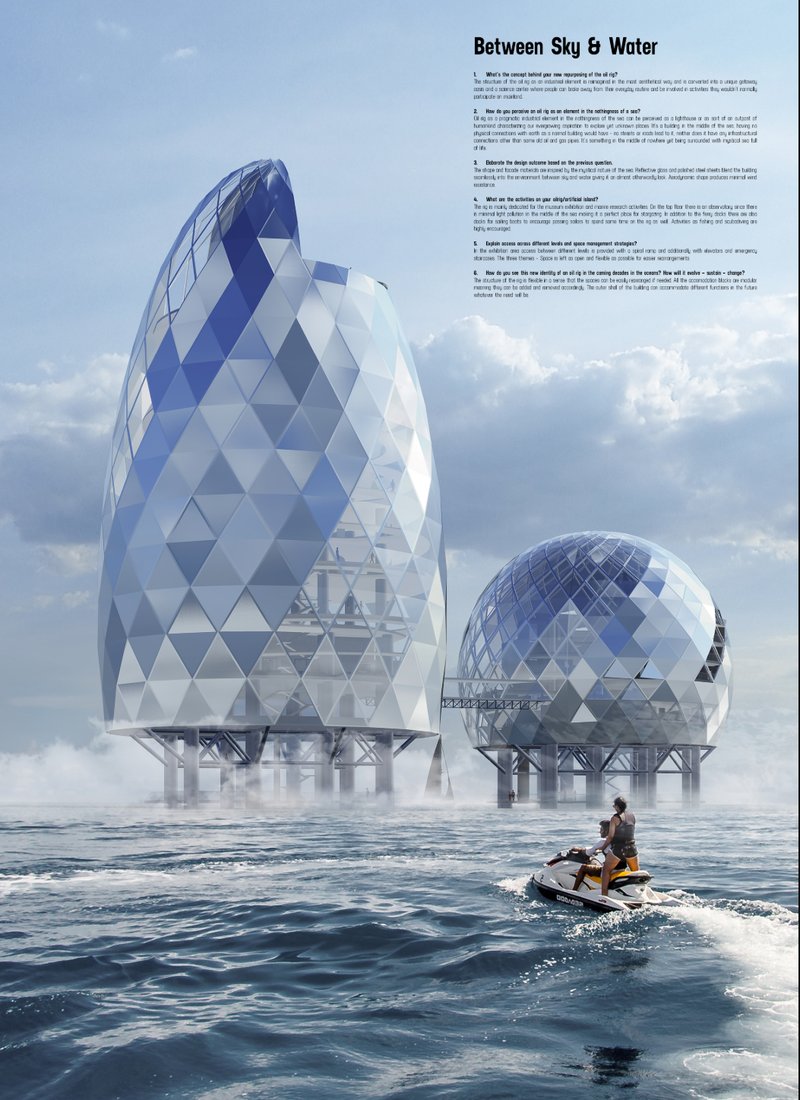
The visual identity of the project is shaped by the constantly changing atmosphere of the ocean. The building forms resemble polished marine organisms emerging from water, creating a futuristic silhouette visible across the horizon.
Reflective glass panels and polished metallic surfaces allow the architecture to blend into the surrounding sky and sea. Depending on weather conditions and daylight, the structures shift in appearance, creating a constantly evolving visual experience.
The faceted façade geometry enhances both aesthetics and performance. Its aerodynamic form minimizes wind resistance while reinforcing the fluid, sculptural quality of the design.
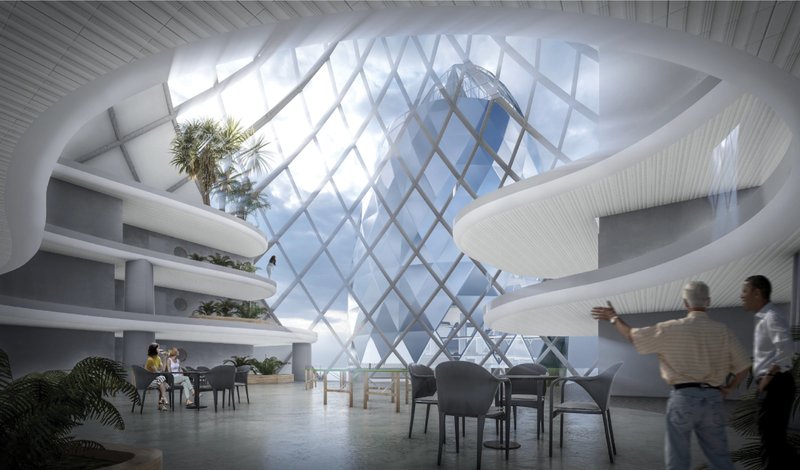
Large glazed surfaces create transparency between interior spaces and the surrounding marine environment. Visitors remain visually connected to the ocean at every level, strengthening the immersive quality of the experience.
A Floating Museum and Marine Science Center
The programmatic organization combines tourism, research, education, and recreation within a compact offshore environment.
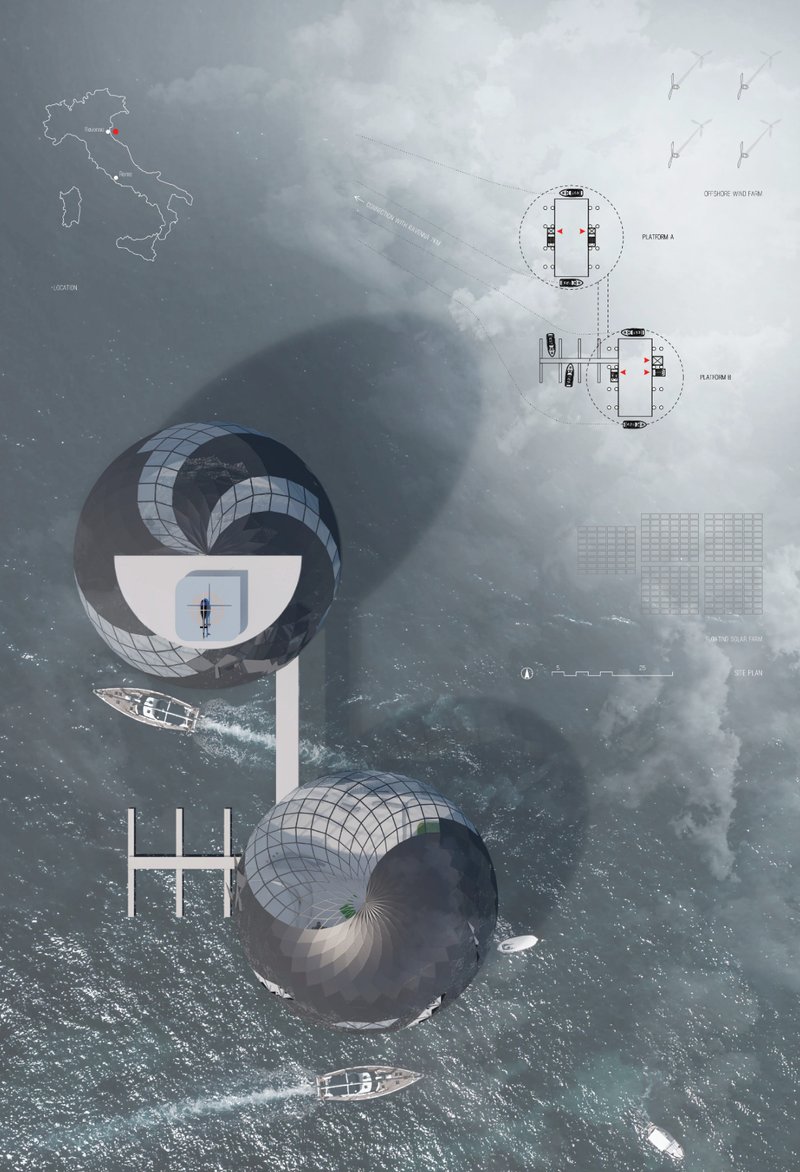
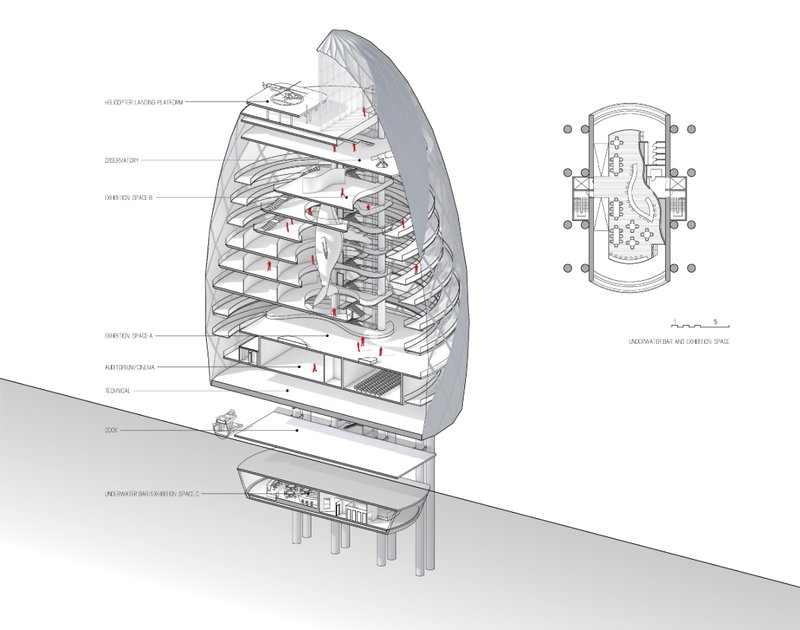
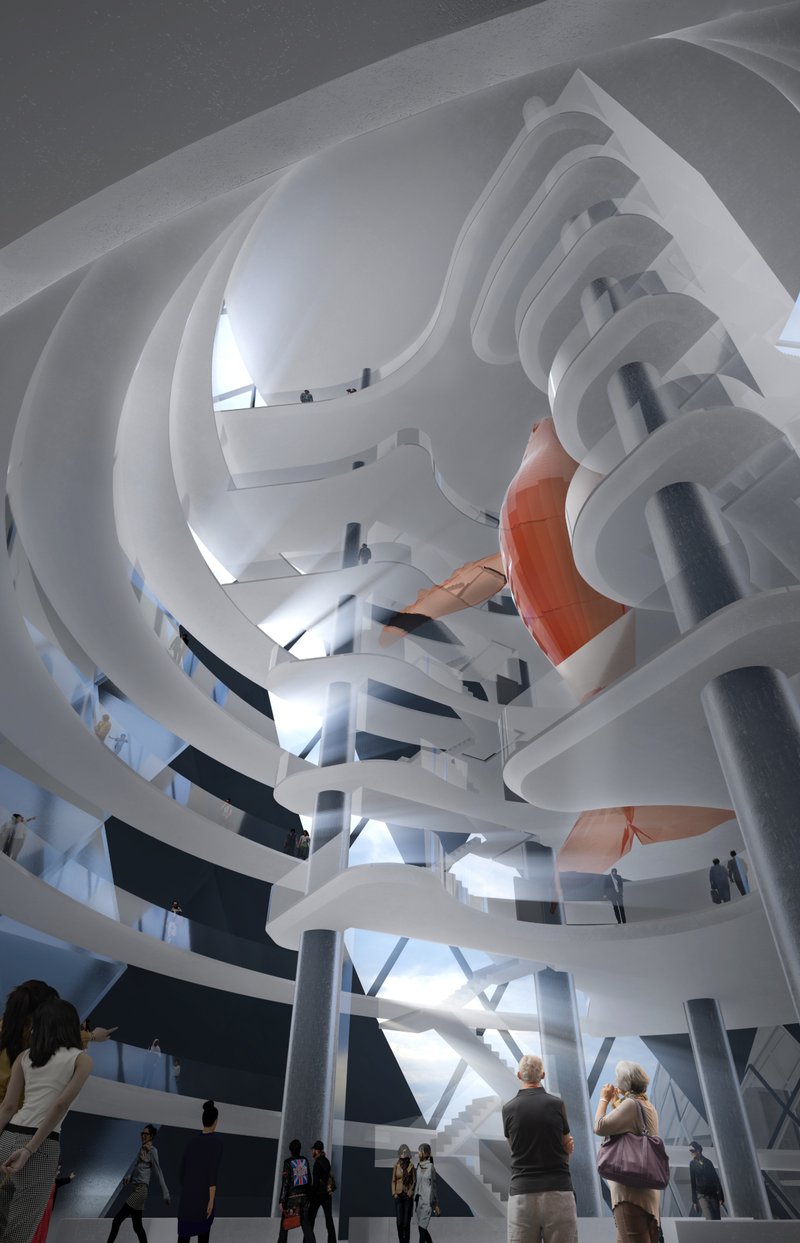
The larger vertical structure houses exhibition spaces, observatories, accommodation units, and research facilities. Spiral circulation routes guide visitors through a sequence of experiences while maintaining uninterrupted visual connections between floors.
The second spherical structure contains laboratories, restaurants, communal areas, and flexible social spaces. A connecting bridge links the two volumes, encouraging movement and interaction between scientific and public activities.
The project functions simultaneously as:
- A marine research center
- An ocean observatory
- A cultural exhibition venue
- A floating hospitality destination
- A recreational retreat for sailors and tourists
This hybrid programming transforms the former oil rig into a multi-functional public architecture typology.
Underwater Spatial Experiences
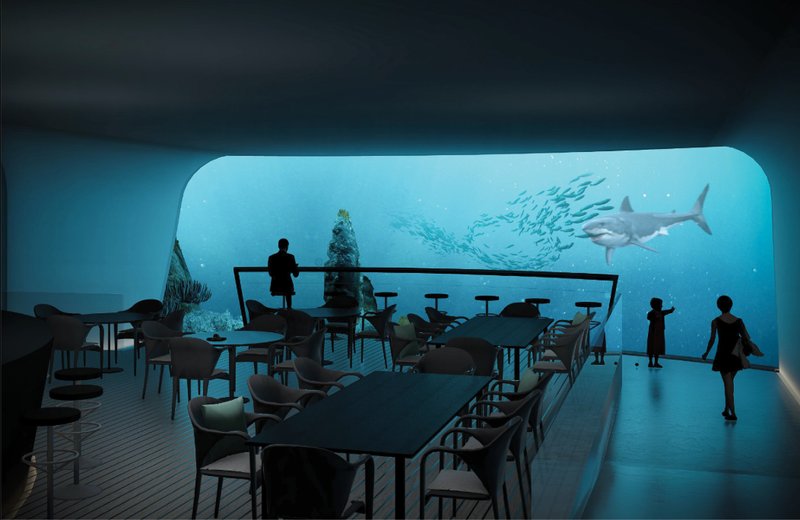
One of the most compelling aspects of the proposal is the underwater exhibition and observation area integrated beneath sea level.
These submerged spaces allow visitors to directly experience marine ecosystems through panoramic underwater viewing environments. Restaurants and lounges overlooking aquatic life blur the boundary between architecture and nature, creating an almost cinematic spatial atmosphere.
The underwater areas elevate the project beyond conventional adaptive reuse. Instead of merely preserving industrial infrastructure, the architecture actively creates new forms of environmental engagement.
This experiential approach reflects broader developments in immersive architecture and destination-based cultural design.
Flexible and Modular Design Strategy
The project proposes a long-term vision for adaptable offshore architecture. Spatial flexibility is central to the design logic.
Accommodation units are modular and can be expanded, removed, or reconfigured according to future needs. Exhibition floors remain open and unobstructed, allowing spaces to evolve over time.
The structure is designed to accommodate future technological upgrades and changing public demands. This adaptability positions the project as a resilient prototype for future ocean-based architecture.
Rather than creating a static monument, Between Sky and Water imagines an evolving architectural ecosystem capable of responding to environmental, social, and technological transformation.
Architecture Between Isolation and Discovery
The emotional quality of the project emerges from its remote location. Floating in the vast openness of the sea, the structure becomes both refuge and destination.
Minimal light pollution allows observatory decks to function as stargazing platforms, while marine research activities encourage deeper engagement with ocean ecosystems. Sailing, diving, and scientific exploration become part of the architectural experience itself.
The project transforms isolation into an asset. The surrounding emptiness amplifies awareness of nature, atmosphere, weather, and marine life.
This relationship between architecture and environment gives the proposal its strongest identity.
A Vision for the Future of Offshore Adaptive Reuse
As offshore industrial infrastructure becomes increasingly obsolete worldwide, projects like Between Sky and Water demonstrate how architecture can reinterpret these structures through ecological and cultural lenses.
Instead of abandonment or demolition, the project proposes transformation through sustainable design, immersive experiences, and scientific engagement.
The proposal positions futuristic ocean architecture not simply as speculative imagery, but as a meaningful direction for adaptive reuse in coastal and marine environments.
Through its sculptural form, environmental integration, and hybrid programming, Between Sky and Water offers a compelling vision for the future of architecture beyond land.




Popular Articles
Popular articles from the community

Takeshi Hosaka Architects Suspends a Concrete Cross Above a Yokohama Cemetery
A 28-square-meter burial renovation in Yokohama lifts the symbol of resurrection into the sky so mourners see it against heaven.
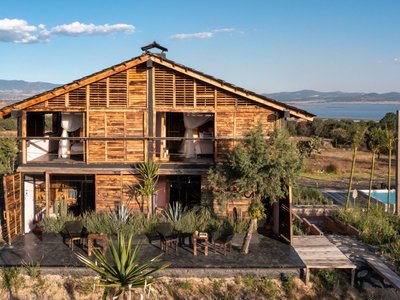
Fausto Terán and Toro Fuse Japanese Craft with Mexican Tradition in a Lakeside Retreat
Nakamura House pairs Shou-Sugi-Ban charred pine with handmade clay tile at the foot of Atlangatepec Lagoon in Mexico.
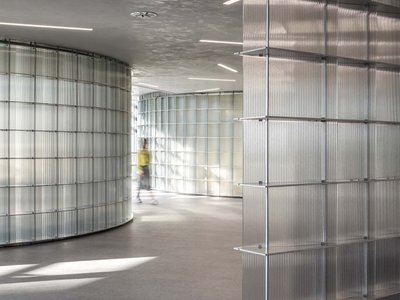
HCCH Studio Wraps a Shanghai High-Rise Office in Curved Walls of Translucent Glass
A 1,000 square meter fit-out in Lujiazui replaces the typical tech-office palette with layered glass, micro-cement, and quiet rigor.
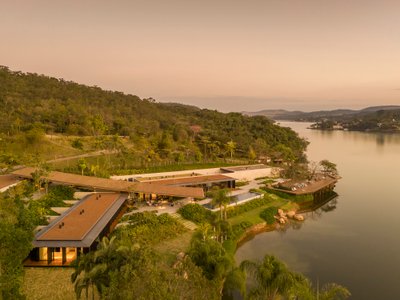
Bernardes Arquitetura Stretches a Timber Roof Along a Reservoir's Edge in Minas Gerais
Dam House in Itaúna lets a sweeping wooden canopy dissolve the boundary between hillside terrain and open water.

Similar Reads
You might also enjoy these articles


Urban Forest: A Vertical Ecosystem for 5,000 Workers in Singapore's Changi Business Park
Radially stacked pods and layered green decks turn a 7-acre plot into 47 acres of ecological workspace projected for 2040.
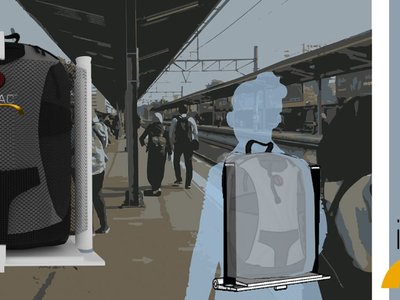
interACT: A Wearable Transit Object That Turns Commuting Into Social Infrastructure
A backpack-mounted foldable device transforms walking, waiting, and riding into moments of shared comfort across Jakarta's transit network.
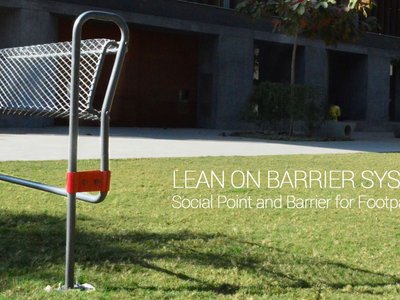
Lean On Barrier System: Where Traffic Safety Meets Chai Culture in Ahmedabad
A modular steel barrier doubles as informal seating and lean-on furniture at one of Ahmedabad's busiest intersections, keeping vendors in place.
The Black Bagh: A Living Monument Built from Water, Light, and Memory
On the banks of the Yamuna, two designers replace the myth of a marble mausoleum with a regenerative landscape of reflection and ritual.





Comments (0)
Please login or sign up to add comments
No comments yet. Be the first to comment!