
BICYCART
Renovation for carts in China
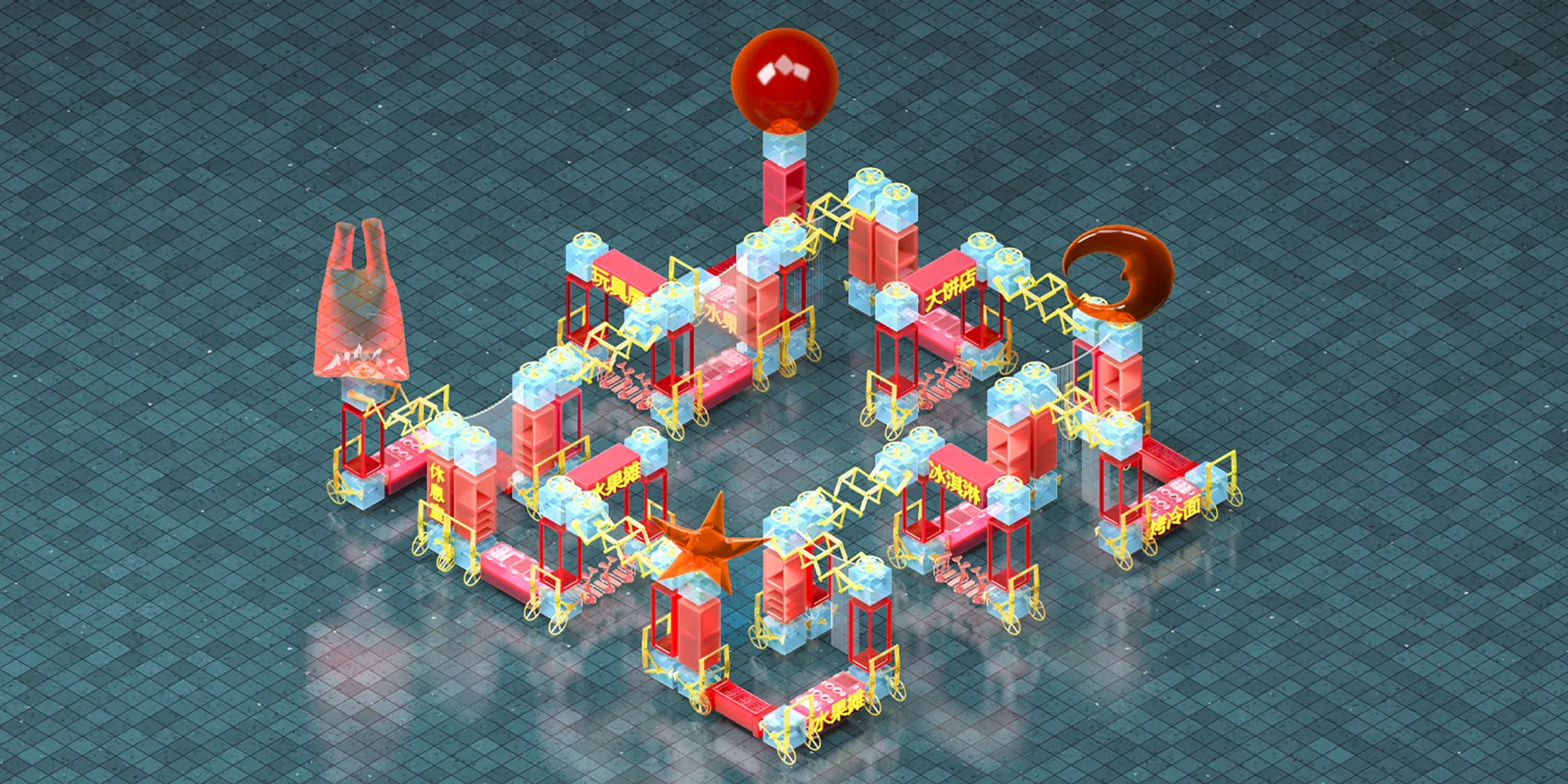
BICYCART is a cart designed for China's post covid-19 era which constitutes a new design by deconstructing and reorganizing the existing waste materials. The modular design ensures the high customization, high mobility and high flexibility of the cart. The main material of the cart is reconstructed from the widely abandoned sharing bike-Mobike in China, which ensures the low price of the cart. Each cart is equipped with balloons for publicity, which helps sellers to sell goods at a longer distance.
BRING BACK THE CARTS——post covid-19 era in China
In China, COVID-19 did drive popularity of street market down, and the market with the engagement of various carts is endeavoring to returning back to people’s daily life. Under this circumstance, carts start to work as not only a necessary role, but also a symbol of normal life and high-quality economic development.
Trend in 2021——What do people need?
In China's post covid-19 era, people are gradually returning to social activities, shopping and other colorful activities. People need food cart services with more integrated functions, higher efficiency and neatness. At the same time, with the rapid movement of information and rapid iteration of current situations, the cart also needs considerable flexibility and variability to meet people's changing needs flexibly.
RECYCLING MATERIALS——from bicycle to cart: BICYCART
MOBIKE is a new way of sharing bikes, but in recent years, MOBIKES are thrown everywhere in cities due to oversupplies. In this project, we declare to reuse and recycle MOBIKE. In this way, we can make the best use of these resources.
SYMBOLIZATION——Balloon and Long distance communication
Most snake carts in China are distributed around high-rise residential areas. Before covid-19, people go out everyday, pass by strollers and have natural shopping behaviors when entering and leaving the residential areas. However, during covid-19, people reduced the frequency of going out, and the sight interaction with the cart was greatly reduced. Our cart is equipped with a balloon for placing logo for each seller, which helps them to transmit information to high-rise residents. When residents see glowing balloons from home, they can receive information that the cart is in operation.
Some strollers in China are distributed around high-rise residential areas.
Customization & Adaptability
The design consists of connection module and function module, which includes cooking module and storage module, as well as seat module and logo module. Function modules can be flexibly attached together by connecting modules. Sellers can equip with different combination methods according to their own needs. When multiple sellers meet, they can connect each other's carts with some connection modules, share the seating area or operate together. At the same time, they can flexibly change the module according to the number of customers. Carts can be stacked and moved together, helping sellers move more flexibly between different places.
EXPANDABILITY & MOBILITY
The connection module is a cube with scalability in six directions. The function module is a cuboid with scalability in two directions. The combination of the two has a very diverse and flexible organization mode. At the same time, we designed different connecting components for inserting plugin. In our current design, plugins include decorative wheels, balloons and functional wheels, all of which can be inserted into the grooves of the connecting module. Our current cart function is based on food cart design, but this geometric expansion system can adapt to more formats and function implantation.
FULL LIFE CYCLE——the recycle of abandoned carts and bikes
The cart is transformed from the abandoned bikes. The cheap and easily available materials and short production cycle ensures the cart be sold at a relatively low price. Reuse of materials also contributes to environmental protection. Since the cart is composed of various functional modules, the cart will not be abandoned after the seller abandons the cart. The disassembled modules have the functions of cooking, storage and rest, and can be used again in home life.
Highly commercialized
All parts of the cart can be rapidly produced and sold to the public in the furniture and tools market. People can go to the CART SHOPPING MALL and assemble their favorite furniture by themselves according to app and guidebook. The combination mode given in this design is only a demonstration, and flexible modules can actually design more diverse and richer forms. Through this sales system, we hope that the cart can provide DIY fun and bring happiness to people who are anxious after the epidemic.


Popular Articles
Popular articles from the community


Lunar Spiral: Space Architecture Shaped by the Mathematics of the Universe
Lunar Spiral reimagines space architecture through Fibonacci geometry, lunar regolith, levitating habitats, and self-sustaining Moon living.

The Ocean Hive: Sustainable Architecture for a Self-Sufficient Civilization at Sea
The Ocean Hive imagines sustainable architecture at sea, where modular habitats, algae, wave power and ocean waste sustain a growing colony.

Play: Fragments of Their World
Familiar architecture becomes modular playground design, creating safe spaces where displaced children can learn, connect, imagine and play.

The Musturak Paradise: Senior Living Architecture for a Connected Future in Temara, Morocco
The Musturak Paradise reimagines senior living architecture in Temara via private homes, social spaces, culture, community, and shared care.


Similar Reads
You might also enjoy these articles

The Rhythm of Seasons
A Farmers' Market Connecting Nature and the City


More Than a Building-Designing a Living System
More Than a Building-Designing a Living System
Base Beyond
DESERT COMPOUND ARID: TOURISM OF ABSENCE AND ABUNDANCE





Comments (0)
Please login or sign up to add comments
No comments yet. Be the first to comment!