
Big-Little House: A Brick Jaali Home in Bengaluru
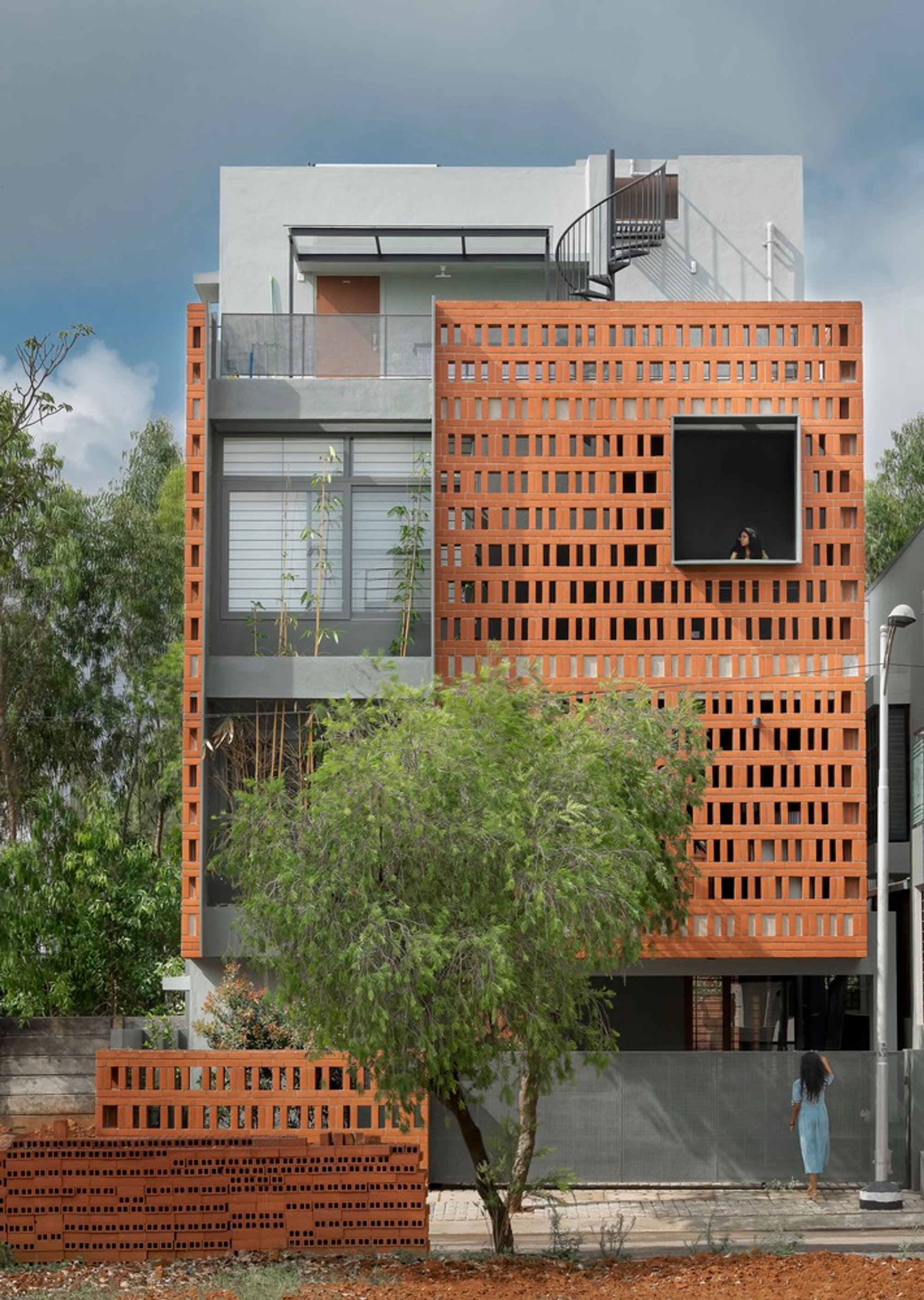
Kamat and Rozario designed a Bengaluru house wrapped in a multi-storey terracotta brick jaali screen with bamboo growing through the voids on the facade.

On a residential street in Bengaluru, a multi-storey terracotta brick screen rises behind a row of mature trees. Big-Little House, designed by Kamat and Rozario Architecture, is a family residence that wraps its facade in a deep brick jaali, allowing bamboo to grow through the voids and creating a permeable boundary between the street and the home. The brick screen is the project's defining gesture: it filters sunlight, frames glimpses of the interior, and turns the building's exterior into a planted vertical garden.
The house is named for its dual character. From the street, it reads as a tall, monolithic brick volume. From inside, it opens into double-height living rooms, side gardens, and skylit upper floors. The contrast between the closed front and the open interior is the project's spatial idea. The brick screen does the work of privacy. Everything behind it is open.
The Brick Jaali Facade
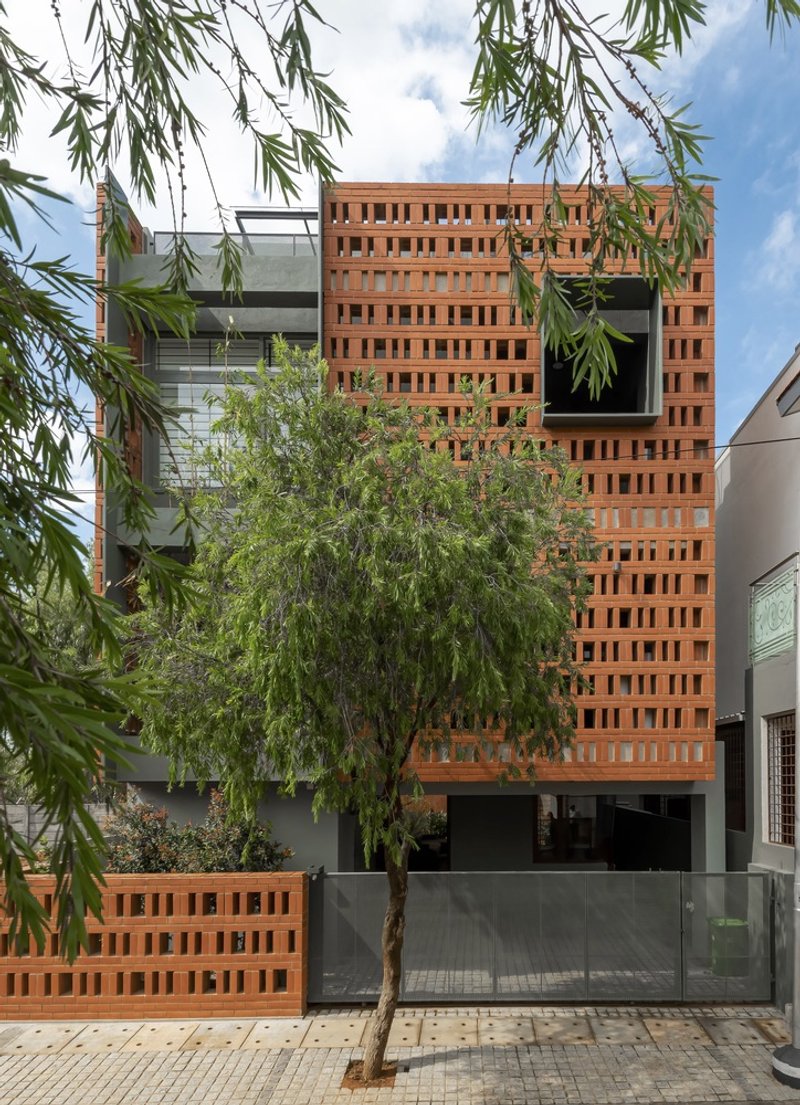
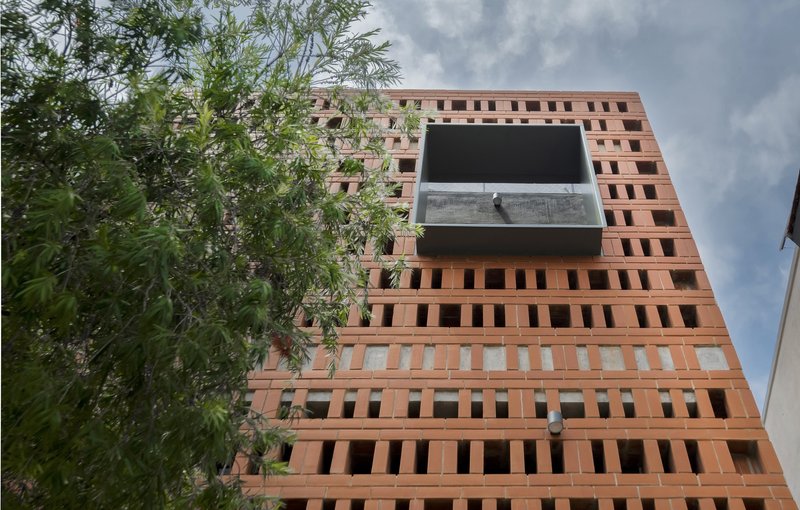
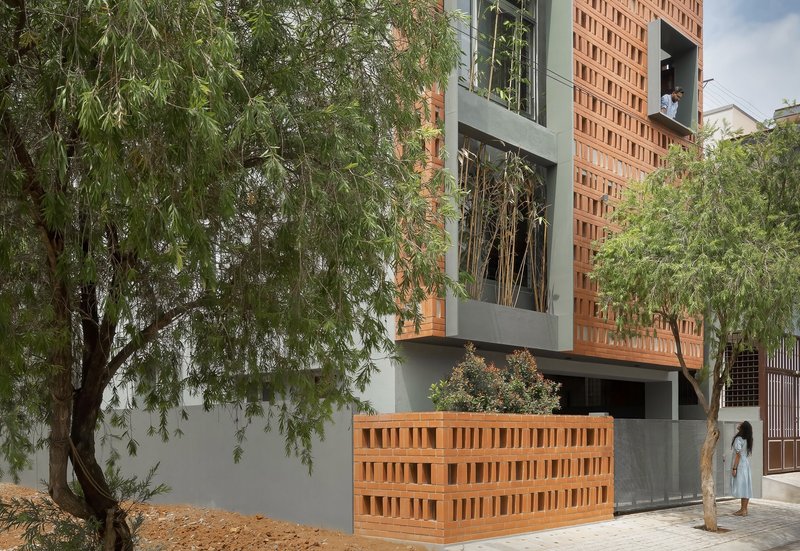
The brick screen is built from terracotta blocks laid in a cross-stretcher pattern with deep voids between courses. The voids are large enough to plant bamboo and let it grow through to the street side. The result is a facade that is part architecture and part landscape: the brick provides the structure, the bamboo provides the foliage. From below, looking up, the screen rises three storeys with a single cantilevered concrete balcony breaking the rhythm. The trees at the street edge complete the layered green wall.
Entry and Ground Floor
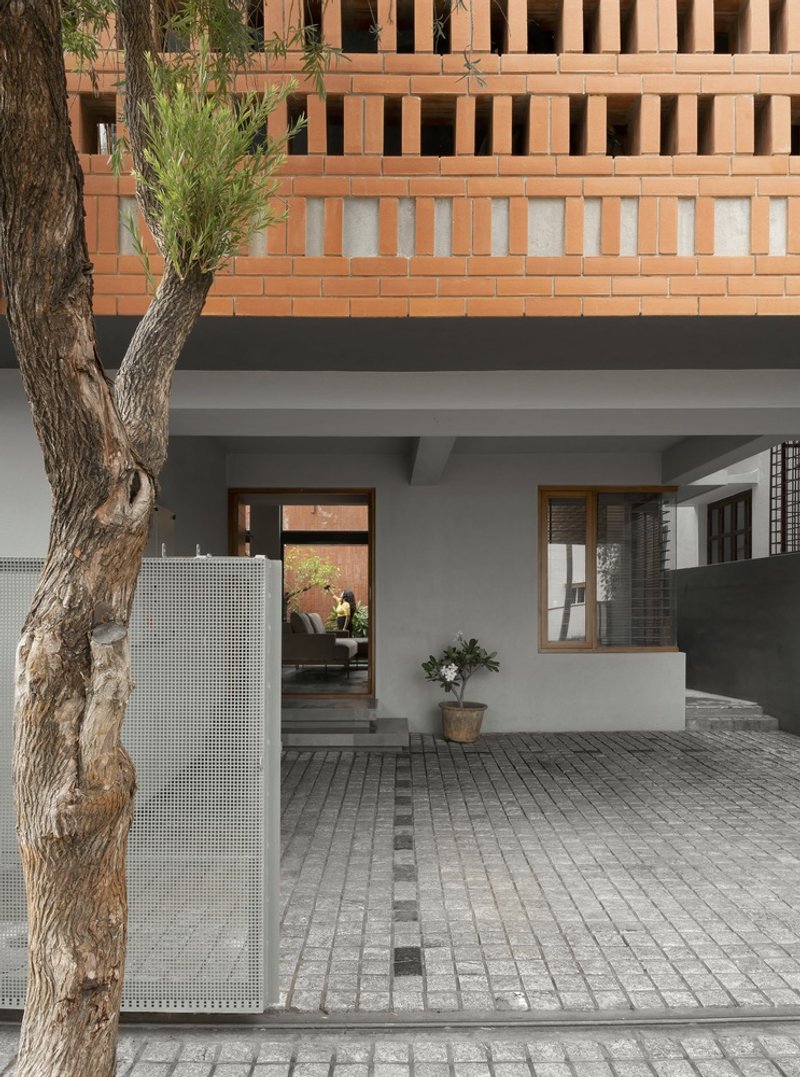
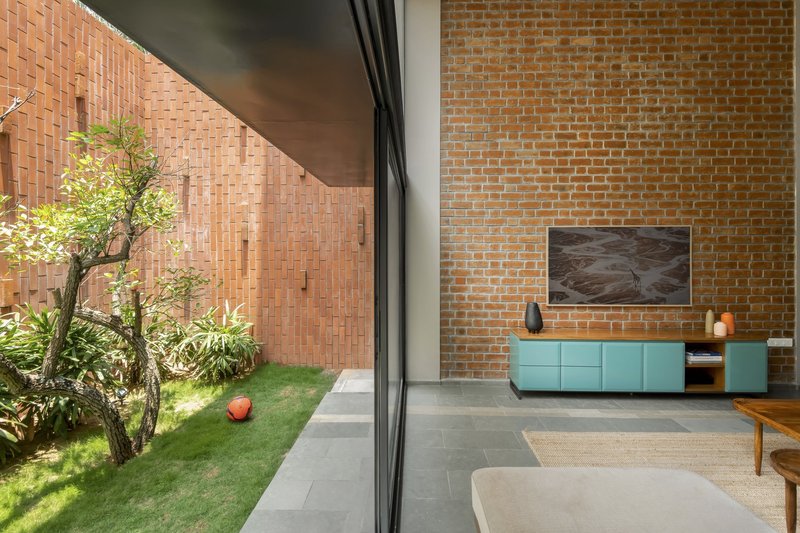
The entry passes through a grey concrete portal under a timber-slatted upper level. Brick paving leads to the front door, with a mature tree growing through the entry court. Inside, the ground floor opens immediately to a side garden through full-height sliding glass doors. The living room has exposed brick walls, a teal media cabinet, grey tile floors, and a view to a sculpted ornamental tree on the lawn. The open plan and the side garden eliminate the sense of being on a tight urban plot.
The Living Room: Brick, Glass, and Bamboo
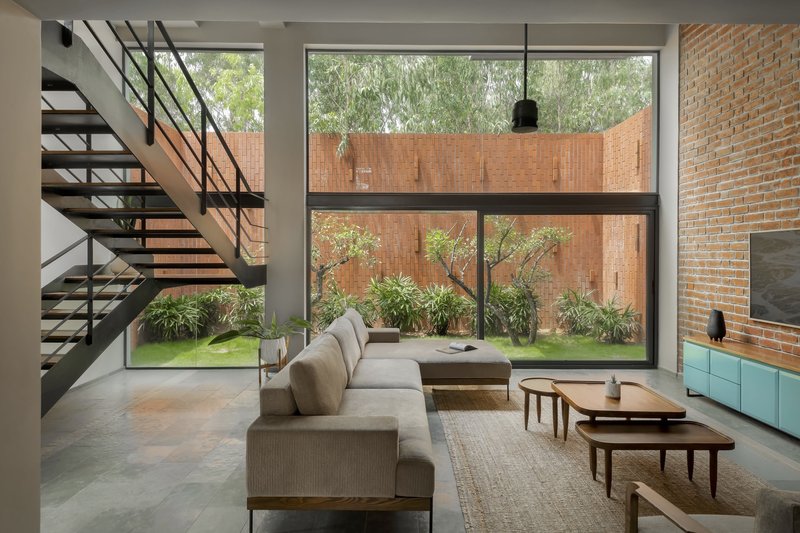
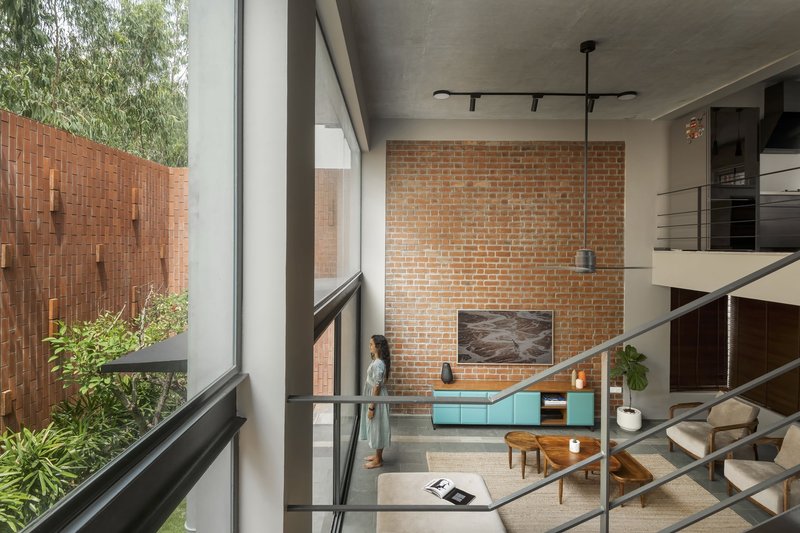
The double-height living room is the heart of the house. One wall is exposed brick with the TV mounted on it. Another wall is full-height glass to the garden, with bamboo growing on the other side of the brick jaali. A black metal staircase rises along the third wall, connecting to the upper floors. A sectional sofa, low timber coffee tables, and a jute rug occupy the centre. From the upper level, the living room is visible through a balcony rail, showing the full height and the layered relationship between the brick walls, the glass, and the bamboo.
Kitchen and Bedrooms
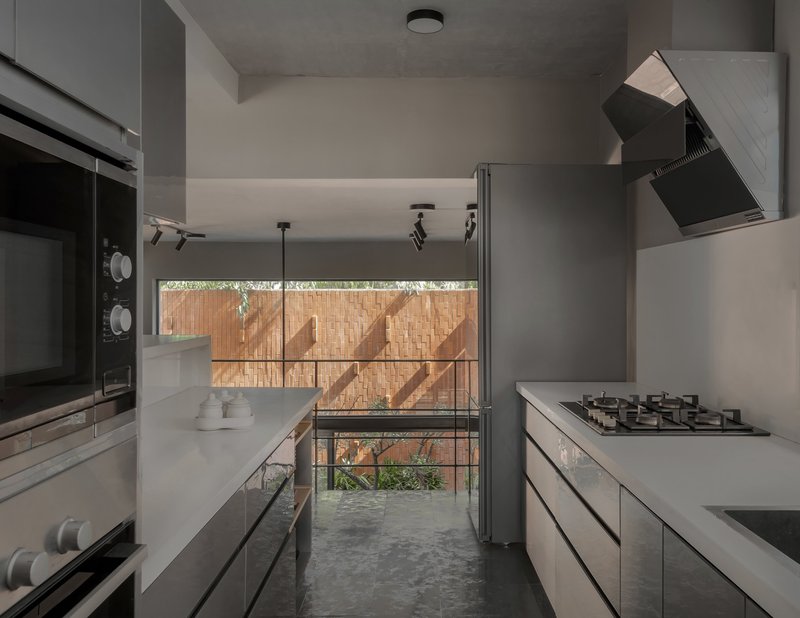
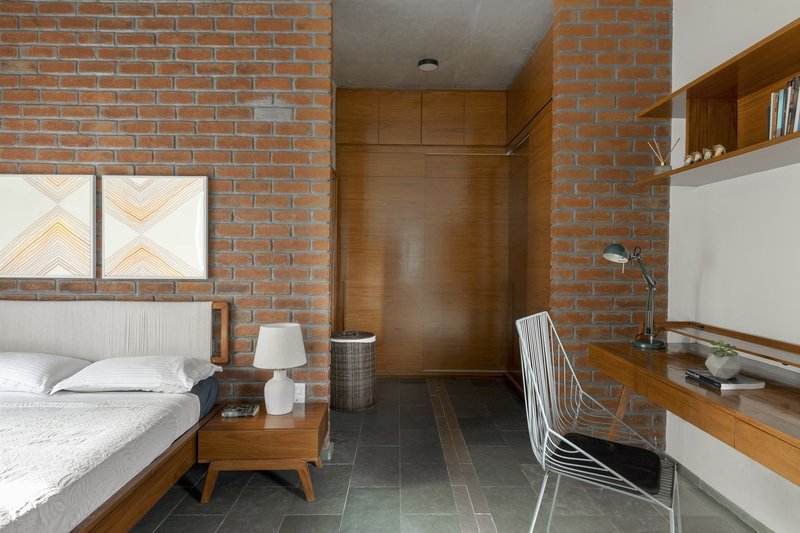
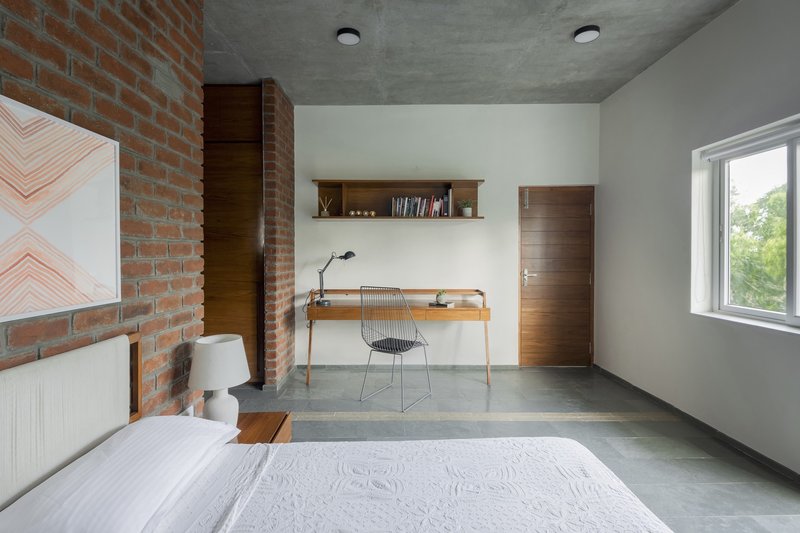
The kitchen is in dark grey concrete: walls, ceiling, and counter base. A light stone counter holds the gas hob. A view through to the garden with the brick screen beyond brings light into the cooking space. The bedrooms have exposed brick walls (used as headboard accents), concrete ceilings, white walls, and timber furniture. The material palette is consistent throughout: brick, concrete, timber, and one or two coloured accents (the teal cabinet, a framed artwork). The interior is calm because the exterior screen does all the visual work.
Plan
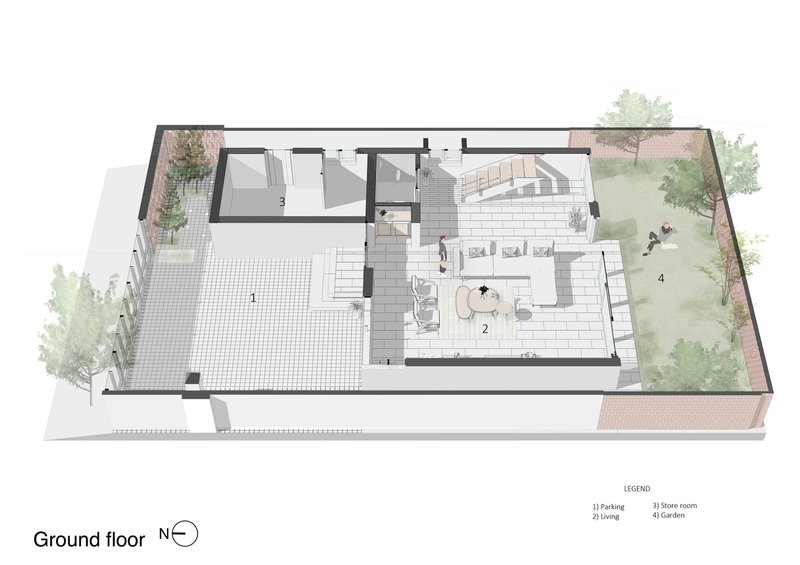
The ground floor plan shows the layout: parking at the front under the brick screen, living and family rooms opening to a side garden, kitchen and service areas at the rear, and the staircase connecting to the upper bedrooms. The house occupies the centre of the plot, with the side garden providing the only outdoor space. The brick screen wraps the front to give the deep plan a layered facade.
Why This Project Matters
Brick jaali screens are a traditional Indian architectural element that has been reinterpreted by contemporary architects. Most modern jaali walls are decorative: a single layer of perforated brick on an otherwise standard facade. Kamat and Rozario went deeper. They built a multi-storey brick screen with voids large enough to plant bamboo, turning the facade into a vertical garden that grows over time. The brick is structural. The bamboo is functional (privacy, shade, cooling). The whole assembly is a climate device, not an ornament.
If you are designing a house in a hot climate, on a tight urban plot, or anywhere that needs privacy without enclosure, Big-Little House is worth studying for how a deep brick screen and a planted facade can solve the problems of sun, view, and privacy in a single architectural element.
About the Studio
Share Your Own Work on uni.xyz
If you are working on Indian residential architecture, brick jaali design, or climate-responsive housing, uni.xyz is a place to publish your work and connect with a global design community.
Project credits: Big-Little House by Kamat and Rozario Architecture. Bengaluru, India. Photographs: Arjun Krishna.




Popular Articles
Popular articles from the community

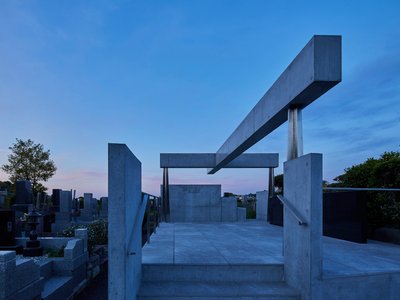
Takeshi Hosaka Architects Suspends a Concrete Cross Above a Yokohama Cemetery
A 28-square-meter burial renovation in Yokohama lifts the symbol of resurrection into the sky so mourners see it against heaven.
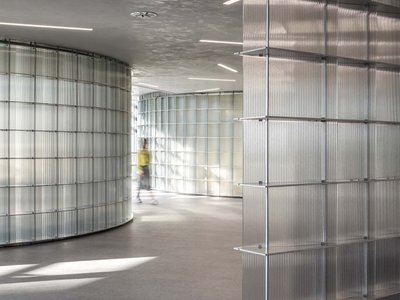
HCCH Studio Wraps a Shanghai High-Rise Office in Curved Walls of Translucent Glass
A 1,000 square meter fit-out in Lujiazui replaces the typical tech-office palette with layered glass, micro-cement, and quiet rigor.

Rojkind Arquitectos and Think Parametric Build a Glueless Pavilion from 67 Interlocking Panels
A serpentine fiber-cement installation in Chapultepec Park celebrates a decade of architectural media in Mexico City.
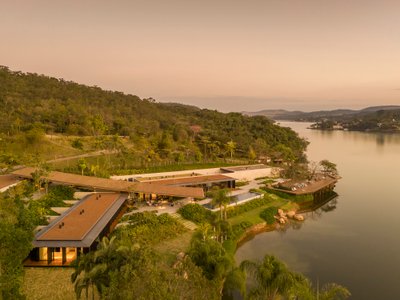
Bernardes Arquitetura Stretches a Timber Roof Along a Reservoir's Edge in Minas Gerais
Dam House in Itaúna lets a sweeping wooden canopy dissolve the boundary between hillside terrain and open water.


Similar Reads
You might also enjoy these articles

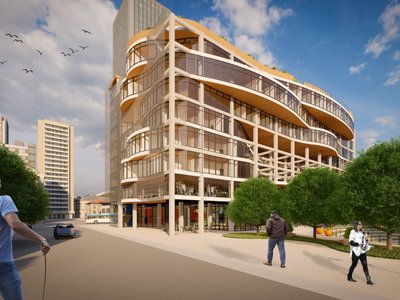
Olio Towers: A Mid-Rise for Performers That Fuses Housing, Rehearsal, and Stage
Located blocks from Houston's Theater District, this modular tower stacks living units around a central performance atrium.

Oasis: Modular Green Housing Carved into Dhaka's Urban Fabric
A shortlisted Plugin Housing entry reclaims unauthorized settlements in Dhaka with stepped concrete volumes, green roofs, and ventilation-driven design.

Black Hole: A Floating Megastructure for the Post-Physical Era
Emiliano Mazzarotto envisions a spherical, self-scaling arena where e-sports, digital hotels, and holographic stadiums replace traditional public space.
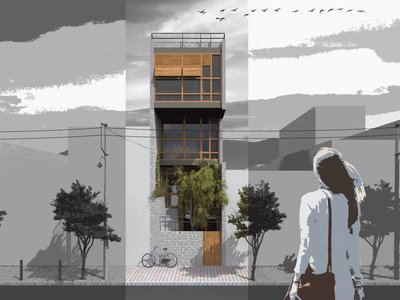
Compact & Sustainable Living in Piraeus: A Four-Level Family Home Built Around Light and Air
A narrow townhouse in one of Greece's densest port cities uses a central atrium and passive strategies to house three generations under one roof.


Explore Architecture Competitions
Discover active competitions in this discipline




The International Standard for Design Portfolios


The Global Benchmark for Architecture Dissertation Awards


The Global Benchmark for Graduation Excellence


Challenge to reimagine the Iron Throne
Comments (0)
Please login or sign up to add comments
No comments yet. Be the first to comment!