

Bilbao Fine Arts Museum by Foster + Partners
A New Landmark for the Basque Country's Cultural Scene

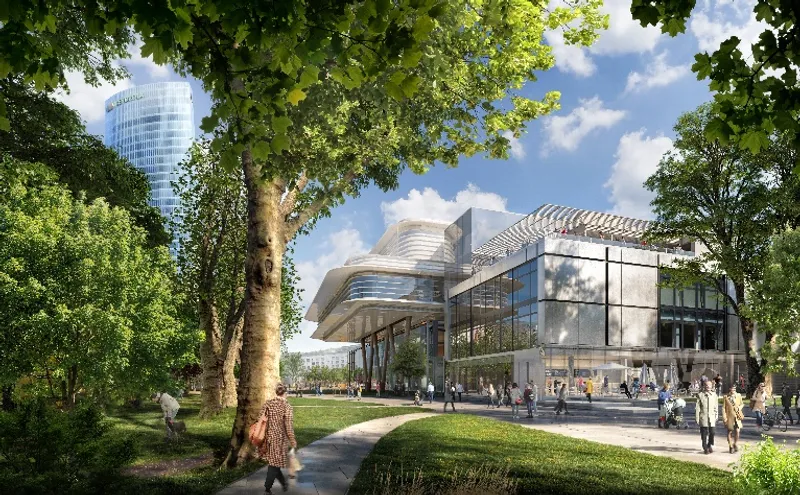
On Thursday, November 17th, the Bilbao Fine Arts Museum marked the beginning of its expansion and remodelling project with a celebratory ceremony. Foster + Partners, the leading design firm, will be overseeing the project, which involves the restoration of the existing 20th-century building and the creation of a new public atrium and contemporary art galleries in a floating pavilion.
The new design will direct the museum's focus towards the city, with the creation of a pedestrian path that runs from north to south, connecting the original 1945 building, the 1970s extension, and a new visitors' centre. This new path will also make the museum more accessible to the public, as it will be permeable at street level.
The Bilbao Fine Arts Museum's expansion and remodelling project is a testament to the significant role that culture can play in the life of a city and its citizens.
Norman Foster, Founder and Executive Chairman, Foster + Partners: “We are delighted to celebrate the birth of a project which will link the cultural heritage of the past to the museum of the future. From the new gathering space in the Arriaga Atrium, the visitor will proceed to the spacious new galleries and then discover the outdoor terrace that celebrates the museum’s unique location. The result of our close collaboration with Luis María Uriarte and the museum team is now about to become a reality. We would like to pay tribute to the General Deputy of the Provincial Council of Bizkaia, the Regional Minister of Culture and Linguistic Policy of the Basque Government, the Mayor of the City Council of Bilbao and the President of BBK Banking Foundation – all for their commitment of the positive role of art in the life of the city.”
The Bilbao project is a combination of cutting-edge technology, a humanistic approach, and ecological sustainability. It offers a beacon of light in the city centre while promoting architectural excellence, urban sensitivity, and social responsibility.
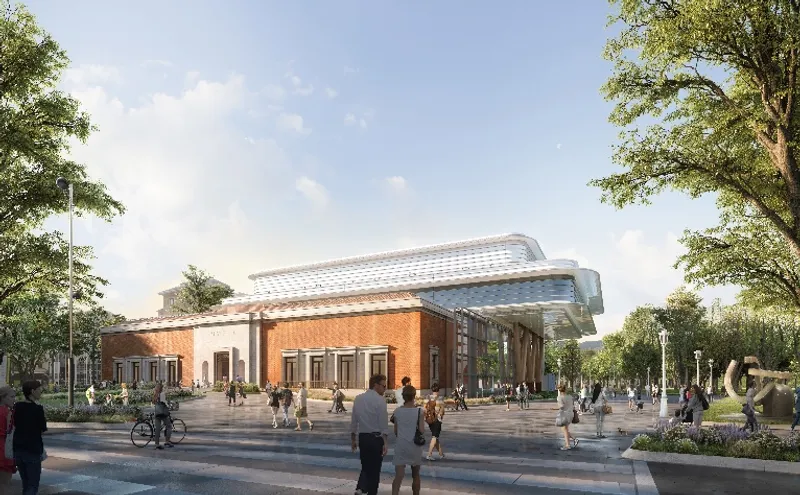
The core of the project focuses on restoring the original entrance and internal spaces of the 1945 building, making it the main attraction. The ground floor is designed for easy navigation with a single, accessible plane. The revitalization transforms Plaza Arriaga into the new hub of the museum, with ample light streaming in from the roof and galleries above.

The new extension is a one-of-a-kind structure that seamlessly integrates with the existing museum, providing 2,300 square meters of new gallery space. The top floor features a flexible, column-free exhibition area that can accommodate a variety of displays. All service spaces are contained within two technical walls to maximize space and efficiency. The panoramic window allows natural light to filter in, offering stunning views of the nearby park, with north lights that can be adjusted to suit the exhibits.
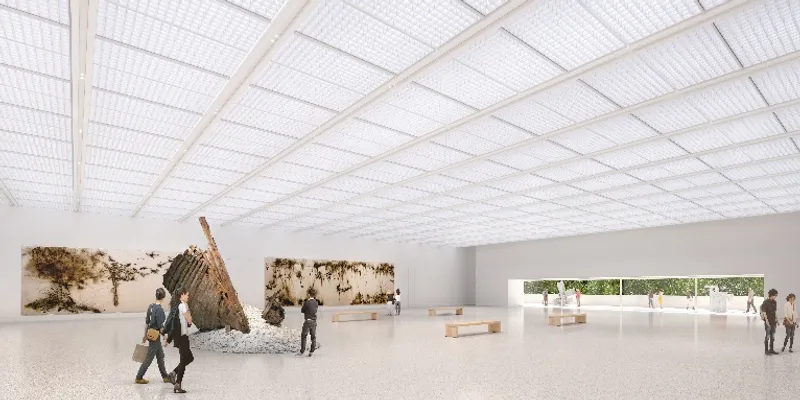
The new extension features a lower level designated for educational programs, workshops, office spaces, and service areas. The addition boasts a unique façade, complete with a viewing terrace, designed to showcase sculptures and emphasize its sleekness. The building's environmental impact is minimized through the incorporation of cross ventilation, ample natural light, high thermal mass, solar energy collection, and rainwater harvesting. Constructed using low-carbon steel, the extension also boasts a roof designed to harness the energy and promote sustainability.
Press release and images courtesy of Foster + Partners

Popular Articles
Popular articles from the community


David Ortega Stacks a Two-Story Mexico City Penthouse Around a Steel Stair and a Pergola-Shaded Roof Terrace
In Colonia Roma, a 300 m² penthouse uses oak joinery, a planted steel stair and a slatted roof pergola to make a new-build apartment feel like a house.

Cube Design Draws an Ecological Corridor Between Two Shenzhen Hills with the Nankai Building
Beside Shenzhen's container docks, the Nankai Building pairs stacked balconies with a climbing green screen to connect two hillsides across its height.


Singing Woman: An Opera House That Performs Before the Curtain Rises
Ovidiu Cristian Pavel's conceptual opera house translates Estonia's choral identity into a sculpted waterfront landmark facing the Baltic Sea.

LT2A and OPEN Architectes Thread a Brick and Glass High School Through a Wooded Belgian Campus
In Braine-l'Alleud, a 3,000 m² wing for Collège Cardinal Mercier pairs pale brick with a glazed colonnade, deferring to a small chapel and a dense wood.

Similar Reads
You might also enjoy these articles

Vereda Arquitetos Renovates a 40-Square-Meter Apartment Inside Niemeyer's Copan Building
A compact unit in São Paulo's most iconic residential tower gets a material overhaul that pairs exposed concrete with bold blue Formica.

Shakur's House: Exposed Brick as an Interior Organiser in a 168 m² Mashhad Residence
Brick moves indoors in this Mashhad residence, where masonry walls, glass partitions and teal planes sequence a compact home without closing it off.

Day and Night Park: A Time-Based Urban Newsstand in Beijing
A temporary urban newsstand in Beijing blending travel, light, and reading through poetic colors, compact form, and community-focused design.

Modernist Patio Renovation in El Masnou, Barcelona by Oliver Segura Arquitectura + Cebrià Arquitectura
Modernist patio renovation blending tradition and innovation with a movable pool, leveled floors, and Catalan materials in El Masnou.

Explore Cultural Architecture Competitions
Discover active competitions in this discipline


Challenge to reimagine the Iron Throne

Photograph architecture without architects

Illustrate the lost glory of Angkor Wat - Render Challenge

Bring back Drive In's
Comments (0)
Please login or sign up to add comments
No comments yet. Be the first to comment!